If you’re serious about growing your brand in Singapore’s hyper-digital market, ignoring Generative Engine Optimisation is no longer an option. Knowing how GEO is affecting branding online is being aware of the shift in how AI-driven engines evaluate, summarise, and surface your brand content to potential customers.

Unlike traditional SEO, GEO doesn’t rely solely on keywords; it looks at context, authority, and the relevance of your messaging.
In Singapore, where SMEs and corporates compete for attention in sectors ranging from F&B to fintech, this shift is significant. Your website, social media, and digital campaigns are no longer just content repositories — they are data points feeding generative engines that summarise, recommend, and even position your brand against competitors.
For business owners and marketers, the question isn’t if GEO will affect your brand, but how quickly you can adapt.
Working with a GEO agency can give you an edge, ensuring your brand’s narrative, authority signals, and content strategy align with what AI sees as credible and valuable.
From structured FAQs to consistent tone across many platforms, the aim is to make your brand “AI-friendly” without losing your human connection. This is your roadmap to mastering GEO in Singapore.
Key Takeaways
- Generative Engine Optimisation is shifting the focus of online branding from traditional keyword-driven SEO to AI-understood relevance, authority, and consistent messaging across all digital touchpoints.
- Singapore businesses that integrate local context, structured content, and authoritative signals into their brand strategy are more likely to appear prominently in AI-generated summaries and recommendations.
- While GEO offers significant visibility advantages, brands must carefully manage AI representations and maintain authentic human connections to prevent misinterpretation or dilution of their identity.
Understanding Generative Engine Optimisation (GEO)
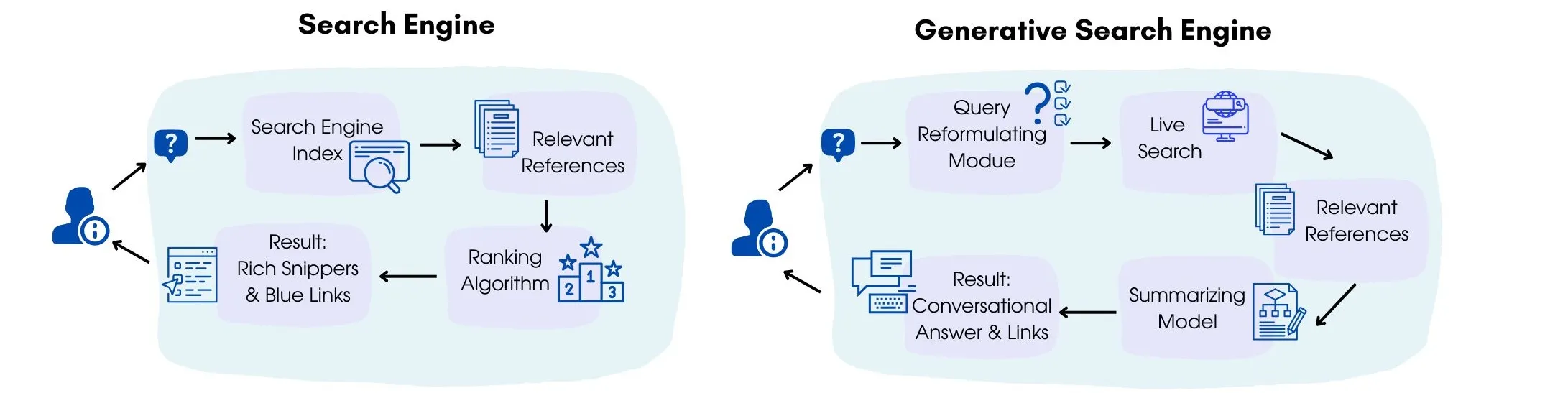
Generative Engine Optimisation, or GEO, is the next evolution of digital visibility. At its core, GEO is about how AI-driven search engines, such as those increasingly integrated with Google and Bing, interpret content. Unlike traditional SEO services, which rely on keyword frequency and backlinks, GEO evaluates:
- Relevance: Does your content answer user intent in full context?
- Authority: Are you consistently cited or referenced by credible sources?
- Consistency: Is your brand messaging uniform across digital channels?
Consider this example: if someone searches for “best childcare in Singapore,” a generative engine doesn’t just match keywords. It summarises reviews, social mentions, and authoritative articles to deliver an AI-generated recommendation.
A childcare provider that optimises for GEO ensures its website, social mentions, and PR coverage all signal the same brand authority, increasing the chances of being selected in AI summaries.
The practical difference is stark. Traditional SEO focused on ranking pages. GEO focuses on ranking the brand itself in AI understanding. For Singapore businesses, this means visibility is no longer about “being found” — it’s about being understood and trusted by AI.
Example in Action: A local SME café that integrates structured menus, high-quality customer reviews, and AI-friendly FAQs is far more likely to appear in generative search suggestions than one relying solely on keyword-stuffed blogs.
The Intersection of GEO and Online Branding
Branding in the age of GEO is no longer just about visual identity or messaging. It is about how your brand is interpreted, summarised, and recommended by AI systems. Generative engines assess tone, credibility, and consistency across all digital touchpoints to determine whether your brand is trustworthy enough to surface in AI-driven answers and recommendations.
Brand Narrative
AI actively parses your storytelling to understand who you are and what you stand for. A consistent brand narrative across your website copywriting approach, blog content, and social media presence improves perceived reliability. When your messaging aligns across channels, AI systems are more confident in summarising your brand accurately rather than presenting fragmented or diluted interpretations.
Authority Signals
Authority is a critical input for GEO. Mentions in high-authority publications, strategic partnerships, expert citations, and quality backlinks all reinforce your credibility. These signals overlap strongly with local SEO fundamentals, helping generative engines recognise your brand as a reliable expert source within your industry and market.
Consistency Across Touchpoints
Every digital touchpoint contributes to AI’s understanding of your brand. Your LinkedIn page, Google Business Profile, and third-party listings should all reflect the same positioning, tone, and value proposition. Inconsistent signals confuse AI systems and weaken brand recall in generative results.
Singapore Example:
A local boutique hotel successfully increased AI-driven bookings by harmonising content across TripAdvisor, Google reviews, and its website. GEO rewarded the brand with better summarised recommendations in AI-powered travel search results.
| Branding Factor | Traditional SEO | GEO Optimisation |
| Keywords | High-density placement | Contextual relevance and intent |
| Content Updates | Periodic blogs | Continuous AI-friendly content updates |
| Authority | Backlinks and PR | Citations, mentions, and consistency across platforms |
| Visibility | Page ranking | Brand representation in AI summaries |
For you, the takeaway is simple: if AI can’t clearly understand your brand, it won’t feature you prominently, no matter how strong your traditional SEO is.
GEO’s Impact on Content Strategy
Content marketing strategy in Singapore must pivot from keyword obsession to user intent mastery. GEO rewards content that answers questions holistically, anticipates follow-up queries, and embeds strong local context.
Rather than chasing isolated rankings, brands need to think in terms of visibility across AI-generated answers, summaries, and recommendations, where context and credibility matter as much as keywords.
Content Types Favoured by GEO
Certain content formats consistently perform better in generative environments. FAQs, structured data, multimedia assets, and semantic-rich long-form articles are prioritised over generic blog posts.
These formats make it easier for AI systems to extract, interpret, and reuse information accurately. Well-structured FAQs signal clarity and expertise, while schema markup supports both GEO and local SEO by improving how content is indexed and understood.
Multimedia such as explainer videos, charts, and infographics also reinforce topical depth and user engagement, both of which generative engines increasingly value.
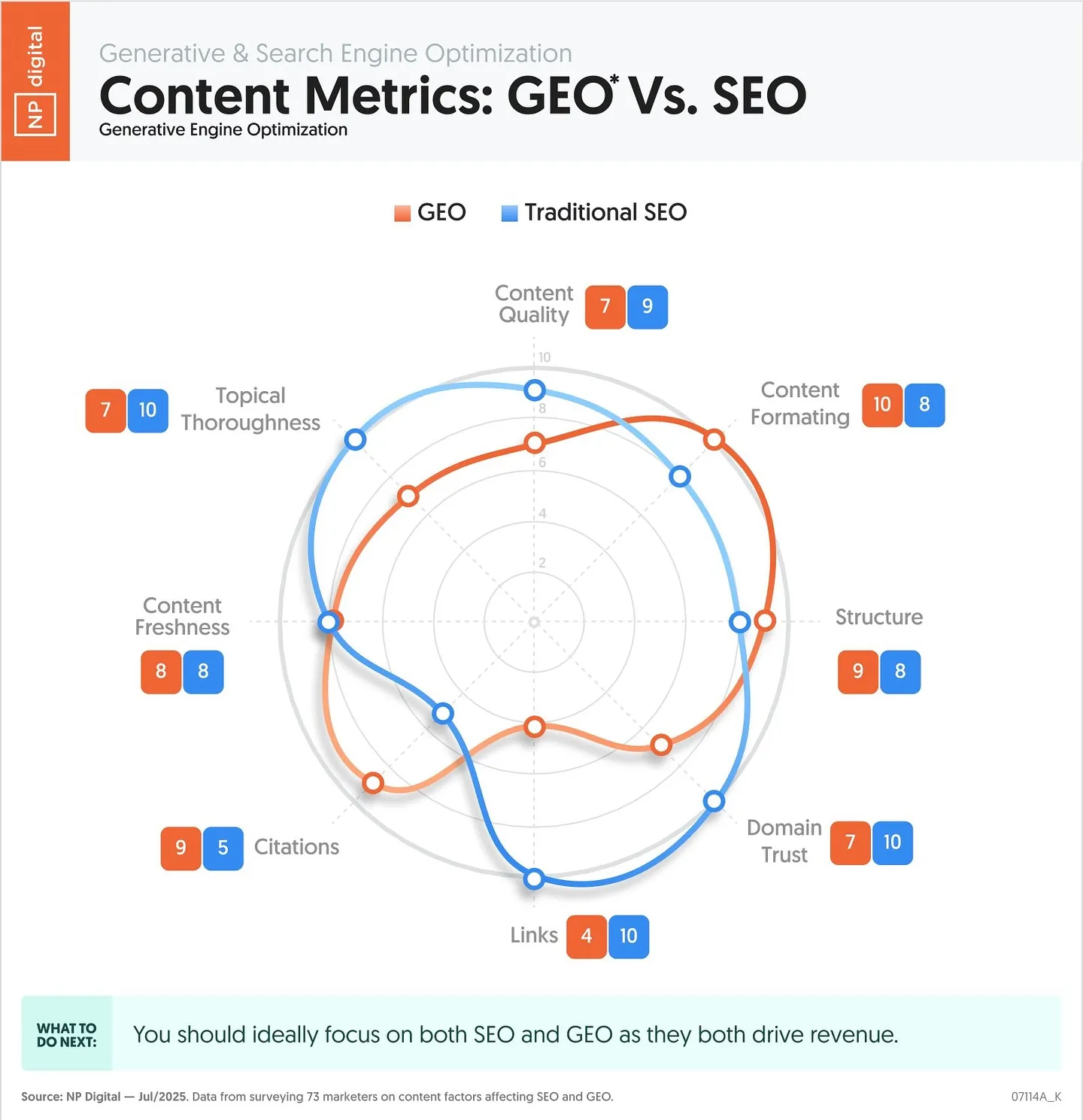
Image Credit: Neil Patel
Localisation for Singapore Audiences
Localisation is no longer optional—it is a core ranking signal in GEO. Incorporating Singapore-specific terminology, cultural references, and real-world context helps AI systems determine relevance for regional queries.
For example, “hawker centre dining” conveys more intent than generic phrases like “food options.” Referencing neighbourhoods, MRT lines, local laws, or SGD prices strengthens contextual alignment. This approach complements local SEO by ensuring your content resonates with search engines and with Singaporeans asking locally nuanced questions.
Brand Voice and AI Readability
Maintaining a consistent brand voice remains essential, but it must be balanced with AI readability. Clear headings, logical structure, concise explanations, and factual citations make content easier for generative engines to process and trust.
Authenticity still matters—over-optimised or robotic content is easily detected and often deprioritised. The goal is authoritative clarity: content that sounds human, yet reads cleanly for machines.
Pro Tip: Audit for GEO Readiness
Audit your existing content through a GEO lens. Are your FAQs truly comprehensive, or do they stop at surface-level answers? Are Singapore-specific references used consistently across service and blog pages? Strong GEO performance builds on local SEO but goes further, rewarding brands that provide context, depth, and authority aligned with real user intent.
GEO and Customer Experience
Customer experience (CX) is increasingly shaped before a user ever visits your website. In the era of GEO, AI systems often act as the first point of contact, pulling your content into summaries, recommendations, and answer snippets.
This means perception is formed early, and brands must ensure that what AI presents aligns with their intended customer experience.
AI-Generated Snippets

Your brand may appear in AI-generated summaries that effectively “pre-review” your business for users. These snippets signal trustworthiness, relevance, and authority in seconds. Clear positioning, accurate messaging, and structured content help ensure AI reflects your brand positively rather than ambiguously.
Responsiveness & Accuracy
Generative engines prioritise brands that provide timely and accurate information. Up-to-date business hours, clear service descriptions, and consistent contact details enhance AI confidence. These signals also support local SEO, reinforcing reliability for both generative systems and traditional search users.
Social Proof
Reviews, ratings, and testimonials now influence not only human decision-making but also AI summarisation. In the Singapore market, strong review velocity and sentiment help generative engines validate your reputation and relevance. Social proof becomes a shared trust signal across CX, GEO, and local SEO.
By aligning GEO with your CX strategy, you create a seamless perception of reliability, authority, and relevance across AI-driven and human interactions.
Risks and Challenges of GEO for Branding
GEO offers significant visibility advantages, but it also introduces branding risks that businesses must manage carefully. Because AI systems interpret, summarise, and repackage your content, brands no longer have full control over how their messaging is presented to potential customers. Without safeguards, GEO can unintentionally weaken brand clarity rather than strengthen it.
Loss of Control
One of the biggest challenges is message distortion. AI may summarise your content in ways you did not intend, omitting nuance or oversimplifying complex value propositions. This can lead to misrepresentation, especially for specialised services where precision, tone, and context matter. Over time, repeated misinterpretation can skew how users perceive your brand.
Over-Reliance on AI Metrics
Another risk is prioritising AI visibility at the expense of human-centred strategy. Chasing inclusion in generative answers, snippets, or summaries without considering real customer needs can erode emotional connection. Branding built solely for machines may perform well algorithmically but fail to resonate with actual decision-makers.
Brand Dilution
Generic AI-generated summaries often flatten brand personality. Distinctive voice, values, and positioning can be stripped away, making your brand sound interchangeable with competitors. This is particularly dangerous in crowded markets, where differentiation is essential for long-term growth.
Mitigation Strategies
To reduce these risks:
- Actively monitor how AI platforms describe and reference your brand.
- Maintain strong structured data, clear positioning, and consistent messaging across all digital touchpoints.
- Most importantly, balance GEO optimisation with traditional branding methods — storytelling, emotional cues, and customer experience — to retain your human touch while benefiting from AI-driven visibility.
Practical Steps to Boost Branding with GEO
GEO is no longer theoretical for Singapore businesses. Brands that take practical action now are better positioned to shape how AI systems interpret, summarise, and recommend them. The following steps provide a structured way to strengthen branding visibility while supporting long-term local SEO and authority building.
Content Audit
Start with a comprehensive content audit across your website, blog, and social channels. Assess whether your content is AI-readable, clearly structured, and aligned with your brand positioning.
Look for strong authority signals such as expert authorship, factual accuracy, and topical depth. Identify gaps where content may be outdated, overly promotional, or lacking local context. A thorough audit ensures generative engines can accurately interpret your expertise and present your brand with confidence.
Structured Data & FAQs
Structured data plays a critical role in GEO. Implement schema markup for services, FAQs, reviews, and organisation details to improve clarity and machine comprehension.
Well-developed FAQs that address real customer questions help AI systems extract reliable answers directly from your site. This not only increases visibility in generative results but also reinforces local SEO by clearly signalling relevance and trustworthiness.
Localised Queries
Embedding Singapore-specific context is key. Use local terminology, industry nuances, and market realities in your product and service pages. Referencing SGD pricing, local regulations, or common consumer behaviours strengthens contextual relevance. This helps generative engines distinguish your brand as locally authoritative rather than generic or globally vague.
Integrated Strategy
GEO should not operate in isolation. Align your efforts with SEO, digital PR, and social media marketing campaigns to build cumulative authority. Consistent brand mentions across news outlets, blogs, and social platforms reinforce credibility signals that AI systems prioritise. Integration ensures your messaging remains coherent across all channels.
Singapore Case Study
A boutique fintech SME in Singapore provides a clear example. By implementing structured FAQs, optimising localised content, and maintaining consistent brand mentions across media and social platforms, the company increased AI-driven lead generation by 30% within six months.
This demonstrates how strategic GEO execution can directly support branding and business growth.
Take Advantage of How GEO Is Affecting Branding Online
GEO affecting branding online isn’t a future trend — it’s happening now. Your visibility depends on how well AI understands your brand, from your narrative to your authority and consistency. Brands that proactively audit content, leverage structured data, and integrate GEO strategies with broader marketing gain measurable advantages in AI-driven recommendations.
For hands-on expertise, MediaOne, an innovative SEO agency in Singapore, can help translate your brand into AI-understood authority while keeping your human touch intact. Don’t wait until you’re losing traffic to AI and your competitors get summarised first, act now.

Partner with our geo agency in Singapore to align your brand narrative, authority signals, and content structure with how AI engines evaluate credibility, so your business shows up where buying decisions are now being shaped.
Frequently Asked Questions
What industries in Singapore benefit most from GEO in branding?
Industries that rely heavily on online discovery, such as F&B, fintech, e-commerce, and hospitality, benefit most from GEO in Singapore. These sectors gain an advantage when AI summarises and highlights brands with consistent messaging, authority, and local relevance, increasing visibility in generative search results.
GEO evaluates content across multiple platforms, including social media, as part of a brand’s authority and relevance. Posting consistent, informative, and locally relevant content on channels like LinkedIn, Instagram, or TikTok can improve AI understanding and increase your brand’s chances of appearing in AI-generated recommendations.
Can GEO help small businesses compete with larger brands online?
Yes, small businesses can leverage GEO to level the playing field by optimising their content for AI comprehension and local relevance. By maintaining consistent messaging, structured FAQs, and authoritative signals, SMEs can appear alongside larger competitors in generative search results without needing massive marketing budgets.
How often should a brand update its content for GEO optimisation?
Brands should review and update their content regularly to ensure accuracy, relevance, and alignment with current local trends and customer queries. Frequent updates to FAQs, product details, and blog content help AI maintain a correct understanding of the brand and reflect the latest offerings or services.

Does GEO change how online reviews impact branding?
Yes, GEO considers reviews and ratings as part of a brand’s credibility and authority. Positive and verified reviews, particularly on platforms like Google Business Profile and industry-specific portals, enhance AI’s perception of trustworthiness, which can influence how your brand is summarised and recommended in generative results.