AI has been shaking up how people search the internet for information.

In fact, during a poll we held for an August 2025 webinar that we held discussing AI-integrated SEO, over half of the attendees said that they use AI more than traditional search when looking for information.
More people have been using AI tools to search for things, whether it’s informative searches, such as how to inspect a second-hand car, or commercial searches, such as “best EMV terminals.” Due to this evolution, it’s not surprising that only 17% of attendees say that their traffic hadn’t gone down.
Failing to adapt your business to this emerging new search habit means getting run over by the rapid technological curve. It’s imperative, therefore, that entrepreneurs acknowledge this new emerging search habit and use it to their marketing advantage.
MediaOne CEO Tom Koh gives a detailed yet passionate webinar on leveraging AI programs and GEO to acquire more traffic. Be sure to catch the replay here.
Key Takeaways
- AI is reshaping online search habits. More than half of users now turn to AI tools like ChatGPT, Google’s AI Overviews, and Bing Copilot for information, causing significant declines in traditional website traffic.
- Generative Engine Optimisation (GEO) is the new SEO frontier. GEO focuses on optimising content for AI crawlers and AI-generated summaries, requiring marketers to adapt traditional SEO practices to new AI-driven platforms.
- Content must be structured for AI readability. Using question-based H2 headers, clear tables of contents, FAQ sections, concise summaries, and bullet points helps AI models identify, interpret, and cite your content more effectively.
- E-E-A-T remains essential. Experience, Expertise, Authority, and Trust still define strong content, but true visibility also depends on being helpful—creating content that solves user problems rather than just promoting a brand.
- Success in the AI era demands visibility beyond your site. Build credibility and authorship by contributing to high-authority platforms (e.g., LinkedIn, Quora, Reddit), track GEO performance using AI analytics tools, and continually refine strategy as AI search evolves.
Types of AI Tools for Internet Searches
The two types of AI tools we primarily use for search include LLMs and AI Overviews. Both these methods use AI crawlers to crawl your website and retrieve information for their respective users.
Large Language Models (LLMs)

Source: Slide 9 of Slide Presentation for “LOSING HALF YOUR CLICKS TO GOOGLE’S AI OVERVIEW?”
LLMs are AI systems trained on gargantuan datasets of text to predict meaning, context, semantics, expression, and, hence, form language. A popular example is ChatGPT. Because of LLMs’ vast datasets and access to the internet, people who would otherwise have relied on a search engine like Google have begun turning to LLMs for advice online.
AI Overviews
AI Overviews are the search engine’s AI-generated answers for any given search. These include:
- The Google SERP’s “AI Overviews” section, and
- Microsoft’s Copilot, which they use with Bing.
These overviews aim to provide an AI-generated, encompassing overview that satisfies the searcher with a complete answer—including information that may be relevant to the search.

Source: Google Search for “sauce based vs oil based pasta”
The above image is an example of an AI Overviews section. It’s the result for the search query, “sauce based vs oil based pasta.”
Sites acquire traffic from these AI Overviews if they’re cited as one of the sources. In which case, people may tend to click through.
However, most of the time, AI Overviews gather information from prominent sites. Very seldom do they pool information from low DA sites. So if you’re already struggling to target a particular keyword, leveraging the AI Overviews section will also be quite far-fetched, favouring the towering Godzillas.
But the goal isn’t to compete directly with these Godzillas. Rather, it’s to gain healthy traffic from niche yet relevant searches your audience is looking for. Tom gives this tip more detail in his webinar.
Catch the replay here.
What Is GEO (Generative Engine Optimisation)
GEO deals with practices and approaches of optimising content for LLMs and AI Overview sections, as opposed to organic search pages. However, SEO and GEO practices aren’t that much different from each other.

Source: Slide 22 of Slide Presentation for “LOSING HALF YOUR CLICKS TO GOOGLE’S AI OVERVIEW?”
Furthermore, with GEO, an AI mention or citation doesn’t guarantee a website visitor. While in one rare case it might, a GEO effort often needs to be paired with other brand touch points before it can reward your website with a visit.
As is the rule with marketing. So you’d also want to integrate smarter ads, a CRM system, and lead nurturing channels (e.g., automated email marketing campaigns), among other things.
How to be AI-Cited?
If you look at the graph below, you’ll notice that Reddit, YouTube, Quora, and LinkedIn make up massive portions of the Google AI Overviews’ content. They are immediately followed by LinkedIn, Gartner, NerdWallet, Forbes, Wikipedia, and Business Insider, leaving the fresh, new pages to contend for the remaining 4% slice.

Source: Slide 70 of Slide Presentation for “LOSING HALF YOUR CLICKS TO GOOGLE’S AI OVERVIEW?”
So, if AI and search algorithm crawlers alike prefer established industry Goliaths, how are we to ensure we’re cited in AI Overviews then?
Two ways. We’d want to be part of the AI’s data and part of its training.
In order to do that, we should make our content more crawlable and AI-friendly. Here are a few enhancements that could level up your blogs’ crawlability, and even make it more digestible for human readers:
Use a table of contents / key takeaways

Source: Slide 43 of Slide Presentation for “LOSING HALF YOUR CLICKS TO GOOGLE’S AI OVERVIEW?”
Crawlers from search engines and AI programs go through trillions of pages every year. So, it will be beneficial for your blog to include a table of contents at the beginning, just right below the featured image. This lets the crawler know, at a glance, what the piece of content will be about.
H2 Headers with Embedded Keyword

Source: Slide 30 of Slide Presentation for “LOSING HALF YOUR CLICKS TO GOOGLE’S AI OVERVIEW?”
Speaking of the outline, you’d want your H2 Headers to contain your target keyword. Even better if the H2 Header takes on the form of a question. So if your target keyword is “colorectal cancer,” for example, a good H2 header to include would be “What is colorectal cancer?”, followed immediately by a quick answer.
Since it’s an H2 section, you can use more paragraphs to elaborate, BUT make sure your first paragraph is a swift, well-summarised answer—one that’s deserving of an AI Overview feature. You’d want to provide quick, snappy, direct-to-the-point answers for questions you think your potential customers might have. AI Overviews pick up on these fast, snappy answers.
Word your question and answer like a human would. For example, don’t just place “treatment” as-is as a header. Instead, make it “How is osteoporosis treated?”
Provide an FAQ section for your blogs

Source: Slide 50 of Slide Presentation for “LOSING HALF YOUR CLICKS TO GOOGLE’S AI OVERVIEW?”
Leveraging AI Overview’s need to provide its readers with complete information, you’d want to include a Frequently Asked Questions section (FAQs) in your blog. This will increase your likelihood of appearing on these AI Overview sections.
Place a Frequently Asked Questions section below your Conclusion. Then list questions readers might have after reading your blog. Then draft answers that quickly and succinctly answer those questions. It’s best to aim for between two and three sentences per question.
You’d want at most five Frequently Asked Questions.
Observe E-E-A-T+
We know Google’s guidelines when it comes to how they rank content. Experience, Expertise, Authority, and Trust.
- Experience: When writing, make sure to write from the perspective of a tenured professional. Provide lots of industry experience, case studies, and fitting examples.
- Expertise: Discuss the topic with breadth and depth. Demonstrate mastery of the subject in order to signal to AI crawlers your expertise on the matter.
- Authority: You’d want to be an official, authoritative source. So, get into the habit of writing press releases. Be seen in authority sites; you may collaborate with them or opt for guest blogs. Answer reporters through Help a Reporter Out (HARO), so that way, you and your brand may be mentioned by a media outlet.

Source: Slide 36 of Slide Presentation for “LOSING HALF YOUR CLICKS TO GOOGLE’S AI OVERVIEW?”
- Trust: This is usually hard to come by with fresher, newer sites. However, a good way to get started would be to link to authoritative sources. Doing so would give your blog points for being an aggregator—borrowing upon these sites’ trust and authority. Content that is more complete and encapsulating of the topic, even if a significantly lower DA site writes it, can earn points by including reputable external links to substantiate its claims.
- Additional Value: Helpful: While this is an easy guide to follow, we’ve noticed widespread mistakes and misconceptions during our SEO years that people have made, and continue to make to this day. So much so that we find it necessary to add one more criterion to this list just to hammer the concept in:
GEO and SEO ranking content should be helpful.

They should satisfy the search intent, not talk about the company or its achievements. While stuff like this is nice to mention in passing, it shouldn’t be a focal point if your awards aren’t relevant to the searcher’s particular qualms.
Tom gives a descript, practical breakdown on how to produce content that meets E-E-A-T, while also doing it at scale.
Catch the replay here.


Source: Slide 40 of Slide Presentation for “LOSING HALF YOUR CLICKS TO GOOGLE’S AI OVERVIEW?”
Write with the reader’s problems in mind. Refer to elaborate sources (e.g., video links, webinars), even if the more elaborate source is outside of your own company. Also, ALWAYS remember to cite the source’s owner. Search engines will see that you’ve aggregated quite strong, beneficial content, and thus, make your content helpful in and of itself
General Content Optimisation for GEO
Some general content optimisation you can do for GEO includes the following content formats, as these help to visualise data and help put them into a more digestible perspective:
Provide Statistics and Trends

Source: Slide 45 of Slide Presentation for “LOSING HALF YOUR CLICKS TO GOOGLE’S AI OVERVIEW?”
Statistics and trends are numerical values denoting change in the market—meaning they are an objective indicator of something shaping up in the industry. Whether your reader is human or AI, these statistics and trends add authority to the blog, strengthening your statements.
You may get your statistics and trends from Statista and other reputable research firms. Also, you’d want to make sure crucial statistics are visualised. You can’t go wrong with bar, line, and pie charts.
Provide Table Comparisons

Source: Slide 46 of Slide Presentation for “LOSING HALF YOUR CLICKS TO GOOGLE’S AI OVERVIEW?”
Table comparisons help provide a side-by-side perspective of a comparison between two subjects—perhaps your services vs. that of a competitor on a guest blog. The friendlier, table format makes the content digestible and more accommodating for AI crawlers.
Use Bullet Points
Using bullet points highlights lists and sets, which can give AI better insight into a set of tips, recipe ingredients, or a list of notable individuals. Bullet points also break up longer passages of text into smaller, more topical sections.
Short Sections, Concise Prose
Speaking of shorter text, you’d want to prioritise short sections. Avoid filler text, and make your answer to a question header as direct-to-the-point as possible.
Provide References and Citations
In line with establishing better trust with AI crawlers, include reputable sources to strengthen your content. This sets you up as an aggregator—though not an established thought leader, you’re a blog that’s able to make use of existing industry ideas, synthesising and bringing up new ones.
Providing references and including citations nets extra points with AI crawlers.
Smart Internal Link Building

Source: Slide 49 of Slide Presentation for “LOSING HALF YOUR CLICKS TO GOOGLE’S AI OVERVIEW?”
You’d want to build link juice upwards, not downwards, sideways, or zigzag. You’d want a nice, clean, upward vertical direction for your internal linking efforts.
Level Zero is the Homepage. It’s therefore imperative that your blogs all attempt to link upwards to your homepage and the higher service pages, such as your “About Us” and “Our Projects” pages. You’d want to have anchor texts throughout the bodies of your blogs that will lead upwards. However, make sure to do so contextually as well.
Use Structured Data
Structured data are lines of code that tell search algorithms and AI crawlers what a particular piece of text is—is it a recipe, an address, an upcoming event, a job posting? Having this code will optimise your content for both SEO and GEO.
Build your Authority and Authorship
Don’t just keep your blogs on your own website. Do guest posts, write on popular, often-visited platforms outside of your own. These sites include:
- Quora
- Medium
- Wikipedia
- News
- Government / Educational Sites
- Industry Forums / Journals
Don’t worry even if you don’t get a backlink. AI pools through a wide knowledge graph, and hence, if your authorship is present in more areas, this trains LLMs and AI overview models on your profile and your company.
While it can be challenging to be seen in high-authority places (e.g., CNN doesn’t come knocking everyday, Earned Media can be difficult to obtain) you can use high DA Web 2.0 platforms such as LinkedIn, Facebook, and Medium to post content. Even though these are nofollow links, AI crawlers are discerning enough to consider the quality of your content.
GEO-Focused Content Creation Flow
Now that you know how to create AI-friendly blogs, how do you go about finding topic inspiration?
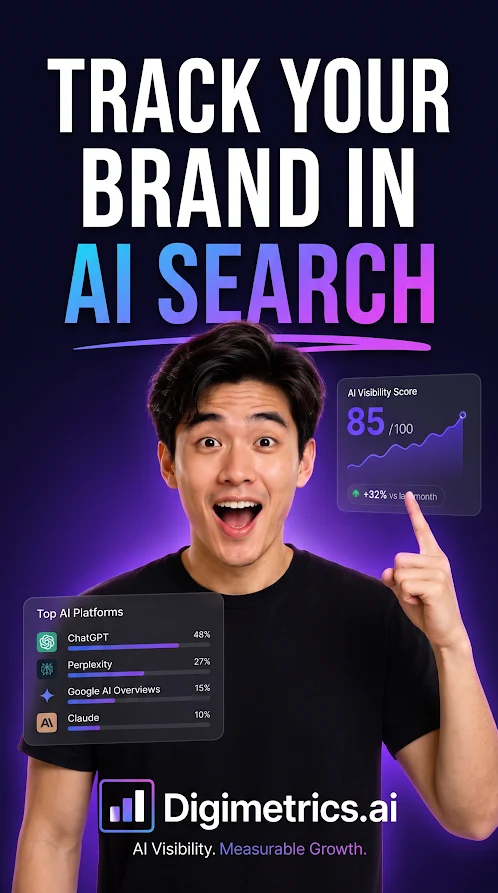
Step#1: Copy Relevant Topics from AI Overview

Source: Slide 55 of Slide Presentation for “LOSING HALF YOUR CLICKS TO GOOGLE’S AI OVERVIEW?”
A lot of us use AI writers, whether SurferSEO, Neuronwriter, or prompts on LLMs like ChatGPT. However, in doing so, a lot of us are also getting the same kind of topics. We should attempt to re-angle and re-hash existing ranking topics for a given search query. That way, we’re not just writing the same exact thing as our search-term competition.
Also, that way, we’re not directly competing against those with higher DA sites.
Step#2: Making Potent Content for Your Shortlisted Topics

Give better answers from your own perspective, other than generic, generated answers. Providing uniqueness and specificity in your responses nets points with people, search algorithms, and AI crawlers.
Additional tip: Adding media, such as videos and infographics, helps to illustrate a point better, thus making AI crawlers better able to pick up your response around that media asset.
Step#3: Smart Placement of Content

Source: Slide 57 of Slide Presentation for “LOSING HALF YOUR CLICKS TO GOOGLE’S AI OVERVIEW?”
Rule of Thumb: make sure to hammer in the 1st to 4th sections of your blog.
Though ideally, the entire blog should be fully chiselled and hammered out. However, if you’re pressed for time and have to choose which particular area to reinforce your raft, choose the 1st to 4th sections. That’s because AI Sections prefer picking from anywhere from the 1st to the 4th section of a blog, denoting the order of headers with importance.
So, make sure these respective sections of your blog are detailed, informative, and provide the most relevant information pertaining to the subject matter. For a more detailed step-by-step for scaling GEO-focused content, Tom provides his practical insights through the unfiltered webinar.
Catch the replay here.
Leveraging Trends and Opinions

Source: Slide 58 of Slide Presentation for “LOSING HALF YOUR CLICKS TO GOOGLE’S AI OVERVIEW?”
Trends and opinions are those which are swayed and influenced by public tastes, discourse, and subjectivity.
If your company is the type to benefit from trends, perhaps you’re a video game publisher or a music producer, you may want to publish on forums, such as Reddit and Quora, in addition to your company website.
You cannot typically build backlinks from these places as a general rule, however. The moment the moderator sniffs your promotional intent, you can get banned. Instead, talk loosely about your brand, and be sure to mention other relevant brands as well to avoid suspicion.
Monitor and Experiment
Proper improvement is iterative—constantly improving and testing what works. The only way you can truly test results is to monitor your GEO performance. Though most SEO tools widely used today already have GEO measuring functionality. We’ve listed the ones that specifically have GEO measuring included:
| TOOL | MAIN FEATURES | PRICING (USD)* |
| Otterly.ai | Tracks Google AI Overview citations; Monitors visibility in AI search; GEO optimisation insights; Competitor tracking; Exportable reports | From $29/mo |
| Ahrefs | Keyword rankings; Backlink analysis; Competitor research; Traffic estimates; SERP feature tracking | From $129/mo |
| WorkDuo | Monitors AI search engine results (ChatGPT, Perplexity, Bing Copilot); Detects brand mentions in LLM outputs; Competitive positioning tracking | From $100/mo |
| Nuggts | Real-time monitoring of AI-generated responses; Detects how your content is paraphrased or cited; Trend analysis | From $50/mo |
| SEOClarity | SEO platform with AI search tracking; SERP feature visibility; Competitive intelligence; AI integration insights | Custom pricing |
| Perplexity Analytics Pro | Tracks citations of your domain in Perplexity AI answers; Topic trends; Question frequency data | From $20/mo |
| MarketBrew AI Search Simulator | Simulates AI-driven search rankings; Predictive modeling; Content optimisation suggestions | From $49/mo |
| Profound | Profound is an enterprise-grade AI visibility platform that tracks and optimises how brands appear across AI-powered search and answer engines offering insights, citation tracking, and strategic content recommendations. | From $499/mo |
Be sure to speak with a sales agent for a free demo with any of these programs and see which best suits your current capacity and needs.
What is the Next Step in Evolution?
Despite the increased use of AI-based search, we don’t see search engines’ traditional organic search disappearing anytime soon. If anything, search engines as a whole will only evolve with the power of AI.
Furthermore, many SEO practices still apply to optimising for AI crawlers, such as observing E-E-A-T, providing short yet descriptive answers for question-based headers, and externally linking to relevant text.
Authority will still remain king. AI knows its limitations, especially with respect to critical industries such as healthcare. It’s imperative, therefore, that we have generative AI refinement processes—relying on human knowledge and discernment for AI audits—to maintain the quality of our outputs. Especially with regards to something as technical as the healthcare sector.
Catch the full webinar replay here.