| AI Summary
Fake Instagram likes are artificial reactions that make a post look more popular. They can distort campaign reports and breach Instagram’s rules on artificial engagement. Singapore businesses can review suspicious spikes by checking when the likes arrived, how people found the post and whether other activity changed. Long-term growth comes from publishing content for the right audience and tracking actions such as saves, shares, enquiries and bookings. |
What are fake Instagram likes? Fake Instagram likes are reactions added to inflate a post’s like count. They can come from bots, paid accounts or organised exchanges. A sudden spike is a reason to check the post’s reach, traffic sources and other interactions. A like count alone cannot show whether the reactions were bought.
Key Takeaways
- A spike deserves a closer look when several signs appear together. A creator share, an ad or a mention from a community page can also explain a jump.
- A like count can look strong while bookings or enquiries stay flat. Each post needs a measure that matches its job.
- A 90-day review works best when it includes ordinary posts as well as top performers. Similar posts give teams a fairer comparison.
- A paid campaign should show what the budget bought, who it reached and what people did next.
A café in Tiong Bahru posts its weekend menu. By lunchtime, the post has 500 likes. The team expects a rush of booking messages, but the inbox stays quiet. Did people enjoy the photos and move on? Did an account share the post with people outside the area? Or did artificial likes inflate the count?
Those questions lead to different decisions. A café that reached people outside its delivery area might change how it promotes the next post. A café that received fake Instagram likes needs to flag the spike before using that post to plan its next campaign.
Why Fake Instagram Likes Backfire
Likes are easy to see, so they often stand in for popularity. A business might buy them before a launch or pay a supplier who promises a fixed number of reactions. A free-likes service can also offer reactions in exchange for activity on other accounts. In both cases, the arrangement explains why the count rises. It tells the business little about interest in the post.
A real person can give an artificial like. Someone may tap the heart to earn points in an exchange or meet a paid task. Research on fake likes on Instagram distinguishes between the account and the action. The same person can like one post out of interest and another as part of a paid arrangement.
What counts as artificial engagement?
- Bot activity. Software uses accounts to add reactions automatically.
- Paid reactions. A supplier pays or directs people to react to specific posts.
- Like exchanges. Participants trade reactions to increase each other’s counts.
A paid Instagram ad works differently. The business pays for distribution, and the people who see the ad choose whether to react. A paid creator partnership can also bring real attention when the creator shares the post with an audience that cares about the topic.
How to use the Like Quality Check
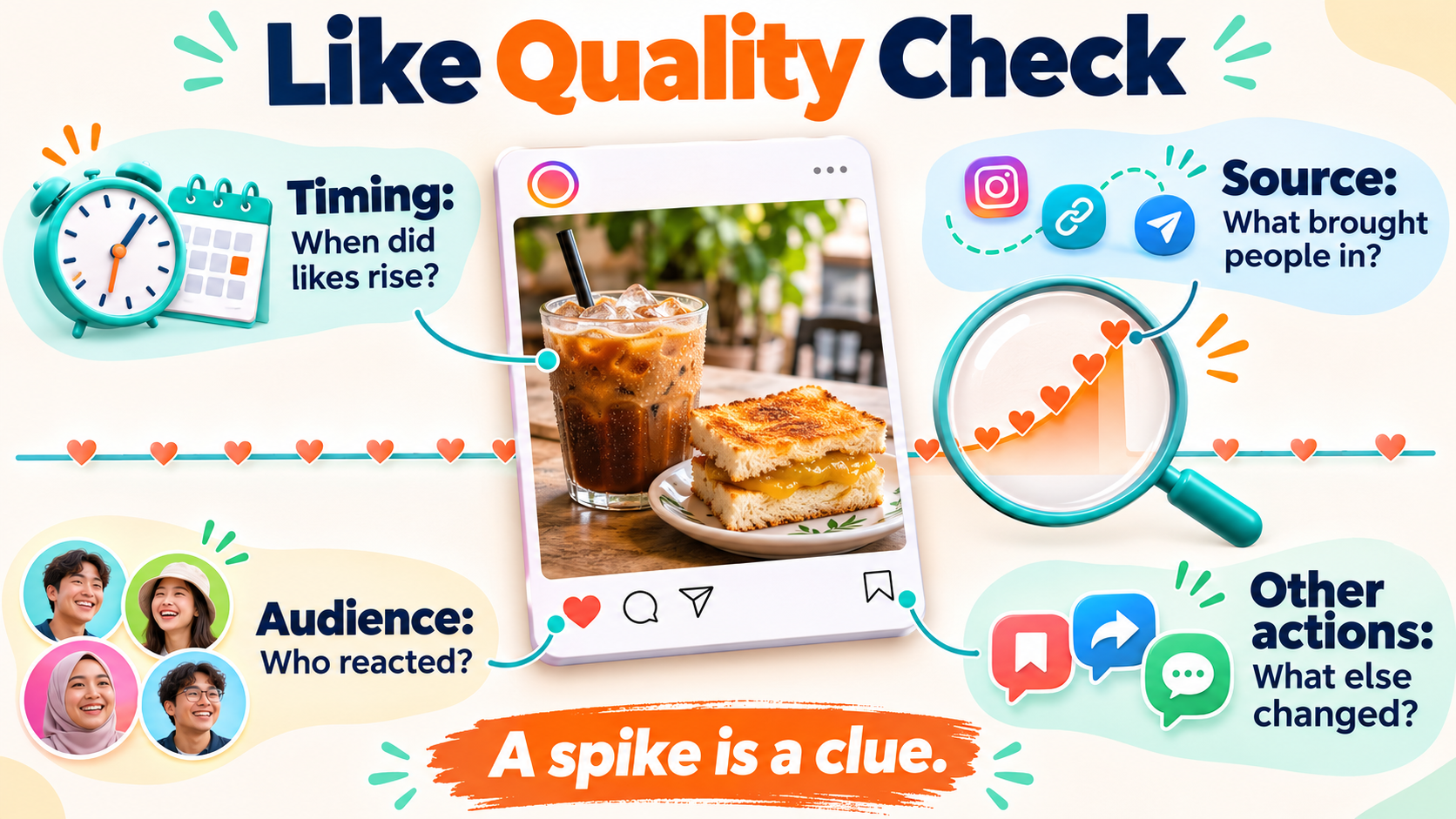
The Like Quality Check gives a team four questions to ask when a post jumps above its usual numbers. It works best when the team has access to the account’s own Insights and a record of what it promoted that week. Each answer can be marked as explained, unclear or worth checking.
| Check | What to look for |
| Timing | Did the likes arrive around an ad launch, creator share, news mention or event? |
| Source | Did the post reach more accounts than usual? Did the team or a partner send new people to it? |
| Audience | Do the profiles and public comments make sense for the post’s topic and intended audience? |
| Other actions | Did shares, saves, replies, visits or enquiries change in ways that match the post’s goal? |
A missing profile photo or a quiet account tells little on its own. People can use private profiles, follow many accounts or browse without posting. A batch of similar reactions deserves a closer look when it arrives at an unusual time and the team also finds little change in reach or other activity. Public profiles give an incomplete view of where people live and how they found the post.
A worked example from a Singapore café
Suppose the café usually receives around 60 likes on a menu post. Its new post receives 500 likes within an hour. The team checks its ad calendar, asks its creator partner whether the post was shared and compares the post with other menu posts of the same age. It finds no planned promotion. Reach is close to normal, and saves and menu taps are close to their usual levels.
The café can mark the spike as unexplained and show its campaign totals with and without that post. It can also keep the post in its records and note why it set the result aside. If a food page later confirms it shared the menu at the same time, the team has a new lead to check against the numbers.
What Instagram Does About Fake Likes
Instagram’s Community Guidelines tell users to avoid artificially collecting likes, followers or shares. The rule applies to the way the engagement is collected. A seller’s claims about real accounts, gradual delivery or free trials do not change the nature of the arrangement.
Meta has also taken action against sellers. In 2019, it announced a lawsuit against a service selling fake Instagram engagement and said it had previously suspended accounts linked to the defendants. In 2020, it announced further lawsuits over services that inflated likes and followers. These cases show action against suppliers. They give businesses no reliable basis for predicting what will happen after a single spike.
What likes can tell you about reach
A like is a quick reaction. A save may mean someone wants to use the post later. A share may mean someone thinks another person would find it relevant. Each action answers a different question, and the same action can have different meanings across posts.
Meta’s explanation of how it ranks content describes systems that use several signals and predictions. A business can learn more by comparing the actions that suit the post’s job than by assigning a fixed value to every like or save. For a café menu, saves can show that people wanted to keep it handy. A menu tap or booking gives the café a closer measure of intent.
What to do if your business has already bought likes
- End the arrangement. The person who manages the account can cancel any recurring orders and record the posts and dates involved.
- Secure the account. If the supplier received login details, the account owner can change the password, review active sessions, remove access the business no longer needs and turn on two-factor authentication.
- Check Instagram’s own notices. Account Status and in-app messages can help the team see whether Instagram has flagged content or limited features.
- Correct reports that used the affected results. A dated note lets the team explain the change to managers, clients or sponsors who received the original figures.
The next few posts can give the team a fresh set of results to compare. Older posts can stay in the record with a note beside affected figures. That gives a new account manager enough context to understand why certain posts sit well above the usual range.
How Fake Likes Distort Reports and Sponsor Decisions
A padded count can change what a team funds. A brand might repeat an offer because its post looked popular, or a sponsor might overestimate how many people care about a creator’s content. The effect is easy to miss when the report puts one number in a large box and gives little space to what happened after the post appeared.
Why two posts can tell different stories
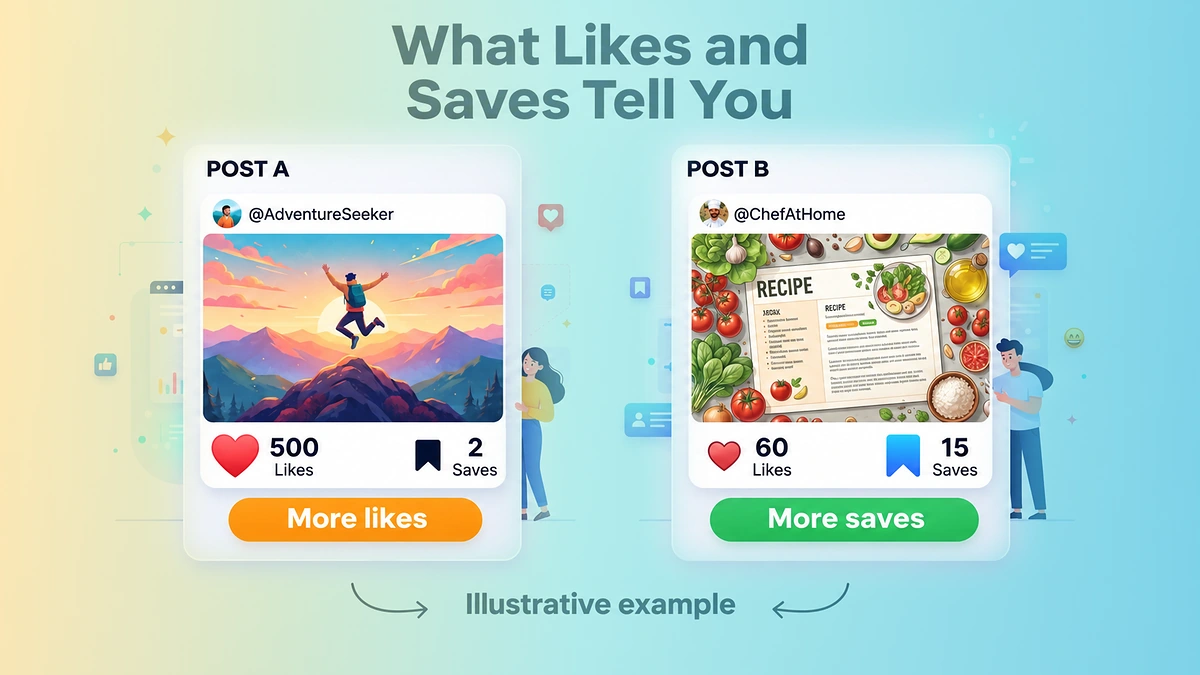
Picture two posts from an outdoor retailer. Post A shows a scenic lookout. It has 500 likes and two saves. Post B shows people how to pack for a day hike. It has 60 likes and 15 saves. The figures are illustrative. If the retailer wanted readers to keep the packing list for later, Post B recorded more of the action the team wanted.
The same example looks different if the job was to reach people who had never heard of the shop. The team would need reach data. If the job was to sell a daypack, it would look for product visits and purchases. The like and save totals cannot settle either question on their own. A broader Instagram marketing guide connects these content goals to the customer’s next step.
What sponsors should ask to see
A sponsor can ask a creator for recent post-level results, the dates they cover and the audience information relevant to the campaign. A skincare shop selling in Singapore might ask where the creator’s audience is based and how recent product demonstrations performed. A restaurant might ask how the creator will help viewers find the location or reserve a table. MediaOne’s Instagram influencer marketing guide covers how brands can plan and measure this work.
A screenshot works best when it shows the post and date range together. A sponsor can ask whether ads helped distribute the content, whether the creator used a link or code, and which results the creator can share at the end. Those answers help both sides agree on how to judge the work before money changes hands.
Singapore’s Competition and Consumer Commission explains that a supplier can engage in an unfair practice in a consumer transaction by making a false claim or doing something that could reasonably mislead a consumer. Separately, the Advertising Standards Authority of Singapore sets standards for social media marketing communications. Businesses can keep public claims tied to the results they can support and identify paid creator content as advertising.
How Singapore Businesses Can Earn Real Engagement
A post earns attention when it answers a question or gives people something they can use. A pet groomer can show what a first visit looks like. A bakery can explain when customers need to order a cake. A gym can show how a beginner class works. Each idea gives a particular audience a reason to watch, save or ask a question.
A practical Instagram marketing strategy for Singapore businesses links the audience, format and measure to the same goal. A small team can start with questions it already hears at the counter or in direct messages. It can then choose a format that makes the answer easy to follow.
Reels that answer a customer question
The first shot can show what someone came to see. A bicycle shop making a Reel about child seats might open with the seat mounted on a bike. The next shots can show where it attaches and which details the shop checks before fitting one. Captions can carry the explanation for viewers who keep the sound off.
A short video gives the shop a way to answer a question that is hard to explain in a photo. The ending can show one next step, such as sending the bike model for a fitting check. The shop can compare reach across similar videos and count messages that include a bike model if fitting enquiries are the goal.
Carousels and captions people can use
A carousel lets readers move through several images in one post. A café can use one slide for the weekend menu, another for the hours and a third for how to reserve. Each slide has one job. A caption can then answer a detail that did not need a slide, such as whether the café takes walk-ins.
Questions work best when the answer helps the business learn something. A bakery could ask which of two pickup windows would help customers who work nearby. The replies could shape the next schedule. A prompt that only asks people to leave an emoji offers less information about what they need.
Creator and customer content with a local purpose
A creator can show a product in a setting the brand rarely gets to film. For example, a cookware shop could work with a home cook who shows how a pan stores in a small kitchen and what a weeknight meal looks like in it. A brief can name the questions to cover, how to disclose the partnership and what the shop will measure after the post goes live.
Customers can also help explain how a product works in daily life. A brand can ask permission to share a customer’s photo or clip, agree on how to credit it and confirm which channels may carry it. A user-generated content strategy gives teams a way to manage that process when several people collect and publish the material.
A local service can name the neighbourhood or service area in the caption when it helps readers decide whether the offer applies to them. A few hashtags that describe the subject or place can support that context. A trend gives the team a reason to take part only if its own customers are likely to find the post relevant. That is also a practical way to assess social media trends before spending time on them.
Posting time is easier to test when the team keeps the topic and format similar. A café could compare two weekday lunch Reels posted at different times and check both after the same number of days. It can also consider when someone is available to answer replies. Meta’s Instagram Best Practices hub offers account-level tips in the professional dashboard.
How to Audit Instagram Engagement Over 90 Days
A 90-day review helps a business see which results it can use to plan. The team can group posts by format and goal, then note paid promotion, creator shares, events or other changes that may explain a spike. The most-liked posts are worth checking, along with several ordinary posts from each group.
An account with a mix of Reels, menus and product photos can use a simple sheet. Each row can list the date, format, topic, goal, reach and main action. A notes column can show when a creator shared the post or a campaign paid for distribution. The team can then judge its Instagram work alongside its wider social media marketing strategy.
Match each post to one main result
| Post goal | Main measure | Question it answers |
| Help new people find the business | Non-follower reach, when available | How many people outside the current audience saw it? |
| Give people something to keep | Saves | How often did people save it for later? |
| Start a sales conversation | Relevant enquiries | How many people asked about price, dates or availability? |
| Turn interest into a booking | Confirmed bookings tied to the post | How many bookings can the team connect to it? |
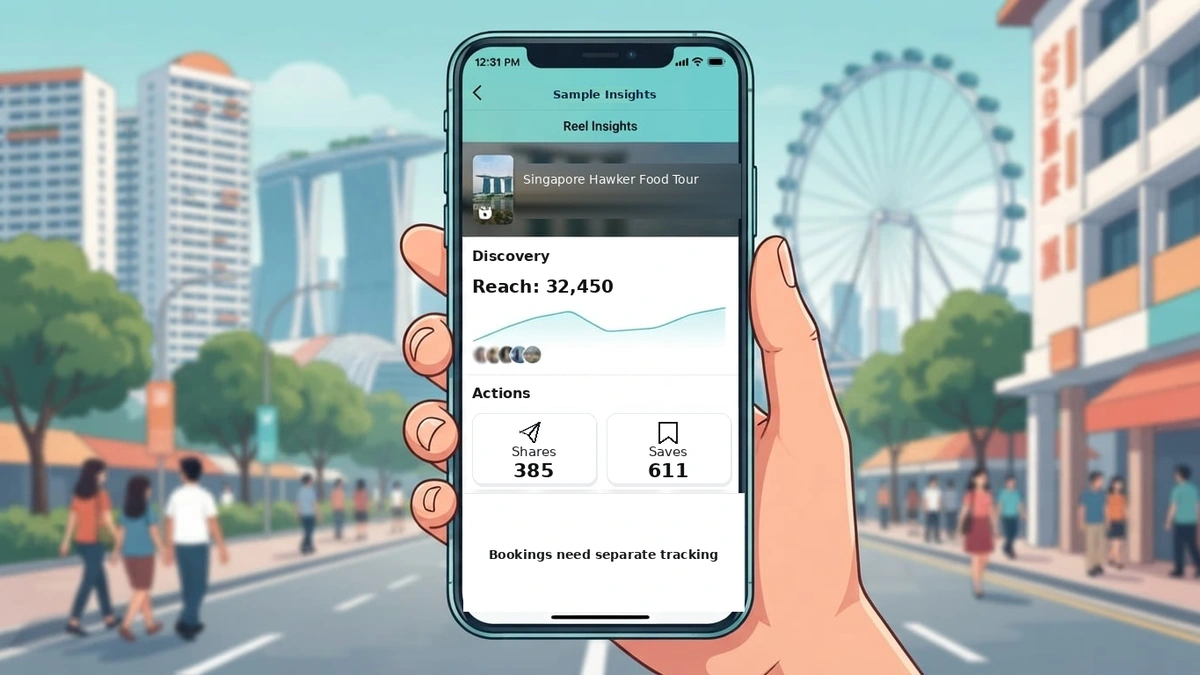
A Reel from a hawker food tour offers a simple example. Suppose the Reel reaches 32,450 accounts and records 385 shares and 611 saves. Those are sample figures. Reach is the first number to check if the goal was discovery. Saves are closer to the goal if the Reel was meant to help people plan a visit. A booking campaign would need a booking record or another way to trace the action.
Compare similar posts at the same age
A two-day-old Reel and a six-week-old Reel have had different amounts of time to collect views. The team can choose a point such as seven days after posting and use it for every post in the test. If earlier records are missing, the team can start that comparison with new posts and use the older numbers as background.
One way to compare save activity is to divide saves by accounts reached and multiply by 100. A menu post with 15 saves and 600 accounts reached has 2.5 saves per 100 accounts reached. A second menu post with 20 saves and 1,600 accounts reached has 1.25. The second post recorded more saves overall. The first recorded more saves for the reach it received. Both numbers help explain what happened.
Use the review to choose the next test
A business can pick one change for its next round. A café could compare a Reel that opens with the finished dish with one that opens with the menu board. A retailer could test two captions that answer different questions about the same product. The team can hold the offer and format steady where possible and agree on the measure before either post goes live.
A small test can point to a better question for the next round. If the finished-dish Reel gets more views but fewer menu taps, the café can check whether people understood when the dish was available. The next video could put the serving days on screen early and track menu taps again.
Build an Instagram Audience That Can Become Customers
A small business can start with one offer and one customer question. A florist that wants more weekend orders might show three bouquet sizes in a Reel, put the pickup hours in the caption and record how many people ask to reserve one. That gives the team a result it can use when it plans the next weekend’s stock and content.
Businesses that need help connecting posts, paid campaigns and sales reports can work with MediaOne’s social media marketing team to build a campaign around the audience they want to reach and the customer actions they want to track.
FAQs About Fake Instagram Likes
Can a competitor send fake likes to my Instagram posts?
An unexplained spike does not reveal who caused it. A business that suspects outside activity can keep the post URL, screenshots and timestamps, then use Instagram’s in-app reporting tools if it sees suspicious accounts or messages. Those records give the team something specific to share if it later receives an account notice.
Should I delete a post that received suspicious likes?
The post can stay up if the content still serves customers. Deleting it can also remove genuine comments, replies or product details people return to. A business can keep a copy of the post data and flag the affected numbers in its report before deciding what to do with the post itself.
Can a public engagement checker prove that likes were bought?
A public checker can flag unusual ratios or repeated patterns. It sees less than the account owner, who may have post-level reach, ad records and details about creator shares. For a sponsorship decision, recent figures from the creator and a short explanation of any unusual post give the buyer more context than an automated score alone.
What should an agency contract say about Instagram engagement?
The contract can state that the agency and its suppliers may not buy or trade likes, followers or comments. It can also set out who owns the account, who approves ad spend, how reports show paid distribution and what records the agency must share if unusual activity appears.
Will hiding public like counts fix an inflated report?
Hiding a like count changes what visitors see on the post. A report that used the inflated figure still needs a correction. The team can update the report, note which post was affected and keep the original date range so readers can compare it with earlier reports.