| AI Summary
An Instagram marketing strategy connects each post to a business goal. Singapore businesses can use a Goal, Audience, Format and Metric matrix to plan content for discovery, product research, enquiries or sales. A four-week test helps teams compare results, find where customers lose interest and decide which posts to make again. |
An Instagram marketing strategy is a plan for reaching specific customers and getting them to take a measurable action. It starts with one business goal and one audience. Each post then gets a format, such as a Reel or Story, and a metric, such as reach, website visits or completed bookings.
Key Takeaways
- A bakery that wants more weekday pre-orders needs different posts from one trying to introduce a new outlet.
- A post can do its job even if it gets few likes. A saved sizing guide and a completed order tell you different things.
- One product shoot can supply a demo, a comparison post and a Story. Each piece can answer a different customer question.
- A weekly check can catch a broken booking link or missed message before the month ends.
- Paid ads and creator partnerships are easier to assess when the team already knows what a worthwhile enquiry or order looks like.
A customer sees your Reel at lunch, checks your profile on the train and sends a message that evening. Your Instagram marketing strategy has to work at each of those moments. The video gives them a reason to look. The profile answers their next question. The reply helps them decide what to do.
That sequence is easy to plan once you know what you want Instagram to do for your business. The four-week example below follows a neighbourhood bakery, with examples for service businesses and shops along the way.
1. What Can Instagram Do for Your Business?
Instagram can help people discover a business, compare products or services, and take a step towards buying. It can also answer practical questions before someone makes a trip. A bakery can show where to collect an order. A tuition centre can show what pupils do in a trial lesson. A furniture shop can show how much room a table takes up when it opens.
DataReportal’s Singapore report puts Instagram’s potential ad audience at 3.5 million in late 2026. The figure estimates how many people ads could reach. It measures a different thing from monthly active use, and your business may serve a much smaller group. For a shop with one outlet, a few people who can collect an order nearby can be worth more than thousands of views from overseas.
Instagram earns a place in your wider social media strategy when you can show what you sell and give interested people a next step. These three questions help you decide where to put your time:
- What can people see? A sample lesson, product demo or look at the space can answer questions that a short description leaves open.
- What do people need to know before buying? Price, pickup times, delivery areas or what comes in a package can shape the decision.
- What can a customer do next? A menu, booking form or monitored inbox gives them somewhere to go once they are ready.
2. How to Set a Goal and Find Your Audience
One goal for the next four weeks
Your goal should describe what you want to change. A new salon may need more people nearby to learn it exists. An established salon with empty Tuesday slots may need bookings for that day. Both can post a short video, but the first may show where the salon is while the second shows what customers can book on Tuesday.
| If the business needs more… | The goal is… | The main number to track |
| People to discover the business | Awareness | Accounts reached, with non-follower reach where available |
| Buyers to compare or remember an offer | Consideration | Saves or shares, depending on the post |
| Visits to a menu, shop or booking page | Website traffic | Website visits from Instagram |
| Trial requests, quotes or appointments | Enquiries | Enquiries that meet your criteria |
| Paid bookings or purchases | Sales | Completed bookings or orders you can trace to the campaign |
A target is easier to set when you have a starting point. If Instagram brought six trial requests last month, use that number when deciding what you want from the next four weeks. If this is your first campaign, the first month can give you a starting point for later comparisons.
An audience based on real customers
Your followers and buyers can be different groups. A bakery may have followers who enjoy cake videos from anywhere, while its weekday customers mostly collect near work. Instagram Insights can tell you about the people who see or interact with your account. Order records and enquiries can tell you who actually buys and what they ask before paying.
Three sources can help a small team write an audience profile:
- Sales and booking records show which offers people buy, where they collect and when they book.
- Customer conversations reveal the questions people ask about price, timing, size or delivery.
- Post results show which topics earn saves, replies or shares. The wording in those replies can also give you ideas for future posts.
A first audience profile can be one sentence. For the bakery, it might be “Office staff near Tanjong Pagar who need a box of pastries for a weekday meeting and want to know the price and pickup time before ordering.” That sentence gives the team something concrete to film and write about.
3. How to Use the Goal, Audience, Format, and Metric Matrix
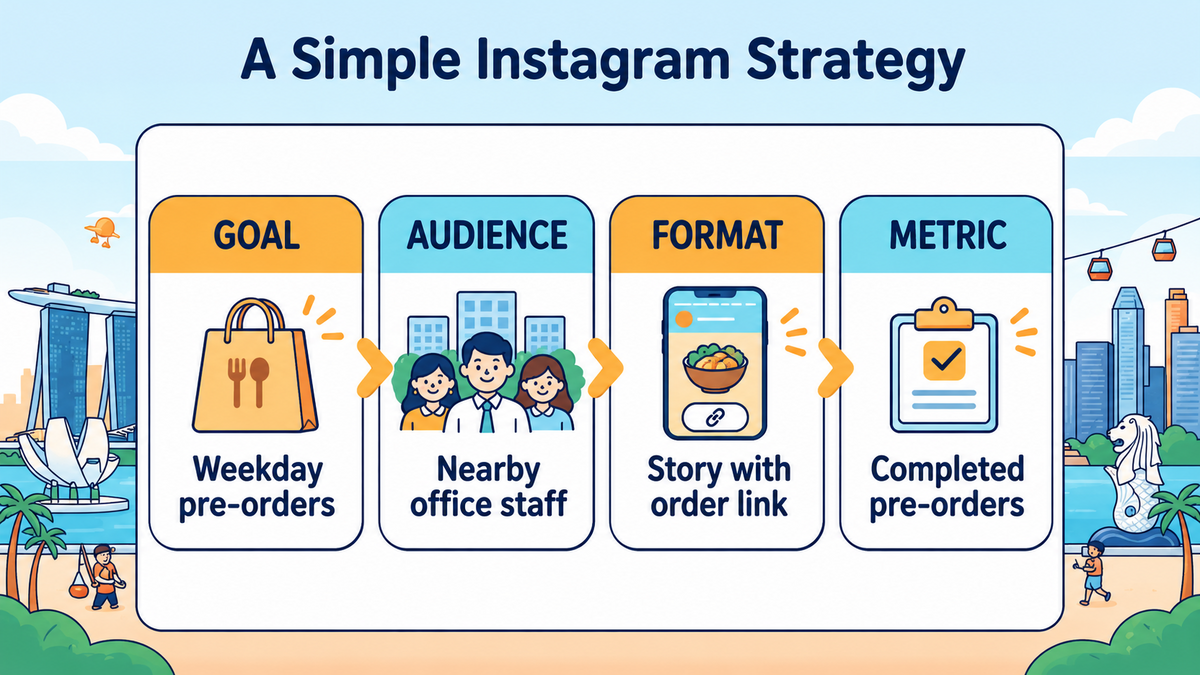
The Goal, Audience, Format and Metric matrix, or GAFM matrix, gives every planned post a job. Goal names the result you want. Audience names the person the post is for. Format is how you tell the story. Metric is the number you use to judge that post. The matrix can sit inside the same spreadsheet as your social media content calendar.
| Goal | Audience | Format and post idea | Main metric |
| Awareness | Nearby workers who have yet to visit | Reel showing the bakery entrance and what goes in a pastry box | Non-follower reach, where available |
| Consideration | Office organisers comparing options | Carousel showing three box sizes and how many people each serves | Saves |
| Website traffic | Shoppers checking price and availability | Story with a link to the weekday order page | Website visits from the Story link |
| Sales | Buyers ready to order for a meeting | Story with the order deadline and pickup window | Completed pre-orders attributed to the campaign |
The first row and the last row serve different people. The Reel helps someone recognise the shop and picture what it sells. The final Story helps someone who already knows what they want place an order. A smaller audience can still make that final Story worthwhile if enough people buy.
How one idea becomes several posts
One shoot of the bakery team packing an order can give you three pieces of content. The Reel shows the box opening so a new viewer sees what is inside. The carousel uses photos from the shoot to compare the sizes. The Story pairs a photo with the order deadline and link.
The same approach works for a service. A dance studio might film a short clip of the room, make a carousel about what to bring and share a Story linking to a beginner class. A customer can learn something new from each post, even when all three came from the same shoot.
4. How to Set Up an Instagram Profile That Helps Customers Buy
A profile has a few seconds to explain what the business offers. A buyer who finds a product in a Reel should be able to tell whether you sell it, where you serve customers and how they can get it. The same details should appear on the page they reach after tapping the bio link.
| Profile element | What it should tell visitors |
| Name and handle | Who you are, using a name customers can recognise and search |
| Bio | What you sell, where you serve customers and what someone can do next |
| Main link | Where to order, book, view prices or find the details your posts promise |
| Story Highlights | Answers people need often, such as delivery, collection, prices or class times |
| Contact details | How to reach the business and when someone is available to reply |
A profile check from a customer’s phone
A bakery bio could say “Pastry boxes for office meetings. Weekday pickup near Tanjong Pagar MRT. Pre-orders below.” A visitor who taps through should see box sizes, prices and pickup times near the top of the order page. If they land on a homepage with several products and have to search for the box, the extra taps give them more chances to leave.
The same check helps service businesses. A tuition centre promoting a trial class can link to the page with the age group, class times and booking form. A customer who arrives from a Story should see the class they just tapped on.
A reply that helps people decide
A message about pricing is an opportunity to answer the question and help the person take the next step. If someone asks whether a box serves eight, the bakery can name the size, state the price and share the order page. If the buyer needs a custom order, one follow-up question about the date or group size may be enough.
A small team can build this work into its social media management routine. One person can check messages at agreed times. A short set of saved replies can cover collection, delivery and booking details, with room to personalise each answer.
5. Which Instagram Formats Should You Use?
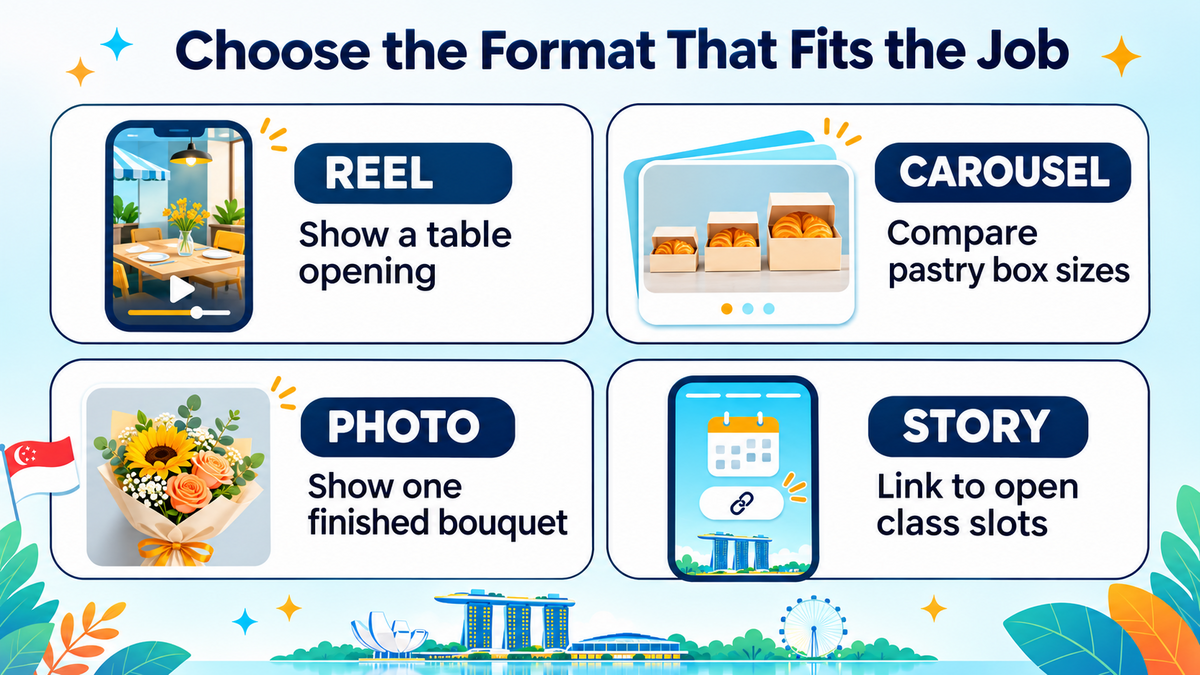
Reels, carousels, photo posts and Stories can all explain an offer. The best format depends on what the customer needs to see or do. Meta describes different ranking systems across Instagram, so a post’s results can vary by where it appears and who sees it.
| Format | When it helps | Singapore business example |
| Reel | People need to see something in motion | A furniture shop shows how a dining table opens in a small flat |
| Carousel | Buyers need to compare options or follow steps | A bakery shows what comes in each box size |
| Photo post | One strong image can answer the question | A florist shows how a standard bouquet looks in someone’s hands |
| Story | People need an update, a reply or a link | A dance studio shares open class slots and links to booking |
Reels that show the point early
The first few seconds should give viewers a reason to stay. A video about a fold-out table can open with the table changing size. The caption can then give the dimensions and say where customers can see it. A long opening shot of the storefront would make the customer wait for the part they came to see.
Captions on spoken videos and descriptive alt text on images help more people follow the post. For a bakery photo, “Open box with six croissants and six fruit pastries” tells someone using a screen reader what the photo shows.
Stories that answer a question or offer a next step
A Story can show what is available today, ask which design people prefer or answer a question that came up in messages. Instagram’s Story link sticker can take someone straight to an order or booking page. A Story about an order deadline can show the date and time on screen and label the sticker “Order pastry boxes” so the destination is easy to understand.
A weekly post mix can be small. Two posts that answer common buying questions can give the team more to learn from than five posts about unrelated offers. MediaOne’s Instagram marketing guide covers how the formats work together when a business is ready to expand its mix.
Search terms people would use
Instagram’s explanation of search identifies search text as one of the signals it uses. A profile name and caption can describe the product and the area it serves in words customers already know. “Pastry boxes for office meetings in Tanjong Pagar” tells people more than “Something special for your team.”
The terms should match what the post delivers. If a florist only delivers in certain areas, the caption can name those areas. A business can use relevant hashtags when they describe the post. The caption should still make sense on its own, and each post can use the wording that suits its subject.
Customers often send posts when the information helps someone else make a choice. A price comparison can go to a colleague planning a meeting. A Reel showing where to find a café can go to a friend arranging lunch. A post earns that share by giving the recipient something they can use.
An Instagram Collab post gives two businesses or creators a way to co-author a post after the invite is accepted. A bakery and a nearby coffee shop might share a Reel about a joint breakfast set. Each team should know where customers order and who will reply if someone asks about pickup.
7. When to Use Creator Partnerships or Instagram Ads
A creator whose audience can act on the offer
A creator partnership makes sense when the people watching can visit, book or buy. A neighbourhood café can ask a creator what share of their audience is in Singapore and look at comments on similar posts. Questions about location or price show what viewers want to know. A follower total alone cannot tell the café whether people can visit.
A written brief for an Instagram creator partnership can cover the offer, the format, posting date, review steps and any permission to reuse the content. A distinct link or code helps tie some orders to the partnership. The Advertising Standards Authority of Singapore’s social media standards cover disclosure for sponsored content. A viewer should be able to recognise a paid partnership when they see the post.
An ad test with a defined result
A small paid test can help when the business has an offer, a page that works on mobile and a way to count results. For a workshop, the ad can show a real class and lead to a page with the next date, price and booking form. Meta’s campaign objectives help match the ad setup to the result the business wants.
The test budget should come from what a booking or order is worth. If a workshop earns S$35 per booking after direct delivery costs, spending S$40 on ads for each booking would leave a S$5 loss before other costs. A low cost per click cannot fix that gap. Instagram advertising costs make more sense when you compare them with the cost of getting a customer.
8. A Four-Week Instagram Marketing Plan for a Small Team
A four-week plan gives a team enough structure to make posts, track a result and decide what to test next. The example below uses a bakery that wants more weekday pastry box orders. Its team can film in one session and check orders alongside Instagram results.
| Week | What the bakery does | What it checks |
| 1 | It tests the order page on a phone and posts a Reel showing what is inside a box. | It records its starting number of weekly pre-orders and checks who the Reel reaches. |
| 2 | It posts a carousel comparing box sizes and answers a common pickup question in Stories. | It tracks saves and notes new questions that come in by message. |
| 3 | It shares a Story with the order deadline and a link to the box page. | It records website visits and completed orders linked to the campaign. |
| 4 | It repeats the most relevant post idea with one change, such as showing the price earlier. | It compares the same metric across the two posts and checks for changes in orders. |
Time for making posts and answering people
A weekly planning session can cover the next post, the person who will film it and who will check the facts before it goes live. Filming in batches helps on busy weeks. The person handling orders can tell the team when an item sells out so an old Story or pinned offer does not keep sending people to it.
A test works best when the team can say what it changed. If Week 4 has a new price, a new format and a different audience, the team has several explanations for any change in results. One change gives it a better basis for deciding what to try again. A quiet week or a public holiday can still affect results, so a few similar tests can tell you more than a single post.
9. How to Measure Results and Decide What to Change
Instagram Insights shows what happened on Instagram. Website analytics and sales records show what happened after someone left the app or got in touch. A social media insights report can bring those numbers together, with a short note on what the team will test next.
A campaign tag on a website link helps Google Analytics identify visits from a promotion. A business can use a consistent campaign name for weekday pastry boxes and distinguish a bio link from a Story link. The bakery can also log orders that come through messages. Some people will see a post and order later through a different channel, so recorded orders show the sales the team can trace.
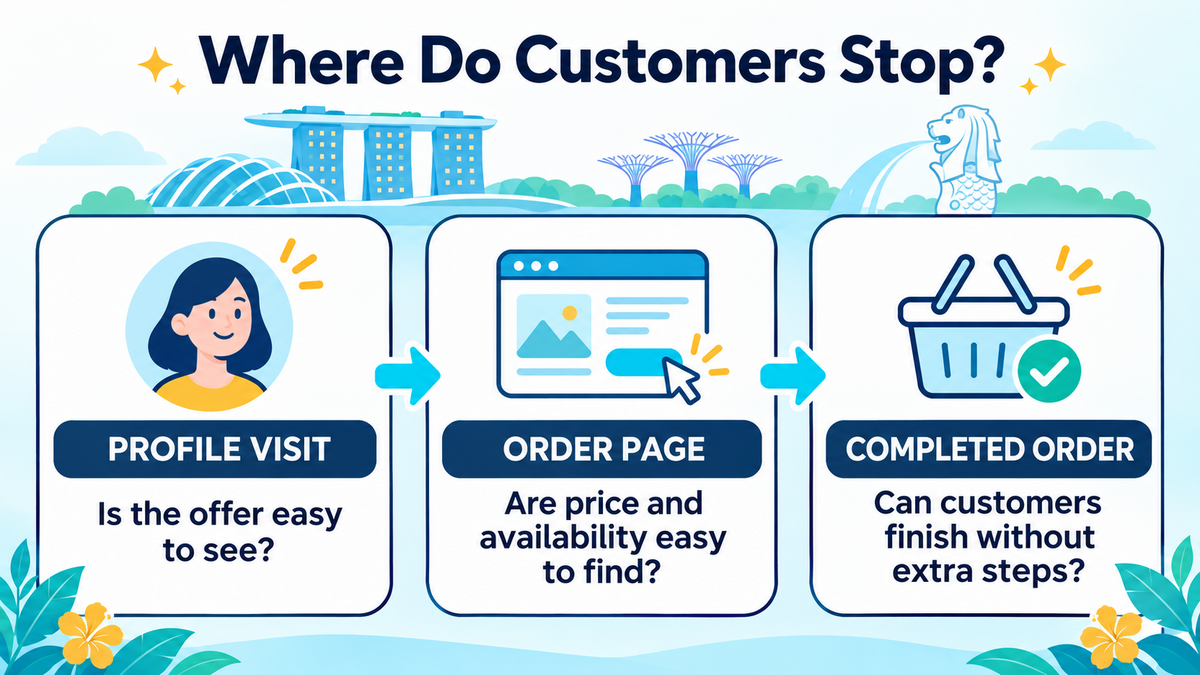
| What you see | What to check first |
| A Reel reaches people, but profile visits stay low | The offer may need to appear earlier, or the viewer may need a reason to see more. |
| Profile visits rise, but website visits stay flat | The bio link may be hard to find or take people to a different offer. |
| Website visits rise, but few people order | The page may leave out delivery fees, stock, pickup times or other details buyers need. |
| Enquiries rise, but few become bookings | The offer may draw people outside your service area or price range, or replies may come too late. |
A monthly review should end with a decision the team can use. If the bakery gets several questions about the order deadline, it can put the deadline earlier in the next Story. If visitors reach the order page and leave when they see a sold-out size, the team can check stock and page updates before it spends more time filming.
Your First Four Weeks on Instagram
Your first month can start with one offer customers already ask about. A business that wants more bookings can build a few posts around the questions people ask before they book. The results can show whether people need to see the service in action, understand the price or find a simpler way to book.
If your team needs help connecting content, ads and reporting, MediaOne’s social media marketing team can help plan a campaign around the customers you want to reach and the results you need to track.
FAQs About Instagram Marketing Strategy
Can a B2B company use Instagram to support sales?
Yes. A B2B company can use Instagram to show what clients would otherwise have to imagine. A commercial printer might show how it checks colours or packs a large order. A buyer can use those posts to learn how the supplier works before making an enquiry.
Should a Singapore business post in more than one language?
More than one language can help when customers often ask questions or place orders in those languages. A business might keep the main caption in the language most buyers use and add a short translation of the offer, price or deadline. Customer messages can help the team decide which details to translate first.
Should each outlet have its own Instagram account?
One account can work well when outlets share a menu, offers and brand. Separate accounts can make sense when branches run different events, keep different hours or have teams that can manage their own updates. The decision depends on how much local information customers need and who can keep it current.
Which posts should a business pin to its Instagram profile?
Pinned posts can answer questions people have on their first visit. A studio could pin an introduction to its classes, a guide to finding the venue and a post explaining what happens in a trial. A time-limited offer can occupy a pinned spot while it is live, then give way to a post that still helps visitors.
What can a business post if customers prefer to stay off camera?
A business can show tools, products, the space or a task performed by a staff member who agrees to appear. A tailor can show a sleeve being shortened. A florist can film a bouquet from above while arranging it. These examples show how the work gets done while giving customers their privacy.