Business blogging is publishing articles on a company website to attract search traffic, answer buyer questions and move readers toward an enquiry. It suits small businesses selling services or products to people who research before they buy. It works when run as a lead-capture and authority asset with a measurable purpose, and the content should be built around the questions buyers actually ask. HubSpot reports that headlines ending with a bracketed clarification performed 38% better than titles without that clarification, which shows how small editorial choices can shape search results.


Most Singapore SMEs should stop publishing on a fixed schedule and instead maintain a small set of high-value blogs, updated and linked to their services. A blog that cannot name the enquiry it is meant to produce is a cost, not an asset.
Key Takeaways
- A business blog needs a clear purpose: capturing leads, building authority, or both.
- Score planned posts on search intent and business role, prioritising commercial posts.
- HubSpot reports that headlines with a bracketed clarification perform 38% better than those without.
- Fewer purposeful posts usually outperform a high-volume calendar.
- Track organic sessions and enquiries from blog pages, then refresh or prune underperformers quarterly.
- Give every post a clear next step.
Why a Business Blog Needs a Job, Not Just a Publishing Habit
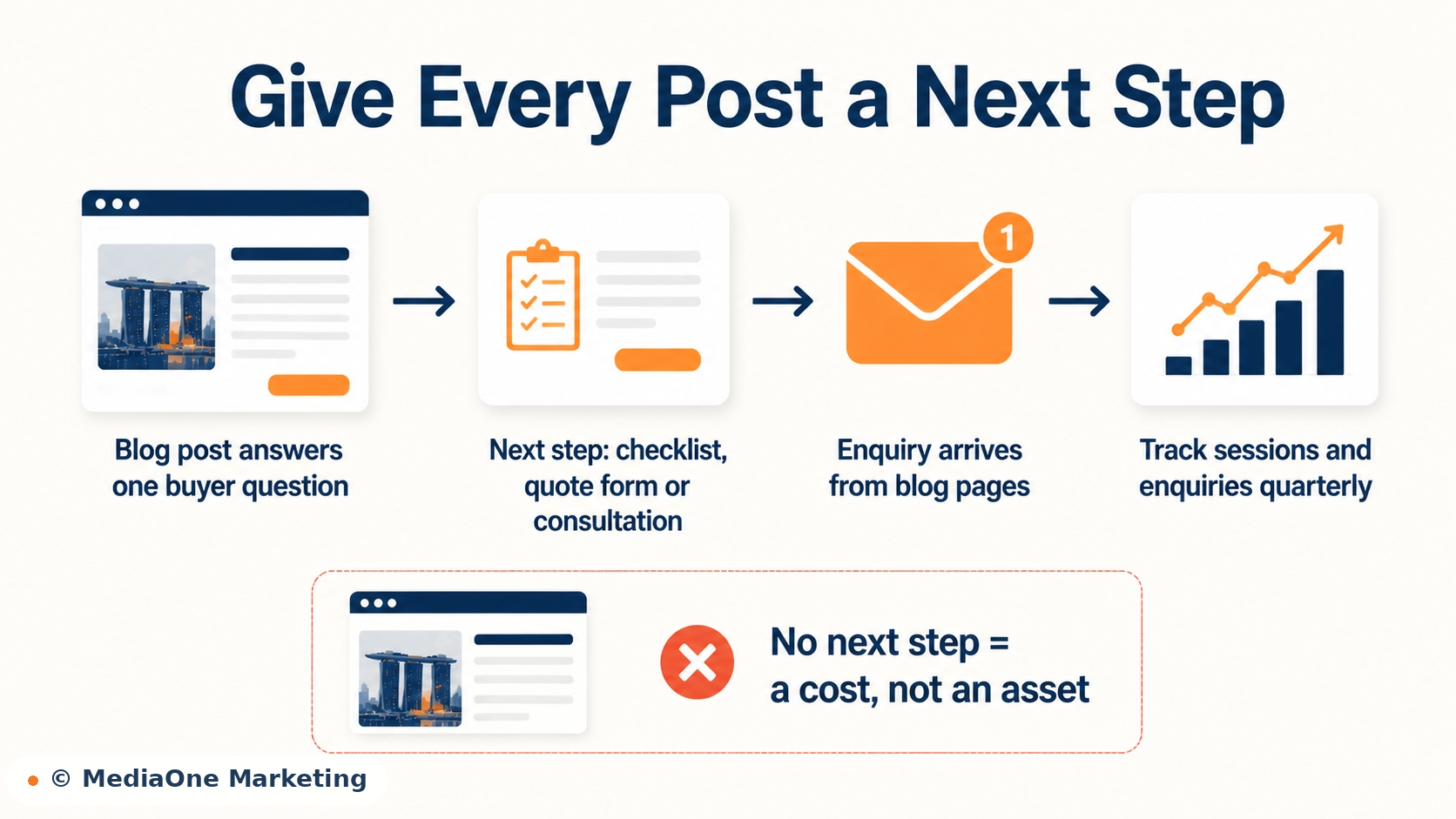
Many small businesses in Singapore start a blog because it looks like a sensible marketing habit. The common advice is to publish more often, but volume alone does not explain results. A blog earns its keep only when each post has a defined purpose tied to a business outcome, and that purpose should be set out before the first post is written.
Test this claim yourself. Pick ten posts from your site and ask whether each one names a reader problem, a next step and a measure. If most cannot, more posts will not fix the gap. Posts without a job rarely rank, rarely convert, and consume hours that could go elsewhere.
HubSpot’s guide to starting a blog names website, blog and SEO work among the strongest return drivers, but that return depends on running the blog as part of a wider content marketing plan. Posts that feed an email marketing list give the blog a route to repeat readers, and writing with a clear audience in mind makes each post easier to target. Posts can also be shared on social media to reach readers beyond search engines, and each post should be created with a clear reader problem in mind.
What makes a business blog different in practice
A business blog is a company-owned publishing channel with a brand voice, an approval path and a clear commercial aim. It needs a named owner, a review cadence and a call to action where the reader’s interest peaks. Keep it separate from a personal blog, because it speaks for the firm. A personal blog can be opinion-led and informal. A business blog must stay accurate, because a buyer may treat it as the company’s own statement.
The Blog Purpose Matrix
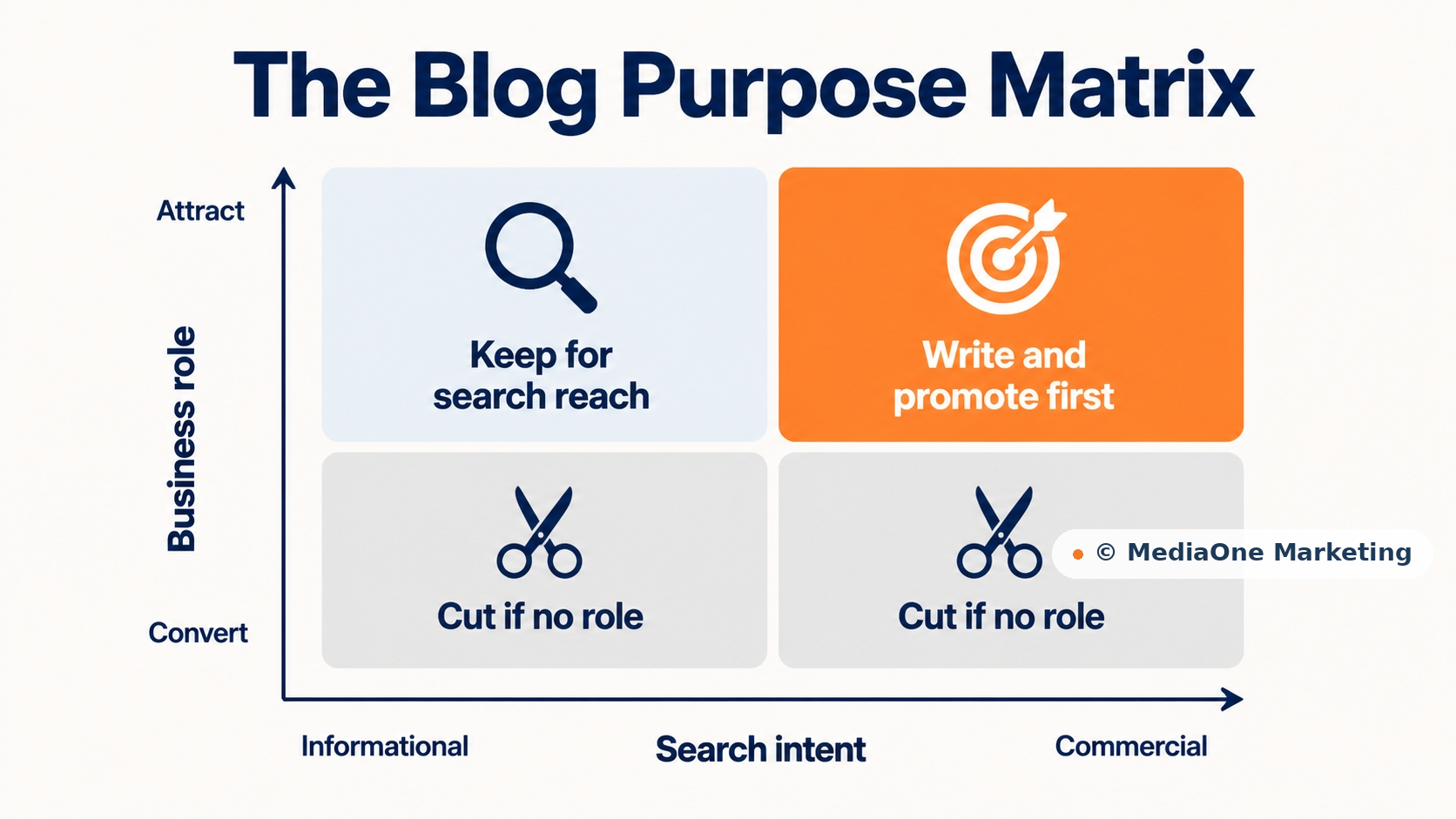
Score each planned post on two axes: search intent (informational, commercial or navigational) and business role (attract, educate, convert or retain). Then rank the posts this way:
|
Intent and role |
Decision |
|
Commercial intent, convert or educate role |
Priority: write and promote first |
|
Informational intent, attract role |
Keep for search reach and newsletter feed |
|
No clear role |
Cut |
Let length follow the job each post must do. HubSpot notes that blog posts range from about 800 to 3,000+ words. Teams can record each post’s intent and role in a simple tools spreadsheet to keep the log current, and review that log at a set time each month.
Many businesses stop blogging after a few months because nothing visibly happens, usually because they never set a goal. Give the blog a job first, and its results become easier to measure and learn from over time.
Worked example: scoring a Singapore accounting service
Take a small Singapore accounting firm offering corporate tax filing and bookkeeping. Each candidate post scores 1 to 3 on each axis, where 3 is the strongest fit for a commercial purpose. The firm can also check which of its service pages and products each post links to, so the blog supports what it sells.
|
Candidate post |
Search intent |
Business role |
Total |
Decision |
|
“Corporate tax filing checklist for a Singapore company” |
Commercial (3) |
Convert (3) |
6 |
Priority: write and promote first |
|
“What is a financial year end?” |
Informational (1) |
Attract (2) |
3 |
Keep for search reach and newsletter feed |
|
“Our office move and new team members” |
None (0) |
None (0) |
0 |
Cut |

The tax checklist ends with a quote form, so it is written first. The definition post stays because it brings readers who may later need the service. The office move post has no search intent and no role, so the firm does not publish it.


Why Businesses Maintain a Blog: Benefits for Websites and Growth
HubSpot’s guide to starting a blog reports that 27% of marketers name website, blog and SEO work as a top return driver. That figure is the only one this article relies on, and it appears here. Because many firms blog, the advantage comes from how well posts are planned and used. Every post should have a clear audience and purpose, and each should tie to one goal. The best tools for planning topics and tracking results make this easier to manage, and teams can create a simple editorial calendar to keep publishing consistent.
Blogging for online visibility and SEO
A blog gives a website a steady supply of pages, each answering a specific question a prospect might search for online. Each post can target one search phrase and link internally to your service pages. Measure this by tracking organic sessions to each post, since that shows which pages bring people to the site through a search engine.
Blogs for small business lead generation
A blog becomes a lead source only when each post points to a next step: a free checklist for informational posts, a consultation or quote request for commercial ones. Offer a subscriber opt-in through email marketing so readers can continue the conversation. Count enquiries arriving from blog pages each quarter.
Consistent, accurate articles show buyers that your firm understands their problem. Track repeat visits, client shares and how often sales conversations start from a blog post. Practical tips from experienced writers can help keep articles focused and useful.
Choosing the Right Content for Your Business Blog
Most small business firms start a blog by asking what they feel like writing. A better question is what each post is meant to do for the business and which audience it serves. Apply the Blog Purpose Matrix above: commercial posts with a convert or educate role get priority, informational posts are kept for search reach, and any post with no clear role is cut.
Types of content for business blogs
Content types should follow the role each post plays. HubSpot’s guide reports that blog posts run newest-first and range from about 800 to 3,000+ words. Match length to the job, and let the format that suits each reader’s question guide the choice.
Sharing stories and company news
Company news rarely attracts search traffic on its own. A product launch or office move is worth a post only if it answers a question a buyer is asking, and it is worth more when your team can share it on social media. Keep these posts short, factual and linked to a service page, so a reader can learn what to do next.
Keyword optimisation in blog content
Choose one primary phrase per post, usually a question or problem your buyer types into a search engine, and place it in the title, the opening paragraph and one subheading. Repetition does not help rankings. Clear answers, relevant internal links and a visible next step do more. The rewrites in SEO copywriting show how small edits change both rankings and readability. Include local terms such as “Singapore” where they fit the intent, and offer a free consultation or resource at the end of the post where it genuinely helps the reader. Give each post enough time to rank before judging its results.
Governance and Consent Practices for Business Blogging
A business blog carries your company’s name, so it needs the same care as any other public statement. Before a post goes live, one named person should be accountable for what it says, how it is sourced and who approves it.
Setting up a review routine
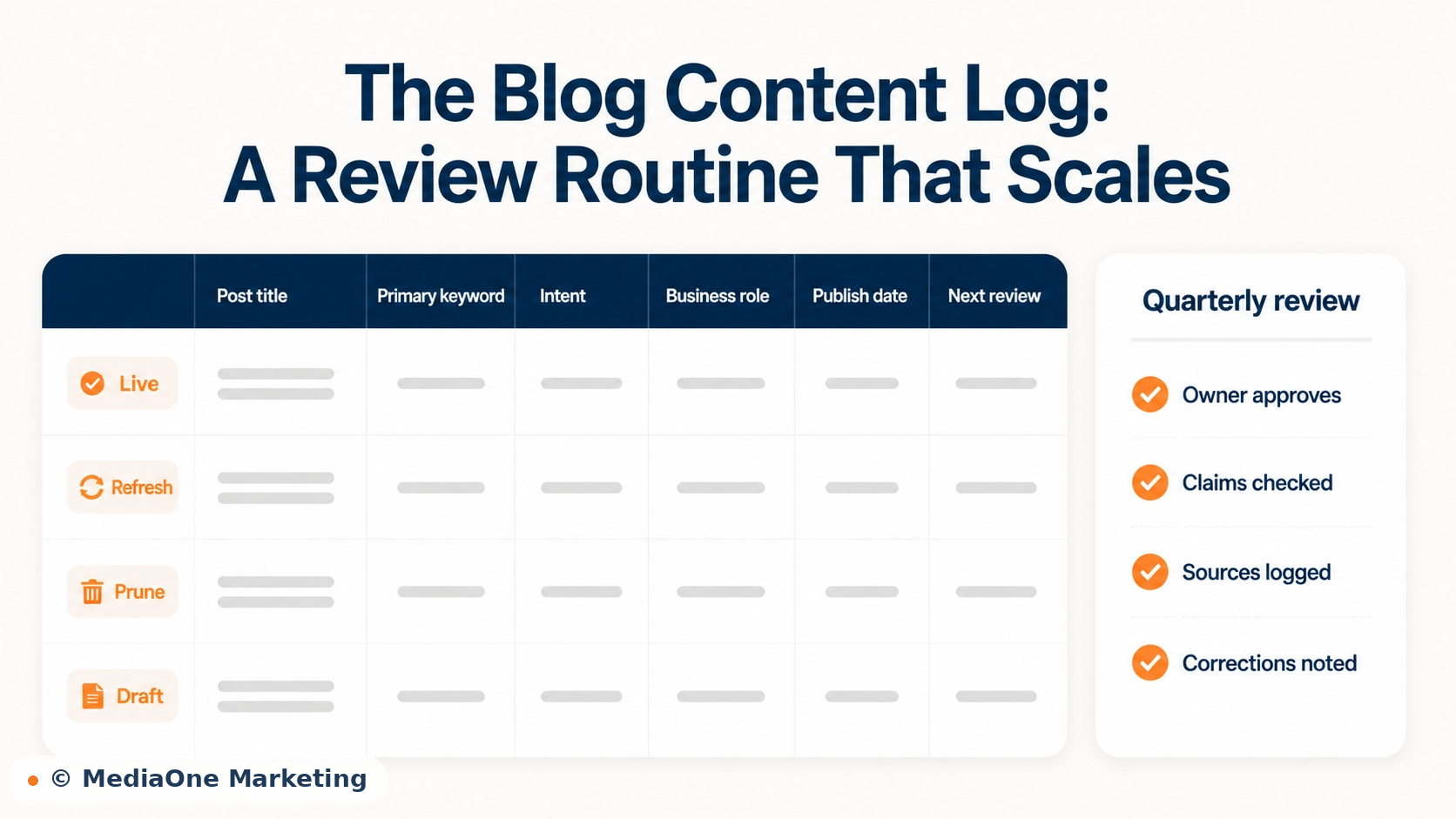
Set up a simple routine before you publish at volume:
- Name one owner who approves every post and keeps the brand voice consistent.
- Write a short review checklist covering factual claims, pricing and any statement about a competitor.
- Keep a log of sources for every statistic, with the survey name, year and sample size where they are known.
- Set a rule for corrections: fix errors within a set period and note the update on the post.
A company post can be read as an official position, so it deserves a second pair of eyes. Readers trust a brand that corrects its own mistakes, and audiences notice how a company handles errors over time. Corrected posts that are shared on social media should carry the same fix, so that readers who saw the original version are not left with the wrong information. Teams that want the best results from a blog usually build these tips into their routine from the first post, rather than adding them after a mistake.
Consent and handling reader data
If your blog forms or newsletter sign-ups collect personal details, decide what you collect and why. Store only what you need, and make clear to visitors what happens to their details. Ask a qualified professional if you are unsure what your forms should say.
Copyright, images and attribution
Use only images you have the right to use: photos you took, images licensed for commercial use, or graphics your team created. Credit any quoted material and link to the original. Where you cite a figure, link to its source, as the HubSpot guide to starting a blog does when it reports that headlines ending with a bracketed clarification performed 38% better than titles without that clarification.
Setting Up a Singapore SME Blog: A Step-by-Step Sequence
- Name the enquiry the blog must produce. Write down the one service enquiry you want each quarter, such as a consultation request or quote form submission.
- Pick one owner and one review date. A named person approves every post, and performance is reviewed each quarter.
- List the questions buyers type before they call. Gather them from sales emails, enquiry forms and client calls.
- Score each question with the Blog Purpose Matrix below. Keep only questions with commercial intent or a convert or educate role.
- Attach one next step to every planned post. Each post should link to a service page, quote form or checklist sign-up.
- Publish a small first batch and track it. Measure organic sessions and enquiries from blog pages before writing more.
Conclusion and Summary
A business blog earns its place only when it has a defined job as a lead-capture and authority asset. Most Singapore SMEs should stop publishing for its own sake and maintain only a few assets that do real work: service pages, a short set of commercial guides, and a newsletter for existing buyers. Good marketing rests on this focus, so every content asset should have a clear purpose before it is produced.
Score every planned post on search intent and business role. Commercial posts about your services come first, informational posts earn their place only when they feed a service page, and posts with no clear role get cut. Review the mix each quarter and build the calendar before you publish.

Frequently Asked Questions
Is business blogging still worth it?
Yes, but only when the blog has a job to do. Score each planned post by search intent and business role, and cut any post that serves neither. Treat perceived returns as indicative, since they vary by sector.
How long should a business blog post be?
Length should follow intent, not a fixed target. HubSpot’s blog guide notes that posts range from about 800 to 3,000+ words, but guidance varies by query type. Use shorter posts for narrow questions and longer guides for commercial queries where the reader is comparing options.
How often should a company publish a blog post?
Publish at a pace your team can sustain for at least a year. A steady, modest schedule usually beats a burst of posts that stops after a few weeks. Review performance each quarter and prune posts that attract no organic sessions and serve no clear business role.
Can a business blog help with SEO without paid advertising?
Yes. Organic search is the main reason a blog earns traffic without ad spend. Target the phrasing your buyers actually use, including Singapore-specific terms, and link each post to a relevant service page. Expect slow, compounding results rather than quick wins.
Do I need a review before publishing a business blog?
Not as a blanket rule, but check any claims about products, services, results or pricing before publishing. If your sign-up forms collect personal details, decide what you collect, why, and how it is stored, and make that visible to visitors. For anything beyond routine content, ask a qualified professional to review it.