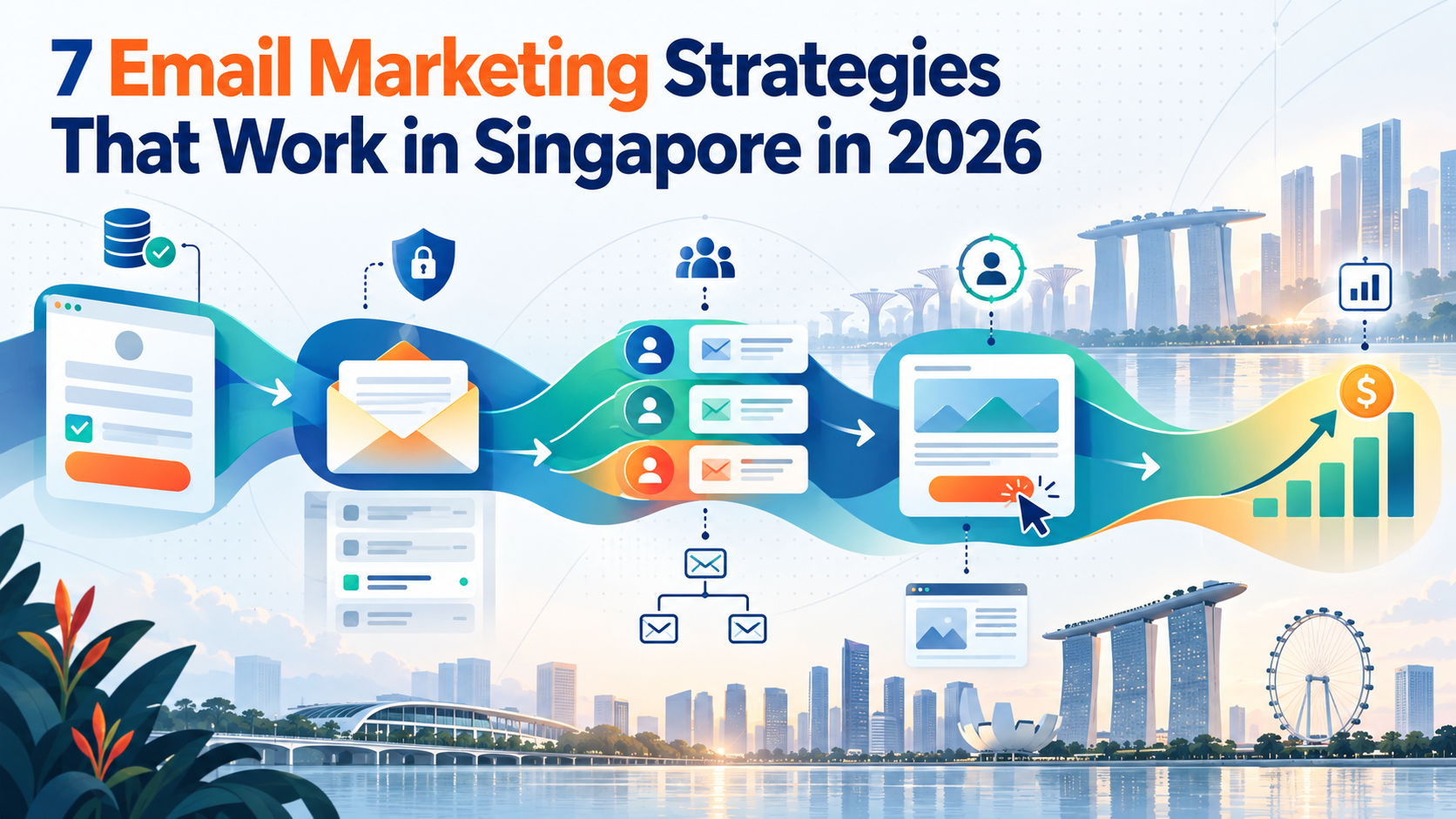
| AI Summary
The strongest email marketing strategies in 2027 start with permission, sender health and audience relevance, before any subject line is written. This guide uses a five-part audit lens, the Permission-to-Revenue Chain (permission, delivery, relevance, action and revenue), to rank seven strategies for Singapore businesses. These cover consented lists, inbox delivery, behavioural segmentation, high-intent automation, intent-based personalisation, a joined-up conversion path, and timing tests judged on commercial value. It also covers PDPA and Spam Control Act requirements, Gmail, Yahoo and Outlook sender rules, and why clicks, conversions and revenue are better signals than open rates. |
The strongest email marketing strategies in 2027 start before anyone writes a subject line. We first check permission, sender health and audience relevance. Weak foundations can reduce reach before the copy has a chance to perform.
For Singapore businesses, email now sits at the intersection of compliance, delivery and conversion. Gmail, Yahoo and Outlook apply stricter sender rules to high-volume email. Singapore businesses also need to work within the Personal Data Protection Act and the Spam Control Act.
At MediaOne, our email marketing service covers managed lists, campaign testing and reporting. That gives us a practical reason to look at the full system, not one isolated campaign. In this guide, we use a simple five-part audit lens called the Permission-to-Revenue Chain.
Key Takeaway
- Start with permission. Build your list from people who knowingly agreed to receive marketing. Clear consent also gives you cleaner data for later targeting.
- Fix delivery before creative. Authentication, complaint levels and bounces affect how many people can receive your emails. Better copy cannot repair poor inbox placement.
- Segment around behaviour. A new subscriber should not receive the same campaign as a repeat buyer. Each group needs a clear reason to receive the message.
- Automate high-intent actions first. Welcome, cart recovery, and post-purchase emails respond to real behaviour. They often reach people closer to a buying decision.
- Judge more than opens. Apple Mail Privacy Protection can prevent accurate open tracking. Clicks, conversions and revenue give us stronger commercial signals.
- Test timing with your own data. 2027 benchmark studies can give you a starting point. Your own subscribers should decide the final schedule.
The Seven Email Marketing Strategies We Would Prioritise
| Priority | Strategy | Main Decision |
| 1 | Build a permission-based email database | Who should be on the list |
| 2 | Protect inbox delivery | Can the message reach them |
| 3 | Segment by behaviour and lifecycle stage | Who should receive each send |
| 4 | Automate high-intent actions | When should the send happen |
| 5 | Personalise around customer intent | What should the message say |
| 6 | Optimise the full conversion path | What should the reader do next |
| 7 | Test timing and measure commercial value | Did the campaign create value |
Use the Permission-to-Revenue Chain
We would not judge an email programme from one metric. For this guide, we use five linked checks called permission, delivery, relevance, action and revenue. Each check answers a different business question.
Permission asks if the person should receive marketing. Delivery checks inbox reach. Relevance checks fit. Action checks the next step. Revenue checks the business result.
This order changes where we spend time. If a sending domain has authentication gaps, we fix those before testing a new button. If the list contains weak or unclear consent, we fix acquisition before increasing campaign volume.
1. Build a Permission-Based Email Database
A large database can look impressive in a report. Its commercial value drops when contacts did not clearly agree to receive marketing.
Singapore’s Personal Data Protection Commission states that organisations should generally obtain express consent for direct marketing. Its guidance favours active opt-in methods such as an unchecked box that the person selects. Pre-checked boxes do not meet the same standard.
We would make the value exchange clear at sign-up. Tell people what they will receive and how often you expect to send. If a form collects an email address for a quotation, do not quietly turn that address into a newsletter subscription.
Apply Singapore Rules Before You Scale Sending
The Do Not Call Registry covers marketing sent to Singapore telephone numbers through calls, texts and faxes. Ordinary email marketing does not use that registry because its scope centres on Singapore telephone numbers.
Bulk unsolicited commercial email can fall under the Spam Control Act 2007. The current Singapore Statutes Online version lists bulk thresholds that include more than 100 similar messages in 24 hours, more than 1,000 in 30 days or more than 10,000 in one year.
Covered unsolicited commercial email must include an unsubscribe facility. Applicable messages also need accurate sender details and the <ADV> label. No further covered messages may be sent after 10 business days following a valid unsubscribe request.
We would process opt-outs much faster. Gmail’s current subscription guidance calls for unsubscribe requests to be handled within 48 hours. Yahoo requires bulk senders to honour them within two days.
Legal compliance sets the minimum. Good email practice should aim higher because a reluctant subscriber can still damage sender reputation through a spam complaint.
Use Confirmation When List Quality Needs Protection
A confirmation email after sign-up can filter mistyped addresses and fake entries. It can also reduce unwanted subscriptions when forms attract bot traffic.
The trade-off is clear. Confirmation may reduce total sign-ups, but it can improve list quality. We would favour it when acquisition quality is uncertain.
Gmail’s subscription guidance asks senders to have recipients confirm their address after entering it on a website or app. That approach gives businesses another check before they start promotional sending.
2. Protect Inbox Delivery Before Improving Creative
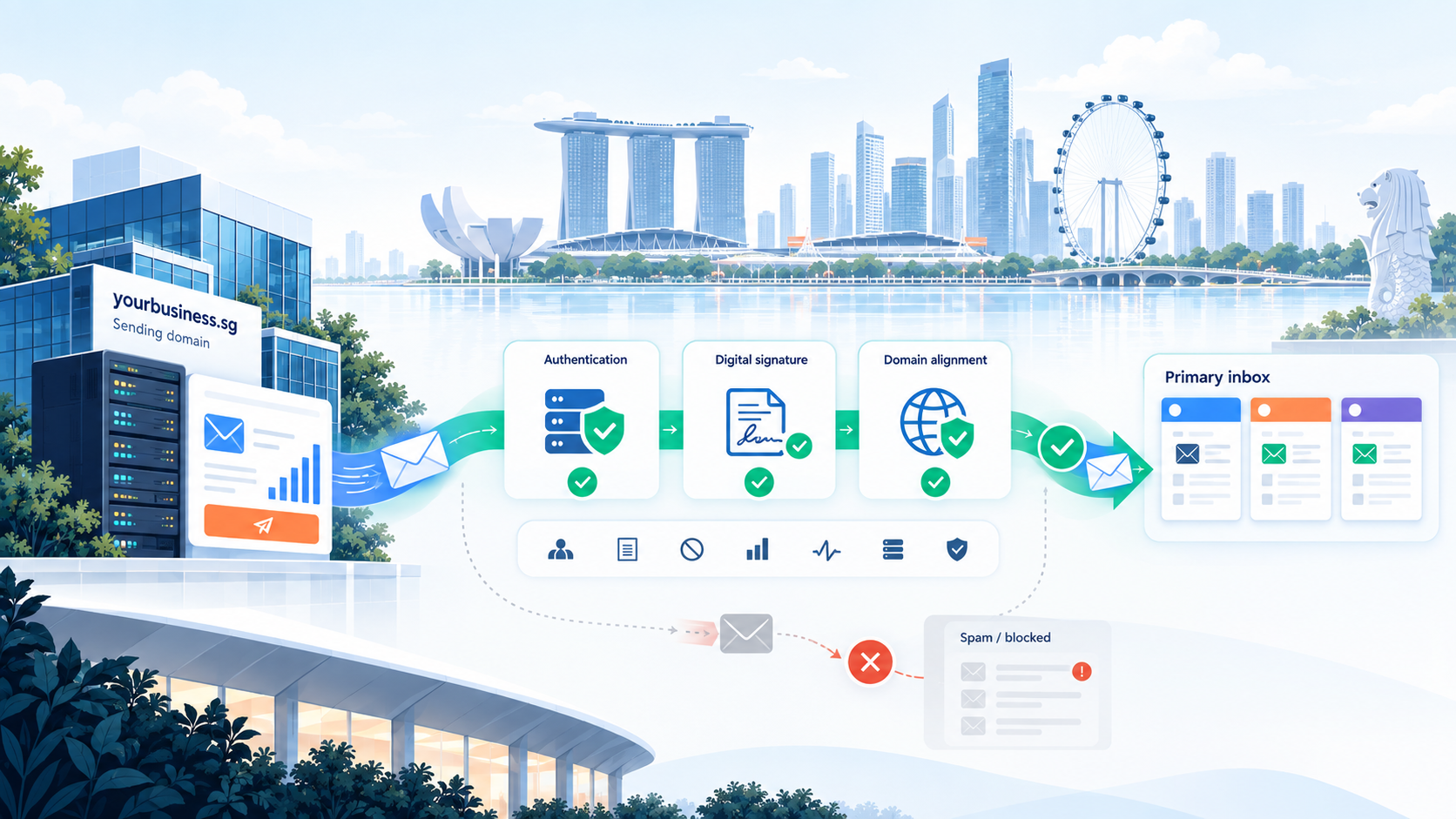
One of the biggest changes since the original article is the higher technical standard for senders. Authentication now belongs in the marketing discussion because a weak setup can reduce reach.
For Gmail, all senders need either Sender Policy Framework or DomainKeys Identified Mail authentication. Senders that cross 5,000 messages a day to Gmail accounts need both. They also need Domain-based Message Authentication, Reporting and Conformance.
Google also requires a Transport Layer Security connection for transmitting email. Qualifying high-volume marketing messages need one-click unsubscribe. Google increased enforcement against non-compliant bulk traffic from November 2025. (Google bulk sender enforcement guidance)
Current Gmail guidance tells senders to keep user-reported spam below 0.1 per cent and prevent it from reaching 0.3 per cent or higher. Yahoo requires senders to keep spam below 0.3 per cent. Microsoft applies stricter authentication rules to domains sending more than 5,000 emails a day to Outlook.com consumer addresses.
Compare the Major Inbox Provider Requirements
| Provider | Authentication | Unsubscribe | Complaint Guidance |
| Gmail | Sender Policy Framework or DomainKeys Identified Mail for all senders. High-volume senders need both plus Domain-based Message Authentication, Reporting and Conformance | One-click unsubscribe for qualifying high-volume marketing mail | Keep reported spam below 0.1 per cent and avoid 0.3 per cent or higher (Google Help) |
| Yahoo | Sender Policy Framework or DomainKeys Identified Mail for all senders. Bulk senders need both plus Domain-based Message Authentication, Reporting and Conformance | One-click unsubscribe and requests honoured within two days | Keep spam below 0.3 per cent |
| Outlook.com | High-volume domains need Sender Policy Framework, DomainKeys Identified Mail and Domain-based Message Authentication, Reporting and Conformance | Use a clear functional unsubscribe process | Non-compliant high-volume mail can face rejection (TECHCOMMUNITY.MICROSOFT.COM) |
The decision is simple. If authentication has gaps, fix them before spending more on templates or copy.
Do Not Clean a List From Open Data Alone
Hard bounces should leave the active sending pool quickly. Long-term inactivity also deserves review, but open data alone can mislead.
Apple Mail Privacy Protection prevents senders from seeing some opens. We would give more weight to clicks, purchases, enquiries and recent site actions before suppressing a contact.
Consider a database with 20,000 contacts. If 5,000 show no useful activity for a long period, suppressing them cuts unnecessary campaign volume by 25 per cent. Some platforms also price plans by active contact count, so the clean-up may lower software costs.
3. Segment Subscribers by Behaviour and Lifecycle Stage
Basic demographics can help, but behaviour often gives us a stronger reason for sending a particular email. The best segment is not the one with the most fields. It is the one that changes the message or offer in a useful way.
An ecommerce brand can start with four working groups. Each group has a different job in the email programme.
- New subscribers. They need context and a clear first action.
- First-time buyers. They may need product guidance or a sensible follow-up offer.
- Repeat customers. They can receive loyalty content or relevant product updates.
- Inactive contacts. They need a re-engagement test before suppression.
A service business should use different signals. Someone who downloaded a guide sits at a different stage from someone who visited a pricing page three times. Sending both the same sales email wastes useful intent data.
We would avoid creating dozens of tiny segments with no distinct message. Complexity can slow the team and make reporting harder.
This is where email should connect with site content. MediaOne’s content marketing service covers audience segmentation, funnel mapping, landing pages and email campaigns. That connection can turn site behaviour into useful follow-up.
4. Automate High-Intent Customer Actions
Scheduled newsletters still have a role. Behaviour-triggered email deserves higher priority because the subscriber has already taken action.
Omnisend’s May 2026 benchmark report analysed more than 20 billion campaign emails and 470 million automated sends across more than 27,000 brands. Its 2025 ecommerce data found that automated emails generated US$3.41 per email sent. Standard campaigns generated US$0.155 per email.
The same dataset reported a 1.49 per cent conversion rate for automated email and 0.08 per cent for campaign email. We would treat these as e-commerceecommerce benchmarks, not a promise for every Singapore business.

The useful lesson is timing. A message tied to a clear action can reach stronger intent than a general promotion sent to everyone.
Start With Automations Closest to Revenue
- Welcome sequence. Explain the brand and guide the next useful step. Do not turn every welcome email into an instant discount.
- Cart recovery. Remove buying friction first. Repeated discounts can train customers to abandon carts and wait.
- Post-purchase follow-up. Help customers use what they bought. Then introduce a logical next purchase when it fits.
- Back-in-stock alert. Use it for shoppers who already showed product interest. Omnisend’s current benchmark data shows strong revenue performance from behaviour-triggered automation.
Service businesses can apply the same logic. A consultation request, webinar registration or guide download can trigger relevant follow-up.
This is one area where we would invest before increasing newsletter frequency. A useful triggered email responds to customer intent, while another generic broadcast adds volume without the same signal.
5. Personalise Around Intent, Not Decoration
Adding a first name to a subject line does not create a personalised strategy. Useful personalisation changes the content because we know something meaningful about the recipient.
Purchase history can guide product suggestions. Recent site behaviour can signal interest. Lead source and stated preferences can also change what the next email should say.
Imagine a Singapore training provider with three subscribers. One downloaded a beginner guide. Another attended a webinar. The third requested corporate pricing.
The guide reader may need education before a sales offer. The webinar attendee may be ready for a related course. The corporate prospect needs content written for an organisational buying decision.
Give Subscribers Control Before They Leave
Preference centres can let subscribers choose topics or sending frequency. That gives an unhappy reader another option before a full opt-out.
The underlying principle is simple. A subscriber who wants fewer emails is still signalling interest. Forcing that person into an all-or-nothing choice can lose a usable relationship.
We would not respond to falling engagement by sending more. First check relevance, frequency and segment quality. If a campaign repeatedly produces weak clicks from one segment, the content or offer may no longer fit that audience.
6. Optimise the Subject Line, Message and Call to Action Together
The original article treated subject lines and buttons as separate tactics. We would assess them as one conversion path.
The subject line creates an expectation. Preview text should support it. The email body needs to fulfil the promise. The Call to Action directs the next step. The landing page should continue the same offer.
If the subject line promotes a free consultation but the landing page immediately pushes a paid package, the campaign creates friction. A good click does not rescue a weak destination.
Test One Commercial Question at a Time
A useful split test should answer one clear question. Keep the rest of the campaign stable while you test it.
- Test a benefit-led subject line against an urgency-led version.
- Compare two Call to Action labels with the same offer.
- Test a shorter email against a longer educational version.
- Test one offer at two send times when timing is the question.
Avoid changing the subject line, layout, offer and send time in one test. You may get a winning version but learn little about the cause.
We prefer action labels that describe the next step. “View available dates” tells the reader what happens next. “Click here” does not.

Our email marketing service includes split testing for email design and subject lines. That gives this recommendation a clear agency basis without inventing client results.
7. Test Timing and Measure Commercial Value
There is no universal best hour for email. Current data shows that the strongest time changes with the goal.
Omnisend’s May 2026 timing study analysed about 26 billion emails. Its research found different high-performing periods for opens, clicks and conversions. That difference is more useful than a universal “best time” claim.
We would use those figures as testing inputs, not scheduling rules. A Singapore business-to-business newsletter may behave differently from an ecommerce sale. A customer base split across Singapore, Malaysia and Australia also needs local-time scheduling.
For a Singapore business, we would start with two or three sensible windows. Then we would compare the commercial action each sends creates. A time that wins on opens but loses on enquiries may not deserve the next campaign.
Stop Treating Open Rate as the Final Score
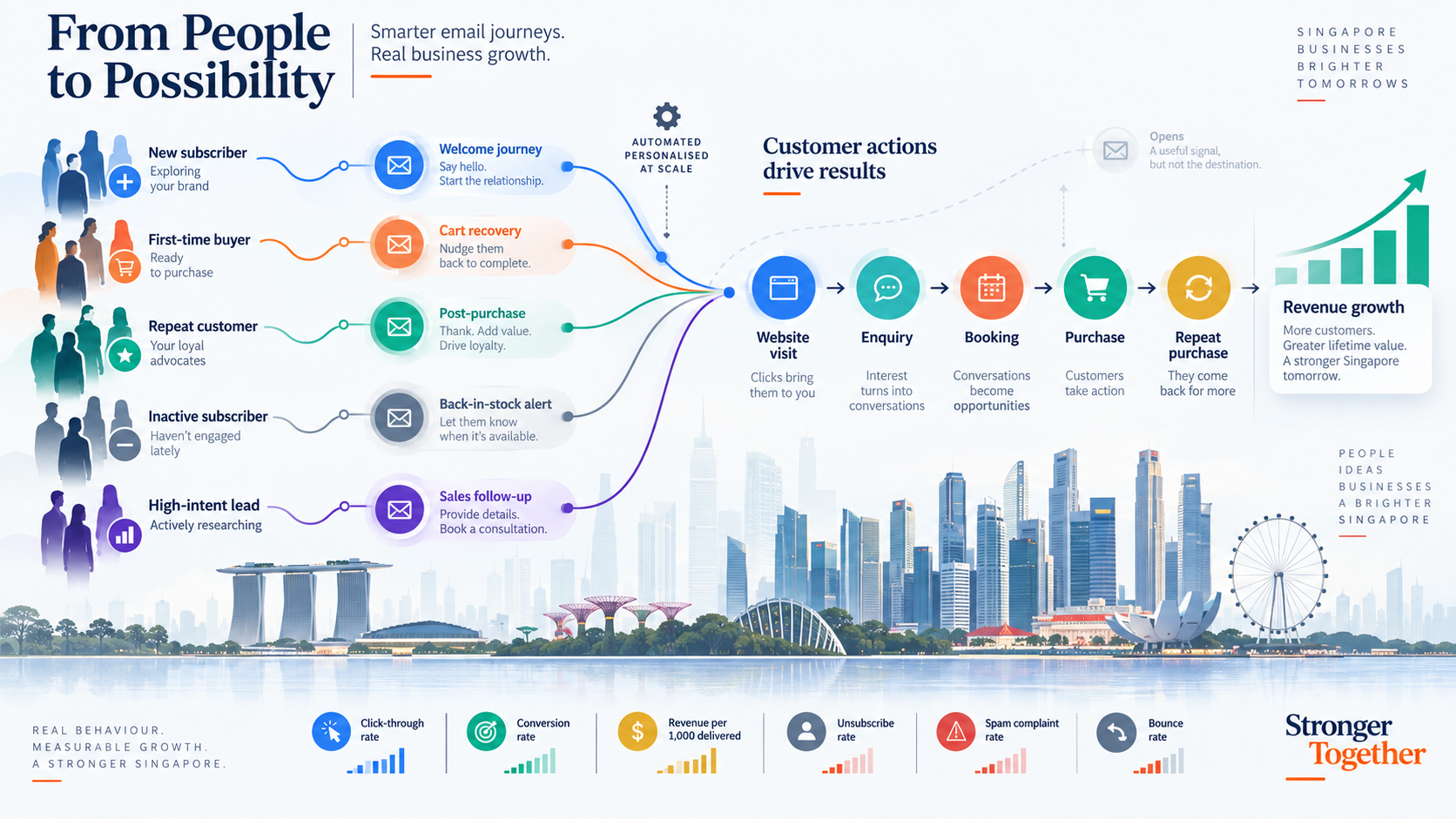
Apple Mail Privacy Protection can hide real open behaviour from senders. Open rate can still provide direction, but it should not carry the full performance story.
| Metric | What It Tells Us | How We Use It |
| Click-Through Rate | How many delivered emails produced a click | Compare message and offer relevance |
| Conversion Rate | How many recipients completed the intended action | Judge commercial effectiveness |
| Revenue per 1,000 Delivered Emails | Value generated across campaigns of different sizes | Compare campaign value |
| Unsubscribe Rate | How many recipients left after the send | Spot frequency or relevance problems |
| Spam Complaint Rate | How many recipients reported the email as spam | Protect future delivery |
| Bounce Rate | How many messages failed | Find list-quality or technical problems |
Revenue needs context too. A campaign can produce more sales and also create a sharp rise in complaints. We would review commercial results alongside list health so one aggressive send does not weaken future delivery.
What We Would Audit First in an Underperforming Email Programme
When an email programme underperforms, we would not start by rewriting every campaign. We would check the system in an order that can expose the root problem sooner.
- Consent and acquisition source. Check how major groups entered the database. Weak acquisition practices can create complaint and delivery problems.
- Authentication and domain health. Review Sender Policy Framework, DomainKeys Identified Mail and Domain-based Message Authentication, Reporting and Conformance before increasing volume.
- List activity. Remove hard bounces. Review long-term inactivity with clicks, conversions and recent customer actions, not opens alone.
- Automation gaps. Find high-intent actions with no follow-up. Cart recovery, new leads and post-purchase sequences often deserve early attention.
- Segment logic. Each audience group should receive a different message for a clear reason.
- Conversion path. The email, Call to action, and landing page should support the same promise.
- Measurement. Connect reporting with purchases, enquiries, bookings or another defined business result.
MediaOne’s email marketing service covers managed lists, split testing and reporting. Businesses that need stronger acquisition systems can connect this work with our lead generation services. Content-led programmes can also use our content marketing service to align landing pages, email copy and audience segments.
Frequently Asked Questions
What are the best email marketing strategies in 2027?
Start with permission and deliverability. Then improve segmentation, automation, personalisation, conversion paths and measurement based on the goal of each campaign.
How often should a business send marketing emails?
No fixed frequency suits every list. Test by segment and watch conversions, unsubscribes, complaints and revenue before increasing volume.
Is open rate still a useful email marketing metric?
Yes, but we treat it as a directional metric. Apple Mail Privacy Protection limits open-tracking accuracy, so clicks, conversions and revenue give us stronger evidence.
Do Singapore businesses need consent for email marketing?
Personal Data Protection Commission guidance states that organisations should generally obtain express consent for direct marketing. Bulk unsolicited commercial email can also fall under Singapore’s Spam Control Act.
What email authentication should businesses use?

Businesses should review Sender Policy Framework, DomainKeys Identified Mail and Domain-based Message Authentication, Reporting and Conformance. Gmail, Yahoo and Outlook apply stricter authentication rules to high-volume senders.
Build Email Marketing Around Trust and Commercial Value
The strongest email marketing strategies in 2027 connect permission, inbox delivery and customer intent with a defined business result. We would fix those foundations before chasing higher open rates or increasing campaign volume.
For most Singapore businesses, the order is clear. Build a consented database and authenticate the sending domain. Then segment by intent and automate useful follow-up.
After that, improve the conversion path and measure what happens after the click. This gives email a clearer commercial role and reduces dependence on vanity metrics.
If your database is large but clicks, attribution or sales remain weak, start with an audit.