| AI Summary
AI-driven marketing helps teams use customer and campaign data to predict actions, draft content and make decisions about email, ads and sales leads. US marketing teams can start with one task, compare it with their current process and measure the business result. Customer-facing uses need approved source material, named reviewers and a way to pause the system. |
AI-driven marketing uses artificial intelligence to analyse marketing data, predict customer actions, create content or automate campaign decisions. Common examples include ranking sales leads, drafting email subject lines and adjusting ad bids. A first test works best when the team defines one goal, keeps a comparison group and checks what happens after launch.
Key Takeaways
- A lead score is a prediction. A sales outcome shows whether that prediction helped the team.
- Drafting an email and choosing who receives it are separate tasks. Each needs its own checks.
- A campaign test needs a success measure, a fair comparison and a reason to stop.
- Tool costs include setup, review and corrections. Time saved on a first draft is only one part of the calculation.
- US teams can build email and testimonial checks into approval so AI-assisted campaigns follow the same review process as other campaigns.
An email team asks AI for ten subject lines and gets them in seconds. Now someone has to choose two, check that both match the offer and see whether either leads to more orders. The writing got faster. The campaign result is still an open question.
AI-driven marketing works best when the team knows which decision it wants to improve. That could be who gets a follow-up, which ad deserves a test or why last week’s leads stalled. The examples below show how to choose a first task and tell whether it earned a place in the team’s work.
1. What is AI-driven marketing and how does it work?
AI-driven marketing uses software to spot patterns, make predictions or generate material for a campaign. Some tools return a score or a forecast. Others draft words or images. Some can act on a recommendation, such as placing a bid, when the team gives them permission.
How customer data turns into a marketing decision
First-party data comes from your own relationship with customers. It can include orders, website activity your team records, enquiries and sales outcomes. Which records you use depends on the task. An order date may help with a reorder reminder. A sales call outcome may help a team learn which enquiries turn into opportunities.
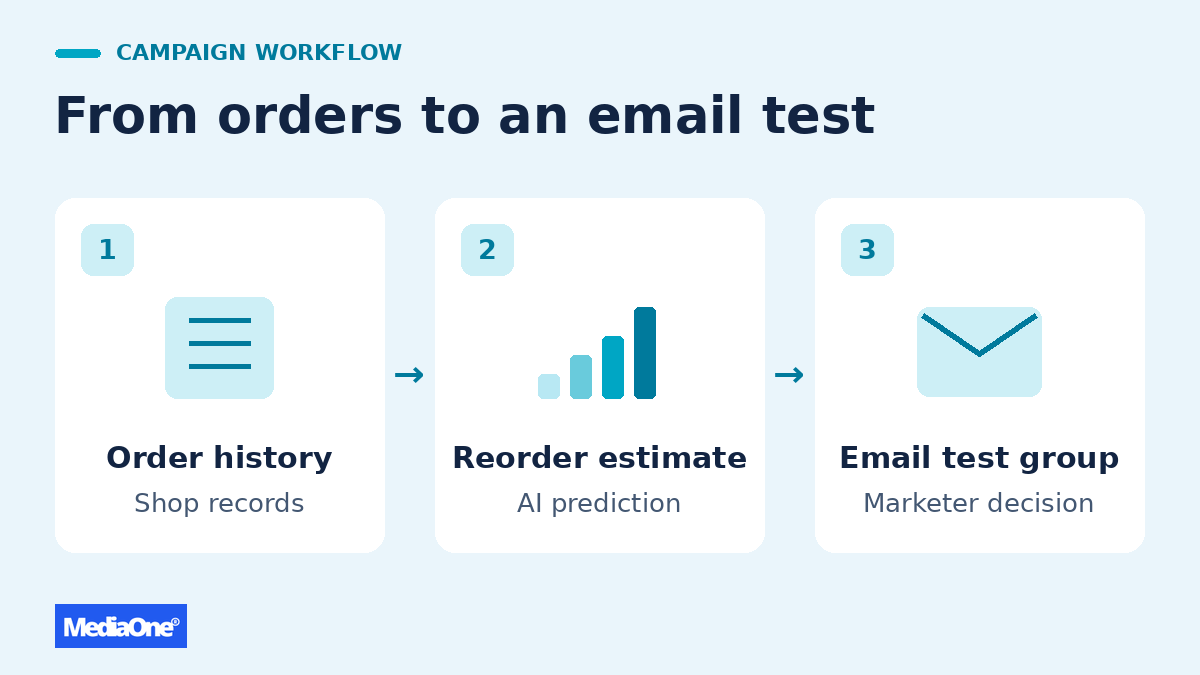
- The team chooses the records. An online shop brings together order dates, product types and return records.
- The software looks for a pattern. A prediction model estimates which customers may be due to reorder.
- The team decides how to act. The email manager checks eligibility, reviews the offer and tests a reminder with part of the audience.
The third step gives the prediction a job. A customer may look ready to buy again but have an open complaint or an order on the way. An audience rule can keep that person out of the send. A marketer can also check whether the reminder works better for products people buy on a regular schedule.
How AI differs from rule-based automation
Rule-based automation follows a condition a person sets. For example, anyone who leaves a basket gets a reminder the next day, if eligible. A prediction tool can estimate which people are most likely to buy after a reminder. A team may then decide whether that estimate is worth using to change the send.
Both approaches can sit within the same email marketing lifecycle. A fixed rule can handle a welcome message. A model can help choose between two follow-up offers. The choice depends on which decision needs help and what the team knows about the people receiving the email.
2. Which AI marketing tools help with which tasks?
AI marketing tools often combine several features. A single product may draft an email, suggest an audience and send the campaign. A team can use one feature at a time and give each feature only the access it needs.
| Type of tool | What it does | Marketing example | What the team checks |
| Predictive analytics | Estimates a future action from past records | Ranks leads by the chance of booking a sales call | Whether the leads go on to book and attend |
| Generative AI | Creates drafts from instructions and source material | Writes three versions of a product email | Whether each version matches the offer and the brand’s voice |
| Personalisation | Chooses a message, offer or send time for an audience | Shows different product recommendations to new and returning shoppers | Whether customers respond and the rules respect their preferences |
| Automated bidding | Sets ad bids based on a campaign goal | Bids towards conversions or conversion value in Google Ads | Whether the campaign counts the outcomes the business values |
| Customer-facing chat | Answers questions or passes them to staff | Provides store hours and sends refund disputes to a person | Whether replies match policy and handovers reach the right team |
Predictive analytics for lead scoring
A company that sells office software may receive a mix of sales enquiries, student requests and support messages. A scoring model can help sort the queue if the company records which enquiries turn into sales opportunities. That result is more helpful than training the model to copy which leads the team happened to call first.
The sales team can run the score beside its existing queue before it changes who gets called. A weekly check might compare bookings, qualified opportunities and promising leads that received low scores. That last check helps show who might be overlooked if the company uses AI to support lead generation and follow-up.
Generative AI for campaign content
Generative AI can turn one approved product brief into draft headlines, social captions and email copy. The product brief gives the tool a starting point for details such as price, availability and audience. A reviewer checks those details against the original source before the campaign goes out.
In a content marketing workflow, the first prompt could ask for three ways to explain the same benefit. The reviewer can then choose the wording that sounds most like the brand. For example, a camping shop might ask for subject lines about a jacket’s weight, using the product sheet for the exact figure. The editor can reject any line that adds a claim about waterproofing when the brief gives no such detail.
Automated bidding for paid search
Google’s Smart Bidding uses AI to set bids in individual ad auctions and optimise for conversions or conversion value. A conversion is an action the advertiser counts, such as an order or a sales enquiry. The action the team chooses gives the system its goal.
A home services company might count every web form as a lead. Some forms could be spam, job applications or requests from outside the area. When the business can measure booked jobs or qualified enquiries, those outcomes give its Google Ads campaigns a better measure of success. The bidding system can then be judged against the result the business actually wants.
3. How can a team choose its first AI marketing project?
A first project should solve a problem the team sees often enough to measure. A campaign report that takes half a day each week gives the team repeated chances to test time and accuracy. A chatbot that would answer questions about refunds gives the team a different problem. One wrong reply can create extra work for support and set the wrong expectation for a customer.
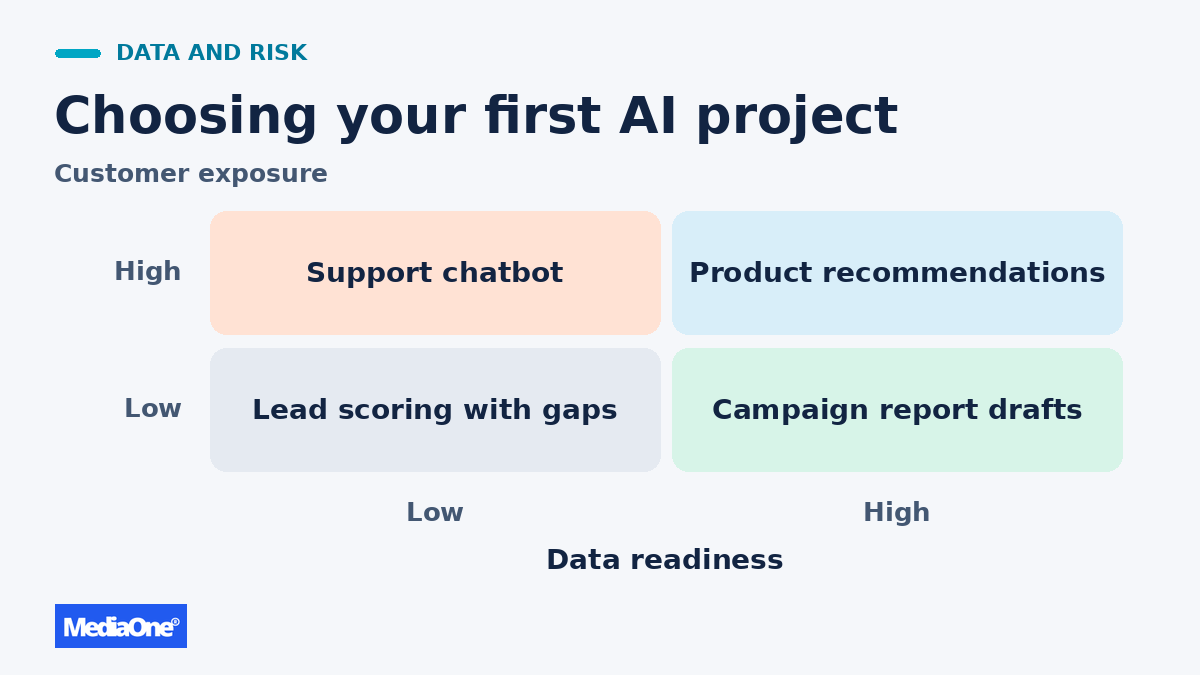
The task, value and risk table below uses two checks. Data readiness means the team has records it can trust for that task. Customer exposure means how directly a mistake could affect a customer.
| Data readiness | Customer exposure | Example | First move |
| High | Low | Drafting notes from checked campaign reports | Test with one analyst and compare the notes with the original numbers |
| High | High | Recommending products on a live shop page | Test the recommendations privately, then release to a small group |
| Low | Low | Scoring leads with missing sales outcomes | Record outcomes consistently and test the score beside the current queue |
| Low | High | A support chatbot using old policy pages | Update the policy pages and test staff handovers before launch |
Why an internal reporting task can be a good start
A reporting assistant can flag an unusual change for a person to check. For example, it might spot that paid search enquiries fell on Tuesday. An analyst can compare the date with a tracking change, a budget cut or a form error. The flag saves search time when it points to a real change. The analyst still needs to find out what caused it.
A team can track how long it takes to prepare and check the report, which errors the assistant misses and how often a flag leads to action. The same numbers help the team decide whether it needs a new tool or a simpler report template.
When a public test needs tighter limits
An AI-assisted subject line has a narrow job and a reviewer can see the full text before it goes out. A chatbot can answer many questions the team never thought to test. The difference changes what a safe first release looks like.
A support team could start a chatbot with store hours, delivery areas and links to order tracking. Questions about a missing order, a refund exception or a disputed payment can go to staff. The customer should get a working way to reach someone even when the chatbot cannot recognise the request.
4. How should US marketing teams run their first AI test?
A fair test asks whether one change improves a result. If the AI version also gets a larger discount, a better audience and a different send time, the team cannot tell what drove the difference. A short campaign measurement plan gives everyone the same test rules.
Before launch
- Name the decision. A retail team may want to know whether AI-assisted subject lines lead to more orders from its weekly email. That is easier to test than a goal such as improving all email performance.
- Check the records. The team confirms who can receive the email, whether duplicate records exist and how purchases connect to sends. An event records an action. Google Analytics lists recommended events such as purchase and generate lead that teams can use when setting up measurement.
- Write down the baseline. The baseline records how the current process performs. The email team might log orders per 1,000 delivered emails, unsubscribes and the time needed to write and approve the message.
- Set a stop rule. The team names an owner and records what would pause the test. A wrong price or a broken opt-out link can trigger an immediate pause. A softer change, such as a small drop in orders, may need more data before the team acts.
During the test
A subject-line test can give one group a human-written line and another group an AI-assisted line. The offer, email copy, landing page and send conditions should stay the same. A random split helps keep the groups comparable. Both subject lines should go through the same review.
A paid search team can use Google Ads experiments to compare a campaign change where the experiment type supports it. If the test changes bidding, the team should record which other campaign settings stay fixed. That record helps explain an unexpected result later.
| What to record | Example | Why it helps |
| Primary outcome | Orders per 1,000 delivered emails | Shows whether the version led to more purchases |
| Supporting measure | Clicks on the product link | Helps explain how readers responded before buying |
| Customer safeguard | Unsubscribes or complaints | Shows a cost that sales figures can hide |
| Work required | Drafting, review and correction time | Shows whether the process saved time overall |
| Test conditions | Send date, audience size and offer | Helps the team repeat or interpret the test |
After the test
A test can end with three decisions. Keep the change if it meets the goal and stays within the agreed limits. Revise it if a specific problem, such as a subject line that draws clicks from the wrong audience, gives the team something to retest. Stop it if the gain is too small for the cost or the change creates problems for customers.
Small differences need care. If each group has a few orders, one extra purchase can make the result look larger than it is. The team can log the result as uncertain, repeat the comparison on another send and decide how much evidence it needs before changing the regular process.
5. What safeguards does AI-driven marketing need in the US?
Marketing teams can use the National Institute of Standards and Technology’s AI Risk Management Framework to organise how they identify, measure and manage AI risks. Its generative AI profile covers issues such as plausible but false output and risks to data privacy. A campaign team can turn those ideas into checks tied to the work it does.
Customer data and tool access
The first check is what the tool needs to see. A campaign assistant can often work with totals by channel or week. A writing tool can draft a reminder from a sample record with no customer details. Using fewer fields reduces the amount of information the team has to manage and protect.
Vendor settings deserve a review before someone imports a list. The team can record who can open an account, what the vendor keeps, whether inputs can be used for training and how data can be deleted or exported. The settings should match how staff will use the tool, including any plug-ins or other services that can see the same data.
Commercial email and customer testimonials
The Federal Trade Commission’s CAN-SPAM guide for businesses sets out requirements for US commercial email. These include accurate sender information, subject lines that reflect the message, a valid physical postal address and a way to opt out. AI-written subject lines and messages belong in the same approval process as the rest of the send.
The FTC’s rule on fake reviews and testimonials covers fake reviews that appear to come from people who do not exist, including ones made with AI. A team drafting ads can use approved quotes from real customers and keep a record of the original words. A fictional scenario can explain how a product works when the example is presented as fictional.
Human review, bias checks and a way to pause
A reviewer needs access to the source behind the output. For an ad, that might be the approved offer and product page. For a chatbot, it might be the current support policy. A lead scoring reviewer needs to see which leads move down the queue and whether those people still get a reply.
| Check | What it looks like in practice |
| Accuracy | The reviewer compares prices, product details and promises with approved sources |
| Audience treatment | The team checks whether some regions or customer groups repeatedly receive less service or fewer opportunities |
| Escalation | The tool sends a case it cannot handle to a person, with enough context for that person to help |
| Pause and recovery | The owner knows how to disable the feature and restore the last approved process |
A pause can be as simple as routing the chat to staff or turning off an AI-generated audience rule. After a mistake, the owner records what customers saw, which source or setting caused the problem and what needs to change before the system resumes. That record gives the next reviewer something concrete to check.
6. How do you measure the value of AI-driven marketing?
A marketing team can measure value in three parts. One is the business outcome, such as purchases or qualified calls. Another is the time saved after review and corrections. The third is the full cost of running the tool. Those figures help explain why a fast feature may earn its place in one campaign and lose it in another.
A simple worked example
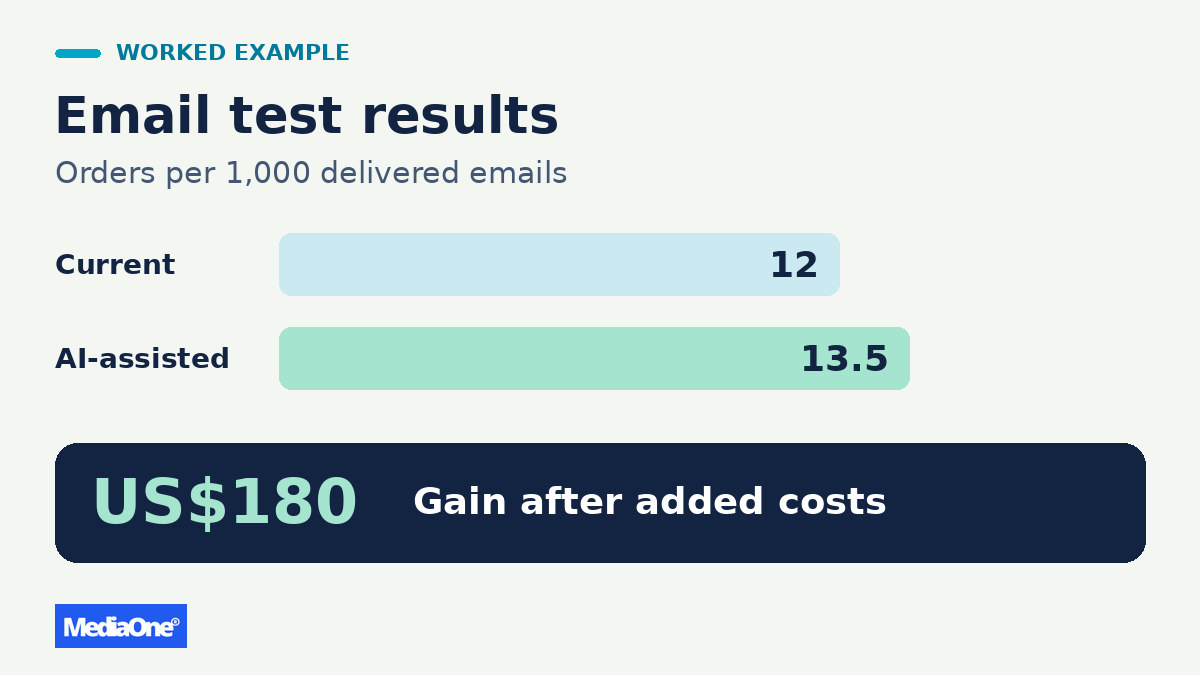
Suppose an online shop sends two versions of the same email. Each version reaches 10,000 people. The current version produces 120 orders and the AI-assisted version produces 135. Each order contributes US$20 after direct costs such as the product and delivery.
| Measure | Current version | AI-assisted version |
| Delivered emails | 10,000 | 10,000 |
| Orders | 120 | 135 |
| Orders per 1,000 delivered emails | 12 | 13.5 |
| Contribution after direct costs | US$2,400 | US$2,700 |
The AI-assisted version produced 15 more orders and US$300 more in contribution in this example. If the extra software and review cost US$120 for the test, the observed gain after those costs is US$180. That figure describes this comparison. The team can look at how steady the result is across later tests before using it in a budget forecast.
For campaigns aimed at new buyers, customer acquisition cost adds another check. The email example counts orders, some of which may come from existing customers. A campaign can sell more and still cost more to win each new customer. Reporting the two outcomes separately shows what the test achieved.
How to compare a vendor claim with your own results
A vendor case study can show how a tool was used. The size of the gain depends on what the customer did before the test, how the vendor counted results and what else changed during the period. A sales increase means one thing when the price and audience stayed the same. It means something else when the test also ran during a large sale.
A team can ask for the starting numbers, sample size, length of the test, definition of success and total cost. The team can then compare those details with its own campaign. For time-saving claims, the same check applies. A tool that saves 90 minutes on a first draft and adds an hour of review saves 30 minutes in the full process.
A First AI Marketing Test Your Team Can Measure
AI-driven marketing earns a place in a campaign when the team can name the decision it improves and show the result. A small test gives the team something it can inspect, from the data it used to the cost of approving the output. That record makes the next decision easier, whether the tool stays in one campaign or moves into another.
If your team is choosing between an email, paid search or lead follow-up test, the campaign you can measure today is a practical starting point. A conversation with MediaOne can centre on that campaign, the result you want and the records you already have.
FAQs About AI-Driven Marketing
Does AI-driven marketing require a data scientist?
Many teams can run a first test with tools they already use, such as an email platform with split testing and a spreadsheet for recording results. A data specialist becomes more useful when the team wants to build its own model, link records across several systems or estimate how much data an experiment needs.
Can a business-to-business team use AI when sales take months?
Yes. A team can test a near-term result such as meetings that prospects attend or opportunities that sales accepts. The team can then track those opportunities until they close. This gives marketing an early signal while keeping the link to sales outcomes visible.
Can AI help with campaigns in more than one language?
AI can draft local versions of a campaign from a shared brief. A reviewer who knows the language and the market should check idioms, product terms, dates and offers. A phrase that reads well in US English may sound too casual or promise something different in another language.
Can a marketing team use the same AI prompt across brands?
A prompt can share a structure across brands, such as asking for an audience, an offer and a word limit. Each brand needs its own examples, product facts and voice rules. The team should keep client records and source material separate so details from one account do not appear in another account’s campaign.
Can AI help after a campaign ends?
Yes. A team can give the tool approved campaign results and ask it to group patterns or draft notes for a review meeting. A person checks those notes against the reports and adds context the numbers cannot show, such as a delayed shipment that affected a promotion.