

For digital marketers and SEO professionals in Singapore, local search is becoming increasingly competitive and results-driven. As more consumers rely on mobile devices and “near me” searches to discover nearby products and services, businesses can no longer afford to overlook local optimisation.
Partnering with a trusted local SEO agency can make a significant difference, but understanding the fundamentals yourself is just as important to stay ahead in 2026.
In this blog, we explore 12 actionable local SEO tips tailored specifically for Singapore businesses. These strategies will help you boost local search visibility, strengthen brand relevance in your target neighbourhoods and convert high-intent searchers into engaged, loyal customers. Whether you’re a growing SME or an established brand, these insights will help you compete smarter and rank stronger in Singapore’s evolving local search landscape.
Key Takeaways
- Nearly half of all Google searches have local intent, making it critical for Singapore businesses to be discoverable by nearby customers.
- Maintaining uniform business information across listings, directories and social profiles builds trust with both search engines and customers.
- With most local searches in Singapore done via smartphones, mobile-friendly websites are essential for visibility and user engagement.
- Creating content tailored to neighbourhoods or districts improves local relevance and attracts high-intent customers.
What Is Local SEO?

Image Credit: SEObility
Local SEO, or local search engine optimisation, is the process of optimising your online presence to attract customers who are searching for products or services within a specific geographic area. Unlike traditional SEO, which aims to improve visibility broadly across national or global search results, local SEO focuses on helping businesses appear in searches that have local intent.
Local intent occurs when users include a location in their search (e.g., “digital marketing agency Singapore CBD”) or when search engines infer that the user is looking for nearby businesses based on their location.
Why Local SEO Matters More Than Ever in 2025–2026
Local SEO is more vital than ever because recent data shows that roughly 46% of all Google searches have local intent. Nearly half of online searchers are looking for nearby businesses or services. Moreover, a significant share of these local‑intent searches convert quickly: for example, about 76% of users who perform a local search on their smartphone visit a business within 24 hours.
On top of that, location-based mobile searches often lead to offline action. Many result in store visits or contacts, making local SEO a strong driver of real-world engagement rather than just online traffic. That being said, businesses that invest in optimising their online presence for local search don’t just appear higher in Google results; they increase the chances of being discovered by customers who are ready to engage, call, or visit.
Combine this with regular content updates, reviews and community engagement and you’ll position your business to capture high-intent local traffic and outperform competitors.
12 Local SEO Tips That Actually Boost Your Business
Local SEO is the process of optimising your online presence so that your business appears prominently in local search results. Unlike general SEO, which focuses on global or broad visibility, local SEO helps you attract customers in a specific geographic area. It encompasses business listings, local keywords, content, backlinks, reviews and more.
1. Optimise Your Business Listing (e.g., Google Business Profile)
A business listing is a profile of your business on online platforms (like Google Business Profile, Bing Places, Yelp) that provides essential information such as name, address, phone number, services and hours.
Your business listing is often the first touchpoint for potential customers. Search engines use it to understand your business and determine when to show it in local results or map packs. An incomplete or inaccurate listing can prevent you from ranking well or appearing at all in local searches.
Actionable Steps:
- Claim and verify your listing to ensure authenticity.
- Complete all details: NAP, website, hours, services and categories.
- Add high-quality images of your location, products and team.
- Write a keyword-rich description highlighting your services and location.
- Update information promptly if changes occur.
Why it helps:
- Improves visibility in local searches and map packs.
- Builds trust with customers searching for reliable businesses.
- Increases clicks, calls and physical visits.
2. Ensure NAP Consistency Across All Listings and Directories
NAP consistency refers to having the same Name, Address and Phone number across your website, social media, directories and business listings. Search engines compare NAP information across multiple sources to verify your business’s legitimacy and location. Inconsistent NAP can lead to lower rankings or even prevent your business from appearing in map packs.
Actionable Steps:
- Standardise how your business name, street address, and phone number are displayed.
- Audit your website, directories and social media profiles to correct inconsistencies.
- Ensure updates are reflected across all platforms simultaneously.
Why it helps:
- Confirms your business’s credibility to search engines.
- Enhances local ranking signals.
- Improves user experience by providing accurate information to potential customers.
3. Build and Maintain Local Citations and Directory Listings
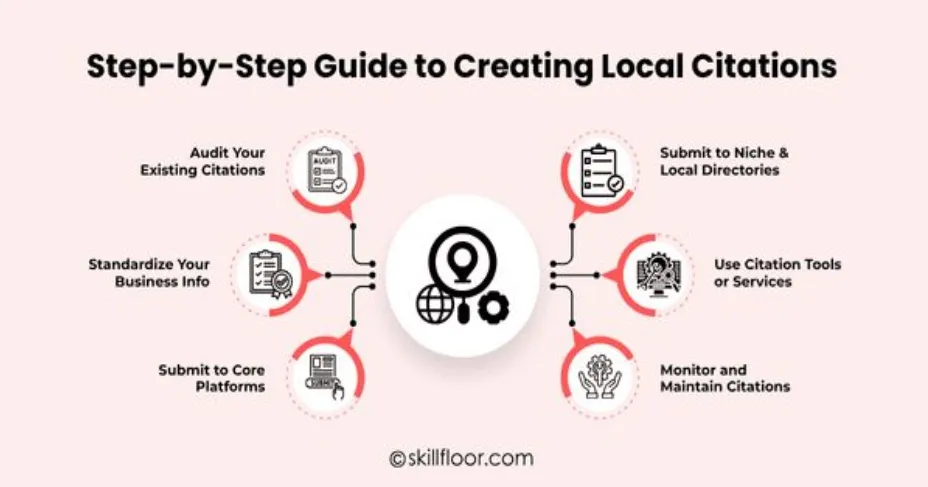
Image Credit: Skillfloor
A citation is any online mention of your business’s name, address and phone number, typically in directories, local business listings, or review sites. Citations help search engines validate your business location and industry. They are a form of endorsement, signalling authority and relevance within your local area.
Actionable Steps:
- List your business in general and industry-specific directories.
- Keep track of citations using tools like BrightLocal or Moz Local.
- Update details regularly and remove duplicate or outdated entries.
Why it helps:
- Reinforces your business’s legitimacy and local presence.
- Helps your website rank higher for location-specific queries.
- Increases discoverability for customers browsing directories or maps.
4. Target Local Keywords and Optimise On-Page SEO
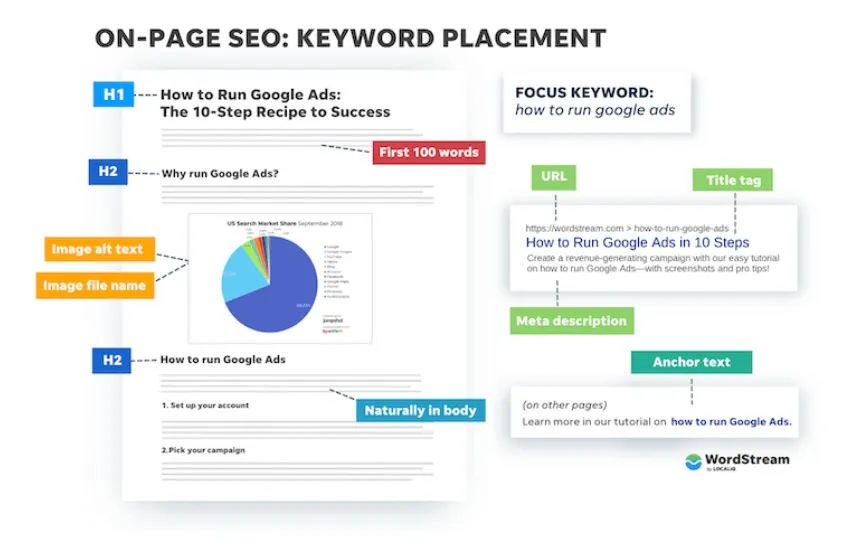
Image Credit: WordStream
Local keywords are search terms that combine your products or services with a specific geographic location (e.g., “plumber in Manchester”). On-page SEO is the practice of optimising individual web pages to rank higher in search engines. Local keywords make your content relevant to nearby users. On-page SEO ensures search engines understand your content and match it to user queries.
Actionable Steps:
- Conduct keyword research using tools like Google Keyword Planner or Ahrefs.
- Optimise titles, headings, meta descriptions, body content and image alt text with local terms.
- Include long-tail variations reflecting specific user intent.
Why it helps:
- Improves ranking for geographically targeted searches.
- Drives qualified local traffic.
- Helps search engines understand exactly where and what your business offers.
Example: A Singapore plumber could optimise a service page for “emergency plumber Singapore” to capture urgent, location-specific searches.
5. Create Location-Specific Pages or Service Pages
Location-specific pages are dedicated web pages for each branch, service area, or location of your business, providing tailored content for that area. For multi-location businesses, a single page cannot adequately represent each area. Location-specific pages improve search engine relevance and provide visitors with precise information.
Actionable Steps:
- Create separate pages for each location or branch.
- Include unique content: maps, addresses, customer testimonials, and local landmarks.
- Embed Google Maps for directions.
Why it helps:
- Helps search engines match searches to the correct branch.
- Improves user experience by providing location-specific information.
- Supports higher rankings in multiple local areas.
6. Produce Locally Relevant Content and Engage with Community Topics

Image Credit: Vital Strategies
Locally relevant content is content that focuses on the interests, events, issues, or news specific to your business’s local area. Content that resonates with the local community builds trust, authority and engagement. It also attracts local backlinks, which further improve SEO.
Actionable Steps:
- Write blog posts, guides, or videos about local events, landmarks, or issues.
- Highlight customer stories, case studies, or testimonials from the area.
- Include local keywords naturally.
Why it helps:
- Demonstrates local expertise to both customers and search engines.
- Encourages engagement, shares and backlinks.
- Signals your business’s active participation in the community.
Example: A digital marketing agency in Singapore could create a blog post titled “Top 5 Social Media Strategies for SMEs in Singapore”. The post could:
- Highlight local trends and case studies from Singapore-based businesses, such as campaigns run during National Day or Singapore Retail Festival (SRF).
- Offer actionable tips tailored to the Singapore market, such as leveraging WhatsApp Business, TikTok, or Instagram Reels for local engagement.
- Mention neighbourhood hubs or local coworking spaces (e.g., Tanjong Pagar, Marina Bay) to demonstrate local expertise.
- Feature client success stories from Singaporean companies to build credibility and trust with both readers and search engines.
This keeps the content industry-specific, locally relevant and practical, making it ideal for local SEO in Singapore.
7. Implement Structured Data (Schema Markup)
Structured data is a code format that helps search engines understand your website content, often enabling rich search results like snippets or knowledge panels. By providing search engines with explicit information about your business, you improve visibility in search results and enhance the appearance of your listings.
Actionable Steps:
- Use the LocalBusiness schema to define your business type, location, hours, services and contact information.
- Apply structured data to all relevant pages, including service and location pages.
- Test your markup with Google’s Structured Data Testing Tool.
Why it helps:
- Improves eligibility for rich results, knowledge panels and map pack features.
- Enhances click-through rates by making your listing more visually appealing.
- Signals search engines that your business is legitimate and relevant.
8. Build Local Backlinks and Partnerships
Local backlinks are links from other locally relevant websites pointing to your business site, indicating authority and trustworthiness. Backlinks are a key ranking factor. Local backlinks, in particular, signal to search engines that your business is a reputable player in its geographic area.
Actionable Steps:
- Collaborate with local blogs, news outlets and organisations for guest posts or mentions.
- Sponsor local events or charities and request backlinks from their websites.
- Form partnerships with other local businesses for cross-promotions.
Why it helps:
- Increases domain authority.
- Strengthens local search relevance.
- Drives targeted traffic from relevant local sources.
9. Encourage, Manage and Respond to Customer Reviews
Customer reviews are feedback left by clients on platforms like Google, Yelp, or industry-specific review sites. Reviews influence both search engine rankings and consumer trust. Actively managing reviews signals engagement and reliability.
Actionable Steps:
- Encourage satisfied customers to leave reviews.
- Respond promptly and professionally to all reviews.
- Highlight positive reviews on your website or social media.
Why it helps:
- Boosts trust and credibility.
- Improves local search rankings.
- Encourages more leads and conversions.
10. Optimise Your Website for Mobile and Usability
Mobile and usability optimisation involves making your website responsive, fast and easy to navigate across all devices, especially smartphones. With the majority of local searches happening on mobile, a poor mobile experience reduces engagement and rankings.
Actionable Steps:
- Ensure responsive design for all devices.
- Optimise page speed by enabling caching, compressing images, and writing clean code.
- Make menus, buttons and text touch-friendly and readable.
- Ensure essential information is visible above the fold.
Why it helps:
- Improves user experience and reduces bounce rates.
- Increases mobile conversion rates.
- Signals to search engines that your site is reliable and user-friendly.
11. Monitor Performance and Track Local Rankings
Monitoring local SEO performance involves tracking your search rankings, map pack positions, website analytics and review metrics over time. Tracking data lets you see what works, identify areas for improvement and adjust your strategy based on measurable results.
Actionable Steps:
- Use tools like BrightLocal, SEMrush, or Ahrefs to track rankings and backlinks.
- Monitor GBP insights: clicks, calls, directions and engagement.
- Adjust SEO strategies based on keyword performance, content engagement and backlink acquisition.
Why it helps:
- Enables data-driven decisions.
- Helps maintain or improve visibility in competitive local searches.
- Allows optimisation of resources for the highest ROI.
12. Engage with the Local Community and Build Real-World Presence
Community engagement refers to participating in local events, partnerships, sponsorships and initiatives and showcasing these activities online. Search engines value businesses that demonstrate real-world local authority. Community involvement also builds trust with potential customers.
Actionable Steps:
- Participate in local events, fairs, or charity initiatives.
- Partner with community organisations and highlight these collaborations online.
- Showcase local testimonials, awards, or recognitions on your website and social media.
Why it helps:
- Builds brand recognition and trust.
- Signals to search engines.
- Enhances credibility and strengthens local SEO signals.
Common Local SEO Mistakes to Avoid
Even businesses that actively invest in local SEO can undermine their efforts if they make fundamental mistakes. These errors don’t just limit visibility. They can actively harm your search rankings, credibility and customer trust.
- Inconsistent NAP (Name, Address, Phone Number): Inconsistent business information across websites, directories, or social media confuses search engines and reduces trust signals. This can prevent your business from appearing in local search results or the map pack, causing potential customers to go to competitors instead.
- Incomplete or Unclaimed Business Listings: Missing or partially completed listings signal to search engines that your business is less authoritative. Potential customers may struggle to find critical information such as opening hours, location, or services, leading to lost enquiries and diminished credibility.
- Neglecting Mobile Optimisation: Websites that aren’t mobile-friendly frustrate users and increase bounce rates. As most Singaporeans search for local services on mobile devices, poor mobile experiences can severely limit traffic and lower mobile search rankings.
- Ignoring Local Keywords: Without location-specific keywords, search engines may fail to associate your business with local searches. This limits visibility for customers actively looking for services in your area, meaning you miss high-intent leads.
- Ignoring Customer Reviews: Failing to encourage, monitor, or respond to reviews reduces both trust and perceived credibility. A lack of reviews or unaddressed negative feedback can deter potential customers and negatively influence search rankings.
- Duplicate or Low-Quality Citations: Multiple listings for the same business or citations on low-authority directories dilute your authority and confuse search engines. This can prevent your business from ranking prominently in local search results.
- Lack of Locally Relevant Content: Generic content that doesn’t reference the local area fails to establish relevance in search engines’ eyes. Without localised content, your business may lose visibility to competitors who actively engage with their community or target local topics.
- Not Using Structured Data (Schema Markup): Omitting structured data makes it harder for search engines to understand your business details. This can limit eligibility for rich results such as map packs, knowledge panels, or enhanced listings, thereby reducing your prominence in search results.
Each of these mistakes undermines a business’s ability to rank well in local search results, reduces credibility with potential customers and can lead to missed opportunities. In a competitive Singapore market, even minor oversights can have a significant impact on visibility, trust and revenue.
Additional Local SEO Tips
Even after implementing standard local SEO strategies, there are advanced tactics that can further boost your business’s visibility in Singapore.
- Optimise for Voice Search: With the rise of smart devices and voice assistants in Singapore, many users now search using natural language, e.g., “Where can I find a reliable dentist near Orchard Road?” Voice search queries are usually longer and question-based, so incorporating conversational phrases and FAQs can help capture this traffic.
- Engage in Local PR & Community Features: Appearing in local news outlets, blogs, or community portals can boost authority and drive traffic. Search engines view backlinks and mentions from reputable local sources as strong trust signals. Highlighting Singapore-specific partnerships or community projects can enhance credibility and regional relevance.
- Monitor Local Competitors: Keep track of local competitors’ SEO activities, keyword rankings and reviews. Understanding where competitors are excelling can reveal gaps in your strategy, uncover new keyword opportunities and help you stay ahead in Singapore’s competitive digital market.
- Use Google Q&A & Messaging Features: Google Business Profile now allows Q&A and direct messaging. Engaging with users who ask questions on your profile increases interaction signals and helps build trust. Prompt, accurate responses can influence potential customers even before they visit your website.
- Highlight Local Awards or Accreditations: Featuring recognitions from Singapore-based authorities, awards, or industry bodies not only builds trust with users but also signals authority to search engines. It can differentiate your business from competitors and strengthen local credibility.
These additional tips focus on emerging trends, hyperlocal strategies and underutilised features that can further strengthen a Singapore business’s local SEO presence beyond the standard practices.
Make Every Search Count With These Local SEO Tips
In Singapore, people are searching for services and products near them every day. Whether it’s a café in Tiong Bahru, a plumber in Jurong, or a boutique in Orchard Road. Local SEO is what makes sure your business shows up when it matters most.
It’s not just about ranking higher on Google. Local SEO helps people discover you, trust you and choose you over the competition. Every search is a chance to connect, welcome new customers and grow your business.
Investing in local SEO means making sure your business is the one people can actually find and rely on in their area. MediaOne can help you optimise your local SEO strategy, boost your online visibility and connect with more high-intent local customers. Get in touch today and start owning your local spotlight.
Frequently Asked Questions
How long does it take to see results from local SEO?
Local SEO results are not instant. Typically, businesses may begin noticing improvements in search visibility and map pack placements within 3–6 months, depending on competition, website authority and how consistently optimisation strategies are applied.
Can small businesses compete with larger brands in local search?
Absolutely. Local SEO is all about relevance and proximity. Even smaller Singapore SMEs can outrank bigger companies in their specific neighbourhood or niche by optimising listings, targeting hyperlocal keywords, gathering reviews and producing locally relevant content.
Does social media activity affect local SEO rankings?
Indirectly, yes. While social signals like likes or shares aren’t direct ranking factors, active engagement on social media increases brand awareness, drives traffic to your website and can lead to more reviews and citations, which positively influence local search performance.
How important are images and videos for local SEO?
Visual content can enhance your local search presence. Using geo-tagged images, descriptive filenames, and localised videos improves user engagement and can signal relevance to search engines, helping your business stand out in map packs and search results.
Should I target multiple locations if my business serves several areas in Singapore?
Yes, but it must be done strategically. Creating dedicated pages for each location with unique, location-specific content improves relevance and avoids duplicate content issues. This approach helps your business appear in searches for each area it serves, maximising reach across Singapore.