| AI Summary
Viral marketing campaigns grow when people share a brand’s message with others. Singapore brands can plan for sharing by choosing a specific audience, testing what people would send to a friend and preparing for the response. Spotify Wrapped shows how personal results give people something to post. Scoot and the Singapore Tourism Board show how a familiar character can invite people to join in. Campaign success depends on the goal, such as more bookings, enquiries or sales. |
Viral marketing campaigns are promotions designed to spread from person to person through shares, forwards or audience-made posts. To plan one, choose a specific audience, give people a reason to share, test a rough version, launch it with a small group and track what people do after they see it.
Key Takeaways
- The first audience should be small enough to name. A group of regular customers or a creator’s followers gives a team a better place to start than a broad age group.
- One rough version can show whether viewers understand the idea, who they would send it to and what they remember about the brand.
- A campaign can use ads, creators and a live event together. Each plays a different role in getting the idea to people.
- Shares, searches and sales answer different questions. A team should choose its main measure before launch.
- A response plan gives staff time to answer questions, correct errors and handle more orders if attention grows.
Imagine a café posts a short clip about the friend who always says, “Anything is fine,” then rejects every lunch idea. Someone sends it to their office chat. A colleague tags the person who does it every Friday. The clip travels because the viewers know exactly who needs to see it.
A Singapore brand can design for that moment. The sections below show how to choose a campaign format, test an idea and decide what to do if people start passing it on.
What Are Viral Marketing Campaigns?
Viral marketing campaigns start with a message a brand puts into the world. People then carry it into their own chats, feeds or conversations. One viewer sends a clip to a friend. The friend shares it in a group chat. Someone in that chat makes their own version. Each step can introduce the campaign to people who missed the original post.
A brand can pay to reach the first viewers. The campaign spreads when those viewers choose to carry it further. That distinction explains how viral marketing works and why two posts with the same view count can tell different stories. One may have reached most viewers through ads. The other may have moved through customer groups, creator posts and private messages.
A campaign can still do its job in a small circle. A bicycle repair shop in Tampines may care about reaching local cycling groups, where a handful of workshop bookings can count for more than a surge of views from overseas. The right audience depends on what the business wants people to do.
Three Ways to Launch a Viral Marketing Campaign
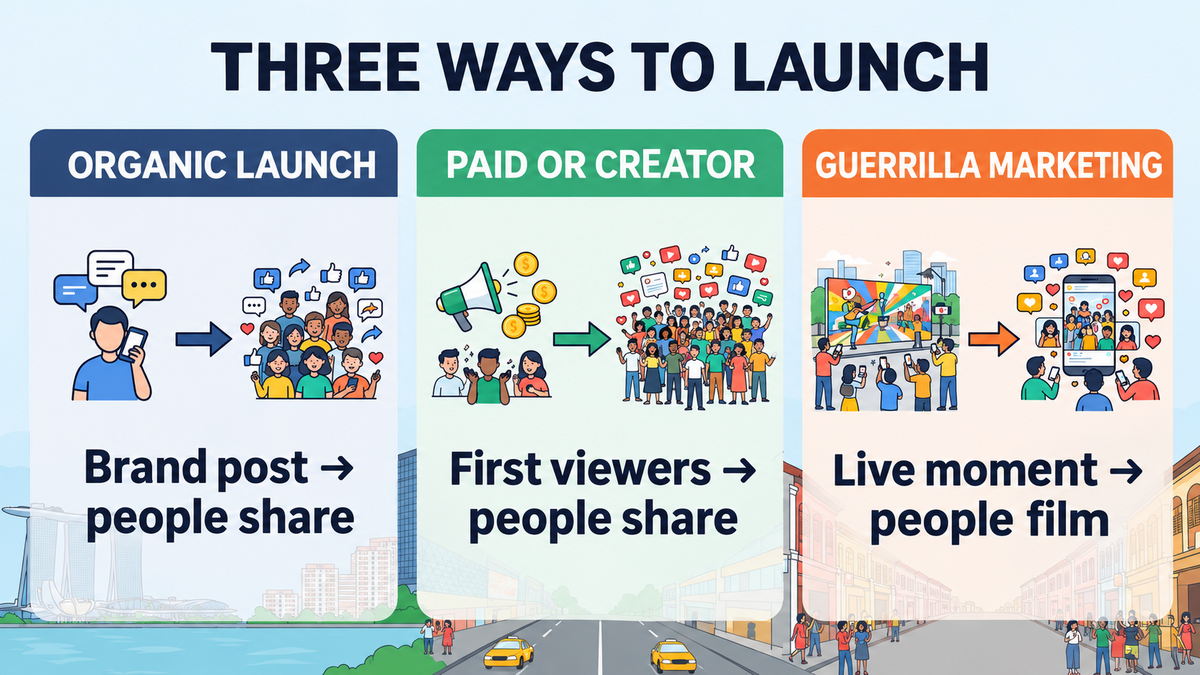
Campaigns can start with a brand’s own followers, a paid push or something people see in person. These options can work together. A live event, for example, can give visitors something to film, while paid promotion can introduce the video to people who missed the event.
| Launch approach | How it starts | Example for a Singapore business |
| Organic launch | The brand posts through its own channels, then viewers pass the idea on. | A bakery posts a short clip showing how its team gets the first trays ready before the morning rush. |
| Paid or creator launch | Ads or paid partners bring the campaign to its first viewers. | A stationery shop works with a study creator to show how students set up a desk in a small room. |
| Guerrilla marketing | An unexpected display or live event gives people something to film or talk about. | A florist sets up a flower wall at a partner venue and lets visitors add a note for someone they miss. |
An organic launch still takes staff time and may need money for filming or design. Paid promotion gives a team more control over who sees the first version. In influencer marketing, the creator can show the idea in a way that feels familiar to their audience. A live event brings venue, staffing and access needs. Its first viewers are the people who walk past or take part.
The choice depends on what makes the idea work. A product demo may need a close-up. A joke may need only a caption and a familiar scene. A public display needs to make sense to someone seeing it in person and to someone who comes across a photo later. A team can choose the simplest format that preserves the part people would share.
Viral Marketing Campaign Examples and What Brands Can Learn
The examples below give people different reasons to pass something on. Spotify offers something personal. Scoot gives viewers a role in a story. Andrex brings a topic people may avoid into everyday conversation. Each example also shows a different kind of result a brand can report.
Spotify’s 2025 Wrapped experience turned a year of listening into a recap people could share. A listener could post a favourite artist or compare listening habits with friends. The story came from what each person played, so friends had something of their own to bring to the conversation.
In its fourth-quarter results filing, Spotify reported 630 million shares worldwide for 2025 Wrapped. That figure shows how often people shared it. A share could come from someone who posted several times, so the figure answers a different question from how many people took part.
A small business can borrow the idea without building an app. A bookshop could give readers three printable cards based on the kind of books they enjoyed that year. A customer picks one and adds a favourite title. That small choice gives each post something personal.
Scoot and STB gave travellers a role in the story
In March 2026, Scoot and the Singapore Tourism Board’s Superfans campaign turned the Merlion into a character that asked travellers to pose somewhere else. Creators started the challenge by inviting people to suggest another photo spot in Singapore. A limited-time fare sale gave interested viewers a separate way to act.
The launch announcement describes how the campaign invited people to join. It gives no share count. A neighbourhood business could use the same idea on a smaller scale. A café might ask customers which nearby landmark belongs on its next cup sleeve. People can name a place they know and show friends how they voted.
Andrex gave people a reason to talk about an awkward subject
Andrex’s Get Comfortable campaign took on the awkwardness of talking about toilet habits. The work included a partnership with Bowel Cancer UK, which also put information on toilet roll packaging. The Institute of Practitioners in Advertising’s case summary reports that the wider campaign reversed a decline in the share of households buying Andrex.
The lesson for other brands is to start with a subject they have a reason to talk about. A laundry service could show what the symbols on clothing labels mean. A person who has ruined a shirt in the wash has a reason to save the post or send it to someone who just moved into their first flat.
A viewer may pass on a campaign to make a friend laugh, share a tip or say, “That happens to me too.” In a study of what makes online content spread, Jonah Berger and Katherine Milkman found that feelings such as awe and anger were linked to more sharing in the articles they studied. They also found that readers were more likely to share practical content. For brands, a timely tip can offer as much creative direction as a joke or a surprise.
Give the viewer someone to send it to
A good test is whether someone can name the person who would get the post. “My sister sends me photos of every dog she meets” tells a team more than “Pet owners will like it.” It gives the team a picture of who might share, who might receive it and why.
The same rule applies to humour. A scene about two colleagues trying to split a group lunch bill can work because people recognise the situation. If a test viewer thinks the joke is aimed at one person, the team can change the scene before it pays to film it.
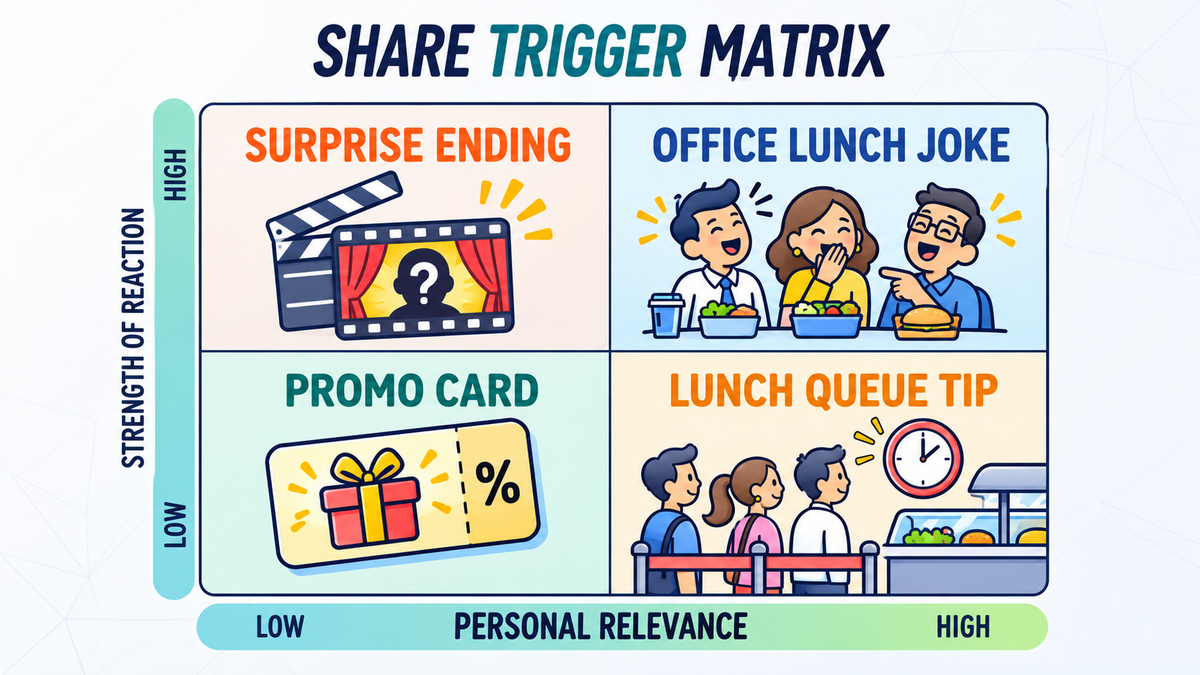
The Share Trigger Matrix is a planning exercise. It asks two questions. How much does the idea make people feel? How closely does it relate to something the audience knows or cares about? A team can use the answers to compare rough ideas before choosing which one to test.
| Audience reaction | Feels less personal | Feels more personal |
| Mild reaction | A standard promo card gives few people a reason to pass it on. | A lunch queue tip could help colleagues who work nearby. |
| Strong reaction | A surprise ending may get a laugh while leaving people unsure whom to send it to. | A joke about the office lunch group may prompt viewers to tag the colleague who does it. |
A practical idea can earn its place with a mild reaction. Someone might send a lunch queue tip because it saves a colleague time. The matrix helps the team spot the reason for that share. A rough test shows whether viewers see the same reason.
The first channel should suit the action the campaign asks for. A post made for private forwarding needs enough context to stand alone. A creator challenge needs a public example that shows how to join. A social media marketing plan can give each channel a job, even when the team uses the same idea across several of them.
| Channel | What people can do | What the campaign needs |
| Forward a card or clip to a person or group. | A short message with the key details inside the card or clip. | |
| TikTok | Share a video or post their own response. | An opening that shows the scene and a prompt people can repeat. |
| Send a Reel or post to a friend or share it to Stories. | Text people can read on a phone and visuals they can follow without sound. | |
| Facebook groups | Discuss a local topic or share it with a group. | A post that serves the group and follows its posting rules. |
The campaign should make sense after it leaves the original account. A screenshot may lose its caption. A forwarded clip may arrive with the sound off. A post about a pop-up, for example, can show the venue, date and brand inside the image. Someone who receives it has the details needed to decide whether to go.
A small team can start with one version. If people keep sharing a café’s lunch joke in messages, a second version might put the punchline and café name on one card. If people ask how to make their own video, a follow-up can show one person doing it from start to finish.
How to Plan a Viral Marketing Campaign on a Small Budget
A small team can build a campaign in stages. Each stage answers a question before the team spends more. The plan below follows a neighbourhood bakery that wants more people to pre-order a weekend pastry box.
Set one goal and choose the first audience
The bakery wants pre-orders from people who can collect the box. Its first audience could be existing customers and people who live or work near the shop. A post can show a familiar moment, such as the person who buys pastries for everyone else and gets home with an empty bag. The collection details give interested viewers a way to buy.
The team can put those choices into a brief with three lines.
- Audience. People who can pick up a box this weekend.
- Reason to share. The post reminds them of someone who always brings breakfast.
- Action after viewing. Pre-order a box and choose a collection time.
Test the idea before filming
A phone clip or a set of sample frames can show how the bakery joke works. Two versions might use the same story with different openings. In one, the viewer sees the empty bag first. In the other, the viewer sees the pastries disappear as the person hands them out.
The test can ask viewers to describe what happened, say whom they would send it to and explain how they would order. If people remember the joke but miss the bakery’s name, the team can put the name on the bag. If they miss the collection time, the team can add it to the last frame. The changes cost less before the team films the final version.
Split the budget into testing, launch and response
The first share of the budget pays for rough versions and a small test. The launch share covers the final post and any planned ads or creator fees. The response share covers work that comes after publishing, such as updating an order page, answering messages or making a follow-up clip.
A spending rule gives the team a way to decide when to release more money. The bakery might pay to reach more people nearby once the first viewers begin sharing the post and placing orders. If people share it but keep asking where to collect, the team can fix the order page before spending more. A jump in views gives the team a reason to look at the next step in the order process.
Prepare for questions and complaints
The bakery can check its offer against the Singapore Code of Advertising Practice before launch. A sponsored creator post also needs to account for ASAS’s standards for marketing on social media. The team can agree on the price, collection terms and sponsorship wording before anyone posts.
The response plan should name the person who answers questions and the person who can pause promotion. If a caption lists the wrong collection time, the team can correct the post and contact people who already ordered. If orders reach capacity, it can update the order page and stop ads that still promote the sold-out box. A basic online reputation management plan gives staff a way to handle complaints while they manage those changes.
How to Measure a Viral Marketing Campaign
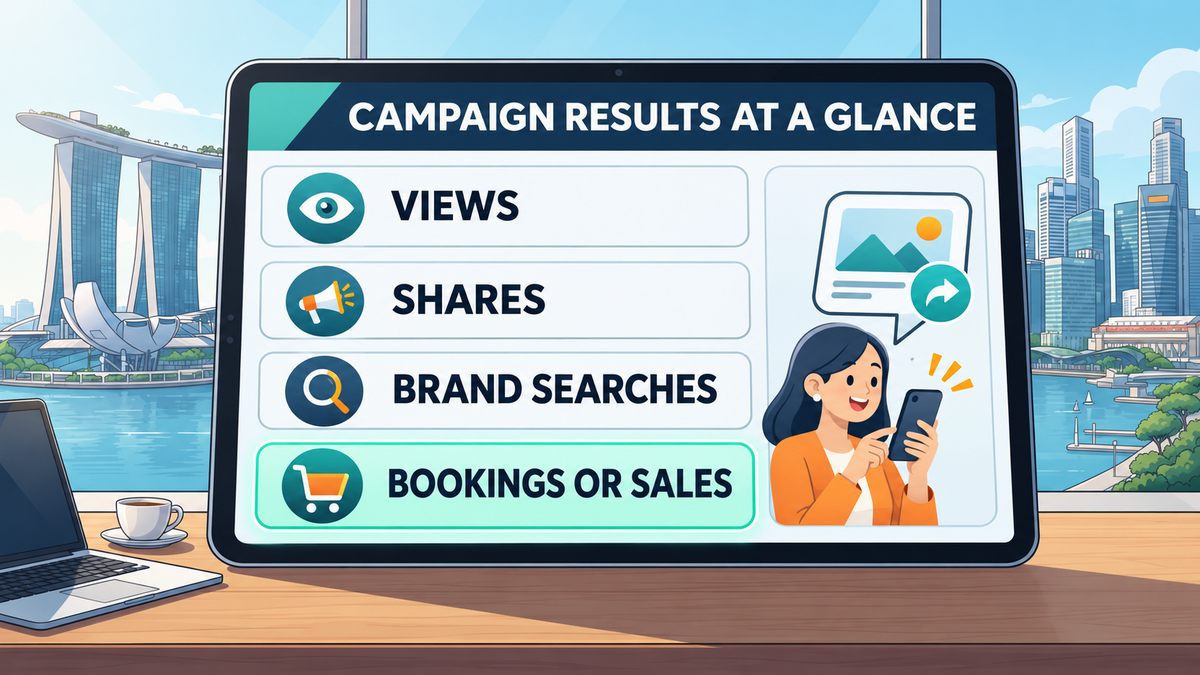
A campaign report should show what people saw, what they passed on and what they did next. The team can record normal results before launch and compare them with a similar period. A bakery comparing weekend pre-orders can start with other weekends that had similar opening hours and stock.
| Measure | What it tells the team | What to compare |
| Views | How often the platform counted a view. | Similar posts on the same platform, using the same reporting period. |
| Shares | How often the platform recorded someone passing the post on. | Share totals and shares per 100 views, where the platform reports both. |
| Brand searches | Whether searches containing the business name changed. | A similar period before launch, allowing for other ads or news. |
| Bookings, enquiries or sales | How many people took the action the campaign was built for. | The campaign page, promo code or booking records and the usual result for that period. |
If a video gets 10,000 views and 250 reported shares, that is 2.5 shares per 100 views. The ratio helps the team compare versions that reached different numbers of viewers. Each platform can count views and shares differently, so the fairest comparison uses posts from the same platform.
A campaign link or offer code can help connect a sale with the post. Some people will see the campaign, search for the shop later and buy without using the link. Some private forwards may leave little detail in the report. The team can keep tracked sales and changes in overall sales on separate lines so it can see what it directly measured.
One follow-up decision is enough for a first report. If shares are high but orders stay flat, the team might review where the post travelled, how the offer appeared or what happened on the order page. Research from Nanyang Business School on short-lived consumer trends offers a reason to check results again after the first wave of attention has passed.
The first version of a campaign can be as simple as a rough clip and a few conversations with customers. A brand that knows who might pass it on can decide what to film, where to post and how to measure the response. A set of brand guidelines can help everyone use the same tone when the campaign moves between staff, creators and channels.
For Singapore teams turning a campaign idea into a series of posts, MediaOne’s content marketing services can support the message and follow-up content. Our branding services can help when the team needs to decide how the idea should sound and look before it goes live.
FAQs About Viral Marketing Campaigns
Yes. An old post can find new viewers when a creator shares it, a news story brings the subject back or a seasonal event makes it timely again. The original caption may still show an expired price or event date. An update near the top of the post can help new viewers find the current details.
Yes. A business-to-business campaign can spread among people who do similar work. A short clip about a common payroll error may travel among HR staff, while a diagram showing why parcels arrive damaged may move through retailer groups. A focused trade audience can give a campaign a reason to spread within that field.
Can a campaign work without a hashtag?
Yes. People can forward a link, send a post or talk about a campaign without using a hashtag. A hashtag is handy when a brand wants to find public entries for a challenge. A campaign that asks people to send a card to one friend can work through the platform’s share tools alone.
Yes. A screen recording, stop-motion clip or set of drawings can carry an idea. A plant shop could show the same desk plant before and after a week of care. The plant tells the story. On-screen dates and close-up shots help viewers follow the change.
Should a campaign have a separate landing page?
A separate page can help when people need details that the post cannot hold, such as dates, collection terms or several booking options. A current product page can serve a simple offer if it already answers those questions. The destination should match what people expected when they tapped the link.