Viral marketing is a campaign strategy in which a message spreads from person to person, usually through sharing. It works only when you deliberately seed the first audience and the content is worth passing on. Most branded content never escapes obscurity, but campaigns that do spread follow a pattern you can plan and score before spending any budget.
Viral marketing is not an overnight moment. It is a series of decisions about what to make, who sees it first and what happens next. Spread depends on a shareable idea, a seeded first audience and a planned follow-up – and it works best as part of a wider plan, not on its own.
This guide helps marketing managers, founders and small business owners decide whether viral marketing fits their budget and goals. It explains how spread works, where campaigns fail and how to score a concept before spending money on it.
It includes a readiness checklist, a worked scoring example and criteria for when viral marketing is the best tool to skip.
Key Takeaways
- Viral marketing relies on strong emotion and a clear reason to share, not luck.
- Most branded content never spreads. Treat virality as a rare outcome you can improve the odds of, not a plan you can bank on.
- Seed a first audience, such as a creator or community group, to kick-start early views.
- Plan a follow-up beat before launch. The ALS Ice Bucket Challenge spread over several weeks because response videos kept it going.
- Score your campaign against five questions before spending. Below 5 out of 10, rethink the plan.
- Check reach claims carefully. Inflated numbers are common, and backlash spreads as fast as praise.
Why the Word ‘Viral’ Misleads Marketers
Most marketers picture a viral campaign as one moment when a video takes off overnight. That picture causes damage. Teams chase a rare outcome and judge ordinary work as failure. In reality, most branded content never escapes obscurity – the campaigns that do spread are the exception, and they are engineered rather than lucky.
Viral marketing is an engineering problem. It needs a first audience, a reason to share and often a follow-up. For most teams, steady brand awareness is the more reliable goal – and virality, when it comes, is a bonus on top of it.
Viral marketing is a strategy in which a message spreads from person to person, usually through sharing, rather than through paid placement alone. The brand’s job is to create content worth passing on and to seed it with the audience that will start the chain. User-generated content can extend that reach further, and a well-run campaign on social media can accelerate it.
Where the term came from: the Hotmail example
The word itself is usually credited to Jeffrey Rayport’s 1996 Fast Company article ‘The Virus of Marketing’, and to Draper Fisher Jurvetson, who popularised ‘viral marketing’ in a 1997 paper inspired by the Hotmail story. Hotmail grew from zero to 12 million users in 18 months after appending a simple footer line to every outgoing email: ‘Get your free email at Hotmail’. Every message acted as a small advertisement from a satisfied user.
‘Viral’ describes the spread, not the size of a campaign. Three principles hold in practice:
- Worth passing on. The message must earn a share through humour, usefulness or a sense of identity – the Old Spice campaign shows how humour drives sharing.
- Early push. A chosen group must push the content before it reaches anyone by chance.
- Rare outcome. Most branded content never reaches this threshold. Treat going viral as a result a campaign can improve the odds of, not a guarantee.
How Viral Marketing Campaigns Work
Viral marketing runs on three steps: seeding, sharing and spreading. A brand places content with a first audience – a creator, a community or a paid push. That audience passes it on, and the spread either builds or dies. Most campaigns stall at seeding, because a cold launch rarely escapes obscurity, so plan how the content reaches its first users before launch, not after.
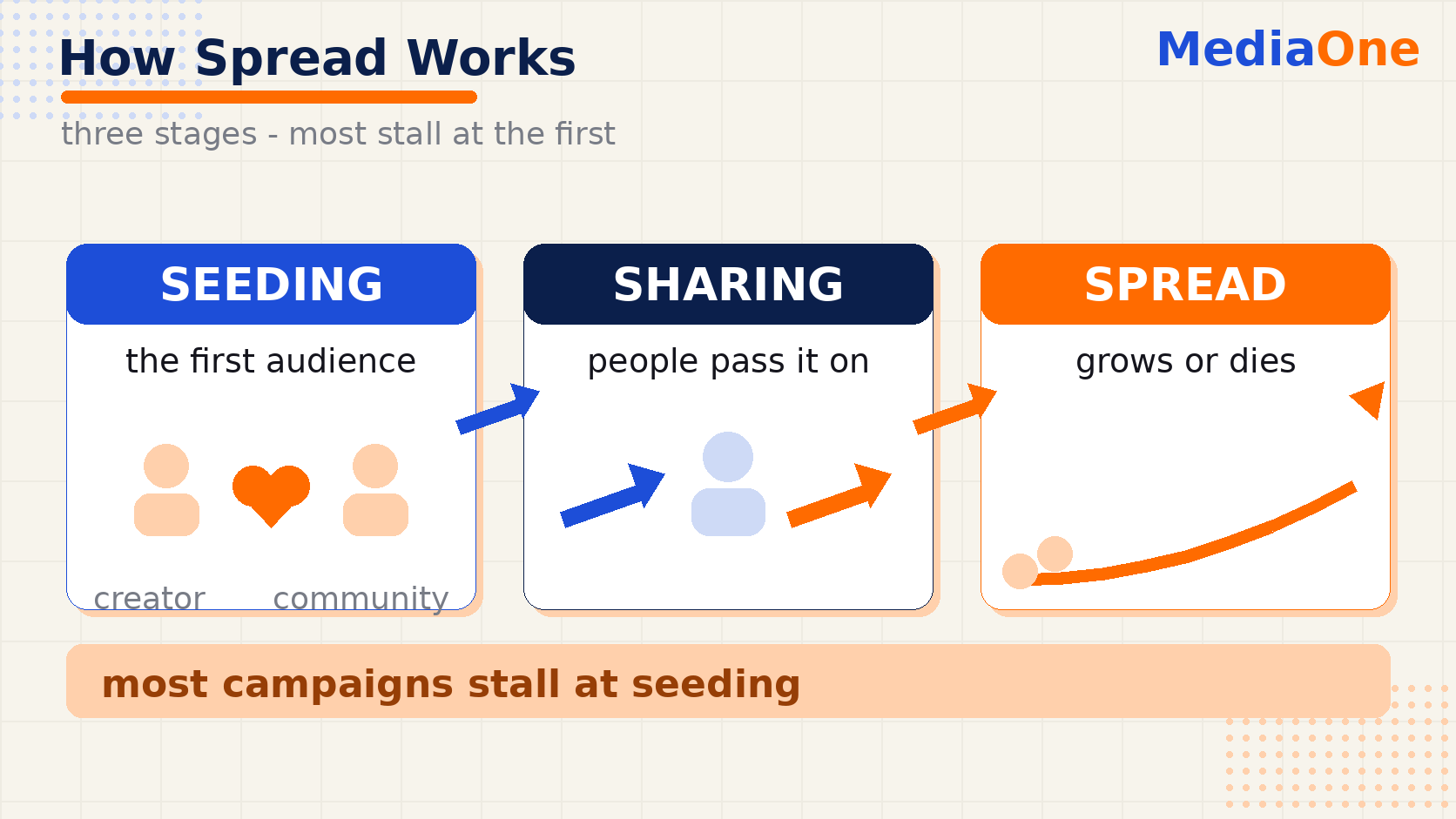
Figure 2: How spread works: seeding, sharing, spread
Viral content is easy to understand in seconds, worth talking about, and gives people a reason to be seen sharing it. Research by Berger and Milkman, published in the Journal of Marketing Research in 2012, examined what makes online content viral – the shareable qualities they studied, led by high-arousal emotion, are the ones to plan for. Pick the idea users are most likely to pass on across social media, not the one the brand finds most flattering.
The Readiness Scorecard: Five Questions Before You Spend
Score your idea from 0 to 2 on each of five questions, and tally the total out of 10:
|
# |
Question |
|
1 |
Does it provoke high arousal – awe, amusement, anger or surprise? |
|
2 |
Does sharing say something about the sharer’s identity? |
|
3 |
Is there a reason to talk about it now, such as a news hook? |
|
4 |
Is a named group ready to push the first 1,000 views? |
|
5 |
Is there a follow-up beat to extend the news cycle? |
|
Total (out of 10) |
8-10 invest; 5-7 fix the weak link; below 5 rethink |
Scores of 8 to 10 justify investment. Below 5, rethink before you spend. Scores from 5 to 7 mean the idea has promise but a weak link, so fix that link before committing budget. The framework is the author’s own method, so test it against past campaigns before relying on it.
Worked example:
A hypothetical meal-kit startup entering a new region scores 2 on surprise, 1 on identity, 0 on timing and 1 on seeding, since a local food blogger is willing to try the kit. It scores 0 on follow-up. The total is 4, so the team should add a follow-up beat and a named seeding group before spending any paid budget.
Second example: a Singapore lifestyle product launched around a national holiday scores 2 on emotion, 2 on identity, 2 on timing, 1 on the named group and 0 on follow-up. The total is 7 – worth a small test, but fix the missing follow-up before the main spend. A second video showing real customer examples would lift the score.
Benefits, Risks and Challenges
Benefits
- Reach at low extra cost. Once people share content, the brand gains exposure it would otherwise pay for.
- Earned credibility. A recommendation from a friend or creator can carry more weight than a paid advertisement, which can increase trust in the brand.
- Lasting recall. Campaigns that give people a reason to share can stay in memory longer than a single ad placement.
Risks and challenges
- Backlash. Content that provokes strong emotion can provoke the wrong one, and a sharp hook can turn against the brand within hours.
- Shallow attention. People may share a joke without remembering the product. An MIT study of Twitter found that false news spreads faster than true news, showing how quickly novelty can outrun accuracy.
- Unpredictable outcomes. Most branded videos stall at modest reach, so any reach claim you read usually describes the rare outlier.
- Weak follow-through. Without a planned second beat, attention fades quickly and the campaign ends.
Before committing budget, ask whether you can afford the ordinary result as well as the best one, and measure success beyond shares alone – recall, sign-ups and sales after the first wave matter more.
Case Studies: What Successful Viral Campaigns Had in Common
The campaigns people remember were built to be passed on, and each gave its audience something to do or say. Old Spice’s ‘The Man Your Man Could Smell Like’ is the classic example of successful viral marketing, with its humorous, direct-to-camera style that audiences were eager to repeat.
The ALS Ice Bucket Challenge and the participatory mechanic
The ALS Ice Bucket Challenge asked people to film themselves, get doused and nominate others. The 2014 campaign united 17 million participants and raised more than US$115 million for the ALS Association during the summer of 2014. Every participant became a distributor, which makes it the leading example of a campaign built for spread through participation.
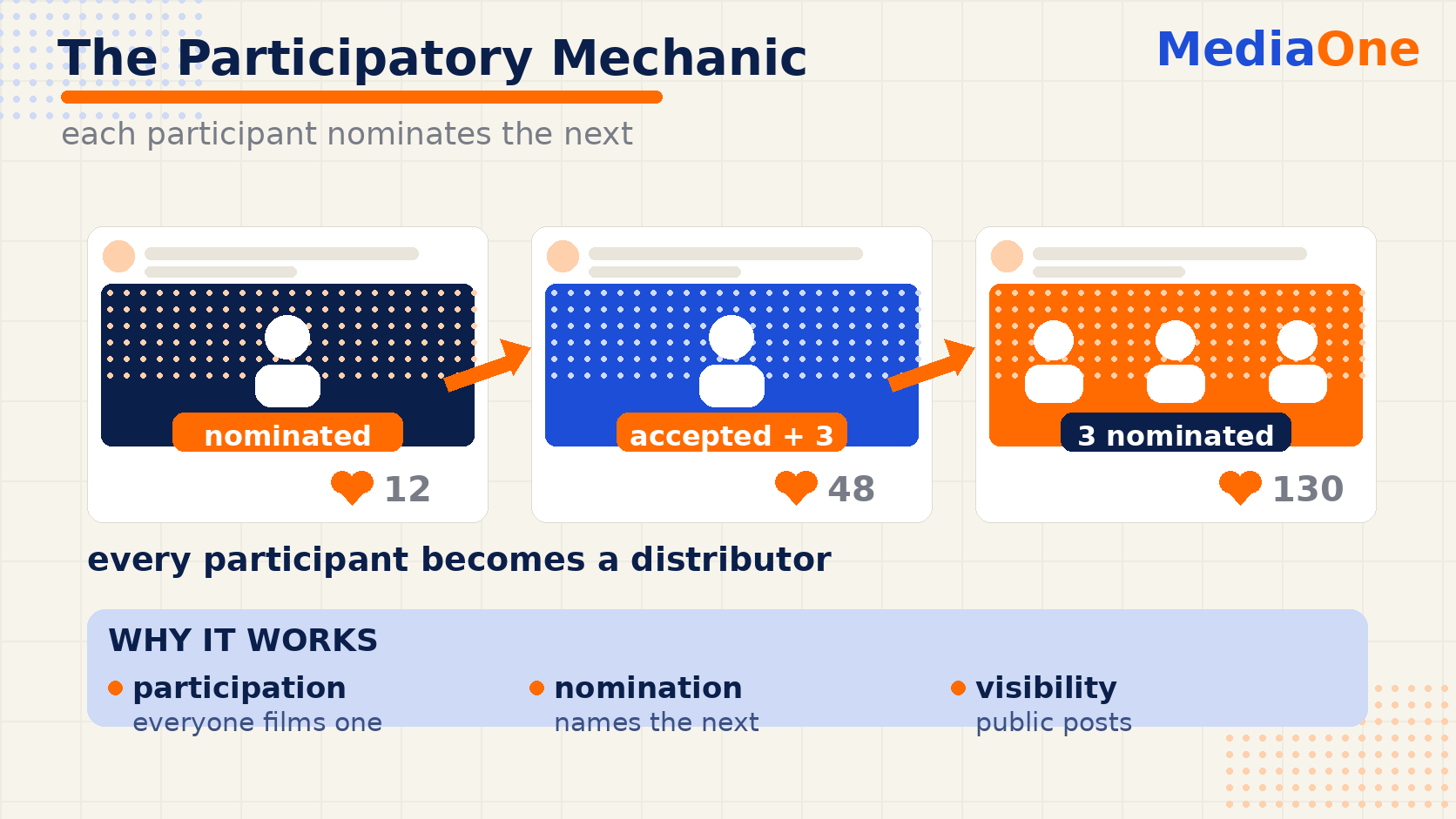
Figure 3: The participatory mechanic: nominated, accepted, three more nominated
Old Spice’s response videos and the sustained news cycle
Wieden+Kennedy, Old Spice’s agency, followed the campaign’s launch by filming 186 personalised response videos to fans and celebrities, answering real comments from social media in character over two and a half days. The responses extended a single ad into a running story – and are widely credited with lifting body-wash sales by a reported 125% during the push. Planned follow-up beats keep attention alive long after launch.
Apple’s white earbuds: the visible signal
Apple’s white earbuds stood out against every other pair. Owning them became a public signal, so the product spread without ad spend – proof that a product’s own design can carry the message.
Patagonia’s ‘Don’t Buy This Jacket’: the counterintuitive message
Patagonia told customers not to buy a jacket. Surprise drove attention, and loyal customers shared it to affirm their values. Sales rose roughly 30% in the nine months that followed, per an IMD case study – a company-reported figure rather than an independently audited one, and Patagonia’s own account of the ad makes clear the intent was long-term activism, not a sales spike.
Seeding the First 1,000 Views
Seeding is the step most campaigns skip. The first audience needs to be chosen before launch, not hoped for after it. In Singapore, that audience is often a creator, a community group or a niche interest channel with an engaged following: We Are Social’s Digital 2026 Singapore report finds Singaporeans spend 17 hours each week on social platforms, and more than one in four use social media for inspiration – so a well-chosen first audience can carry content into wider networks.
Pay for seeding only when organic outreach to your existing community cannot reach the first 1,000 views within the first few days. If no such group exists, paid seeding to a tightly targeted audience is justified – and a creator partner is often the cheapest way to buy that first push, which is where MediaOne’s influencer marketing service comes in. Seeding also builds brand awareness, since early viewers become the first people who recognise the brand.
Plan for a Better Viral Marketing Strategy
Viral marketing rewards deliberate preparation over creative brilliance alone. Berger and Milkman’s research put emotional arousal at the centre of what gets shared – build that pull in, then engineer the spread: seed the first audience, plan the follow-up beat, and score the whole idea before any money moves.
This week: score your current idea against the readiness checklist, pick the platforms your audience uses, and name the group that would push your first 1,000 views. If you want a team on the channels themselves, review MediaOne’s social media marketing service and hold it to the same standard: scored ideas, seeded launches and follow-up beats planned before launch day.
Frequently Asked Questions
Viral marketing is a campaign built so people pass it on to each other, rather than the brand paying for every view. The brand supplies the content and an early push, and users do the rest.
Yes. Singaporeans spend 17 hours each week on social platforms, so a well-placed creator or community group can seed a campaign quickly. Start with a community you already reach before spending on paid seeding.
Track shares, saves, and comments alongside views, and measure spread in the first 48 hours – our guide to brand mentions and how to track them covers the mechanics. Then check whether traffic or sign-ups follow the spike.
No. Influencer marketing pays a creator to promote a brand. Viral marketing aims for the audience to carry the message onward – though an influencer can seed a viral campaign.
Backlash, misreading the audience, and a message that spreads for the wrong reasons – the MIT Twitter study showed novelty spreads faster than accuracy, so test content with a small group first.
Most spikes peak within days. A campaign lasts longer only with a follow-up beat, such as response videos or a new news hook – the ALS Ice Bucket Challenge, which spread over several weeks, is the exception.