| AI Summary
Social media platforms help Singapore businesses get discovered, show how their products work and answer customer questions. Instagram and TikTok suit visual discovery, Facebook supports local updates and communities, YouTube explains products in detail, and LinkedIn reaches professional buyers. WhatsApp Business can handle enquiries and order details. A four-week test helps a business see which channels earn attention from the right people and lead to sales conversations or bookings. |
The best social media platforms for a Singapore business depend on who buys, what they need to see and how they take the next step. Instagram and TikTok suit visual discovery, YouTube suits demonstrations, Facebook suits local communities, and LinkedIn suits business buyers. WhatsApp Business can handle enquiries, orders and support.
Key Takeaways
- A platform earns a place on the shortlist when the team can name the buyer, the post format and the next action.
- An enquiry count becomes more informative when staff record which enquiries the business can serve and which turn into bookings or orders.
- A post with strong reach and few clicks points to a different problem from a page that gets clicks and few enquiries.
- A four-week test gives small teams a set period to compare results, check their workload and decide where to spend the next month.
Social media platforms can play different roles in a single sale. A customer might see a cake on Instagram, open the bakery’s profile for the price range and send a WhatsApp message to check a collection date. The post earns the first look. The chat helps turn that interest into an order.
A Singapore business can use that same logic for a renovation quote, a workshop booking or a sale to another company. The decision starts with what a customer needs to see or learn before they act.
What Are Social Media Platforms?
Social media platforms are online services where people and organisations publish content, share it and interact. A restaurant’s website might list its menu and opening hours. Its Facebook post can also prompt customers to ask about a dish, share the menu with friends or pass along news about an event.
Some platforms serve several purposes. Instagram can host a product video and receive a private message about it. YouTube can help a viewer discover a brand through a short clip or spend ten minutes learning how a product works. For a small team, the platform’s main job should follow the question customers ask at that point in the sale.
The main types and what they do
| Type | Examples | What a business can use it for |
| Visual and short video | Instagram, TikTok | Show a product, a result or a quick demonstration |
| Video sharing | YouTube | Explain a process or answer a question in detail |
| Local and community | Share an event, business update or local offer | |
| Professional networking | Show expertise and reach people who buy for their companies | |
| Messaging | WhatsApp Business | Confirm details, answer questions and handle support |
Public posts give people a way to discover a business. Private messages give them a place to discuss details such as dates, quantities and delivery. The WhatsApp Business app offers tools such as quick replies and a catalogue, which can help a small team answer common questions during those chats.
A bicycle shop, for example, could post a video showing how it checks a used bike. A buyer who needs a repair can then message the shop with a photo and ask for an estimate. Each format solves a different problem for the same customer.
What Singapore’s Social Media Numbers Tell Businesses
DataReportal’s Digital 2026 Singapore report estimated 5.33 million active social media user identities in Singapore in October 2025. DataReportal uses the term user identities because the estimate can include more than one identity for the same person. The figure gives businesses a sense of the scale of social media use in Singapore.
Why platform counts use different measures
- Monthly active users are accounts or users that a service counts as active during a month, based on its own rules.
- Potential ad reach estimates how many people an advertiser could reach under the conditions shown in the planning tool. It describes a possible audience before a campaign runs.
- Registered members are people who have signed up for a service. The total can include people who rarely use it. DataReportal flags this difference in its Singapore report when presenting LinkedIn figures alongside other platforms.
What local evidence adds
National figures can help a business decide which channels to look at first. A pet groomer in Tampines still needs to know where owners near the shop ask about appointments. An IT provider selling to finance teams needs signs that the people reading its posts have a say in buying software. MediaOne’s Singapore social media statistics provide local context for that first review.
Customer behaviour can narrow the list. A team can ask recent buyers where they first heard about the business, note what people send when they enquire and check which posts lead to visits or calls. A buyer may remember a friend’s forwarded video even when the booking system records a direct website visit. Both details help explain how the sale began.
A new business can look for the same clues before it has much data. Conversations with prospective customers can reveal where they look for reviews, how they prefer to contact a seller and what makes them compare prices. Those answers give the first month of posting a purpose.
How to Shortlist Social Media Platforms
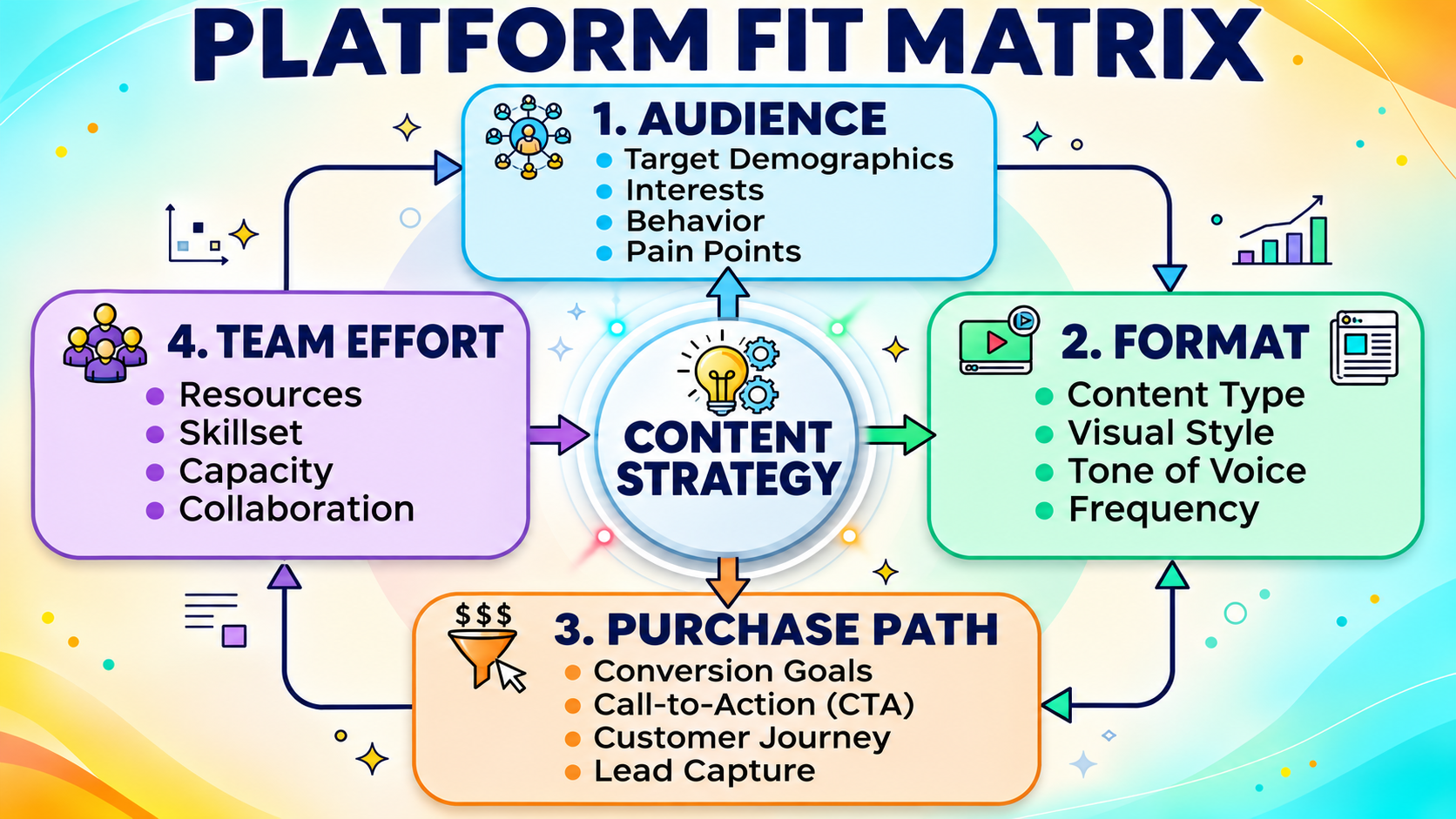
Four questions help a business judge whether it can put a platform to work. They cover the buyer, the post, the customer’s next action and the hours the team has available.
Who needs to see the post?
The intended buyer should be specific enough for the team to picture. A bakery may want parents planning a birthday in the next month. A payroll company may want operations managers who need to move off spreadsheets. Each group has a different reason to stop and look.
A business can learn from questions customers already ask. If bakery buyers often ask how many guests a cake serves, a post that shows portions answers a real concern. If payroll buyers ask what happens during the first pay cycle, a post that walks through the handover gives them something to discuss with their team.
What can the team show well?
The format should suit both the buyer’s question and the team’s skills. A tailor could use photos to show how a jacket sits before and after an alteration. A repair shop could film a technician explaining what caused a fault. A consultant who writes well could turn a common client question into a LinkedIn post with a worked example.
The first few posts can use subjects the team already knows. A common question, an everyday job and a feature buyers miss can each become a post. A short list of ideas also shows whether the channel can support several weeks of publishing.
What happens after someone sees the post?
A post should point to one action a customer can take, such as viewing a price list, booking a call or asking about a delivery date. A short route from the post to that action gives customers less to search for. The bakery’s profile can show serving sizes and collection details before a buyer starts a chat.
A business can test that route on a phone. The person checking it should be able to open the link, find the offer and complete the next step. If they have to return to the post to find a product name or a date, the page or message may need that detail too.
Who will make the posts and answer messages?
The cost of a platform includes time to plan, film, write, approve and reply. A team that can film twice a month can group several clips into one session. A shop that gets busy at lunchtime can assign someone to check messages before the rush and again afterwards.
A channel’s workload also depends on what customers expect. A detailed YouTube tutorial may take longer to make than a Facebook update. An active chat inbox may need daily attention even when the business publishes once a week. The shortlist should account for both kinds of work.
Best Social Media Platforms by Business Goal
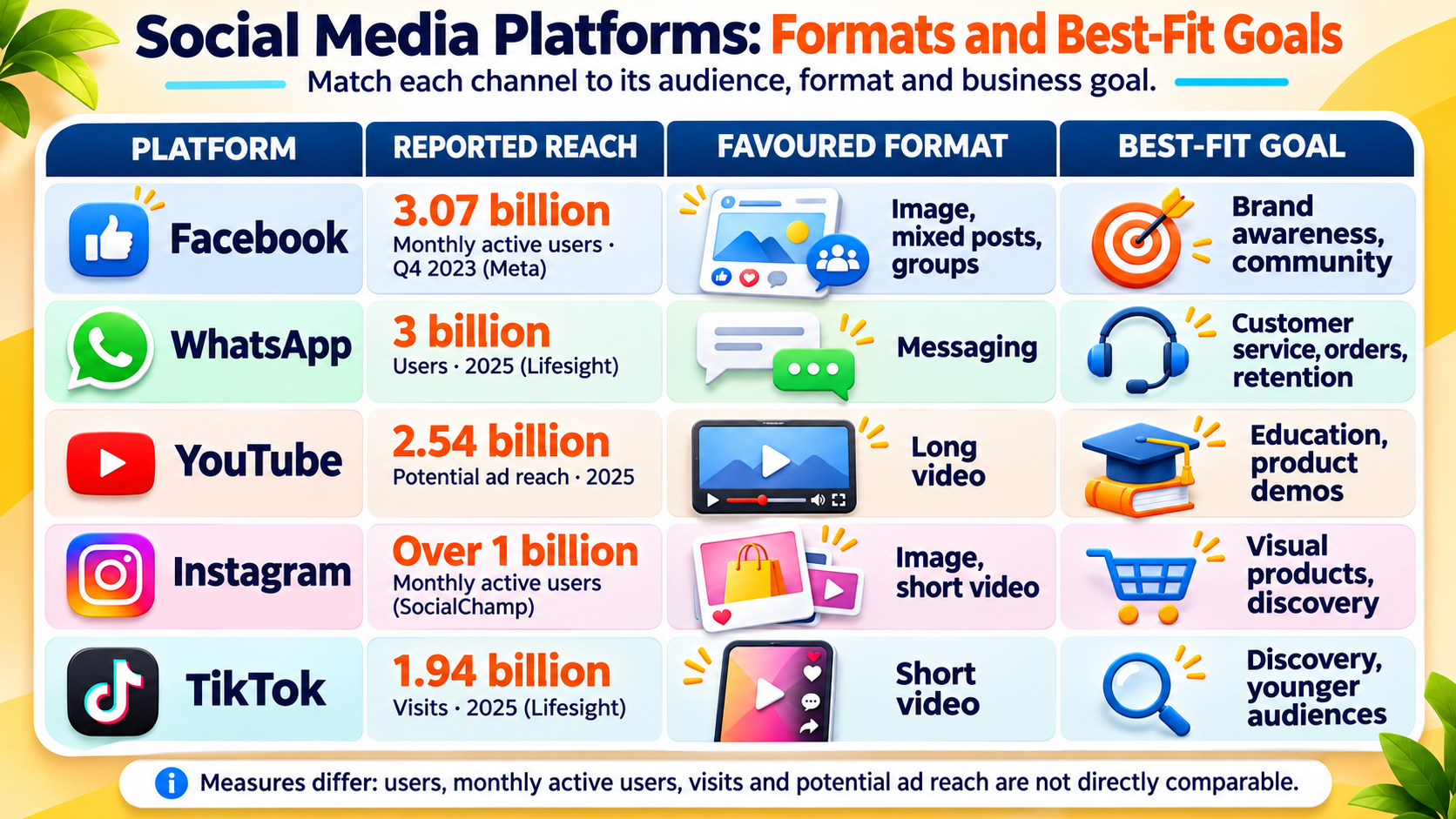
The examples below show what each channel can do for a business. The same company may use one platform to introduce an offer and another to handle the sale.
| Platform | Business goal | Example post or action |
| Help buyers discover and compare products | A bakery shows cake sizes in a carousel | |
| TikTok | Introduce a product through short video | A retailer shows how a foldable trolley opens |
| Share local updates and events | A studio posts the date and location of an open house | |
| YouTube | Answer detailed questions before a sale | A supplier shows how to install and clean a filter |
| Reach buyers who make decisions at work | A payroll provider explains how it moves data from spreadsheets | |
| WhatsApp Business | Handle enquiries, orders and support | A bakery checks availability and confirms collection |
Instagram and TikTok for product discovery
Instagram works well when people want to see details before asking about price or availability. A café can share its set lunch in a carousel, with one image for the menu and another for the seating. A clothing shop can show the same item from different angles in a Reel. That gives an Instagram marketing plan a practical starting point. Each post can answer one buying question.
TikTok is worth testing when the team can show a product or process in motion. A trolley retailer could open with the trolley folded, then show it carrying groceries. TikTok’s creative recommendations for ads cover vertical framing and keeping key details away from interface controls. Those checks can also help a team film readable product clips. A business planning TikTok marketing in Singapore can start with questions customers already ask in the shop.
Facebook for neighbourhood updates
Facebook can serve a business whose customers ask about local events, opening hours or appointments. A tuition centre might post the date and venue for a trial class, then answer questions about the age group in the comments. A shop taking part in a weekend market can share where to find its stall and what will be available.
Group rules help decide where those posts belong. A neighbourhood group may welcome an event listing and restrict offers. A business page gives the company a home for updates it publishes itself. A Facebook marketing plan can account for both the posts a business can share and the places where customers already ask for recommendations.
YouTube for demonstrations and common questions
YouTube gives businesses room to explain decisions that take more time. A water filter supplier could show how to check whether a filter fits, what replacement involves and how often the customer should follow the manufacturer’s service instructions. The sales team can also share the same video when a buyer asks those questions.
A video title can use words customers already say. YouTube’s search and discovery documentation explains how its systems consider what viewers search for and how they respond to videos. YouTube Analytics shows how people found a video and how they engaged with it. A supplier can pair those reports with the questions its team receives after sharing the video.
LinkedIn for business buyers
LinkedIn gives companies a place to explain work that other businesses buy. A payroll provider could show what a small firm needs to prepare for its first payroll run. A training company could explain what a supervisor can do after a workshop to help staff use what they learnt.
A LinkedIn Company Page gives buyers a place to check what the company does and see its updates. An employee can add context through a post that explains a decision or answers a question from their own work. A team that later needs paid reach can compare social media advertising platforms once it knows which topics start conversations with buyers.
WhatsApp Business for enquiries and orders
WhatsApp Business can handle the details a public post leaves open. A bakery can ask for the date, serving size and collection time in one reply. A repair company can ask for a photo and a postcode before it suggests an appointment. A short set of questions helps staff respond consistently when several people share the inbox.
A buyer should know what will happen after they send a message. A profile can state when the team replies. A message can explain when staff will check stock or send a quote. The same contact can then pick up the conversation without having to ask the customer for details twice.
How two channels can work together
A bakery could post an Instagram carousel showing the same cake in three sizes. Its profile can link to WhatsApp, where staff confirm the date and serving size, then send collection details. A small team can track the pairing by asking new customers where they first saw the cake and recording which chats became orders.
A service business can use a different pairing. A payroll provider might explain a common mistake on LinkedIn and send interested readers to a page where they can book a call. If customers ask how the first month works, the provider could add a video later and share it before the call. The second format earns its place by answering a question the first post raises.
How to Test Social Media Platforms in Four Weeks
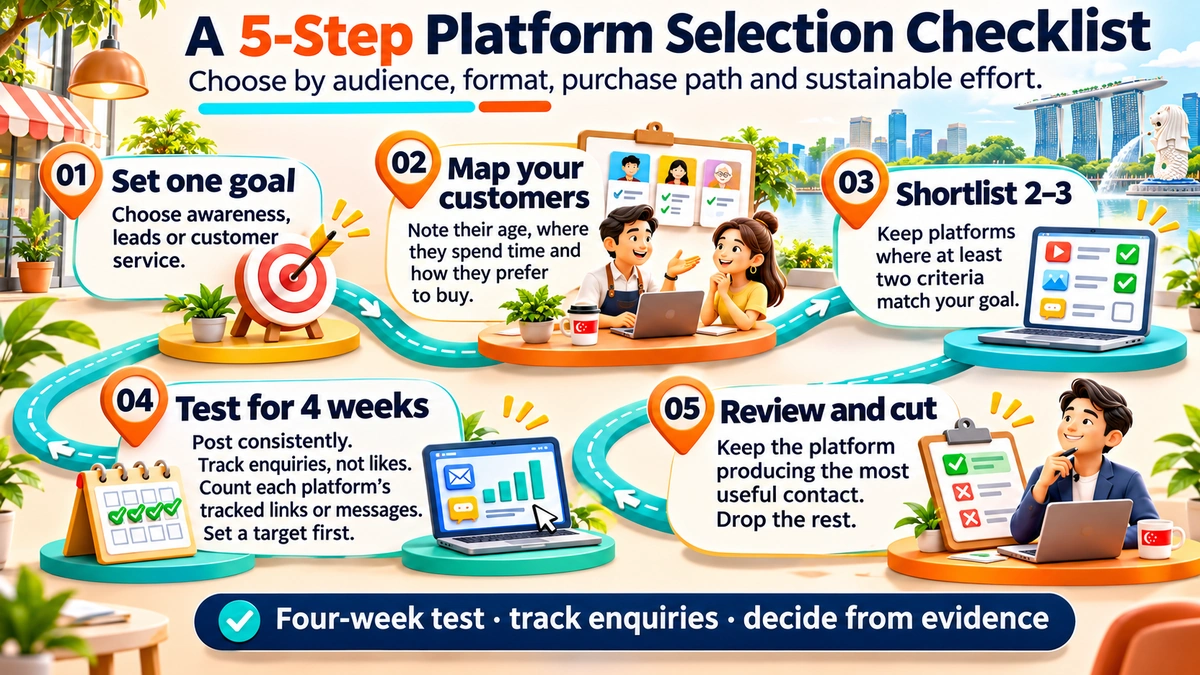
A four-week test gives a team a set period to publish, follow up and learn. A small team can start with one publishing platform and one way to receive enquiries. If it tests two publishing platforms, each can point to the same offer so the team can compare the responses.
Week 1 starts with one goal
The business should choose a result it can count, such as five enquiries it can serve, three booked calls or ten paid orders. A qualifying enquiry should have a definition before the test starts. For a bakery, that could mean an order request for a date and serving size the shop can handle.
The team should record how long each post takes to make, too. That gives the owner a way to compare results with the hours available. A target should reflect the size of the business and what it can deliver during the test.
Week 2 tests two ways to show the offer
One post might show the product in use. Another could answer the question people ask before buying it. Both can point to the same booking form or message. Keeping the offer and next action the same gives the team a better basis for comparing the response to each post.
A new trend can be worth trying if it helps show the product. MediaOne’s guide to evaluating social media trends connects format choices to the audience and business goal. A bakery can put that into practice by showing how it slices a cake for a group. The video gives buyers a reason to save or share it when they plan a party.
Week 3 checks what customers do next
Campaign tags in Google Analytics can help identify which social links send people to a website. For orders that happen in a chat, a team can record the source when the customer shares it. A simple sheet can hold the date, source, type of enquiry and outcome. That gives the team a way to trace sales that happen after someone leaves the app.
Counts are easier to interpret when the team tracks each step. A post with plenty of views and few clicks may need a more specific offer or link. Clicks followed by few enquiries may point to a missing price, an unclear delivery area or a form that takes too long to fill in. Enquiries that rarely become orders can prompt a review of availability, price or the speed of replies.
Week 4 ends with a decision
An example shows how the same goal can lead to different decisions. Suppose a bakery tests two platforms with the same cake offer. One brings eight enquiries and four orders. The other brings twelve enquiries and one order. The team can check which enquiries involved dates it could serve and how many staff hours each channel took.
| What the team sees | What it can do next |
| The channel brings orders and the team can manage the work | Keep publishing and repeat the offer with a new example |
| Customers click but leave before enquiring | Check the page or chat for a missing detail |
| Customers ask for dates the business cannot serve | Put available dates or lead times in the post |
| The test reaches too few people for a fair comparison | Extend the test if the team can afford the time |
Choose Social Media Platforms Your Team Can Run
A good first test begins with one offer the business can deliver this month and one person who can follow up. The team can use what it learns to improve the post, change the way customers enquire or plan the next test.
MediaOne’s social media marketing services in Singapore can help businesses plan content and campaigns around the customers they want to reach. A first discussion can focus on a current offer and the questions customers ask before they buy.
FAQs About Social Media Platforms
Should a Singapore business post in more than one language?
A business can start with the language customers use when they enquire. A team that regularly receives questions in English and Mandarin could test captions in both and check which posts bring replies. Separate posts can make sense when each group needs a different example or offer.
One account can work when branches have the same offers and one team answers messages. Branch names, opening hours and locations should appear in posts about a specific outlet. Separate accounts can help when each branch runs its own events or needs to answer different questions.
An old profile can show current hours, contact details and the account the business now uses. A team should check who has access before changing or closing it. Recent posts or messages may show that some customers still use the account to reach the business.
A business can reuse the original footage and edit it for each platform. A longer product demonstration can become a short clip that answers one question. Captions, framing and the final action should suit the place where people watch it.
Who should own the account when an employee or agency manages it?
The business should hold account access through a company email or an official business account. Staff and agencies can have access based on their roles. The company can then update permissions when someone leaves and keep control of messages, posts and campaign history.