| AI Summary
SEO content types are page formats designed to match search intent and business goals. This guide explains 12 formats, including service pages, tutorials, comparisons, listicles, product pages, case studies and visual guides. Learn how Singapore businesses can select the right content formats, build an effective SEO content mix and measure performance through organic visibility, customer engagement and conversions. |
Choosing the wrong page format can waste a promising keyword. Someone searching for “best accounting software Singapore” expects options they can compare. Someone searching for “corporate tax filing deadline” needs a clear answer. A generic blog post serves neither particularly well. SEO content types are the formats we use to meet those different needs, from comparison articles and tutorials to product pages, local landing pages and case studies.
At MediaOne, we recommend choosing the format before writing the brief. First establish what the reader needs to accomplish. Then decide which page can deliver that outcome and how the business will measure success. This guide explains 12 practical formats, their limitations and how Singapore organisations can build a useful content mix without publishing unnecessary pages.
Key Takeaways
- Match the task to the format. A buyer comparing vendors needs different information from someone fixing a technical problem.
- Content types are not SEO disciplines. Technical, on-page and off-page SEO support pages; they are not substitutes for a format decision.
- Commercial pages deserve attention. Service, product and category pages can answer valuable searches without requiring a blog post.
- Original evidence strengthens content. First-hand explanations, transparent comparisons and useful examples distinguish pages covering similar subjects.
- Judge every format by its purpose. Search visibility matters, but enquiries, purchases and useful reader actions determine business value.
What Are SEO Content Types?
SEO content types are the ways information is organised and published to answer particular searches. A tutorial teaches a process. A comparison evaluates alternatives. A service page explains an offering and provides a route to enquire. Each format creates different expectations about detail, proof and the next step.
This is separate from the disciplines that make pages discoverable. Technical SEO helps search engines access and process a page. On-page SEO improves titles, headings, copy and internal links. Off-page SEO concerns signals and recognition beyond the website. Those activities support multiple content formats rather than defining what readers should see.
Google’s Search Essentials recommends helpful content, relevant language and crawlable links. It does not provide a universally correct list of article formats or guarantee rankings for any format. We therefore make choices using search intent, existing results, business evidence and practical editorial judgement.
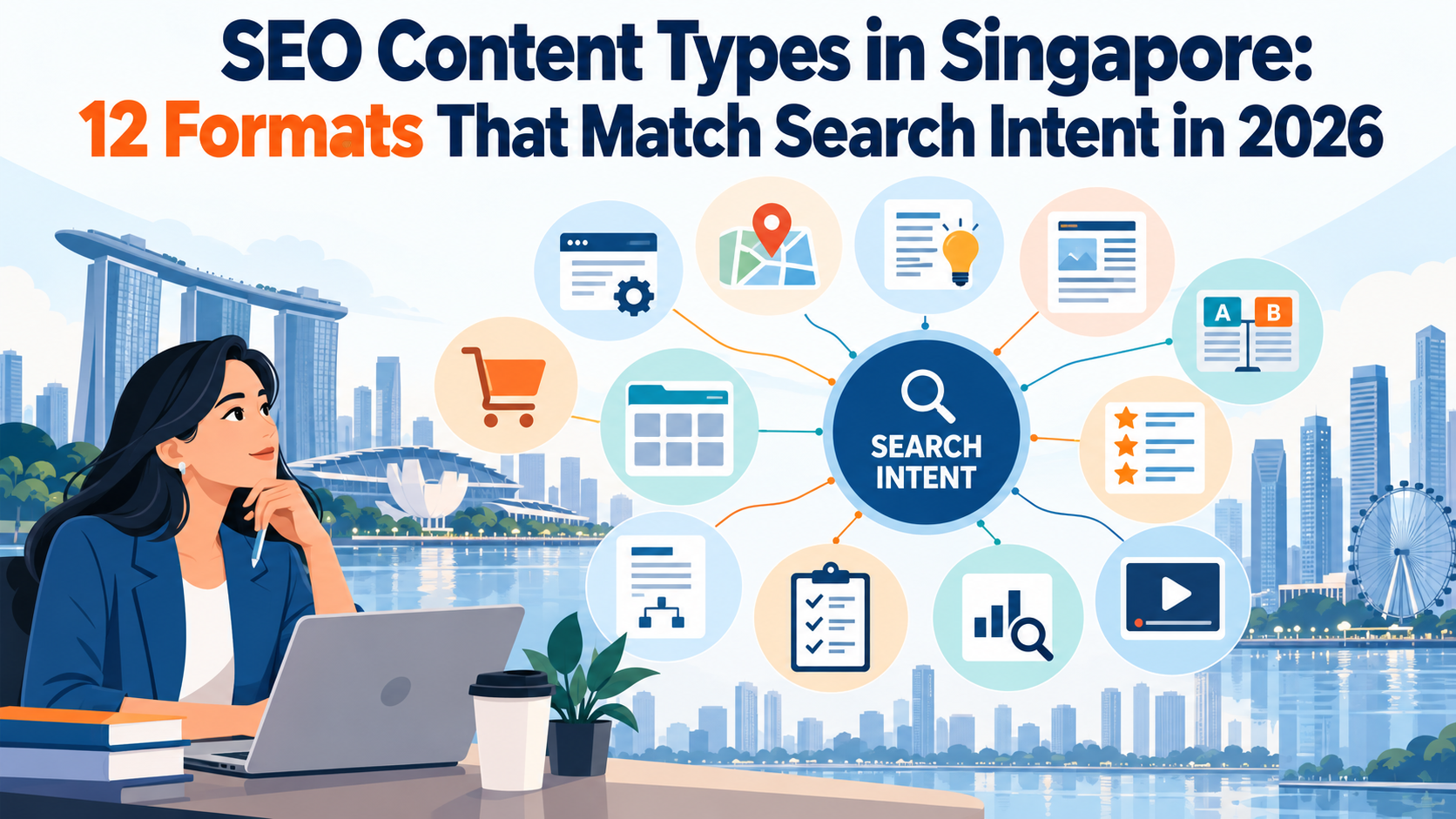
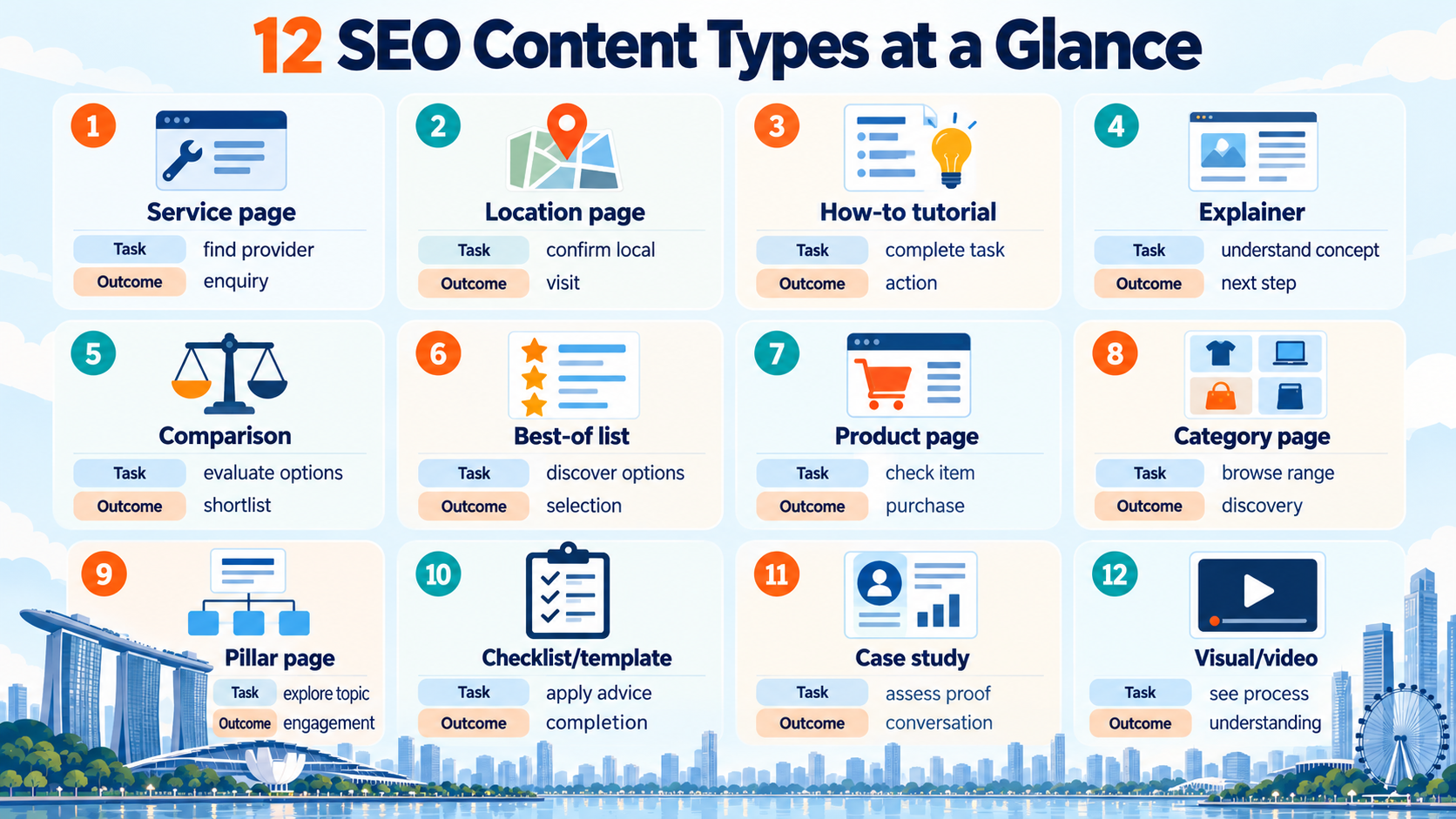
A Quick Comparison of 12 SEO Content Types
| Format | Searcher’s main task | Useful outcome |
| Service landing page | Find a suitable provider | Qualified enquiry |
| Location page | Confirm local availability | Visit or appointment |
| How-to tutorial | Complete a task | Successful action |
| Explainer article | Understand a concept | Informed next step |
| Comparison page | Evaluate alternatives | Shortlist or lead |
| Best-of listicle | Discover options | Product or vendor selection |
| Product page | Check an individual item | Purchase or product enquiry |
| Category page | Browse a product range | Product discovery |
| Pillar resource page | Explore a broad subject | Deeper engagement |
| Checklist or template | Apply advice quickly | Download or completed task |
| Case study | Assess credible evidence | Sales conversation |
| Visual or video guide | See a process or example | Better understanding |
12 SEO Content Types and When to Use Each
The same topic can justify several formats when the questions differ. We would not publish all 12 simply to fill a calendar. Select the pages that answer distinct demands and connect them through a clear website structure.
1. Service Landing Pages for High-Intent Enquiries
Service pages address searches where people want a provider, not a lesson. A Singapore company targeting “commercial cleaning services” should explain its scope, eligibility, service arrangements and enquiry process. The page needs enough detail for a prospect to decide whether contacting the company makes sense.
Include clear service boundaries, practical examples and transparent next steps. When relevant, describe how quotations work rather than inventing a fixed price. A weak service page often says “professional solutions” repeatedly while omitting what the team actually does. We would improve that page before commissioning another general awareness article.
2. Location Pages for Genuine Local Differences
Location pages help people find services at a real branch or within a clearly supported operating area. A clinic with premises in Tampines and Jurong East can explain each branch’s hours, available appointments and arrival information. Those differences justify separate pages.
Avoid copying the same paragraphs across dozens of neighbourhood names. Google’s spam policies warn against doorway pages built around similar searches without distinct value. For eligible customer-facing businesses, accurate Google Business Profile information complements the website; it does not replace useful location content.
3. How-To Tutorials for Practical Questions
Tutorials suit searches asking how to accomplish something. A payroll software provider might publish “how to prepare a monthly payroll report”. Readers need prerequisites, ordered steps, common errors and a clear finished state. Screenshots can help when the interface is central to the task.
If a process varies by account type or software version, explain the limitation. Link to the relevant official instructions for changing settings or legal obligations. A tutorial earns trust when readers can follow it safely and confirm that the result is correct.
4. Explainer Articles for Concepts and Decisions
An explainer answers “what”, “why” and “when” questions. For example, “what is an ecommerce payment gateway?” needs a plain definition, an outline of how payments work and distinctions from nearby concepts. A concise comparison or worked example may be more useful than a lengthy history.
We prefer an immediate definition followed by the implications for the intended audience. Explain acronyms on first use, and avoid turning every definition into a sales pitch. Readers should leave knowing which follow-up question to ask or which resource to consult next.
5. Comparison Pages for Evaluating Alternatives
Comparison content helps readers choose between identifiable options. A query such as “Shopify vs WooCommerce Singapore” suggests a side-by-side evaluation of pricing structures, maintenance requirements, payment integrations and operational trade-offs.
Use the same criteria for every candidate and verify current features with primary documentation. Separate subscription charges from payment processing, developer work and other costs. If MediaOne has no documented hands-on test, we should not describe the evaluation as laboratory testing. Sound judgement can be based on transparent desk research.
6. Best-Of Listicles for Shortlisting Options
A listicle serves broader discovery queries such as “best appointment booking software”. Readers expect a genuine set of choices, not a long essay that hides the options halfway down. State the selection criteria, identify the strongest fit for different needs and explain meaningful drawbacks.
Ranked articles also need maintenance. Prices, free plans and supported integrations can change, so date-sensitive claims should link to vendor pages. We recommend making the shortlist useful even to readers who disagree with the top pick. Distinctive recommendations come from specific trade-offs, not from repeating marketing copy.
7. Product Pages for Individual Purchase Decisions
A product page should let shoppers evaluate a specific item. Include accurate variants, specifications, price, availability, delivery details and returns information where applicable. For Singapore buyers, clarify the currency and practical fulfilment conditions rather than assuming they are obvious.
Google’s product structured data guidance explains how eligible pages can supply information for richer search appearances. Merchant listing requirements differ from editorial review snippets. Structured data must match visible information, and an eligible page is not guaranteed a special result.
8. Category Pages for Browsing and Filtering
A category page suits users exploring a range, such as “ergonomic office chairs Singapore”. It should organise products in a way that makes comparison manageable. Filters, sorting controls and helpful category descriptions serve a different job from a single-product page.
Avoid creating an indexable page for every filter combination without a clear purpose. Faceted navigation can generate large numbers of URLs, some of which provide little additional value. Work with developers on crawlability, canonicalisation and internal links while keeping the shopping experience straightforward.
9. Pillar Resource Pages for Complex Subjects

A pillar page introduces a broad subject and directs readers to detailed supporting resources. An SME resource hub on digital invoicing could link to separate articles about implementation, common errors and software evaluation. The hub explains the landscape while each supporting page handles a specific task.
Do not create a “pillar” merely by joining unrelated posts. Give it a coherent structure and useful navigation. Google’s link guidance recommends descriptive anchors and crawlable links. A hub is valuable when those links genuinely help readers navigate a subject.
10. Checklists and Templates for Repeatable Work
A checklist helps people complete a defined task without overlooking essentials. Examples include a website launch checklist or an event registration email template. The best versions name the person responsible, the required input and how completion can be verified.
A downloadable file is optional. Some readers prefer a page they can use immediately on a phone. If a template includes Singapore regulatory requirements, review the current official guidance and identify situations requiring professional advice.
11. Case Studies for Proof and Risk Reduction
Case studies support prospects who need evidence before making contact. Explain the initial challenge, the scope of work, the intervention and the observed outcome. Clarify the period measured, attribution limits and any relevant context that could influence the result.
We should never invent client figures, testimonial quotes or testing conditions. If permissions restrict the client’s identity, say what can be disclosed and avoid details that could identify them indirectly.
12. Visual and Video Guides for Demonstrations
Some topics are easier to understand when readers can see them. A short demonstration of equipment maintenance or a labelled diagram of website architecture can clarify instructions that would be cumbersome in prose. Pair the visual with a useful written explanation.
Google’s image SEO guidance recommends relevant surrounding text, descriptive filenames and informative alternative text. Video pages also need accessible explanations and sensible embedding. Choose visuals because they improve understanding, not simply to fill space or manufacture a separate keyword target.
Match the Content Format to the Search Results
A keyword list alone cannot reveal everything the reader expects. We examine the query, the available search features and the pages currently satisfying similar needs. Search results are evidence about likely intent, not instructions to duplicate competitors.
Consider the hypothetical query “corporate secretary Singapore”. Some searchers want a service provider, while others need to understand statutory responsibilities. A service landing page may be appropriate for the transactional query. An explainer should cover the informational questions. We would keep their purposes distinct and connect them with natural internal links.

Test the Intent Before Commissioning Content
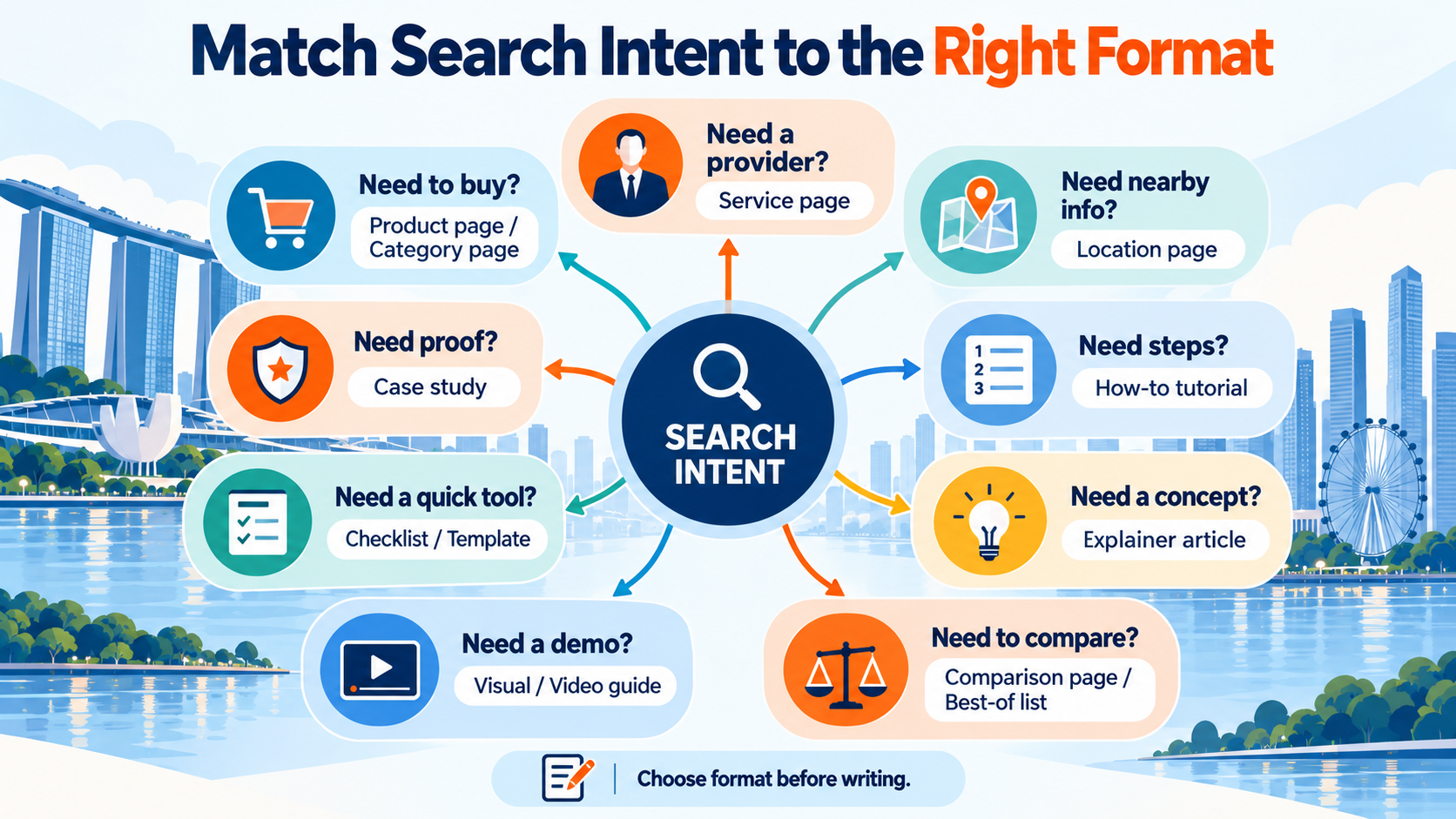
For each target query, record the intended reader, the job they need done and the most useful next step. Review whether people expect an immediate answer, a buying decision, a location or a demonstration. Check whether existing pages on your site already address that need.
If your website already has a strong guide, updating it may be preferable to publishing another. If the query asks for prices, a vague thought-leadership article is unlikely to satisfy a reader seeking costs. The right format is determined by the need, not by what the content team finds easiest to produce.
Build a Content Mix for a Singapore Business
Different organisations need different combinations. A neighbourhood service provider may prioritise service and location pages supported by practical FAQs. An online retailer will usually depend heavily on category and product pages. A business-to-business software company might need comparisons, tutorials and documented case studies.
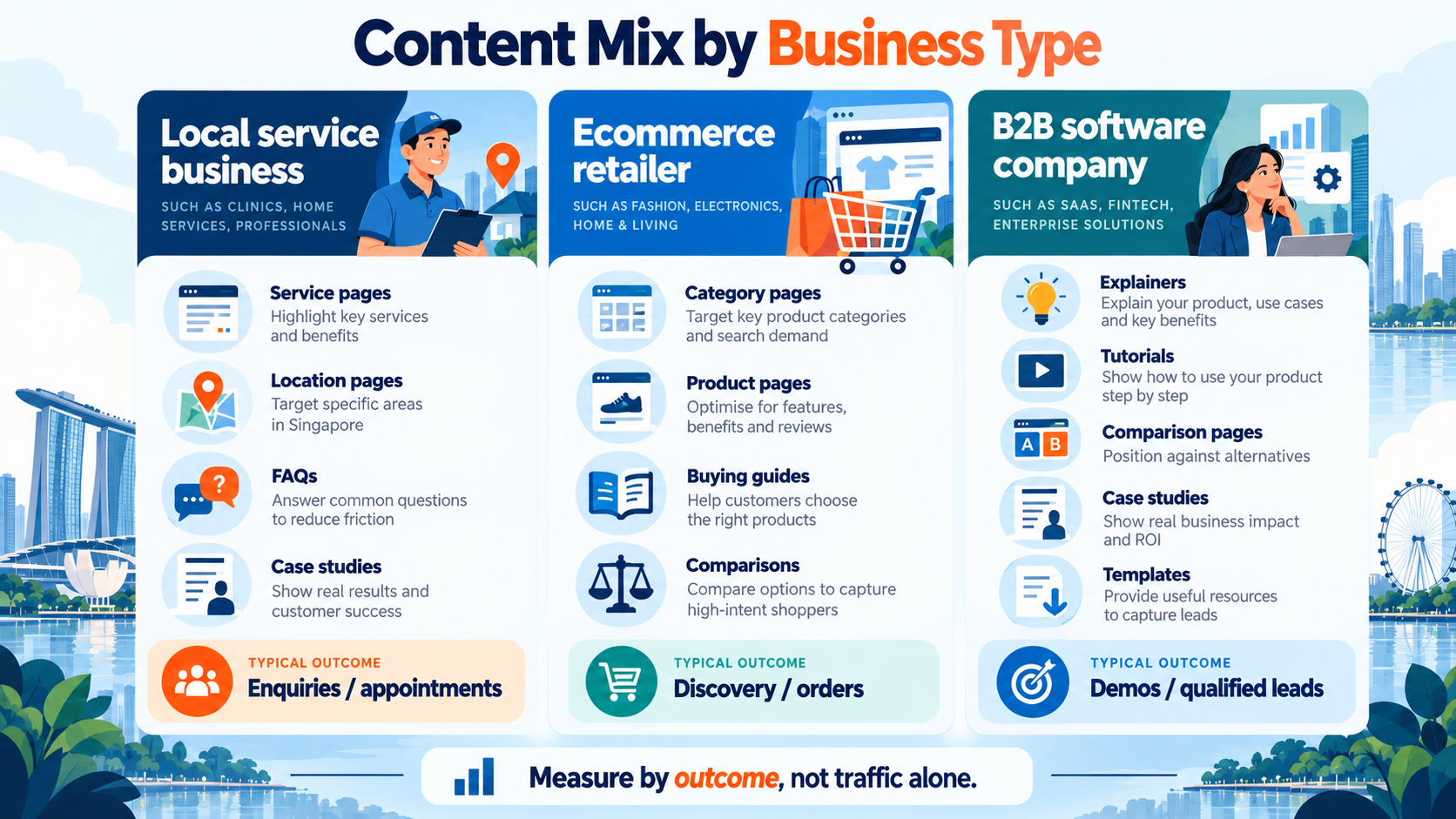
For a hypothetical Singapore accounting practice, we might begin with a clear corporate tax service page, a plain-English guide to filing obligations and a comparison of different support arrangements. Each page answers a separate question. We would connect them without forcing identical keywords into every heading.
A useful publishing brief should state the intended reader, primary query, page type, required evidence, call to action and owner of future updates.
Account for Language and Practical Local Detail
Singapore audiences may use international terms alongside local service names and abbreviations. Keyword research should confirm how customers actually describe a problem. Do not add regional references unless they help the reader understand availability, pricing, processes or requirements.
Use SGD when quoting genuine Singapore prices, and specify whether figures are indicative. When discussing government rules, link to the relevant agency rather than relying on an unsourced summary. These details make a format locally useful without stuffing locations into ordinary sentences.
Optimise the Page Without Changing Its Purpose
Every format needs clear headings, a descriptive page title and internal links that match the subject. Technical access also matters: important pages should be crawlable, indexable where appropriate and usable on mobile devices. Google explains the stages of crawling and indexing and notes that inclusion in results is never guaranteed.
For written pages, answer the main question early. Use comparison tables when criteria can be aligned, and numbered steps when sequence matters. Add images where they clarify an action. Avoid generic calls to action that interrupt a reader before the promised answer has been delivered.
Treat AI Search as Another Discovery Context
Generative engine optimisation (GEO) concerns visibility in AI-assisted discovery. It does not create a mandatory thirteenth content type. Google’s guidance for generative AI search says foundational SEO practices still apply. It also rejects the idea that special AI text files or artificial content “chunking” are required for Google Search.
Write complete, accurate explanations with clear sources and distinctive evidence. Do not promise an AI citation because a paragraph has a particular structure. We recommend evaluating how the material serves people first, then monitoring supported search reporting as those experiences develop.
Measure Each SEO Content Type Against Its Job
Organic clicks are useful, but they do not tell the whole story. A tutorial may attract readers who later return to a service page. A comparison may earn fewer visits but support stronger enquiries. A category page can produce sales without ever functioning as a conventional blog article.
Google Search Console reports search performance by queries and pages, including impressions and clicks. Use it with website analytics and reliable business records. Be cautious when assigning revenue to a single informational page, especially when customers return through other channels.
| Content type | Primary signal to review | Business outcome to check |
| Service or location page | Relevant organic entrances | Suitable enquiries or visits |
| Comparison or listicle | Commercial-query engagement | Shortlists, leads or referrals |
| Product or category page | Product discovery | Orders and revenue |
| Tutorial or explainer | Query coverage and engagement | Assisted actions or return visits |
| Case study or template | Relevant visits and usage | Qualified conversations or downloads |
Review performance at the level of an actual URL and its intended search task. A high-impression page with weak clicks may need a better title or a more useful answer. A page receiving qualified visitors but few enquiries may need clearer service details or a simpler contact route.
Common Content Planning Mistakes to Avoid
The first is treating every keyword as a request for a blog post. That approach misses product and service intent. The second is publishing multiple formats that answer the same question without a clear difference. Both can fragment maintenance effort and leave visitors uncertain about which page to use.
Another error is presenting unsupported claims as original research. A persuasive case study needs real evidence. A product comparison needs current documentation and candid limitations. Google’s people-first content guidance asks whether a page adds substantial value and avoids simply reworking what others have already written.
Finally, do not confuse production volume with progress. A smaller set of maintained, linked and useful pages may serve the business better than a large backlog of generic posts. Review gaps in customer decisions before setting monthly article quotas.

Frequently Asked Questions
What is the difference between SEO content types and SEO strategies?
Content types are formats such as tutorials, comparisons and service pages. An SEO strategy decides which audiences, topics and opportunities those pages should serve, alongside technical and promotional work.
Which SEO content type is best for sales?
It depends on what customers buy and how they decide. Product and service pages often support direct conversions, while comparisons and case studies can help buyers evaluate options before contacting a business.
Are blog posts still useful for SEO in 2026?
Yes, when a blog post answers a real question and contributes distinctive information. A blog should not replace dedicated product, category or service pages when those formats better match the search.
Should every article include an FAQ section?
No. Add FAQs when they resolve genuine questions left after the main explanation. They are not a required ranking feature, and ordinary commercial sites should not assume FAQ markup will produce special search displays.
How often should existing SEO content be updated?
Review pages according to the volatility of their information and their business importance. Pricing guides may need frequent checks, while stable definitions can remain useful longer; update material when facts or user needs change.
Can one keyword support several content formats?
Sometimes, but each page should have a distinguishable purpose. A broad topic may justify an explainer and a commercial comparison, while two near-identical articles targeting the same task usually create unnecessary overlap.
Choose SEO Content Types That Lead to Better Decisions
The right mix starts with understanding what customers are trying to accomplish. Use service and product pages when they are ready to act. Publish tutorials and explainers when they need clarity. Offer comparisons, evidence and practical tools when they must evaluate alternatives or carry out a task.
At MediaOne, we would audit existing pages before adding another format. Identify the missing customer decision, choose the page that resolves it and define a useful outcome. Our SEO services can support that planning when a business needs help connecting content choices with search performance. A focused content library is easier to maintain, measure and improve than another collection of interchangeable articles.