| AI Summary
Online shopping in Singapore offers several ways to buy, including marketplaces, supermarket websites, specialist retailers and brand stores. The best choice depends on the exact product, total cost, seller and after-sales support. A low advertised price can lose its appeal once delivery charges, return postage or warranty limits appear. Shoppers can compare purchases more reliably by checking the same details across sellers and keeping records until the order is complete. |
Online shopping in Singapore works best when shoppers compare the same product across marketplaces, specialist retailers and official brand stores. The main checks are the final checkout price, seller identity, delivery date, return conditions and local warranty. No single platform provides the lowest price or best service for every purchase.

Key Takeaways
- A store badge and a high rating do not replace checks on the seller and product.
- A return may provide store credit, so the refund method deserves attention before payment.
- Overseas stock can involve extra tax, longer delivery and different warranty arrangements.
- Bulk purchases save money only when the household can use the full quantity.
- Order records and photos make missing-item or damage complaints easier to explain.
A cheaper phone may come without local manufacturer support. A discounted dress may be excluded from returns. Neither detail appears in the large sale price.
Price, trust and convenience all influence online buying behaviour in Singapore. This article brings those decisions down to the purchase in front of you, with examples showing when a marketplace, specialist retailer or brand store deserves consideration.
Where to Shop Online in Singapore
The best starting point depends on what you need. Marketplaces help with comparing sellers, supermarkets organise grocery orders, and specialist retailers can answer product-specific questions.
Different online shopping platforms in Singapore also serve different purposes. A place to browse discounted household supplies may not be the right place to buy an appliance that needs installation.
| Shopping option | Purchases to compare there | Main detail to check |
| Shopee | Everyday goods, household supplies and branded products | The individual seller and selected product variation |
| Lazada, including RedMart | General shopping and grocery orders | The seller, delivery arrangement and applicable return terms |
| Supermarket websites | Planned grocery baskets and repeat essentials | Available slots, substitutions and order charges |
| Specialist retailers | Electronics, beauty, furniture and other category purchases | Product advice, warranty support and delivery services |
| Official brand stores | A specific brand, collection or replacement item | The website address, stock status and return method |
These are starting points for comparison, not rankings or promises about price.
Marketplaces and Brand Stores
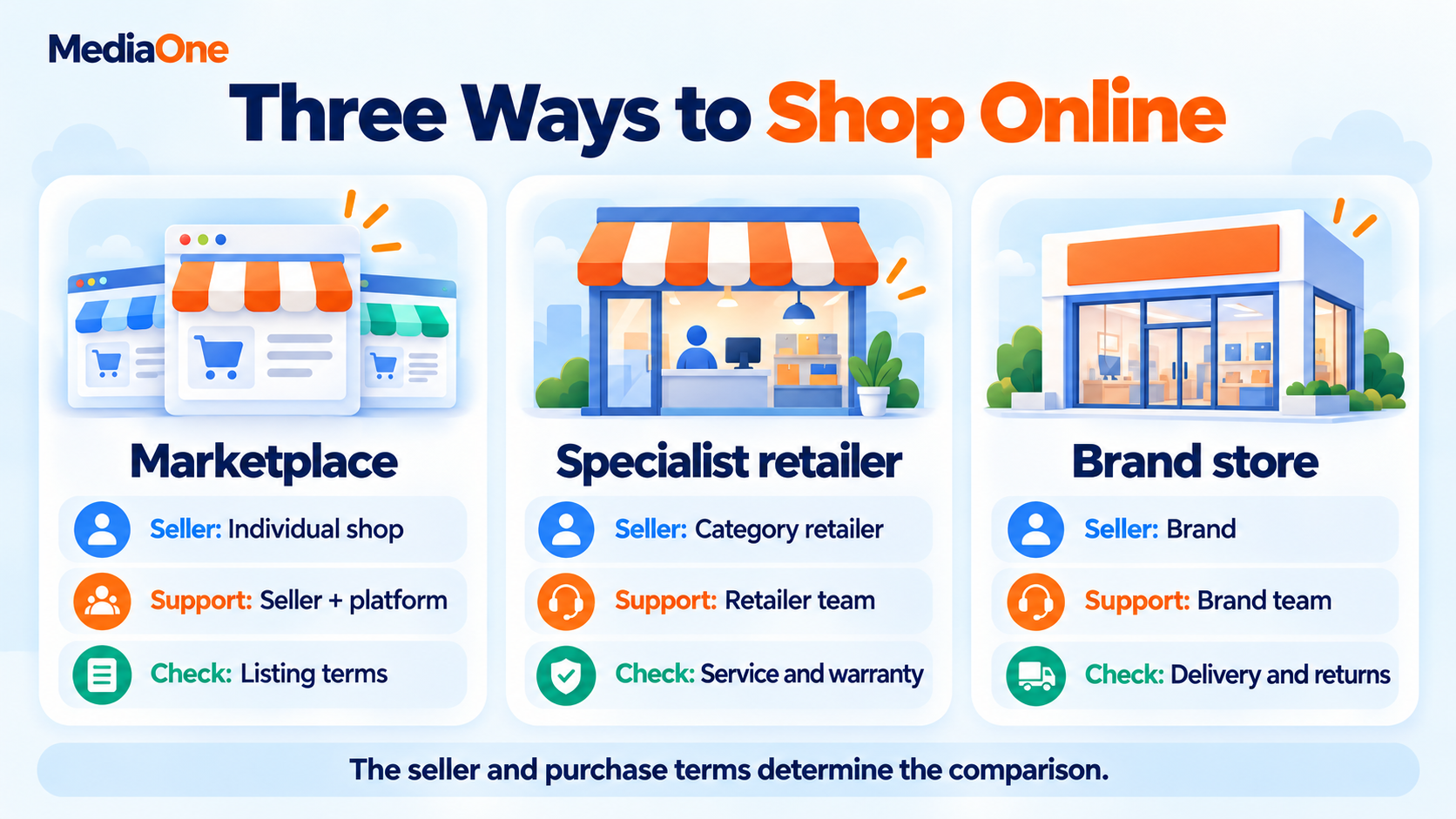
Marketplaces bring sellers together on one website or app. Shopee, for example, lists categories ranging from clothing to home appliances. Lazada also carries general merchandise, while RedMart provides grocery shopping within its service.
A brand store sells through the brand’s own website. However, an official brand can also run a shop within a marketplace. The platform name alone does not identify who supplies the goods.
These ecommerce business models explain why the same brand may appear in several places. Your comparison should follow the actual seller and terms attached to each listing.
Direct purchases can simplify contact with a brand, but they do not automatically include cheaper delivery or more generous returns.
Specialist Shops and Social Media Stores
Specialist retailers deserve attention when a purchase needs advice, installation or servicing. An authorised electronics retailer may help explain model differences that a short marketplace description leaves unanswered.
Social ecommerce lets shoppers discover products through videos, livestreams and posts. A demonstration can show a bag’s compartments or a lamp’s size. The product listing should still explain what the order includes.
How to Check a Seller Before Paying
Seller checks begin with identity. A familiar logo, polished photograph or sponsored search result does not establish that a shop belongs to the brand.
Your browser address should match the retailer’s real website. On a marketplace, the seller profile should match the shop you intended to choose. A brand’s own website may list its authorised retailers or official marketplace stores.
Seller Reviews and Product Reviews
Seller reviews describe service, packing and communication. Product reviews describe the item itself. Both help, but they answer different questions.
For example, a five-star review saying that a parcel arrived quickly says little about whether a smartwatch stays charged. A review discussing battery life, model details and several weeks of use provides different information.
Detailed customer reviews can support a buying decision, especially when several buyers describe the same experience. Repeated reports of wrong items or unanswered complaints deserve attention.
Recent reviews of the exact product variation are more relevant than comments about another model. Photos can add context, although neither photos nor a verified-purchase label prove every claim is accurate.
Product Information and Contact Details
A complete online store should explain the product, payment process, shipping arrangements and ways to contact the business.
Your purchase checks should cover:
- The full model name, size, colour and quantity.
- The item’s condition, including refurbished or pre-owned status.
- The seller’s contact channel and return address.
- Any missing accessories or separate service charges.
An unanswered question about an expensive purchase is a reason to pause. A written answer inside the order system also gives you a record if the delivered item differs.
The lowest displayed price may belong to a smaller size, one accessory or a different colour. Your selected variation should match the photograph and description you relied on. A quick look at the basket before payment can catch an accidental change, particularly when the listing contains many options with similar names.
What to Check for Each Product Category
Each category needs a different first check. Size drives many clothing decisions; servicing can determine whether an electronics purchase works for you after delivery.
Clothing, Footwear and Accessories
Measurements deserve more attention than the size letter. A medium from one label may differ from a medium elsewhere. The product’s stated measurements, fabric and cut help you compare it with clothing you already own.
Shoes need similar care. A size chart may use foot length, insole length or a regional sizing system. Your usual number alone may not identify the right option.
Return conditions also vary between full-price and discounted purchases. MGP’s published online return policy, for example, describes eligible returns for credit notes and excludes sale or discounted items. That is different from a promise of a cash refund.

A dress for an event needs enough time for delivery and any permitted return. A backorder can be unsuitable even when the price is attractive.
Product photographs also need context. A bag pictured beside a model may look larger than it is. The stated width, height and strap length give a more dependable comparison. A tape measure and a similar item at home can help you judge whether the purchase will hold what you carry.
Beauty, Personal Care and Wellness Products
Authenticity and product information come first. Packaging photos should identify the item, quantity and ingredients where relevant. A suspiciously low price deserves closer attention, particularly when the seller provides little information about the source.
Opened-product returns may have restrictions, so a new skincare product needs careful consideration before purchase. A sample or smaller pack can reduce waste when you have not tried it before.
The Health Sciences Authority warns that health products from unfamiliar online sources may be counterfeit, adulterated or accompanied by false claims. Testimonials and promises of rapid results do not establish safety.
Electronics and Household Appliances
The exact model number helps establish whether two listings are comparable. Storage capacity, included accessories, regional versions and condition can change the purchase substantially.
Warranty wording should identify who provides support and where the item must go for servicing. A seller warranty and a manufacturer warranty may involve different repair arrangements. Your invoice should identify the purchased model and seller.
Compatibility deserves its own check. A tablet cover needs the correct model generation, while a monitor connection needs to match the ports on your computer. A connector that looks similar may support different functions. The manufacturer’s product specifications can resolve these differences before an accessory becomes an expensive drawer item.
For regulated household appliances, the Consumer Product Safety Office identifies categories that require a valid SAFETY Mark. Its online shopping information also covers plug and voltage suitability for Singapore.
Groceries, Home Items and Children’s Products
Groceries need a comparison of pack size, storage space and delivery timing. A large carton offers little saving if part of it expires before the household can use it.
Furniture measurements should include the space available and the route through doors or lifts. Assembly, disposal and delivery services may carry separate charges.
Children’s products need age suitability, dimensions and safety information. A product description should explain the intended use, with warnings and instructions available before purchase. A popular listing alone does not answer those checks.
For repeat household supplies, the description should distinguish a refill from a complete dispenser and a replacement part from a complete product. Listing photographs sometimes show several items together. The written quantity and package contents should establish which items the selected price actually includes.
How to Compare the Final Price
The checkout total gives a better comparison than the first price shown. The same quantity, model and delivery destination should appear in both baskets.
Your comparison can follow this calculation:
Final purchase cost = item price + delivery + compulsory charges + tax not already included − discounts applied at checkout.
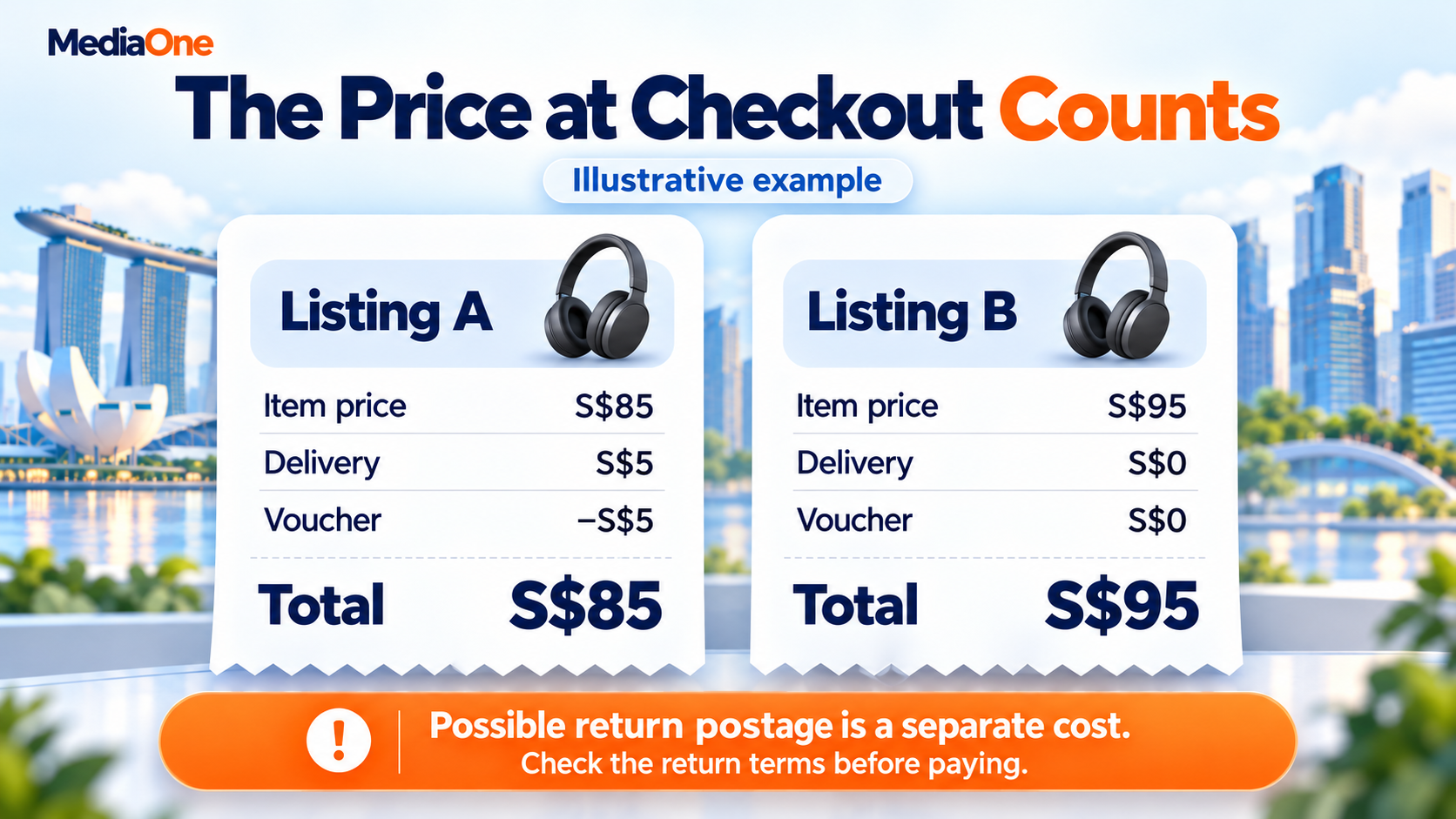
Possible return postage belongs in a separate note because it applies only if a return happens. Keeping that cost separate prevents the comparison from treating an uncertain expense as a confirmed charge.
Vouchers, Bundles and Free Delivery
Voucher terms can include minimum spending, selected sellers, payment methods or discount caps. The advertised percentage may differ from the amount deducted from your order.

For example, a hypothetical 20% voucher capped at S$5 reduces a S$50 eligible purchase by S$5. The saving is not S$10.
Free delivery also needs a spending check. A shopper with a S$32 basket and a S$40 delivery threshold would spend S$8 more to qualify. If delivery otherwise costs S$3, unnecessary extras increase the bill.
The same principle applies to bundles. Two bottles for less per bottle can be good value when both will be used. A second bottle that sits unopened until expiry adds waste.
Unit Prices and Overseas Charges
Unit price means the cost for the same amount, such as one litre, one kilogram or one piece. It helps compare packs that contain different quantities.
A hypothetical 500 ml bottle costing S$6 works out to S$12 per litre. A 750 ml bottle costing S$8 works out to about S$10.67 per litre. Delivery can still change the better overall purchase.
Overseas purchases need tax checks too. IRAS explains that GST can apply to imported low-value goods, including qualifying items valued at S$400 or less bought from GST-registered suppliers and delivered by air or post. The S$400 figure does not mean every smaller overseas order is tax-free.
Sale Prices, Rewards and Repeat Orders
A sale label does not show what another seller charges today. Your comparison should use the amount available for the same item now, including any conditions attached to that price.
Cashback and reward points deserve separate treatment from an immediate discount. A reward that requires another purchase, expires soon or applies only to selected goods may have little value for your household. Your current payment remains the amount charged at checkout.
Repeat-delivery offers need another check. The first-order price may differ from later deliveries, and the delivery frequency may exceed how quickly you use the product. The cancellation process, next billing date and later order price should be visible before you enrol. A recurring order works best when it matches an existing need.
A Worked Example of Two Shopping Options
A side-by-side comparison helps when one listing costs less but another offers support you need. A point score can hide an important problem, so the decision should remain attached to the actual terms.
The following figures and conditions are hypothetical. They do not represent current retailer offers.
| Purchase detail | Marketplace listing | Authorised retailer website |
| Same model of headphones | S$85 | S$95 |
| Delivery charge | S$5 | S$0 |
| Checkout discount | S$5 | S$0 |
| Final cost | S$85 | S$95 |
| Warranty stated | Seller warranty | Local manufacturer warranty |
| Servicing arrangement | Return to seller | Named local service centre |
| Estimated delivery | Five to eight working days | Two to four working days |
The marketplace option saves S$10. The retailer option offers the stated local manufacturer support and an earlier delivery estimate. Neither choice wins solely because of its website type.
A shopper replacing broken work headphones may value the earlier arrival. Someone buying a spare pair may accept the longer wait after checking the seller’s warranty process.
The first decision is whether each option meets the purchase requirements. An item arriving after the day it is needed should leave the comparison, even if its price is lower.

The next decision is whether the saving justifies the remaining differences. Your own needs determine that answer. A fixed total out of 20 cannot establish product authenticity, warranty coverage or delivery reliability.
A short comparison note is enough: final price, arrival estimate, return outcome and support provider. Recording those details also prevents an attractive voucher from distracting you from the original reason for buying.
What to Expect From Delivery and Collection
Delivery information should distinguish between dispatch and arrival. “Ships in two days” describes when an item leaves the seller; it does not necessarily describe when it reaches your door.
Your expected arrival may also depend on whether the order contains local stock, overseas stock or a backorder. Working-day estimates can exclude weekends and public holidays, depending on the retailer’s terms.
Split Orders and Additional Services
A single checkout can contain items from different sellers. Separate parcels may arrive on different days, so one delivered package does not necessarily complete the order.
For bulky purchases, the service description should say whether delivery includes carrying the item upstairs, assembly or removal of packaging. Any building access restrictions deserve attention before the delivery booking.
Collection can be practical when home delivery is inconvenient. The collection location, parcel size limits and collection deadline should work with your schedule.
The First Parcel Check
The parcel should match the order’s item count and selected variations. Packaging and labels can help identify a mix-up, so they deserve a quick check before disposal. A photograph can record visible damage or missing contents, although it does not guarantee a claim will succeed. Electrical products need the supplied instructions before setup, and any obvious damage deserves a report before use.
Grocery Deliveries
A grocery order needs someone available to receive chilled or frozen items and store them promptly. Substitution settings also deserve attention when the household needs a particular brand, ingredient or pack size.
Missing or damaged items should be reported through the retailer’s order system. FairPrice’s published missing and damaged item process sets different reporting periods for fresh items and other groceries. The order’s current conditions should guide the timing.
How Returns, Refunds and Warranties Differ
Returns, refunds and warranties describe different parts of after-sales support. A return is the process of sending something back. A refund returns money under the applicable terms. A warranty sets out support for covered faults.
A shop that accepts returns may offer store credit. A warranty may provide a repair without offering a change-of-mind return.
Return Conditions to Understand Before Purchase
The policy should answer five points:
- The deadline for requesting and completing a return.
- The condition required, including tags and packaging.
- Any excluded products or discounted purchases.
- Who pays postage or collection charges.
- Whether the outcome is money, an exchange or store credit.

A return address overseas can make a low-cost purchase expensive to send back. A local return address may be easier to manage, but the policy still determines eligibility.
Defective Goods and Unresolved Complaints
A faulty item is different from an item you simply no longer want. CASE explains that Singapore’s Lemon Law provisions provide remedies for qualifying goods that do not conform to the contract. The provisions do not cover a change of mind or consumer-to-consumer transactions.
Your first complaint should identify the order, explain the problem and include relevant photos. A broken zip, for example, is easier to assess when the photo shows both the garment and the fault.
CASE’s consumer complaint service assesses consumer-to-business disputes and can help with eligible cases; fees may apply.
How to Pay Safely and Keep Order Records
Payment safety begins with the website or app you are actually using. A familiar payment logo cannot establish that a seller or link is genuine.
ScamShield identifies requests for direct payment outside a platform, unfamiliar payment links and third-party app downloads as warning signs of ecommerce scams. Payment through a platform’s own checkout keeps the transaction within its process, subject to its protection terms.
An established retailer may offer PayNow through its checkout. That situation differs from an unknown marketplace seller sending a personal account number in chat. The recipient and transaction channel both need checking.
Your bank login, card details and one-time passwords should remain private. A seller should not ask you to send an OTP in a message to arrange delivery or a refund.
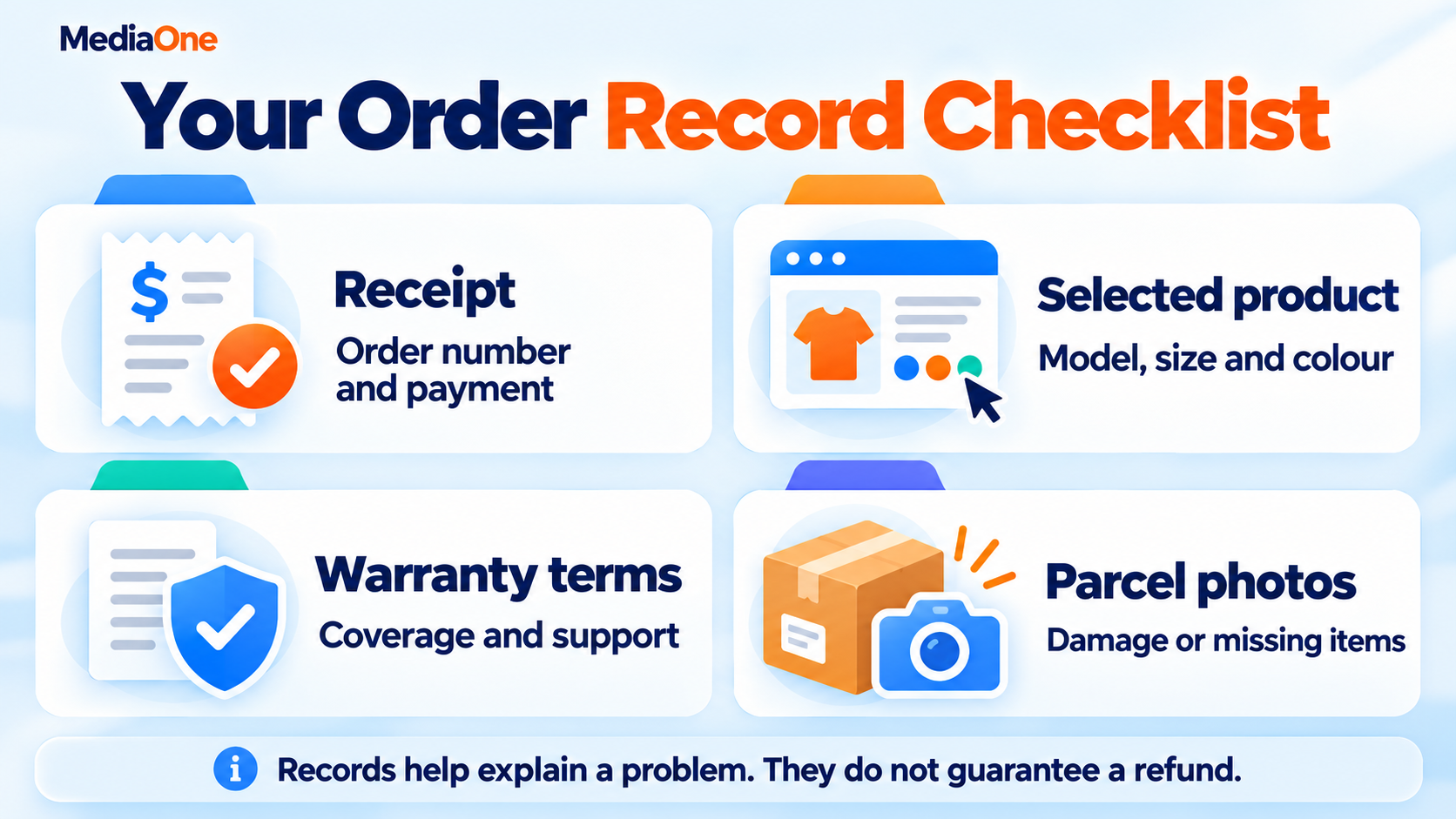
Your order records should include the receipt, listing, selected variation, relevant policy and messages. A screenshot of a warranty promise can help explain a later disagreement.
An unexpected delivery-fee message should be checked through the courier’s official website or app. The message’s own link should not be the starting point for verification.
Better Decisions for Online Shopping in Singapore
Online shopping in Singapore becomes easier when the comparison reflects what you need from the purchase. A weekly grocery order, an event outfit and a replacement laptop each call for different priorities.
Your next purchase can begin with two or three credible options and one written requirement, such as local servicing or arrival before a particular date. Any listing that cannot meet that requirement can leave the shortlist before vouchers enter the decision.
For retailers, these checks reveal what shoppers need to see: complete product details, visible charges, realistic delivery information and understandable after-sales terms. MediaOne’s ecommerce website development services help businesses build online stores with product, payment and shopping functions. Retailers can use a website review to identify where customers struggle to find the information needed to place an order.
Frequently Asked Questions
Can an Online Order Be Cancelled Immediately After Payment?
Cancellation depends on the retailer’s terms and the order’s processing status. Your account may offer a cancellation button before packing begins. A customer service request does not automatically cancel the order, so written confirmation and the expected refund process should follow before you place a replacement purchase.
Does Guest Checkout Prevent Shoppers From Tracking an Order?
Guest tracking depends on the store. The confirmation email may contain an order link or instructions using an order number and email address. A saved confirmation helps with tracking and enquiries. Shoppers should use the retailer’s official website when an email or tracking message appears suspicious.
Can a Gift Recipient Return an Online Purchase?
Gift returns depend on the seller’s policy. Some stores need the original buyer to request the return or provide proof of purchase. A gift receipt may help where offered. The refund destination also deserves attention because money may return to the buyer’s original payment method.
Does a Singapore Dollar Price Mean the Seller Ships From Singapore?
A price displayed in S$ does not identify the stock location. An overseas seller can show local currency. The listing’s dispatch location, return address and delivery estimate provide more relevant information. A Singapore-facing website also does not automatically establish that warranty repairs take place locally.
What Happens When a Payment Appears Twice?
A pending authorisation and a completed charge can look similar in an account. Your bank or payment provider can explain the transaction status. Two completed charges should be raised with the retailer and payment provider using the order reference and transaction records. Any dispute deadline needs prompt attention.