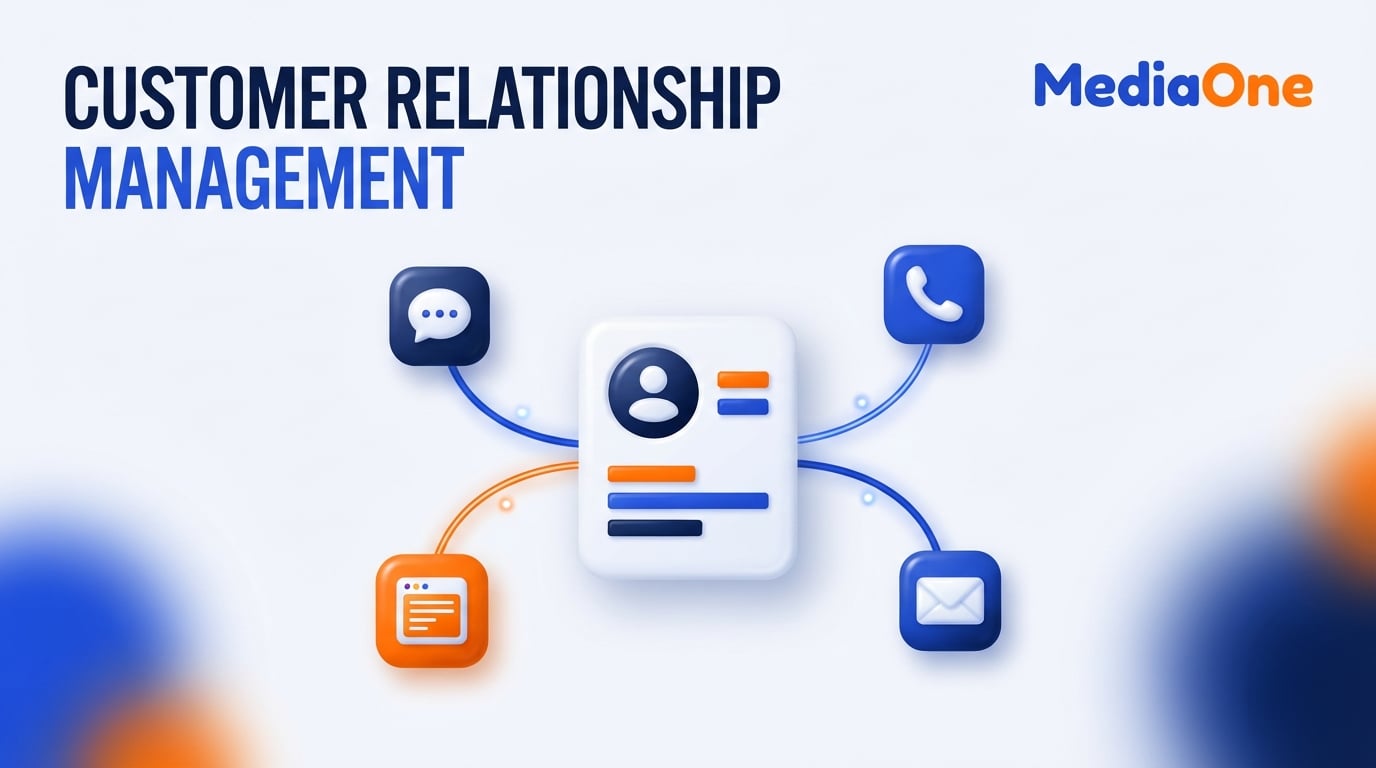
Some small and mid-sized businesses in Singapore lose track of customers when enquiries sit unanswered in a WhatsApp thread, a phone call goes unlogged, or nobody knows who promised what. Customer relationship management is the set of practices and tools a business uses to track those interactions, so the right person follows up at the right time.

This guide takes a practical view. A CRM pays off through disciplined data capture and follow-up habits rather than a long feature list. The buying decision should therefore start with the process your team will actually follow. Later in this guide, the Five-Question CRM Fit Test gives you a scoring checklist to complete before you shortlist any tool.

It shows whether a lightweight tool, a mid-tier platform or a full suite may fit your business, and where process fixes should come first.
Key Takeaways
- Start with the process, not the platform. A CRM works when your team captures data and follows up consistently. Define how the team will work before you shortlist tools.
- Score your fit first. The Five-Question CRM Fit Test offers a practical starting point for choosing a lightweight tool, a mid-tier platform or a full suite.
- Capture the channels your customers use. That might include WhatsApp and phone enquiries as well as email. Check which integrations your shortlisted CRM supports.
- Budget for total cost, not the list price. Setup, integrations, training and admin time can add to the subscription cost. Request quotes in S$ with these items itemised.
- Treat adoption as the main operational risk. Unlogged calls and duplicate contacts reduce the value of your records. Measure those gaps and assign ownership.
How CRM Tracks Customer Interactions
A customer relationship management is a shared record of interactions a business has with customers and prospects. It stores who they are, what they have bought or asked about, and what happened in each conversation. Team members can pick up the thread without asking customers to repeat themselves, which gives the team a fuller view of each account. In financial services, this record can also help staff track client needs and service history.
A shared CRM record helps teams pick up customer conversations without starting again.
How CRM Connects Customer Records
Each contact becomes a record, and each record collects linked activity: calls, emails, meetings, quotes, support tickets and purchases. Salesforce’s CRM overview describes how CRM software brings contact details, sales opportunities and service issues into one place. The real value comes from connecting these pieces. One record can show that a prospect was introduced by a partner, received a quote, and then raised a support query.

Sales and service teams can then see the same history and respond with more context. A well-chosen CRM solution keeps these links intact as the volume of records grows.
CRM Workflows for Sales and Service Teams
A CRM is used differently depending on the business. A sales-led team uses it to track deals through stages and forecast revenue. A service-led team, such as a clinic or equipment servicing firm, uses it to log enquiries, schedule follow-ups and record recurring issues. Teams that reach potential customers through marketing campaigns can also link leads to the resources they received.
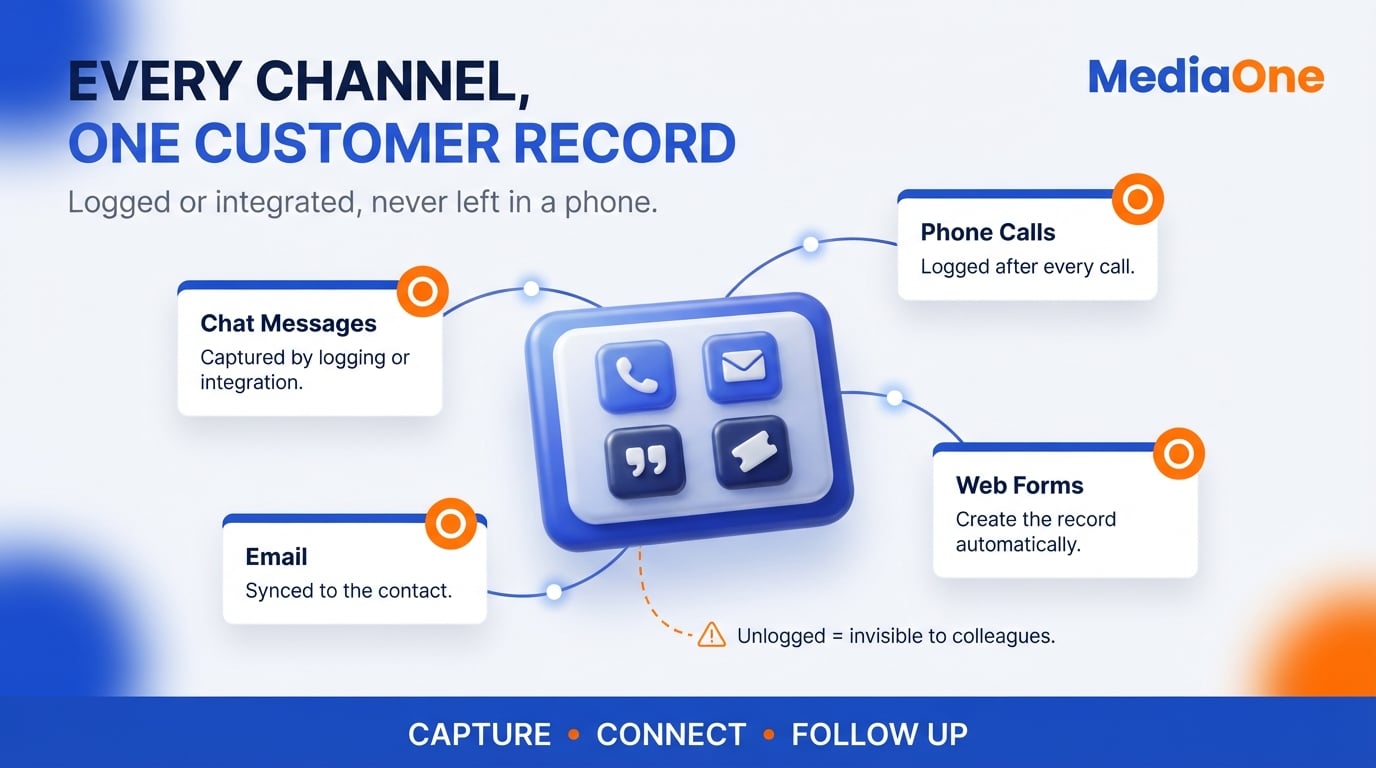
WhatsApp can be useful for customer enquiries in Singapore, but a CRM will capture those messages only if staff log them or a compatible integration is configured. The WhatsApp Business Platform supports integrations with CRM and marketing automation systems. Strong customer relationships depend on continuity across the channels a business actually uses.
Core CRM Features for Small Businesses
A CRM is only as useful as the data it holds, so start there. Many platforms offer four functions: customer data management, sales and marketing automation, service tools and reporting. Each one depends on the habits that feed it, whether you operate in financial services or another relationship-led business. Good customer management depends on that discipline.
Start with clean customer records before adding automation or reporting.
Centralised CRM Customer Records
The main value of customer relationship management is a shared view of each customer. That view may combine contact details, enquiries, purchase history and service records if the relevant sources are connected. The difficulty for a Singapore team is capture. Phone calls and messaging app conversations can be missed unless someone logs them or sets up an approved integration.
Decide which channels must be captured before you pay for CRM software. An unlogged WhatsApp enquiry is invisible to colleagues who rely on the CRM record.
CRM Sales and Marketing Automation
Automation handles repetitive steps such as follow-up reminders, lead routing and campaign triggers. IMDA’s CRM guidance for SMEs lists lead tracking, campaign management and reminders among common capabilities. Automation still depends on accurate data. A workflow that emails a duplicate contact twice can damage trust faster than a manual follow-up.
CRM Customer Service Tools
Service features can record tickets, enquiries and feedback against the same customer record that sales uses. This is where a CRM earns its keep after the sale, especially when customers contact different team members. The lesson is to close the loop on each issue. A feedback form that nobody reads adds no value.
CRM Analytics and Reporting
Dashboards turn stored data into decisions. Teams can use customer relationship management reporting to monitor enquiry volume, sales stages and service workload where those events are recorded consistently. Keep the weekly view small: pipeline value, overdue follow-ups and new enquiries by channel. A dashboard with forty metrics can become difficult to use.
CRM Benefits for Retention and Acquisition
A CRM can contribute in three areas: keeping existing customers, improving the efficiency of winning new ones, and giving the team evidence for decisions. These benefits depend on the team using the system consistently and tracking outcomes, not simply paying for software.
Measure retention and customer acquisition results against your own baseline.
CRM Customer Retention Benefits
Retention can be a valuable use of CRM data. When enquiries, complaints and renewal dates sit in one record, the team can review the history and spot overdue follow-ups. It also gains a shared work history and a clearer view of relationships with each client. Missed follow-ups are one preventable cause of customer frustration, and a CRM can help the team catch those lapses.
For related approaches, see MediaOne’s guide to customer relationship management and loyalty in Singapore.
CRM and Customer Acquisition Costs
Customer acquisition cost may fall if better follow-up helps a business win more customers without increasing its sales and marketing budget. Centralised records may also reduce the time staff spend searching through spreadsheets. These are outcomes to measure, not automatic benefits of buying software. They are relevant when reviewing lead generation and CRM workflows alongside sales costs.
A simple CAC formula shows where the savings may appear: CAC equals total sales and marketing spend divided by the number of new customers won in the same period. In an illustrative example, a business spends S10,000onsalesandmarketinginaquarterandwins20newcustomers,givingaCACofS500. If improved follow-up lifts wins to 25 customers on the same spend, CAC falls to S$400. These figures are illustrations, not promised results.
Your own numbers depend on spend, win rate and the effort required to maintain the CRM.
Common CRM Implementation Mistakes
Customer relationship management projects can struggle when a business buys a tool before deciding how staff will use it. Poor data quality can create the same problem. The two mistakes below are worth checking early because both are within the team’s control.
Define lead ownership and data-capture rules before choosing the software.
Buying CRM Software Before Mapping Workflows
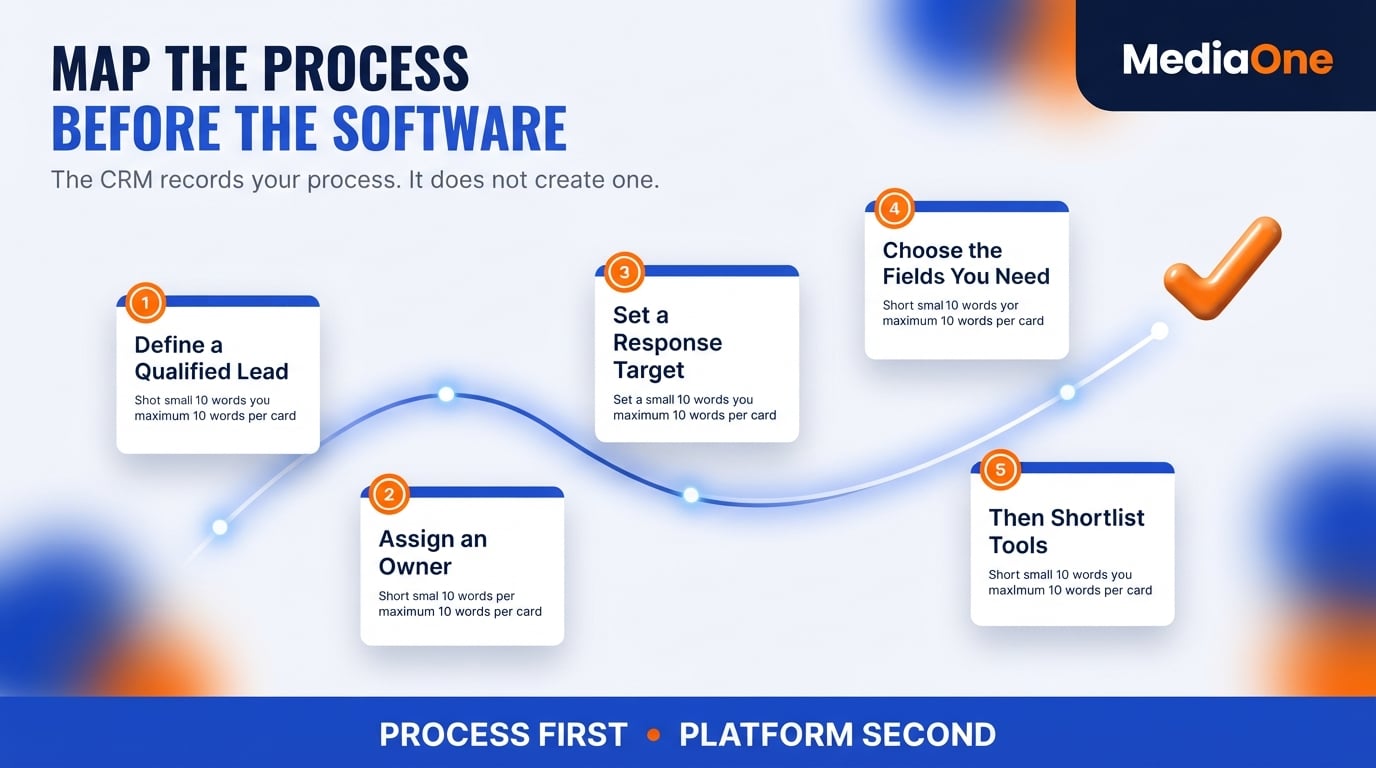
A CRM records what your team does. If nobody has written down what a qualified lead looks like, who follows up and within how many hours, the software alone will not define those steps. Map the sales or service workflow on paper first. Then choose a CRM solution that fits it.
A useful test: if you deleted the software tomorrow, could you still describe every stage a customer passes through? If not, define the process before you shortlist platforms.
Missing CRM Data and Duplicate Records
Every CRM is only as useful as the information inside it. Duplicate contacts, unlogged phone calls and WhatsApp enquiries that never reach the system create blind spots. Small teams may capture the email trail while missing other channels. Measure the gap: sample ten recent customers and check whether their calls, messages and orders appear against one record.
Each missing or duplicated record can lead staff to re-ask questions the business has already answered. Review access permissions, data accuracy and lawful collection too; the PDPC assessment tool for organisations helps Singapore businesses assess their data-protection practices.
Counterpoint: capturing everything may not be realistic for a team of three. Start with the two channels that generate most of your revenue, whether those are WhatsApp, phone, email or forms. Expand only once those are logged consistently.

Choosing CRM Software in Singapore
Start with the process your team will follow, then shortlist tools. Use the Five-Question CRM Fit Test below to judge what kind of system may be suitable. Treat it as an internal planning aid rather than a software recommendation. For more selection factors, see MediaOne’s CRM selection guide for Singapore businesses.
Treat the Five-Question CRM Fit Test as a shortlist tool, not a vendor verdict.
The Five-Question CRM Fit Test
Before you compare vendors, answer five questions and score each from 1 (low complexity) to 3 (high complexity). This is an illustrative editorial checklist, not a validated industry scoring model. Use the scores to start a discussion, not to select a vendor automatically.
- Who enters the data? One salesperson scores 1. A whole team across sales and service scores 3.
- How many contacts and deals per month? As an illustrative threshold, under 200 contacts scores 1 and over 2,000 scores 3.
- Which channels must be captured? Email only scores 1. WhatsApp, phone, social media and web enquiries together score 3. List the channels your team actually uses and check how they connect to the CRM.
- What must the dashboard show weekly? A pipeline total scores 1. Stage conversion, response times and service backlog score 3. Define the three figures your team needs.
- What is your admin time budget? Under two hours a week scores 1. A dedicated part-time administrator scores 3.
Use the totals as follows:
| Total score | What it points to | Typical fit |
| 5 to 8 | Lightweight tool | One or two users, simple pipeline |
| 9 to 12 | Mid-tier platform | Small team, several channels |
| 13 to 15 | Full suite | Multiple teams, high volume, complex reporting |
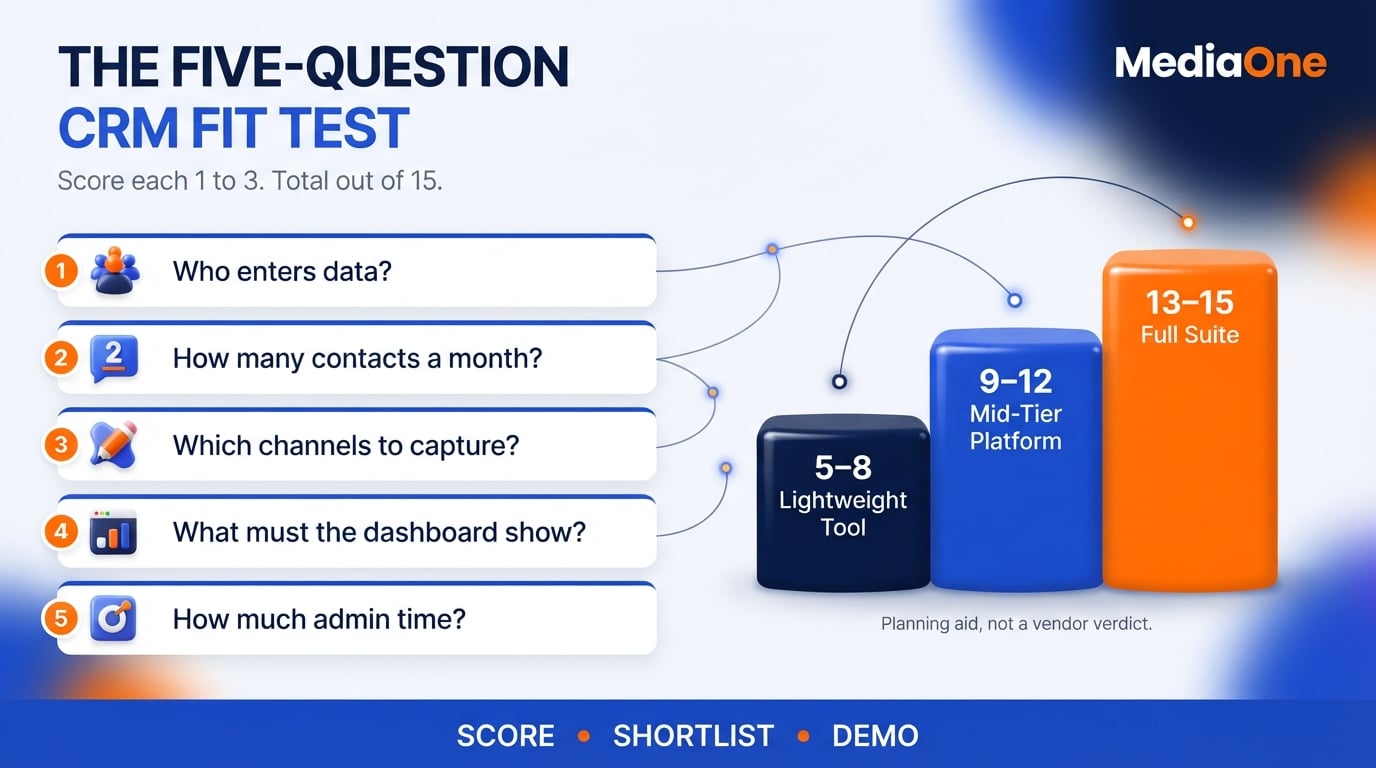
Worked example (illustrative): A three-person consultancy scores 2 on who enters data (two of three staff, with a shared inbox), 1 on volume (under 200 contacts), 3 on channels (WhatsApp, phone and email), 2 on dashboard needs (stage conversion only) and 2 on admin time. Its total is 10, which suggests comparing mid-tier platforms first. Change the scores to reflect your business before using the table.
Any question where your score is 3 but your team cannot yet describe the process behind it is a warning to define the process before buying. Request quotes in S$ and confirm setup, integration, training and admin costs with each vendor, since these vary and sit outside the licence fee. Before committing, request a demo from two or three shortlisted vendors using sample data that does not expose real customers’ personal information.
Some Singapore businesses handle substantial enquiry volumes through WhatsApp, while others depend on email, phone or web forms. Check your own lead sources before selecting integrations. A process that ignores an important channel can leave active leads unrecorded. For financial services and other regulated sectors, confirm the record-keeping and privacy rules that apply to your business.
Phased CRM Implementation Roadmap
- Map one workflow end to end, such as a WhatsApp enquiry through to a closed deal.
- Clean your existing contacts and remove duplicates before importing them.
- Configure the fields and stages the team will actually use.
- Pilot with one team for four weeks as an illustrative trial period, then adjust.
- Roll out to the rest of the business with an owner for data quality. If comparing a named tool, MediaOne’s HubSpot CRM review for Singapore teams provides additional context.
Checking CRM Adoption After Launch
Success shows up in reliable records and timely follow-up, not just logins. Check weekly whether calls and WhatsApp conversations are recorded within the team’s agreed response window. When they are not, review training, workflow design and tool access before blaming the platform. Close the loop on feedback too: captured information becomes useful when someone acts on it.
Next Steps for CRM Selection

Before you shortlist software, decide who enters data, what gets recorded and which dashboard figures the team reviews each week. Run the Five-Question CRM Fit Test as a first-pass discussion, then compare suitable options against real workflows and total cost. Clear information at this stage helps match the tool to the team’s workload.
Start with workflow ownership, data quality and total cost before requesting demos.
Your next steps are simple:
- Score the five questions honestly, recognising they are a planning aid.
- Map every channel your team actually uses, including WhatsApp and phone if relevant, so potential customers are followed up.
- Write down the three to five dashboard figures you will review every week.
- Request quotes in S$ and compare total cost of ownership, including setup, training and admin time.
Frequently Asked Questions
How Do CRM Software and CRM Practices Differ?
Customer relationship management is the practice of organising interactions with customers and prospects. CRM software supports that practice by storing records, tracking activity and prompting follow-up. Decide how you will win, serve and keep customers, then choose a system to support those steps.
What Does CRM Cost for a Small Singapore Business?
Prices depend on the vendor, number of users, integrations and features. Request quotes in S$ from several vendors and compare total cost of ownership rather than just the monthly licence fee. Include setup, data migration, integrations, training and administration time.
How Long Does CRM Implementation Take?
The timeline depends on workflow decisions, the state of your data, integration requirements and vendor setup. Agree on sales stages, required fields and record ownership before configuring the platform, then confirm the schedule with the vendor.
Can CRM Improve Customer Retention?
Yes. When the relevant data is connected, a CRM can show purchase history, service requests and feedback in one record. That helps staff spot overdue renewals and follow up with customers who may need attention. Track retention against a baseline to find out whether the changes work for your business.
Does a Small Business Need CRM Software?
Not always. If one person handles every relationship, a well-kept spreadsheet may be enough. Consider a CRM once several people share customer work, your WhatsApp, email and phone enquiries are scattered across devices, or you keep losing track of follow-ups.