| AI Summary
Negative reviews call for different responses. A genuine complaint needs a reply that names the problem and explains what happens next. A review with unclear details needs a private check. A review that breaks platform rules can be reported with evidence. Singapore businesses can protect customer privacy by keeping order and contact details out of public replies. A record of recurring complaints can also show which service problems the team should fix first. |
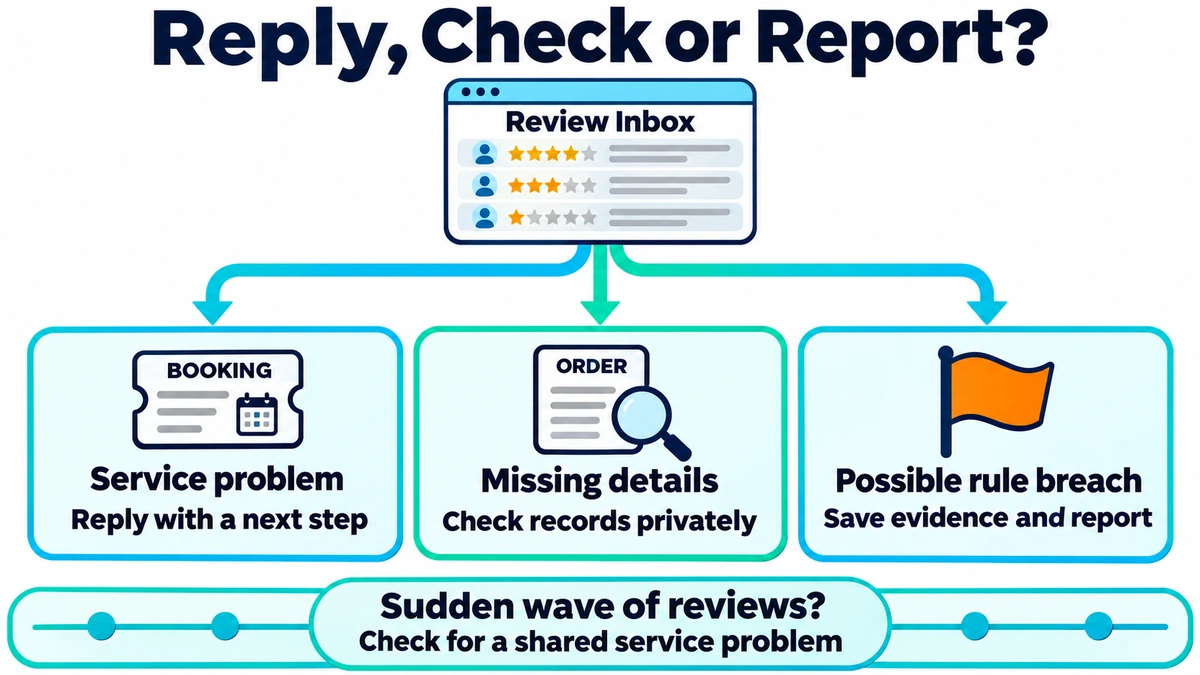
A business should respond to negative reviews promptly, name the specific issue, apologise for any confirmed mistake and offer a fair next step. Private details belong in a direct message, email or phone call. If a review appears fake, abusive or part of a coordinated attack, the business should save the evidence and report it through the platform.
Key Takeaways
- A burst of poor ratings may follow a real service problem. Timing alone gives the team a reason to investigate.
- A review belongs with someone who can see the case through, even if another team member posts the reply.
- Google prohibits incentives for posting, changing or removing reviews.
- Complaints about the same fee, delay or handover can point to one process the team can fix.
- A business can keep helping a customer even when the original review stays visible.
A customer leaves a one-star review after waiting for a confirmed appointment. The front desk remembers a busy morning, but nobody knows whether the customer received an update. The business needs to check what happened, give the customer a next step and keep the appointment details private.
That same process starts differently when a review describes a service the business has never offered. The first decision is whether the post calls for a reply, a closer look or a report.
Why Negative Reviews Affect Customer Trust
A review gives future customers a look at what can go wrong. A reply shows what the business does when that happens. Someone choosing between two clinics, repair shops or cafés may want to know whether the staff answer questions, explain charges and follow up when plans change.
A good reply can give readers facts they can use. For example, a repair shop can explain that extra work needs customer approval before it starts. If staff skipped that step, the reply can acknowledge the mistake and name the person who will look into it. Those details give a reader more to work with than a long defence of the business.
What Google says about reviews and local search
Google names relevance, distance and prominence as its main local ranking factors. Google also says review count and positive ratings can help local ranking. A business can use its Google Business Profile to keep hours and contact details current while it handles feedback. A reply serves the customer in front of the team, and Google gives no guarantee that one reply will improve a ranking.
Reviews also form part of what people see when they look up a business by name. The reviews themselves, the listing details and the answers people find across search can shape first impressions in different ways. MediaOne’s analysis of Google reviews and search visibility looks at those surfaces separately.
When to Reply, Investigate, or Report a Review
A star rating tells the team how the reviewer felt. The words and any supporting details help the team choose what to do. A one-star complaint with a date and a specific concern can be easier to act on than a three-star review that gives no details.
| What the team sees | What to check | First action |
| A customer describes a late order, missed visit or billing problem. | Order records, booking details or staff notes. | Reply. Acknowledge the concern and give the customer a next step. |
| The account name is unfamiliar or the review gives too few details. | Other booking names, sales channels or records for the branch. | Investigate. Ask for enough information through a private channel. |
| The post appears to contain spam, threats, abuse or personal information. | The wording against the platform’s rules. | Report. Save the evidence and select the rule that applies. |
| Several low ratings arrive close together. | Matching phrases, branch records and any real issue that affected several customers. | Check for a pattern. Separate real complaints from posts that appear to break the rules. |
A manager can ask one staff member to sort new reviews and another to approve replies about fees, staff conduct or serious service failures. In a small business, one person may do both. The important detail is who takes over when the first person lacks the records or authority to make a decision.
The customer may also have posted a concern in more than one place. A branch manager who sees the Google review can check whether the support team already has an email about the same order. That step can spare the customer another round of explaining and keep two teams from offering different fixes.
How to Respond to Negative Reviews in Four Steps
1. Check what happened before posting
The first reader can record the review link, branch, issue and date. The person handling the case can then check the order, staff notes or messages the customer received. A short pause gives the business time to separate what the review says from what the team can confirm. Google’s tips for answering negative reviews also advise businesses to check their records and respond in a timely way.
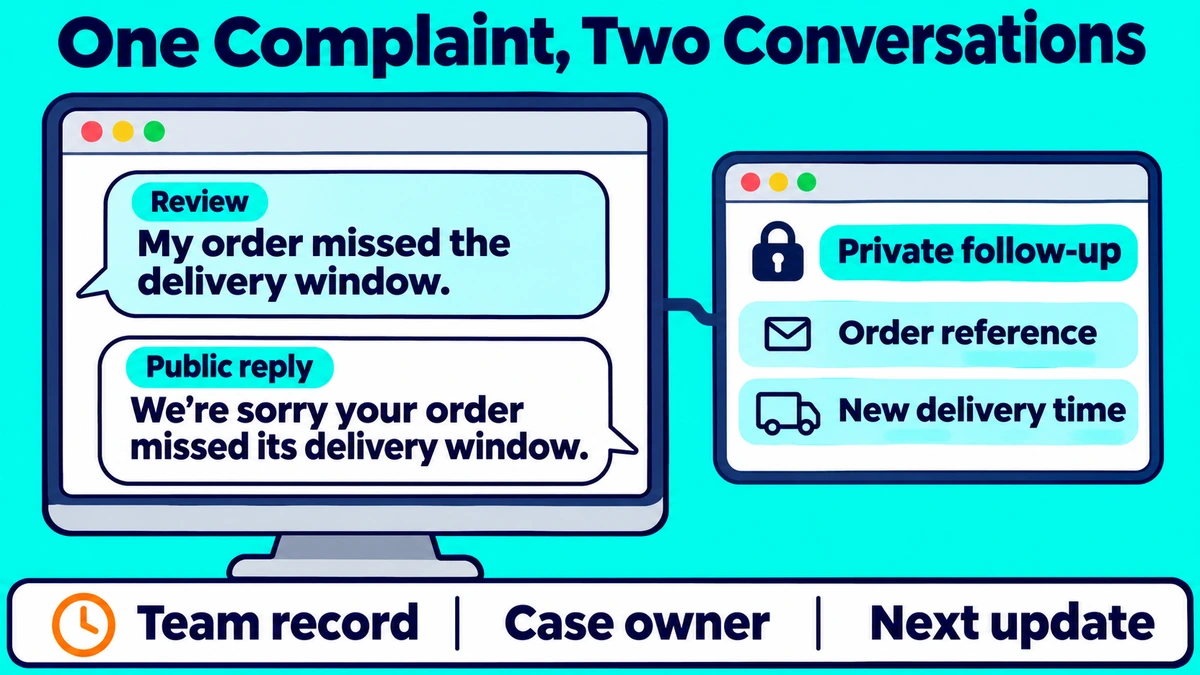
A reply can still go out while the facts are being checked. A customer who reports a missed delivery can hear that the shop is checking the booking and needs the order reference in a private message. The delivery team can then confirm the cause before anyone promises a refund or replacement.
2. Name the issue and acknowledge its impact
The first sentence should show that someone read the complaint. “We’re sorry you waited after arriving for a confirmed booking” gives the customer more than “Thank you for your feedback.” When the team confirms a mistake, the reply can say what happened in plain words.
A concern can also be acknowledged while the facts are uncertain. “We understand why the charge shown on your receipt raised a question” recognises the customer’s concern while the team checks the bill. If a brief explanation would help later readers, it can go after the acknowledgement. The public reply needs only enough detail to explain the next step.
3. Offer a fix that matches the problem
A fair fix addresses what the customer lost or still needs. A shop that missed a delivery window could offer a new time the customer can accept. A seller that sent the wrong item could explain its exchange process. A billing team could check whether a fee appeared on the quote and correct the bill if it finds an error.
- For a delay, the team can offer a new time or a date for the next update.
- For a wrong item, the team can check the order and arrange the exchange if it confirms the error.
- For a disputed charge, the team can compare the quote and invoice before offering a remedy.
- For a late reply, the team can give the customer one contact who can take over the case.
A remedy should stand on its own. Google’s rules on fake engagement bar businesses from offering payment, discounts or free goods or services in exchange for changing or removing a negative review. A refund or replacement that the business owes the customer can proceed while the review stays up.
4. Move case details to a private channel
The public reply should tell the customer which branch, email address or support channel can help. A request to “contact us” leaves the customer with more work if the profile lists several numbers. A dedicated business inbox is easier to use when staff know who checks it and how to find the case.
Home addresses, personal phone numbers, order numbers and appointment records belong in the private exchange. A decision by Singapore’s Personal Data Protection Commission examined a business’s disclosure of a customer’s personal data in a Google review reply. The practical rule for a team is to address the concern in public and keep records that identify the customer out of the thread.
The case owner should record who will contact the customer, what the business offered and when the next update is due. If the issue is fixed and a public update would help, one short sentence can record the outcome without sharing private details. If the issue remains open, the promised private update takes priority.
Negative Review Response Examples for Common Complaints
The following examples show how the reply can change as the facts change. Each one assumes the business has a private channel that staff check. A team can keep the shape of a reply while swapping in the facts of the case.
A confirmed mistake
“We’re sorry your order missed the delivery window we confirmed. Our team can check the next available slot with you. A private message to our support team with your order reference will help us find your booking.”
This reply owns the missed window and gives the customer a way forward. The business can agree on a new time once it checks the schedule. If staff already know the customer’s case, a direct follow-up can spare the customer from sending the reference again.
A charge the customer did not expect
“We understand why the extra charge raised a question. Our billing team can compare the quote with the final invoice. A message to our billing inbox with your invoice reference will help us check what was agreed.”
The invoice may show a charge the customer approved, an item the team explained poorly or an error. The public reply leaves room for those possibilities. If several customers question the same fee, the team should check what people see before they book.
A review the team cannot match to its records
“We’d like to check the experience you described. The details here haven’t helped us find the visit yet. A private message to our branch team with the visit date and location will help us look into it.”
A review may come from a guest, family member or someone whose booking used another name. The team can offer a private check without calling the account fake. If the post contains threats, exposes someone’s details or is part of a demand for payment, the reporting process takes priority.
A low rating with several complaints
“We’re sorry you waited for your appointment and left without an answer about the fee. Our branch manager can check both points. Our support inbox can put you in touch with them.”
An answer that handles only the wait leaves the fee question open. The reply can name each issue in a few words and give the customer one contact. The case owner can then bring in both the front desk and the billing team without asking the customer to start over with each one.
How to Spot and Report Fake Negative Reviews
A review that describes a product the business has never sold, or repeats the same unusual wording across accounts, gives the team a reason to look closer. A new account, a missing receipt or an unfamiliar name can also have an ordinary explanation. The team should check the available facts before accusing anyone of making up an experience.
What evidence helps the platform assess a report?
- The direct URL, date and screenshot for each review show what appeared and when.
- The wording that may break the rules helps the platform assess the report.
- A brief timeline can connect a run of posts to a service outage, promotion or other event the team can verify.
- Private records can support the team’s own checks, with submission limited to relevant information the platform requests.
Google’s review reporting process allows businesses to flag posts for policy violations, check the outcome and submit a one-time appeal for eligible reviews. A harsh opinion can remain online if it follows the rules. Tripadvisor also explains why a reported review may remain published. The team should match the report to the rules of the site where the post appears.
What if someone demands payment to remove reviews?
A demand for money, goods or services to remove reviews requires a different response from an ordinary complaint. Google’s review extortion reporting process asks businesses to preserve messages and review links and advises against paying or engaging with the sender. The records should include the demand, the affected listing and when the posts and messages appeared.
A burst of low ratings without a demand can have other causes. For example, a restaurant may receive several complaints after a power outage interrupts dinner service. Customer complaints about that evening can coexist with unrelated spam. The team can sort the reviews individually while looking for links between the suspicious ones.
How to Prevent Repeat Complaints
A review log can show what individual replies hide. One vague complaint about slow service may be hard to trace. Several reviews about a Saturday queue, backed by booking records and support messages, give the branch manager a specific time and process to inspect.
Track issues by branch, service and time
A simple log can record the platform, location, issue, case owner and outcome. Labels such as “wait time”, “unclear fee” and “missed update” make it easier to group complaints. One shared record can also show when two posts describe the same incident, so the team counts one service failure once.
Review monitoring works best when the team can compare public posts with other feedback. For example, social media listening can pick up public comments about a delivery delay, while the support inbox shows when customers first asked for news. Branch details should also be consistent across local business listings so customers can find the right team.
Fix what happens before the complaint
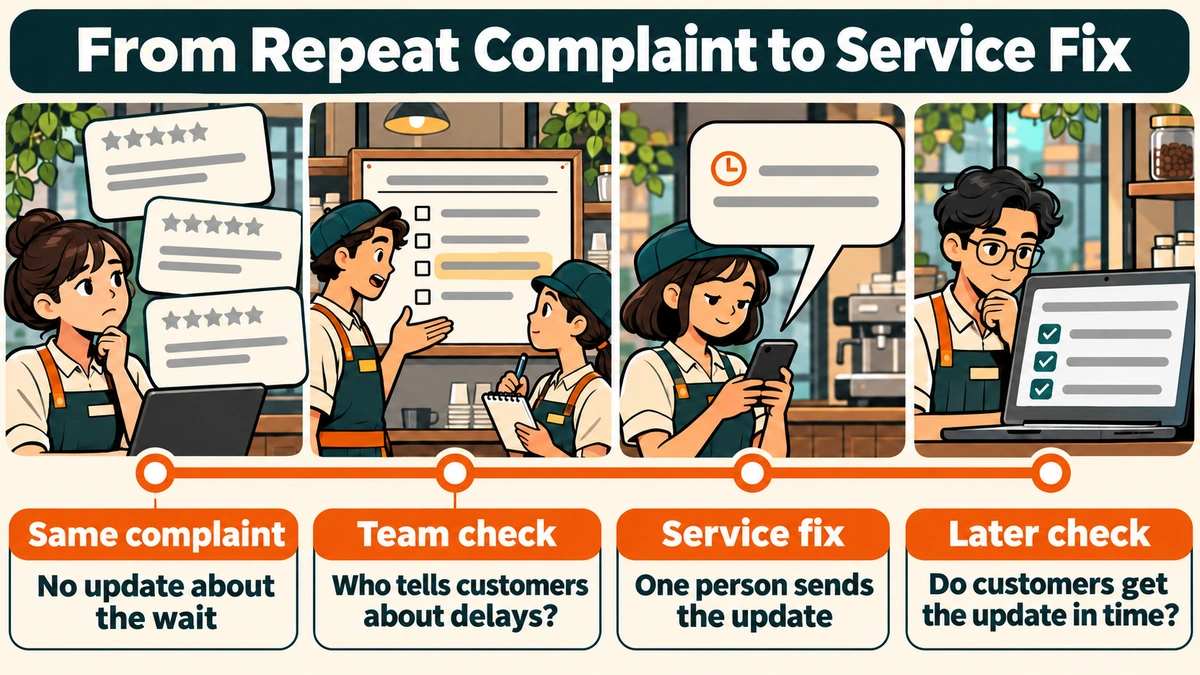
| Repeat complaint | What the team checks | One change to test |
| “Nobody told me my appointment was running late.” | When staff first knew about the delay and who was meant to contact customers. | A named staff member sends an update when a wait grows longer. |
| “The fee was higher than I expected.” | What the booking page, quote and staff said before the sale. | The team puts the fee next to the service price before customers book. |
| “I had to tell three people the same thing.” | How the case moved between staff, locations or inboxes. | One owner records the issue and keeps the customer updated. |
A fix needs an owner and a date to check whether it is working. A branch that starts sending delay notices can review later bookings and complaints about missing updates. Staff can also look at when the notices went out. If customers still arrive without knowing about delays, the notices may be reaching them too late.
Train staff to handle the first reply
Staff can practise with reviews that mix anger and useful facts. A good training example asks someone to identify the complaint, decide what the team can confirm and write a reply that gives one next step. The exercise can also show when the reply needs a manager’s approval, such as when a customer disputes a high bill or names an employee.
The person who posts the reply needs to know which fixes they can offer. A staff member may be able to rebook a visit while a manager reviews charges. When everyone knows who can make each decision, cases spend less time waiting between teams.
Build Customer Trust With Better Review Responses
A business can start with the oldest unresolved complaint that still needs action. One person can check the facts, contact the customer and note what caused the problem. If the same issue appears again, the team has a record it can use to test a fix.
At MediaOne, our online reputation management services help Singapore businesses assess what customers see online and plan how to respond. Our branding services can help teams develop a consistent voice across listings and public replies.
FAQs About Negative Reviews
Can a customer edit their Google review after the business replies?
Yes. Google lets reviewers edit or delete their own reviews, including changing the text or star rating. A customer can leave the original review in place even after receiving a refund or other remedy. The business can judge its work by whether it delivered the fix and kept the customer informed.
Should a business reply to a negative review from last year?
An older review can be worth answering if it still appears prominently and the business has something specific to add. A brief reply can say that the team now uses a new booking process, for example, if that is true. When the records are gone, the business can acknowledge the experience and explain how a current customer can reach support. A reply should avoid promising that staff can reconstruct an old case.
Who should sign a negative review response?
A staff member’s first name, initials or a role such as “Branch Manager” can work. The signature should help the customer identify who owns the reply. A shared support team can use a team name if it has a way to route follow-ups to the right person. A team can also use a role in sectors where staff names or customer details need extra care.
Should a business write back in the reviewer’s language?
A reply in the reviewer’s language can make it easier to understand the next step if the business has someone who can check the wording and handle any private follow-up in that language. If the team relies on translation, a short reply with plain terms reduces the risk of misreading a fee, date or refund promise. Private records should stay out of any public translation or reply.
What if a negative review appears under the wrong branch?
The business can say which branch can look into the concern and offer to pass the case to that team. The branch that received the review should first check whether the customer dealt with both locations, such as booking with one and collecting from another. A private handover keeps the customer from repeating their details and gives the teams one place to track the outcome.
Should the business reply again if the reviewer adds new details?
A second reply can help if the edit raises a new issue or changes what the customer needs. The business can acknowledge that point and tell the customer who will check it. If a public back-and-forth continues without new information, the team can keep the case open privately and use the contact channel it already gave the customer.