| AI Summary
Near Me SEO helps Singapore businesses attract nearby customers through Google Search and Maps. Learn how to optimise your Google Business Profile, improve local search visibility, manage reviews, maintain accurate business listings and create location-specific content. This guide also includes a 10-point readiness score and a practical 30-day checklist to increase enquiries and customer visits. |
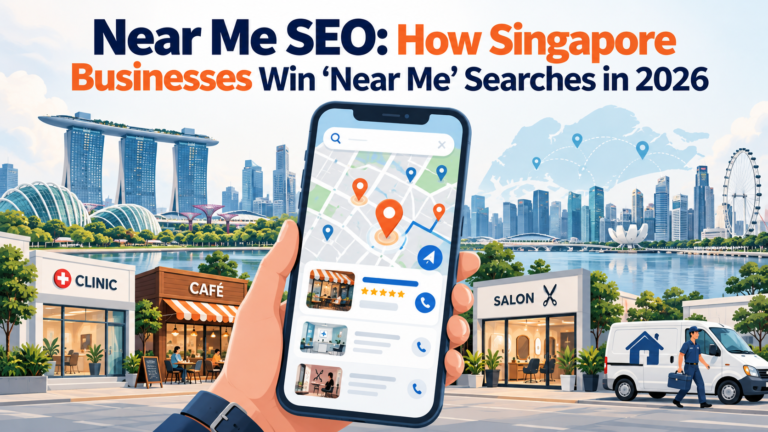
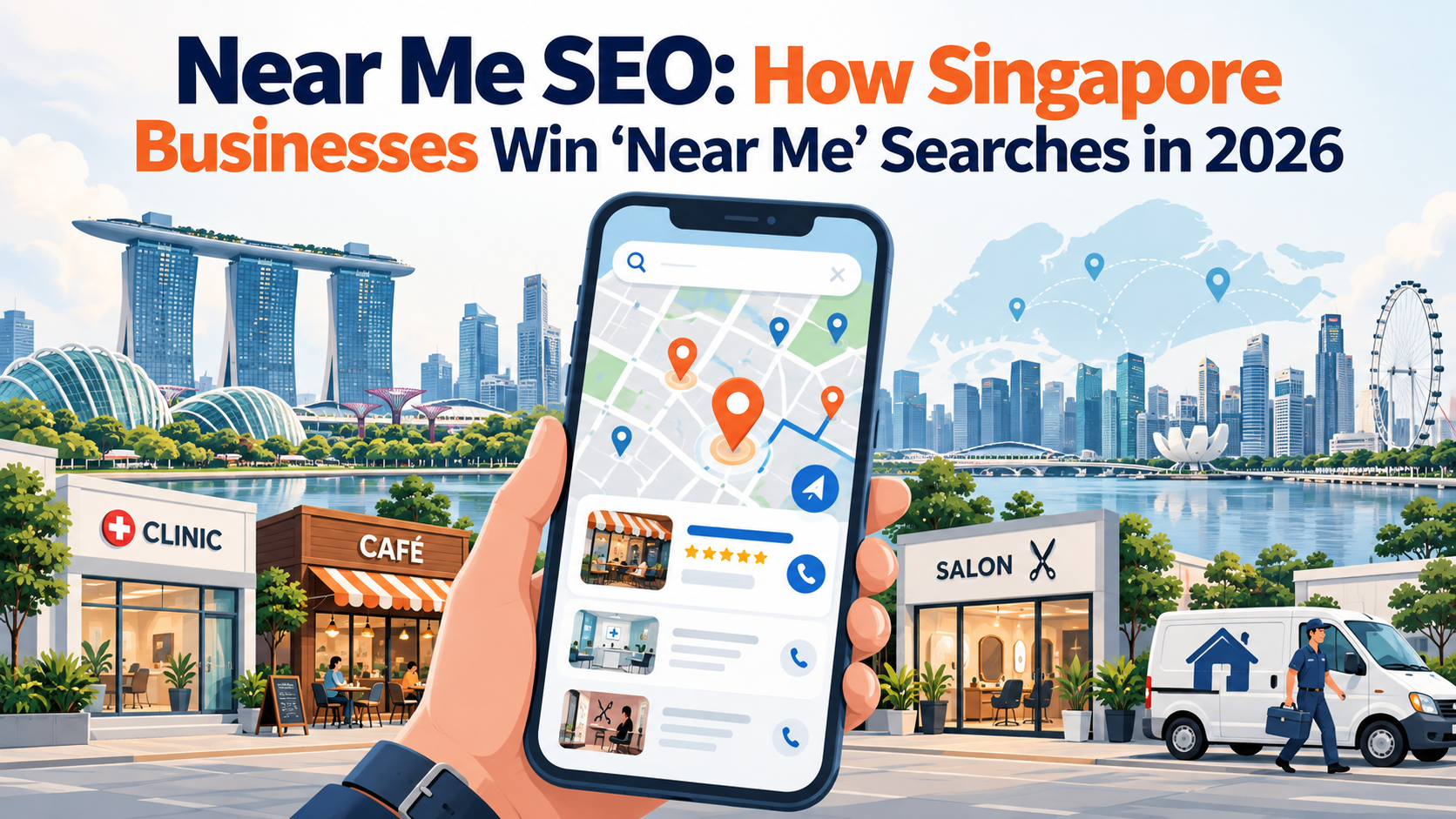
A customer in Tampines searches for “dentist near me”. Another in Jurong East looks for a café that is open now. Both want a useful answer without spending time comparing distant businesses. Near Me SEO helps your business appear when people search for relevant services in their immediate area.

The starting point is accurate business information, not repeating “near me” across your website. We recommend strengthening your Google Business Profile, checking your actual service coverage, building credible local content and making enquiries easy. This guide explains how to do that in Singapore, without relying on outdated search statistics or questionable ranking shortcuts.
Key Takeaways
- Relevance, distance and prominence shape local results. You can improve the information Google uses, but you cannot choose a searcher’s location.
- A complete Google Business Profile is the foundation. Accurate categories, hours, services and contact details help customers assess your business.
- Real locations matter. A mall unit, shophouse, clinic or service-area business needs a listing that reflects how it operates.
- The Near Me Readiness Score is a self-audit. Use our ten-point framework to prioritise practical improvements, not predict your Google ranking.
- Measure customer actions. Calls, direction requests, website visits and qualified enquiries provide a clearer picture than checking one keyword position.
What “Near Me” SEO Means for Singapore Businesses
Near Me SEO is the part of local search engine optimisation focused on searches with nearby intent. People may type “hair salon near me”, “aircon servicing near me” or simply “pharmacy”. Google can interpret local intent even when someone does not include the words “near me”.
These searches often signal an immediate need, although not every searcher is ready to buy. Someone checking nearby clinics may be comparing opening hours. Another person may need an emergency plumber and want to call straight away. Your listing must answer the practical question behind the search.
Near Me SEO therefore covers both visibility and usability. A business needs to be a relevant local result. It also needs a dependable phone number, accurate directions or a clear way to book. A prominent listing that sends customers to the wrong unit or an unanswered telephone wastes the opportunity. Because results vary by neighbourhood, we would evaluate visibility where customers genuinely search rather than rely on one citywide ranking check.
Why Nearby Searches Matter in 2026
Local searches connect discovery to visits and enquiries. Mobile customers can compare opening hours, read reviews and request directions while already on the move. Google Search and Maps bring those decisions into a single experience.
The practical opportunity remains clear without an inflated headline statistic. A neighbourhood bakery needs customers to find today’s opening hours. A tuition centre needs parents to understand its location and programmes. A mobile cleaning service needs homeowners to know which estates it serves. In each case, helpful information can shorten the journey from discovery to contact.
How Google Chooses Businesses for “Near Me” Results
Google states that local results are primarily based on relevance, distance and prominence. Its local ranking guidance is a better foundation than unofficial checklists claiming to reveal the algorithm.
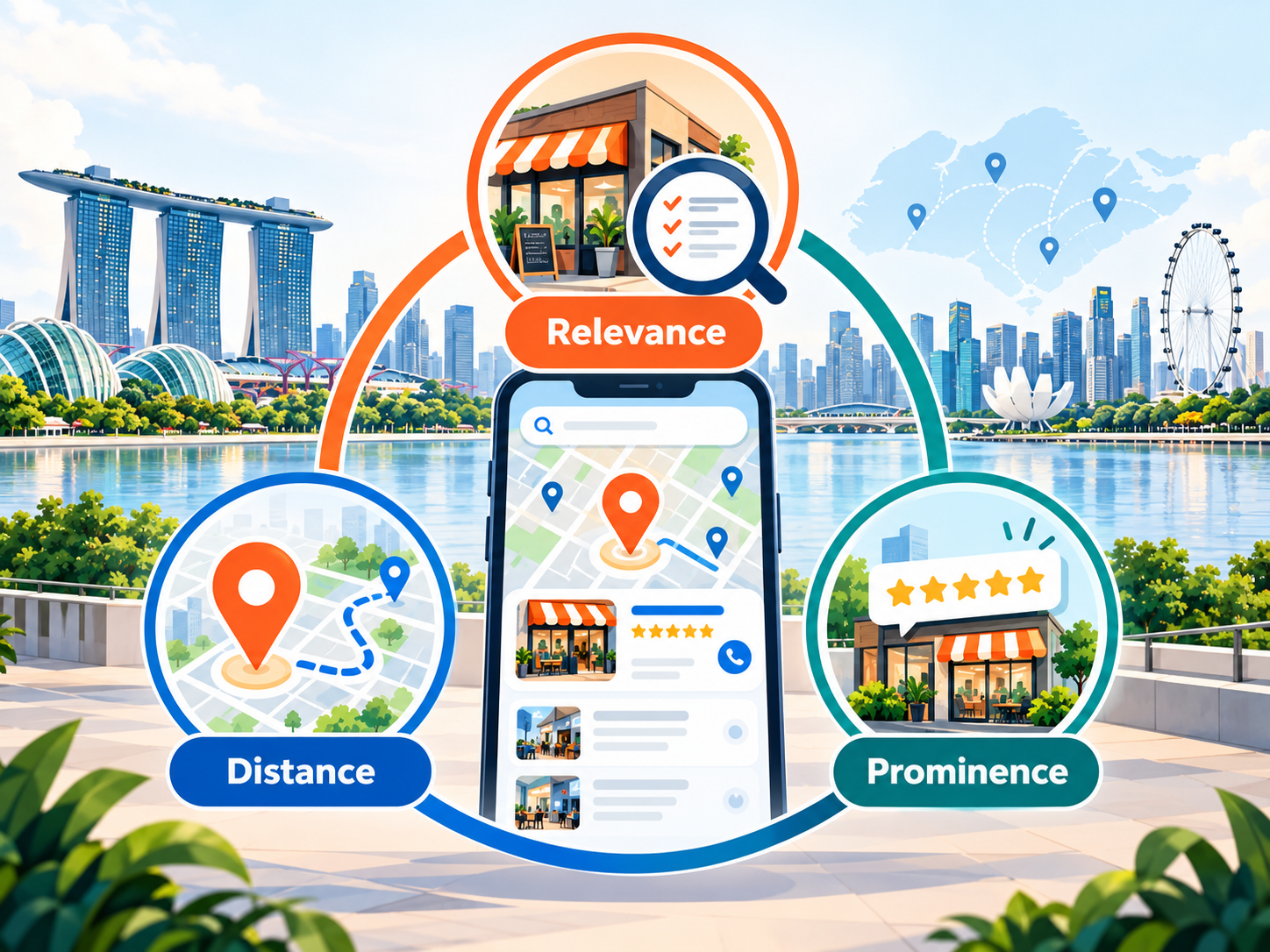
Relevance: Does the business match the search?
Relevance describes how closely a business matches what someone wants. The correct primary category, specific services and complete business details help Google understand the offering. A physiotherapy clinic should not select a broad or unrelated category merely because it receives more searches.
We recommend using the terms customers naturally use when describing services. Explain your actual treatments, menu items or repair options. Do not insert “near me” into the registered business name or repeatedly force it into descriptions.
Distance: How close is the business to the searcher?
Distance depends on the business location and the location Google knows or estimates for the person searching. A business in Toa Payoh cannot make itself physically closer to someone in Woodlands through extra keywords or a longer service-area list.
This matters when evaluating rankings. Compare results from realistic customer locations and note that two people searching the same term can see different businesses. A lower ranking outside your genuine catchment is not automatically an optimisation failure.
Prominence: How established is the business?
Prominence reflects how well-known a business is. Google mentions signals such as links from other websites and the number and quality of reviews. Positive ratings can support local ranking, but no number of reviews guarantees a place in the local pack.

We would focus on earning authentic customer feedback and useful mentions from relevant local organisations. Avoid buying reviews or building directory links in bulk. Google also makes clear that businesses cannot pay it for better organic local rankings.
Build a Reliable Google Business Profile
Your Google Business Profile is often the first detailed encounter a nearby customer has with your company. Start by claiming the existing listing, completing the required verification and checking whether duplicate profiles already exist. Google outlines the eligibility and naming rules in its Business Profile guidelines.
Choose accurate categories, services and hours
Select the primary category that best describes the core business, then add relevant secondary categories where available. Complete your actual products or services. Keep your primary telephone number and website link working, and update special hours before Singapore public holidays.

Restaurants may need menus and dining hours; clinics need accurate appointment details. Repair companies should explain call-out arrangements.
Use genuine photographs that help customers recognise you
Upload current photographs of your exterior, entrance, reception or work where appropriate. For a unit inside a shopping centre, a clear entrance photograph can be particularly useful. A visitor should be able to recognise the place upon arrival.
Google permits business photographs and videos, subject to its content requirements. These assets can improve a customer’s understanding, although uploading a particular number of photographs is not a guaranteed ranking tactic.
Keep one accurate profile for each eligible location
Do not create several profiles for the same shop to target neighbouring districts. Google generally expects one profile per actual business location, with specific exceptions for eligible departments or individual practitioners. The profile name should match the name used in the real world, not a string of suburbs and services.
A business operating from a shopping mall should include its actual unit and floor details where relevant. Correct an inaccurate map pin and show practical entrance information on the website. These details reduce customer confusion even when they do not change ranking directly.
Get Singapore Addresses and Service Areas Right
Shared addresses complicate local optimisation. A shophouse may contain several unrelated companies. A mall may have stores with similar names or entrances on different levels. Each independently eligible business needs accurate information, rather than an invented location or duplicate listing.
Storefronts, home-based services and hybrid businesses
A storefront welcomes customers at its displayed address during stated hours. A service-area business visits or delivers to customers but does not serve them at its business address. A hybrid business does both.
For example, a plumbing business operated from a private residence should generally hide the residential address if customers are not received there. A showroom that welcomes visitors and also installs products may display its eligible storefront and define its service coverage. Google’s service-area instructions explain these distinctions.
You can specify eligible areas by place or postal code, up to Google’s supported limit. Adding districts does not make your business physically closer to searchers in those districts. Google no longer allows businesses to configure service areas as an editable distance radius.
Avoid virtual offices and artificial branches
A rented mailing address is not an eligible storefront simply because it looks professional. Google’s rules also restrict co-working addresses without appropriate signage, staffing and customer-facing operations. Before creating another listing, confirm that the location is genuinely eligible. Multi-location businesses should maintain separate branch information where operations genuinely differ.
Make Your Website Useful for Local Searchers
Your website supports local SEO by describing services in depth and helping visitors take action. It also gives Google additional context about the business. A verified profile does not replace useful website content, and a website can appear in organic results alongside local listings.
Create pages for real branches and meaningful services
Each genuine branch can have a dedicated page containing its address, hours, transport guidance and locally relevant services. For example, a clinic in Clementi might explain its appointment options and how to find the entrance. Include information a patient or visitor would genuinely need.
Service businesses can describe the neighbourhoods they cover, but avoid producing dozens of almost identical pages that merely swap “Bukit Timah” for “Pasir Ris”. Google identifies such patterns as potential doorway abuse. We favour fewer, useful pages with distinct information.
Use local keywords naturally
Mention your core services and genuine location in relevant page titles, headings and body copy. A natural title might be “Aircon Servicing in Bedok | [Business Name]”. The phrase “near me” does not need to appear in every heading to make a page locally relevant.
Add practical supporting detail: appointment availability, parking, nearby MRT stations, access instructions and service restrictions. If the business offers islandwide delivery, explain how that works rather than pretending to maintain a physical outlet in every district.
Make the mobile experience fast and easy
Google uses mobile content for indexing, as explained in its mobile-first indexing guidance. Test pages on actual phones, not only in a desktop preview. A slow page or hidden booking control can cost an enquiry even if the listing is visible.
Check whether users can tap to call, find an address and book without unnecessary steps. Fix intrusive pop-ups and broken forms. Page speed alone cannot guarantee a local-pack position.
Where appropriate, implement accurate LocalBusiness structured data to describe location details for search engines. Markup must reflect visible facts on the page. It cannot manufacture a business address or secure a particular search feature.
Strengthen Listings, Reviews and Local Credibility
Name, address and phone number are commonly shortened to NAP. Check that customers encounter correct, consistent NAP details on your website, Google profile and relevant third-party platforms. Minor formatting differences are less important than a conflicting telephone number, an old address or a wrong opening time.
Prioritise sources customers actually consult, such as relevant business directories, sector associations, Apple Maps and other navigation platforms. Correct existing records before creating new ones. Citation consistency is useful information management; Google has not published a rule that matching every punctuation mark produces a specific ranking increase.
Earn and respond to genuine reviews
Ask customers for honest feedback after a real service or purchase. Google supports sharing a review link or QR code, but prohibits rewards or discounts in exchange for reviews. Do not ask only happy customers to leave positive reviews while discouraging others.
Reply professionally to useful feedback. Thank customers for specific comments and address problems without disclosing personal information. Reviews can help future customers assess reliability, while detailed replies show that the business is attentive.
Relevant community involvement can generate credible mentions and links. A shop might be listed by a local association, while a specialist contributes useful advice to an industry publication. Prioritise real audience value.
Check Your Near Me Readiness Score
We use a Near Me Readiness Score as a simple ten-point self-assessment. It is our editorial planning framework, not a Google metric, published ranking model or guarantee of visibility. Score the evidence you can verify, then work on the weakest area.
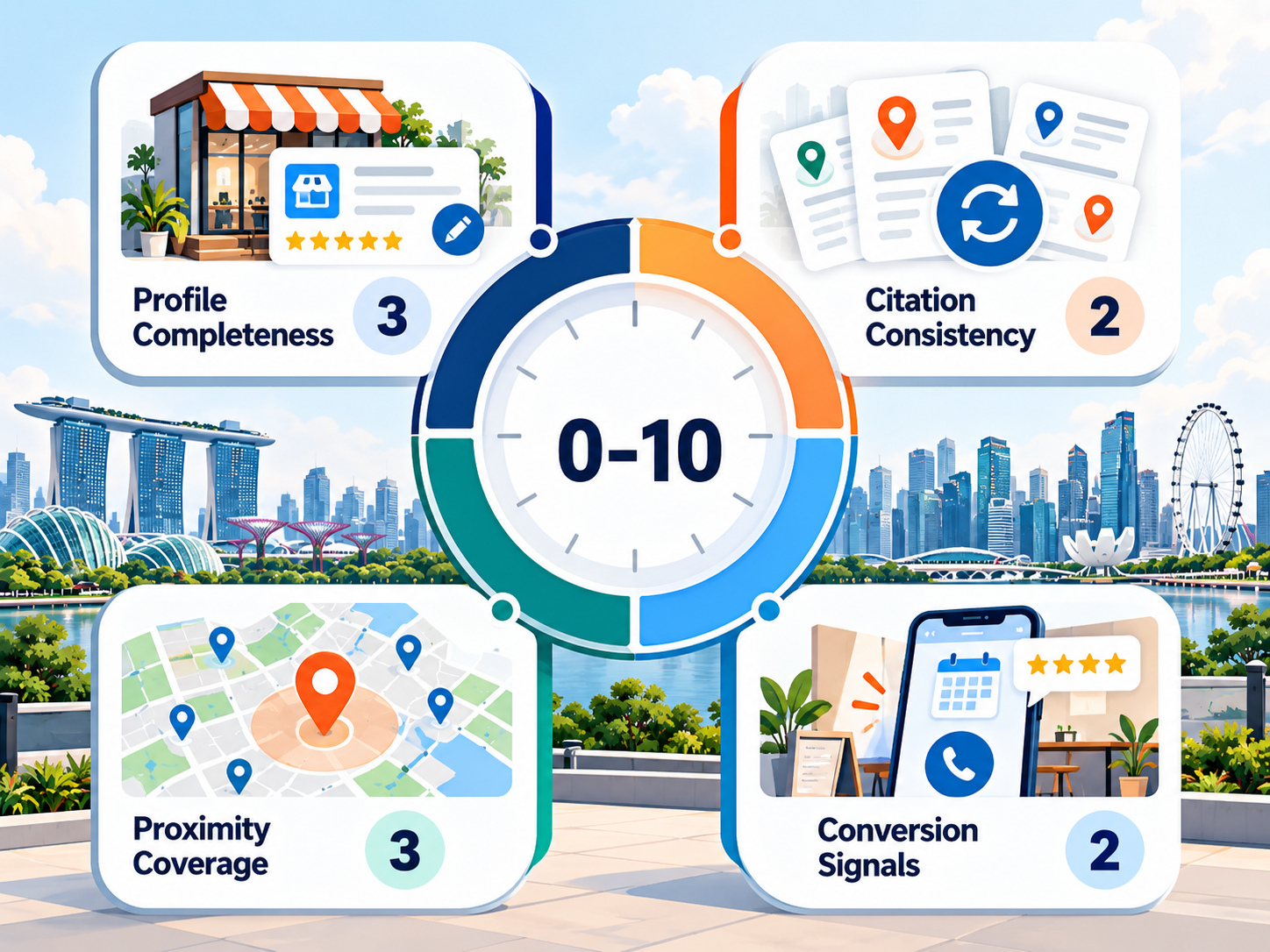
| Pillar | Maximum points | How to award the points |
| Profile Completeness | 3 | One each for accurate category and services; correct contact/location details; current regular and special hours |
| Citation Consistency | 2 | One for matching website and main listing details; one for reviewing and correcting relevant external listings |
| Proximity Coverage | 3 | One for an eligible, accurately mapped location; one for truthful service areas or branch information; one for useful local landing-page coverage |
| Conversion Signals | 2 | One for a practical review-response process; one for tested mobile contact, direction or booking paths |
| Total | 10 | Add the points earned across all four pillars |
The “Proximity Coverage” label measures whether your information reflects your real catchment. It does not measure or improve Google’s calculated distance between a searcher and your business.
How to interpret your score
- 0–4: Fix accuracy first. Review eligibility, hours, categories and conflicting details before launching content campaigns.
- 5–7: Improve the weakest pillar. Strengthen genuine location pages, review management or mobile conversion paths, depending on your gaps.
- 8–10: Maintain and measure. Keep information current, monitor customer actions and revisit the audit when operations change.
For example, a verified Tampines salon might have complete profile information but an outdated mall unit number on another platform. Correcting that inconsistency is an immediate practical improvement. It does not justify claiming a fixed percentage increase in rankings.
Measure “Near Me” SEO Performance Beyond Rankings
Google’s Business Profile performance report provides applicable metrics such as profile views, search terms, direction requests, call-button clicks and website clicks. Some businesses may also see booking-related metrics if the relevant feature and provider are supported.
Keep the differences clear. A call-button click is not proof that a conversation occurred. A direction request is not a confirmed store visit. A website click is not automatically a sale. Compare these indicators with actual enquiries, appointments or transactions recorded by your business.
We would review results monthly and look for patterns rather than judging one day’s position. Compare the same branch, similar time periods and relevant customer areas. Check for operational changes such as reduced hours before attributing an improvement or decline entirely to SEO.
Bookings require additional care. Google’s booking-provider instructions describe options that depend on participating providers and local availability. Do not assume every Singapore service business can offer direct booking and payment inside Google Search or Maps. A reliable booking link on your own website remains valuable.
A 30-Day Near Me SEO Checklist for Singapore Businesses
A month can resolve preventable information problems and establish measurement. It does not guarantee ranking improvements. We recommend treating this as an implementation schedule, followed by ongoing review.
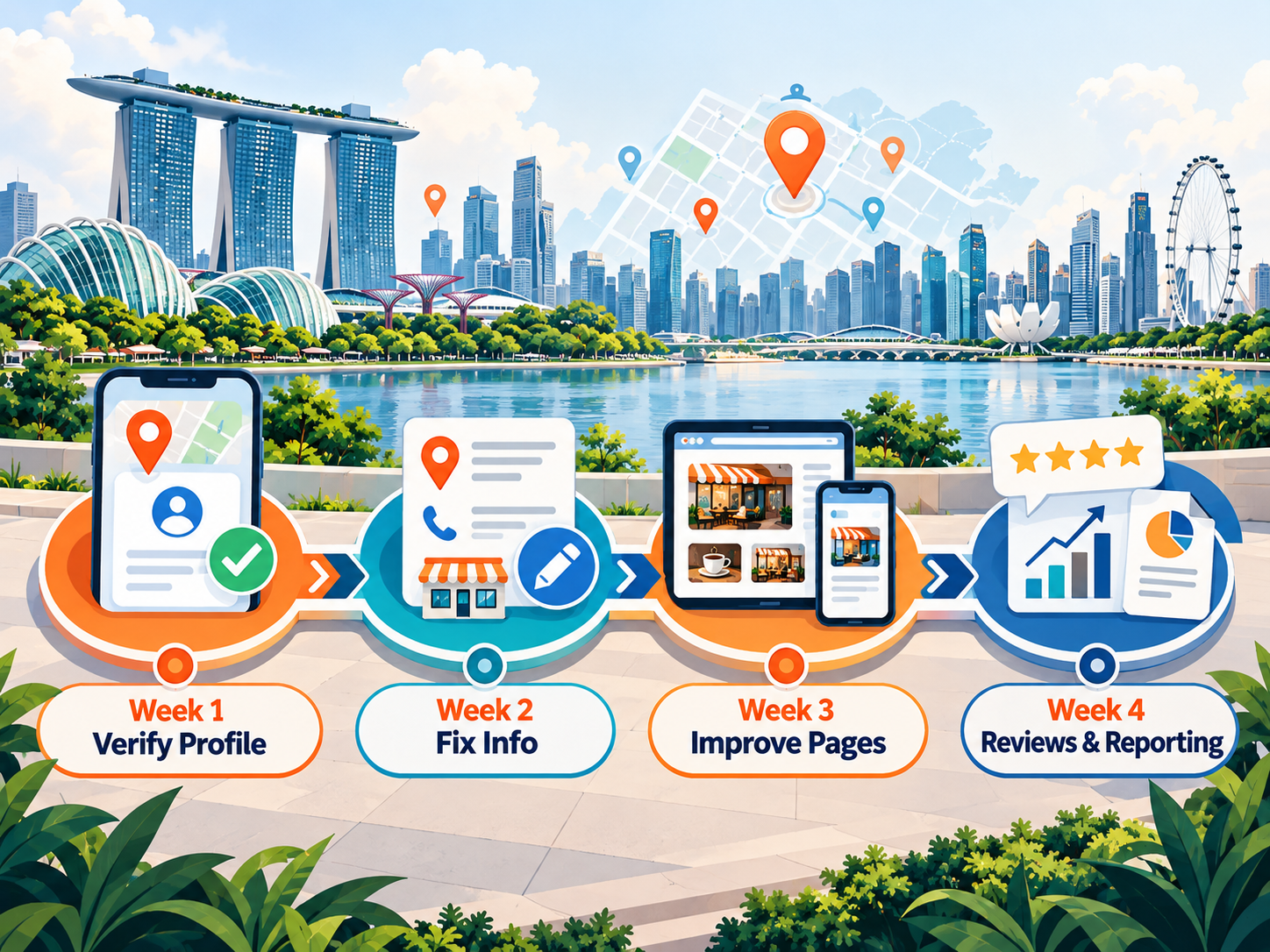
Week 1: Verify and complete the business profile

Audit profile ownership, primary category, secondary categories, contact details, address or service area and business hours. Check public-holiday opening times. Upload genuine photographs and confirm that the map pin points to the correct entrance or building.
Search for duplicates and review eligibility before requesting changes. Record initial performance for comparison.
Week 2: Correct business information across platforms
Compare your website footer, contact page, relevant directories and social profiles. Fix obsolete phone numbers and old premises details. Check unit numbers for mall and shophouse businesses, particularly when customers rely on navigation apps. Assign responsibility for updates whenever hours or locations change.
Week 3: Improve local pages and mobile journeys
Review your most important service and branch pages. Add genuine location guidance and answer common pre-visit questions. Test call, enquiry and booking links on mobile devices, including after business hours.
Remove thin location pages that offer no meaningful distinction, or consolidate them into helpful service-area information. Fix broken forms and slow-loading assets before commissioning more content.
Week 4: Build feedback and reporting habits
Introduce a compliant review-request process and assign someone to monitor responses. Check that customers can find the correct contact method and receive a timely reply. Use Google Business Profile performance data to establish a reporting baseline.
Repeat the readiness score. List the next three actions according to business impact, not simply the easiest tasks. Continue monitoring rankings across relevant locations without treating a single result as representative of Singapore.
Frequently Asked Questions
What is the difference between local SEO and Near Me SEO?
Local SEO improves visibility for searches connected to a location. Near Me SEO focuses on nearby intent, whether users explicitly type “near me” or Google infers that they need a local result.
Do I need a Google Business Profile for “near me” searches?
An eligible Google Business Profile is a key way to manage your presence in Google Search and Maps. Your website can also appear in organic results, so you should maintain both rather than treating the profile as a replacement.
Can I rank in another Singapore neighbourhood without an office there?
You may attract customers from neighbouring areas, but listing a service area does not move your physical location. Do not create fictional branches or use addresses where your business does not qualify to operate a profile.
How important is NAP consistency?
Accurate name, address and phone information helps customers reach the right business. Correct conflicting information across important platforms, but do not assume that identical punctuation is a proven ranking lever.
Do reviews guarantee a higher Google Maps ranking?
No. Google’s local ranking guidance includes reviews as part of prominence, alongside relevance and distance. Encourage genuine feedback and avoid buying reviews or offering incentives.
Should I add “near me” to my business name or every page?
No. Your Business Profile must use your real-world name, and website content should read naturally. Use clear service and location information instead of repeating a search phrase unnaturally.
Is Near Me SEO suitable for home-service businesses?
Yes. Eligible cleaners, plumbers and other mobile providers can use service-area profiles when they visit customers. They should accurately define the areas served and hide a home address if customers are not received there.
Turn Nearby Search Visibility Into Real Customer Enquiries
Near Me SEO works best when searchers can understand your offer, trust your details and contact you without friction. We recommend beginning with accurate Google Business Profile information, then improving service-area clarity, useful local pages and review processes. Measure real enquiries alongside Search and Maps interactions.
For Singapore businesses with several branches or persistent visibility gaps, our local SEO services can help prioritise the work. The aim is not to appear everywhere on the map. It is to become a credible, convenient choice where your customers actually search.