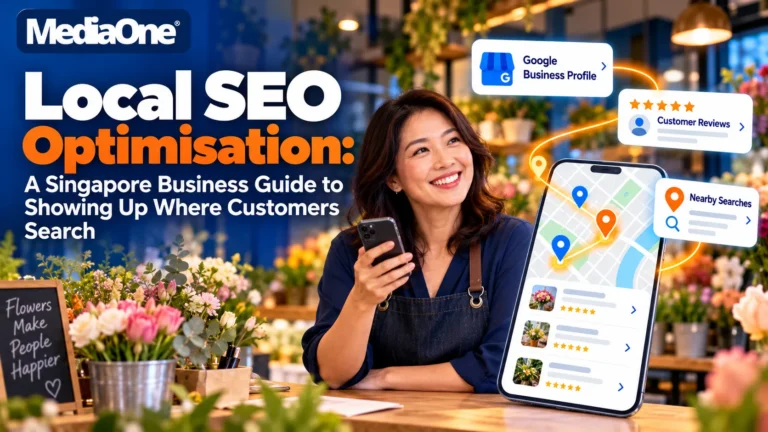
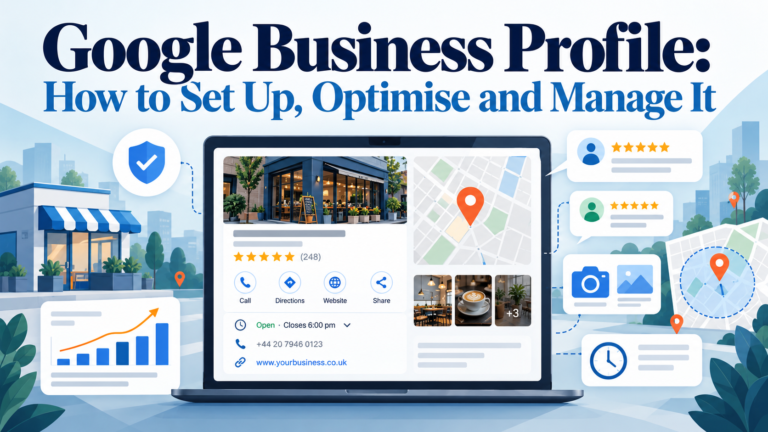
Most Singapore small businesses assume local search is a content problem. In practice, the bigger gains usually come from a complete Google Business Profile, consistent business details, prompt replies to customer reviews and accurate listings across local citations. These steps help your local business appear in relevant local search results, where key customer information is shown. Stronger local search visibility also depends on a clear, accurate website that matches your listings.

The stakes are real. Nav43 reports that 76% of people who search nearby on their smartphone visit a related business within a day. Halotech Media reports that 28% of nearby business or service searches result in a purchase.
This guide argues that operational accuracy should come before content volume. It introduces the Local Visibility Audit Scorecard, a six-signal checklist in which each signal is scored from 0 to 2. Run it on your listings to see how your local SEO is performing and what to fix first. Treat this as an important strategy step, because a clear plan keeps your SEO efforts focused on the signals that matter most to a search engine.
Start Here: The First Three Actions
- Claim and verify your Google Business Profile. This is the foundation of local visibility.
- Check that your name, address and phone number match everywhere. Compare your profile, website and directories field by field.
- Reply to every open review. Then work through the Scorecard from the lowest score upward.
Key Takeaways
- Profile accuracy beats content volume. For most Singapore small businesses, a complete, accurate Google Business Profile moves local rankings more than extra blog posts.
- Claim your listing first. Laire Digital reports that 56% of local businesses have not claimed their Google My Business listing.
- Mobile searchers decide fast. According to Nav43, 76% of people who search nearby on a smartphone visit a related business within a day.
- Keep name, address and phone number identical everywhere. Mismatched details blur Google’s picture of your business.
- Score before you fix. Rate six signals from 0 to 2 using the Local Visibility Audit Scorecard, then tackle the lowest score first.
- Expect varied timelines. Some businesses see movement within four weeks, while others need three to six months, according to First Place SEO.
What Local SEO Optimisation Means
Local SEO Optimisation makes a business appear when someone nearby searches for what it sells, on Google Maps and in local search results. A simple audit checks whether the business appears for its core service in its own neighbourhood and whether its website shows up in those results.
Local search rests on three signals: relevance (how well the business is described across the web), distance (how close it is to the searcher) and prominence (how credible it looks). Google’s Business Profile help documentation describes these as the basis for ordering results. You cannot control distance, but you can control the other two. Consistent listings and reviews strengthen both.
Why Nearby Searches Lead to Visits and Sales
According to Nav43’s guide to local search, 76% of people who search for something nearby on their smartphone visit a related business within a day, and 28% of those searches end in a purchase. Accurate hours, a working phone number and a clear route should be visible before customers tap.
Local SEO vs. Standard SEO: Where the Strategies Diverge
Standard SEO asks which page best answers a search. Local SEO asks which nearby business should appear right now. That shift is why a Local SEO Optimisation strategy starts with your listing, not your website.
Ranking Signals That Are Unique to Local Search
Google’s local results lean on relevance, distance and prominence. You cannot change distance, but you can influence the other two through a complete Google Business Profile, accurate categories, consistent business details and recent, responded-to reviews. Reviews also show potential customers how a business handles feedback.
For most Singapore small businesses, these signals outweigh extra blog posts. Fix the profile first.
When a Local Business Needs Both
A wider-market business may need standard SEO first. A clinic in Tampines or a cafe in Orchard needs local signals first. Most businesses need both, but the order matters.
Google Business Profile Optimisation: The Foundation of Local Visibility
For most small businesses in Singapore, the Google Business Profile matters more for local search visibility than any blog post or keyword tweak. Accuracy and responsiveness are more important than content volume, so please prioritise fixing the profile first. A well-maintained listing is the core of local SEO optimisation, because it determines which search results your business appears in and how customers find your website. A strong local keyword strategy begins here, since the profile signals what your business offers to nearby search engine users. Every local SEO strategy depends on a solid foundation.
Claiming and Verifying Your Profile
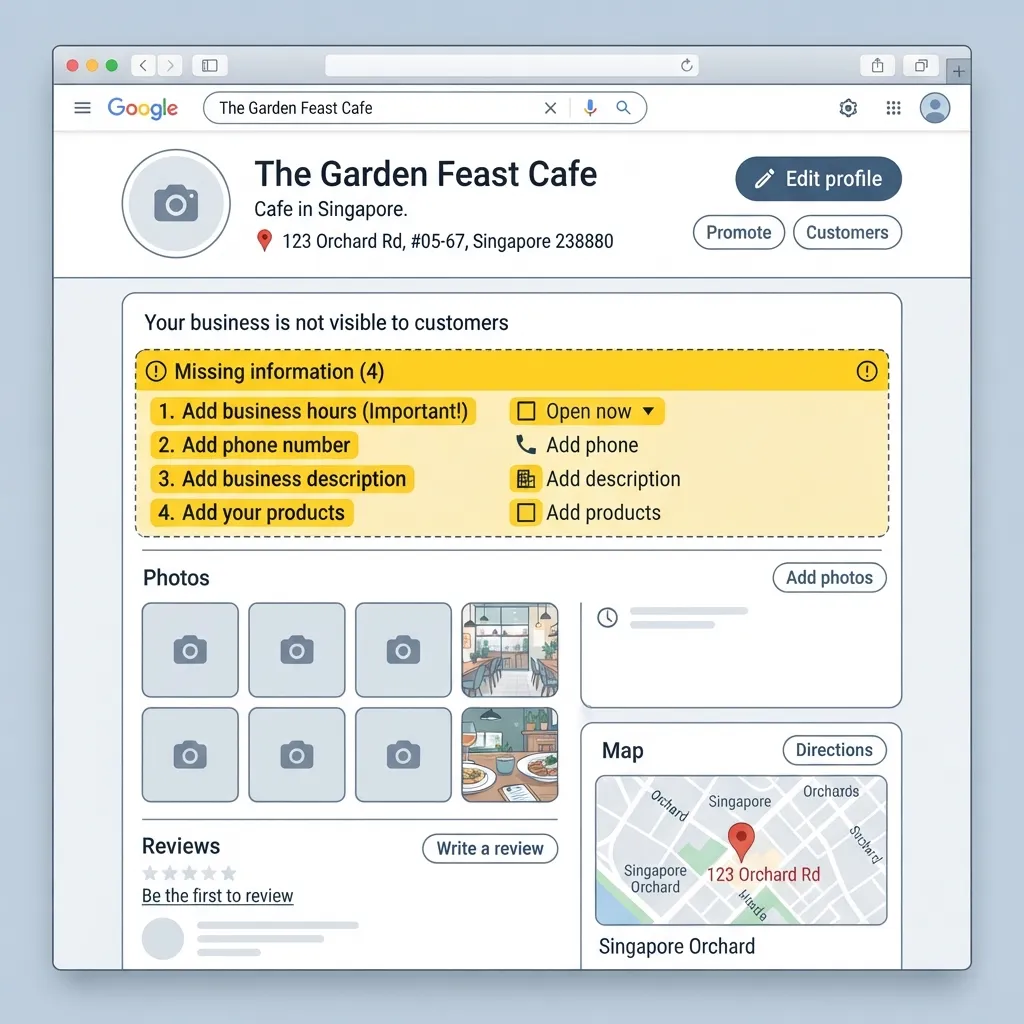
Check whether a listing already exists. According to Laire Digital, 56% of local businesses have not claimed their Google My Business listing. Unclaimed listings cannot be controlled or responded to. Claim it, complete verification, and confirm the name, address, and phone number match your real-world details so local and potential customers see accurate information.
Worked example: a Singapore cafe finds an old phone number, a generic category and hours that do not match its signage. After claiming, it corrects all three, starting with the lowest-scoring item.
Completing Categories, Hours, Photos and Products
Google recommends keeping hours, categories, photos and products complete and current, as HaloTech Media also notes. Almost 55% of traffic comes from mobile devices, according to Townsquare Interactive. Hours, directions and a tappable phone number decide whether a customer contacts you or moves on, and a complete profile strengthens your online presence across the digital marketing channels that feed local search. Pairing these strategies with local content on your website reinforces the same signals across your wider local SEO efforts.
Building Local Authority Through Citations, NAP Consistency and Reviews
Local authority depends on consistency and responsiveness. Google needs to confirm that your business sits at one address, with one phone number, and that real customers vouch for it. This section covers two of the six signals in the Local Visibility Audit Scorecard: NAP consistency and review response rate.
Local Citations and Directory Listings
A citation is any online mention of your business name, address and phone number, usually on a directory. Google does not publicly detail how it uses citations, so treat them as corroboration rather than a known ranking lever. Accuracy matters more than volume, and consistent citations support your broader SEO strategy for any local business.
Check these Singapore platforms and note whether your listing is present and correct:

- Google Business Profile: the primary listing that drives Maps and local pack visibility.
- Bing Places: the database for Microsoft Copilot.
- Yelp Singapore: a review platform many diners and service seekers check.
- Yellow Pages Singapore: a long-standing directory still appearing in search results.
- Foursquare: a location-data platform feeding several map and app services.
- Industry portals: trade or professional directories relevant to your sector.
Score coverage from 0 to 2. A 2 means you are listed on the major Singapore directories and relevant industry sites, with no duplicates.

Business Information Consistency (NAP)
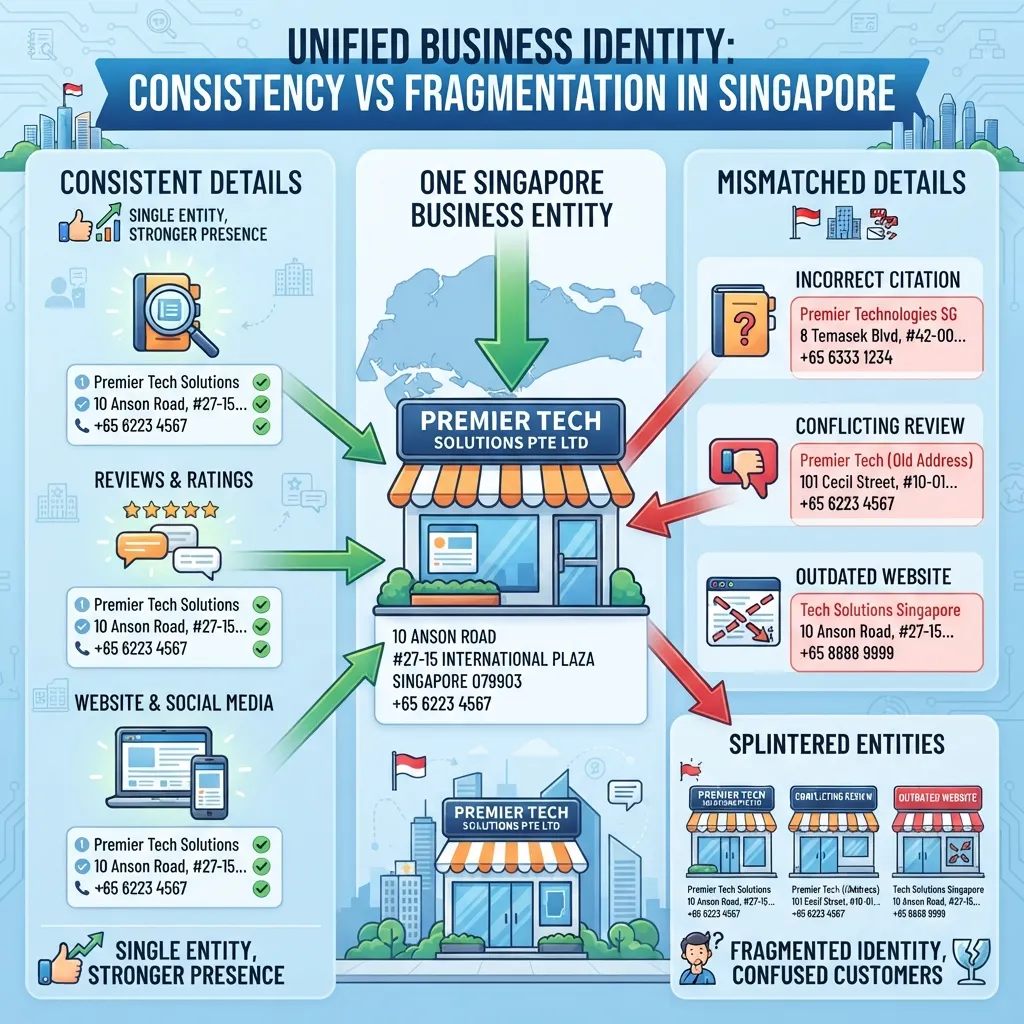
NAP stands for name, address and phone number. If one listing reads “Blk 123 Tampines St 11” and another reads “123 Tampines Street 11, #01-45”, search engines may treat them as two entities, weakening your Local SEO Optimisation.
Compare each listing against your Google Business Profile, field by field. Score 2 when all match exactly, 1 when only minor variations remain, and 0 when phone numbers or addresses conflict.
Managing Online Reviews Ethically and Consistently
Response rate matters as much as star rating. Thank the reviewer briefly and mention a specific detail. For neutral reviews, thank the reviewer and invite a follow-up. For negative reviews, acknowledge the issue, move the conversation offline, and fix the cause. Score your review response rate from 0 to 2.
Avoid defensiveness. A usable template: “Thank you for telling us. We are sorry your appointment ran late. Please get in touch directly so we can make it right.” Never offer incentives for positive reviews, as this breaches Google’s review policies and risks removal.
On-Site Local Optimisation: Pages, Content and Schema
Your Google Business Profile does most of the heavy lifting in local search, but your website must confirm who you are and where you operate. Show the same name, address, phone number and opening hours on your website as on your listing, word for word. Pages that convert nearby searchers put the address, opening hours, a tappable phone number and a route to directions within seconds.
On-Page Elements for Local Search
Start with the homepage and contact page. Show your local business name, full address and phone number exactly as they appear on your Google Business Profile, with a map embed and a tap-to-call link near the top. About 51.76% of global traffic comes from mobile devices, so the mobile version matters as much as the desktop one. The Digimetrics local SEO services team can review whether your key pages carry these details clearly.
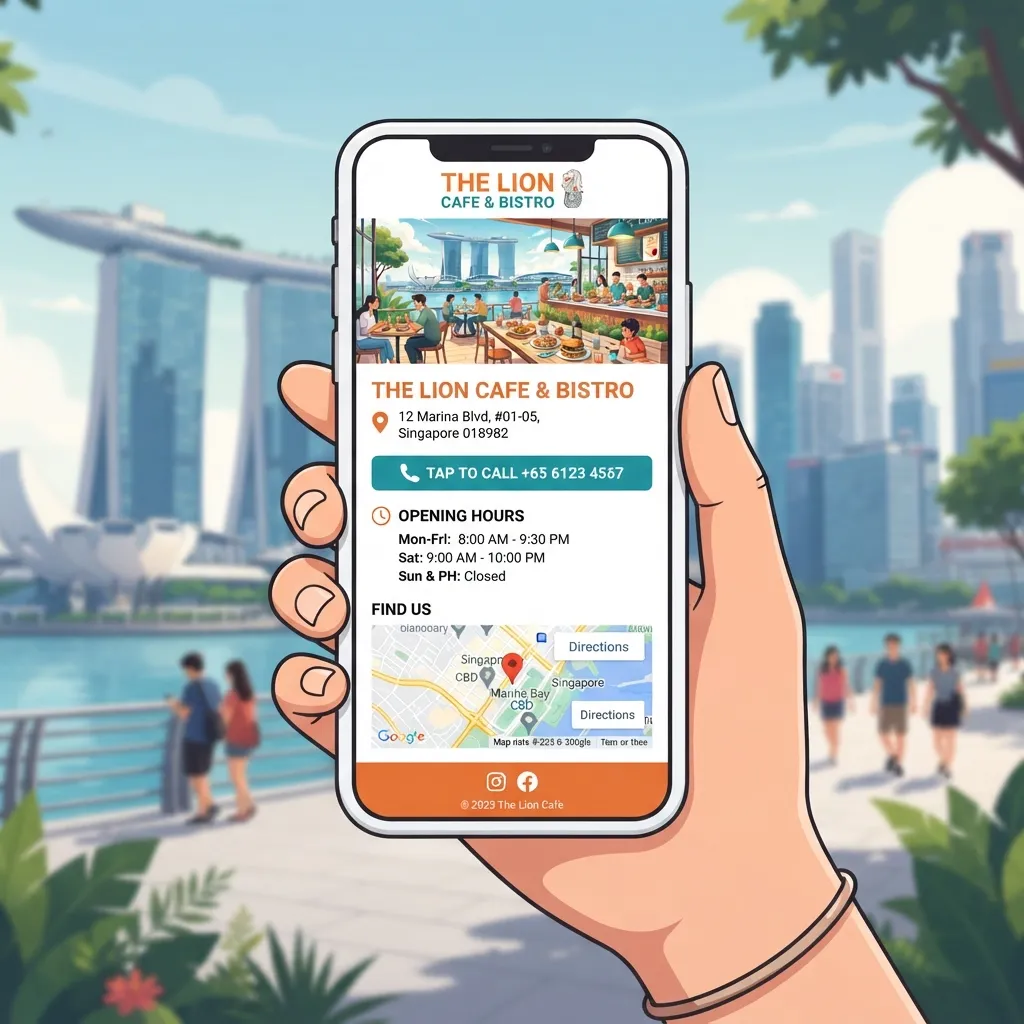
Please incorporate your primary service and neighbourhood into the title tag, meta description, and H1 naturally, for example, “Dental Clinic in Tampines.” Keep your details identical across your website and local citations. Let your local keywords guide the wording of each page as part of your Local SEO Optimisation strategy. Consistent information helps customers trust what they see in search results and supports your wider SEO strategies, including social media and digital marketing efforts. Keeping your online presence accurate across every platform makes this consistency important for both customers and search engines.
Location Pages and Location-Specific Content

If you have several outlets, give each its own page with unique copy, local opening hours, directions and photos. Duplicate text across branches weakens your visibility in local search in each area. Mention real landmarks, such as the nearest MRT station, so each page is useful to the customers who visit it.
Local Schema Markup Basics
Schema markup is code that labels your business details so search engines can read them without guessing. Add your business name, address and phone number to each page. Use the LocalBusiness schema in JSON-LD on your contact page for opening hours and geo-coordinates. Schema does not guarantee rankings, but it makes your details machine-readable. Check the result with Google’s Rich Results Test before you publish.
Conclusion and Next Steps
Most Singapore small businesses do not need more content to rank locally. They need an accurate Google Business Profile, matching business details across the web and prompt review handling. The Local Visibility Audit Scorecard ranks these fixes so you tackle the highest-impact one first. Improving visibility in local search starts with a local business profile that customers can trust.
A 90-Day Local SEO Action Plan
- Days 1 to 10: Score your profile on the six signals, rating each 0 to 2.
- Days 11 to 30: Fix every signal scored 0, starting with categories, hours and phone numbers.
- Days 31 to 50: Check your name, address and phone number on every listing across search engines and directories.
- Days 51 to 70: Reply to every customer review within 48 hours.
- Days 71 to 90: Upload photos, post updates, and confirm that your website matches your profile for local customers.
Measuring Results and Expected Timelines
Track profile views, calls, direction requests, review count and response rate monthly against your day 1 score. Local search visibility is an important measure of progress, and a steady rise in local keyword rankings across search results shows your engine optimization is working.
According to Safari Digital, as cited by Laire Digital, one agency reports around 4.76 months before local SEO shows positive return. Some businesses may see movement within four weeks, while others need several months, depending on market and starting point. Unclaimed listings take longer. Re-score at day 90 to decide what to fix next.
Frequently Asked Questions
How long does it take for local SEO to show results?
Most small businesses see movement within two to four months, though results vary by market, competition and starting point. A claimed, complete Google Business Profile usually moves faster.
Do small businesses in Singapore really need local SEO?
Yes, if customers find you by location. Wrong contact details or opening hours cost you calls, so keep your information accurate everywhere.
Can I do local SEO myself, or do I need an agency?
Most owners can handle the foundation themselves: claim your Google Business Profile, keep your name, address and phone number identical everywhere, and reply to every review. Consider outside help if you run several branches or cannot respond to reviews consistently.
How many reviews does a business need to rank locally?
There is no fixed threshold. Recent reviews and a high response rate matter more than total volume.
What is the difference between a citation and a backlink?
A citation is a mention of your business name, address and phone number on a directory or listing site. A backlink is a hyperlink from another website to your site. Citations help search engines confirm your location, while backlinks mainly signal authority.

Does local SEO work for businesses that serve customers at their location?
Yes, and it is often the strongest case for it. Keep each location’s profile and hours accurate, and give every outlet its own page so branches do not compete.