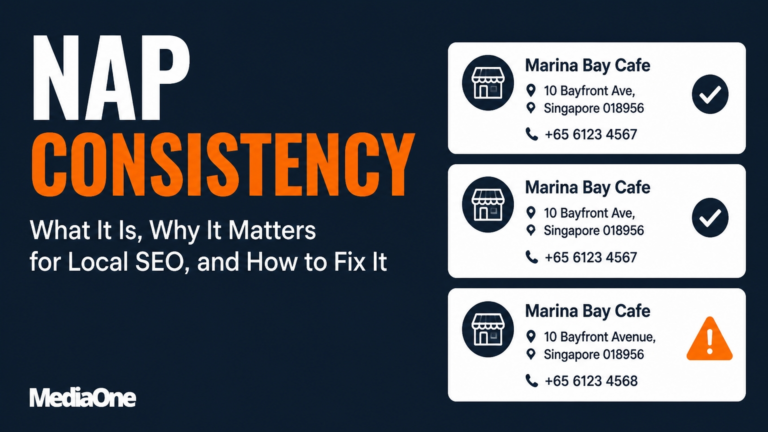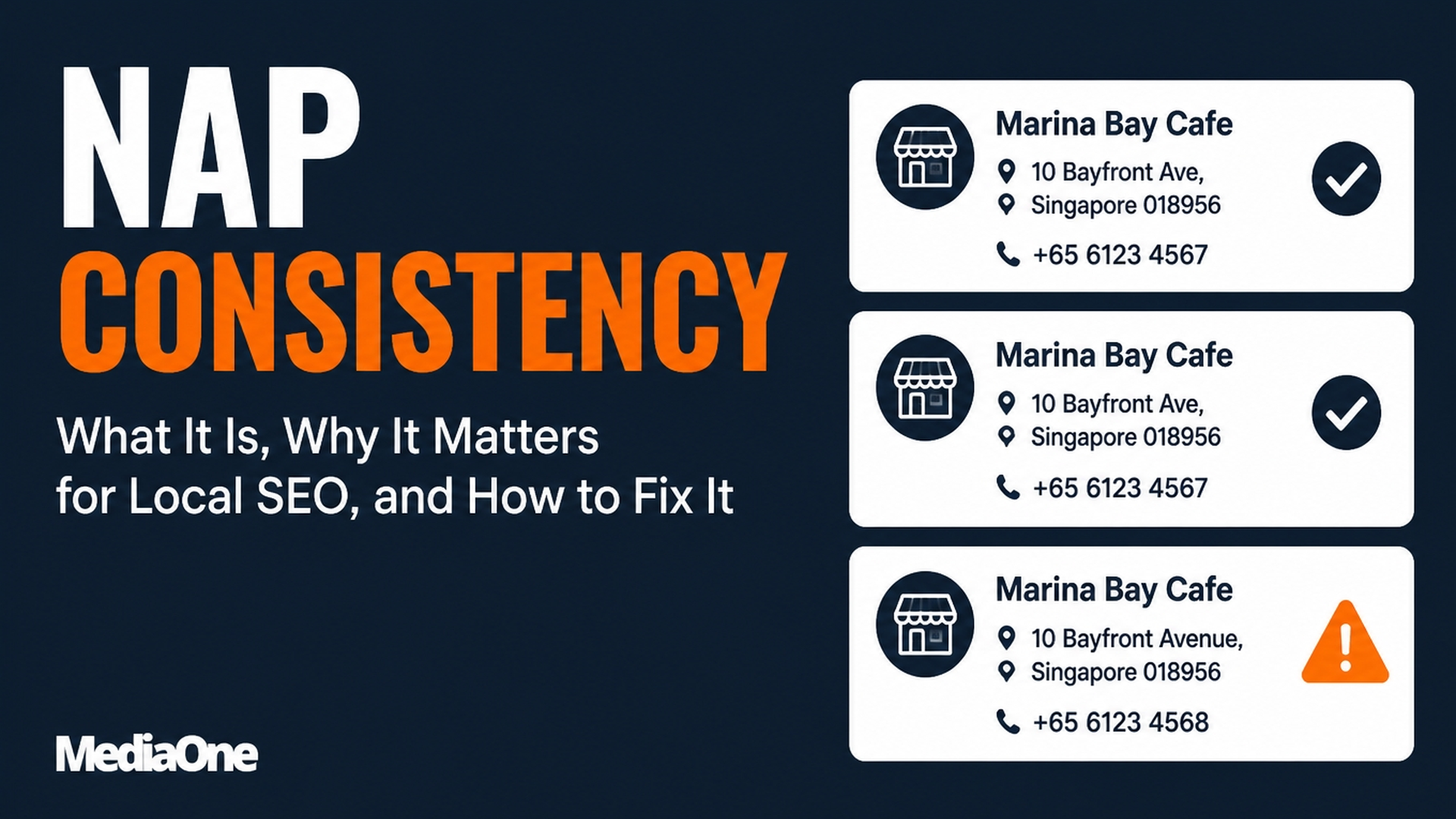
Your business name, address and phone number (NAP) show customers and search engines who you are. When they match everywhere online, you build trust. Keeping them consistent is ongoing work, not a one-off clean-up.

This revision of the guide corrects several widely recycled statistics on the topic, and adds what the current evidence actually says about where NAP consistency pays off in 2026. It sits alongside our local SEO services and the backgrounder on what local SEO is.
Key Takeaways
- Treat NAP as an operational discipline. Your name, address and phone need one owner and a regular review, not a one-off clean-up.
- Match structure first. A legal name variant, an old address or a retired number breaks matching before formatting differences do.
- Fix high-impact listings first. Google Business Profile and the major directories come before long-tail listings.
- Verify every correction. Check the live listing afterwards – fixes often do not propagate immediately.
- Re-audit regularly. Listings drift after moves, new phone numbers, rebrands and staff changes.
- The strongest argument in 2026 is AI search, not the local pack. Citations have declined in local pack weighting for a decade, but three of the top five AI search visibility factors are now citation factors.
Why NAP Consistency Matters More Than Most Local Businesses Realise
Customers check your name, address and phone number before they call or visit. NAP consistency means these details match exactly on every online listing, down to the formatting. “Rd” in one listing and “Road” in another is a mismatch.
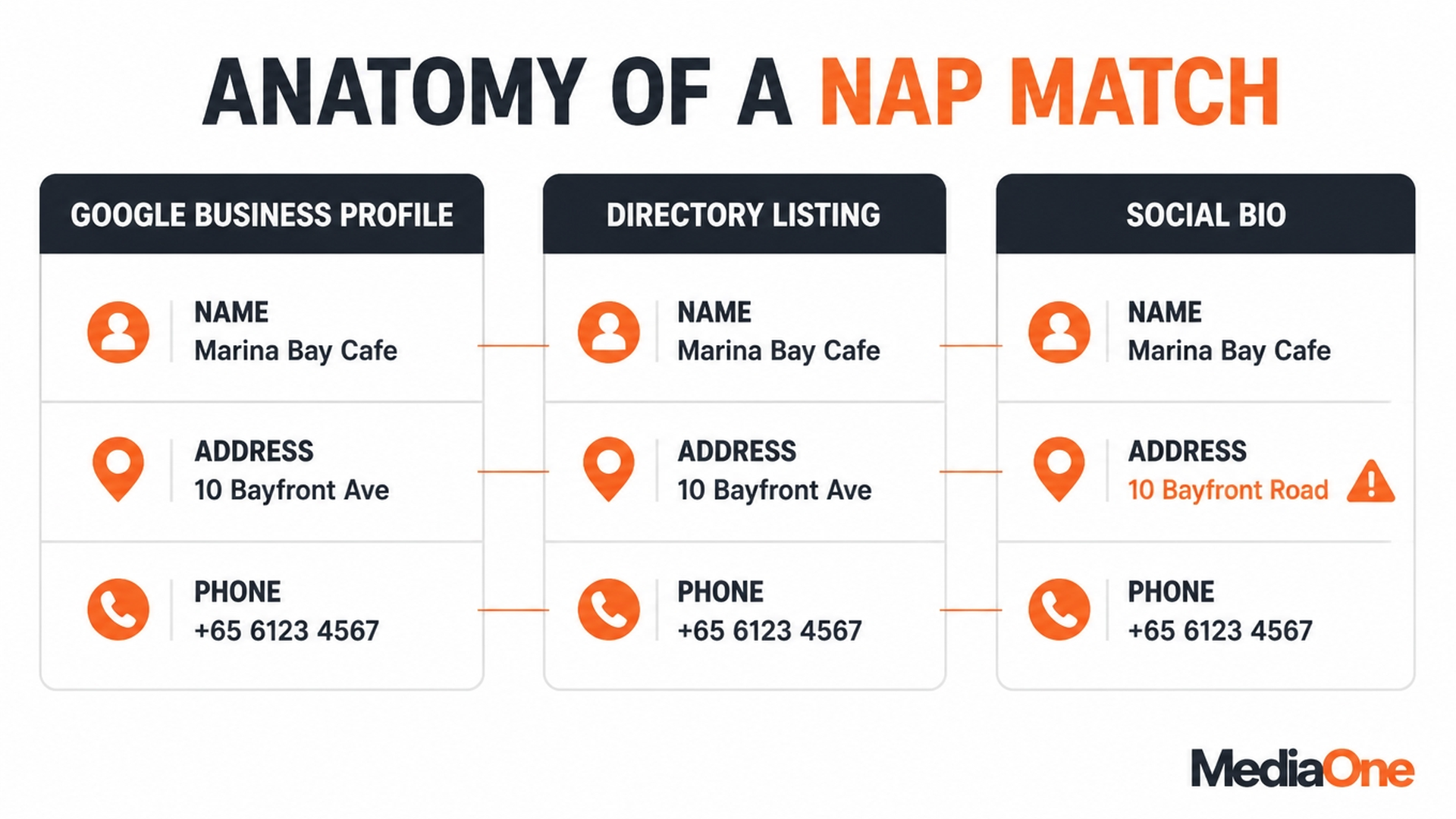
Figure 2: Figure 1: Anatomy of a NAP match – three listings aligned, with one address variant flagged
NAP consistency is a trust and data-hygiene problem first and a ranking tactic second. Accurate, consistent details give every search engine and every potential customer the same information about your business, so what they find in one place matches what they find in another. That alignment supports local SEO and the wider marketing programme rather than replacing either.
What NAP Stands For, and What Counts as a Citation
NAP stands for name, address and phone number. A citation is any online mention of those details – on map listings, directories, review sites and social media profiles. A citation does not have to include a link to count.
The relevant Google guideline is not about citations at all. It is about real-world accuracy: Google’s guidelines for representing your business require you to “represent your business as it’s consistently represented and recognised in the real world across signage, stationery, and other branding.” On the name field specifically, Google states that “your name should reflect your business’s real-world name, as used consistently on your storefront, website, stationery, and as known to customers.” The same page contains the rule that most directly governs duplicates: “There should only be one profile per business.”


Where the Local Ranking Evidence Stands
Most articles on this topic quote a specific percentage lift from NAP consistency. Those figures are usually recycled between marketing blogs without a traceable study behind them, so this revision does not repeat any of them. Here is what the current evidence actually shows.
The most authoritative source is Whitespark’s Local Search Ranking Factors report, an expert survey now in its 2026 edition with 47 local search experts scoring 187 factors. Three findings matter here:
- Citations have kept declining in local pack weight. The 2026 edition shows citations losing roughly another half a percentage point, continuing a downward trend across earlier editions. NAP consistency is not a strong direct lever on map pack rankings.
- But citations are among the strongest AI search visibility factors. The report’s own summary is blunt: “Citations are back! Citations as a local search strategy have been decreasing in importance for the past decade, but AI SEO is breathing new life into them. 3 of the top 5 AI Search visibility factors are citation factors. In AI SEO, mentions (citations) are the new link.”
- The strongest signals are still Google Business Profile signals for local pack rankings, and on-page signals for local organic rankings.
The practical read is that NAP consistency is worth doing – but the payoff has moved. It matters less for map pack position and more for how confidently an AI assistant can identify, describe and recommend your business. That is a material shift from the framing most NAP articles still use.
One supporting figure makes the AI angle concrete: the SOCi Local Visibility Index 2026 found that only 68% of business contact information surfaced by ChatGPT and Perplexity matches the details on Google Business Profiles. Roughly a third of the time, an AI assistant is working from details that differ from your own profile.
The Real Cost of Inconsistent Listings: Trust, Calls and Conversions
Inconsistent listings damage trust first, and the numbers on this are well documented. BrightLocal’s Local Citations Trust Report found:
- 80% of consumers lose trust in a local business when they see incorrect or inconsistent contact details or business names online.
- 93% of consumers are frustrated by incorrect information in online directories.
- 68% of consumers would stop using a local business if they found incorrect information in online directories.
- 71% had a negative experience in the previous 12 months because of incorrect local business information found online; 22% visited the wrong location because the online address was wrong, and 36% called a wrong number.
A more recent BrightLocal study shows the pattern holding: the Local Business Discovery and Trust Report 2023 found that 62% of consumers would avoid using a business if they found incorrect information online. Consumers also blame the business rather than the directory – in the Citations Trust Report, 31% held the business at fault against 18% for the directory, which is worth remembering when a listing error sits on a platform you do not control.
The trust cost lands on the things that convert. In BrightLocal’s Consumer Search Behavior 2026 study, the top three factors consumers weigh when choosing which business to contact are clear and complete information (32%), the best or most reviews (30%), and clear pricing (29%). Incomplete contact details work directly against the first of those.
One caveat worth stating plainly: the widely quoted “80% higher conversion rates for businesses with reliable NAP information” figure that circulates online has no traceable study or methodology behind it. This revision omits it. The trust evidence above is sufficient to justify the work without it.
How Inconsistency Damages Search Visibility
Search engines cross-check listings to decide whether separate records describe the same entity. Conflicting details lower confidence in that match, and duplicate profiles can split reviews and ranking signals between two records – which is precisely the outcome Google’s one-profile-per-business rule exists to prevent.
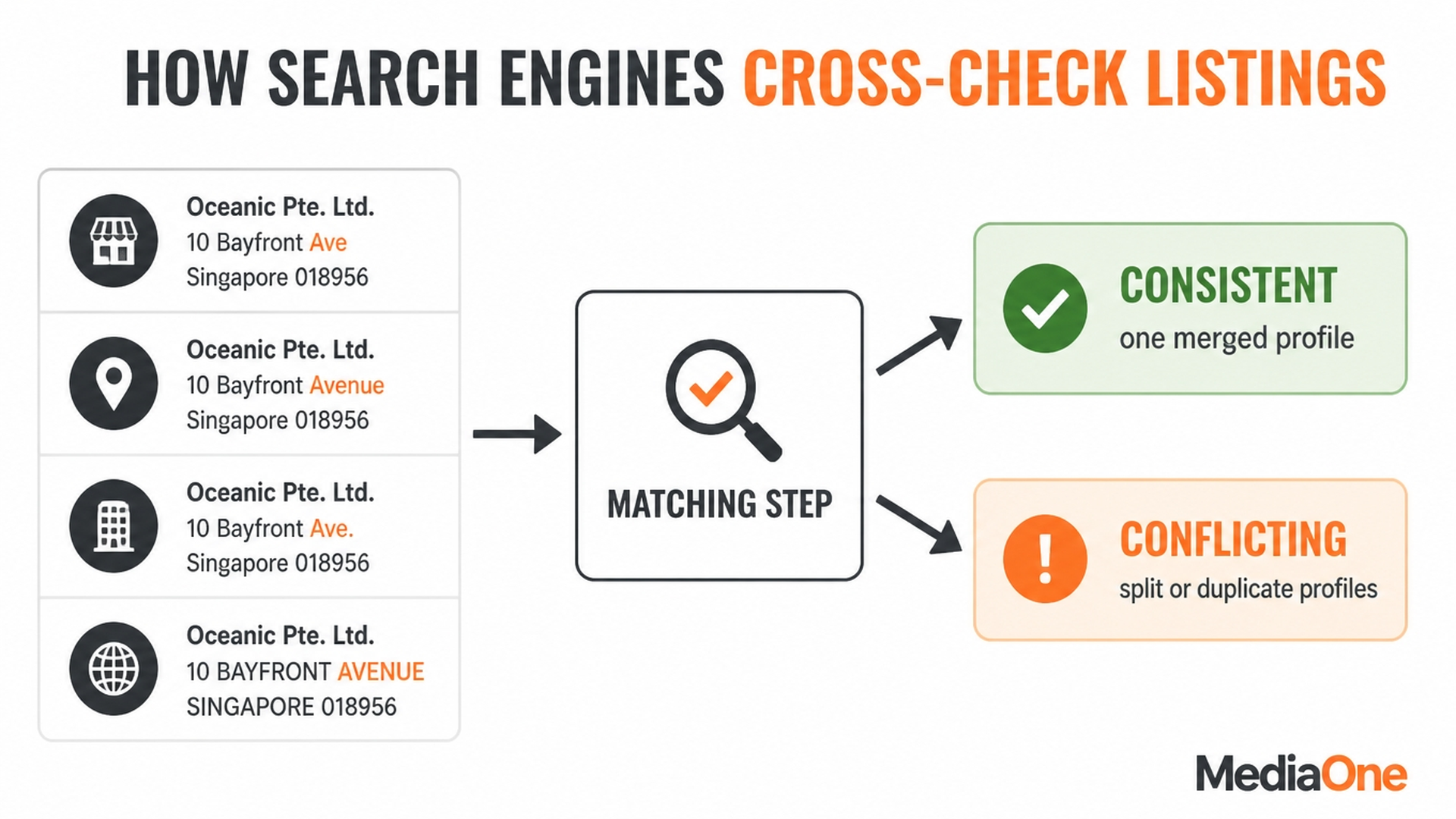
Figure 3: Figure 2: How a search engine cross-checks listings, and how conflicting records split into duplicate profiles
Causes of NAP Inconsistency and Where It Hides
Most mismatches come from ordinary business events. A rebrand, office move or new phone line changes one field, but that field may sit on dozens of platforms, each updated at a different time or never. Listings created by former staff are the hardest to trace, and they often hold outdated information that potential customers still find.

Formatting drift causes most of the rest. “Street” and “St”, or “#03-12” and “Unit 03-12”, look identical to a person but can read as different locations to a matching system. Phone numbers vary through “+65” prefixes and spacing, so a consistent format across your website and listings matters as much as the data itself. The same discipline applies to the local link building signals that surround your listings.
Where Inconsistencies Usually Appear
Problems cluster on Google Business Profile, niche directories, social media bios, and booking or delivery platforms. One outdated page can undermine the rest of the effort, and it can also send a customer to the wrong place entirely.
Spotting Problems Quickly
|
Symptom |
Likely cause |
First check |
|
Two Google Business Profiles for one business |
Old or duplicate listing |
Search by name and phone; flag the older profile |
|
Postal code differs between sites |
Formatting error or outdated address |
Compare against your ACRA BizFile record |
|
Calls reaching a retired number |
Phone not updated after a change |
Check the number on every platform you control |
|
Wrong unit number shown on the map |
Move or unit change never propagated |
Verify the address on the live map listing |
|
Listing appears under an old name |
Rebrand not rolled out everywhere |
Audit directories and social bios for the former name |
For Singapore businesses, the ACRA BizFile portal at bizfile.gov.sg is the authoritative source for your registered entity details, and the record to compare your listings against when an address or name looks wrong.
A Step-by-Step Framework to Achieve and Maintain NAP Consistency
Treat NAP consistency as an operational routine. Fix what affects customers most, then keep the record clean across every website, page and listing. Consistent business information across every platform is the foundation of a strong online presence, so start by making the master record authoritative. Potential customers who find the same details everywhere are more likely to trust the business and make contact.
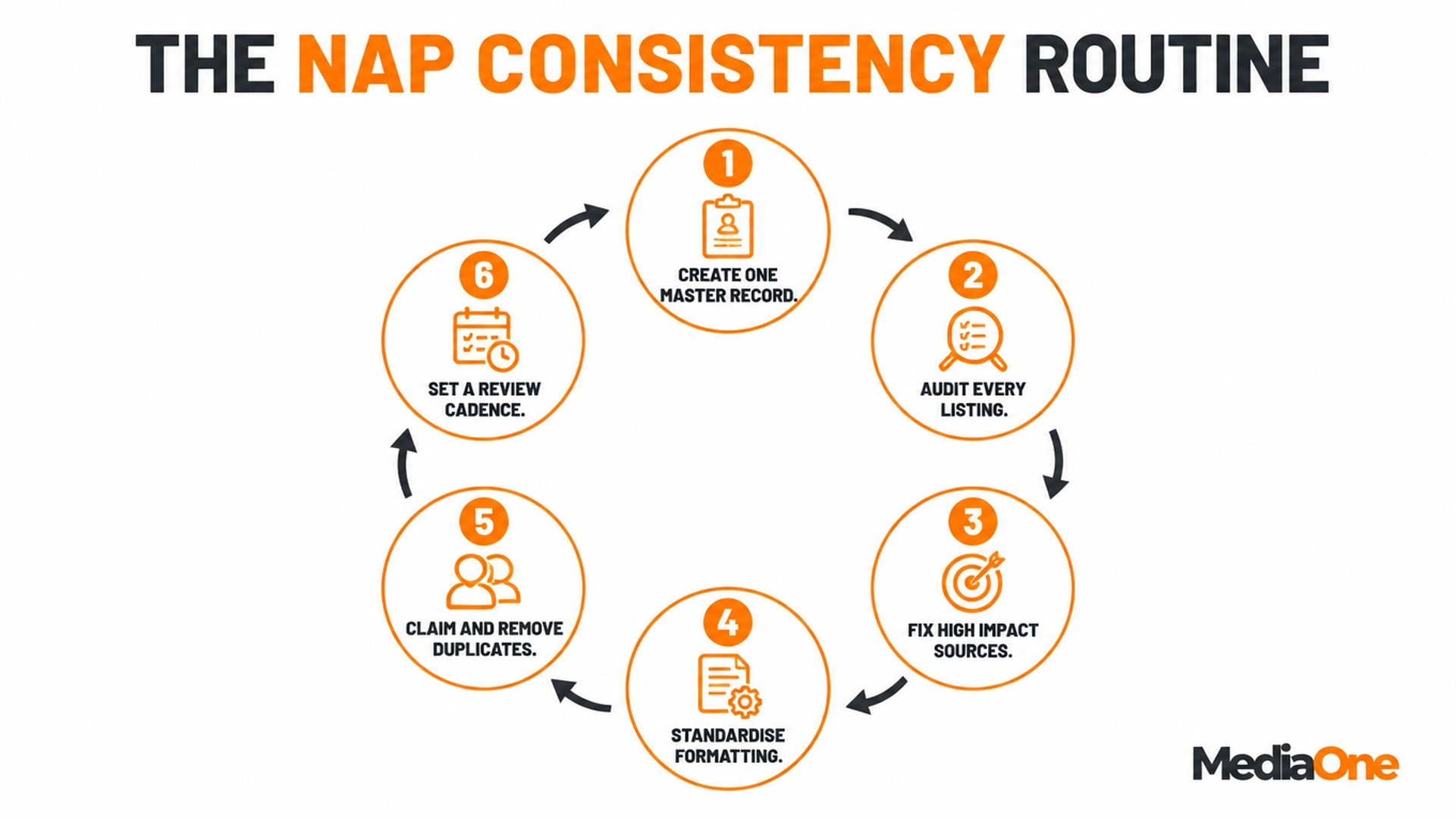
Figure 4: The NAP consistency routine – a six-step cycle that loops back to the audit
- Create a single source of truth. Write one master record for your legal name, address and phone number, with formatting rules (for example, “Unit #01-01” rather than “Unit 01-01”).
- Audit existing listings. Log every variant across Google Business Profile, directories and social profiles.
- Fix high-impact sources first. Start with map profiles, then major directories, then long-tail listings.
- Standardise formatting everywhere. Apply the same abbreviations, unit format and phone format on every platform.
- Claim and remove duplicates. Assign each listing to one named owner. Remove duplicate profiles and update correct profiles that carry old details.
- Set a review cadence. Check top map profiles monthly and everything else quarterly, and after any move, rebrand or number change.
Worked Example: Correcting One Listing End to End
Say a cafe moves from Unit 03-12 to Unit 03-15. Update the master record first. Then open the Google Business Profile dashboard, go to Info, and change the address field to “#03-15” with the same postal code. Check the phone field and business name against the signage. Finally, search the business on Google Maps to confirm the new unit appears, and repeat the same fields on the directory and social bio. Note that Google requires permanent fixed signage of the business name at the address shown, so confirm that before editing.
Ownership and Governance
Assign each listing to a designated owner. In a small team, the person who handles premises and phone lines should own the record. Where listings have drifted across dozens of platforms, and nobody internally has the bandwidth to audit them, that work is usually folded into a broader local SEO engagement or an online reputation management programme.
Improve Visibility Through NAP Consistency
NAP consistency protects customer trust first and local visibility second. The trust evidence is strong and well sourced: 80% of consumers lose trust in a business with incorrect or inconsistent contact details online, and 62% would avoid using a business they found incorrect information for.
The ranking picture is more nuanced than most articles admit. Citations have declined in local pack weighting for a decade, so do not expect NAP clean-up alone to move you up the map results. But citations are among the strongest AI search visibility factors in the 2026 expert survey, and only 68% of the contact details AI tools surface match a business’s own Google profile – which makes clean, consistent listings one of the more durable investments available.
This week: name one owner, build a single source-of-truth record, and audit your Google Business Profile and top three listings. If you would like that audited for you alongside your wider SEO programme, talk to our team.
Frequently Asked Questions
What does NAP stand for in local SEO?

NAP stands for name, address and phone number. Search engines and map platforms use these fields to match your business across listings, so they should be identical everywhere. A related term, a citation, is any online mention of those details, whether or not it links to your site.
Does NAP consistency directly affect Google rankings?
Less than most articles claim. In Whitespark’s 2026 Local Search Ranking Factors expert survey, citation signals have continued a decade-long decline in their weighting for local pack and Maps rankings. Where NAP consistency has gained importance is AI search visibility, where three of the top five factors are citation factors. The strongest reason to fix errors remains customer trust: 80% of consumers lose trust in a business when they find incorrect or inconsistent contact details online.
How often should I check my business listings?
Quarterly audits are a sensible baseline, with monthly checks on your top map profiles, because platforms change and duplicate profiles appear over time. Run an unscheduled check after any move, rebrand, phone number change or staff handover, since those are the events that create most mismatches.
Which platforms should I check first in Singapore?
Start with Google Business Profile, since the majority of local searches route through Google – 52% of consumers start their most recent local search there and 71% use it at some point, per BrightLocal’s Consumer Search Behavior 2026 study. Then check the directories and social profiles your customers actually use, and compare everything against your ACRA BizFile record at bizfile.gov.sg.
Do small formatting differences really matter?
Yes, though they matter more for matching than for rankings. “St” and “Street”, or “#01-01” and “Unit 01-01”, look the same to a person but can read as two addresses to a matching system. Pick one format, write it into your master record, and apply it everywhere.
Can an inconsistent listing be removed entirely?
Sometimes. Claim the listing first, then request removal of any duplicate. If you cannot access it, report the listing through Google Business Profile Help. If removal fails, update it to match your current details. Note that Google’s guidelines allow only one profile per business, which is the basis for requesting removal of a duplicate.