
| AI Summary
LinkedIn marketing works for Singapore B2B companies when it supports a clear commercial goal. Start with the buyer, offer and sales process, then give expert profiles and the company page different roles and build content around real buyer questions. Use LinkedIn Ads once the audience, offer, follow-up, and tracking are ready, and match formats such as Thought Leader Ads, Document Ads and Lead Gen Forms to the goal. Measure qualified leads, opportunities and revenue beyond clicks, and plan for PDPA and Do Not Call rules from the start. |
LinkedIn marketing works best when it supports a clear commercial goal. For Singapore business-to-business companies, we would start with the buyer, offer and sales process before planning posts or ad spend.

Singapore has a large professional audience on the platform. DataReportal’s Digital 2026 Singapore report, based on LinkedIn advertising resources, recorded 5.10 million registered members in late 2025. This figure refers to registered members, not monthly active users.
The real question is how LinkedIn can reach the right professionals and create qualified sales opportunities. That requires a clear audience, useful content, strong conversion paths and reliable measurement.
Key Takeaway
- Start with lead economics. Work backwards from customer value and an acceptable acquisition cost. Cheap clicks have little value if leads never reach sales.
- Give people and company pages different roles. Expert profiles can share opinions and practical advice. Company pages should support proof, offers and brand credibility.
- Build content around buyer questions. Address issues buyers face before they speak to sales. Avoid filling the feed with generic company announcements.
- Use paid LinkedIn after the offer is ready. The platform provides detailed professional targeting. Paid reach cannot fix poor positioning or an unclear next step.
- Measure qualified pipeline. Engagement helps explain attention. Qualified leads, opportunities and revenue give a stronger commercial view.
- Treat Singapore data compliance as part of campaign setup. Lead forms and follow-up messages can create Personal Data Protection Act obligations. Plan consent and data retention from the start.
Decide If LinkedIn Fits the Sale Before You Invest
LinkedIn deserves more attention when professional identity helps identify the buyer. This often applies to software, professional services, corporate training, technology and enterprise solutions.
We would give it less priority when purchases are low-value or impulsive. The same applies when professional roles have little influence on the buying decision.
| Business Situation | LinkedIn Priority | Practical Reason |
| Specific job roles influence the purchase | High | LinkedIn can target job title, seniority, company and industry |
| Named accounts form part of the sales plan | High | Matched Audiences can support account and contact targeting |
| Several people influence the purchase | High | Content can address different members of the buying group |
| The product is a low-cost impulse purchase | Lower | Broader consumer channels may fit the buying behaviour better |
| Sales cannot define a qualified lead | Fix this first | More lead volume will not repair poor qualification |
LinkedIn’s professional audience targeting includes attributes such as job title, company name, industry and seniority. Its Matched Audiences tools support company targeting, contact targeting and retargeting.
We would not choose LinkedIn because competitors use it. Buyer fit, deal value and follow-up capacity should decide how much priority the channel receives.
Build the Commercial Model Before the Content Calendar
A posting calendar can create activity without generating useful demand. We would first define the prospect, buying problem and desired next step.
This follows the search-intent principle we use across digital marketing. Our keyword intent guide explains why content should match what the user wants to achieve. A buyer researching a problem needs different information from someone comparing providers.
Define the Ideal Customer Profile
Start with the company characteristics that fit the offer. Record the sector, company size, location and likely job function.
Then identify the buying trigger. A finance software provider may target chief financial officers, but the real trigger could be regional expansion or slow manual reporting.
Map the Buying Group
Complex business purchases rarely depend on one person. A senior executive may approve the budget while another employee builds the shortlist.
Different roles also need different proof. For a S$40,000 annual software contract, finance may focus on payback while operations may focus on implementation.
Choose One Primary Conversion
Give each campaign one main next step. It could be a consultation, product demonstration, assessment or webinar.
A single primary conversion also improves measurement. The team can see which campaigns generate meaningful action instead of tracking several unrelated goals.
Give Expert Profiles and the Company Page Different Roles
LinkedIn content becomes stronger when each publisher has a clear purpose. We would use founders, subject experts and senior leaders for informed opinions and answers to real buyer questions.
The company page has another job. It should support those voices with research, case studies, product updates and business information.

LinkedIn Thought Leader Ads let advertisers promote eligible posts from individuals after getting the author’s permission. This gives businesses a paid way to extend strong expert content.
Our documented FinLab work for United Overseas Bank included LinkedIn thought-leadership content, founder interviews and data-led insights. MediaOne reports a 32.51 per cent engagement rate and more than 500 new followers in two months for that project. We would not use those figures as a general benchmark for other LinkedIn campaigns.
Useful expert content still needs substance. A clear point of view, original data or a credible interview gives readers a stronger reason to stop.
Build Content Around Buyer Questions Instead of Posting Frequency
We would not begin with a rule such as three posts per week. We would build themes from sales questions, objections and pre-purchase decisions.
Our content marketing services use audience intent and funnel stages to guide content. LinkedIn content should follow the same principle.
| Buyer Stage | Useful LinkedIn Content | Good Next Step |
| Problem recognition | Expert observation, short video or research finding | Read, follow or save |
| Early research | Checklist, document post or guide | Visit a related resource |
| Supplier comparison | Case study, comparison or implementation advice | Review proof or request details |
| Decision | Assessment, consultation or demo | Submit an enquiry |
Publish Problem-Led Content
Start with problems buyers already recognise. A payroll software provider could explain why regional expansion creates reporting pressure before discussing the product.
The post should still help the reader without requiring a click. If every post becomes a direct sales pitch, its usefulness drops.
Add Decision Content Earlier
Many brands stay at the awareness stage for too long. We would also publish buying criteria, implementation risks and comparison questions.
A post about five questions to ask before choosing a regional payroll platform may attract fewer people than a broad trend post. Its audience may be closer to a buying decision.
Use Proof Carefully
Case studies and documented results can support trust. State what happened without suggesting another business will achieve the same result.
If evidence is limited, say so. We would not add an invented conversion rate or sales result to make a post appear stronger.
Use LinkedIn Ads Only After Four Conditions Are Ready
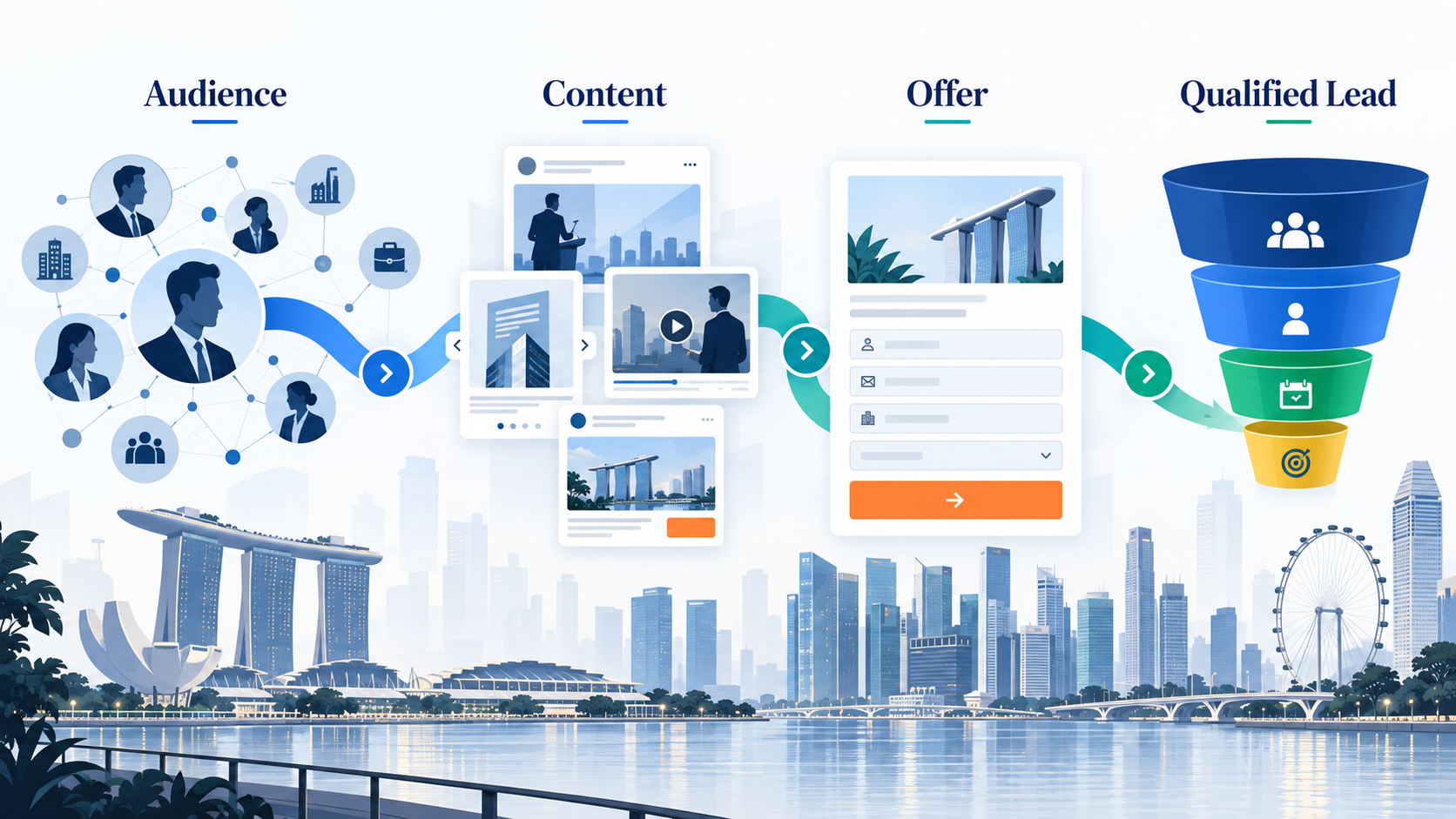
LinkedIn’s advertising setup guidance lists more than 20 audience attributes. These include company size, company name, skills, job title and job seniority.

That targeting depth can support high-value business offers. We would still hold paid spend until the campaign fundamentals are ready.
- The audience is identifiable. You should know which companies and roles influence the purchase. Broad targeting can weaken relevance.
- The offer is clear. The buyer should know what happens after the click. A vague message gives little reason to act.
- The follow-up process exists. Sales should know who owns each lead. Enquiries should not sit untouched.
- Tracking is working. Connect spend with conversions and later sales stages. Otherwise, optimisation stops too early.
Match the Ad Format to the Commercial Goal
LinkedIn currently offers formats such as Single Image Ads, Video Ads, Document Ads and Thought Leader Ads. Its LinkedIn Ads guide explains the current options.
| Campaign Goal | Useful Format | Reason |
| Build awareness through expert content | Thought Leader Ads | Extends eligible individual posts |
| Share research or a buyer guide | Document Ads | Lets users view documents in the feed |
| Capture contact details | Lead Gen Forms | Uses pre-filled member profile information |
| Re-engage known audiences | Sponsored Content with Matched Audiences | Reaches website visitors, contacts or target accounts |
| Drive website action | Single Image or Video Ads | Sends traffic to a dedicated conversion page |
LinkedIn Document Ads can display guides and reports inside the feed. They can also work with Lead Gen Forms when contact capture fits the campaign.

We would use that combination when the document gives enough value to justify asking for personal information. Gating weak content usually creates weak leads.
Treat Lead Gen Forms as a Qualification Decision
LinkedIn Lead Gen Forms can pre-fill profile information. LinkedIn’s Lead Gen Form best practices recommend three to four fields, although forms can include up to 12 informational fields.
We would not minimise every form automatically. A high-value enterprise offer may need extra questions to help sales separate good prospects from poor-fit enquiries.
Form length should match the next step. A webinar registration usually needs less information than an enterprise consultation.
LinkedIn also requires a privacy policy URL for Lead Gen Forms. Advertisers can add privacy text and disclosure checkboxes when required.
Stop Treating Cost per Lead as the Final Score
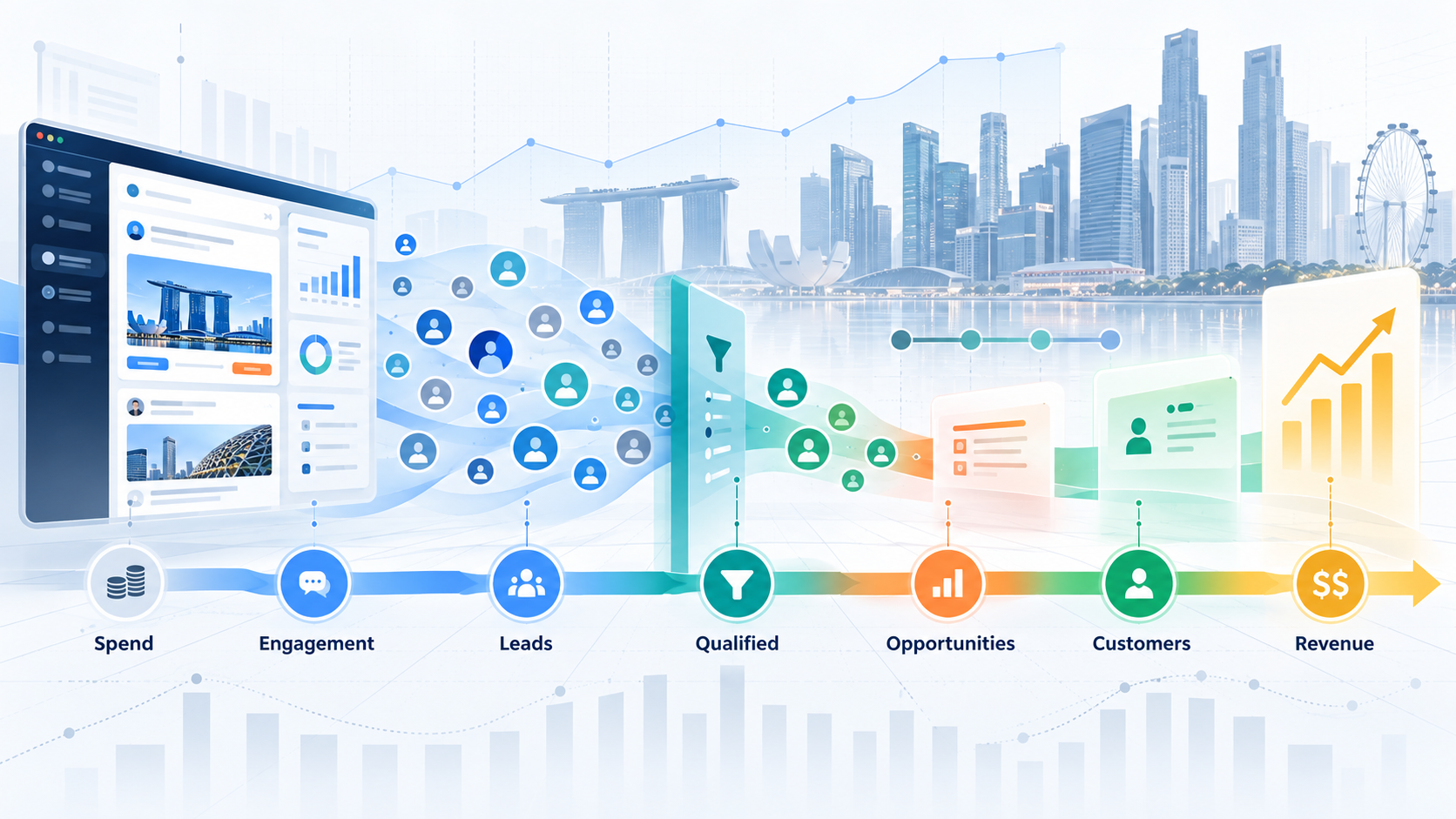
A low cost per lead can hide poor sales quality. We would track the path from spend to qualified opportunities and revenue.
Consider a hypothetical S$6,000 campaign. It produces 60 leads at S$100 each. Twelve become qualified opportunities and two become S$12,000 first-year customers. That produces S$24,000 in first-year revenue before fulfilment costs.
Now consider another S$6,000 campaign. It generates 120 leads at S$50 each but closes no sales. The lower cost per lead looks attractive, but the commercial result is weaker.
Track media spend, qualified leads, meetings, opportunities, and won revenue. Customer acquisition cost should also sit in the same report.
This is where our lead generation services can support the wider system. We connect acquisition channels with content, landing pages and follow-up so businesses can judge lead quality after the initial form submission.
Build LinkedIn Measurement Before Launch
LinkedIn’s Insight Tag supports website conversion tracking, retargeting and professional audience insights. LinkedIn states that the tag records website visits and associated activity for relevant attribution in Campaign Manager.
LinkedIn also offers Conversions API setup for server or partner data. Its measurement guidance includes qualified leads, pipeline and revenue among shared sales and marketing outcomes.
Track Events That Reflect Sales Progress
Do not stop at the first form submission if the sales cycle lasts several weeks. Track actions such as booked demonstrations and accepted opportunities where your systems support them.
We would also compare LinkedIn with other acquisition channels. Our search engine marketing services can capture people already searching for a solution. LinkedIn can reach selected professional audiences earlier.
Our search engine optimisation services can support longer research cycles. Search visibility can help prospects find deeper information after first discovering a business through LinkedIn.
Apply Singapore Data Protection Rules to LinkedIn Leads
LinkedIn forms and exported lead files can contain personal data. Singapore’s Personal Data Protection Commission data protection obligations cover areas such as notification, consent, purpose limitation, protection and retention.
Campaign setup should account for these requirements from the start. We would define what information the team needs and why it needs it.
- Explain the purpose clearly. Tell the person what will happen after submission. Follow-up should stay consistent with that purpose.
- Collect useful information only. Extra fields create friction and increase the amount of personal data held.
- Control access. Limit access to campaign exports and customer records. Avoid uncontrolled lead spreadsheets.
- Set retention rules. LinkedIn stores sponsored lead data on its platform for 365 days. Your organisation still needs its own retention process after export or sync, according to LinkedIn’s lead data retention guidance.
Phone follow-up also needs attention. The Personal Data Protection Commission’s Do Not Call Registry guidance explains the rules for specified marketing messages sent to Singapore telephone numbers.
Do not assume that a LinkedIn submission gives unlimited permission for future marketing. Follow-up should match the stated purpose and the consent obtained.
Decide When to Hire a LinkedIn Specialist
A capable internal team can manage LinkedIn if it has subject experts, paid media skills and enough time. A specialist may make more sense when LinkedIn becomes an important acquisition channel.
Focus the hiring decision on capability. Ask how the provider defines qualified leads, builds audiences and reports sales outcomes.
| Operating Model | Best Fit | Main Risk |
| In-house team | Strong subject experts and campaign skills | LinkedIn becomes a side task |
| Freelancer | Narrow content or campaign support | Limited coverage across the funnel |
| LinkedIn specialist | LinkedIn is a primary acquisition channel | Work may sit apart from search and website conversion |
| Integrated digital partner | LinkedIn supports a wider acquisition system | Platform ownership still needs clear roles |
Check account ownership before signing. Your company should keep access to the LinkedIn Page, ad account, audiences, lead data and reporting history.
Where Our Services Fit
We do not position LinkedIn marketing as a standalone specialist service. Our role fits best when LinkedIn activity needs stronger content, better landing pages, clearer lead qualification or stronger search visibility.
Our digital marketing services can support those areas around the LinkedIn channel. A LinkedIn specialist or internal team can own platform execution while we support search, content and lead generation.
This split keeps responsibilities clear. It also lets each partner focus on the work they can support with real expertise.
Use This LinkedIn Marketing Decision Check
Before increasing activity or ad spend, answer six questions. The answers will expose gaps in the campaign or sales setup.
- Can you name the roles and companies you need to reach?
- Can you explain the buyer’s problem in one clear sentence?
- Do you have proof that supports the offer?
- Does the campaign have one defined next step?
- Can sales identify a qualified lead?
- Can you connect campaign activity with pipeline or revenue?
If several answers are no, fix those gaps before buying more reach. More impressions will only expose the same weaknesses to a larger audience.
If most answers are yes, LinkedIn has a stronger commercial case. The next task is consistent execution and measurement.
For leads that need further education after the first conversion, our lead nurturing guide explains how to plan follow-up across different buyer stages. Use it when LinkedIn creates contacts, but too few reach sales conversations.
Make LinkedIn Part of the Revenue System
LinkedIn marketing deserves investment when professional targeting fits the buying process. Start with the audience, offer and measurement plan before increasing content volume or ad spend.
We would judge success by the quality of opportunities LinkedIn creates. Posting frequency and follower growth can support diagnosis, but they should not replace sales metrics.
If LinkedIn forms part of a wider acquisition plan, we can support the surrounding system through lead generation services, content, search and paid media. This keeps LinkedIn connected with the channels that turn professional attention into sales opportunities.
Frequently Asked Questions About LinkedIn Marketing
Is LinkedIn marketing worth it for a small business in Singapore?
It can be if the business sells to identifiable professional roles and the customer value supports the acquisition cost. A small B2B company with a narrow target market may gain stronger commercial value than a larger consumer brand.
How long does LinkedIn marketing take to generate leads?
Paid campaigns can generate responses soon after launch when the targeting and offer are ready. Organic content usually needs repeated publishing before enquiries become consistent.
Should we use a personal LinkedIn profile or a company page for marketing?
Use both for different purposes. Expert profiles can carry experience and opinion while the company page supplies corporate proof and offers.
Are LinkedIn Ads worth the higher cost for B2B companies?
They can be when deal value and qualified lead rates support the acquisition cost. We would judge the channel through qualified opportunities and revenue, not click price alone.
What should we measure in a LinkedIn marketing campaign?
Track reach and engagement for diagnostic purposes. Then focus on qualified leads, opportunities, pipeline value, customer acquisition cost and won revenue.
Should we hire a LinkedIn marketing agency or manage it in-house?
Keep the work in-house when your team has platform skills and enough content capacity. Hire specialist support when LinkedIn has commercial value but internal expertise or time is limited.