Many brands treat influencer content as a reach purchase. They pick the largest creator they can afford, post the brief and count the views. That approach misdirects budget. Reach only pays off when viewers believe the recommendation and the creator’s format suits what you sell.
Influencer marketing is now a large industry. Influencity says global spend reached $32 billion in 2025, up 35 percent on 2024. That is global context, not a Singapore figure. This guide sets out a decision method you can apply before you sign any creator, so your influencers work toward a clear result, whether you sell digital products or services. Good content creation starts with that decision, not with the follower count.
Key Takeaways
- Choose creators on trust and fit first. 69% of consumers trust influencers, friends and family over direct brand information, according to Matter Communications.
- Score every candidate before you shortlist. Rate Trust, Fit and Proof from 1 to 5, and keep only creators who score at least 3 on each.
- Use tiers as a cost and reach filter. Apply nano, micro, macro and mega bands after scoring, not before.
- Verify data before you sign. Discovery tools help you cross-check Instagram, TikTok and YouTube profiles.
- Plan for about 1 to 2 weeks from strategy kickoff to content going live, according to one agency’s estimate.
- Match platform to audience. Facebook is the most popular social platform worldwide, but short-form video is not automatically the right default for your audience.
Why Trust Comes Before Follower Count
Many brands start the search with follower count, and that often sends budget to the wrong place. Ask instead whether an audience acts on a creator’s recommendation. Apply that test to every candidate, because trust is what a specific audience responds to. It is the first column of the scorecard used later.
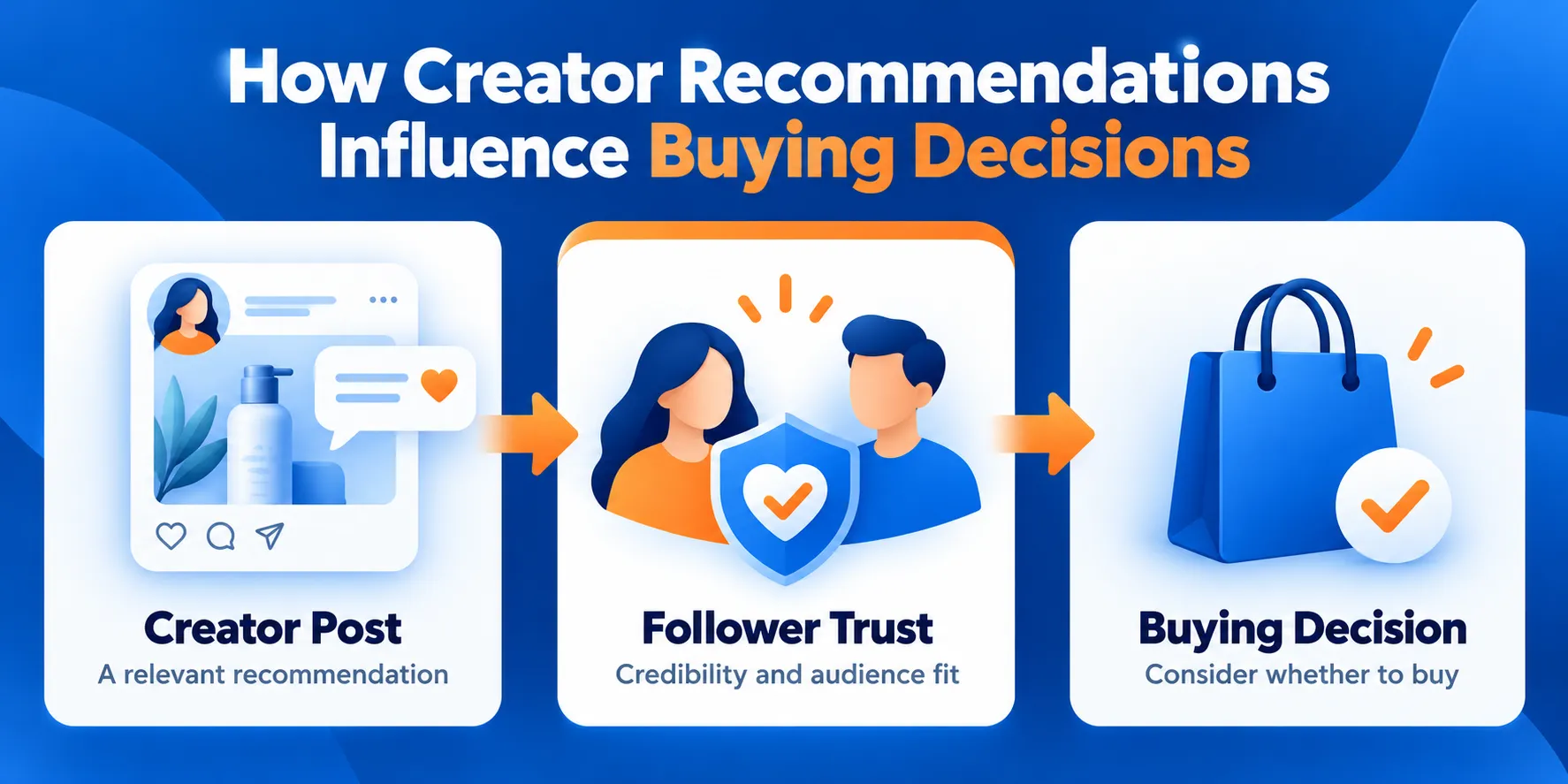
Trust is why creator content works at all. According to Matter Communications, cited by the Digital Marketing Institute, 69% of consumers trust influencers, friends and family over information from a brand. A creator’s post reads as a personal recommendation, not an advert, which is why a skilled content creator can help build brand awareness that an advert often cannot. The best creator partnerships build on that trust, letting the message land across a wider set of marketing campaigns and channels.
Scale matters less than it appears. Brands often group creators by follower count: nano (1,000 to 10,000), micro (10,000 to 100,000), macro (100,000 to 1 million) and mega (over 1 million). These bands are conventions, not fixed standards, and thresholds vary by source and platform. Reach rises with each tier, and so does cost. A large audience that never engages is expensive reach. A micro creator with a tightly matched audience can outperform a mega creator on the metric that counts: sales.
Global growth is useful context, not a local forecast. The global influencer marketing industry reached $32 billion in 2025, up 35 percent from 2024. That shows the channel is maturing, but it does not tell a Singapore brand what to pay for a given reach, so it should sit within a wider marketing strategy rather than drive the budget alone.
Choosing on follower count alone is the most common budget mistake. Reach the buyer; it never acts on is just an impression bill. Start with trust and creative fit, and give a clear brief time to prove its value.
Choosing the Right Creators: Tiers, Discovery and Vetting
Mega, macro, micro and nano influencers compared
Brands often sort creators by follower count. Mega influencers have 1 million or more followers. Macro influencers have 100,000 to 1 million. Micro influencers have 10,000 to 100,000. Nano influencers have 1,000 to 10,000, according to a widely used tier breakdown. Thresholds differ by source, so use these bands as a working convention and a cost-and-reach filter, not a quality signal. A nano creator with a tight local following can outperform a mega account on bookings.
Finding creators through data-driven discovery
Influencity claims a database of over 200 million profiles. You can filter a search by follower count, engagement rate, niche and location. Use these filters to build a long list, then apply the scorecard below before anyone reaches out. Many brands run discovery through social media platforms and digital databases to build these shortlists, and a well-run influencer marketing search helps you create a shortlist that is easier to help you compare.
To verify any creator’s audience, use tool-neutral checks: ask for screenshots of audience location and age breakdowns from the platform’s own analytics, compare average engagement on recent posts with follower size, and sample recent comments for real conversation. Cross-check claims against at least two sources before you sign.
The Trust-Fit-Proof Scorecard
Score each candidate from 1 to 5 on three columns. Keep only creators who score 3 or higher in every column, then rank them by total score. Apply the tier bands after this step as a cost and reach filter.
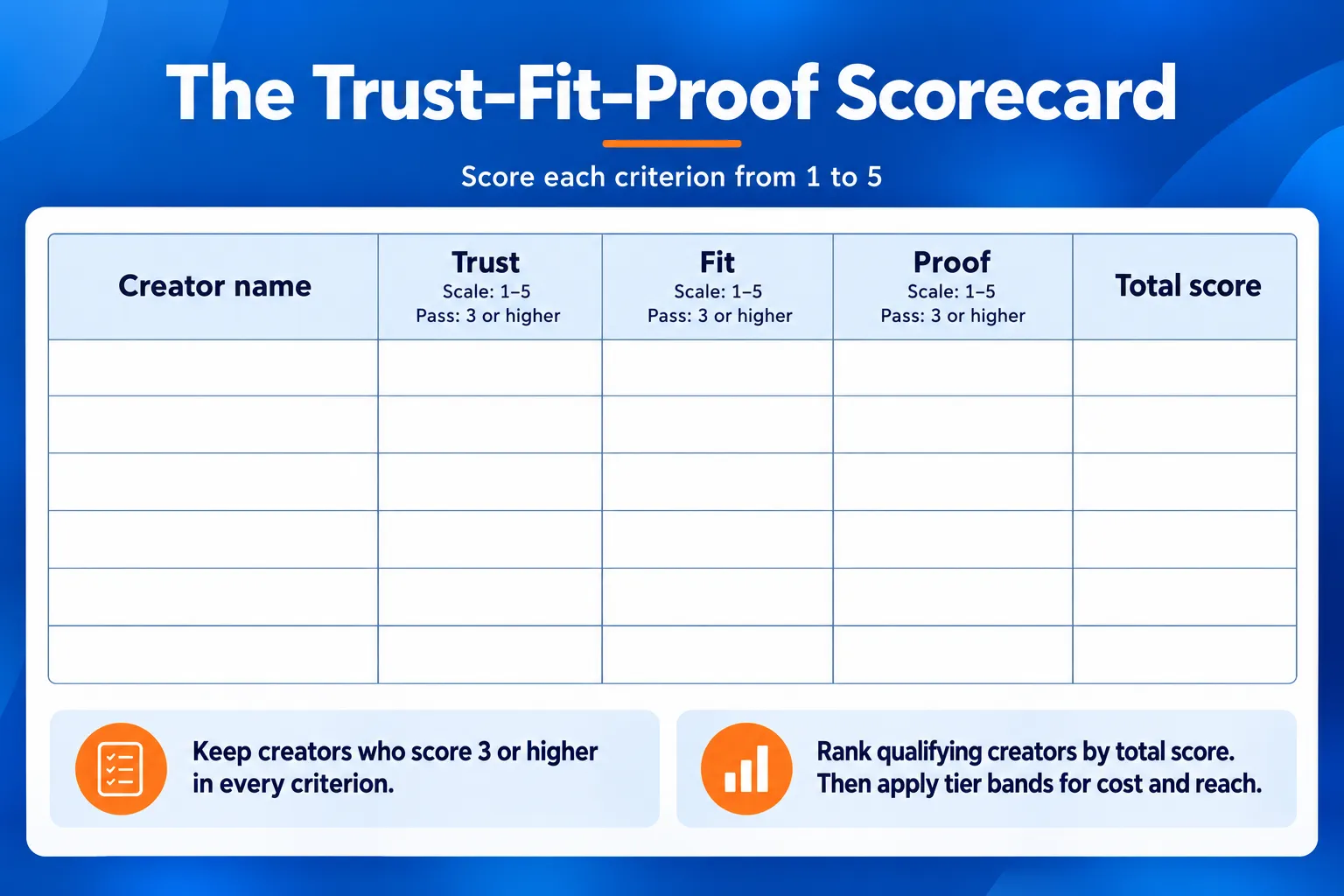
| Column | Question to ask | Pass mark |
|---|---|---|
| Trust | Do followers treat this creator’s recommendations as personal advice? | 3 or higher |
| Fit | Does their format and tone suit how the product is used? | 3 or higher |
| Proof | Can you verify audience and performance data before signing? | 3 or higher |
Worked example (illustrative, not real creators). A Singapore skincare brand scores three hypothetical creators:
| Creator | Trust | Fit | Proof | Result |
|---|---|---|---|---|
| Creator A (nano, 4,000 followers) | 5 | 4 | 4 | Shortlisted |
| Creator B (macro, 300,000 followers) | 3 | 4 | 2 | Not shortlisted (Proof below 3) |
| Creator C (micro, 25,000 followers) | 4 | 3 | 3 | Shortlisted |
Creator B has the largest audience but fails on Proof, so the brand cannot verify the data before signing. Creator A and Creator C go forward, with Creator A ranking first on total score.
Checking audience authenticity and fit
Before you sign, please check the audience, not just the headline count. Look at comment quality, audience location and whether engagement matches follower size. Confirm the platform mix too. Facebook is the most popular social media platform worldwide, but a B2B or professional audience may live mainly on LinkedIn or YouTube, and an engaging Instagram feed isn’t always the right default. Ask each creator to produce a sample post for a product brief first so you can judge the fit on real work. Each brand’s audience differs, so test fit against your own customers rather than a generic benchmark.
Types of Collaborations and Campaigns
Collaboration formats ask different things of an influencer. First, decide what job the content must do. A gifting post and a long video review rarely deliver the same outcome, so define whether the goal is brand awareness or deeper persuasion before choosing a format.
Gifting, reviews and video collaborations
Gifting sends a product with no fixed script and suits low-cost awareness. Reviews go further, with the influencer testing the product and giving an opinion. Video collaborations give you the most control and creative depth, as the creator builds a full piece of digital content around your brand, though they cost more per creator.
Across these formats, the scorecard matters more than the format. A nano influencer whose audience acts on recommendations will often outperform a macro influencer whose followers scroll past sponsored posts, so compare engagement rates rather than follower counts.
Giveaways, takeovers, event coverage and signal boosting
Giveaways reward participation, so they lift follower counts quickly but can attract people who never buy. Takeovers give an influencer control of a brand’s social media account for a day, making them ideal for launches. Event coverage and signal boosting extend the reach of a moment already happening across your channels.
KOL and KOC campaigns: when each works best
Key Opinion Leaders (KOLs) are experts or well-known voices who shape opinion within a specific category. They suit influencer marketing campaigns that need credibility. Key Opinion Consumers (KOCs) are genuine consumers whose authenticity resonates with their smaller but highly engaged audiences. They suit product trials and word-of-mouth. Choose a KOL when you need authority and a KOC when you need believable, peer-level proof.
Building an Influencer Content Strategy
Many campaigns falter at the planning stage. The plan often focuses on follower count and a launch date, and the brief arrives after the creator has already signed. Start with what the content must do, who needs to see it, and how the message stays consistent across influencer marketing channels and social media so that every influencer post reinforces the same brand message.
Setting goals and defining the audience
Write one measurable goal per campaign, such as trial sign-ups, store visits or saves on a product page. Describe the target audience in terms a creator can match: age band, platforms used, and the question they want answered before buying. A content creator whose followers don’t share that question will deliver reach you cannot act on, so choose the best fit for your marketing campaigns.
Planning, briefing and approving content
Budget at least two weeks from strategy kickoff to content going live. One agency’s typical campaign runs about 1 to 2 weeks from kickoff to launch, which is one planning reference rather than an industry benchmark. Rushed timelines usually produce rushed creativity. Give each creator a brief that sets out the key message, required claims and format but leaves delivery in their own voice. Let’s agree on an approval round in advance to ensure revisions don’t delay the launch.
Running, monitoring and adjusting the campaign
Check performance in the first 48 to 72 hours. Compare saves, clicks and engagement rates against your goal, not total views. If one creator’s audience engages and another’s does not, shift the remaining budget toward the stronger fit. Treat the first posts as a test of audience response, not a finished result.
Measuring Effectiveness: KPIs, Reporting and ROI
Many brands judge an influencer marketing campaign by reach. That is the first mistake. Reach shows how many people saw the content, not whether anyone cared. A campaign with a million impressions and no clicks has measured the wrong thing.
Engagement, reach and conversion KPIs
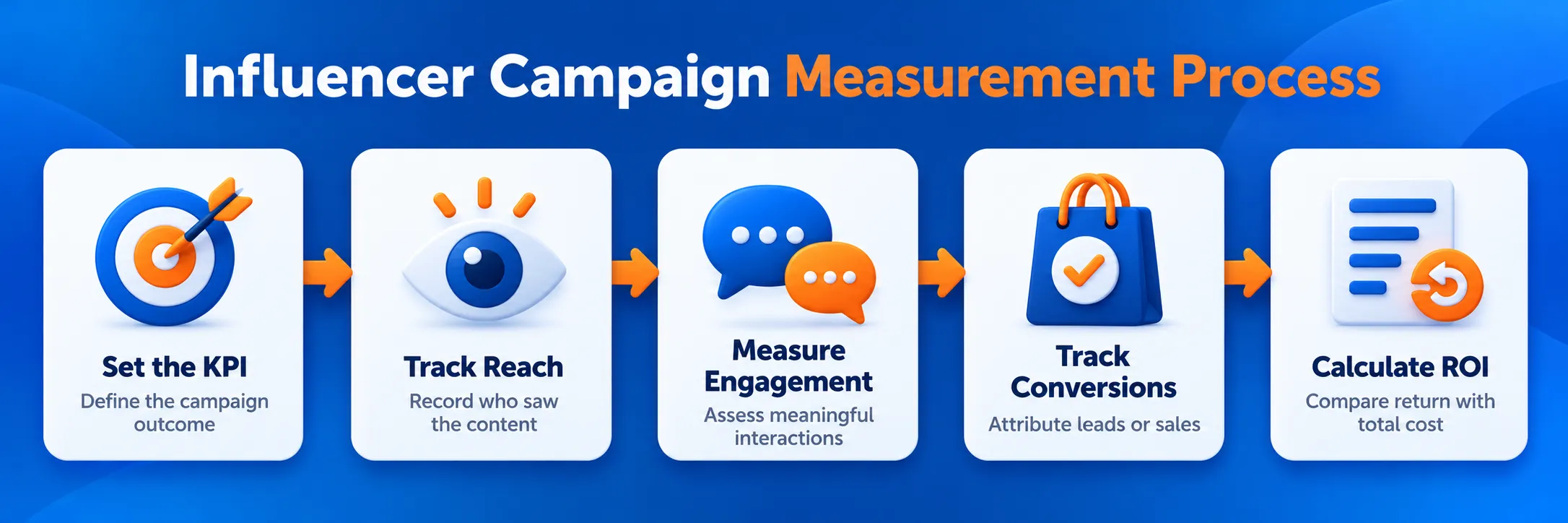
Track three layers in order. Reach shows exposure. Engagement shows whether the target audience reacted through saves, comments and shares. Conversion shows whether the content moved people to act, such as redeeming a discount code, clicking a tracked link, or signing up.
Give each creator a unique discount code or a tagged UTM link. This tells you which content creator drove each sale or sign-up. Without it, you are guessing which influencers did the work.
Engagement rate is the share of followers who interact with a post. Apply the Proof column of the scorecard here: a strong engagement rate means little if the audience behind it is not real. Discovery platforms such as Influencity offer audience and performance data to help check quality. Review that data before you set a KPI target for a creator, especially on engaging social media channels where audience quality varies.
Building a performance report and calculating ROI
A usable report has five lines per creator: cost, reach, engagement rate, tracked conversions and the revenue those conversions produced. Return on investment (ROI) measures the return on your spending. This guide uses the standard calculation: (revenue attributed minus campaign cost) divided by campaign cost, multiplied by 100.
For example, take a creator campaign with a known cost and tracked sales. Subtract the cost from the revenue, divide by the cost and multiply by 100. The result is the ROI as a percentage.
Set the reporting window before launch. Halotech Media estimates that a campaign typically takes about 1 to 2 weeks from kickoff to going live. This is one agency’s timeline, not an industry benchmark, so confirm it for your plan. Schedule a second review two to four weeks after publication to capture late conversions.
Conclusion and Next Steps
Influencer marketing content pays off when you choose influencers for trust and fit, not audience size. Run every candidate through the Trust-Fit-Proof Scorecard first, then use the nano, micro, macro and mega tiers to filter cost. This reduces spend on reach that buyers never act on, helping your brand focus on creators whose content feels genuine and engaging.
Your next steps are simple. Build a shortlist. Score each creator from 1 to 5 on Trust, Fit and Proof, and drop anyone who scores below 3 on any column. Verify audience data with a discovery tool such as Influencity. Then plan for at least two weeks from kickoff to going live, and confirm which platform your buyers use before you create any campaign briefs or commit to a budget.
Frequently Asked Questions
What is the difference between influencer content and UGC?
Influencer content is made by a creator with an established audience, usually under a paid or gifted arrangement, and published on the creator’s channel. User-generated content (UGC) comes from ordinary customers or fans, often unpaid, and brands often repost it. Use influencer content for reach within a creator’s community, and UGC for social proof and product imagery.
How many influencers should a campaign use?
The right number depends on your budget and on how many creators you can brief, track and measure properly. Scale up only after one creator has shown a repeatable pattern in engagement or conversions.
How long does an influencer campaign take to launch?
Halotech Media estimates about 1 to 2 weeks from strategy kickoff to going live. Allow extra time for several revision rounds or a fixed event date.
Which KPIs matter most for influencer content?
Match KPIs to your goal. For awareness, track reach and impressions. For engagement, track engagement rates and saves. For sales, track tracked links, promo codes and conversions. Pair reach with a conversion metric wherever possible.
How do I find influencers in Singapore?
Use a discovery platform that searches Instagram, TikTok and YouTube, such as Influencity. Filter by location, audience demographics and content category, then score each shortlisted creator on trust, fit and proof before you make contact.