
Influencer marketing is rapidly expanding, with the industry projected to reach $24 billion in 2024. The next challenge: turning these investments into measurable results.

Measuring influencer marketing ROI goes beyond likes, views, or follower growth. Brands must assess how influencer content drives traffic, conversions, revenue, and long-term brand growth.
That is why many businesses turn to an influencer marketing agency in Singapore to build clearer attribution frameworks and measure campaign performance more effectively. Unlike traditional ads, influencer campaigns shape customer decisions across multiple touchpoints.
A customer might see a product in an influencer’s post, research it later, and buy days after. Tracking ROI is more complex, but with the right tools and frameworks, it’s possible.
Before diving into the details, it’s helpful to understand the core strategies agencies use. This guide breaks down how agencies measure influencer ROI, from tracking conversions and sales to analysing engagement and brand lift.
Understanding these measurement methods can help brands evaluate campaign performance more effectively and make better decisions about future influencer partnerships.
Key Takeaways
- Influencer marketing ROI measures the business value generated from creator campaigns, including conversions, sales, engagement, and brand awareness.
- Agencies use tracking links (URLs with added codes), discount codes, affiliate platforms (software for tracking influencer results), and analytics tools to connect influencer content with measurable campaign outcomes.
- Measuring influencer marketing ROI requires clear campaign objectives and attribution methods before the campaign begins.
- Both short-term conversions and long-term brand lift indicators should be considered when evaluating campaign performance.
- With the right tracking setup and data analysis, influencer campaigns can become a scalable and measurable growth channel for brands.
What is Influencer Marketing ROI?
Influencer marketing ROI is the value you get from a campaign compared to what you spend. That value could be revenue, leads, brand visibility, engagement, or new content assets.
For brands investing in influencer campaigns, ROI measurement helps answer key questions:
- Did the campaign drive meaningful business outcomes?
- Which influencers delivered the strongest results?
- Should the brand invest in similar campaigns in the future?
When you measure influencer ROI, creator partnerships become part of your core marketing system, not just experiments.
How Agencies Track Influencer Marketing ROI
Tracking influencer ROI requires linking influencer activity to business results with a structured approach.
Agencies typically implement tracking frameworks before the campaign begins, enabling every influencer interaction to be monitored through analytics tools and attribution systems.
Agencies use multiple data sources to evaluate how influencer campaigns affect traffic, conversions, and engagement.
This layered approach gives brands a clearer view of what’s working and which creators drive results.
UTM Tracking Links and Traffic Attribution
UTM tracking links (special URLs with tags for analytics) are a go-to tool for measuring influencer ROI. Agencies use unique links for each influencer so analytics can pinpoint the source of traffic.
These tracking links allow agencies to monitor:
- how many visitors were driven by each influencer
- which content generated the most traffic
- how users interact with the website after arriving
Using analytics tools such as Google Analytics, agencies can determine whether influencer traffic leads to conversions or meaningful engagement.
Unique Discount Codes and Promotional Codes
Another common method for tracking influencer marketing ROI is the use of unique promotional codes. Each influencer is assigned a specific code that their audience can use during checkout.
This method allows brands to measure:
- the number of purchases generated by each influencer
- total campaign revenue
- which creators drive the highest sales performance
Discount codes work especially well for e-commerce brands that want a clear way to measure influencer-driven sales.
Affiliate Tracking Platforms
Affiliate tracking adds another layer. Affiliate tracking platforms (systems that use unique referral links) track purchases that come directly from influencer content.
Affiliate platforms allow agencies to analyse:
- conversion rates from influencer audiences
- revenue generated by each creator
- commission payouts tied to campaign performance
This approach is common in performance-based campaigns where influencers get paid for the sales they drive.
Campaign Landing Pages and Dedicated URLs
Agencies also use campaign-specific landing pages to track and isolate influencer-driven traffic.
Dedicated landing pages allow brands to:
- analyse how influencer audiences engage with campaign messaging
- track conversions with greater accuracy
- tailor the user experience to match influencer content
Campaign-specific URLs and landing pages provide clearer ROI insights, indicating which influencer partnerships work best.
Measuring Influencer Marketing ROI Through Conversions and Sales
The most direct way to measure influencer ROI is by tracking conversions and revenue. Awareness and engagement matter, but conversions show real business impact.
Agencies connect influencer activity to customer actions, like purchases or sign-ups, using analytics, tracking, and attribution models. This shows which creators and platforms drive the most impact.
Conversion Tracking and Analytics Integration

Conversion tracking (monitoring when users complete key actions) allows agencies to identify when users complete important actions after interacting with influencer content. These actions may include purchasing a product, subscribing to a service, or submitting an enquiry form.
Analytics platforms such as Google Analytics or marketing automation tools help monitor how influencer traffic behaves after arriving on the website. By analysing this data, agencies can determine whether influencer-driven visitors are engaging with the site and completing meaningful actions.
Common conversion metrics tracked include:
- product purchases
- sign-ups or registrations
- lead form submissions
- downloads or app installs
Tracking these conversions helps connect influencer campaigns with measurable business outcomes.
Revenue Attribution Models

Revenue attribution helps determine how much revenue an influencer campaign generates. Because customers often interact with several marketing channels before making a purchase, agencies may use different attribution models to analyse campaign performance.
Some common attribution models include:
- First-click attribution is a model in which the first interaction with the brand receives credit for the conversion.
- Last-click attribution is a model in which the final interaction before purchase receives credit for the conversion.
- Multi-touch attribution is a model which distributes credit for a conversion across multiple marketing touchpoints (such as ads, influencer posts, and emails).
Using these models helps agencies better understand how influencer campaigns influence the overall customer journey.
Cost Per Acquisition from Influencer Campaigns

Cost per acquisition (CPA) is the cost to acquire a customer through an influencer campaign. This metric helps brands evaluate whether influencer marketing is generating customers more efficiently than other channels, such as paid search or social advertising.

CPA is typically calculated by dividing the total campaign cost by the number of customers acquired during the campaign period.
For example:
- campaign investment: $15,000
- new customers acquired: 300
CPA = $50 per customer
Lower CPA often indicates stronger influencer marketing ROI, particularly when compared against other marketing channels.
Evaluating Influencer-Driven Customer Lifetime Value
Some influencer campaigns may introduce new customers who continue purchasing from the brand over time. In these cases, agencies evaluate customer lifetime value (CLV, the total revenue a customer generates over their relationship with a brand) to understand the long-term impact of influencer marketing.
If customers acquired through influencer campaigns make repeat purchases, the campaign’s true ROI may be significantly higher than the revenue generated by the initial purchase alone.
By analysing both immediate conversions and long-term customer value, brands can develop a more complete picture of influencer marketing ROI.
Measuring Brand Lift as Part of Influencer Marketing ROI
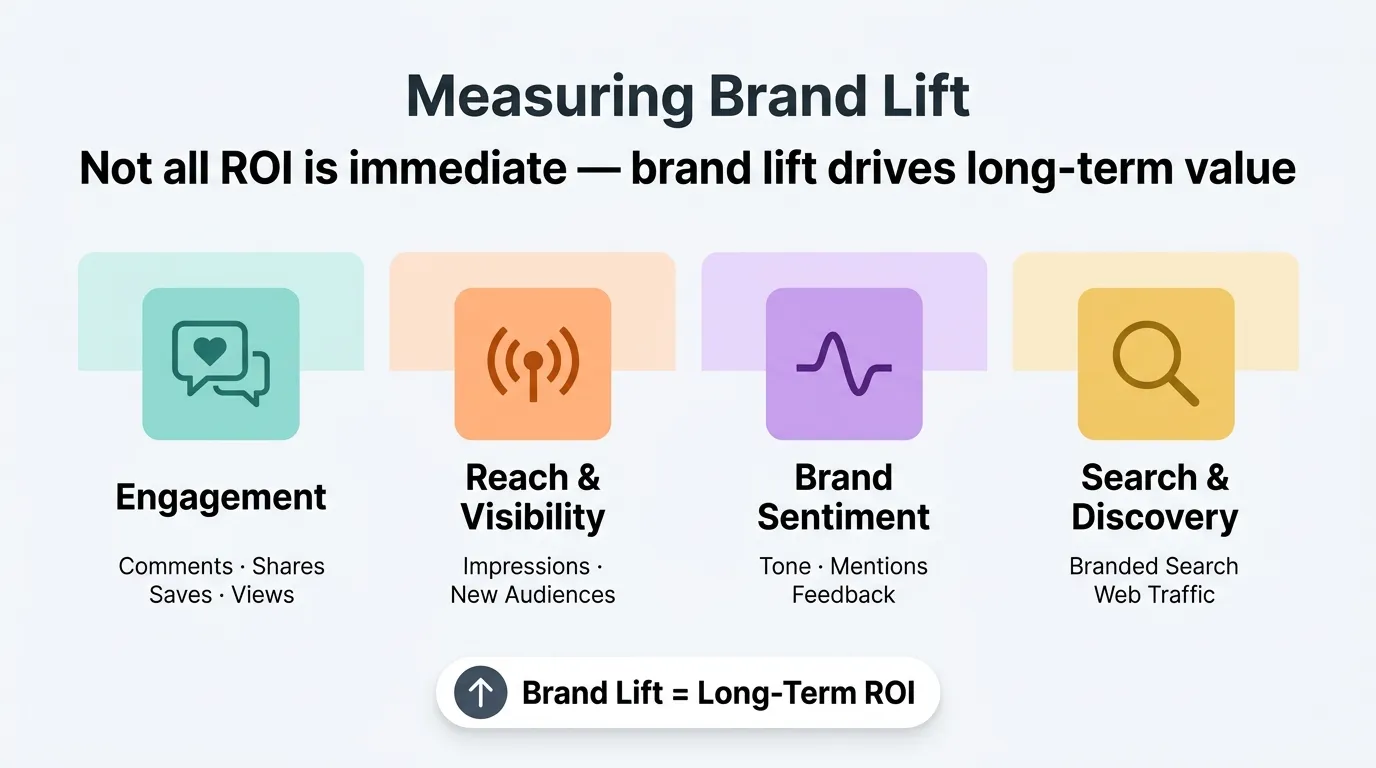

Not every influencer campaign is designed to generate immediate sales. Many brands use influencer collaborations to increase awareness, introduce new products, or strengthen brand credibility among specific audiences. In these cases, brand lift becomes an important component of influencer marketing ROI.
Brand lift refers to the positive change in how audiences perceive or interact with a brand after being exposed to a campaign. While these outcomes may not translate into immediate purchases, they often influence future buying decisions and long-term customer relationships.
Agencies typically analyse several indicators to measure how influencer campaigns influence brand perception and audience behaviour.
Engagement Metrics and Audience Interaction

Engagement metrics show how audiences respond to influencer content. When followers actively interact with posts, it often signals that the content resonates with them and builds stronger brand interest.
Agencies commonly analyse engagement indicators such as:
- comments and discussions on influencer posts
- shares and reposts of content
- saves or bookmarks
- video views and watch time
High engagement levels suggest that the influencer’s audience is genuinely interested in the brand or product being promoted.
Reach and Visibility
Reach measures how many people were exposed to the influencer campaign. While reach alone does not determine influencer marketing ROI, it provides useful insight into how widely the campaign message was distributed.
For brand awareness campaigns, reach and impressions help brands understand whether influencer partnerships are expanding their visibility among new audiences.
Brand Sentiment and Perception Analysis
Agencies may also evaluate audience sentiment to understand how people react to influencer campaigns. This involves analysing the tone and context of comments, messages, and online discussions related to the campaign.
Positive feedback, recommendations, or enthusiastic responses often indicate improved brand perception, which contributes to long-term marketing value.
Search Volume and Brand Discovery Signals
Influencer campaigns can also drive increased brand interest beyond social media. After seeing influencer content, audiences may search for the brand online, visit the website, or explore the product independently.
By monitoring branded search volume, website visits, and referral traffic, agencies can identify whether influencer campaigns are encouraging brand discovery. These signals provide additional insight into the broader impact of influencer marketing ROI beyond direct conversions.
Common Challenges in Measuring Influencer Marketing ROI
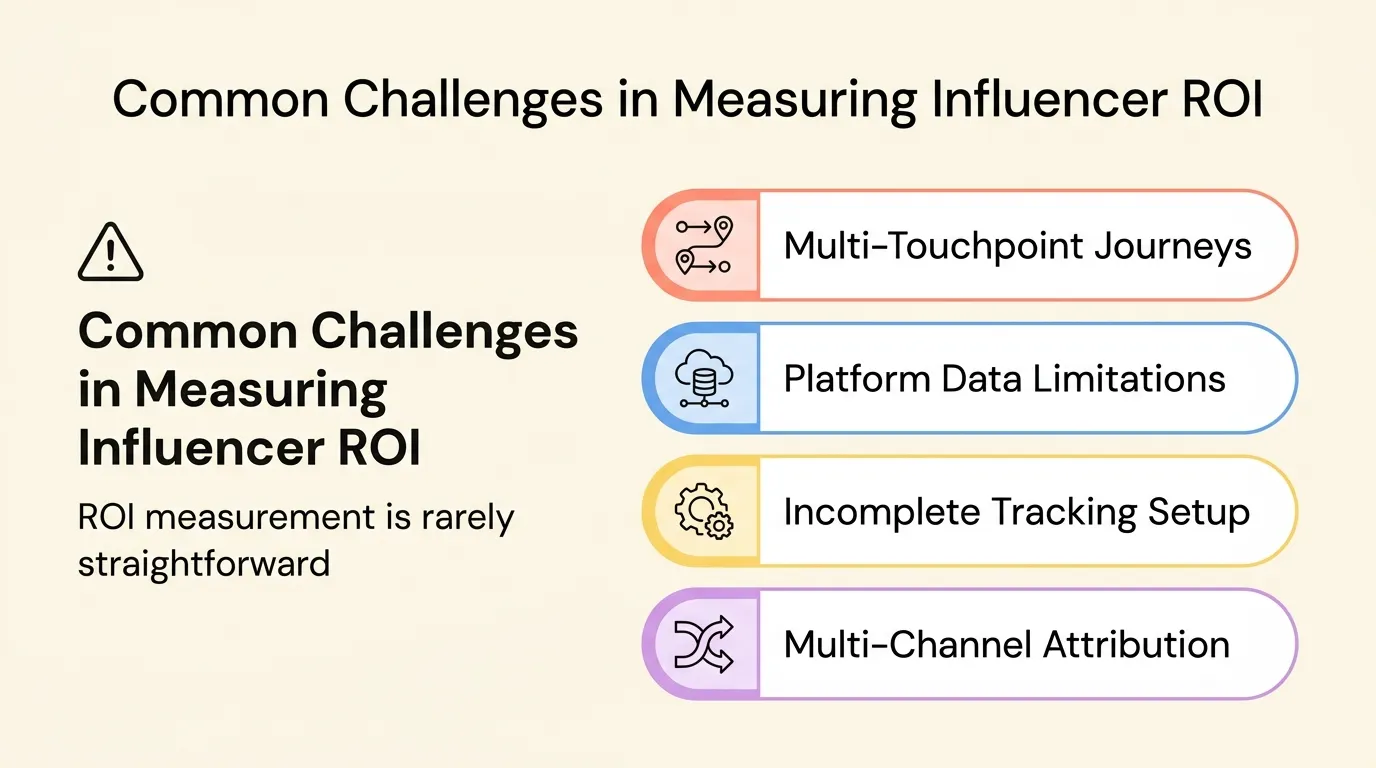
While brands increasingly expect measurable results from creator collaborations, accurately calculating influencer marketing ROI is not always straightforward. Influencer campaigns often shape customer behaviour across multiple channels and over extended periods, making attribution more complex than in traditional digital advertising.
Understanding these challenges helps brands set realistic expectations and adopt more reliable methods for tracking campaign performance.
Multi-Touchpoint Customer Journeys
Consumers rarely make a purchase immediately after seeing influencer content. Instead, they often interact with several marketing channels before completing a transaction. For example, a potential customer may first discover a product through an influencer’s post, then search for reviews online, and finally purchase it through a brand’s website or marketplace listing.
Because multiple touchpoints contribute to the final purchase, it can be difficult to attribute the conversion entirely to the influencer campaign.
Platform Data Limitations
Social media platforms sometimes limit the amount of detailed data available to brands and agencies. While influencers can access insights such as reach, impressions, and engagement, deeper audience behaviour data may not always be fully available.
These limitations can make it harder to track how influencer audiences behave after interacting with content, especially when campaigns span multiple platforms.
Incomplete Campaign Tracking Setup
Another common challenge occurs when tracking systems are not properly configured before a campaign begins. Without tracking links, conversion tags, or attribution tools in place, it becomes difficult to accurately measure influencer-driven traffic and sales.

Setting up measurement frameworks early in the campaign planning stage is essential to effectively evaluate influencer marketing ROI.
Attribution Across Multiple Marketing Channels
Many brands run influencer campaigns alongside other marketing initiatives such as paid advertising, search marketing, and email campaigns.
When customers encounter several marketing channels before making a purchase, identifying the specific contribution of influencer content becomes more complicated.

Agencies often address this challenge by analysing broader patterns such as traffic spikes, brand search growth, and engagement trends to estimate the influence of creator campaigns within the overall marketing strategy.
Why Brands Work With Agencies to Track Influencer Marketing ROI

Tracking influencer marketing ROI requires more than simply monitoring likes, views, or follower growth. Brands need a structured way to connect influencer activity with meaningful business outcomes such as conversions, revenue, or long-term brand growth.
For many companies, working with an agency provides the expertise and tools needed to manage this process effectively.
Agencies help brands set up measurement frameworks, implement tracking systems, and analyse campaign performance data. This makes it easier to understand how influencer marketing contributes to the overall marketing strategy.
Structured Campaign Tracking Setup
Agencies typically establish tracking systems before a campaign begins. This includes setting up tracking links, attribution parameters, analytics integrations, and conversion monitoring tools.
With these systems in place, brands can track how influencer audiences interact with their website, identify which creators drive traffic, and measure conversions more accurately.
Access to Advanced Analytics Tools
Many influencer marketing agencies use specialised analytics platforms that provide deeper insights into campaign performance. These tools help analyse audience demographics, engagement patterns, and conversion behaviour.
By combining data from social media platforms, website analytics, and campaign tracking tools, agencies can build a more comprehensive picture of influencer marketing ROI.
Data Driven Campaign Optimisation
Agencies do more than simply measure campaign results. They also analyse performance data to improve future campaigns.
Insights from past campaigns help agencies identify:
- influencers who generate the strongest engagement or conversions
- content formats that resonate best with audiences
- platforms that deliver the highest campaign impact
These insights allow brands to refine their influencer marketing strategy and improve ROI over time.
Strategic Insights and Reporting
Interpreting campaign data can be complex, particularly when multiple influencers and platforms are involved. Agencies provide structured reporting that translates campaign performance metrics into actionable insights.
Clear reporting helps brands understand how influencer campaigns contribute to both immediate results and longer-term marketing goals.
Brands that want a more reliable approach to campaign measurement often work with an influencer marketing agency in Singapore that offers ROI tracking services to implement structured tracking frameworks and gain clearer visibility into campaign performance.
Understanding the True Value of Influencer Marketing ROI
Measuring influencer marketing ROI allows brands to move beyond vanity metrics and focus on outcomes that truly matter for business growth.
By tracking conversions, analysing revenue attribution, and monitoring brand lift indicators, companies can gain a clearer understanding of how influencer campaigns contribute to their broader marketing strategy.
Since influencer marketing spans many touchpoints, you need a structured approach to measuring performance. Agencies combine analytics, attribution, and campaign data to see both short- and long-term impact.
The right measurement framework makes all the difference for brands investing in influencer partnerships.
If you’re investing in creator partnerships but can’t see clear results, work with an influencer agency in Singapore. MediaOne will help you set up structured tracking, uncover insights, and turn influencer marketing into a measurable growth channel. Contact us today.
Frequently Asked Questions
How long does it usually take to see ROI from influencer marketing?
The timeline for seeing influencer marketing ROI depends on the campaign objective and industry. Some campaigns generate immediate conversions through promotional codes or affiliate links, while others influence purchasing decisions over several weeks as consumers research the brand.
Which platforms generate the highest influencer marketing ROI?
The platforms that generate the strongest influencer marketing ROI often depend on the target audience and product category. For example, TikTok and Instagram tend to perform well for consumer products, while YouTube may drive stronger results for in-depth product reviews or tutorials.
Do micro influencers generate better ROI than larger influencers?
In many campaigns, micro influencers can deliver strong ROI in influencer marketing because they often have more engaged, niche audiences. While macro influencers may offer greater reach, micro influencers frequently generate higher engagement rates and more targeted interactions.
Can influencer content be reused to improve marketing ROI?
Yes. Many brands repurpose influencer-generated content across other marketing channels such as paid advertising, websites, and social media posts. Reusing creator content can extend the value of a campaign and improve overall influencer marketing ROI.
How can brands improve influencer marketing ROI in future campaigns?
Brands can improve influencer marketing ROI by analysing campaign performance data, identifying creators who drive strong results, and refining campaign messaging based on audience engagement. Over time, these insights help optimise influencer partnerships and increase campaign effectiveness.