| AI Summary
Inbound marketing connects customer questions with content, enquiries and ongoing support. Singapore businesses can begin with one audience, a small group of related pages and a follow-up process. This guide explains the channels, readiness checks, costs and measurements needed to run a first campaign without spreading a small team too thinly. |
Inbound marketing attracts potential customers through relevant articles, search results, social content and permission-based emails. It helps people understand a problem, compare solutions and contact a business when they are ready. The process continues after purchase through onboarding, support and content that helps customers use what they bought.
Key Takeaways
- A download or newsletter sign-up shows interest, but does not automatically identify a sales-ready lead.
- Content costs include research, staff time, editing, design, distribution and maintenance.
- Each campaign needs someone responsible for enquiries and follow-up.
- Page-level results help teams find weak offers, missing answers and broken forms.
- A 90-day trial can test the process, but cannot guarantee search rankings or sales.
- Customer support content belongs in the plan alongside content for new buyers.
A potential customer may have several questions before making an enquiry. A business that answers them well can become part of that buying decision before anyone speaks to sales.
Inbound marketing gives those answers a purpose. An article explains the problem, a comparison helps someone assess options, and a service page explains what happens next.
For Singapore businesses, the starting point is manageable: one customer group, one business goal and enough time to publish, respond and review. A busy publishing calendar can wait until those pieces work together.
What Is Inbound Marketing, and How Does It Work?
Inbound marketing earns attention by helping people with something they already want to understand. Content brings customers into contact with a business, while relevant follow-up helps them decide whether to buy.
A payroll provider, for example, might answer questions about changing software. A reader finds its comparison article, checks the migration process and requests a demonstration. Each step answers a different concern.
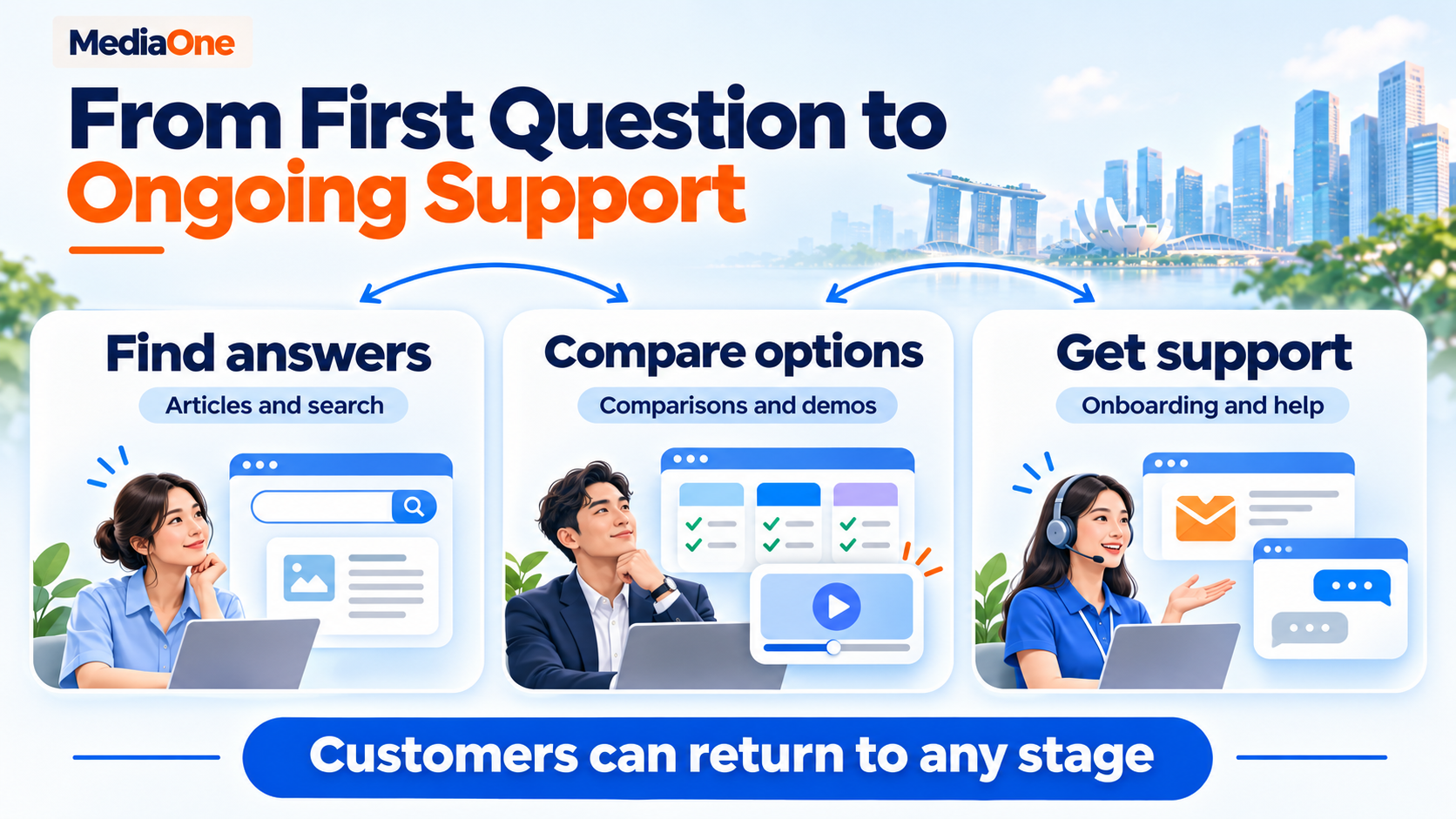
The stages from discovery to customer support
HubSpot’s inbound methodology describes three stages: attract, engage and delight. The older four-stage model separates conversion and closing. Both help teams organise their work; customers do not have to follow a fixed order.
| Stage | Customer need | Business response |
| Attract | “What is causing this problem?” | Articles, videos and search-friendly pages |
| Engage | “Which solution should I choose?” | Comparisons, demonstrations and relevant follow-up |
| Delight | “How do I get value after buying?” | Onboarding, tutorials and customer support |
A buyer may arrive directly on a pricing page. An existing customer may return to an introductory guide. The stages describe needs, so content should remain accessible wherever someone begins.
Content marketing is one part of the system
Content marketing produces and distributes information. Inbound marketing connects that information with discovery, enquiries, sales conversations and customer care.
A blog can therefore form part of an inbound programme without completing it. Readers also need relevant service details, working contact options and someone who responds.
A content marketing funnel helps organise those information needs. The wider inbound plan assigns responsibility for what happens when someone takes action.
How Does Inbound Marketing Differ From Outbound?
Inbound marketing responds to interest that a customer expresses. Outbound marketing starts contact or places a message in front of an audience.
The distinction depends on the activity. A social account can attract followers through educational posts and also run paid advertisements. Email can continue a requested conversation or begin unsolicited outreach.
| Factor | Inbound marketing | Outbound marketing |
| Starting point | A search, content interaction or requested communication | A business initiates contact or buys exposure |
| Common activities | SEO, educational content and subscriber emails | Cold calls, display advertisements and direct outreach |
| Cost pattern | Creation, distribution and ongoing maintenance | Campaign delivery, outreach labour and media spend |
| Timing | Existing demand may respond quickly; search visibility can take longer | Exposure can begin quickly after launch |
| Main challenge | Reaching relevant buyers and earning their interest | Reaching people at an appropriate time |
| Lasting value | Published resources may continue attracting readers | Campaigns can also create awareness and later demand |
Neither approach guarantees cheaper leads. An inbound programme with weak topics can waste money, while a targeted outbound campaign can reach an appropriate buyer.
The two can work together. An advertisement might introduce a comparison guide, while the guide helps readers assess the offer. Reporting should separate paid acquisition costs from organic results.
Which Channels Belong in an Inbound Marketing Plan?
Channel selection starts with customer behaviour and team capacity. A business needs enough coverage to help buyers discover, assess and contact it.
A review of internet marketing channels can help compare the options. The first campaign should focus on the channels the team can maintain and measure.
Articles and resources answer buying questions
Articles work best when they resolve a specific concern. A broad company update rarely helps someone who needs to compare costs or understand a service.
Common starting points include:
- Explanations of recurring customer problems.
- Comparisons between available approaches.
- Cost breakdowns with stated assumptions.
- Checklists for preparing a purchase.
- Case studies with documented circumstances and outcomes.
Google’s approach to people-first content emphasises original value, accurate information and a satisfying answer. An article should leave readers better informed without requiring another search for the missing basics.
SEO helps people discover those answers
Search engine optimisation helps search engines access and understand pages. Content still needs to answer the question behind the search.
Google’s SEO Starter Guide covers foundations such as descriptive titles, organised content and links that help users understand their destination. SEO improves a page’s chances of discovery; it does not guarantee a ranking.
For a Singapore service business, practical page checks include:
- A title that describes the service or question.
- Accurate service areas and contact details.
- Readable text and working forms on phones.
- Links between related explanations and service pages.
- Examples that reflect the customers the business serves.
Local search supports nearby enquiries
A nearby customer may discover a business through Maps before visiting its blog. Eligible businesses should therefore keep their Google Business Profile details accurate.
Google identifies relevance, distance and prominence as the main factors in local results. Complete information helps Google understand the business, while distance depends on the searcher’s location.
A business should describe its real locations and service coverage. Repeated location pages with little distinct information do not help customers compare services.
Social content starts conversations
Social media can introduce expertise through demonstrations, explanations and responses to customer questions. It can also distribute material already published on the website.
A short video might demonstrate a product. A LinkedIn post might explain one common purchasing mistake. The format should reflect what customers need to see.
User-generated content can add customer perspectives when permission and context support its use. Customer posts should remain accurate, with any relevant commercial relationship disclosed.
Email continues a requested relationship
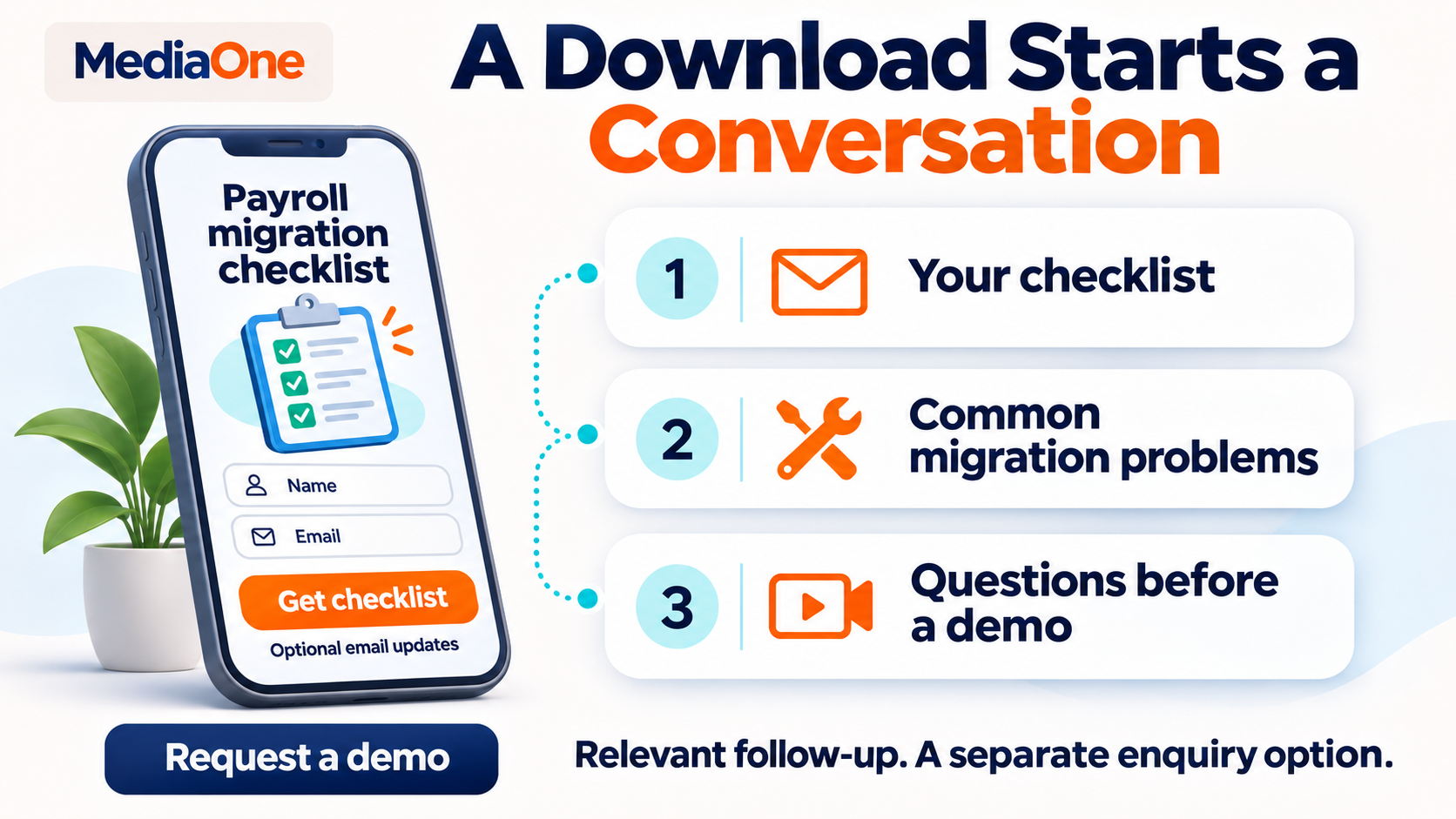
An email marketing lifecycle connects messages to a contact’s interests or actions. A requested checklist might lead to a related explanation and an invitation to discuss the problem.
Automation handles timing, but someone must check the content and sending rules. A customer who has already booked should not keep receiving reminders to book.
A small programme can begin with one welcome message and a short sequence addressing the topic that prompted the subscription.
How Do Visitors Become Leads and Customers?
A lead is a person or organisation that has expressed interest and provided a way to continue contact. That interest can range from a newsletter subscription to a detailed quotation request.
A lead generation plan for small businesses should distinguish these actions. Sales teams need different responses for someone learning about a topic and someone requesting a proposal.
Offers should match the reader’s immediate need
A reader researching a problem may want a checklist. Someone comparing suppliers may want pricing details, a demonstration or evidence from a similar project.
A resource should provide enough value to justify any information requested. Basic service details should remain available without requiring a download.
| Reader action | Relevant next step |
| Reads an introductory article | Related explanation or practical checklist |
| Compares approaches | Comparison table or worked example |
| Checks delivery details | Process page or consultation |
| Requests a quotation | Direct response from the responsible team |
Forms should explain the exchange
A form should state what the person will receive and what happens after submission. Its fields should reflect the information needed for that action.
A quotation may require project details. A newsletter subscription usually needs less information. Extra questions can wait until they become relevant.
A form review should cover:
- Successful submission on a phone.
- An understandable confirmation message.
- Delivery to the correct inbox or system.
- A named person responsible for responding.
- A separate explanation of any ongoing marketing.
Follow-up should answer the next concern
A short follow-up sequence can deliver the requested resource, explain a related issue and offer a conversation. Messages should respond to expressed interest. A person who downloaded a payroll checklist should receive payroll-related information, not an unrelated service promotion.
A qualified lead also needs a shared definition. For example, an enquiry might qualify when the customer needs a service the business provides, falls within its service area and has a project the team can assess.
How Should Singapore Businesses Handle Customer Data?
An inbound programme can collect personal data through forms, subscriptions and customer systems. The collection process needs the same attention as the content.
The PDPC’s data protection obligations under the PDPA cover areas including notification, consent, purpose limitation, protection and retention. The requirements depend on the circumstances and applicable exceptions.
A practical starting process includes:
- A notice explaining the purposes of collection.
- Appropriate consent arrangements for the planned communications.
- Records of subscription choices.
- Access limited to staff who need the information.
- A process for withdrawals and unsubscribes.
- A retention schedule for information no longer needed.
A requested document should not become an unexpected stream of promotions. The form and subsequent emails should match the expectations set when the person signed up.
This section covers programme basics, not every legal obligation. The team responsible for personal data should assess its actual collection and communication practices.
Is Your Business Ready for Inbound Marketing?
The Inbound Readiness Scorecard helps identify missing foundations before a campaign grows. It is a planning exercise, not a validated test or forecast.
Each dimension receives one point when absent, two when partly in place and three when established. Written evidence helps keep the assessment realistic.
| Dimension | Evidence to check |
| Customer knowledge | Recent customer questions, sales notes and reasons for buying |
| Content capacity | A writer, reviewer, owner and achievable schedule |
| Discovery | Search data and an accessible website |
| Enquiry handling | Working forms, response ownership and relevant follow-up |
| Measurement | Recorded sources, qualified leads, costs and sales outcomes |
The gaps deserve more attention than the total
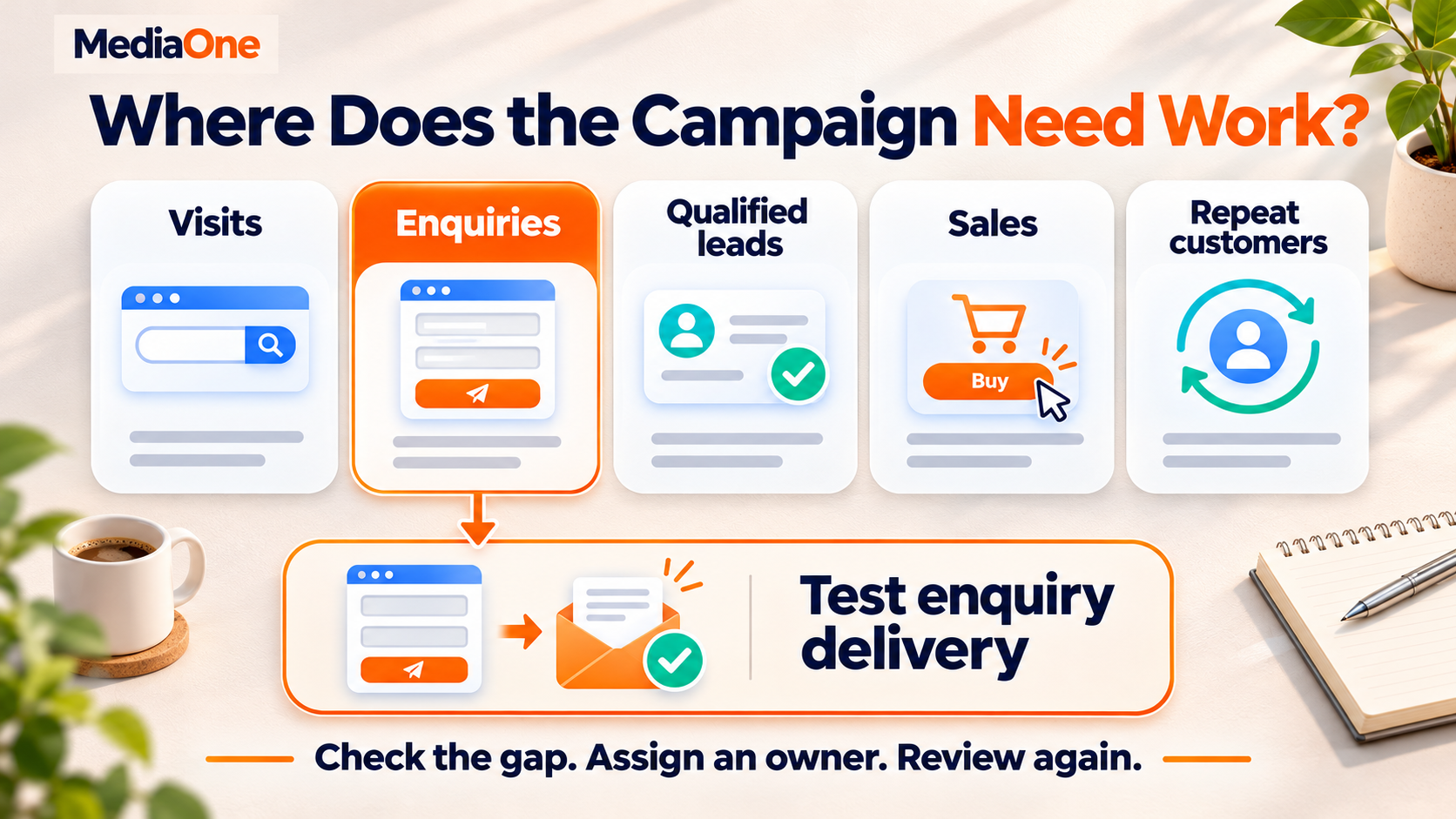
A high total cannot compensate for a broken enquiry form. Each weak area should receive an action, an owner and a completion date.
For example, strong content capacity with weak measurement suggests a need to repair tracking before expanding production. Strong traffic with poor enquiry handling points towards a different problem.
The scorecard also helps set scope. A small team with limited capacity can test one customer group and one offer without launching several channels at once.
How to Build Your First 90-Day Inbound Plan
A first campaign needs a limited scope and an agreed review date. A broader marketing strategy provides the business goal; the inbound plan defines the content, follow-up and measurement needed to support it.
The following schedule is an example. Production time will depend on the subject, approvals and resources available.
Step 1: Define one customer group and its questions
A customer description should explain the buying situation. “Finance managers” says less than “finance managers replacing payroll software before a contract renewal.”
Sales notes, support requests and customer interviews can reveal:
- What prompted the search.
- Which alternatives the customer considered.
- What caused hesitation.
- Which information helped the decision.
- Who else approved the purchase.
A short list of real questions provides a stronger starting point than a long list of broad topics.
Step 2: Review existing pages and search data
Google Search Console’s Performance report shows search queries, clicks, impressions and other search results data. These records help identify topics already reaching readers.
The content review can group pages by the work required:
| Page condition | First action |
| Relevant visits and enquiries | Maintain accuracy and investigate what works |
| Relevant visits but few enquiries | Check the offer, information and contact process |
| Relevant topic but limited visibility | Review the answer, technical access and competition |
| Outdated or duplicated information | Update or combine where justified |
Low traffic alone is not a reason to delete a page. A specialist explanation may support a small number of valuable purchases.
Step 3: Set the offer, responsibilities and costs
A campaign brief should name the audience, intended action, content pieces, distribution channels and review date. Responsibility should cover more than publication. Someone needs to approve claims, test forms, respond to enquiries and record sales outcomes.
The budget should include research, writing, editing, design, website work, tools and staff time. Paid distribution needs a separate line so the team can assess it independently.
Step 4: Publish a connected group of answers
One main guide and several supporting pieces can cover a purchasing problem without repeating it.
A payroll software campaign might include:
- A guide to comparing payroll systems.
- A migration preparation checklist.
- An explanation of implementation costs.
- A page describing training and support.
- A demonstration request page.
Each piece should answer a distinct question. Relevant links let readers continue when they need more detail.
Step 5: Run the campaign and review the evidence
A simple schedule keeps the work visible.
| Period | Main work | Review point |
| Days 1–30 | Research, page repairs, main guide and form testing | Accuracy, technical access and successful enquiries |
| Days 31–60 | Supporting content, distribution and follow-up emails | Relevant visits, responses and contact quality |
| Days 61–90 | Updates and sales feedback review | Enquiries, qualified leads and next actions |
The first review should identify what the team has learned. Limited data may justify extending the test, while broken tracking needs repair before anyone judges performance.
What Does Inbound Marketing Look Like in Practice?
The examples below are hypothetical. They show how content and follow-up can connect without claiming documented results.
A B2B example: payroll software
A Singapore payroll provider wants enquiries from companies replacing their existing system. Its content begins with the questions buyers ask before requesting a demonstration.
The main guide explains migration tasks, ownership and training. Supporting pages cover data preparation and pricing factors. A checklist gives readers a way to organise their own requirements.
The sales team receives demonstration requests with the relevant context. Its feedback also reveals gaps: repeated questions about setup time may show that the process page needs more detail.
A B2C example: a furniture retailer
A furniture retailer wants shoppers to assess dining tables before visiting its showroom.
Its content could include:
- A measuring guide for dining areas.
- A comparison of table materials.
- A video showing extension mechanisms.
- Care instructions for each surface.
- Accurate showroom and delivery information.
The next action may be checking stock, saving a product or arranging a visit. A downloadable guide is optional; customers may prefer to assess products directly.
How Should You Measure Costs and Results?
Inbound marketing performance connects audience activity with business outcomes. Traffic helps explain discovery, while qualified enquiries and sales show commercial progress.
A measurement plan should define each action before the campaign starts. Otherwise, teams may count downloads, enquiries and customers as though they mean the same thing.
A short dashboard is easier to act on
Google Analytics key events record actions a business considers important. A completed enquiry can be one such action, provided the tracking measures successful submission.
| Area | Measure | What it helps assess |
| Discovery | Relevant search queries and visits | Whether intended buyers find the content |
| Enquiries | Completed forms or bookings | Whether visitors take the intended action |
| Quality | Qualified enquiries | Whether the offer reaches suitable customers |
| Sales | Customers and contribution profit | Whether results support campaign costs |
| Retention | Renewals or repeat purchases | Whether customer relationships continue |
A click on a telephone number does not confirm a completed conversation. Tracking and sales records should reflect that distinction.
Cost calculations need consistent definitions
Cost per qualified lead equals total campaign cost divided by qualified leads. For an illustrative quarter, S$6,000 in campaign costs and 20 qualified leads produce a cost of S$300 per qualified lead. Those figures are an example, not a Singapore benchmark.
A separate return calculation can compare contribution profit with campaign cost:
Marketing ROI = (attributable contribution profit − marketing cost) ÷ marketing cost × 100
Contribution profit means sales revenue after direct delivery costs. The calculation should avoid counting marketing costs twice.
Attribution explains part of the story
A customer may discover a business through a referral, read its articles and later enquire through search. The final visit alone does not describe every influence.
A lead-source field, analytics records and sales notes can provide complementary evidence. Reports should acknowledge gaps instead of assigning every sale to the last article viewed.
Results need time and context
Existing audiences may respond soon after publication. A new website seeking competitive search visibility may need much longer. Sales cycles also affect when revenue appears.
There is no universal five-month saving or guaranteed reduction in lead costs. Quarterly reviews should compare consistent definitions, account for seasonality and include the time required to close sales.
What Common Problems Should Teams Fix First?
A campaign can struggle even when individual articles read well. The first repair should address the stage where progress stops.
| Symptom | Possible cause | First check |
| Visits from unrelated searches | Topic attracts the wrong audience | Search queries and customer relevance |
| Readers leave before key information | Answer is delayed or hard to scan | Opening sections and mobile layout |
| Downloads produce few conversations | Offer mainly attracts early research | Follow-up relevance and qualification |
| Enquiries receive no response | Ownership or delivery failure | Inbox routing and response records |
| Sales questions remain unanswered | Missing buying information | Calls, proposals and lost-sale notes |
One change at a time makes results easier to interpret. A small test also needs enough observations before a team treats a difference as meaningful.
How Does AI Search Affect Inbound Marketing?
AI-generated answers can introduce buyers to a topic before they visit a website. Content therefore needs to communicate its answer directly and provide reasons to trust it.
Google states that AI Overviews and AI Mode rely on established SEO foundations. Supporting pages must be indexed and eligible for search snippets; no special AI markup guarantees inclusion.
A practical publishing check includes:
- An answer near the relevant heading.
- Explanations of unfamiliar terms.
- Sources beside factual claims.
- Examples that add something beyond a definition.
- Important information available as text.
- Accurate authorship and review details.
An AI summary cannot replace the full explanation. Customers still need evidence, service information and a way to discuss their circumstances.
Inbound Marketing Starts With One Customer Need
Inbound marketing becomes manageable when a campaign centres on one buying problem and a team can maintain every step. MediaOne’s content marketing services can support the planning and production involved.
A business preparing its first campaign can discuss its goals with MediaOne, including the audience, existing pages and enquiries it wants to earn.
FAQs About Inbound Marketing
Does inbound marketing require a blog?
A blog is one option. Product demonstrations, calculators, webinars, comparison pages and support resources can also attract and assist buyers. The format should match the question and the information needed to answer it.
Can inbound marketing work for a new product category?
A new category may have limited direct search demand. Educational content can explain the underlying problem in terms customers already recognise. Partnerships, events and demonstrations may help introduce the idea before buyers know the product category’s name.
Who owns inbound marketing when a business hires an agency?
The business should retain control of its domain, website, analytics and customer records. The agreement should state ownership of content, account access, responsibilities and handover arrangements. An agency still needs product knowledge and feedback from the client.
Should Singapore businesses publish in several languages?
Language choices should reflect actual customer needs and the team’s ability to maintain accurate versions. Customer conversations and search data can inform the decision. Each version needs appropriate terminology and updated service information.
Can older content become part of a new campaign?
Older material can contribute when its information remains accurate and relevant. Webinar questions, sales explanations and support resources may reveal topics worth developing. Dates, permissions, claims and product details need checking before republication.
Does every inbound campaign need a downloadable guide?
A guide is optional. Some customers need a stock check, quotation, demonstration or booking. The intended next action should match the purchase, without adding a form that delays access to basic information.