| AI Summary
Branding agencies help businesses decide how customers should recognise and understand them. Their work can include research, positioning, naming, design and launch support. Singapore businesses should compare agencies against the same written brief, with named deliverables, fees and approval stages. A branding budget should cover both agency work and the cost of introducing the changes. Results need a starting measurement and regular review because sales changes can have several causes. |
Many Singapore businesses start by asking which creative agency has the best portfolio. That can produce a shortlist of impressive work without answering the buying question: which team can solve the business’s problem?

Branding agencies should be assessed on relevant experience, proposed work, cost and the people delivering it. Strategy comes before design when the business needs to decide what it stands for. A business with an agreed strategy may need a smaller design assignment.
The starting point is the decision the company needs help making. A cafe opening its first outlet has different needs from an established supplier entering a new market. Their proposals should reflect those differences.
Key Takeaways
- Itemised proposals make comparison possible. Each quote needs quantities, file formats, revision limits and exclusions.
- Existing recognition deserves attention. Customer evidence should guide which familiar brand elements remain.
- Launch costs extend beyond design. Printing, staff time, website changes and licences can affect the total.
- Results need context. Pricing, promotions and distribution can influence sales alongside branding.
- Grant support has conditions. Funding should remain separate from the amount the business can afford without support.
What Do Branding Agencies Do?
Branding agencies develop the strategy, language and design that help customers identify a business and understand its offer. The American Marketing Association’s definition of a brand includes identifying features such as names, designs and symbols. An agency’s assignment determines which of those elements it develops.
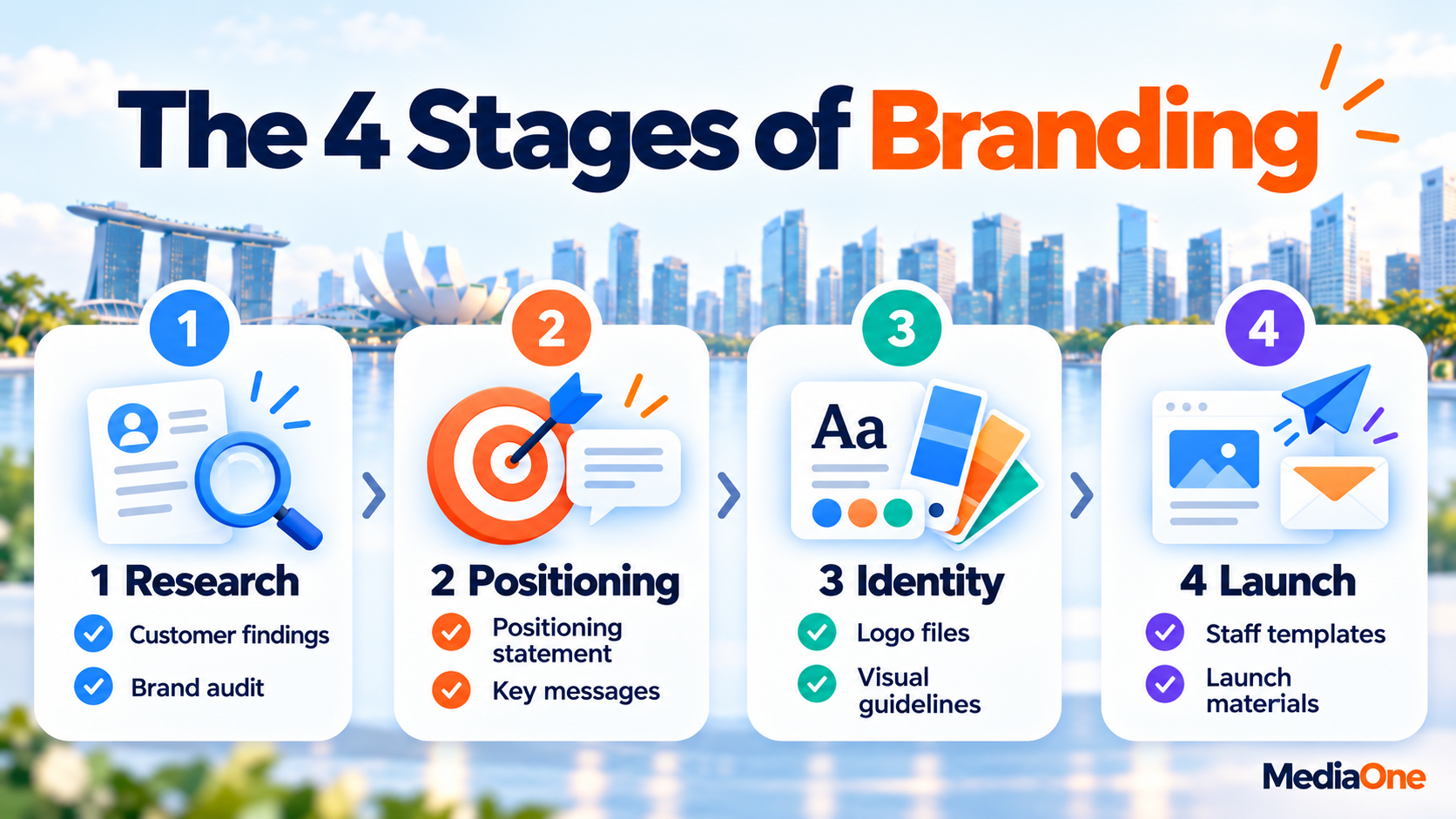
Branding services can cover several stages. A proposal should name the stages included and explain how each produces something the business can use.
Research and Brand Discovery
Discovery examines the business, its customers, its competitors and its existing reputation. The purpose is to find evidence for decisions about the brand.
Activities may include staff interviews, customer conversations, a review of sales feedback and an audit of current materials. The proposal should explain who takes part, how participants are selected and how findings will be recorded.
For example, an accountancy firm may think clients choose it because of low fees. Interviews might show that clients value quick replies during tax season. Those findings would support different messages and service promises.
Research depth should match the decision. Existing customer studies may reduce the need for new interviews, provided they remain relevant. A small visual update does not automatically require a large research programme.
Positioning and Brand Messaging
Brand positioning explains who the business serves, what it offers and why customers would choose it. The output should help staff describe the business in everyday language.
A positioning statement might describe a meal delivery company as serving office workers who need predictable lunch deliveries. Its supporting messages could address delivery windows, ordering and dietary information.
That direction gives brand positioning a practical role in design and communication. The agency can test whether proposed headlines, images and packaging support the agreed promise.
Messaging deliverables may include a company description, product messages, a tone guide and examples. A list of abstract values needs examples showing how those values affect actual words and decisions.
Every promise also needs operational support. A company describing itself as responsive should know who answers enquiries and when customers receive a reply. A retailer promising convenient returns needs a policy staff can explain and apply. The agency can develop the message, but the business must be able to deliver the experience behind it. Discovery should identify promises the company cannot yet support before they appear in public materials.
Brand Identity and Everyday Design
Brand identity includes the name, logo, colours, typefaces and visual style. Graphic design applies that system to items such as brochures, packaging and presentations.
A logo presentation alone does not demonstrate how the identity works. The proposal should include relevant applications: perhaps a delivery label for a food company or a sales proposal for a consultancy.
Digital applications need readable colours and typography. The W3C guidance on text contrast specifies a minimum ratio of 4.5:1 for ordinary text and 3:1 for large text under WCAG Level AA, subject to exceptions. Logo text has an exception; ordinary website text does not gain one simply because it uses brand colours.
A pale colour may work as decoration but make small text difficult to read. Practical demonstrations help the business assess a proposed identity before approving it.
The same test applies beyond colour. A long name might crowd a mobile page header, while a detailed logo might lose its shape on a small product label. A sales template should accommodate real prices, product names and contact details. Mockups become more informative when the agency uses the business’s actual content and the sizes customers will see.
Launch Support and Ongoing Brand Management
A branding project may end with guidelines and files. Launch support, production and ongoing management may require separate agreements.
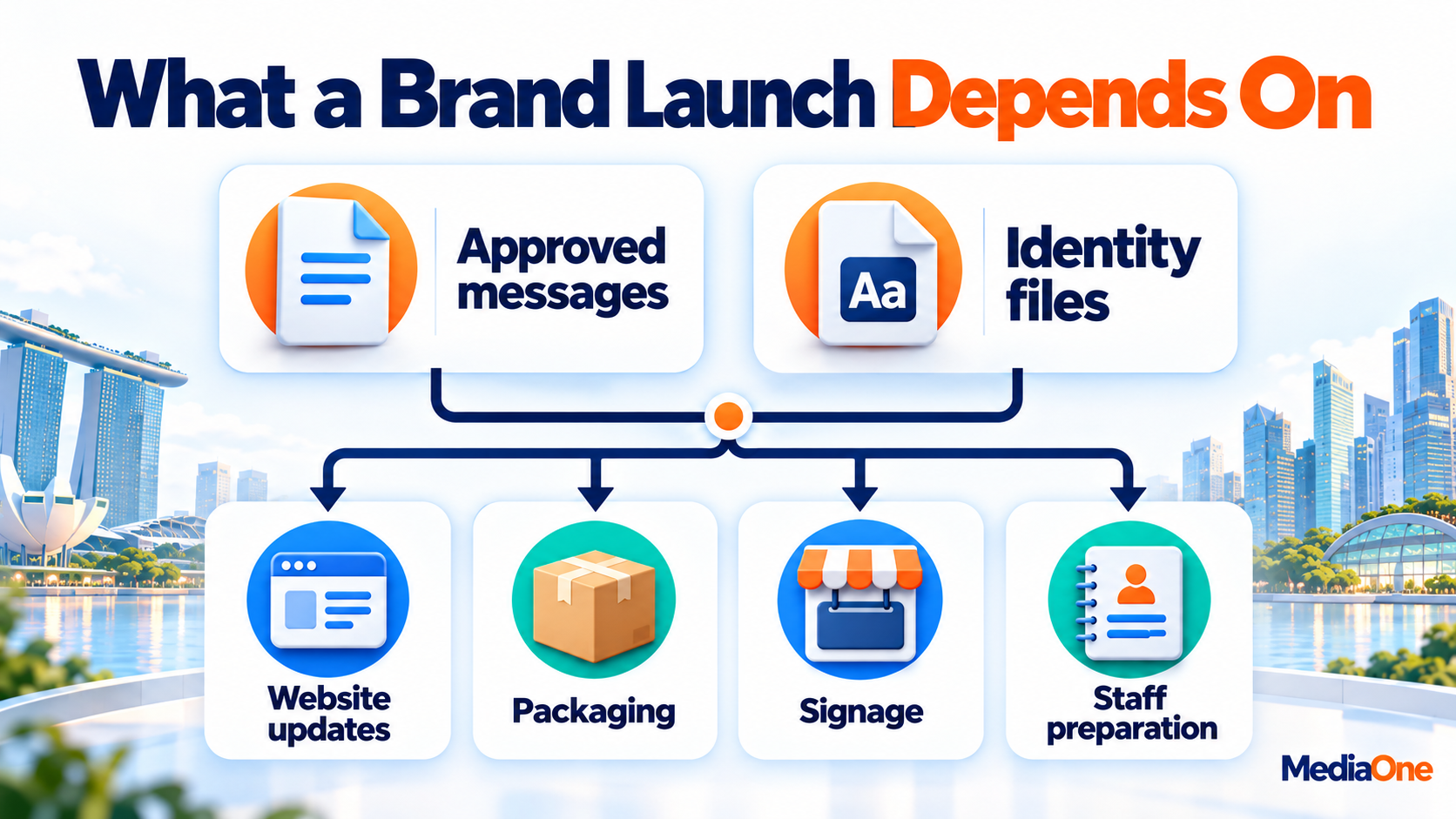
The handover should identify who updates the website, prepares packaging, briefs staff and replaces old materials. Website design may involve development and testing beyond the branding agency’s design work.
A business also needs rules for future communication. Marketing communications connects the agreed messages across sales materials, customer emails and campaigns. Without that handover, different departments may interpret the same guidelines differently.
Ongoing management can include reviewing new assets and supporting new products. A monthly retainer needs its own workload, response times and approval process.
The business should know whether the retainer includes new creative work or only reviews, and how unused hours, urgent requests and additional charges are handled.
Startup Branding, Refresh or Full Rebrand?
A startup needs enough direction and assets to begin trading consistently. An established business also needs to understand what customers already recognise and trust.
A brand refresh updates parts of the presentation while retaining the main identity. A rebrand can change positioning, naming or the identity more extensively. These labels vary between agencies, so the deliverables provide the better comparison.
| Business situation | Work worth considering | Evidence needed |
| New business preparing to launch | Positioning, naming and initial identity | Customer needs and a validated offer |
| Familiar brand with dated materials | Visual refresh | Recognition of existing assets |
| Conflicting messages across departments | Messaging and guidelines review | Examples of customer confusion |
| New audience or business model | Positioning review and possible rebrand | Research into the new market |
| Merger involving several brands | Brand structure and naming review | Customer recognition and operational requirements |
A familiar colour or name can carry years of recognition. The agency should explain what it proposes to retain and why a larger change is necessary.
How to Set a Branding Budget and Project Timeline
Branding fees depend on the work agreed, the team involved and the number of applications required. A single price range cannot reliably describe everything from a logo update to an international rebrand.
The budget becomes easier to assess when proposals separate agency fees from implementation expenses. The comparison also needs the same assumptions about research, revisions and launch responsibilities.
What Should a Branding Quote Include?
An itemised quote should connect each fee to an output. The following structure helps businesses see where money goes.
| Budget area | Examples of work | Detail to confirm |
| Research | Interviews, surveys, existing asset review | Participant numbers and research report |
| Strategy | Positioning, audience priorities, messaging | Documents and approval stages |
| Identity | Logo, colours, typography, visual applications | Concepts, revisions and final formats |
| Naming | Name development and initial checks | Number of candidates and checking scope |
| Guidelines | Usage rules and examples | Coverage and editable templates |
| Implementation | Website, packaging, signage, launch materials | Design, production and supplier responsibilities |
A headline quote can conceal major differences. One agency may include writing and templates; another may supply visual guidelines alone.
Naming also needs a defined checking process. IPOS guidance on registering trade marks includes searching for identical or similar existing marks. A name-development fee should state whether it includes initial screening, registration work or neither. A domain search alone does not establish trade mark availability.
Costs Beyond the Agency Fee
Implementation can include printing, packaging changes, signage, photography, font licences and staff training. GST and third-party charges should appear in the budget where applicable.
The total also depends on how the business introduces the changes. A retailer replacing signage at several outlets faces different expenses from a consultancy updating digital documents.
A hypothetical budget illustrates the difference:
| Illustrative project cost | Amount |
| Agency research, strategy and identity | S$12,000 |
| Website updates | S$3,000 |
| Printed materials and signage | S$2,000 |
| Total before GST and other expenses | S$17,000 |
These figures explain budgeting only. They are not market rates or a MediaOne quotation.
The business should also identify assets that can remain in circulation temporarily. Existing packaging stock, for example, may affect the launch sequence and replacement cost.
Payment milestones deserve attention alongside the total. The agreement can connect payments with defined stages, such as the research report, approved identity and final handover. A deposit, progress payment and final balance should each have an agreed trigger. Cancellation terms should explain what completed work remains payable and what the business receives if the project ends early.
Grant Support for Eligible Branding Work
Enterprise Singapore’s international branding support under the EDGE Grant covers specified work connected with overseas expansion. Its listed areas include brand research, strategy, and identity development or refresh.
The activity has eligibility conditions and cost exclusions. The official page excludes activities aimed at domestic business opportunities and operational expenses such as collateral production, website development and social media management. It also states that work and supplier payments must not precede application submission.
Grant availability does not mean every branding assignment qualifies. The business’s spending decision should account for the full project cost and treat potential support as conditional on the scheme’s terms and approval.
What Determines the Project Timeline?
A reliable schedule shows activities, approvals and dependencies. Project labels alone do not tell the buyer how long the work will take.
| Project stage | Dependency that affects timing |
| Research | Customer access and interview scheduling |
| Positioning | Agreement among decision-makers |
| Naming | Screening and availability checks |
| Design | Feedback deadlines and revision rounds |
| Production | Supplier lead times and final artwork |
| Launch | Website readiness, stock and staff preparation |
A short deadline does not prove that research has been omitted. It does require an explanation of what the team can complete within the available time.
The schedule should distinguish agency working time from client review time. A week waiting for internal approval still affects the launch date.

Feedback should explain the business concern behind a requested change. “The product name becomes hard to read on our smallest label” gives a designer something specific to address. “The director dislikes green” provides less direction unless there is a relevant reason. Agreed evaluation criteria help the team assess concepts against customer needs, production requirements and the brief, while still allowing room for creative judgment.
How to Measure Branding Results
Branding results should relate to the problem that justified the project. The business needs a starting measurement before changes launch and a consistent way to review progress afterwards.
Brand equity describes the value connected with recognition, perceptions and trust. A company cannot assess that value through logo approval or social media reactions alone.
Recognition surveys need consistent wording. Aided recognition asks whether someone recognises a name or logo shown to them. Unaided recall asks which brands come to mind without showing a list. Those questions measure different things. A comparison becomes less reliable if the first survey samples existing customers and the next samples people who have never bought from the company.
Measures That Answer Different Questions
A small set of measures is easier to interpret than a dashboard containing every available number.
| Business question | Possible measure | Limitation |
| Do customers recognise the business? | Recognition survey | Results depend on the audience sampled |
| Do customers understand the offer? | Interviews or message testing | Stated understanding may differ from behaviour |
| Are more people searching for the name? | Brand-related search impressions and clicks | Advertising and publicity can also influence demand |
| Are enquiries more relevant? | Share meeting agreed qualification criteria | Sales recording must remain consistent |
| Are more enquiries becoming sales? | Enquiry-to-sale conversion rate | Price, availability and follow-up also affect results |
Google Search Console’s Performance report provides search queries, impressions and clicks. These can help monitor searches involving the business name, although query reporting does not capture every search.
Content marketing and social media marketing can support the new messages after launch. Their activity should be recorded alongside branding changes so the business can interpret results in context.
Revenue, Profit and Attribution
Additional sales do not equal additional profit. A financial assessment should account for the cost of delivering those sales and the cost of the branding project.
For example, a hypothetical company records S$20,000 in additional revenue and S$12,000 in direct delivery costs. That leaves S$8,000 before branding, marketing, overheads and other expenses. The company still needs evidence before attributing that amount to branding.
A promotion, new distributor or improved sales follow-up may explain part of the increase. Comparisons with similar periods and customer feedback can help interpretation, but they do not automatically prove causation.
A branding report should distinguish completed work, changes in customer response and financial outcomes. Those are related stages, and each requires different evidence.
The review period should also reflect the buying cycle. A supplier selling annual contracts may need longer to observe purchasing behaviour than a cafe selling lunch. Teams should note seasonal peaks and unusual events when comparing periods. Consistent questions and definitions make repeated measurements more informative, even when the business cannot isolate branding from every other influence.
Warning Signs in Branding Agency Proposals
Proposal weaknesses often appear in missing details. A strong presentation still needs workable terms, named responsibilities and evidence behind its recommendations.
Vague Deliverables and Revision Rules
A phrase such as “complete brand package” leaves too much open. The agreement needs quantities, applications, formats and acceptance criteria.

Revision rules should define what a round includes and how feedback is submitted. A change to the agreed audience midway through design is different from correcting a spelling error.
The proposal also needs a process for additional work. Written approval of the cost and timing effect helps both sides manage changes without a dispute at invoicing.
Hidden Charges and Unnamed Team Members
Low fees deserve the same questions as high fees. Missing research, limited applications or excluded production can explain an apparent saving.
The agency should identify who leads strategy, who designs and who handles daily communication. Any subcontracted work needs a named owner for quality and deadlines.
A large team does not guarantee senior involvement. A small studio does not guarantee limited capacity. The relevant evidence is the actual staffing plan and availability for the assignment.
Guaranteed Sales and Unsupported Case Studies
A rebrand cannot guarantee a revenue increase. Product quality, distribution, price and execution also affect commercial results.
Case studies should explain the original problem, the agency’s contribution and how results were measured. A sales increase without dates or context tells the buyer little about the agency’s role.
The business may also need SEO or improvements to its digital marketing strategy if discovery shows that customers struggle to find it. An agency should connect its proposed service to the diagnosed problem.
How to Compare and Shortlist Branding Agencies
A consistent buying process helps teams compare substance across different presentation styles. Each candidate should receive the same brief and enough information to explain its proposed approach.
Step 1: Prepare a One-Page Brief
A brief should cover the business, its customers, the reason for the project and the intended outcome. Existing research and examples of current materials help agencies understand the starting point.
The brief also needs a budget range, a target launch date and any fixed requirements. Those might include keeping a recognised name or producing materials in several languages.
Internal approval arrangements belong here too. One person should combine feedback, and the final decision-maker should take part before major stages receive approval.
Step 2: Assess Relevant Work and Local Understanding
A shortlist of three to five agencies is a manageable starting point. Relevant work may involve a similar audience, business challenge or scale; it need not come from the same industry.
Singapore market knowledge should appear in concrete examples. Agencies can explain how they tested language, handled local customer expectations or adapted materials for different audiences.
Published rankings can help identify candidates, but buyers should examine their selection criteria and commercial relationships. An agency’s place on a list does not establish whether it can deliver the current brief.
Step 3: Compare Approaches and Client References
Each agency should explain its research method, proposed deliverables, schedule and fee structure. A conversation about an existing project can reveal how the team handles disagreement and changing requirements.

Paid discovery can help when the problem needs further investigation. Its agreement should specify the findings and documents the business receives, including whether another supplier can use them.
Client references can address practical details: communication, budget changes, delivery and support after handover. Reference conversations add context to the agency’s own presentation.
Confidentiality can limit what an agency shares. A redacted document or an explanation of the method may still demonstrate its reasoning without exposing a former client’s information. Buyers should assess that evidence fairly. An agency does not need to disclose another business’s private brief to show how it approaches a comparable problem.
Step 4: Score the Evidence Before Choosing
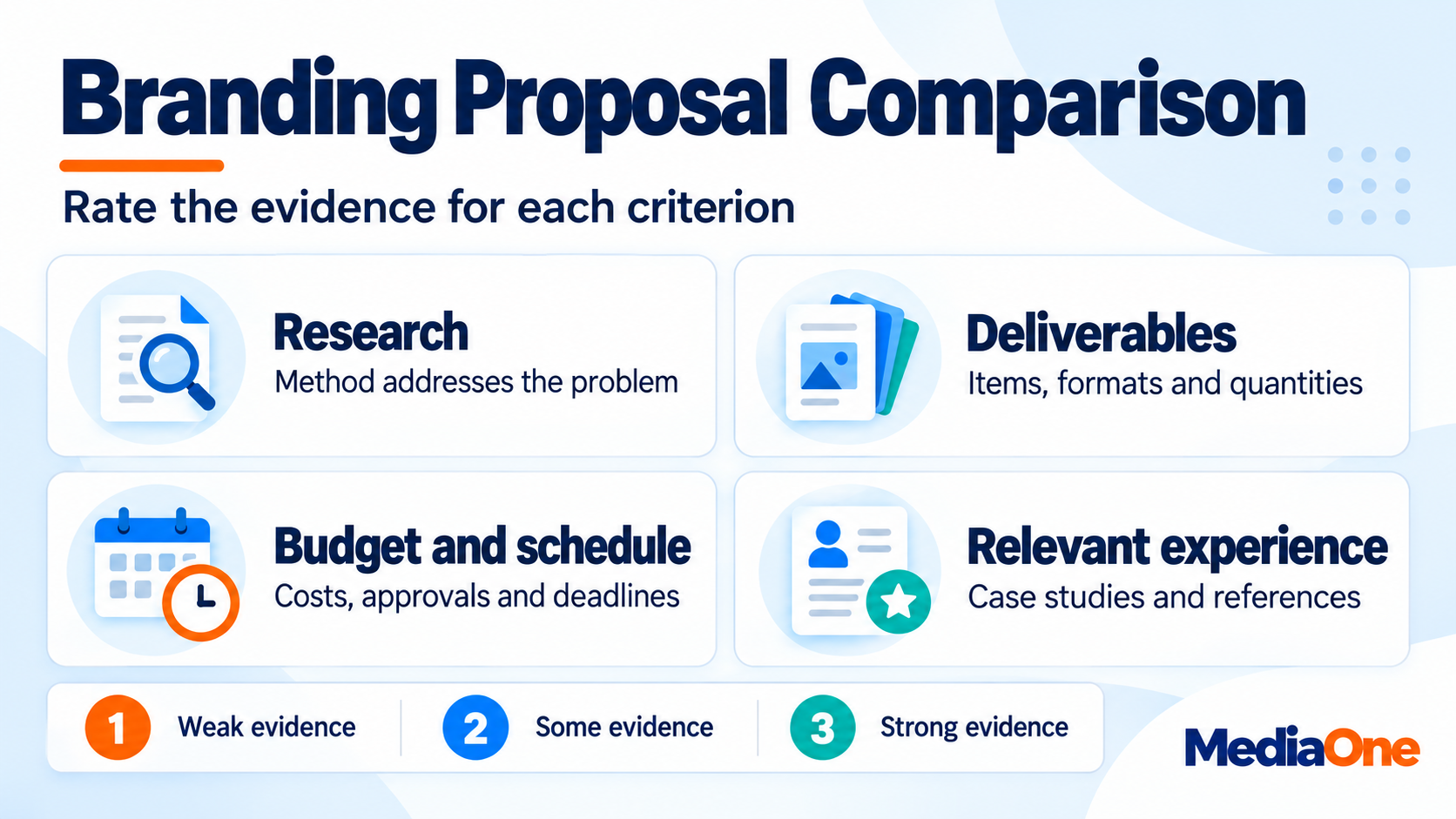
A shared scoring system can make internal discussion more disciplined. The following example uses ratings from 1 to 3, where 1 means weak evidence and 3 means strong evidence.
| Criterion | Example weight | Evidence supporting a high score |
| Research approach | 3 | Activities address the business problem |
| Deliverables | 3 | Quantities, formats and applications are specified |
| Budget and schedule | 2 | Costs and dependencies are explained |
| Relevant experience | 2 | Case studies and references support the proposal |
The weighted score equals each rating multiplied by its weight, with the results added together. These example weights produce a maximum of 30 points.
The score supports discussion; it cannot resolve a serious omission. An unnamed project team or missing essential deliverable needs an answer before appointment, regardless of the total.
Choosing Branding Agencies for Your Business
The final agency conversation should turn the proposal into an agreement the business can manage. Both teams need to understand the first milestone, approval responsibilities and the work included at handover.
MediaOne’s branding services cover strategy, storytelling and design alongside digital communication. A project discussion with MediaOne can begin with the business problem, current materials and available budget, helping establish the work required before a proposal is prepared.
Frequently Asked Questions
Who Owns the Logo After a Branding Project?
Copyright ownership depends on the agreement and applicable rules. IPOS explains copyright ownership, including that commissioned work generally belongs to its creator unless the contract provides otherwise. The agreement should state ownership or usage rights and identify the editable files supplied. Font and stock-image licences may have separate conditions.
Does Registering a Business Name Protect the Brand?
Business registration and trade mark registration serve different purposes. ACRA distinguishes business names from trade marks: registering the name does not provide trade mark protection or secure a matching domain. These are separate tasks to account for when establishing a business identity.
Can a Rebrand Affect Website Search Traffic?
A rebrand involving a new domain or changed page addresses can affect search visibility. Google’s guidance on website moves covers redirects, address mapping and monitoring. The project should assign responsibility for that work before launch. A visual redesign alone does not automatically require changing existing page addresses.
Can an Agency Work With Competing Businesses?
An agency may serve several businesses in the same sector. The agreement can address confidentiality, access to sensitive information and any agreed exclusivity. Industry experience does not automatically mean exclusive service. Any restriction should name the businesses or categories covered and its duration.