| AI Summary
Effective digital marketing strategies help Singapore businesses attract customers, generate qualified leads and increase revenue. A successful strategy begins with measurable goals, audience research and the right marketing channels. Key approaches include SEO, content marketing, paid search, social media and email marketing. Businesses should allocate budgets based on customer acquisition costs, track meaningful performance metrics and follow a 90-day action plan. Regular reviews and compliance with Singapore’s Personal Data Protection Act (PDPA) support sustainable growth. |
Digital marketing strategies work when every channel serves a business goal. Posting regularly, buying advertisements and publishing blog articles may create activity, but none guarantees profitable growth. Singapore businesses need a framework that connects audience needs to customer acquisition, revenue and retention.

The opportunity is substantial. DataReportal’s Digital 2026 Singapore report estimates 5.78 million internet users in late 2025, representing 98.4% of the population. That figure describes internet adoption, not the number of potential customers for every business. The challenge is identifying the right buyers within that connected population.
In this guide, we explain how to set targets, prioritise channels, allocate budgets and measure results. The framework works for small and medium-sized enterprises (SMEs), established consumer brands and business-to-business (B2B) companies.
Key Takeaways
- Start with a commercial objective. Define the leads, sales or repeat purchases you want before choosing platforms.
- Understand your buyers. Use customer records, search data and sales conversations rather than invented personas.
- Prioritise strategically. Choose two or three complementary channels that match your audience, resources and timeline.
- Measure meaningful outcomes. Monitor qualified enquiries, acquisition costs and revenue alongside channel-specific indicators.
- Review and adjust. Establish a 90-day action plan with clear ownership, reporting and criteria for changing direction.
What Are Digital Marketing Strategies?
A digital marketing strategy is a coordinated set of decisions about how a business attracts, converts and retains customers through digital channels. It identifies the audience, commercial objective, channel mix, resources and performance measures. Tactics are the individual actions used to execute those decisions.
For example, a renovation company might aim to generate 40 qualified consultation enquiries monthly. Its strategy could combine local search visibility with renovation-cost guides and targeted search advertising. Publishing an article or launching an advertisement is a tactic. A six-week promotion supporting the same goal is a campaign.
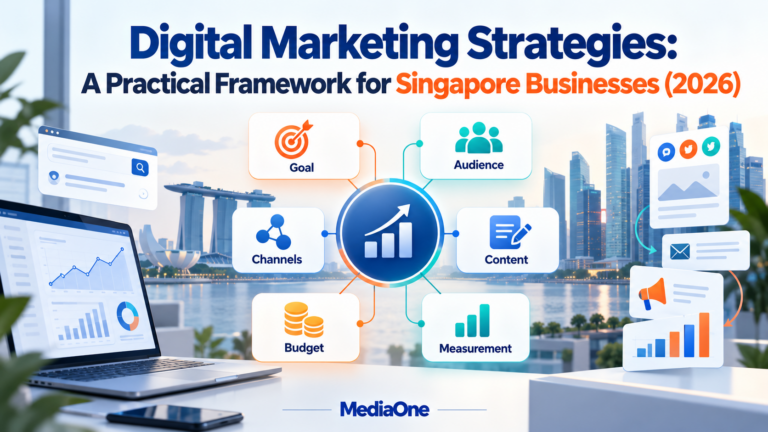
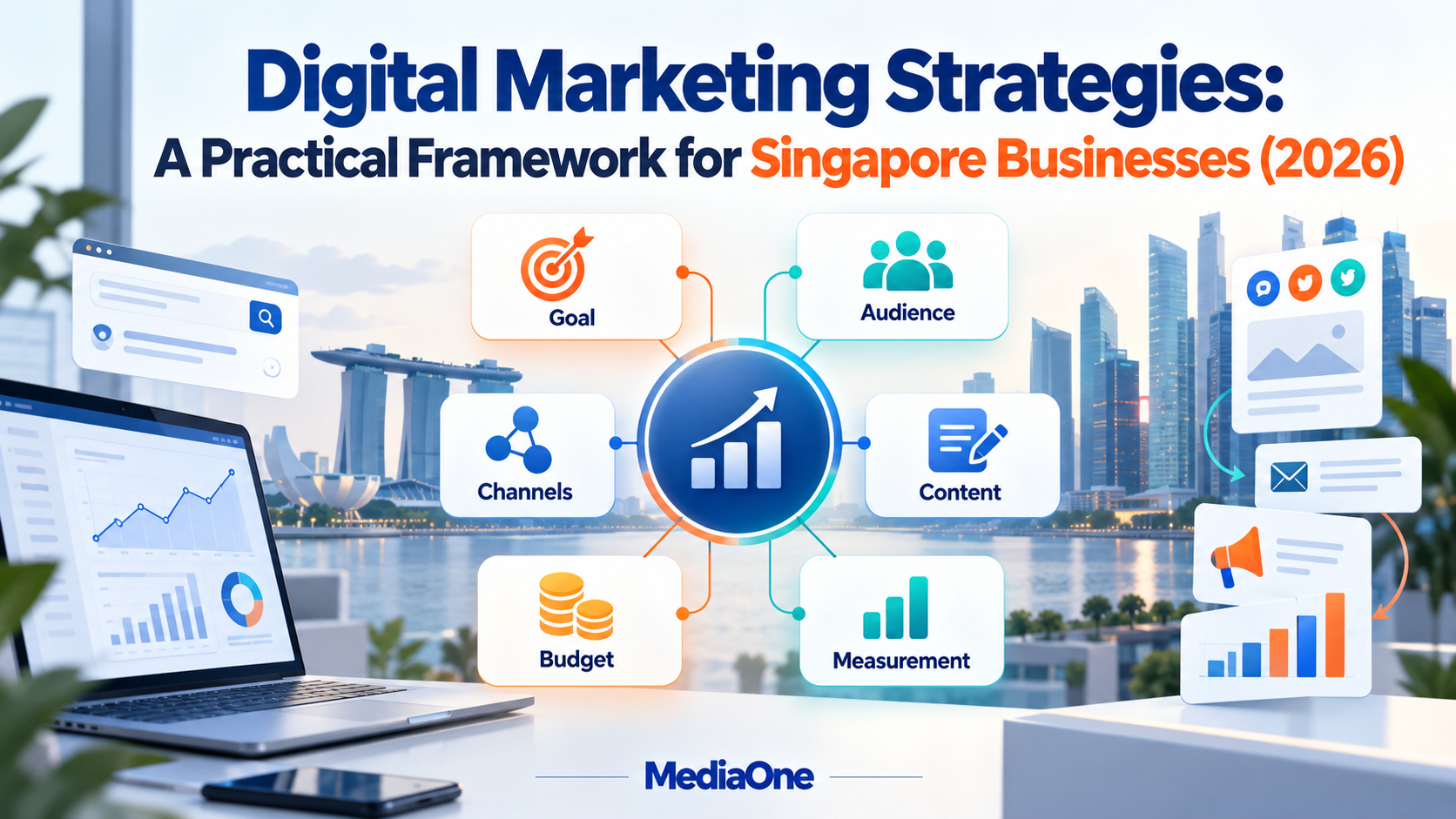
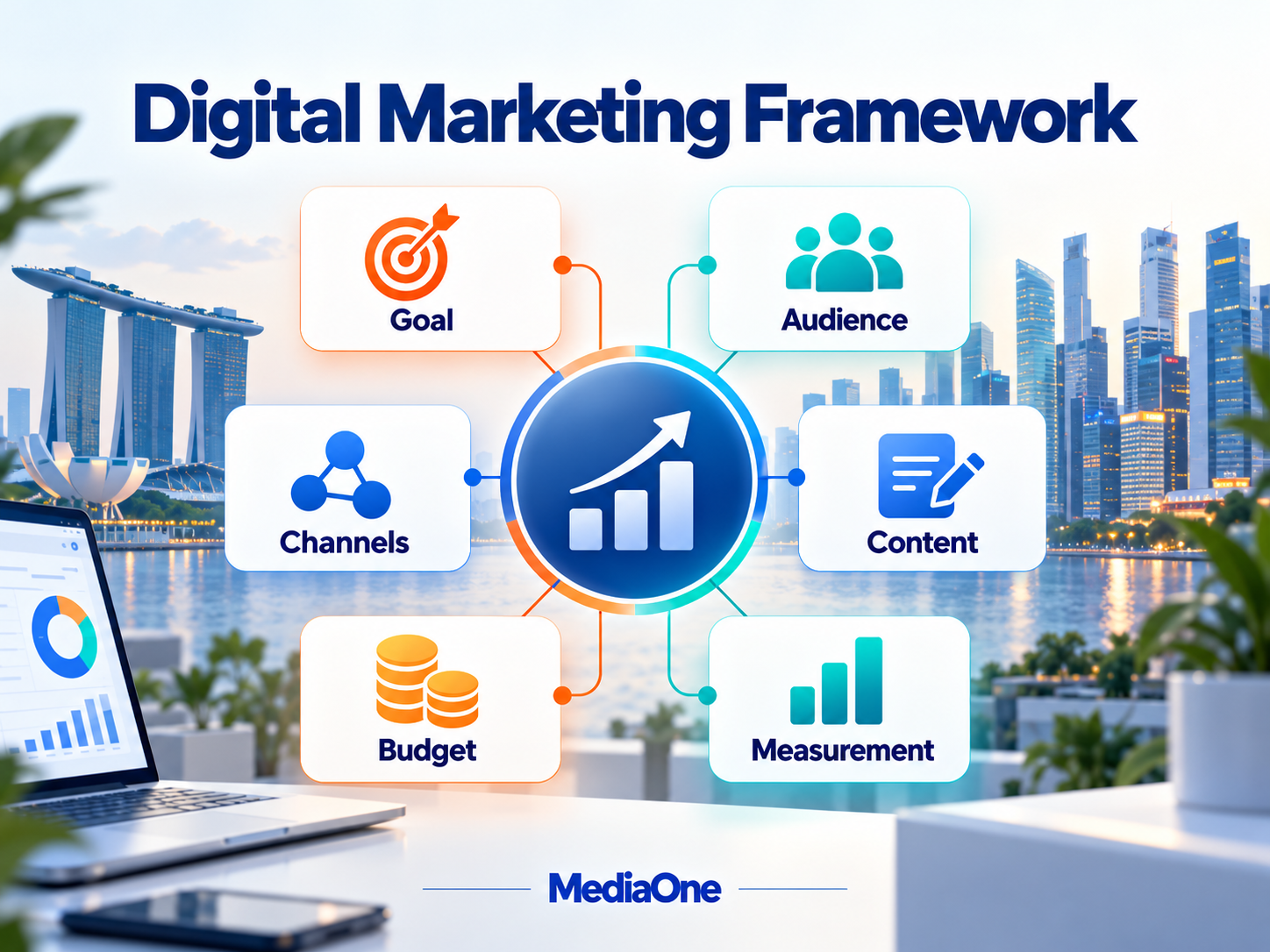
We recommend building every strategy around six connected elements: goal → audience → channels → content → budget → measurement. Insights from measurement should feed back into the next decision. A business should be able to explain why each channel deserves investment and what evidence would justify changing it.
A strategy also differs from an execution plan. The strategy establishes priorities; the plan names the activities, owners and deadlines. Both are necessary, but they answer different questions.
Step 1: Set Measurable Goals and Audit Your Current Performance
Begin with a business outcome, not a preferred platform. A useful objective identifies a baseline, target, deadline and accountable owner. It should also distinguish activity from commercial value.
Consider these illustrative objectives:
- Increase qualified website enquiries from 30 to 45 per month within six months.
- Raise ecommerce revenue from returning customers by 15% within two quarters.
- Reduce cost per qualified lead from S120toS95 within 90 days without lowering lead quality.
These figures are planning examples, not Singapore industry benchmarks. Choose targets using your margins, sales capacity and historical performance. We recommend one primary objective supported by one or two secondary measures.
Audit the assets you already own
Before increasing expenditure, examine your website, search visibility, social accounts, customer database and advertising history. A focused audit should answer:
- Website: Which landing pages attract visitors, and where do enquiries or purchases drop off?
- Search: Which relevant queries generate impressions, visits and commercial actions?
- Social: Which posts bring useful website visits, messages or enquiries rather than reactions alone?
- Email: Is the contact database permission-based, current and segmented?
- Advertising: What have you spent, and which campaigns produced valuable results?
- Measurement: Are forms, purchases, calls and customer records tracked reliably?
Use Google Search Console for organic search queries and Google Analytics 4 (GA4) for website behaviour. Check the quality of recorded events before accepting a report as your baseline. A poorly configured purchase event can distort an entire advertising budget.
The audit should end with three prioritised problems. Fix a broken enquiry form or unclear offer before paying to send more visitors to it.
Step 2: Define Your Audience and Map the Customer Journey
Demographics alone rarely explain why someone buys. We want to know what triggers demand, how buyers evaluate alternatives and what prevents a decision.
Build concise customer profiles from customer relationship management (CRM) records, interviews, sales objections, support enquiries and search terms. For each profile, record the problem, purchase trigger, typical questions, decision criteria and preferred research channels. Treat assumptions as questions to validate, not established facts.
A Singapore renovation firm, for example, might find that some prospects begin researching costs before collecting their Build-To-Order flat keys. Those buyers may value transparent quotations, project photographs and evidence of completed work. Search-led guides and detailed case studies could therefore outperform broad lifestyle posts. This is an illustrative scenario; the business should confirm it against real enquiries.
Match messages to buying stages
| Customer stage | What the buyer needs | Useful content and channels | Main outcome |
| Awareness | An explanation of the problem | Search guides, educational video, social content | Relevant reach |
| Consideration | Help comparing solutions | Comparison pages, case studies, webinars, email | Engaged prospects |
| Decision | Evidence and low-friction next steps | Reviews, demonstrations, targeted search ads | Qualified enquiries or sales |
| Retention | Support and reasons to return | Helpful email, loyalty offers, customer education | Repeat purchases |
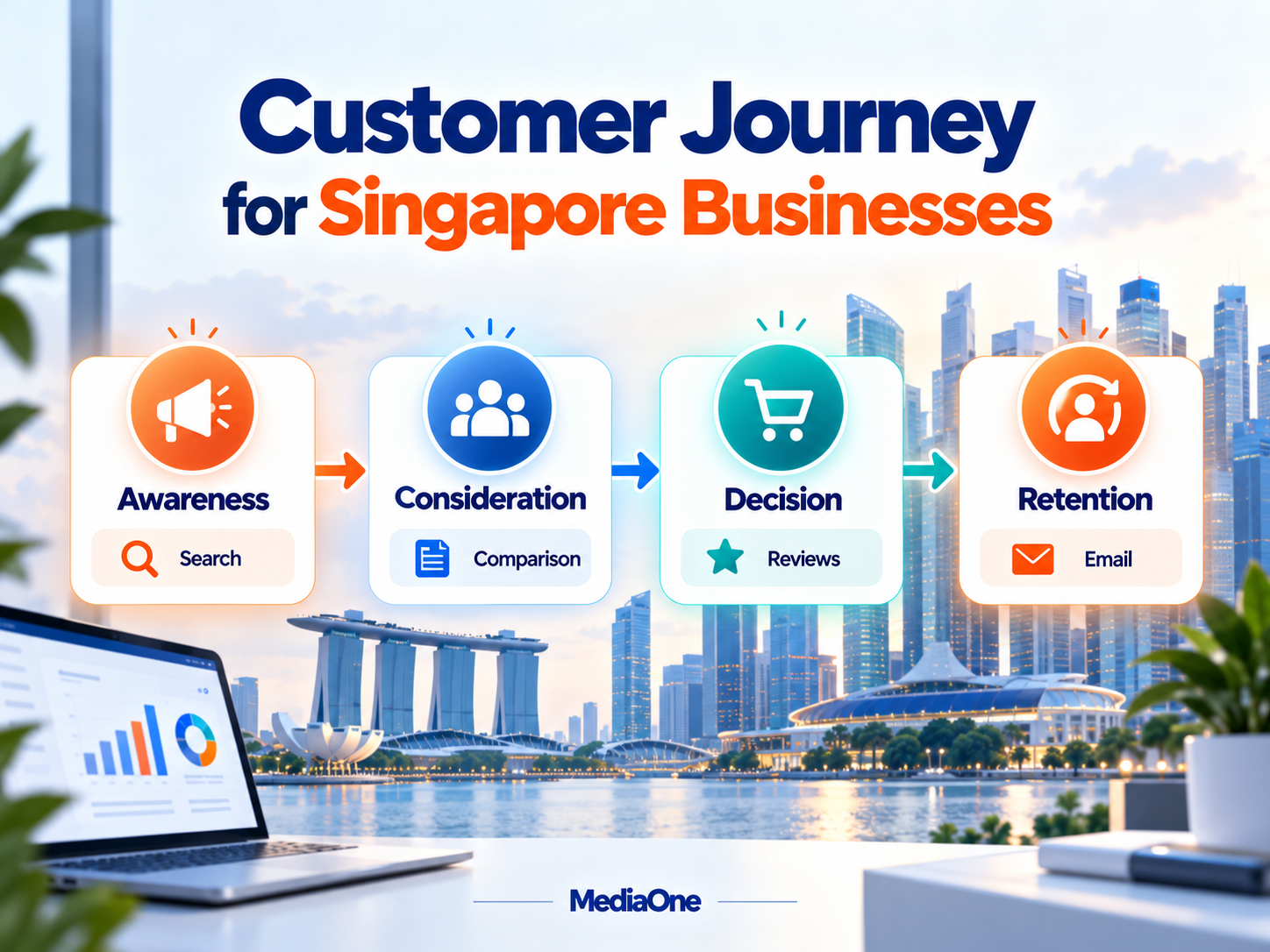
Real journeys are rarely linear. Someone may discover a brand on Instagram, compare providers through Google and return later using a direct website visit. Evaluate channels for their contribution to the journey instead of crediting only the final interaction.
Step 3: Choose Digital Marketing Strategies That Fit Your Business
There is no universally best platform. We choose channels based on buyer intent, time to impact, internal capability and measurable commercial value. The following options solve different problems and often work best together.
Search engine optimisation for sustainable discovery
Search engine optimisation (SEO) helps relevant pages become discoverable in unpaid search results. Start with pages that explain services, answer real buying questions and make the next action clear. Improve internal links, accessibility and technical performance before expanding content production.
For location-based companies, maintain accurate service information and an eligible Google Business Profile. Google says businesses can manage their appearance on Search and Maps at no charge. Reviews and consistent details help prospective customers evaluate a business, although no action guarantees a particular ranking.
Google’s SEO Starter Guide reinforces the importance of helpful content and search accessibility. We recommend SEO when buyers actively research your offering and the business can invest consistently without expecting immediate results.
Content marketing that answers purchase questions
Content marketing supports discovery, consideration and trust. Effective formats include comparison articles, pricing explainers, implementation guides, customer stories and short educational videos. Select topics from actual customer questions rather than publishing simply to meet a schedule.
Give each asset a defined purpose. A guide may introduce the problem; a comparison page can clarify options; a case study can reduce perceived risk. Connect related pages through useful internal links and direct readers to a relevant next step.

AI-assisted search deserves attention in 2026, but avoid promises of guaranteed AI mentions. Google’s guidance on AI search features says established SEO practices remain relevant and no special schema is required solely for AI Overviews or AI Mode. Focus on original expertise, clear explanations and accurate business information.
Paid search for existing customer demand
Paid search can reach people already looking for a service or product. It suits businesses with clear offers, sufficient margins and landing pages capable of converting visitors. Campaign performance still depends on competition, targeting, budget and follow-up quality.
Separate high-intent searches from general informational queries. Group related keywords, exclude irrelevant searches and align each advertisement with its landing page. Check location settings carefully when serving Singapore customers.
Before scaling, configure conversion measurement. Google Ads documentation explains how purchase and lead actions inform reporting and optimisation. Track meaningful actions, not just clicks. We would test search advertising before expanding to broad awareness campaigns when immediate qualified demand is the priority.
Social media marketing for discovery and engagement
Social media is useful for showing products, demonstrating expertise and developing a recognisable brand. Choose platforms based on actual audience behaviour. LinkedIn may suit some B2B decision-makers, while visual demonstrations may be better suited to Instagram or TikTok. Neither platform is automatically right for an entire industry.
Build repeatable content themes around customer questions, proof and useful demonstrations. Test several creative approaches, then examine website enquiries, assisted conversions and customer feedback alongside reach and engagement.
Organic posting and paid social have different functions. Paid campaigns can extend reach, but high engagement does not necessarily mean profitable acquisition. Our social media marketing approach emphasises funnel alignment and measurable outcomes rather than posting frequency alone.
Email marketing for nurturing and retention
Email is valuable after someone has expressed interest or purchased. Segment contacts by lifecycle stage and genuine interests. A new subscriber may need an introductory guide; a recent customer may benefit from onboarding or after-sales advice.
Use clear subject lines, relevant offers and one primary call to action. Test content and frequency without overwhelming subscribers. Judge performance using clicks, enquiries, repeat purchases and attributable revenue. Open rates alone can be misleading because email privacy features affect measurement.
Maintain consent records, provide suitable unsubscribe options and remove invalid addresses. A clean, relevant list is preferable to a large database that customers did not knowingly join.
Influencer partnerships and referral marketing
Creators and referral partners can introduce brands to trusted communities. Evaluate audience relevance, content quality, disclosure practices and the likelihood of attracting genuine buyers. A small specialist creator may be a stronger fit than a large general-interest account.
Agree on deliverables and usage rights before launch. Use appropriate promotion disclosures and assess referral enquiries or sales where measurement is possible. We recommend a limited pilot before committing to a long-term partnership.
Score your channel options before committing
Rate each channel from 1 (weak fit) to 3 (strong fit) against four criteria: audience relevance, commercial intent, affordability and operational readiness. For time sensitivity, award a higher score only when the channel can realistically work within your deadline.
The resulting score is a discussion tool, not an objective forecast. A channel with strong reach but poor unit economics should not win simply because its total looks attractive. Choose a primary acquisition channel, a supporting trust-building channel and, where useful, a retention channel.
Step 4: Allocate Your Budget Using Customer Economics
Start with what an acquired customer is worth. Estimate average revenue, gross margin, repeat purchase potential and the proportion of leads that become customers. Your allowable customer acquisition cost (CAC) must leave sufficient contribution to cover operating costs and profit.
Suppose a firm can sustainably spend S$300 to acquire one new customer. If one in five qualified leads becomes a customer, its planning ceiling is S$60 per qualified lead. The calculation is S$300 multiplied by a 20% close rate. Real spending limits should be adjusted for sales costs, cancellation risk and actual profitability.
A hypothetical monthly testing budget of S$3,000 might allocate S$1,500 to search ads, S$900 to search-focused content and technical improvements, and S$600 to creative testing and measurement. These are illustrative allocations, not recommended minimums or market prices.
Include agency fees, production time, software and landing-page work when calculating total cost. Reserve enough budget to collect useful evidence. Spreading a small amount across six channels may leave every test inconclusive.
Step 5: Build Campaigns Around Conversion, Not Traffic Alone
A campaign needs a relevant offer, a clear destination and a reliable follow-up process. Match the message in each advertisement or article to the landing page it promotes. Visitors should quickly understand the benefit, supporting evidence and action required.
For lead generation, reduce unnecessary form fields and explain what happens after submission. For ecommerce, check product information, delivery details, checkout friction and mobile usability. A faster response to enquiries may improve outcomes without increasing media spend.
Assign ownership across marketing and sales. Agree on what qualifies as a lead, how it enters the CRM and who contacts it. Otherwise, a campaign can report a low cost per enquiry while the business sees little revenue.
We recommend testing one major variable at a time where practical, such as the offer, headline or audience segment. Record the hypothesis and result. Do not call a change successful based on a handful of transactions or a temporary traffic spike.
Step 6: Measure the Metrics That Support Decisions
Every channel needs a principal performance indicator and a review date. Supporting measures help diagnose problems, but they should not replace the business objective.
| Objective | Primary measure | Useful diagnostic measures |
| Lead generation | Cost per qualified lead | Landing-page conversion rate, lead quality |
| Ecommerce sales | Revenue relative to acquisition cost | Checkout completion, average order value |
| Organic discovery | Qualified organic enquiries | Search impressions, relevant landing-page visits |
| Customer retention | Repeat purchase rate | Email clicks, customer engagement |
In GA4, important business actions are called key events. Google distinguishes these from the conversions used in advertising measurement; see its explanation of key events and conversions. Configure reporting carefully when comparing GA4 and Google Ads, because their attribution and counting settings can differ.

Track costs and revenue through the CRM or sales system wherever possible. A platform’s attributed results should be reviewed against actual orders, qualified leads and gross margin. Attribution is an estimate of contribution, not proof that one touchpoint caused a purchase.
Use three review rhythms. Weekly: investigate tracking failures and unusual cost changes. Monthly: compare channel outcomes with targets and test results. Quarterly: reconsider audience assumptions, channel allocation and the overall objective. Avoid stopping a promising channel before enough relevant evidence has accumulated.
Step 7: Put Your Strategy Into a 90-Day Action Plan
Execution improves when teams know what must happen first. We recommend a staged rollout rather than launching every idea together.
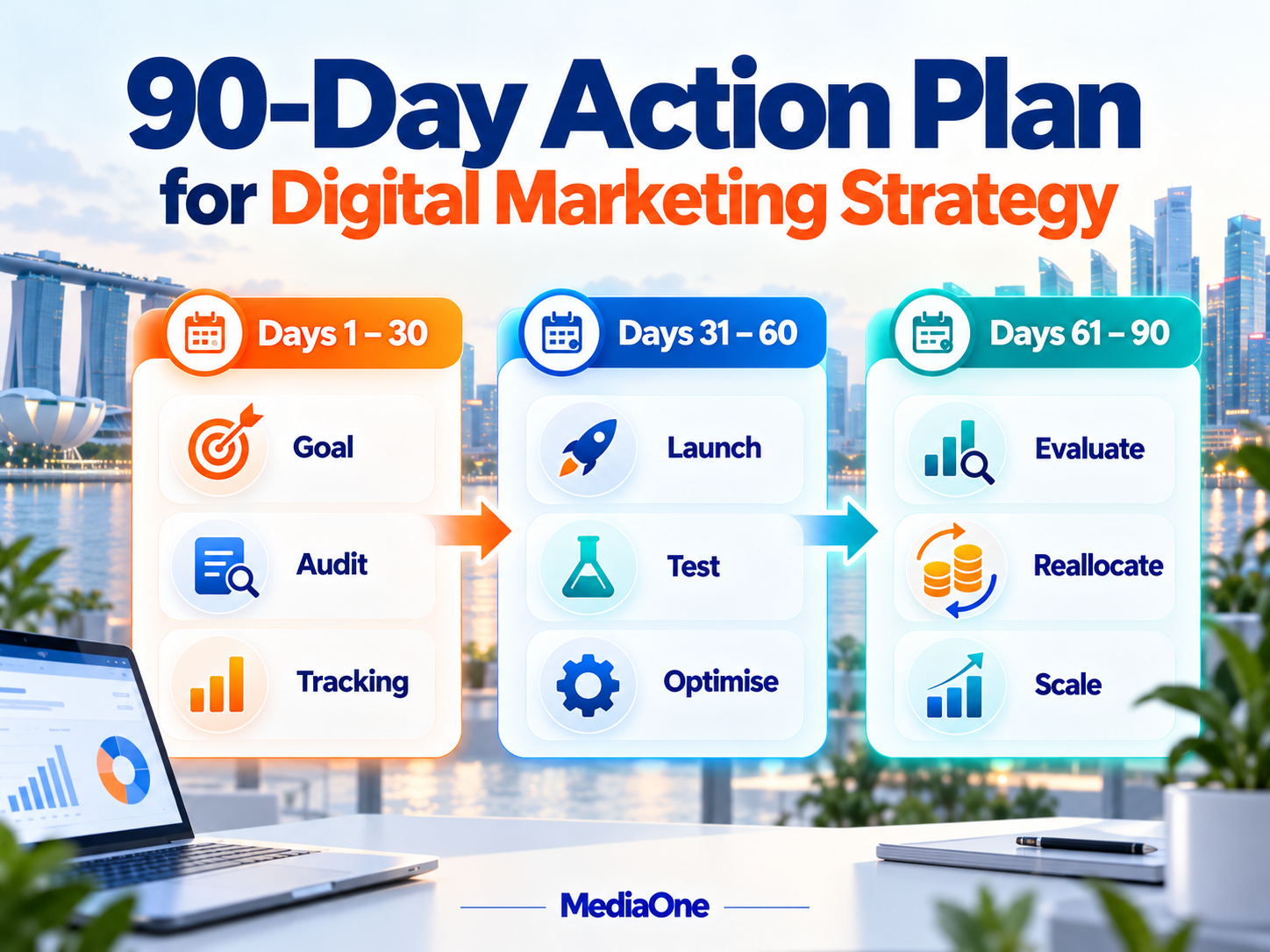
Days 1–30: Establish the foundation. Confirm your goal and audience. Audit landing pages, fix tracking, examine historic leads and select the initial channels. Assign owners and establish a baseline dashboard.
Days 31–60: Launch controlled tests. Publish priority content, activate one acquisition campaign and improve the relevant landing page. Check incoming lead quality with the sales team. Document creative, targeting and offer changes.

Days 61–90: Evaluate and reallocate. Compare spending with qualified leads, sales and customer value. Improve the strongest combinations, repair weak conversion points and stop clearly unsuitable tests. Plan the next quarter using actual evidence.

SEO and complex B2B sales may require longer observation windows. Set realistic expectations for each channel before judging its contribution.
Protect Customer Data While Marketing in Singapore
Privacy compliance belongs in campaign planning. Singapore’s Personal Data Protection Act (PDPA) governs how organisations collect, use and disclose personal data, subject to applicable exceptions. Explain your purposes clearly, use an appropriate legal basis and protect customer information.
The Personal Data Protection Commission’s marketing consent guidance addresses consent for marketing uses. Its Do Not Call guidance explains additional obligations for certain promotional calls and messages to Singapore numbers. The rules include exceptions, including some business-directed communications, so assess the actual campaign rather than assuming every message is treated identically.
Review how customer lists are uploaded to advertising platforms, who can access them and how long data is retained. Privacy safeguards should be part of the launch checklist, not a correction after complaints arrive.
Common Digital Marketing Mistakes to Avoid
- Choosing channels because competitors use them. Verify your own audience and commercial case first.
- Reporting impressions as business growth. Connect awareness indicators to qualified demand and sales.
- Scaling advertisements before fixing conversion problems. Improve forms, offers and follow-up before buying additional traffic.
- Publishing content without a defined purpose. Map topics to customer questions and the next relevant action.
- Changing everything at once. Keep a test record so results remain interpretable.
- Ignoring retention. Existing customers may create valuable repeat business without requiring another first-time acquisition campaign.
A disciplined review process makes it easier to correct them.
Build Digital Marketing Strategies That Deliver Measurable Growth
Successful digital marketing strategies begin with a clear commercial goal and a defensible understanding of the buyer. From there, choose complementary channels, fund them realistically and measure the customer actions that matter. Remove activity that cannot justify its place in the plan.
We recommend starting with one documented goal, a baseline audit and a 90-day testing schedule. If you need support connecting search visibility, advertising and customer acquisition, explore our SEO services and search engine marketing solutions. The aim is a marketing system your team can explain, improve and sustain.
Frequently Asked Questions
What is the difference between a digital marketing strategy and a digital marketing plan?
The strategy explains who you want to reach, which outcomes matter and why specific channels are appropriate. The plan translates those decisions into budgets, deadlines, campaigns and responsibilities.
Which digital marketing strategies are best for small businesses in Singapore?
Start with the channels that match genuine buyer demand and available resources. Local SEO and search advertising may suit service businesses, while social demonstrations and email retention can work for suitable retail brands.
How long does digital marketing take to generate results?
Paid campaigns can produce traffic soon after launch, but profitable results depend on conversion rates and competitive costs. Organic search, content programmes and B2B sales pipelines often need a longer evaluation period.
How much should an SME spend on digital marketing?
There is no universally appropriate percentage or monthly budget. Calculate what you can afford to spend per customer, account for production and management costs, and test a manageable channel mix before scaling.
How often should a digital marketing strategy be reviewed?
Check operational problems weekly, campaign performance monthly and strategic priorities quarterly. Extend the review window when purchase cycles or organic growth make short-term comparisons unreliable.