A customer who sees one price on your website and receives a different price for the same offer from your sales team has to resolve the contradiction before making a purchase. A matching logo cannot fix that problem. The business needs an agreed standard for what it promises and how it delivers.
Brand consistency brings those standards together across marketing, sales and customer service. For Singapore businesses, the challenge often involves keeping several digital channels and customer-facing teams aligned without restricting useful creative work. We recommend treating brand management as a shared operating responsibility, with clear rules and evidence behind every important claim.
A practical quarterly audit will help you identify inconsistencies, prioritise the touchpoints that need attention and give your team the tools to maintain a recognisable identity as your business grows.
Key Takeaways
- Maintain a recognisable brand identity across customer interactions, including the service people receive after purchase.
- Keep your core promise stable while adapting the presentation and tone to each channel.
- Use a quarterly audit to identify the most serious inconsistencies across your busiest touchpoints.
- Develop practical guidelines that explain visual standards, writing conventions and approved claims.
- Give employees, freelancers and agency partners access to the same approved assets and training.
- Track brand recognition, customer feedback and commercial indicators to assess progress over time.
What Brand Consistency Means
Defining Brand Consistency
Brand consistency means presenting a recognisable identity and delivering a reliable promise wherever customers interact with your business. It covers visual design, written communication, marketing messages and the customer experience.
A Singapore retailer might use the same brand colours across its website, marketplace listings and packaging. Its product descriptions, returns information and customer support replies should also communicate the same expectations.
Understanding Brand Identity
Brand identity is the set of deliberate choices that determine how a business presents itself. These choices typically include its name, logo, typography, colour palette, positioning and voice.
Begin by identifying what your business wants customers to associate with it. A clear brand positioning framework helps establish the audience, promise and evidence that should inform subsequent creative decisions.
Protecting distinctive assets also deserves attention. The Intellectual Property Office of Singapore explains that trade marks can distinguish goods and services. Businesses should reserve the registered trade mark symbol for marks with registered status.
The Difference Between Identity and Consistency
Brand identity establishes the standard. Brand consistency describes how reliably people across the organisation apply it.
| Brand Element | Identity Decision | Consistent Application |
|---|---|---|
| Visual design | Approved logo and colours | Correct assets across channels |
| Brand voice | Preferred communication style | Appropriate language across customer interactions |
| Positioning | Intended place in the market | Aligned service descriptions and campaign messages |
| Brand promise | Commitment to customers | Service delivery that reflects the commitment |
A retailer may adopt a reassuring voice in its guidelines while publishing aggressive promotional copy. The identity has already been established, but the advertising fails to reflect it.
A Practical Quarterly Brand Audit
A quarterly audit helps teams identify where brand standards are breaking down and direct resources towards the problems customers are most likely to encounter.
We recommend assessing the customer experience alongside design and copy. An attractive landing page has limited value when its offer contradicts the information customers receive during a sales conversation.
Listing and Scoring Customer Touchpoints
Begin with the five busiest or most commercially important customer touchpoints. These might include the homepage, paid advertisements, social media profiles, sales proposals and support replies.
Score each touchpoint against four criteria using a consistent scale.
| Criterion | 0 Points | 1 Point | 2 Points |
|---|---|---|---|
| Visual identity | Missing or incorrect assets | Partial or outdated application | Correct approved assets |
| Brand voice | Contradicts the agreed voice | Inconsistent application | Matches the voice and context |
| Core message | Incorrect or conflicting promise | Incomplete or unclear message | Accurate, aligned message |
| Customer experience | Fails to deliver the promise | Inconsistent delivery | Reflects the stated commitment |
Each touchpoint can receive a maximum of eight points. Review the actual materials customers encounter, including current screenshots, published copy and relevant service records.
Where a channel contains several materials, examine a representative sample. Record the evidence behind each score so another team member can repeat the assessment.
Ranking Gaps by Customer Exposure
A minor issue on a rarely visited page may deserve less attention than repeated inconsistencies in a high-volume sales process. To prioritise fixes, use the following calculation.
Priority score = (8 − total consistency score) × exposure weight
Assign an exposure weight from one to three based on customer reach and commercial importance:
- 1: Low-exposure or infrequently used touchpoint.
- 2: Moderate exposure or commercial importance.
- 3: High exposure or direct influence on purchasing decisions.
The weighting system is a suggested internal planning method. Use website analytics, enquiry volumes and customer contact records to support the classifications.
| Touchpoint | Consistency Score | Exposure Weight | Priority Score |
|---|---|---|---|
| Website homepage | 4/8 | 3 | 12 |
| Social media profiles | 6/8 | 3 | 6 |
| Sales proposals | 5/8 | 3 | 9 |
| Support emails | 7/8 | 2 | 2 |
| Printed brochure | 3/8 | 1 | 5 |
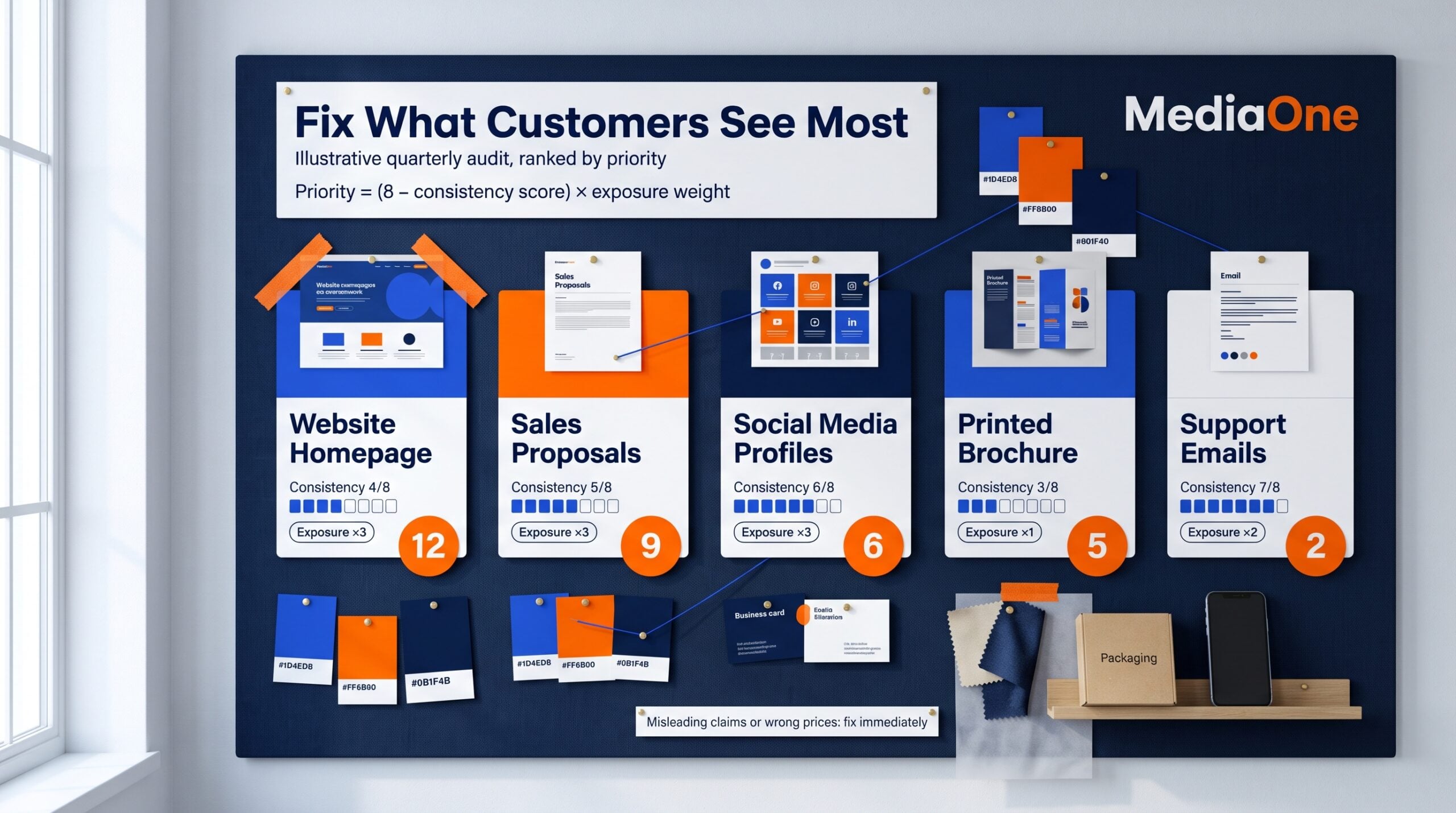
In this illustrative audit, the homepage receives attention first, followed by sales proposals. The brochure has the lowest consistency score, but fewer customers encounter it.
Misleading claims, incorrect prices and serious service failures should receive immediate attention regardless of their numerical priority.
Turning Audit Findings Into Actions
Assign each issue an owner and deadline. Repeat the audit after approximately 90 days using the same criteria. Compare individual scores alongside the overall result and investigate recurring problems before expanding the review to other channels.
The Benefits of Brand Consistency
Improving Clarity and Brand Recognition
Repeated visual and verbal cues can help customers identify a business across different environments. A distinctive colour combination, familiar product name or characteristic writing style may make its communications easier to recognise.
A local example is the Singapore Government Design System, which provides shared design foundations and reusable components for government digital services. Individual services can address different needs while drawing from common interface standards.
Review recognition through customer interviews or short surveys. Ask respondents to identify the business from selected materials and explain which features helped them recognise it.
Supporting Customer Trust and Loyalty
Customers form expectations from marketing messages and assess those expectations through experience. Repeated delivery of the stated promise can give them confidence when considering another purchase.
A home services company that communicates appointment arrangements clearly should apply that standard during booking, service delivery and follow-up. If delays occur, its staff need an agreed process for communicating changes.
Monitor complaints about unclear terms, unexpected charges and conflicting advice alongside customer retention. These records can reveal problems that a visual brand audit would miss.
Customer loyalty also depends on product quality, pricing and service performance. Consistent communication supports those factors, but it cannot compensate for a poor experience.
Reducing Rework and Commercial Friction
Shared templates and approved messaging can reduce the time teams spend resolving avoidable differences. Designers know which assets to use, while sales staff have a common reference for describing the offer.
A consistent brand may also make it easier for prospects to compare services and understand what comes next. At MediaOne, we consider the handover from discovery to enquiry part of the brand experience, since a promise made in an advertisement needs to hold up on the website and during sales follow-up.
Track revision requests, repeated sales objections and enquiries caused by unclear information. These indicators help identify improvements worth making without assuming every change in conversion rates results from branding.
Developing Your Brand Voice and Guidelines
Creating a Distinctive Brand Voice
Brand voice is the personality expressed through a company’s words. It should reflect the people behind the business, its values and the expectations of its customers.
Choose a small number of voice traits and define what each looks like in practice. A business that wants to sound direct and approachable could use plain language, explain technical terms and avoid exaggerated claims.
| Voice Principle | Preferred Approach | Avoid |
|---|---|---|
| Direct | ‘Your order will arrive on Friday.’ | Vague delivery promises |
| Approachable | ‘Our team can help you set this up.’ | Unnecessary technical jargon |
| Evidence-led | ‘Here is what the campaign data shows.’ | Unsupported performance claims |
| Respectful | ‘We understand your concern and will investigate.’ | Dismissive complaint responses |
A distinctive voice develops through experience. Invite customer-facing staff and technical specialists to contribute expressions, explanations and examples that reflect how they actually communicate.
We prefer evidence to exaggerated language, particularly when discussing results. Specific observations and the conditions behind them give readers a clearer understanding of what a business can deliver.
Building Practical Brand Guidelines
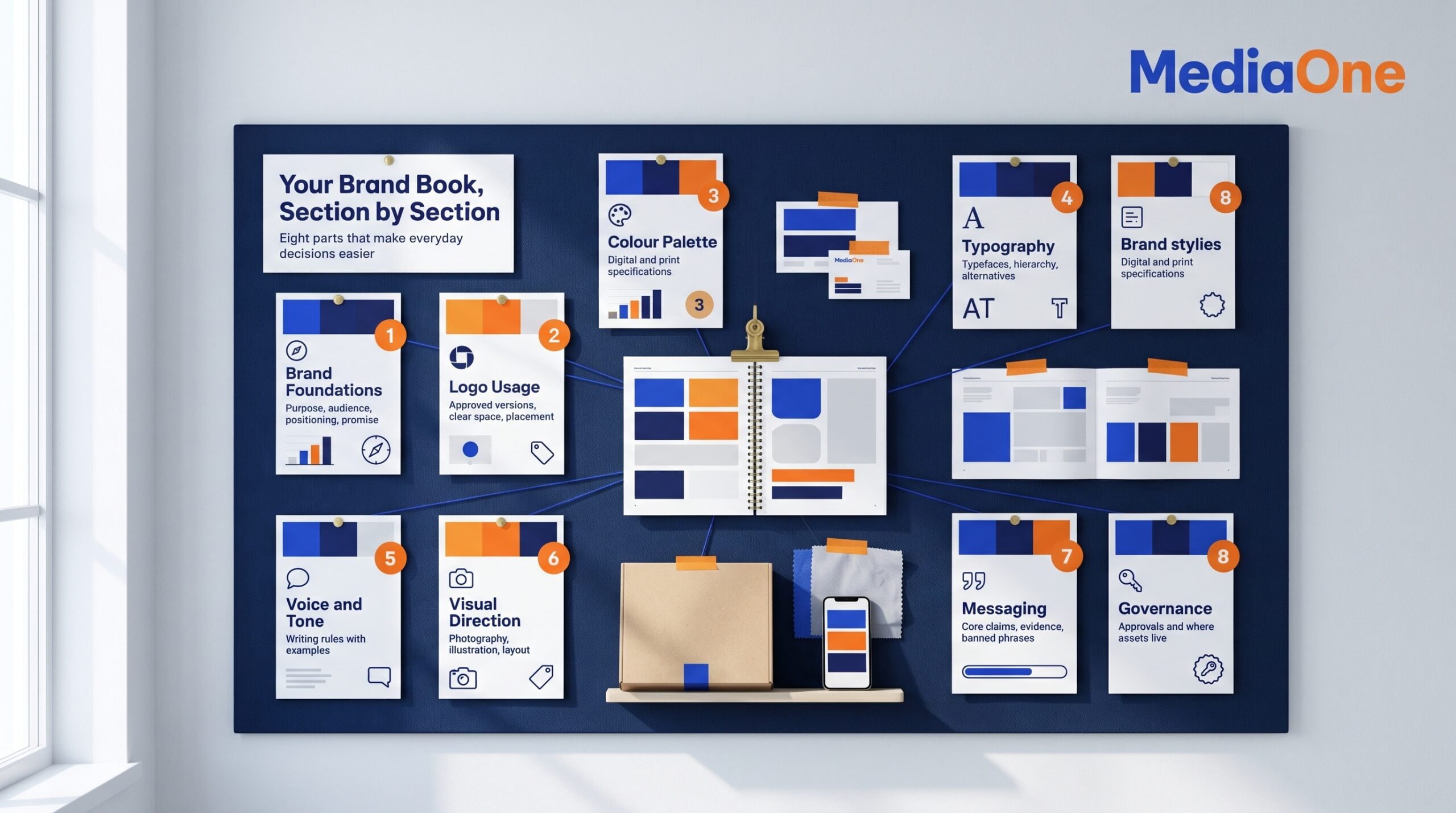
Document the rules in a format that employees and external partners can access easily. A useful brand style guide for Singapore businesses should make everyday creative decisions easier.
| Guideline Section | What to Document |
|---|---|
| Brand foundations | Purpose, audience, positioning and promise |
| Logo usage | Approved versions, clear space and placement |
| Colour palette | Digital and print colour specifications |
| Typography | Approved typefaces, hierarchy and alternatives |
| Voice and tone | Writing rules and examples for different situations |
| Visual direction | Photography, illustration and layout preferences |
| Messaging | Core claims, evidence and prohibited expressions |
| Governance | Approval responsibilities and asset locations |
Include approved and rejected examples for important rules. A designer should be able to identify suitable logo placement without requesting approval for every layout.
For digital materials, check readability alongside visual consistency. The WCAG 2.2 minimum contrast criterionspecifies a contrast ratio of at least 4.5:1 for ordinary text and 3:1 for large text at Level AA, subject to exceptions such as logotypes.
Document accessible colour combinations so teams can apply them consistently across website pages and digital communications.
Maintaining an Approved Claims Library
A claims library records the factual statements your business can support. It may include qualifications, certifications, awards, service commitments and documented customer results.
For each claim, record its approved wording, supporting evidence, responsible owner and any relevant expiry date. Customer testimonials should retain their original meaning and have permission for the intended use.
The Singapore Code of Advertising Practice establishes honesty and truthfulness as core advertising principles. Use these standards when reviewing promotional messages and comparative statements.
An award can strengthen credibility when its category and year are relevant to the customer’s decision. A campaign result also needs context, including the measurement period and scope of work. These details allow the evidence to carry the message without an exaggerated headline.
Training Teams to Maintain Brand Standards
Onboarding Employees and External Partners
Introduce brand standards during onboarding for new employees, freelancers and agency partners. Explain the business promise and show how it appears in actual work.
Give contributors access to approved templates, the claims library and the current guidelines. Clarify which decisions they can make independently and which require review.
Sales staff may adapt a proposal to a customer’s needs while keeping service descriptions and pricing conditions accurate. Designers may adjust a campaign layout while retaining approved identity elements.
Using Examples to Explain Brand Rules
| Material | Assessment | Reason |
|---|---|---|
| ‘Our team will respond within one working day.’ | Approved if supported | Communicates a specific service commitment |
| ‘Guaranteed best prices, act now!’ | Rejected | Uses pressure and an unsupported comparison |
| Logo stretched to fill an advertisement | Rejected | Changes the approved logo proportions |
| Shortened social caption with the same offer | Approved | Adapts the format while retaining the message |
Use examples from your own published work where possible. Discuss why a decision fits the brand so contributors can apply the same reasoning to future tasks.
Providing a Quick Reference Card
A short reference card makes key standards accessible during everyday production. Keep it alongside shared templates and include instructions such as these:
- Use the current approved logo files without altering their proportions.
- Check promotional and performance claims against the evidence library.
- Keep complaint responses calm and specific.
- Adapt trending formats only when they suit the brand’s identity.
- Refer exceptions to the designated brand owner.
Giving Feedback and Refreshing Training
When guidelines change, run a short refresher session showing the previous and updated materials. Explain the business reason for the change and ask contributors to revise a representative example.
Give feedback against the written standard. For a headline using an unsupported superlative, identify the claim that needs evidence and suggest a more precise alternative.
Keep individual corrections constructive and address repeated problems through shared training. Recurring inconsistencies may indicate that the instructions are unclear or that approved assets are difficult to find.
Maintaining Consistency Across Channels
Establishing a Consistent Social Media Presence
Social media accounts should use recognisable identity elements, current business information and language suited to their audiences. A shared content calendar can help coordinate campaign messages and publication dates.
Use channel-specific templates based on the same visual standards. Profile images should remain recognisable where practical, while banners and biographies can accommodate each platform’s format and audience needs.
Set a publication frequency the team can maintain and review audience response. Avoid repeating reminders purely to achieve an arbitrary viewing target.
Adapting Communication to Different Platforms
A complaint received through WhatsApp requires a different tone from a promotional LinkedIn post. Both interactions should reflect the company’s values and provide accurate information.
| Channel | Consistent Elements | Permitted Adaptations |
|---|---|---|
| Website | Positioning, service claims and visual identity | Detailed explanations and page layouts |
| Core message and professional voice | Industry commentary and longer posts | |
| Recognisable visual assets and positioning | Short captions and creative formats | |
| Accurate information and service standards | Conversational wording | |
| Brand voice and current offers | Subject lines and content length | |
| Sales materials | Approved claims and commercial terms | Examples relevant to individual prospects |
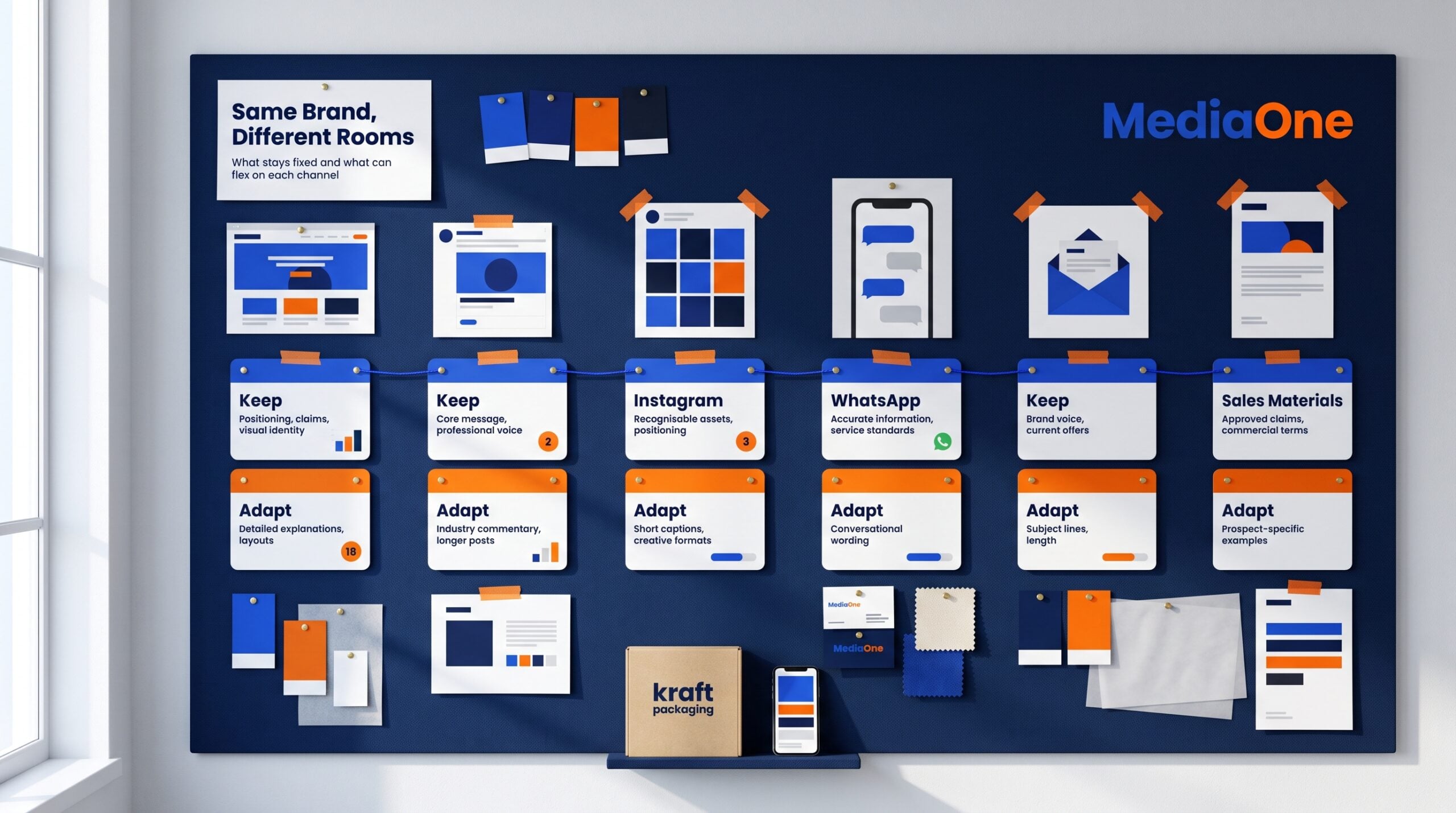
For businesses serving Singapore and neighbouring markets, document approved translations of service names, product details and important terms. Review translated content in context so local expressions do not change the underlying promise.
A broader online branding approach for Singapore SMEs can help coordinate these decisions as the business adds channels.
Organising and Updating Brand Assets
Maintain one shared location for approved logos, templates, product information and messaging documents. Assign an owner who controls updates and removes superseded versions from everyday use.
Use descriptive file names, version numbers and approval dates. Separate editable working files from approved assets so contributors can identify the correct material without opening several versions.
When a campaign ends or an offer changes, update every affected channel. Record the locations that require attention, including automated emails, marketplace listings and printed materials.
Identifying and Resolving Brand Inconsistencies
Recognising Common Warning Signs
Brand inconsistencies often appear in customer questions and internal production problems before they become visible in performance reports.
| Symptom | Possible Cause | Where to Check |
|---|---|---|
| Customers struggle to recognise campaign materials | Unstable visual identity | Advertisements and social templates |
| Sales explanations differ between employees | No agreed messaging reference | Sales decks and onboarding materials |
| Support replies contradict marketing promises | Unclear service standards | Help-centre content and response templates |
| Prices differ across purchase channels | Poor offer management | Website, email and marketplace listings |
| Marketing materials require repeated revisions | Outdated or unclear guidelines | Asset library and approval process |
Understanding the Commercial and Regulatory Risks
Conflicting offers can create uncertainty during purchasing decisions. Customers who need clarification may delay an enquiry or contact support for information that should have been clear from the start.
In Singapore, the Guidelines on Price Transparency recommend including unavoidable charges in the headline price. If these charges cannot reasonably be calculated in advance, their existence should be disclosed clearly alongside the price.
Investigate potential commercial effects through qualified enquiry rates, sales objections and complaint records. Consider changes in traffic sources, seasonality and pricing before attributing performance changes to branding alone.
Fixing High-Priority Inconsistencies First
Return to the quarterly audit and address serious issues before cosmetic improvements. Assign each correction to the team responsible for the underlying information or customer experience.
If several channels display an outdated offer, update the central source before revising individual materials. This reduces the chance of the same inconsistency reappearing.
Track the original audit score, the changes made and the result at the next review. A recurring problem should prompt an examination of the approval process or ownership arrangements.
Conclusion
Brand consistency develops through everyday decisions about how a business communicates and delivers its promises. A documented identity provides the foundation, while shared standards and clear ownership help teams maintain it across customer interactions.
Begin by auditing your highest-exposure touchpoints. Use the results to prioritise improvements, assign responsibility and establish a quarterly review schedule.
Keep the personality behind the business visible through its people, professional experience and evidence. A brand becomes easier to recognise when customers repeatedly encounter the same values in its communication and service.
Frequently Asked Questions
How is brand consistency different from brand identity?
Brand identity defines the visual and verbal choices a business makes about its presentation, including its logo, positioning and voice. Brand consistency describes how reliably the organisation applies those choices across customer interactions. A business may have a well-developed identity but still communicate conflicting messages through individual channels.
How often should a business review its brand guidelines?
An annual review is a practical starting point, supported by a shorter consistency audit each quarter. Review the guidelines sooner following a rebrand, significant product change or expansion into a new market. If teams repeatedly encounter the same problem, check the relevant instructions and training before adding further rules.
No. Social media formats can vary according to the platform, audience and purpose of the content. Retain recognisable visual elements, an appropriate voice and accurate core messages while adapting layouts and copy length. This gives creative teams room to produce relevant content without weakening the brand’s identity.
Can a small business maintain brand consistency without a designer?
Yes. Start with approved logo files, a limited colour palette, agreed typography and a short voice guide. Use reusable templates for social posts, proposals and customer communications. Assign one person to maintain the materials and review exceptions, seeking professional design support when more complex changes are needed.
How can businesses measure brand consistency?
Score customer touchpoints from zero to two across visual identity, brand voice, core messaging and customer experience. Review the scores quarterly using the same criteria. Combine the audit results with customer feedback, recognition surveys and sales objections to identify patterns and assess the practical effects of improvements.