Most sales teams that adopt AI for lead generation end up with a tool they barely use. The usual cause is not the software. The team bought a platform before deciding which stage of its lead generation process was actually broken.
This guide splits the lead cycle into four stages – Find, Verify, Qualify and Reach out – and shows how to score each one before comparing products. It also covers the sender-side risks that erode deliverability, and the consent checks Singapore teams owe under the Personal Data Protection Act.
For the wider picture of the funnel these tools feed, MediaOne’s lead generation guide for small businesses covers the whole process end to end.
Key Takeaways
- Start with the bottleneck, not the tool. Score each stage (Find, Verify, Qualify, Reach out) on weekly manual hours and error rates.
- Automate the most painful stage first for the fastest return on effort.
- Check plan limits, not just list prices. Contact caps, monthly sends and seat counts drive real cost. Re-verify them on each provider’s pricing page.
- Verify before you send. Email verification protects deliverability.
- Measure qualified-lead conversion before and after to see whether AI-powered lead scoring works for your sales team.
- Confirm consent and opt-out handling under Singapore’s PDPA before automated outreach goes live.
Why AI Lead Generation Matters and What It Actually Means
AI lead generation uses machine learning and automation to handle parts of the lead cycle that once took a sales team many hours each week. Those parts include finding prospects, checking contact details, ranking prospects and sending outreach.
Tools range from enrichment databases and email verifiers to predictive scoring engines and sequencing platforms that run follow-ups without a rep touching each message. Any business can apply these tools, but the gains depend on which stage they cover. Used well, they help sales teams spend less time on manual research and more time on conversations that close deals. A B2B lead is only useful once a verified email address is attached to it.
The useful question is which stage a tool removes from manual work, not whether it uses artificial intelligence. Splitting the process into four stages gives a clearer picture:
- Find: discovering accounts and contacts.
- Verify: confirming that each email address is valid and deliverable.
- Qualify: ranking prospects by fit and intent.
- Reach out: sending and following up, including through LinkedIn and other social channels, across personalised campaigns.
Each stage has different inputs, different failure modes and often a different tool category. Adoption is moving fast – Saleshandy, which sells its own platform, says top-performing teams have ‘quietly replaced 60-70% of their lead-gen workflow with AI’. That figure comes from a vendor with a commercial interest and is not independently verified, so read it as a sign of direction, not a benchmark. Your own hours saved per stage are the number that matters. Track them monthly.
Stage-Fit Matrix: how to score each stage
Score each stage from 1 to 5 on two measures: weekly manual hours and error rate. Multiply the two scores to get a priority figure.
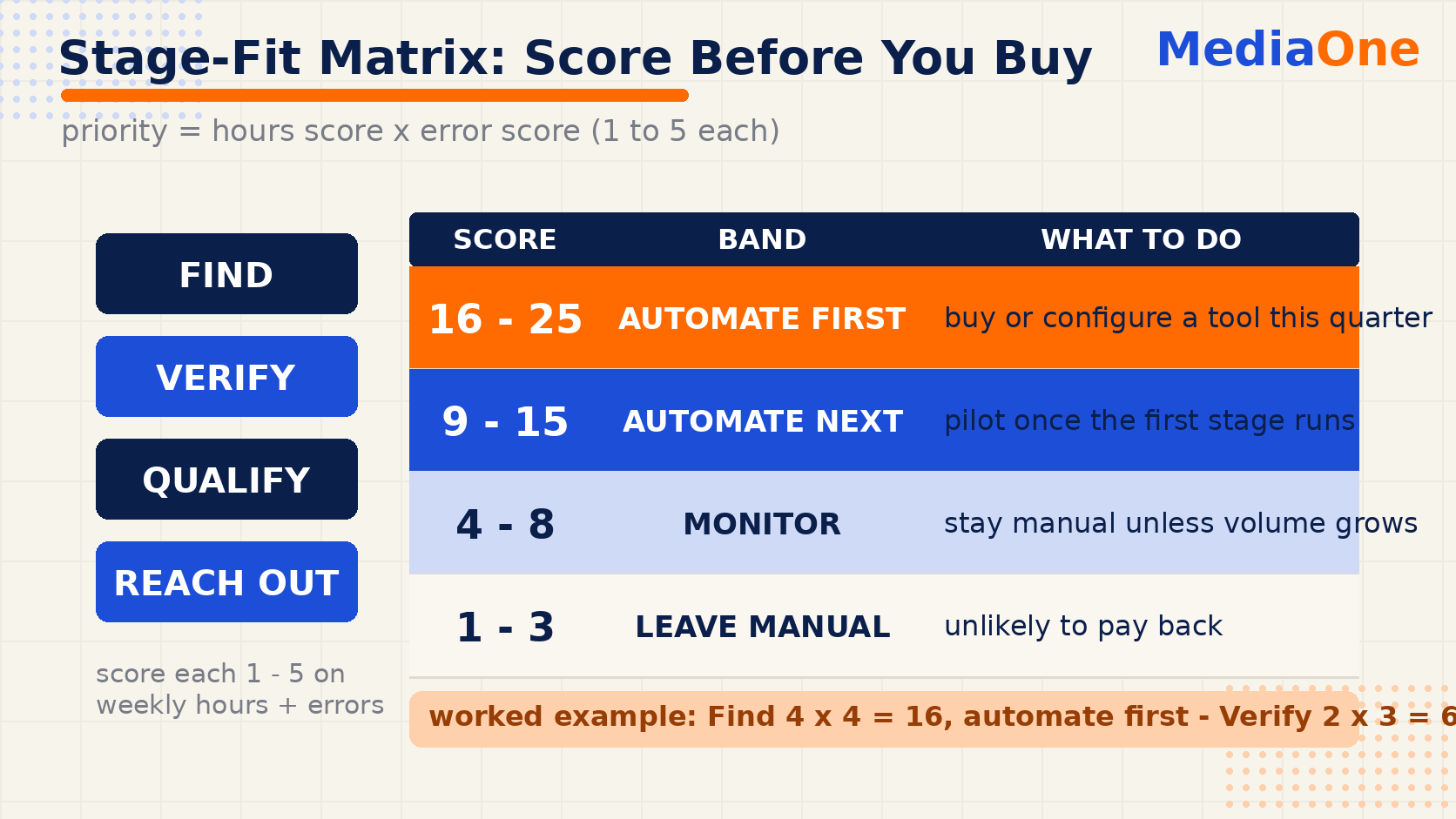
Figure 2: The Stage-Fit Matrix: score first, buy second
Worked example: a three-person B2B team scores Find at 4 hours a week and an error rate of 4, giving 16. Verify scores 2 hours and an error rate of 3, giving 6. The team automates Find first, and monitors Verify.
Speed, volume and time saved for sales teams
The clearest gain is time. Saleshandy says its integrated workflow lets users save 2-3 hours every day. This is a vendor figure, not an independent benchmark, so measure your own hours before and after. Freed hours only add volume if they go back into outreach rather than into managing the tool.
Better contact quality and deliverability
Speed means little if contacts bounce. Mailbox providers track bounce rates, and a list that bounces heavily damages the sending domain – our guide to email bounce rate benchmarks explains the thresholds and the fixes. Verification is the stage that protects you here, and it is covered in detail below.
Personalisation at scale and its effect on revenue
Personalisation is the most cited benefit and the easiest to overstate. AI-BEES reports that personalised interactions boost revenue by 10% to 15%, but the source does not state its methodology, so treat it as directional. Personalisation lifts results only when the research behind it is accurate. Generic lines with a first name added tend to underperform and add sending risk. Some teams use ChatGPT to draft first-pass research notes, but every claim still needs checking before a prospect sees it.
Automation can also hurt where relationships drive the sale. For long, high-value deals, a rep’s own research may outperform any template. Judge AI by the stages it touches, not by the whole cycle.
Prospecting and Contact Discovery With AI
Many lead generation budgets leak at the prospecting stage. Teams either buy static contact lists that go stale within months, or spend hours researching names by hand. AI tools can help, but only once you know which stage of the sales process you are automating. Our view is that verification should come before prospecting when you work with Singapore lists, because a list that bounces or breaks privacy rules wastes every hour spent on it.
How AI finds and enriches contacts
AI prospecting tools work in two passes. The first finds companies and people who match your ideal customer profile, using filters such as industry, headcount and location. The second enriches each record with job titles, work email addresses and technographics (the software a company already uses). Some platforms add intent signals, such as recent hiring or website visits, to rank who to contact first. Many also surface people on LinkedIn, so sales and content campaigns can be personalised from the start. Their machine learning models improve matching as more records are verified.
Vendors make strong claims – the Saleshandy figure quoted above is one example, and it is not an independent benchmark. Measure your own workflow instead. Score the Find stage before buying anything:
- Record the hours per week your team spends building and enriching lists.
- Record the percentage of contacts that bounce, reach the wrong person or are already outdated.
- Mark Find as a priority only if both numbers are high.
If list quality is fine but outreach is slow, a prospecting tool will not fix the problem. A free trial can show whether a tool solves your specific bottleneck before you commit.
Real-time email verification and why it matters for deliverability
Finding an address is not the same as being able to email it. Verification checks whether a mailbox is likely to exist and accept mail before you send. High bounce rates signal poor list hygiene to mailbox providers, which can push your messages to spam across your whole domain.
Some platforms verify at the point of discovery. Saleshandy’s lead finder, for example, is described as verifying emails in real time with a 98% deliverability rate – a vendor claim, so ask how it was calculated, then test it on a sample of your own list.
Automate verification first when your Find stage produces large volumes.
Compliance and data-handling considerations for Singapore businesses
Contact data in Singapore is personal data. The Personal Data Protection Act (PDPA) governs how organisations collect, use and disclose it, and the Personal Data Protection Commission (PDPC) administers it. Scraped or purchased lists used for marketing need the same care as any other personal data. The PDPA sets consent and withdrawal obligations. For telephone outreach, the Do Not Call Registry applies: consumers who register their Singapore telephone numbers must not receive telemarketing messages by phone call, SMS or fax. Email marketing relies on the consent obligation instead, and every email needs a working opt-out.
Before automated outreach, check three things:
- Source: Can you explain where each contact came from and whether that use is permitted?
- Consent and opt-out: Does your sequence include a working unsubscribe that honours removals across all sends?
- Retention: Does the vendor delete or restrict data you no longer need?
Ask vendors where data is stored and how they handle deletion requests, and get the answers in writing. This is a due-diligence checklist, not legal advice – our overview of digital marketing laws in Singapore covers the wider rules. Have a legal professional review your consent and marketing practices before you scale outreach.
How predictive lead scoring works
Predictive lead scoring gives each contact a number estimating how likely it is to become a customer. A machine learning model learns from past wins and losses which attributes and behaviours tend to come before a closed deal. It then applies that pattern to new leads. The output is usually a score, a rank or a band such as hot, warm or cold. 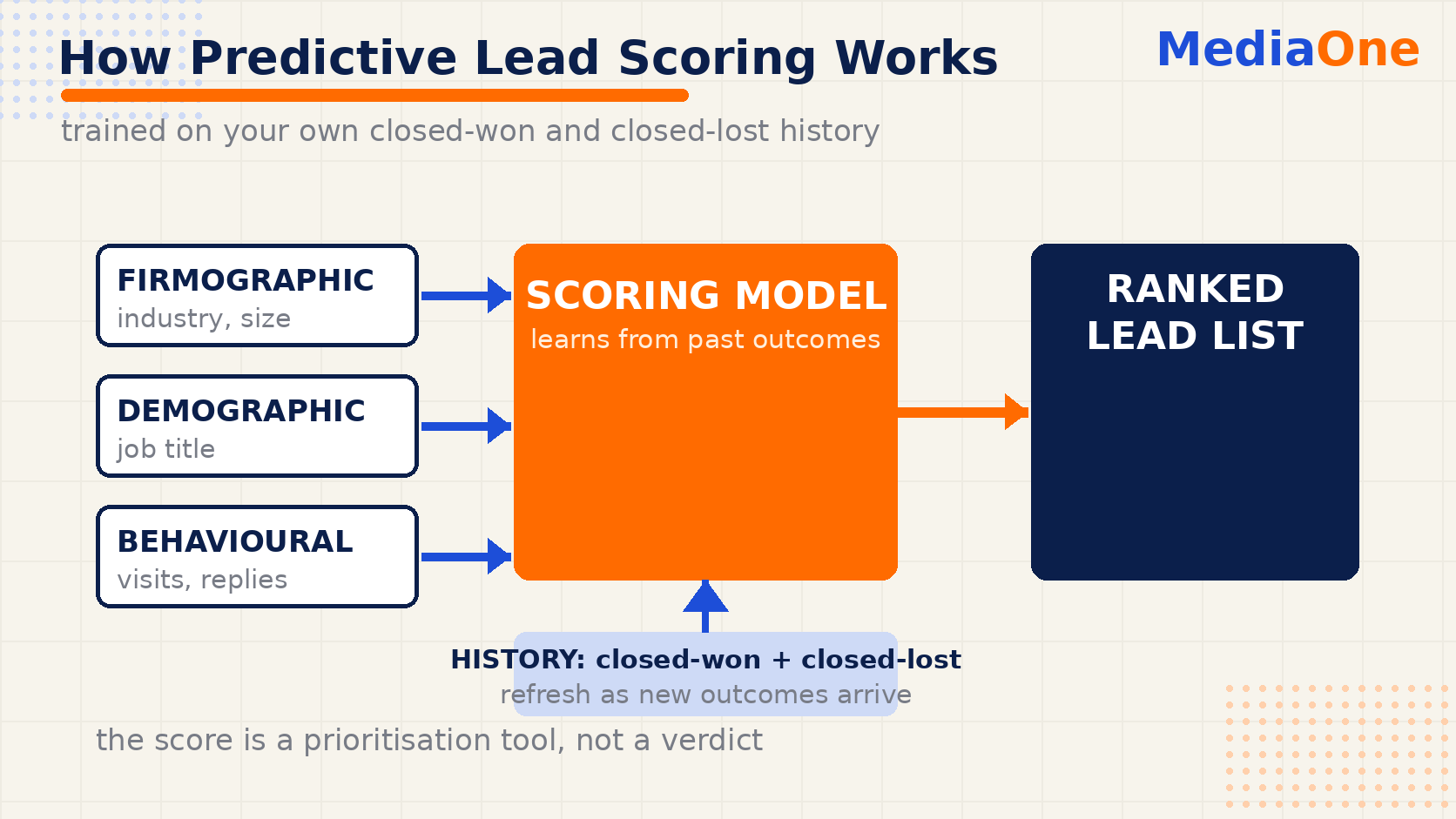
Figure 3: Predictive lead scoring: signals in, ranked list out
The model takes firmographic inputs (company size, industry), demographic inputs (job title) and behavioural inputs (page visits, meeting requests). It trains on historical records with known outcomes, then scores live leads and is refreshed as new outcomes arrive.
The score is a prioritisation tool, not a verdict. It tells your team where to spend the next hour.
Building a scoring model with your own CRM data
Use CRM data including closed-won and closed-lost outcomes for at least 500 opportunities (1,000 or more is preferable), with contact and company fields recorded when each lead entered the pipeline. A model trained on a few dozen deals mostly learns noise. If your history is thin, use simple rule-based points until you have enough outcomes – keeping that history organised in the first place is what our guide to customer relationship management for SMEs is for.
- Define the outcome. Pick one clear label, such as ‘became a qualified opportunity within 90 days’.
- Clean the fields. Remove duplicates and standardise job titles and industries.
- Fill obvious gaps. Complete missing company size or industry where you can.
- Select candidate signals. Keep only fields known at lead creation.
- Drop leaking fields. Remove anything filled in after a deal closes, such as deal size, because it reveals the answer.
- Hold back test data. Keep part of the historical deals aside.
- Test the ranking. Check whether the model ranks the held-back deals better than random ordering.
- Compare with your current process. Check whether top-scored leads convert at a higher rate than those reps currently prioritise.
Most CRMs and AI scoring platforms will run the testing steps, but you still own the outcome definition. Log each model version with its date and conversion result.
Sample scoring rubric
|
Band |
Example points |
Action triggered |
|
High (fit and intent) |
Target industry and size, buyer role, meeting request |
Rep contacts within one working day |
|
Medium (partial fit) |
Target industry, non-buyer role, pricing page visit |
Add to nurture sequence |
|
Low (weak signals) |
Email open only, no fit data |
Keep in general sequence, review monthly |
Figure 4: A sample scoring rubric with the action each band triggers
Set the points and thresholds against your own historical conversions, not against this example.
Signals to weight and signals to ignore
The strongest predictors show fit or intent: a prospect in your target industry and size band, a role with budget authority, a direct reply or meeting request, and repeat visits to pricing pages.
Weak signals mislead. Email opens are inflated by privacy features and link previews. Raw page views often reflect researchers, students or competitors rather than buyers. Personal demographic attributes should not be used, because they are unreliable and raise fairness concerns. In Singapore, check consent under the Personal Data Protection Act before combining data sources for scoring.
A useful test: if a signal would not change what a rep does next, do not weight it. Review weights each quarter, because a signal that predicted well last year can stop working as the market shifts.
Email Sequencing, Personalised Outreach and Measurement
Outreach is where automation is most visible and where it most easily damages your sender reputation. Treat it as a precise plan, not a sequence template. For an AI lead generation programme, this stage is where the automated cold emailing work happens, so the rules below apply to every sequence you run.
Email sequencing with AI
A sequence is a set of timed emails sent to one contact until they reply, book a meeting or opt out. AI is useful in two places: deciding when to send each step based on engagement, and drafting or adapting the copy. The timing decision is the valuable part. An engagement-aware sequence can pause after a reply, shorten the gap after an open, or move a non-responder to a different track.
The same engagement signals can feed your tool setup, refining who enters the sequence in the first place. Sales teams that already score leads can reuse those scores here.
Set three rules before you switch on automation:
- Cap daily sends per sender address. Start well below the platform limit and raise it only after bounce and spam-complaint rates stay low for two weeks.
- Stop the sequence automatically on any reply, bounce or unsubscribe. A follow-up sent after someone has answered makes a team look careless.
- Verify addresses before they enter a sequence. Outreach to unverified lists is where deliverability problems start.
Our guide to cold email best practices for Singapore covers the sending mechanics in more depth.
Plan limits often matter more than feature lists. According to Mailchimp’s plan documentation, the free tier allows up to 250 contacts, 500 sends per month and a daily limit of 250 sends. Plan details were checked against each provider’s published pricing or help pages on 6 November 2026. Confirm current limits on the provider’s own pricing page before you commit. At these limits, a three-step sequence to 400 prospects would reach the monthly ceiling before it finished.
Personalised outreach without the generic feel
Personalisation at scale means the opening line reflects something specific and true about the prospect, such as a hiring post, a product launch or a page on their website. Artificial intelligence can surface these details and draft a sentence around them. A tool such as ChatGPT can help draft that opener. The risk is templated flattery that readers recognise instantly.
Use this test: remove the prospect’s name and company from the email. If it still reads as relevant to anyone in that role, the personalisation is shallow. Keep the AI-written opener to one or two sentences. Write the offer and call to action yourself.
HubSpot Sales Hub is described by its listing as including AI tools for prospect research and personalised outreach. Research and drafting can sit alongside account history in the CRM. Machine learning models can rank which personalised content is most likely to earn a reply. A person should still review the final wording.
Personalisation also has a data-protection side: marketing email to contacts in Singapore falls under the PDPA, so confirm your consent basis and check that every email carries a working opt-out before automated sending begins – the compliance checklist above covers this.
Measuring outreach performance and when to intervene
Track four numbers per sequence: delivery rate, reply rate, positive-reply rate, and unsubscribe or spam-complaint rate. Reply rate shows whether the message works. Complaint rate shows whether you are damaging your domain. Treat these numbers as a feedback loop, not a scorecard – our guide to digital marketing KPIs explains how to tie them to the metrics that matter.
|
Signal |
Likely cause |
Action |
|
Bounce rate rising |
Unverified or stale list |
Pause sending, re-verify the list |
|
Opens high, replies low |
Weak offer or unclear ask |
Rewrite the call to action |
|
Complaints rising |
Poor targeting or missing opt-out |
Stop the sequence, review consent |
|
Replies high, meetings low |
Slow follow-up by humans |
Route positive replies faster |
Intervene when a metric moves for two consecutive weeks, not after one bad day. Compare reply rates before and after any change, using the same audience segment, so you can tell whether the change caused the shift.
Where AI Lead Generation Is Heading
AI lead generation is moving from separate point tools towards connected workflows. The teams that benefit most decide on a process first, then use artificial intelligence and machine learning only where they measurably help. Whether the platform is a standalone product, a CRM add-on or a general assistant such as ChatGPT, check what it produces against your own sales data.
The vendor figures quoted in this guide – 60-70% of workflow replaced, 2-3 hours saved a day – are claims from platforms that sell those platforms, not independent benchmarks. A more reliable test is whether your own stage-by-stage numbers improve, particularly on LinkedIn and other social media channels where outreach volume is high. Judge the content and information each tool produces against those results, not against marketing claims.
Before you buy anything new, re-run the Stage-Fit Matrix. Score Find, Verify, Qualify and Reach out against this quarter’s manual hours and bounce rates. Automate only the stages that still score high on both. Check that each tool supports personalised outreach rather than generic mass messages, and that each platform fits your B2B lead process.
Re-check each plan’s contact, send and seat limits on the provider’s current pricing page. Those limits set your real cost. Singapore teams should also confirm consent and opt-out handling under the PDPA before scaling automated outreach, including the emails they send. And when you want the surrounding funnel built out, MediaOne’s lead generation guide for small businesses pairs with our practical guide to AI marketing in Singapore to put these tools in context.
Frequently Asked Questions
Is AI lead generation the same as automated cold emailing?
No. Automated cold emailing is one stage: reach out. AI lead generation covers the whole cycle: finding contacts, verifying them, such as checking each email address, scoring them for fit and deciding who to contact and how. Cold-email automation without verification often leads to bounces and spam complaints, which damage sender reputation for later campaigns.
How much can AI lead generation tools cost for a small Singapore business?
Prices vary widely, and plan limits often matter more than list prices. Snov.io starts with a free trial, with paid Starter tiers from US$39 a month; Dialpad AI, listed in the same Saleshandy review, has entry pricing from US$15 a month per seat. Check the provider’s current pricing page before budgeting, and convert any USD figure to S$ at the prevailing rate. Compare contact caps, monthly send limits and seat counts, because a cheap plan with a low send cap can cost more in practice – our roundup of free AI lead generation tools in Singapore is a starting point.
Do AI lead generation tools comply with Singapore’s data protection rules?
The tool does not decide compliance. Your use of it does. Contact data used for marketing falls under the Personal Data Protection Act (PDPA), administered by the Personal Data Protection Commission (PDPC). Before automated outreach, confirm you have a lawful basis for collecting each contact, honour opt-out requests, and keep records showing how consent was obtained. Ask vendors how their data is sourced and stored, and read the PDPC’s guidance directly.
How long does it take to see results from AI lead generation?
Expect a pilot period. Run a single stage, such as verification or scoring, for four to six weeks. Then compare qualified-lead conversion against your pre-adoption baseline. Verification gains show quickly in bounce rates. Scoring and outreach gains take longer, because they depend on enough closed deals to show whether high-scoring leads convert better. If nothing changes in that window, the bottleneck may sit elsewhere in the funnel.
Can AI replace a human sales team?
Not in any practical sense. AI handles the repetitive parts of the cycle: finding, checking, ranking and drafting. Judgement about which accounts to pursue, how to handle objections and when a relationship is ready to close still depends on people. The strongest setups use AI to free sales staff from manual research, so they spend more time in real conversations.