If you run a small business in Singapore, your customers are already searching for you online. They are typing phrases like “near me”, “open now”, or “best in Tampines” long before they step foot in your shop or book an appointment.

This is why you need a local SEO guide that speaks directly to the way Singaporeans make decisions today. The surge in hyperlocal discovery means you are no longer just competing with brands in your industry. You are competing with businesses within a 3 km radius.
Retail, F&B, home services, healthcare, legal, tuition, wellness. Every category is saturated. You cannot afford to let visibility happen by chance. You need to engineer it. Local SEO is how you get discovered at the precise moment people are ready to act.
When done well, it gives you more calls, more messages, more walk-ins, and more credibility without paying SGD3 to SGD30 per click in ads.
In this guide, you will see how to dominate local search with practical steps built for Singapore’s competitive landscape. You will learn how to make Google work harder for you, how to beat nearby competitors, and how to turn online visibility into actual revenue.
This is your roadmap and your chance to outpace competitors that react slowly. When you want support implementing what you learn here, an expert from a local SEO agency can accelerate results.
Key Takeaways
- A strong local search presence in Singapore depends on optimising your Google Business Profile, maintaining consistent business information across platforms, and building locally relevant authority signals.
- High quality reviews, locally targeted content, and neighbourhood specific backlinks significantly improve visibility, credibility, and conversion rates.
- Long term success requires continuous tracking of local SEO metrics and adapting to emerging trends such as zero click search, voice queries, and AI driven personalisation.
How Local Search Works in Singapore
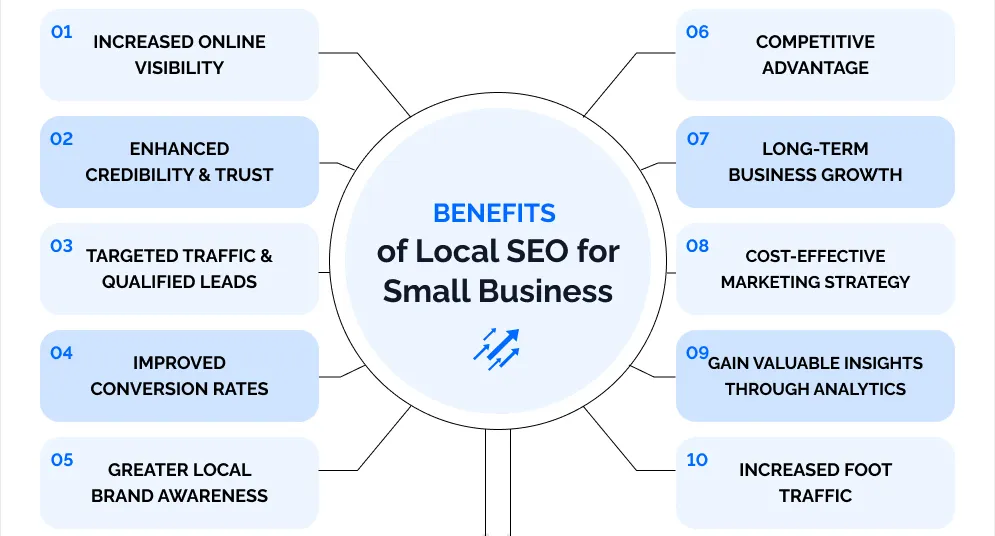
Image Credit: SeoProfy
Before you optimise anything, you need to understand how Google decides who appears in the Local Pack. There are only three winning signals that truly matter: proximity, relevance, and prominence. Google uses these to predict which businesses deserve to be shown first to searchers in a specific location.
- Proximity is the distance between the searcher and your business address. If someone in Yishun searches for “pet groomer”, nearby businesses get priority.
- Relevance measures how well your business information matches the query.
- Prominence indicates how reputable and well known your business appears online.
Here is the critical distinction many SMEs miss: Organic SEO helps you rank pages across the entire country. Local SEO improves your visibility specifically within your physical or service areas.
Singapore also has unique search behaviours you need to account for:
- Singapore is among the highest mobile usage markets in the world with 179% mobile penetration (yes, there are more mobile devices in Singapore than its total population).
- Bilingual and colloquial queries are common.
- Service area businesses like cleaners, pest control companies, massage therapists, movers, and repair services rely heavily on suburb or town-based searches.
This means your local strategy has to be intentional, granular, and engineered for neighbourhood-level visibility.
A Step-by-Step Guide on How to Dominate Local SEO in Singapore
Step 1: Optimise Your Google Business Profile Your Singapore Local SEO Foundation
Your Google Business Profile (GBP) is your frontline storefront on Google. It influences whether a customer clicks, calls, or keeps scrolling. For many Singapore SMEs, a well-optimised GBP generates more leads than their entire website.
To make GBP work for you, start with the fundamentals:
- Ensure your Name, Address, Phone (NAP) are accurate and follow Singapore formatting.
- Choose the correct primary and secondary categories.
- Write a localised business description that signals relevance to Singapore customers.
- Upload high quality photos that reflect your premises, team, or product experience.
- Enable attributes that matter locally. These include halal-friendly, wheelchair accessible, bilingual staff, and appointment required.
GBP Posts are an underused feature in Singapore. Use them for promotions, events, menu updates, appointment availability, and new product announcements. Frequency matters because Google ranks active profiles more favourably.
This is publicly available and verifiable. Even though the dataset is global, the behaviour maps cleanly to Singapore where mobile-first searches dominate. If you want to outrank competitors in areas like Clementi, Bedok, or Ang Mo Kio, your GBP is not optional. It is the foundation of your visibility.
Step 2: Build a Location-Optimised Website That Signals Local SEO Relevance
Your website tells Google whether it can trust your business to fulfil local intent. You need local signals that prove you are relevant to the exact neighbourhoods you serve.
Start with local keyword research. Singapore searchers often include town names, MRT stations, hawker centres, or colloquial phrases in their queries. Examples include “Jurong electrician”, “pasir ris baby clinic”, “near NTUC”, or “cheap plumber sg price”.

Technical elements matter too:
- Add Local Business Schema to validate your address.
- Add FAQ or Review Schema for rich results.
- Write content that matches Singapore-specific concerns, regulations, or prices.
If you serve multiple areas, create location pages for suburbs like Tampines, Woodlands, or Bukit Merah. Do not duplicate content across these pages. Each location needs its own stories, proof points, testimonials, and service details.
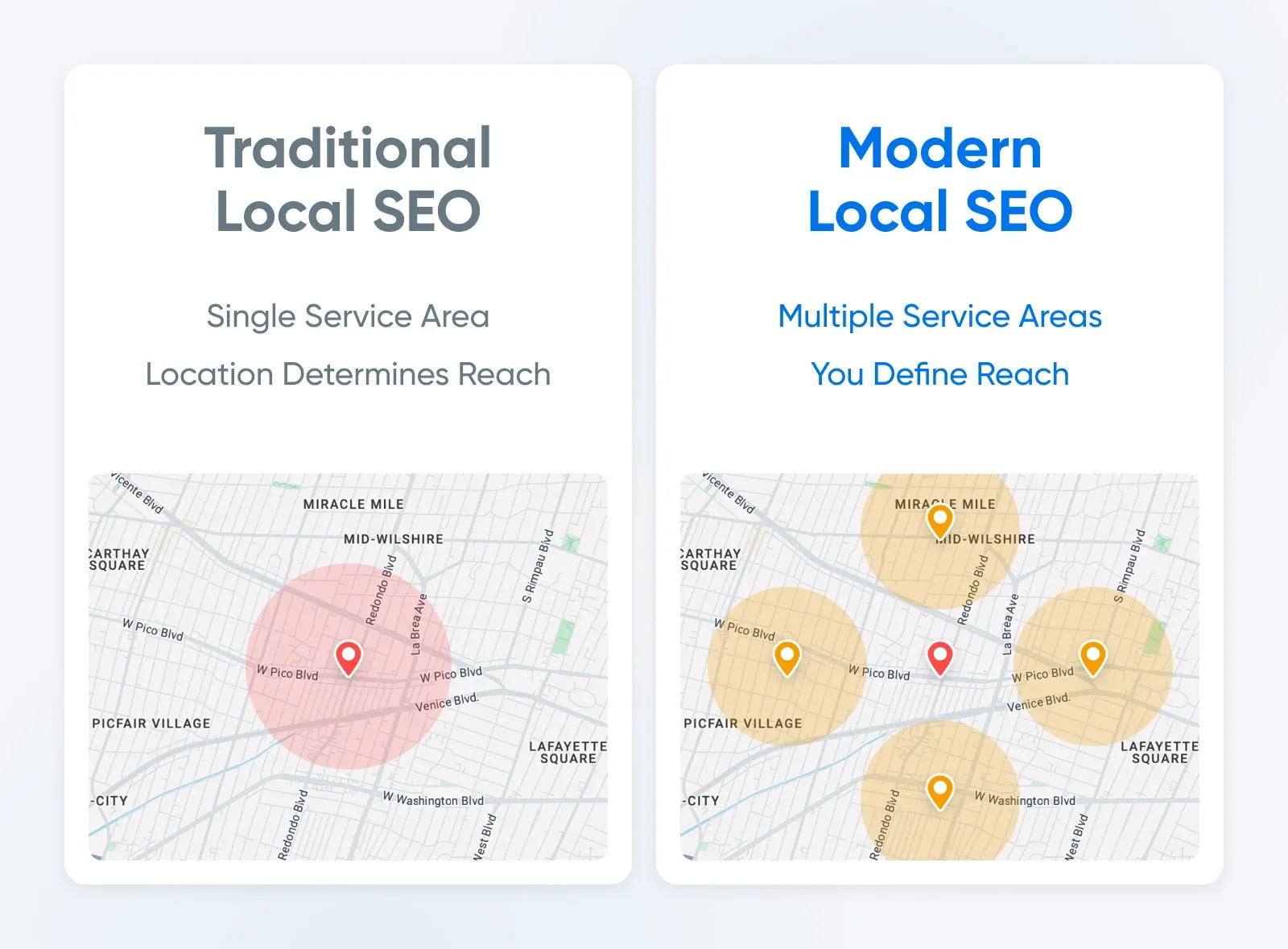
Image Credit: Dream Host
Singapore users expect a fast mobile experience. Google’s Page Experience update prioritises websites that load quickly on 4G or 5G. Slow sites lose visibility. Slow sites lose revenue.
Avoid these website pitfalls:
- Thin content that provides no depth.
- Stock images with no relation to Singapore.
- Address buried in a footer or missing entirely.
- Using US spelling when your audience expects UK spelling.
Your website is not just a brochure. It is a local authority signal. Treat it like one.
Step 3: Strengthen Local Citations and Directory Listings
Your citations tell Google that your business exists, is legitimate, and is tied to a real location. To build strong citations, maintain absolute NAP consistency across all platforms. Small discrepancies like “Rd” versus “Road” can weaken your authority.
Start with the most trusted Singapore directories:
- SGLocal
- StreetDirectorySGP Business
- Singapore Yellow Pages
Then add industry-specific platforms:
- F&B: Burpple, HungryGoWhere
- Healthcare: HealthHub, DoctorAnywhere listings
- Home services: Carousell Services, Yelp SG
- Beauty and wellness: LookBook, Vanitee
Citations help both ranking and trust. When Google sees your business appearing across credible local platforms, it views you as a verified entity deserving of more search visibility.
Step 4: Manage and Leverage Online Reviews
Your reviews are one of the strongest drivers of local ranking and customer trust. Singapore customers read reviews before almost every decision. According to BrightLocal’s Local Consumer Review Survey 2025, 83% of consumers used Google reviews to evaluate a local business.
Here is how reviews impact local ranking:
- More reviews increase prominence.
- Keywords in reviews help relevance.
- High ratings improve click through rates.
- Timely responses show activity and professionalism.
To earn more Singapore-based reviews, build automated review invites into your post-service workflow. For regulated industries, ensure messaging complies with local rules. Respond to every review with a tone appropriate for Singapore customers.
- Positive reviews deserve gratitude and a simple call to action.
- Negative reviews require calm, solution-focused replies. Never argue publicly.
A consistent review strategy raises your search rankings and boosts conversions at the same time. It is one of the highest return local marketing activities you can implement.
Step 5: Build Local Backlinks for Authority
A local backlink is a vote of confidence from a website connected to your geographic area. The closer the backlink source is to your neighbourhood or industry niche, the more valuable it becomes.
Effective backlink strategies for Singapore include:
- Partner with associations like the Singapore Malay Chamber of Commerce and Industry or the Singapore Retailers Association.
- Collaborate with local creators and micro influencers in Singapore who publish your brand story, product demo, or service walkthrough.
- Sponsor neighbourhood events such as community runs, charity drives, or school activities. These often come with legitimate local backlinks.
- Get featured in local media or lifestyle publishers through pitches or advertorials.
To assess backlink quality:
- Prioritise sites with genuine local readership.
- Avoid link farms.
- Choose sites with clear editorial standards.
- Look for sustained local relevance rather than global scale.
These backlinks boost your prominence and help you outrank competitors in your surrounding districts.
Step 6: Leverage Local Content Marketing
Content is where you win on both visibility and trust. Singaporeans actively search for guides, comparisons, neighbourhood insights, and practical advice. To capture these searches, your content marketing strategy should create content that blends expertise with local context.
High performing formats include:
- Detailed guides
- Neighbourhood explainers
- Price comparison tables
- Step by step checklists
- Singapore specific FAQs
Examples:
- Best brunch cafes in Tiong Bahru
- Renovation costs in Singapore
- Plumber cost breakdown in SGD
- Jurong electrician service checklist
To improve relevance, reference Singapore regulations, local SEO pricing norms, MRT landmarks, or common neighbourhood questions. Integrate content with GBP using Posts, Q&A, and photo updates. Share your articles across Facebook, Instagram, and TikTok, where Singaporeans follow businesses for authenticity and transparency.
Step 7: Track the Right Local SEO Metrics
You cannot improve what you do not measure. Local SEO gives you precise, actionable metrics that reflect both visibility and intent.
Track your:
- Local Pack rankings by keyword and by suburb
- Google Business Profile insights
- Website traffic segmented by neighbourhood
- Click through rates
- Direction requests
- Calls and enquiries
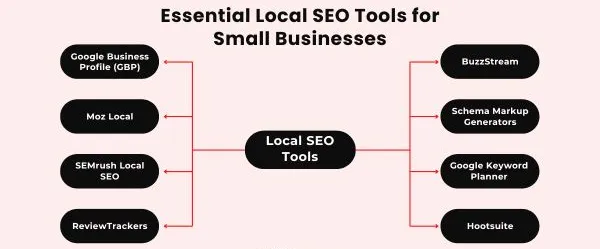
Image Credit: Skill Floor
Useful tools include:
- Google Analytics
- Google Search Console
- GBP Insights
- BrightLocal
- Ahrefs
- Meta Business Suite
Tracking these metrics helps you see what drives results and which neighbourhoods generate the most revenue.
Common Local SEO Mistakes You Should Avoid
Many Singapore SMEs lose rankings not because of fierce competition, but due to avoidable errors that undermine Google’s trust signals. Local SEO is highly sensitive to accuracy, relevance, and credibility.
When these fundamentals are off, even sites done with professional web design services struggle to rank in neighbourhood or city-level searches. Here are the most common mistakes to watch out for:
Using Incomplete or Outdated GBP Information
Your Google Business Profile is often the first touchpoint for potential customers searching for your products or services nearby. Leaving fields blank — such as business categories, service areas, operating hours, or contact details — weakens your local relevance.
Likewise, outdated information (e.g., old addresses, changed opening hours) can lead to customer frustration and negative user experiences. Keep your GBP optimised with high-quality photos, posts, attributes, FAQs, and updated details. Google favours businesses that actively maintain their profiles.
Duplicate Content Across Multiple Location Pages
If your business operates in multiple areas (e.g., Orchard, Tampines, Jurong), you may create separate location pages. The mistake many SMEs make is copying and pasting the same text across all these pages.
Google detects duplicate content and may penalise or ignore such pages, reducing your local rankings. Each location page should be unique — include specific service details, neighbourhood landmarks, local promotions, and reviews from customers in that area.
Inconsistent NAP Details
Consistency is a core ranking factor in local SEO. If your business name, address, or phone number appears differently across your website, social media platform accounts, Google Business Profile, and online directories, search engines may become uncertain about your legitimacy.
This reduces your ranking potential. Regularly audit your information across platforms to ensure NAP accuracy. Use one standardised formatting convention for your business name and address.
Neglecting Mobile Speed and User Experience
Most local searches in Singapore happen on mobile — especially “near me” searches. A slow website, cluttered layout, or hard-to-navigate mobile menu leads to high bounce rates. Google interprets this as poor user experience, negatively affecting your rankings. Optimise page load speed, simplify site structure, and ensure your content is easily viewable on smaller screens.
Ignoring Reviews or Responding Aggressively
Reviews are one of the strongest trust signals for both Google and potential customers. Failing to ask for reviews means missing opportunities to boost credibility. Meanwhile, responding defensively or emotionally to negative feedback can discourage new customers. Aim to respond politely, professionally, and with solutions.
Using Non-Local or Generic Stock Images
Photos that don’t reflect Singapore’s environment, architecture, or cultural context can reduce credibility. Use original photos where possible — storefronts, interiors, staff, neighbourhood landmarks — to reinforce trust and local identity. Avoiding these pitfalls provides a clean foundation for stronger search visibility and long-term local ranking success.
Future Trends of Local SEO in Singapore
The way Singaporeans search for products and services is evolving rapidly. To maintain a competitive edge, businesses must understand where local search is heading and adjust their strategies accordingly. The future of local SEO will be shaped by personalisation, shifting user behaviours, and how Google continues refining the signals it values.
AI-Driven Personalisation Will Shape Search Results
Search results are no longer the same for everyone. Google increasingly tailors listings based on a user’s search history, browsing behaviour, physical location, and even the time of day. For Singapore businesses, this means that two people standing in different parts of the same neighbourhood could see entirely different search results for the same query.
To stay ahead, SMEs must ensure their local signals — such as accurate business categories, relevant keywords, and active engagement on Google Business Profile — align tightly with what customers are most likely searching for.
Voice Search Usage Will Continue to Rise
With the growing adoption of Siri, Google Assistant, and voice-enabled devices like Google Nest, voice search has become a natural part of everyday behaviour. Singaporeans are increasingly asking conversational questions like “Where’s the nearest cake shop?” or “Which aircon servicing is open now?”
To capture this demand, businesses should optimise for long-tail, conversational keywords and include clear answers to common customer questions on their website and GBP profile.
Zero-Click Searches Will Dominate Local Buying Decisions
More users now make decisions directly on Google’s search results page without visiting a website — known as zero-click search. Features like map listings, knowledge panels, reviews, FAQs, and menus allow customers to compare businesses instantly.
This makes your GBP profile one of your most valuable digital assets. The businesses that maintain updated images, consistent posting, and strong reviews will stand out before a customer even clicks through.
Service Area and Home-Based Businesses Will Gain More Visibility
Google is improving how it categorises and displays service-based businesses that do not have physical storefronts — such as home bakers, freelance beauty providers, tutors, and mobile services. This shift creates more opportunities for smaller, home-based SMEs to compete locally. The earlier these businesses optimise their profiles, the more likely they are to dominate in neighbourhood searches.
Staying proactive, rather than reactive, will ensure your business leads the next wave of local search.
Start Winning Customers With This Local SEO Guide
Image Credit: E2M
Local search visibility is no longer optional if you want to stay ahead in Singapore’s competitive SME landscape. You have seen how local optimisation works, how each step builds your authority, and how the right strategy brings in more calls, more walk-ins, and more revenue. This local SEO guide gives you a clear plan you can act on today.
Whether you need help with GBP optimisation, location-based content, review management, or link building, you do not need to do it alone. If you want faster growth and execution without guesswork, speak to MediaOne, an innovative SEO agency in Singapore. Contact us today and let’s work together to dominate local search with proven, data backed strategies.
Frequently Asked Questions
What is the difference between local SEO and map pack optimisation?
Local SEO refers to the broader strategy of improving a business’s visibility for location-based searches across both Google Search and Maps. Map pack optimisation focuses specifically on ranking within the three-map results that appear for high intent local queries. Both work together, but the map pack requires more emphasis on proximity signals, reviews, and Google Business Profile activity.
How often should a business update its Google Business Profile posts?
Updating your Google Business Profile posts once a week helps keep your listing current and signals ongoing activity to Google. This rhythm also allows you to promote timely offers, events, or changes in operating hours. Consistency matters more than volume, so maintaining a predictable posting cadence is key.
Does local SEO work for online-only businesses?

Local SEO is primarily designed for businesses with a physical location or a defined service area. Online-only brands typically rely more on traditional organic SEO since proximity is not a ranking factor for them. However, if an online business offers services tied to specific regions, it can still benefit from location-focused content and metadata.
Can local SEO improve foot traffic for brick-and-mortar stores?
Local SEO can lead to more foot traffic by increasing your visibility in searches that include intent to visit, such as “near me” or “open now”. When your business appears in the map pack and searchers see strong reviews, they are more likely to choose your location. This makes local optimisation a direct driver of in-person visits.
How long does it take to see results from local SEO?
Most businesses begin seeing early movement within a few weeks, but meaningful improvements typically become noticeable over a few months depending on competition and existing online presence. Local SEO is cumulative, so results strengthen as your reviews, citations, and local signals build up. The key is consistent optimisation rather than one-time updates.