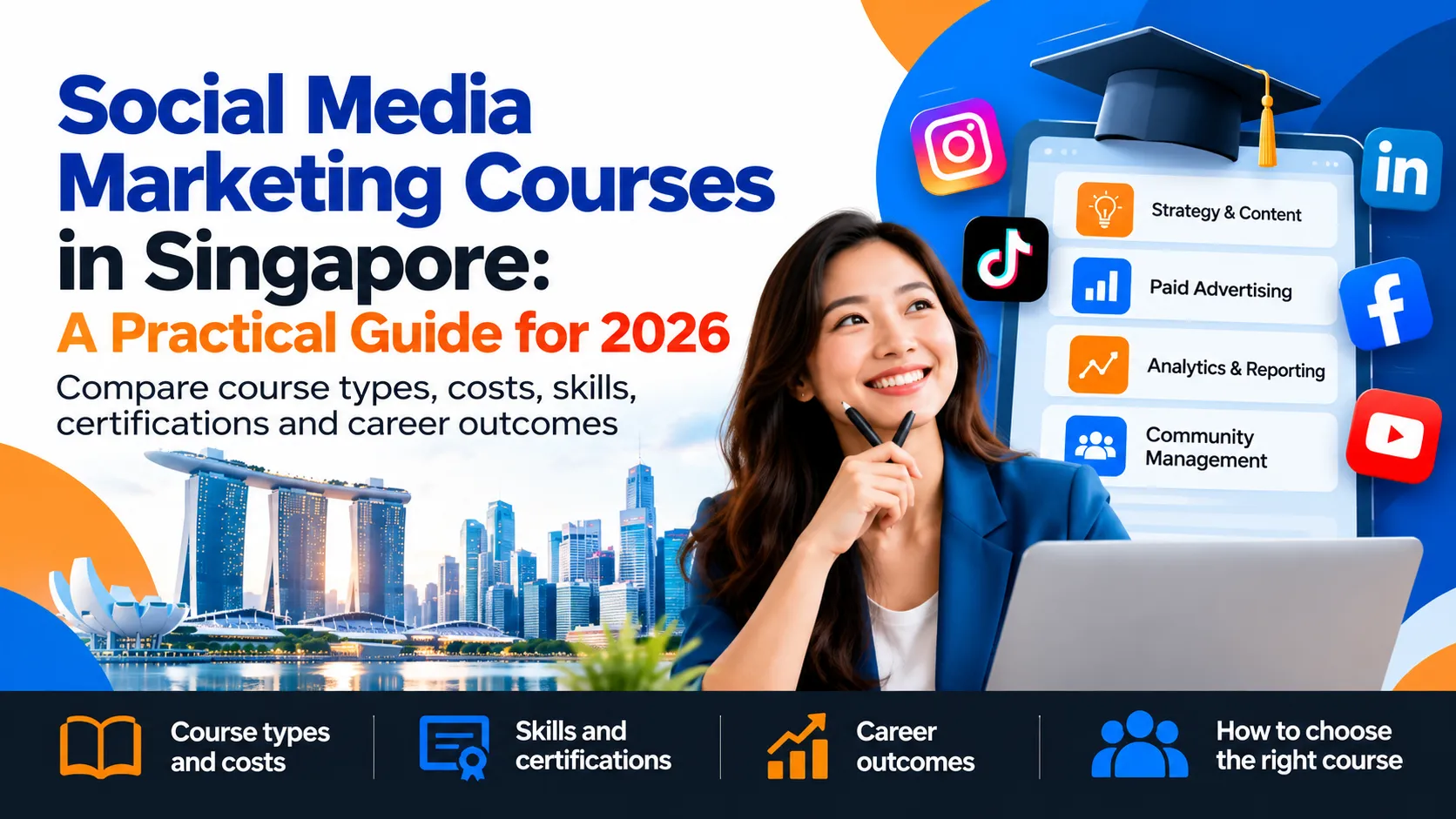
The demand for social media marketing skills in Singapore has grown faster than the available talent supply. Financial services firms, e-commerce platforms and digital agencies are competing for professionals who understand paid advertising, community management and analytics. If you are considering a course, you join thousands of professionals who recognise that informal learning and in-house training alone do not prepare you for platform-specific strategy or the paid social tools that employers actively hire for.


This guide compares course types and outcomes directly. You will learn which format fits your timeline and budget, what credentials carry weight in Singapore’s job market, and how to validate whether a provider’s promises are real. Whether you are switching careers, upskilling in a current role, or building a freelance practice, this article gives you a decision framework and a step-by-step enrolment checklist you can act on this week.
- Course costs range from free (Google Skills for All) to S$40,000 for full-time diplomas. SkillsFuture credits provide S$500 annually for eligible Singaporeans aged 25 and over; eligibility and credit amounts are subject to current CPF Board guidelines. Part-time certificates (S$500 to S$3,000) suit working professionals. Bootcamps (S$3,000 to S$8,000) compress learning into 6–12 weeks and typically include placement support.
- Individual outcomes depend on effort, prior skills, market conditions and employer demand. Some course alumni report salary progression of 15–25% within 18 months; results vary based on prior experience, current role level and local market demand. This is not a guarantee. Entry-level coordinator roles typically pay S$2,200 to S$3,000; mid-level specialists earn S$3,500 to S$5,500; and senior managers reach S$6,000 to S$10,000 or higher.
- Hands-on portfolio projects are non-negotiable; avoid theory-only courses. Verify that programmes provide access to a real or training ad account (typically S$100 to S$500 budget), so you graduate with 2–3 case studies you can show employers, not just certificates.
- Courses with tutors who have managed Singapore campaigns typically produce higher job-readiness rates. Prefer providers where tutors have direct experience in Singapore and the curriculum references local regulation (Personal Data Protection Act), case studies (DBS, Grab, Lazada) and platform quirks, not generic examples from overseas markets.
- Define your starting point and goal before shortlisting. Career switchers need bootcamps or diplomas with placement support. Upskilling professionals benefit from 4–12 week part-time certificates. Entrepreneurs and side hustlers should start with free, self-paced platforms (HubSpot Academy, Google Digital Garage) and practise on real accounts first.
- Check SkillsFuture eligibility and secure your credits before paying. Many courses qualify for government funding. Every Singaporean aged 25 and over receives S$500 annually. Employer sponsorship and Career Development Grants can cover additional costs if you are retrenched or career-switching.
Key Takeaways
- Singapore’s social media roles are growing faster than talent supply, creating strong job security and salary progression for trained professionals.
- Course formats range from free self-paced learning to 24-month diplomas. Part-time certificates (4–12 weeks, S$500 to S$3,000) suit most working professionals.
- SkillsFuture credits cover 30–50% of approved course costs. Always check eligibility before enrolling.
- Portfolio matters more than credentials. Employers want proof of live campaigns, not just certificates. Bootcamps and agency-backed programmes build portfolios; self-paced courses often do not.
- Hands-on access to real or training ad accounts is non-negotiable. Avoid theory-only courses. Verify budget allocation in writing.
- Courses with tutors experienced in Singapore campaigns significantly increase job readiness and close knowledge gaps around local regulation and platform behaviour.
- Individual outcomes depend on effort, prior skills, market conditions and employer demand. Salary progression and job placement are not guaranteed.
Why Singapore Professionals Choose Social Media Marketing Training
Social media marketing has become one of Singapore’s fastest-growing career paths, yet the skills gap persists. Universities, polytechnics, bootcamps and online platforms compete to fill it. This guide directly compares course types and outcomes. It tells you which format fits your situation, what to realistically expect to earn, and how to avoid paying for programmes that over-promise.
Whether you are switching careers, upskilling in a current role, or building a freelance practice, choosing the wrong course costs time and money. The right course can accelerate your earning potential and open doors to roles that have grown rapidly in recent years.
The Skills Gap in Singapore’s Digital Economy
Demand for social media marketers has grown across financial services, e-commerce and creative agencies. Yet most university and polytechnic graduates do not graduate with platform-specific, hands-on expertise in paid advertising. In-house training alone does not prepare employees for Meta Ads Manager, TikTok Shop integration, analytics dashboards or crisis response.
Career switchers report a common problem: they understand marketing theory but cannot confidently set up a campaign, read an analytics dashboard or explain spend to a finance director. Structured courses close this gap.
Growing demand for these roles has been documented in recent Singapore industry reports. Roles like “social media specialist” and “performance marketer” have grown in hiring volume. Employers actively seek candidates with verified training or demonstrated platform competence.
ROI and Career Progression in the Singapore Market
Some professionals report a 15–25% salary increase within 18 months after completing a structured course, according to bootcamp and polytechnic alumni reports. A coordinator earning S$2,400 per month might reach S$2,750 to S$3,000 within two years. A manager on S$4,500 might progress to S$5,200 to S$5,600.
This progression is not automatic. It depends on portfolio strength, the number of live campaigns you have managed and your ability to link social metrics to business outcomes (lead generation, e-commerce sales, app downloads). Courses that emphasise analytics and real projects support this progression.
Results vary based on prior experience, current role level and local market demand. This is not a guarantee.
Singapore’s digital roles remain understaffed despite strong competition for talent. Verified training is a measurable differentiator that helps your resume stand out and can justify faster promotion.
Types of Social Media Marketing Courses Available in Singapore
Full-Time Diploma and Degree Programmes
University-backed and polytechnic programmes run 9–24 months and combine theory with hands-on campaign execution. Institutions including Temasek Polytechnic and Nanyang Technological University (NTU) offer specialised tracks in digital media and communications.
Tuition varies by institution and eligibility for sponsorship or study grants. Full-time diplomas carry weight with employers and unlock career progression roles in larger organisations. They also build breadth: you learn photography, video production, copywriting and analytics alongside social strategy.
The time commitment is substantial. You must leave employment or study full-time. However, placement support from polytechnic networks and university career services is often strong, reducing your job-search time post-graduation.
Part-Time and Evening Certificates (4–12 weeks)
Working professionals dominate this category. Courses run evenings or weekends to fit your schedule. Providers including Google Skills for All, LinkedIn Learning, and certificate programmes from local training providers deliver core social media competencies without career interruption.
Cost ranges from S$500 to S$3,000. Quality varies widely: free platforms like Google’s are introductory, while university-backed certificates from institutions such as NUS and SMU command S$2,000 to S$3,000 but offer brand credibility and more direct interaction with tutors.
This format suits you if you already work in marketing, PR, or communications and want to formalise platform expertise. It also works for business owners or freelancers who need to refresh skills on a specific platform.
Specialist Bootcamps and Intensive Programmes
Immersive 6–12 week bootcamps compress hands-on learning into accelerated schedules. They focus narrowly on performance marketing, paid social advertising (Meta and TikTok), or influencer strategy. Many include placement support and assign real-world client projects.
Cost ranges from S$3,000 to S$8,000. General Assembly (Singapore) operates a 12-week full-time Social Media Marketing Bootcamp. Boutique digital agencies sometimes partner with recruitment firms to run bootcamps linked to hiring pipelines.
Bootcamps suit career changers who can commit 40 or more hours per week and want accelerated entry into a social media role. They also appeal to employed professionals seeking a structured, intensive pathway without a multi-year diploma commitment.
University Extension and Professional Development Courses
Institutions including National University of Singapore (NUS), Singapore Management University (SMU) and INSEAD deliver professional extension programmes running 4–8 weeks in online or blended formats. They target mid-career professionals and carry premium pricing (S$2,500 to S$6,000) but significant brand value.
These programmes bridge the gap between short certificates and full diplomas. They emphasise strategy and analytics in depth that weekend courses cannot, and they draw peers from senior corporate roles, expanding networking value.
Self-Paced and Online Learning Platforms
Globally accessible platforms including Coursera, Udemy, HubSpot Academy and LinkedIn Learning require no geographic enrolment and run from free to S$500. They suit self-motivated learners and those testing interest before committing funds.
The trade-off is significant. Quality and accreditation vary; most lack Singapore-specific case studies, local regulatory guidance, or tutors available to answer questions. You also lack cohort accountability and structured feedback on portfolio work. Completion rates for self-paced courses typically hover around 5 to 10%.
Self-paced learning works best as a supplement to a structured course or as refresher training, not as your primary entry point into professional social media work.
Key Curriculum Topics to Expect
Platform Strategy (Meta, TikTok, LinkedIn, Instagram)
Every course teaches audience profiling, content calendar planning, and algorithm fundamentals for each major platform. You learn why Instagram’s algorithm prioritises Reels over static posts, how LinkedIn’s organic reach differs from Facebook, and where TikTok drives the highest engagement for different content types.
Advanced modules cover cross-platform synergy. You adapt a single content asset, such as a video or carousel post, to each platform’s norms and audience. You compare each platform’s commercial tools. Meta’s Ads Manager, TikTok Shop integration, and LinkedIn Lead Gen Forms each require different setup and optimisation approaches.
Paid Advertising and Ad Account Management
This is where most courses justify their cost. Hands-on modules teach campaign structure, budget allocation, audience targeting, creative testing and performance optimisation. You work inside Meta Ads Manager, TikTok Ads Manager, or LinkedIn Campaign Manager.
The best courses provide you with a training budget, often S$100 to S$500, to run real campaigns or manage a staging account. This builds portfolio evidence that employers value far more than a certificate. You learn by doing, not by watching videos.
Analytics, Measurement and Reporting
Courses teach metrics progression. You start with basics such as impressions, reach, and engagement rate. You move to intermediate metrics, including click-through rate and cost per acquisition. Advanced topics cover attribution modelling and customer lifetime value. You work in Google Analytics 4, platform-native dashboards, and reporting tools.
A core skill is linking social metrics to business outcomes. If a campaign’s goal is lead generation, you calculate the cost per qualified lead and feed it into a sales funnel. If it’s e-commerce, you track return on ad spend. This depth separates social media coordinators (who report vanity metrics) from strategic roles (who optimise for revenue).
Content Strategy and Creative Development
Frameworks for audience research, content pillars, posting cadence and storytelling are covered extensively. Some courses include hands-on training in copywriting for different platforms, basic video editing using tools such as CapCut or DaVinci Resolve, and A/B testing methodology.
This section is particularly valuable for freelancers and entrepreneurs who cannot hire a content team. You learn to plan 4–8 weeks of content in advance, maintain brand voice across platforms, and test creative variants to identify what resonates with your audience.
Community Management and Crisis Response
Managing conversations, moderating comments, handling negative feedback and escalating brand safety issues are core skills that theory-only courses skip. Case studies often draw from Singapore retail, fintech and food and beverage sectors, where social sentiment can escalate quickly.
You study real incidents. You learn how a brand missteps on social, how community managers should respond, and when to loop in legal or PR teams. Locally taught courses focus heavily on Singapore’s regulatory environment, including the Personal Data Protection Act and Advertising Standards Authority guidelines.
How to Choose the Right Course for Your Situation
Assess Your Starting Level and Prior Experience
Beginner courses assume zero platform experience. You spend the first module simply navigating Meta Business Suite or creating your first Instagram business account. If you’ve informally managed a company Instagram, you’re past this stage.
Intermediate tracks expect you to have run at least one platform and understand basic analytics terms such as impressions, clicks, and engagement. Advanced courses assume 1–2 years of hands-on experience and move straight into strategy and optimisation.
Placing yourself one level higher than you should typically leads to frustration and knowledge gaps. Placing yourself one level lower wastes time on foundational content you already know. Most providers offer free assessments; use them.
Define Your Career Goal
Your goal fundamentally shapes course choice.
Career switching: Prioritise bootcamps or full-time diplomas with structured placement support. You need broad skill coverage and employer credibility quickly. A 6–12 week bootcamp with job guarantees or placement interviews is your best bet.
Upskilling within your current role: A part-time certificate or evening course fits. You’re not leaving your job; you’re adding a skill that makes you more promotable. 4–12 weeks of evening study is manageable.
Freelancing or side income: Action-focused, self-paced content such as HubSpot Academy saves money and lets you apply knowledge immediately to real clients.
Hobby or passion exploration: Free or low-cost self-paced platforms, including Google Skills and Udemy courses under S$50, let you test fit before investing.
Evaluate Time and Financial Commitment
Full-time diplomas take 9–24 months and require tuition. They carry institutional weight, unlock career progression roles, and offer broad skill coverage. They’re only feasible if you can leave employment or are recently graduated.
Part-time certificates fit working schedules. 4–12 weeks of evening or weekend study costs between S$500 and S$3,000. This is an entry point for professionals without prior marketing experience.
Bootcamps accelerate outcomes. Bootcamps typically last 6–12 weeks, cost between S$3,000 and S$8,000, and often include job placement support. They suit career changers who can commit 40+ hours per week during the bootcamp window.
Self-paced online offers maximum flexibility and the lowest cost (free to S$500), but completion rates are low, and employer recognition is weaker without portfolio evidence.
Check for Hands-On Learning and Portfolio Building
Avoid theory-only courses, which leave you without proof of capability. Verify that programmes include the following elements.
- Live campaigns or real client projects
- Access to a training ad account with a specified budget
- Portfolio review from tutors before graduation
- A finished case study or graduation project you can show employers
This is non-negotiable. Many job postings ask, “Do you have campaign examples?” A certificate without case studies will not pass an initial screening.
Confirm Local Relevance and Tutor Credentials
Tutor experience matters. Check LinkedIn profiles of tutors or course leads. Have they managed campaigns for Singapore brands? Do they understand local regulatory context, including the Personal Data Protection Act and advertising standards?
Courses with tutors who have managed Singapore campaigns typically produce higher job-readiness rates than those taught by international instructors unfamiliar with the local market. Agency-backed bootcamps embed Singapore examples and local regulatory guidance. Global platforms, including Coursera and Udemy, often use US or UK case studies, which limits applicability to your local job market. You will need to translate what you learn into a Singapore context.
Top Providers and Programmes in Singapore (2026)
University and Polytechnic Programmes
National University of Singapore (NUS), Digital Marketing Professional Certificate
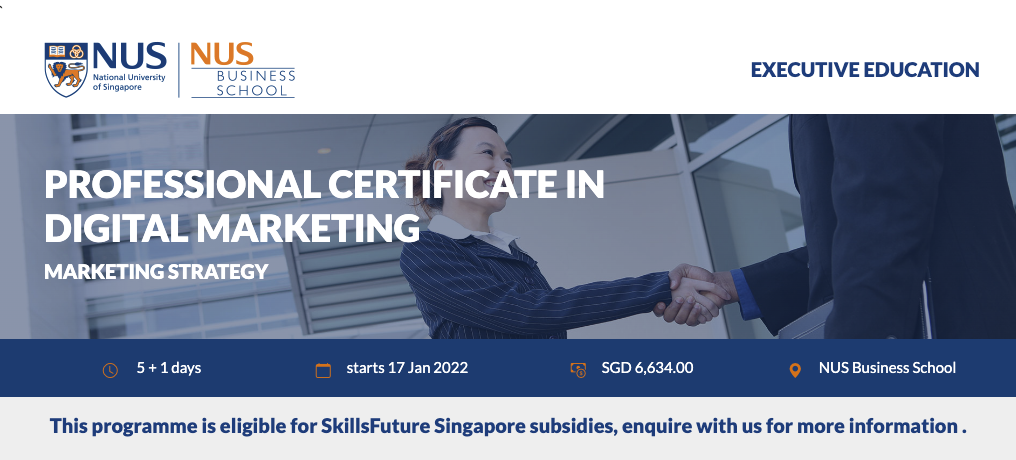
An 8-week part-time blended course emphasising data-driven strategy and analytics. The cost is S$2,400. NUS’s brand carries weight with career changers from finance, tech and corporate backgrounds. The course includes placement support through the NUS Career Centre and access to an active alumni network.
Temasek Polytechnic, Diploma in Digital Media and Communications
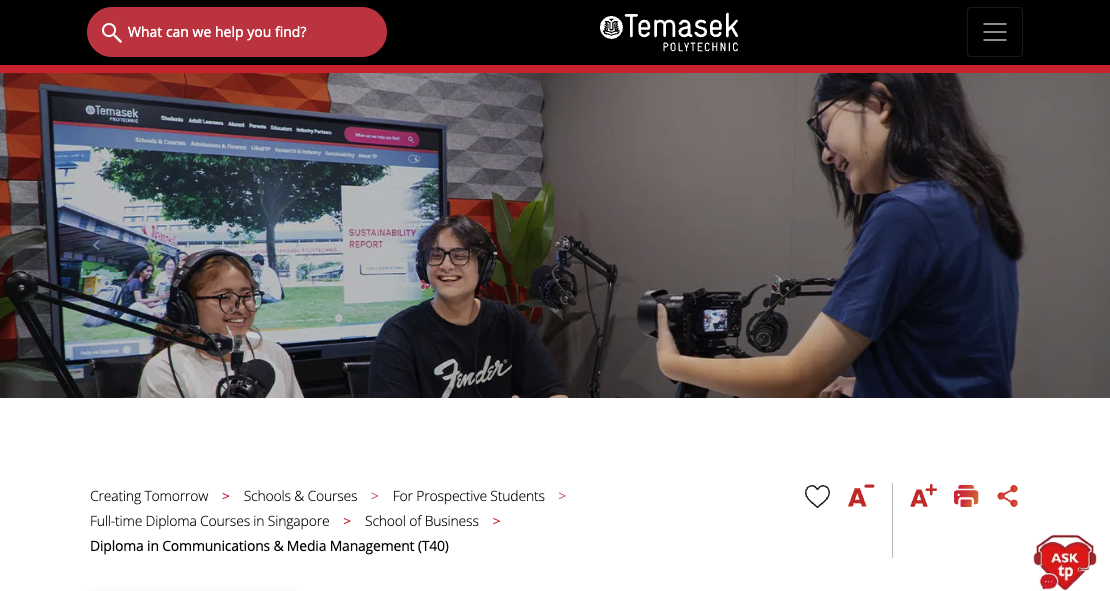
A 2-year full-time or 3-year part-time diploma covering social media, content production and campaign management. Cost ranges from S$22,000 to S$28,000 depending on intake and sponsorship eligibility. The polytechnic partners with agencies and in-house marketing teams for placement. Graduates typically enter coordinator or junior specialist roles at S$2,400 to S$2,800 per month, though salary depends on prior experience and portfolio strength.
Singapore Management University (SMU) Academy, Social Media and Digital Marketing
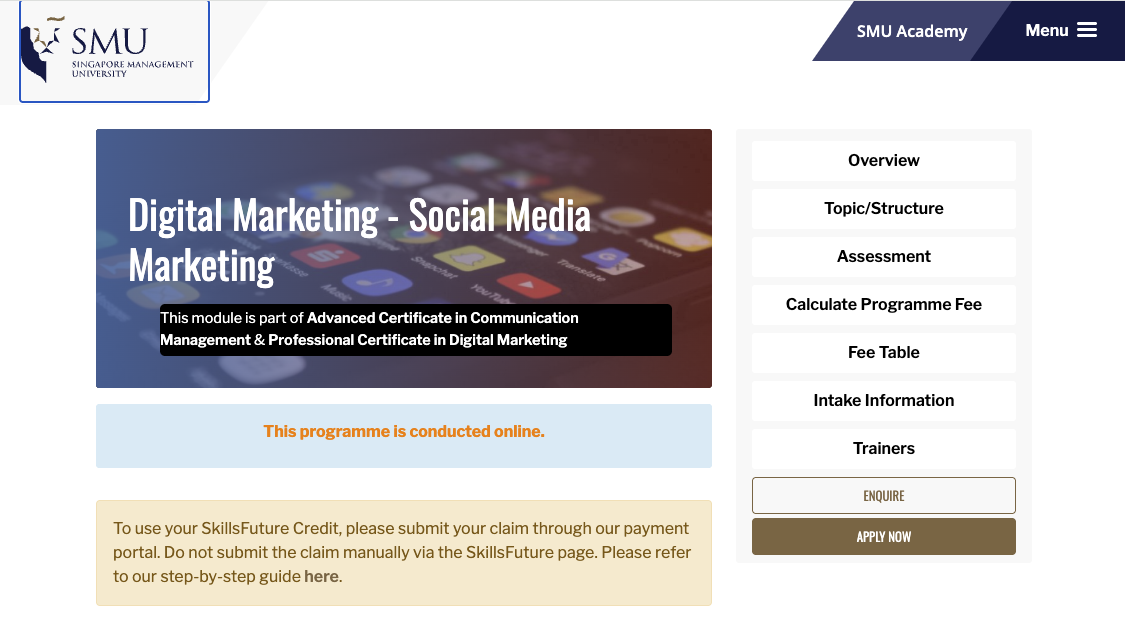
A 6-week evening programme focusing on strategy and analytics, priced at S$1,995. This course suits entry-level to intermediate learners. The cohort composition adds value: peers are mid-career professionals from finance, tech and services sectors, creating a professional network alongside the curriculum.
Bootcamps and Specialist Agencies

A 12-week full-time Social Media Marketing Bootcamp using project-based learning with structured job placement support. Cost is S$15,000 to S$18,000. The programme has strong relationships with tech and agency recruiters. According to course feedback, graduates are often placed within 2 to 4 months of completion, though individual outcomes vary based on portfolio quality and job market conditions.

Courses range from free workshops to paid intensive modules costing S$500 to S$2,500, covering community management, live-commerce and TikTok strategy. Tutors draw on hands-on experience from Carousell’s own marketplace operations, providing locally tailored case studies. While less formally accredited than university programmes, the practical applicability is high for Singapore-based social media roles.
Digital agencies (such as MediaOne, Omnicom Singapore and others) occasionally run in-house bootcamps or partner with recruitment firms to offer subsidised training linked to hiring pipelines. Contact your target employers directly to enquire about such opportunities.
Global Online Platforms (Singapore-Accessible)
Google Skills for All, Digital Marketing and E-commerce Fundamentals
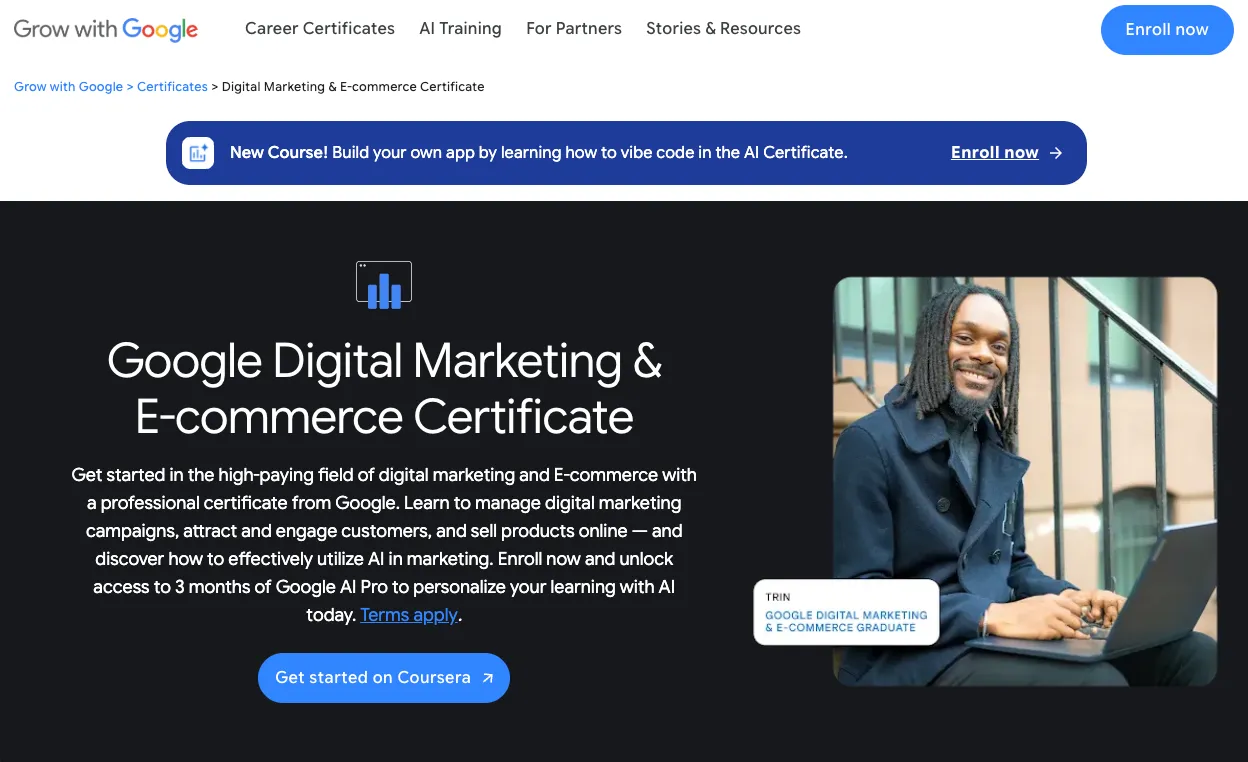
Self-paced, free, and Google-certified at the introductory level. Singapore supports the course through the SkillsFuture initiative. While it does not include hands-on ad account access, the content is current and widely respected by employers.
HubSpot Academy, Social Media Certification
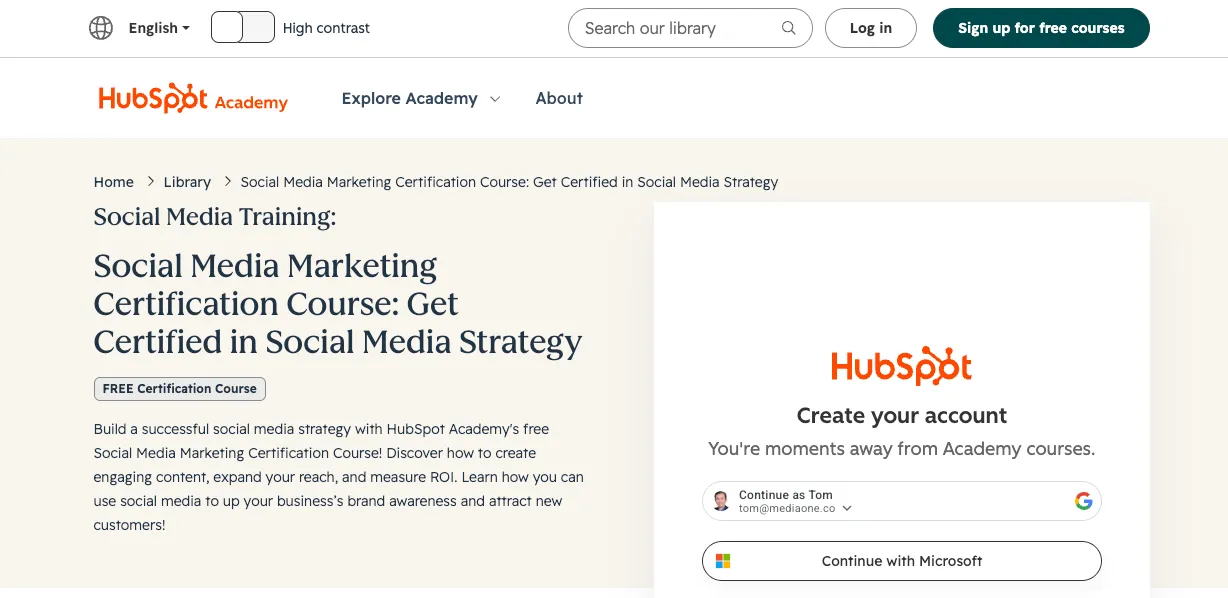
Self-paced with a free tier and optional paid tracks around S$100. Coverage includes strategy, content and analytics. Certificates are genuinely valuable for job applications. Note that the free tier does not include real campaign experience.
LinkedIn Learning, Social Media Marketing Path
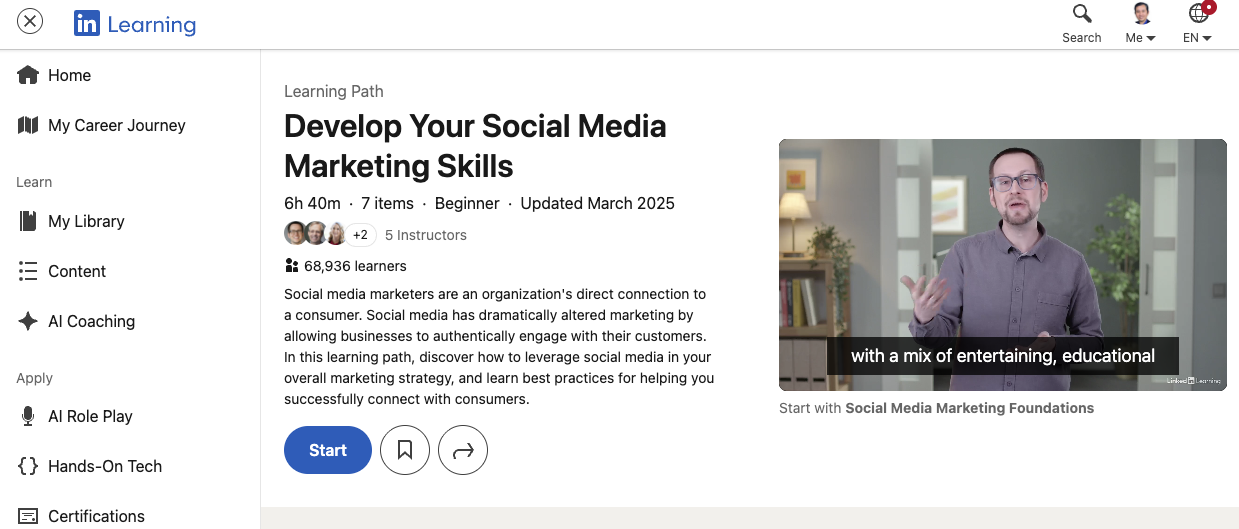
Subscription-based at approximately S$200 to S$300 annually. The platform offers curated playlists on trends, tools and strategy, integrating with your LinkedIn profile for visibility. While less formally accredited, the content is current and platform-native.
Coursera, Meta Social Media Marketing Professional Certificate
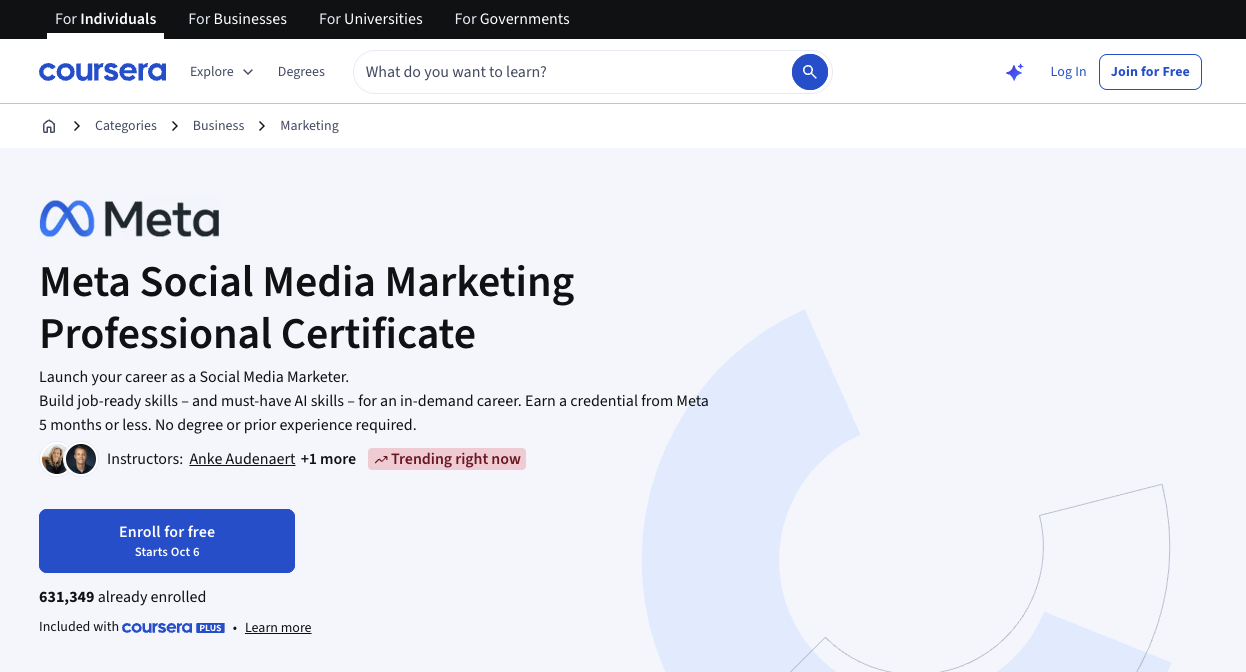
Self-paced via Coursera Plus subscription at S$400 to S$500 annually. The course is industry-backed by Meta and beginner-friendly. Important note: examples and case studies are predominantly US-based, so Singapore-specific context is limited.
Accreditation and Recognised Credentials in Singapore
SkillsFuture Singapore Recognition and Funding
Courses listed on SkillsFuture Singapore and endorsed by the Infocomm Media Development Authority (IMDA) qualify for SkillsFuture credits. Every Singaporean aged 25 and older receives S$500 per year, capped at S$1,000 total, usable on approved courses. Eligibility and credit amounts are subject to current government guidelines as set by the CPF Board.
Polytechnic diplomas automatically qualify. Many certificate courses do as well. Before enrolling, verify eligibility on the SkillsFuture portal; some providers are listed, others are not. Using your credits upfront can offset 30 to 50 percent of course costs.
Industry Certifications and Badges
Certifications from Meta Blueprint, Google Digital Garage, LinkedIn Learning and HubSpot Academy carry weight with employers. They don’t replace a diploma, but they provide modular proof of competency in a specific area, such as Meta Ads Manager or TikTok for Business.
Stacking multiple badges demonstrates breadth. An employer reviewing your resume may recognise serious upskilling when they see Meta Blueprint, Google Analytics, and HubSpot certifications together.
Employer Recognition vs. Formal Accreditation
Large technology companies (Google, Meta, Amazon) and Singapore fintechs (Grab, Gojek) actively recognise their own certifications or partner credentials. Smaller firms often value portfolio evidence above formal credentials. A solid case study or live campaign example frequently outweighs a certificate in hiring decisions.
The general hierarchy is: portfolio evidence, formal diploma, bootcamp completion with placement support, industry certificates, and self-paced completion. Combining as many as possible strengthens your candidacy.
Cost Breakdown and Funding Options in Singapore
Typical Price Points by Format
| Course Type | Duration | Cost (S$) | Funding Eligible |
|---|---|---|---|
| Self-paced online | Flexible | 0–500 | SkillsFuture credits (partial) |
| Part-time certificate | 4–12 weeks | 500–3,000 | SkillsFuture credits, employer sponsorship |
| University extension | 4–8 weeks | 2,500–6,000 | SkillsFuture credits (some) |
| Specialist bootcamp | 6–12 weeks | 3,000–8,000 | SkillsFuture credits (some), employer sponsorship |
| Full-time diploma | 9–24 months | 15,000–40,000 | Tertiary Education Allowance (if aged under 25), SkillsFuture loans, employer sponsorship |
SkillsFuture Credits and Career Development Grants
Every Singaporean aged 25 and older receives S$500 SkillsFuture credits annually, capped at S$1,000 total. Use these to offset part-time certificates or bootcamp fees. If you are retrenched or transitioning sectors, you may qualify for a Career Development Grant of up to S$10,000, subject to means-testing and sector eligibility.
Check eligibility at the SkillsFuture portal or contact the Ministry of Education before enrolling.

Employer Sponsorship and Company Training Budgets
Many companies allocate 1 to 3 percent of payroll to staff development. Request sponsorship from your HR or learning and development department. Some bootcamps negotiate corporate rates for group enrolments, reducing per-person cost.
If your employer supports the course, retention clauses often apply: you may need to remain employed for a set period after completion.
A small number of bootcamps offer income-share agreements (ISA): you pay a percentage of salary, typically 10 to 15 percent, for 12 to 24 months after job placement. Verify terms carefully. Ensure exit clauses exist if you secure work independently or decide the role is unsuitable.

ISAs can reduce upfront cost barriers, but they are only worthwhile if the bootcamp’s placement rate exceeds 80 percent and salary trajectories align with your expectations.
What You Can Expect to Earn After Completing a Course
Entry-Level Roles (Social Media Coordinator, Executive)
Entry-level social media professionals typically earn S$2,200 to S$3,000 per month in coordinator or junior executive roles. Polytechnic diploma holders or bootcamp graduates with strong portfolios command the higher end. Salary varies by employer, location and sector.
Your first role’s title and pay reflect your portfolio strength. A bootcamp graduate with three live campaign case studies may enter at S$2,800; a self-paced learner without real-account experience might start at S$2,200. Individual outcomes depend on prior experience, current market conditions and employer demand.
Mid-Level Roles (Social Media Specialist, Manager)
Professionals with 2 to 4 years’ hands-on experience and demonstrated campaign results earn S$3,500 to S$5,500. Specialisation in paid social, influencer partnerships or community management increases salary expectations.
Progression to this level typically requires moving roles once or twice to gain breadth and negotiate better compensation. Remaining with one employer often results in slower salary growth relative to the market.
Senior Roles (Social Media Manager, Head of Social)
Five or more years’ experience, strategic influence and team leadership typically attract S$6,000 to S$10,000 or higher depending on industry. Fintech and e-commerce sectors pay 20 to 30 percent more than nonprofits, SMEs or traditional retail.
Few people remain as individual contributors at this career stage; most transition into senior marketing or growth leadership roles.
Freelance and Agency Rates
Freelance social media managers in Singapore charge S$1,500 to S$5,000 per month as a retainer or S$50 to S$150 per hour, depending on their portfolio and the calibre of their clients. Specialist freelancers in areas such as TikTok strategy or paid social typically command the higher end of this range.
Agency roles typically pay 10 to 20 percent less than equivalent in-house positions but offer breadth of experience, faster skill development and stronger portfolio-building opportunities.
Common Challenges and How Courses Address Them
Platform Algorithm Changes and Curriculum Lag
Algorithms shift quarterly. Courses cannot remain static. The best providers refresh content monthly and teach principles such as audience intent, creative testing and performance measurement rather than short-lived tactics.
When evaluating a course, confirm that tutors commit to monthly updates or that a community forum supports peer learning. Outdated course content significantly reduces practical value.
Limited Hands-On Experience Before Employment
Career changers often complete courses without managing a real budget or audience. Bootcamps and university extension programmes address this by providing a training budget (S$100 to S$500) and assigning real or simulated projects.
Ask providers directly: “How much live-account experience will I gain? What is the training budget?” Vague or absent answers indicate weak practical readiness.
Lack of Singapore-Specific Context
Courses from overseas platforms rely on predominantly US or UK examples and regulatory contexts. Providers such as Temasek Polytechnic, Carousell Academy and local agencies embed Singapore’s regulatory landscape, including the Personal Data Protection Act and Advertising Standards Authority guidance, alongside case studies from Singapore brands like DBS, Grab, Lazada and Shein SEA.
This local context is difficult to self-teach. For Singapore market entry, locally taught courses provide disproportionate value.
Keeping Up with Emerging Platforms
TikTok, BeReal and niche platforms evolve faster than formal curricula. Supplement formal courses with self-directed learning via TikTok Creator Academy, platform documentation and peer learning through local communities such as LinkedIn groups, Slack networks and practitioner WhatsApp groups.
Budget 3 to 5 hours per month after course completion for staying current with industry trends.
Comparison of Top Three Programme Types (Decision Matrix)
| Factor | Full-Time Diploma | Part-Time Certificate | Bootcamp |
|---|---|---|---|
| Time commitment | 9–24 months | 4–12 weeks | 6–12 weeks |
| Cost | S$15,000–S$40,000 | S$500–S$3,000 | S$3,000–S$8,000 |
| Hands-on projects | Extensive (6–8 campaigns) | Limited (1–2) | High-intensity (2–4) |
| Job placement support | Via polytechnic network | Limited | Structured, high success rate |
| Accreditation | Formal, widely recognised | Variable | Industry-backed, optional badges |
| Suitable for | Career changers, school leavers, those on leave | Working professionals upskilling | Accelerated careers, employed professionals |
| Entry requirements | Secondary 4 or equivalent | None (literacy assumed) | None (motivation key) |
What to Look for in Course Reviews and Alumni Feedback
Red Flags in Provider Claims
Avoid courses that promise job placement or salary guarantees. These claims carry legal risk and are unrealistic. Similarly, bypass providers who emphasise celebrity endorsements over curriculum substance or charge significantly above market rates without justifying the premium.
Verify marketing claims via independent platforms: Google Reviews, CareerFoundry, Course Report and ProductHunt. If a bootcamp claims 95% job placement but has fewer than 10 Google reviews, investigate further. Ask for LinkedIn group links to cohort alumni.
Questions to Ask Providers Directly
Send an email to the provider’s student support address with these five questions:
- What is your tutor-to-student ratio, and do tutors have live industry experience (not just teaching credentials)?
- How much access do I get to a real or training ad account? What budget can I spend?
- If I do not finish on time or the course disappoints, what is your refund or deferment policy?
- Do you provide portfolio review and job board access after graduation?
- Which Singapore companies have hired your recent graduates, and in what roles?
Honest providers respond within 48 hours. Evasive or generic responses warrant caution.
Alumni Outcomes Worth Tracking
Legitimate providers share anonymised placement data, such as “85% employed in digital roles within three months, with a median salary of S$3,200. ” Ask for a LinkedIn group link or a list of three to five alumni you can contact confidentially. Real conversations with recent graduates are invaluable.
Ask alumni these questions: “Would you take the course again?” “What surprised you?” “What was not covered?” “How long to find your first role?” “Are you still in social media, or have you moved into another area?”
Step-by-Step Checklist: Choosing and Enrolling in a Course
Step 1: Define Your Objective (Week 1)
- [ ] Write down your goal: career change, upskill, side income or hobby exploration.
- [ ] Identify your current skill level: beginner (no platform experience), intermediate (managed one platform) or advanced (run paid campaigns).
- [ ] Set a realistic time budget (hours per week) and financial budget (S$). Include SkillsFuture credits if you are eligible.
Step 2: Shortlist Providers (Week 2)
- [ ] Identify three to five providers matching your objective and constraints (time, cost, format).
- [ ] Download and review each course syllabus; confirm platform coverage (Meta, TikTok, LinkedIn, and others).
- [ ] Check SkillsFuture eligibility for each course on the official portal.
- [ ] Read reviews on Google, CareerFoundry and ProductHunt.
Step 3: Vet Tutors and Curriculum (Week 3)
- [ ] Search tutor names on LinkedIn; assess their campaign experience and current role.
- [ ] Confirm hands-on elements: live campaigns, portfolio projects and real ad account access.
- [ ] Attend any free introductory session, webinar or trial class to assess teaching style and tutor accessibility.
Step 4: Ask Critical Questions (Week 3–4)
- [ ] Email providers with your five key questions (see “Questions to Ask Providers” above).
- [ ] Request contact details of two to three alumni who completed the course within the last six months.
- [ ] Clarify refund and deferment policies in writing; screenshot confirmation emails.
Step 5: Secure Funding (Week 4)
- [ ] Check SkillsFuture credit eligibility for your age and citizenship via the official portal.
- [ ] If cost is a barrier, ask your employer about sponsorship, study loans or Career Development Grant (CDG) eligibility.
- [ ] Confirm payment schedule with the provider (deposit or full upfront).
Step 6: Enrol and Set Expectations (Before Start Date)
- [ ] Confirm enrolment; request pre-course reading, software setup or system access details.
- [ ] Block calendar time; notify your manager if attending during work hours.
- [ ] Connect with cohort mates via LinkedIn or the course messaging platform; ask about their backgrounds and goals.
How Social Media Marketing Skills Fit Into the Broader Digital Economy
Crossover With Other Digital Roles
Social media skills form the foundation of broader digital marketing careers. Platform strategy and paid advertising expertise naturally open adjacent roles: performance marketing manager, growth marketing specialist, customer acquisition lead or product marketing manager.
Many professionals earn more in adjacent roles than in pure social media work. A paid search specialist (Google Ads, Bing Ads) or performance marketer across multiple channels often commands higher salaries than a single-platform social media specialist.
Complementary Skills to Develop Alongside Social Media
Data analytics (Google Analytics and SQL basics), copywriting, basic graphic design (Canva and Adobe basics) and video editing (CapCut and Adobe Premiere Lite) measurably strengthen earning power and job prospects. Some courses bundle these; others require self-directed learning.
Budget five to ten hours after the course on each complementary skill to remain competitive. Freelancers particularly benefit: handling copy, design, and analytics independently can significantly increase your client rates.
Singapore’s Digital Transformation Agenda and Skills Demand
Singapore’s Digital Economy Framework and the IMDA’s Tech Talent initiatives explicitly highlight social media marketing and digital customer engagement as priority skills. Demand remains robust across financial services, e-commerce, travel and professional services sectors.
Expect sustained hiring through 2026–2028 as Singapore’s 5,000-plus SMEs and scale-ups accelerate digital customer acquisition strategies. This favours job stability and upward salary mobility for trained professionals.
Practical Next Steps: From Learning to Employment
Building Your Portfolio During and After the Course
As you progress through the course, document every project: screenshots of ads, audience demographics, engagement metrics and write-ups of your strategy and results. Request permission from the provider or a real client (small business, nonprofit) to run a short campaign. By graduation, aim for two to three case studies showcasing different platforms or objectives.
Your portfolio matters more than your certificate. Employers want proof that you can build audiences, optimise ads and read analytics. Screenshots and metrics demonstrate this capability; a diploma alone does not.
Networking and Finding Your First Role
Attend local digital marketing meetups (Marketing Institute of Singapore events, IMDA events, and agency open houses) and join LinkedIn groups focused on social media or marketing. Connect with your tutors and cohort-mates; many job placements flow from within cohorts or personal referrals.
During your course, add tutors and cohort-mates to your LinkedIn network. After graduation, ask them to be sounding boards for your job search. Personal introductions significantly improve your interview-to-offer ratio.
Continuing Education and Staying Current
Plan to invest three to five hours monthly in self-directed learning after the course ends. Follow industry blogs such as Social Media Today, HubSpot Blog and Neil Patel. Take quarterly certification refreshers (Meta Blueprint updates) and stay active in peer communities (Slack communities of practitioners, WhatsApp networks, LinkedIn groups).
Platforms evolve quarterly. Your course will become outdated in specific tactics, but core principles remain valid. Use community forums and peer learning to bridge the gap and stay current with algorithm changes.
Conclusion and Summary
Social media marketing courses in Singapore range from free, self-paced options to intensive 24-month diplomas, each suited to different goals, budgets, and schedules. The right choice depends on your starting point, available time and career intent.
Full-time diplomas unlock institutional recognition and broad skill building but require a nine- to 24-month commitment and an S$15,000 to S$40,000 investment.

Part-time certificates suit upskilling professionals, lasting four to 12 weeks and costing between S$500 and S$3,000. These offer low friction and measurable value.
Bootcamps accelerate career entry through intensive, project-led learning in six to 12 weeks, often with strong job placement support.
Key takeaways: Verify SkillsFuture eligibility and secure credits before paying full price. Prioritise programmes that include hands-on projects and real account access. Verify tutor credentials and alumni outcomes, not marketing claims alone. Plan to invest three to five hours monthly after the course to stay current as platforms evolve.
A structured course accelerates learning compared to self-teaching and significantly improves job market positioning. Individual outcomes depend on effort, prior skills, market conditions and employer demand. Reported salary progression varies based on these factors and is not guaranteed.
Your next step: narrow your shortlist to three providers this week. Request one free preview session or email their support team with your five key questions. Secure contact details of two to three recent alumni and schedule brief calls to validate each programme’s outcomes before enrolling.
Frequently Asked Questions

Google Skills for All (free) and HubSpot Academy’s free tier (optional paid certification, approximately S$100) are the lowest-cost entry points. Both platforms teach core social media fundamentals for free. However, free resources lack hands-on project feedback and formal credentials.
If you want structured learning with certification, SkillsFuture Singapore courses (subsidised by government credits, typically S$200 to S$800 after credits) offer the best value. Check SkillsFuture portal eligibility and credit balance before enrolling.
No. A course teaches skills; employment depends on job market demand, your prior experience, interview performance and application strategy. Courses with strong portfolio-building components and job board access improve your odds significantly, but no provider can guarantee placement.
Courses report placement rates (for example, “85% employed within three months”), but ask providers for the definition: does this include roles outside social media? How many graduates total? Individual results vary widely.
Entry-level social media coordinator and executive roles typically command S$2,200 to S$3,000 monthly, based on job board data and recruiter reports. Salary varies by employer size, sector (fintech pays more than nonprofits) and location.
After 18 months in the role, professionals often report salary increases, though outcomes depend on role scope, performance and market conditions. This is not a guarantee.
What if I do not have prior marketing experience?
Beginner courses start with the fundamentals: platform features, audience targeting, basic analytics, and content planning. You do not need prior marketing experience to enrol in beginner or intermediate courses.
However, if you have any experience in copywriting, design, customer service or sales, you will progress faster. Beginners typically take longer to feel confident with paid advertising (usually weeks four to six of a course).
How do I know if a course is right for me?
Ask yourself: What is my goal (career change, upskill, or freelance income)? How much time can I commit (hours per week)? What is my budget? What is my starting skill level?
Match these answers to the course format: full-time diplomas suit career changers; part-time certificates suit working professionals; and bootcamps suit structured, intensive learners. Request a free trial or preview; chat with alumni. A course that aligns with your goal and learning style is the right one.
Can I use SkillsFuture credits to pay for a course?
Yes, if you are a Singapore citizen aged 25 and above with an active MySkillsFuture account. SkillsFuture credits (typically S$500 to S$1,000 annually, subject to current government guidelines) can fund eligible courses listed on the SkillsFuture portal.
Check SkillsFuture Singapore’s official portal to confirm course eligibility and your credit balance. Credits do not cover 100% of premium courses; you may need to pay the difference.
Should I choose a bootcamp or a diploma?
Choose a bootcamp if you want fast entry into the job market (six to 12 weeks), prefer project-based learning and can commit full-time. Bootcamps cost S$8,000 to S$15,000 and often include job placement support.
Choose a diploma if you want institutional credentials, broader skill coverage (including complementary skills like analytics and copywriting) and prefer part-time or flexible study. Diplomas take nine to 24 months and cost S$15,000 to S$40,000, but larger employers value them.
What if I want to freelance instead of working for an employer?
Freelancing requires the same core skills but adds business development and client management. Courses help build your skill set; building a portfolio and client network is up to you.
Take courses that emphasise case study development and real campaign execution. After graduation, start with friends, nonprofits or small businesses to build portfolio pieces and testimonials. Freelancers with three to five strong case studies and verified client results command rates of S$1,500 to S$5,000 per month or S$50 to S$200 per hour, depending on scope and experience.
How often do I need to retrain as platforms evolve?
Core principles (audience research, engagement, analytics) remain stable. Platform-specific tactics (ad formats, algorithm updates) change quarterly.
Plan to spend three to five hours monthly on self-directed learning. Follow industry blogs, take quarterly refresh courses (Meta Blueprint updates are free and take two to three hours), and stay active in peer communities. This investment keeps your skills current without needing a full retrain every year.
What are common mistakes students make when choosing a course?
Choosing based on price alone without checking tutor credentials or curriculum depth. Not verifying hands-on access to real ad accounts. Trusting marketing claims without checking independent reviews or alumni feedback. Not confirming SkillsFuture eligibility before paying full price.
Avoid these by following the step-by-step checklist in this guide: shortlist three to five providers, vet tutors and curriculum, ask critical questions, and contact alumni before enrolling.