| AI Summary
A social media audit reviews a business’s accounts, content, audience and results. It helps teams decide which channels deserve more time, which need repairs and which need further testing. This guide covers account checks, performance measures, attribution and a Channel Decision Matrix. Each finding becomes an action with an owner, a deadline and a way to measure progress. |
A social media audit is a review of a brand’s social accounts, content, audience and performance. The process involves listing profiles, checking branding and access, measuring results, reviewing audience quality and comparing competitors. The findings help a business decide what to scale, fix, test or retire.

Key Takeaways
- Account ownership and access belong in the audit alongside content and performance.
- Each channel needs a purpose before the team can judge its results.
- Paid and organic activity need separate reporting because their costs and distribution differ.
- Engagement rates need a stated formula; platforms do not always count interactions in the same way.
- Missing tracking calls for further investigation before a channel loses its budget.
- Every recommendation needs an owner, a review date and a measurable result.
A busy social feed can hide problems. Posts go out, followers increase and reports fill with numbers, yet the team still cannot explain which activity helps the business.
A social media audit brings those questions together. Perhaps LinkedIn generates enquiries while Instagram answers customer questions. Perhaps an old Facebook page sends people to an expired offer. Each finding needs a different response.
The process below keeps the focus on decisions. Your team can work through it with platform analytics, website data and a spreadsheet.
What Does a Social Media Audit Cover?
A social media audit examines what a brand runs, who it reaches and what happens afterwards. The review covers public profiles and the work behind them, including account access, content production, advertising and customer replies.

An audit supplies evidence for the next decision. A social media strategy sets the goals, audiences and activity that follow. The two connect, but the audit should first establish what the business can support with its records.
| Audit area | Main question |
| Accounts and access | Which profiles exist, and who controls them? |
| Brand consistency | Do profiles present accurate business information? |
| Content | Which topics and formats produce the intended response? |
| Audience | Does the account reach people the business serves? |
| Performance | What results appear in platform and business records? |
| Resources | How much money and staff time does each channel require? |
The review should also recognise different channel roles. A customer support account may earn its place through resolved enquiries. A recruitment page may support hiring. Direct sales alone cannot judge every account.
How to Prepare for a Social Media Audit
A manageable audit starts with a defined scope. Your team needs to agree on the accounts, review period, business goals and data sources before collecting figures.
Choose the review period and channel goals
A 90-day period can provide a practical starting point for an established account. Seasonal businesses should also compare a similar period from the previous year where records exist. New accounts may need more time before their results support a decision.
Each channel should have one main purpose and a small set of supporting measures:
- Awareness: reaching people in the intended market.
- Consideration: attracting questions, website visits or product interest.
- Sales: generating purchases or qualified enquiries.
- Customer care: resolving questions and reducing unanswered messages.
- Recruitment: attracting suitable applicants.
A channel can serve several purposes, but the audit needs to show which one takes priority. Otherwise, the team may celebrate video views while overlooking a campaign’s enquiry target.
Gather the records before judging performance
The audit needs native platform reports, advertising costs, website analytics and customer records where available. Content calendars and staff time estimates help explain the resources behind the results.
For example, LinkedIn’s analytics exports include reports for content, visitors, followers and competitors. Saved exports also preserve the period reviewed, making later comparisons easier.
Your working file should record the reporting dates, currency, time zone and metric definitions. Any missing data belongs in a limitations column. An empty conversion field means “not measured” until the team establishes otherwise.
Step-by-Step Social Media Audit Process
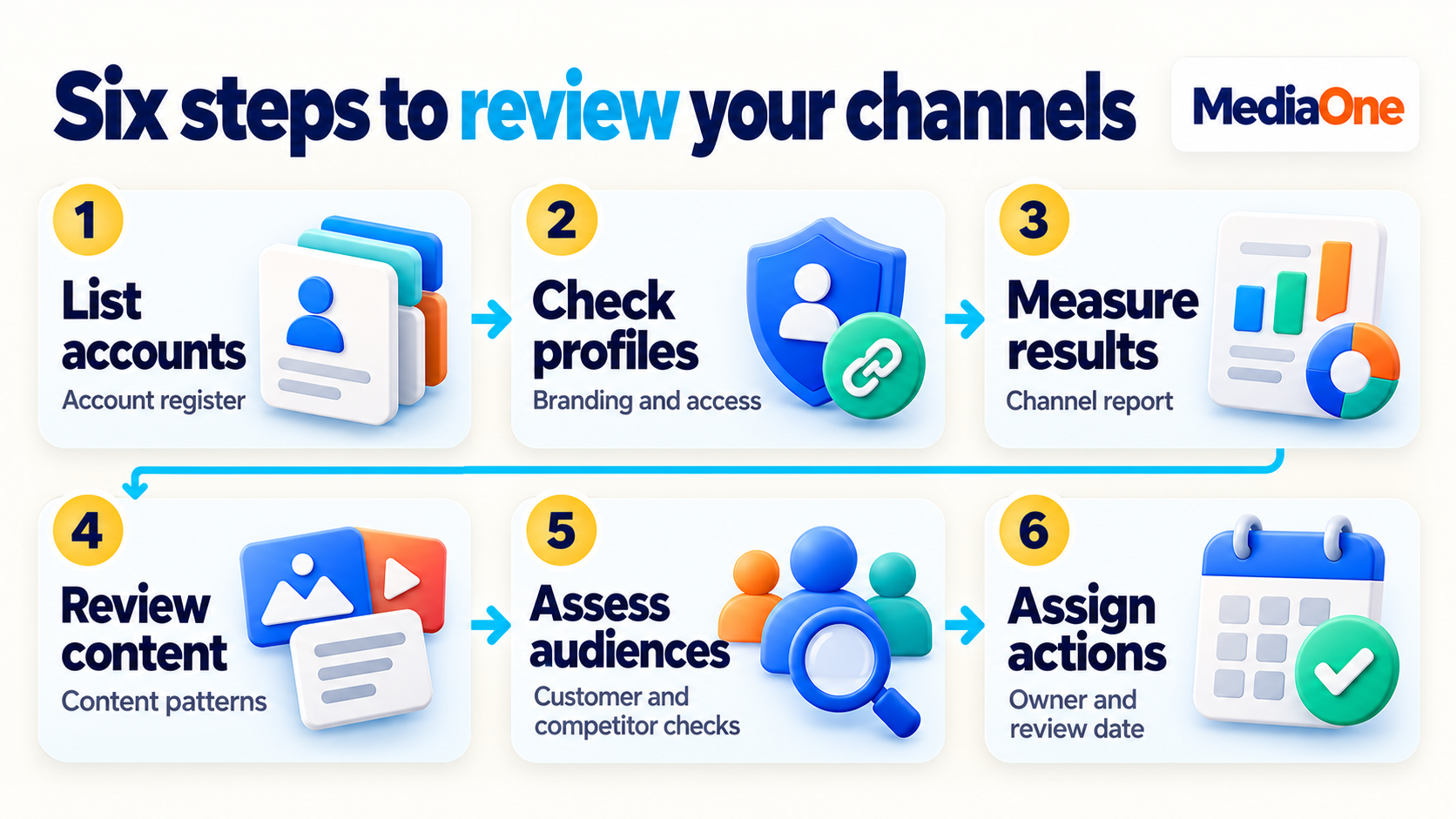
The audit follows six connected steps. Each step adds evidence to the final channel decision, so the team should avoid ranking accounts before checking their records.

Step 1: Inventory every account and check access
The account register should include active profiles, old campaign pages, location accounts and staff-created business pages. Searches for the company name, previous names and common spelling variations can reveal profiles missing from internal records.
Each account needs the following details:
| Field | Information to record |
| Platform and profile URL | The account’s public address |
| Purpose | The audience and business goal it serves |
| Account owner | The person responsible for its operation |
| Access | Approved administrators and connected tools |
| Recovery details | Business-controlled recovery arrangements |
| Status | Active, dormant, duplicate or unauthorised |
| Recent activity | Last post and typical posting frequency |
Account security deserves attention before new content plans. Former staff and suppliers should retain access only where the business still authorises it. Two-factor authentication and current recovery details reduce avoidable access problems.
A dormant account does not automatically need deletion. The business may retain a handle, direct visitors to its main page or preserve customer information. Account merging also depends on the platform’s rules and available features.
An impersonating profile needs a different response. Your team should preserve evidence and use the platform’s reporting process. An account outside the business’s control cannot simply be reassigned to an internal owner.
Step 2: Check branding, links and customer replies
Every live profile should give visitors accurate information. A customer should recognise the business and understand what it offers without comparing several accounts.
The profile check includes:
- Current logo, cover image and business name.
- Bio, service description and contact details.
- Opening hours or service areas where relevant.
- Website links and enquiry buttons.
- Pinned posts and featured offers.
- Captions, subtitles and readable image text.
Consistent branding helps connect these details across channels. Consistency still allows different formats: a LinkedIn introduction and an Instagram bio can sound natural on their respective platforms.
Every important link needs a mobile check. The destination should load, match the offer and allow the intended action. A working homepage link does little for a post promising a booking page that visitors cannot find.
Customer replies belong in this review too. A sample of comments and messages can reveal unanswered questions, repeated complaints and slow handovers. These findings connect social activity with online reputation management, especially when public questions remain unresolved.

Step 3: Review performance against each channel’s purpose
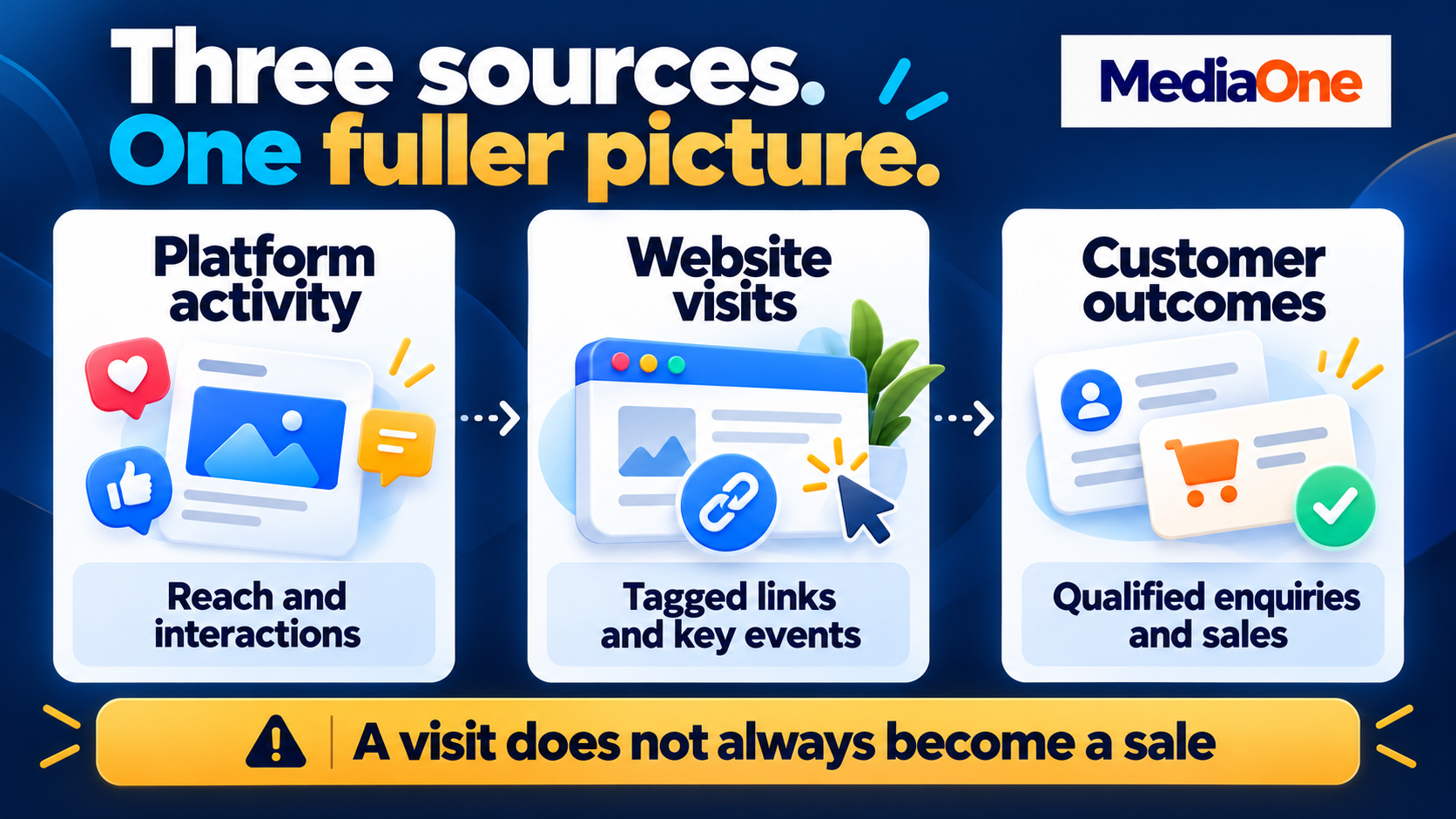
Performance measures should answer the goal set before the audit. Reach describes distribution. Engagement describes interactions. Enquiries, purchases and resolved support requests describe different business outcomes.
A compact measurement table keeps the review focused:
| Goal | Primary measure | Supporting evidence |
| Awareness | Reach within the intended market | Audience location and repeat exposure |
| Content interest | Relevant interactions | Saves, shares and substantive comments |
| Website traffic | Visits from social sources | Landing-page activity and key events |
| Lead generation | Qualified enquiries | Sales acceptance and eventual outcomes |
| Sales | Completed purchases | Revenue, refunds and delivery costs |
| Customer care | Resolved requests | Response times and recurring issues |
Follower count remains background information. Changes can reveal growth, a campaign effect or an unusual spike, but a large audience does not establish commercial value.
Engagement rates also need careful handling. Your team can calculate interactions divided by impressions, multiplied by 100, when both figures exist. The report must state which interactions it includes. A rate based on followers cannot be compared directly with a rate based on reach.
Video needs additional context. YouTube’s engagement reports include watch time, average view duration and audience retention. These measures help show whether viewers remain interested after the opening.
Paid and organic results should appear separately before any combined assessment. A paid campaign buys distribution, while organic publishing carries production and management costs. Their results can inform the same business decision without being treated as identical activities.
Step 4: Check attribution and the route to conversion
Attribution assigns credit to marketing interactions before a customer acts. It helps explain reported results, but different systems can give credit to different parts of the same purchase.
Google Analytics attribution models apply different methods to assigning that credit. The audit should record the model and reporting settings before comparing website results with advertising dashboards.
A practical attribution check includes:
- Campaign links: whether the team applies consistent tracking labels.
- Website actions: whether purchases, bookings or forms register correctly.
- Customer records: whether enquiries become suitable leads or customers.
- Reporting settings: whether date ranges and credit windows differ.
- Missing activity: whether calls, messages or offline purchases escape tracking.
UTM campaign parameters label links with details such as source, medium and campaign. Consistent names help prevent one campaign appearing under several variations in reports.
For example, a LinkedIn post promoting a workshop could carry the source linkedin, medium social and campaign workshop_registration. These labels describe the marketing activity. Customer names, emails and other personal identifiers do not belong in them under Google Analytics’ data requirements.
The GA4 Traffic acquisition report then helps examine the sources of website sessions and associated activity. A customer survey can add context, although remembered discovery sources should remain separate from tracked visits.
Step 5: Evaluate content and audience quality
A content review groups posts by topic, format and purpose. This reveals patterns that a list of the most popular posts can miss.
Each post record should include its subject, format, publication date, organic or paid status, intended action and result. The team can then compare similar posts and identify repeated strengths or problems.
A simple grouping system might include:
- Educational content that answers customer questions.
- Product or service explanations.
- Customer stories published with permission.
- Company and team updates.
- Offers, events and announcements.
- Support content addressing recurring problems.
Existing social media content marketing plans provide context for these groups. The audit checks whether the content delivered its intended response and whether that response deserves further investment.
Post volume also affects interpretation. Ten educational posts and one customer story do not provide equally strong evidence about their formats. Median results can help describe typical performance when one unusually successful post distorts the average.
Audience quality needs its own review. LinkedIn follower analytics can provide demographic information such as location, industry and job function. Available breakdowns can help assess whether followers resemble the people the business serves.
Unusual growth, repeated generic comments or irrelevant interactions deserve investigation. These signs alone do not prove that followers are bots. The report should describe the evidence and its limits without presenting an unverified authenticity score as fact.
Step 6: Compare competitors and customer conversations
Competitor checks give context to the brand’s own findings. A small group of businesses serving similar customers is usually easier to assess consistently than a long list of loosely related accounts.
The comparison should cover:
| Review area | What to examine |
| Positioning | The main promise and supporting evidence |
| Topics | Questions and problems covered repeatedly |
| Formats | Videos, images, documents and discussions |
| Audience response | Questions, objections and shared experiences |
| Customer service | Visible replies and unresolved concerns |
| Missed topics | Relevant questions receiving little attention |
Public figures have limits. Your team cannot establish a competitor’s sales, profit or total advertising spend from visible posts. A popular campaign may receive paid support that the comparison does not capture.
Customer conversations can reveal more than posting frequency. Repeated questions about delivery, pricing or setup suggest subjects the brand could explain better. Tracking brand mentions also helps identify discussions outside the company’s own feeds.
Creator activity should receive the same scrutiny. An influencer marketing review needs audience relevance, agreed deliverables and recorded outcomes. A creator’s follower total alone cannot establish whether a partnership serves the business.
Turning Audit Findings Into Recommendations
The audit report should separate observations from decisions. “Instagram enquiries fell” describes a result. “Repair the booking link and review completed enquiries next month” gives the team something to do.
Recommendations should explain the evidence, the proposed action and the expected result. The report should also show uncertainty, particularly where tracking or customer records remain incomplete.
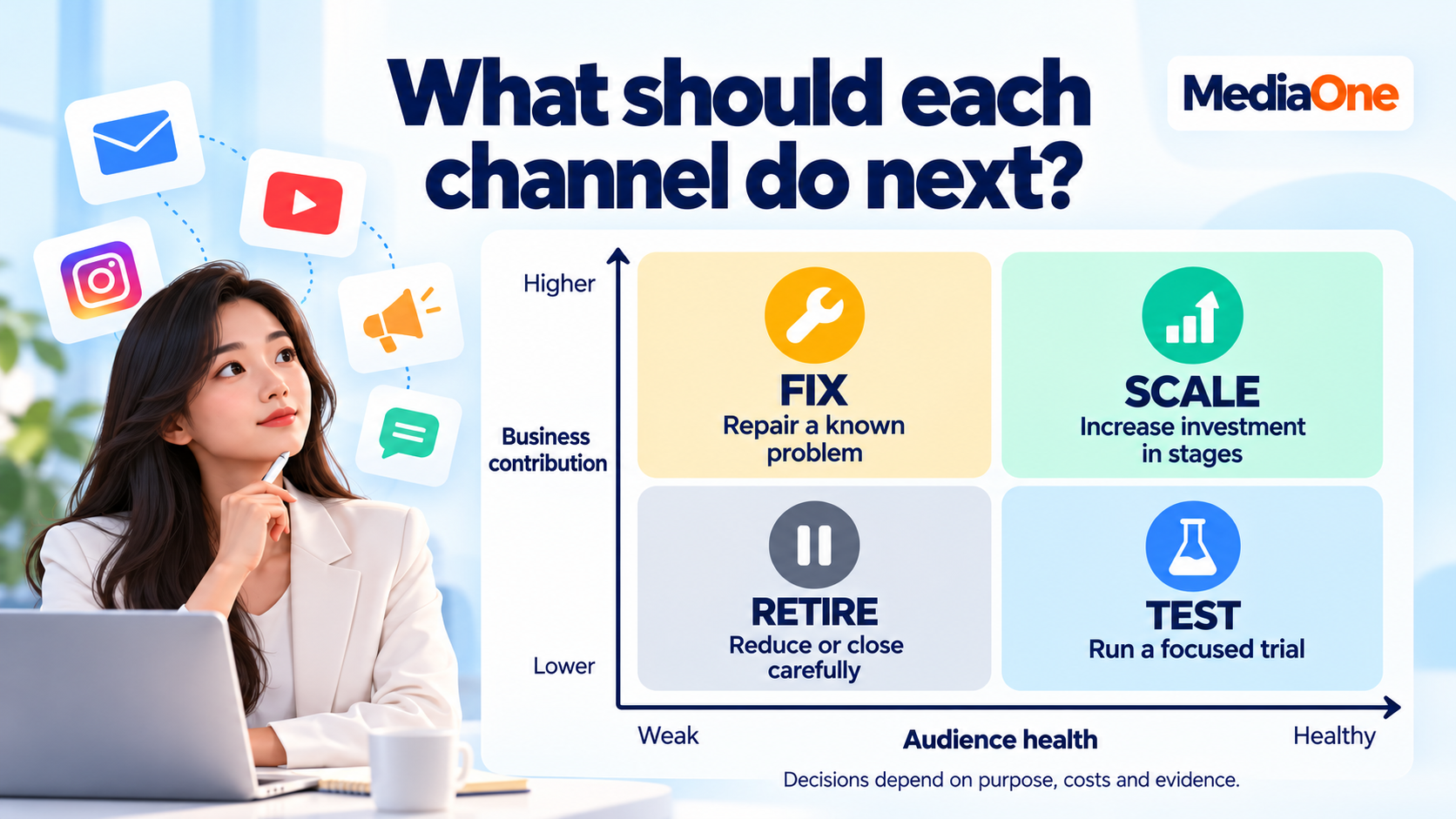
The Channel Decision Matrix
The Channel Decision Matrix groups accounts into Scale, Fix, Test or Retire. It is a planning aid, with decisions based on the business’s goals and evidence.
The matrix considers two areas:
- Business contribution: outcomes relevant to the account’s purpose, assessed alongside its costs.
- Audience health: whether the account reaches relevant people and sustains meaningful interaction.
A business should define acceptable results from its own economics and operating needs. A small account producing valuable enquiries may deserve continued investment. A high-reach account may need changes if its audience cannot buy or use the service.
| Decision | Evidence | Next action |
| Scale | Relevant audience and repeatable results | Increase investment in measured stages |
| Fix | Valuable outcomes with an identifiable problem | Repair the issue and review performance |
| Test | Relevant audience with uncertain contribution | Run a focused test with a deadline |
| Retire | Persistently weak results and no essential role | Reduce activity or close carefully |
The retirement decision needs care. Missing tracking, a long sales cycle or a customer support role can explain low recorded sales. The team should resolve those questions before withdrawing resources.
A worked example of channel decisions
Consider a hypothetical Singapore training company reviewing LinkedIn, Instagram and Facebook. Before the audit, the team gave each channel similar attention and judged performance mainly through likes and follower growth.

The records suggest different actions:
| Channel | Audit finding | Decision |
| Relevant business enquiries appear repeatedly in customer records | Scale | |
| Relevant engagement continues, but enquiry links are not tracked | Test | |
| Customers ask course questions, but replies are inconsistent | Fix |
LinkedIn receives a measured increase in resources, with enquiry quality reviewed alongside volume. Instagram receives tagged links and a test of a course-specific landing page. Facebook receives a named person responsible for customer questions.
The example does not establish that one platform is always better. Each decision follows the account’s role and available evidence. A later review may change the allocation.
Separate advertising returns from business profit
Financial recommendations need consistent definitions. Advertising revenue does not equal profit, and organic activity still requires staff time, production and tools.
A hypothetical campaign with S5,000inattributedrevenueandS1,000 in advertising spend has a reported return on ad spend of 5. That figure excludes production costs, service delivery, refunds and other expenses.
The audit should keep these measures distinct:
- ROAS: attributed advertising revenue divided by advertising spend.
- Cost per qualified lead: defined campaign costs divided by qualified leads.
- Marketing ROI: attributable profit after marketing costs, divided by marketing costs.
Any ROI calculation should name the included costs and explain the attribution limits. For Facebook marketing, for example, platform-reported purchases should be checked against business records before the team treats reported revenue as a reason to increase spending.
Give each recommendation an owner and review date
A short action register makes the audit easier to implement. Each row needs one problem, one action and one person responsible for completion.
| Finding | Action | Owner | Success measure |
| Old profile links | Replace and test destinations | Account manager | All listed links reach the intended page |
| Missing campaign labels | Apply the naming system | Analytics lead | New campaign visits appear consistently |
| Unanswered course questions | Assign message coverage | Customer service lead | Fewer enquiries remain unresolved |
| Weak service explanations | Test posts answering common objections | Content lead | More relevant questions or enquiries |
Production findings should also feed into content marketing. A repeated customer question can become a social post, a service-page explanation or a demonstration video, depending on where people need the answer.
Schedule reviews and avoid rushed decisions
A practical routine can combine monthly checks, quarterly channel reviews and a broader annual audit. The right frequency depends on activity, spending and the pace of change.
Additional reviews may follow a rebrand, a campaign failure, an access problem or an unexpected audience change. These events can affect several accounts before the next scheduled report.
Common errors deserve a final check:
- One successful post should not determine the whole content plan.
- Paid distribution should not inflate an organic comparison.
- Missing data should remain visible in the report.
- Small samples should not support confident claims.
- Customer support activity should retain its own measures.
Some budget decisions may justify an incrementality test, which compares outcomes between groups receiving different exposure. Test duration and design depend on purchase cycles, sample size and operational limits. A fixed two-week test cannot answer every business question.
Make Your Social Media Audit Lead to Action
A social media audit should leave the business with decisions it can carry out. Accurate account records, comparable reporting and customer outcomes help the team identify what deserves more investment and what needs attention first.
MediaOne’s social media marketing services connect channel planning, content and reporting with business goals. Our team can help turn audit findings into priorities for your next campaign.
FAQs About Social Media Audit
A pre-launch audit can review existing brand accounts, reserved handles and profile details. It can also assess how comparable businesses communicate with customers. Performance conclusions remain limited because the new business has no publishing or campaign history.
Should employee profiles appear in a company audit?
Employee profiles can appear where staff agree to represent the business through advocacy or sales activity. The review should focus on agreed business activity and public brand references. Personal accounts should not be treated as company-owned assets.
AI can help group post topics, summarise supplied records and suggest questions for further review. Its output depends on the data provided. People still need to verify calculations, interpret business context and approve decisions. Confidential customer information should remain protected.
What should an agency hand over after an audit?
An agency should provide the account register, reviewed exports, metric definitions, findings and action register. The handover should explain limitations and show how each recommendation follows from evidence. Business-controlled access helps the client continue reporting after the engagement ends.
How should location accounts appear in an audit?
Location accounts should appear separately before results are combined. Each branch may serve a different audience, operating area or service mix. A combined total can hide a branch with outdated details, unanswered enquiries or strong local performance.
A focused review can establish affected accounts, authorised access and where the issue is spreading. That immediate assessment differs from a full performance audit. The wider review can follow once the team has addressed urgent communication and account problems.