| AI Summary
Online reviews help customers assess a business before they visit, book or buy. Singapore businesses can manage them through fair requests, accurate profiles, thoughtful replies and service improvements. Google allows businesses to request honest reviews, but prohibits incentives and requests aimed only at happy customers. Ratings provide a starting point; the written feedback explains the experience behind them. |
Online reviews are public ratings and comments about a customer’s experience with a business, product or service. They help people compare options before spending money. Businesses can earn reviews through honest requests, respond to feedback professionally and use repeated comments to improve their products, service and customer information.
Key Takeaways
- Review details explain the score. Comments about delivery, waiting times or product quality help readers assess what to expect.
- Platform rules differ. A collection method allowed on one website may breach another platform’s rules.
- Recent feedback adds context. Older reviews may describe staff, products or processes that have since changed.
- Replies need a purpose. A specific answer or service update gives readers more than repeated thank-you messages.
- Complaints need an owner. A response has limited value if nobody follows up on the problem.
- Review counts need context. Customer numbers, business age and purchase frequency affect how much feedback a business receives.
A café owner in Tiong Bahru, a salon manager in Tampines and an online retailer face a shared challenge: customers can form an opinion before speaking to the business.
Online reviews bring those opinions into view. A few lines about an appointment, purchase or delivery can answer questions that the business’s website leaves open.
The work starts with understanding what customers need to know. A sensible review process then helps the business collect feedback, answer concerns and improve the experience behind its ratings.
Why Customers Read Online Reviews Before Buying
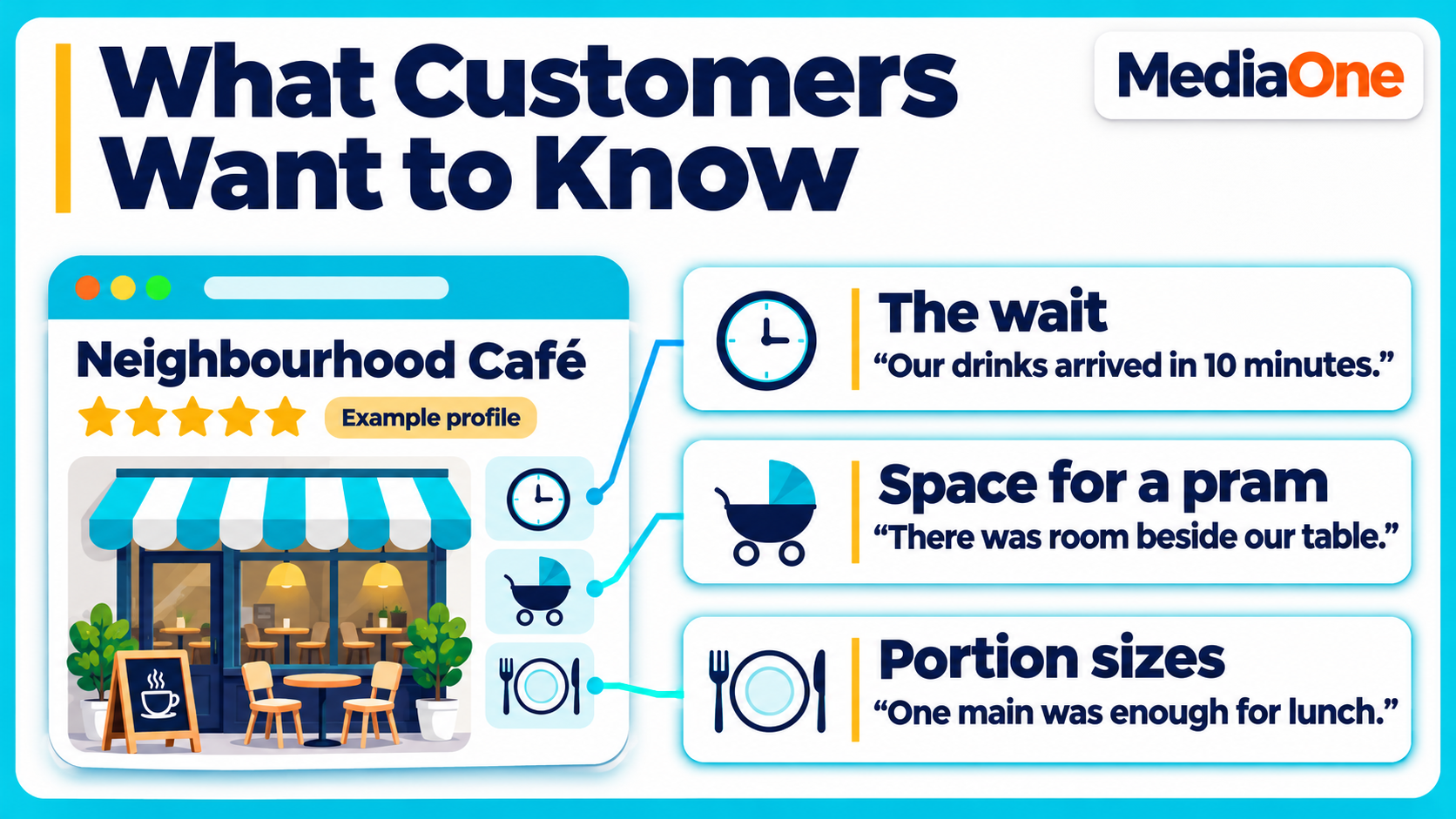
Online reviews help people judge an experience they have not had yet. A restaurant menu shows prices and dishes. Customer feedback may explain portion sizes, noise levels or the wait for a table.
Reviews answer practical questions
Customers often look for information linked to their own needs:
| Customer | Question a review may answer |
| Parent booking a haircut | Did the staff treat the child patiently? |
| Shopper buying shoes online | Did the size match the product description? |
| Homeowner hiring a cleaner | Did the team arrive within the agreed time? |
| Office manager ordering lunch | Did the food arrive ready for the meeting? |
| Visitor choosing a café | Was seating available during a busy period? |
Specific comments give readers something to compare. “The delivery arrived before our lunch meeting” says more than “Great company”.
That detail is one reason positive online reviews can support a purchase decision. The value comes from what the customer describes, as well as the rating.
A review adds evidence to a business claim
A website might promise careful packaging. A customer photo showing an undamaged order adds another view of that promise.
Reviews also expose gaps. Several comments about unexpected charges may suggest that the price page needs more explanation.
The business benefits when its advertising, website and service describe the same experience. Consistent marketing communications help customers understand what they are buying before they arrive.
How Ratings, Review Counts and Dates Affect Decisions
A star average is a quick signal. The number of reviews, their dates and the experiences described help readers interpret it.
No single rating tells every customer whether a business will meet their needs. A quiet café and a lively café can both receive positive reviews from different people.
The same rating can tell different stories
The following example describes two fictional cafés:
| Review detail | Cafe A | Cafe B |
| Average rating | 4.3 stars | 4.3 stars |
| Review count | 12 | 60 |
| Latest review | Four months ago | This week |
| Written feedback | Mostly short ratings | Comments about food, seating and service |
| Owner replies | None visible | Relevant answers to questions and complaints |
Cafe B gives the reader more information to assess. That does not prove its food or service is better.
Cafe A may be new, serve fewer customers or receive feedback elsewhere. Comparisons need that context.
Recent reviews describe the current experience
A review from last week may reflect today’s opening hours, menu or delivery service. A review from several years ago may describe a previous team.
Fresh feedback helps readers assess whether an old complaint still appears. Repeated comments about late deliveries deserve attention even when the overall rating remains high.
Recency should not become a claim that every newer review has more ranking value. Google does not publish a simple weighting formula that businesses can apply.
Reviews can support local search visibility
Google identifies relevance, distance and prominence as factors in local results. Its explanation of local ranking factors states that more reviews and positive ratings can help a business’s local ranking.
Reviews therefore belong within small business local SEO, alongside accurate categories, business details and website information.
A larger review count does not guarantee first place. Location and the search itself still affect which businesses appear.
Which Review Platforms Deserve Attention?
A neighbourhood service business and an online shop may need different review systems. A business with several sales channels may need more than one.
| Platform or review location | Main role | What the business should assess |
| Google Business Profile | Feedback about a local business or location | Profile eligibility, branch accuracy and customer activity |
| Online marketplace | Feedback about purchases made through that marketplace | Seller rules, order links and dispute procedures |
| Own ecommerce website | Reviews of individual products | Product matching, moderation and mobile display |
| Travel or booking platform | Feedback about stays, attractions or bookings | Relevance to the business and booking process |
| Specialist directory | Feedback within a particular sector | Audience activity, credibility and collection rules |
Customer activity should guide the choice
The team can ask new customers where they checked the business before booking. Website referral data and enquiry records may add context.
A short list of active platforms is easier to manage than several neglected profiles. Each selected platform needs someone responsible for checking it.
Product reviews and business reviews serve different needs
An online retailer needs to keep those experiences separate enough for shoppers to understand them. A complaint about a courier should not become the only information available about a product.
Reviews work best within an ecommerce marketing strategy that also explains delivery, returns, product features and payment options.
How to Prepare Google Business Profile for Reviews
A business should check its profile before sending customers to it. The wrong branch, an old phone number or outdated hours can create avoidable complaints. The review process needs a reliable place to begin.
Ownership and verification come first
Google chooses the verification methods available to each business. Depending on the profile, these may include video recording, phone or text, email, live video call or mail. Businesses cannot assume that postcard verification will be offered.
The person managing the profile should follow the options shown in the account. Google may require more than one method.
Verification confirms the business’s authority to manage its profile. It does not certify the quality of its products or service.
Profile details need a customer check
A profile check should cover:
- Business name: The name customers recognise from the business’s real-world branding.
- Location or service area: The place customers visit or the area the business serves.
- Opening hours: Regular hours and relevant holiday changes.
- Phone and website: Working contact details that reach the right business.
- Categories and services: Accurate descriptions of what the business provides.
- Photos: Current images that represent the location or offering.
Accurate details support local SEO optimisation and reduce confusion before a visit.
How to Ask for Online Reviews Fairly
A review request should invite an honest account of a real experience. The customer decides whether to respond and what to write.
Timing should match the experience
The right moment depends on what the customer bought:
| Business type | Possible request point |
| Café or restaurant | After the visit |
| Salon | After the appointment |
| Online retailer | After delivery and time to try the item |
| Home repair business | After the agreed work is complete |
| Subscription service | After the customer has experienced the service |
A request sent before delivery asks someone to judge an unfinished experience. A request sent months later may arrive after the details have faded.
The team should choose a repeatable point in the customer process. Timing should not depend on whether staff expect praise.
A short request leaves room for an honest answer
A neutral message might say:
Thank you for visiting [business name]. Your feedback can help other customers understand the experience. An honest review is welcome through the review link below.
The final message needs a working review link and enough context for the recipient to recognise the business.
Google supports review requests through a link or QR code. Customers must sign in to a Google Account to submit a review, so a business should not promise an account-free process.
The request should be easy to complete
A phone test can reveal problems before customers encounter them:
- The link opens the correct business or branch.
- The message explains why the customer received it.
- The QR code scans at the size used.
- The destination works on a mobile screen.
- The customer can decline without pressure.
Review Collection Mistakes That Can Damage Trust
A business can undermine its review profile while trying to improve it. The main risk comes from influencing who posts, what they say or the score they choose.
Rewards are not allowed for Google reviews
Google’s fake engagement and rating manipulation policy prohibits payment, discounts, free goods or services in exchange for reviews. The restriction also covers rewards for changing or removing a negative review.
An offer of a free drink for any Google review still creates a problem. The business does not avoid the rule by accepting all star ratings.
A normal refund or complaint remedy should remain separate from any request about the customer’s review.
Review gating filters out unhappy customers
Review gating happens when a business gives satisfied customers a public review link while directing dissatisfied customers only to a private form. Private feedback channels can help a business resolve concerns. They should not serve as a filter that hides negative experiences from public review requests.
Google also prohibits selectively asking for positive reviews. Staff should avoid asking customers for a particular score or supplying wording for them to copy.
Purchased reviews create wider risks
A seller promising a bundle of five-star reviews cannot supply genuine customer experience on demand. Google’s Business Profile restrictions can include temporarily blocking new reviews, unpublishing existing ratings or displaying a warning that fake reviews were removed. The safer investment is a service process that earns feedback and gives staff time to handle it.
How to Reply to Reviews Without Sounding Scripted
A review reply has two audiences, the person who posted it and the people reading afterwards. The reply should address the experience described. Repeated promotional messages can make the business sound inattentive.
Positive and neutral reviews need relevant replies
A positive review about careful packing could receive:
Thank you, Mei. The packing team will appreciate your feedback. We’re pleased the glasses arrived safely.
A mixed review about good food and slow service needs both points acknowledged:
Thank you for your feedback. We’re pleased you enjoyed the food, and we’re sorry about the wait. The manager will review the service delay with the team.
These examples show tone and structure. Each business should reply using facts it has checked.
Negative reviews need a calm response
A practical reply has four parts:
- Acknowledgement: The response recognises the concern.
- Apology where appropriate: The business accepts a confirmed mistake.
- Next step: The customer knows how the concern will be investigated.
- Private contact option: Personal or order details stay out of public view.
Google’s review management tools allow verified businesses to publish, edit and delete their own replies. A business cannot directly delete a customer’s review.
A specific example helps
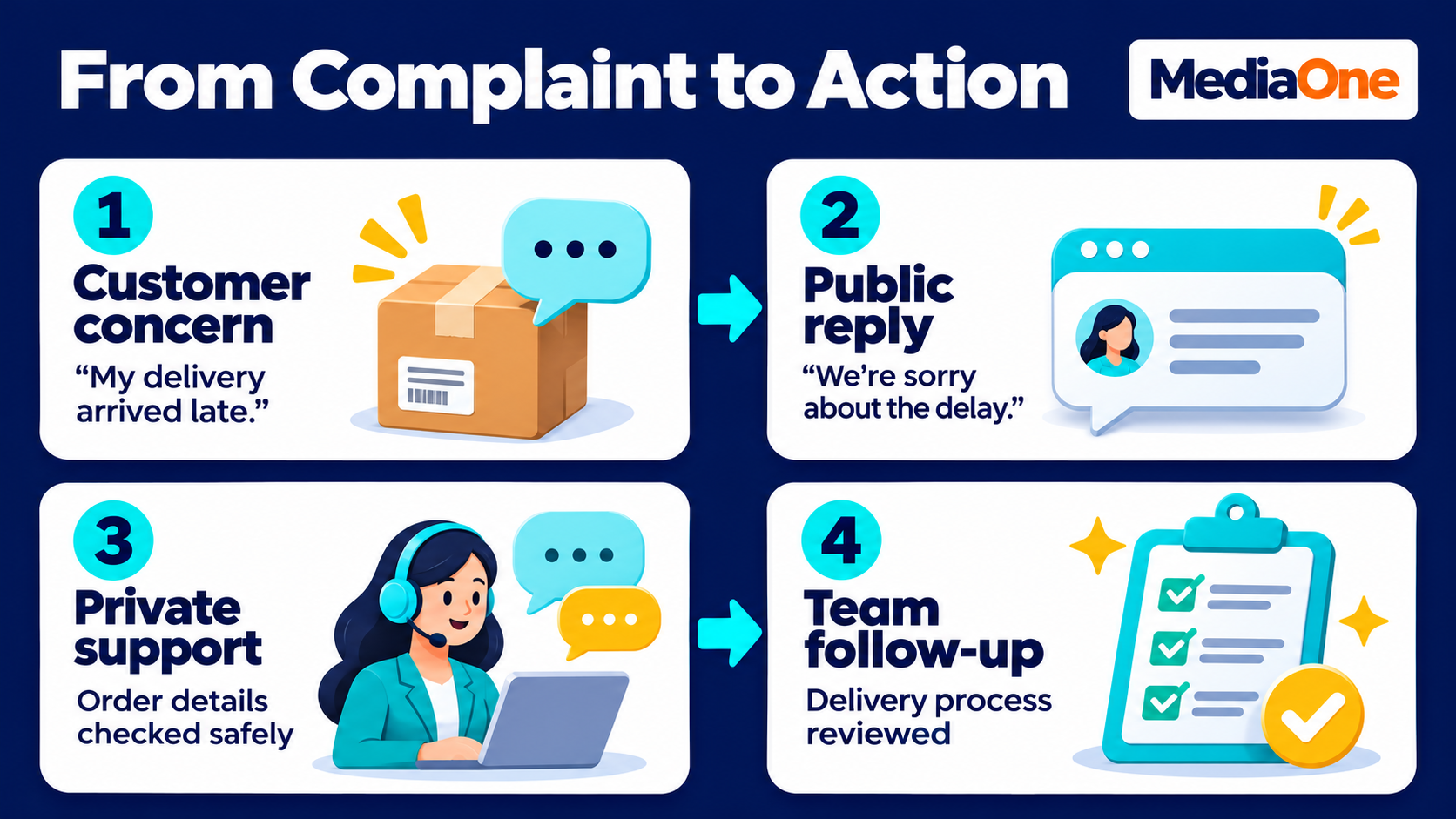
For a fictional late-delivery complaint, the business might write:
Thank you for raising this. We’re sorry your order arrived after the agreed delivery window. Our support team can check what happened. A message to the support email on our website, with your order number, will help the team investigate.
The reply avoids promises about a refund before anyone has checked the order.
A business should also avoid posting addresses, phone numbers, booking records or payment information to defend itself.
What to Do About Suspected Fake Reviews
A review that the team cannot recognise deserves investigation. An unfamiliar display name alone does not prove that the review is false.
Evidence should come before an accusation
A review check can record:
- The review URL, date and wording.
- The location or product mentioned.
- Any matching booking, order or support record.
- Repeated wording across suspicious posts.
- The specific platform rule that may have been breached.
A sudden cluster can justify a closer look. It cannot establish dishonesty by itself. A public accusation may create another problem if the customer’s experience turns out to be genuine.
Removal depends on a policy breach
Google accepts reports of reviews that violate its policies. A business’s disagreement with a complaint is not, by itself, a reason for removal.
The report should identify the relevant problem and include available evidence. Repeated angry replies do not strengthen the case.
The team can continue handling genuine customer concerns while the report is assessed. Any public response should remain brief and avoid repeating abusive or private content.
How Reviews Can Improve Products and Service
A review programme becomes more valuable when feedback reaches the people who can act on it. A polite reply may help the conversation, but the same complaint will return if the underlying process stays unchanged.
Repeated themes need named owners
A simple tracking sheet can connect feedback with action:
| Review theme | Possible issue | Person responsible | Possible improvement |
| Long waits | Appointments run over | Outlet manager | More realistic booking intervals |
| Unexpected charges | Prices lack detail | Sales manager | Itemised quotes before approval |
| Wrong sizes | Product information is incomplete | Ecommerce manager | Better measurements and size notes |
| Missed deliveries | Handover information is incomplete | Delivery lead | Address checks before dispatch |
| Unanswered calls | Enquiries lack coverage | Customer service lead | Call handling and callback checks |
These are starting points for investigation. The review alone may not reveal the full cause. One detailed complaint about a serious failure can need attention even when no similar review exists.
Service recovery needs follow-through
A complaint record should show who contacted the customer, what the business checked and whether any agreed action happened. That follow-through supports customer retention. A customer has more reason to return when the business resolves the issue and prevents a repeat.
Recovery does not guarantee loyalty or a higher rating. The customer remains free to judge the experience.
Feedback can reveal missing website information
Repeated questions about parking, delivery areas or extra charges may point to missing information before the sale. The website can answer those questions in the relevant place. A product page might need measurements; a booking page might need late-arrival terms.
The team should check the facts before publishing an update. A review can identify a problem without providing the correct answer.
How to Display Reviews on an Ecommerce Website
Reviews should appear where they help a shopper assess the product or service being considered.
Review displays need context
A practical review section can include:
- The overall rating and number of reviews.
- The date of each review.
- The product or variation purchased, where available.
- The customer’s written account.
- Filters that help shoppers find relevant experiences.
- An explanation of verified-purchase labels, if used.
A clothing shopper may want comments about sizing. A buyer comparing headphones may care more about comfort and battery life. The display should remain readable on a phone, including longer comments and business replies.
Moderation should follow published rules
A store needs rules for spam, threats, personal information and unrelated content. Negative feedback should not disappear simply because it criticises the product. Consistent moderation helps readers understand what the review section represents.
A review tool should also allow the business to export its data. That reduces the risk of losing customer feedback when changing suppliers.
Website reviews do not guarantee search-result stars
Google’s review snippet requirements distinguish eligible product reviews from reviews about a business itself. Reviews controlled by the business being reviewed are not eligible for self-serving LocalBusiness or Organization review stars, including reviews displayed through third-party widgets.
Product review features have separate requirements. Correct technical setup does not guarantee that Google will display stars.
What to Measure Each Month
A monthly review check should show both customer feedback and the business’s response to it. The star average belongs in the report, but it should not be the only figure.
| Measure | What it helps the team assess |
| New reviews | Whether feedback is arriving |
| Review dates | Whether the profile reflects recent experiences |
| Unanswered concerns | Whether customers still need a response |
| Response time | Whether reviews receive timely attention |
| Repeated themes | Which service issues continue |
| Completed actions | Whether the business followed through |
| Rating by location | Whether one branch needs closer attention |
Business context keeps comparisons fair
A busy outlet will usually have more opportunities to receive reviews than a smaller branch. The team should compare review activity with customer numbers, opening dates and the type of service. Raw totals can hide those differences.
A low-volume specialist business may receive detailed feedback less often. Its review process still needs to work whenever an appropriate opportunity arises.
Sales results need careful interpretation
More reviews and more bookings can happen at the same time without proving that one caused the other. Promotions, seasonal demand, pricing and opening hours can also affect results.
Review reporting can sit within wider online reputation services, while keeping everyday service actions close to the team responsible for customers.
A Weekly Routine for Managing Online Reviews
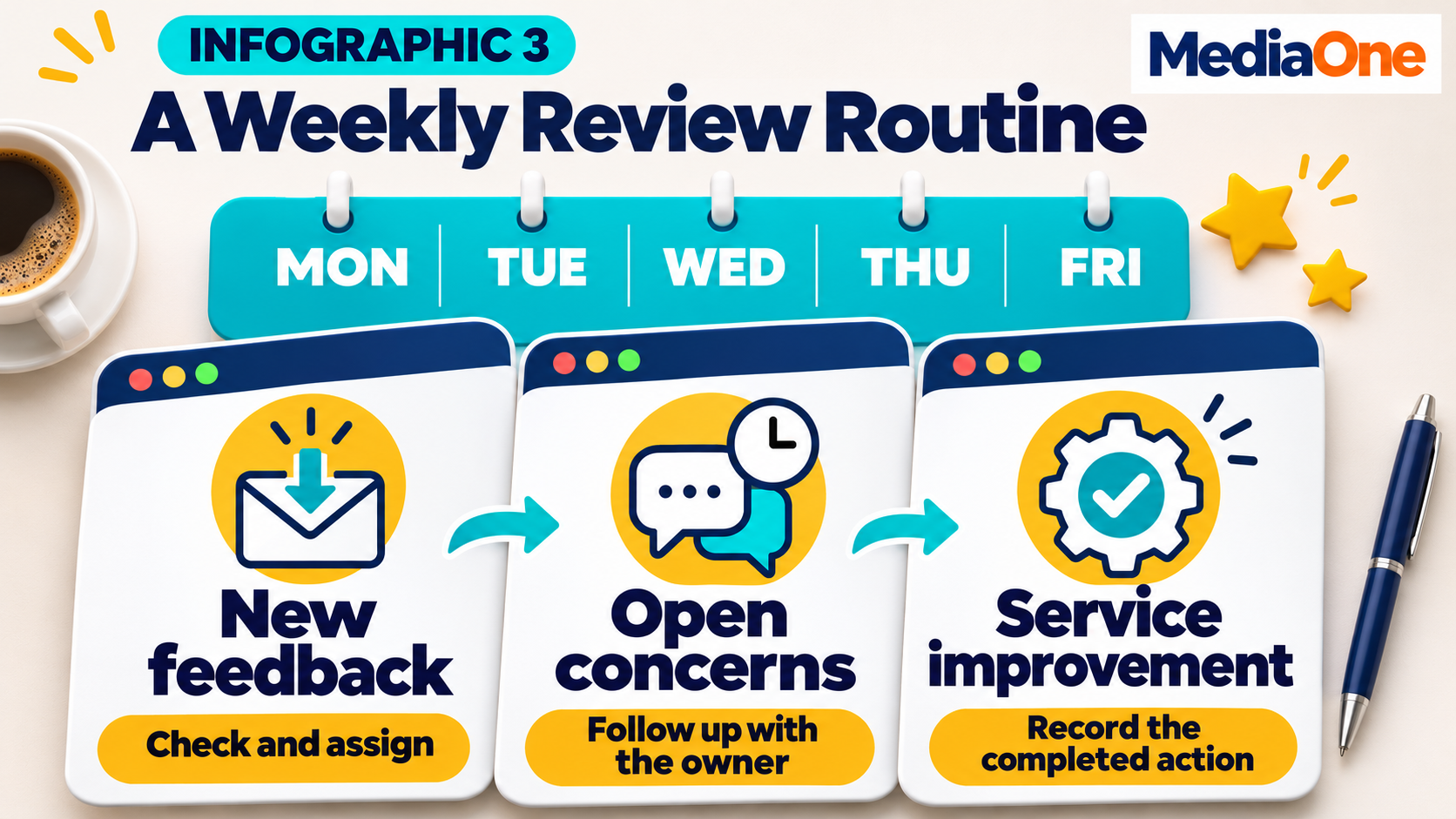
A small business can begin with a shared checklist and a named owner. Software becomes more valuable when several branches or platforms make manual checks difficult. The routine needs a backup person so reviews do not go unattended during leave.
| Frequency | Task | Expected result |
| Each working day | Check selected review platforms | New concerns reach the right person |
| Each working day | Draft and check necessary replies | Responses reflect verified facts |
| Weekly | Review unresolved complaints | Each open issue has an owner |
| Weekly | Test request links and QR codes | Customers reach the correct destination |
| Monthly | Group themes and assess actions | Repeated problems receive attention |
A next-working-day check can serve as an internal target. It is not a universal platform deadline. The business should choose a response schedule it can maintain and give urgent concerns faster attention.
Making Online Reviews Part of Everyday Customer Care
A review request creates an opportunity for customers to describe their experience. The business earns trust through what happens before and after that request.
A manageable starting point is one active platform, one review owner and one recurring service issue to investigate. A business considering outside support can assess its collection process, response workload and unresolved concerns before deciding what help it needs.
FAQs About Online Reviews
Does a customer need a Gmail address to leave a Google review?
A customer needs a Google Account, but the account does not have to use a Gmail address. Google allows accounts created with other email addresses. The customer still needs to sign in before posting.
Can a customer change a Google review after posting it?
A customer can edit a Google review after publication. A business reply may prompt another look at the experience, but the decision belongs to the reviewer. Any change should reflect the customer’s own view.
Should a business translate reviews written in another language?
An internal translation can help the team understand and answer the concern. Names, dates and the meaning of the complaint need checking before anyone responds. A customer’s preferred language can guide the reply when the team can write it accurately.
Can an AI tool draft review replies?
An AI tool can help prepare a first draft. A staff member still needs to check the facts, tone and promised action before publication. Private customer records should stay out of drafting tools unless the business has approved that use.
What should a business do with a one-star review that has no comment?
A brief reply can invite the reviewer to contact the business through its published support channel. The team should avoid inventing an explanation for the rating. A comment-free review provides too little information to identify what happened.