Many Singapore buyers judge a business online before they contact it. They check Google Maps, scan the star rating and read a few reviews. Buyers often form their view of a business from its reviews first. 97% of people find local businesses online, so your online reputation often makes the first impression.
Online reputation management in Singapore means responding in public and building a steady stream of current, genuine evidence over time. It does not mean hiding bad news. This guide explains the Reputation Response Matrix, which sorts each mention by sentiment and control, then applies one action per quadrant. It also covers auditing your presence, escalation and ethical review gathering. Our view is that proactive reputation work beats suppression. Many firms spend heavily on pushing negative results down the page. We argue that a visible, prompt response to a complaint usually does more to protect trust than any attempt to bury it.
Key Takeaways
- Reputation is built in public. Prompt, visible replies to reviews build more brand trust than pushing negative results off page one.
- Use the Reputation Response Matrix. It sorts each mention by sentiment and control (owned, earned or third-party), then applies one fixed action per quadrant.
- Measure response speed. InMoment research finds 53% of customers expect a reply to negative reviews within a week, so track your average response time.
- Recent reviews carry more weight. 86% of consumers only saw reviews from the last three months, so steady current reviews beat a large but old set.
- Be cautious with paid removal schemes. Paying for removals can be costly, and results depend on whether a platform’s policy allows the review to come down.
What Online Reputation Management Means and Why It Matters

Online reputation: a working definition
Your online reputation is what people find when they search your business name, read your reviews, check your listings and see what others say about you across digital platforms. It exists whether or not you manage it. The choice is whether to shape it deliberately or leave it to others.
Start this week with a simple checklist:
- Search your business name on Google and Google Maps.
- Note every platform where a review or listing appears.
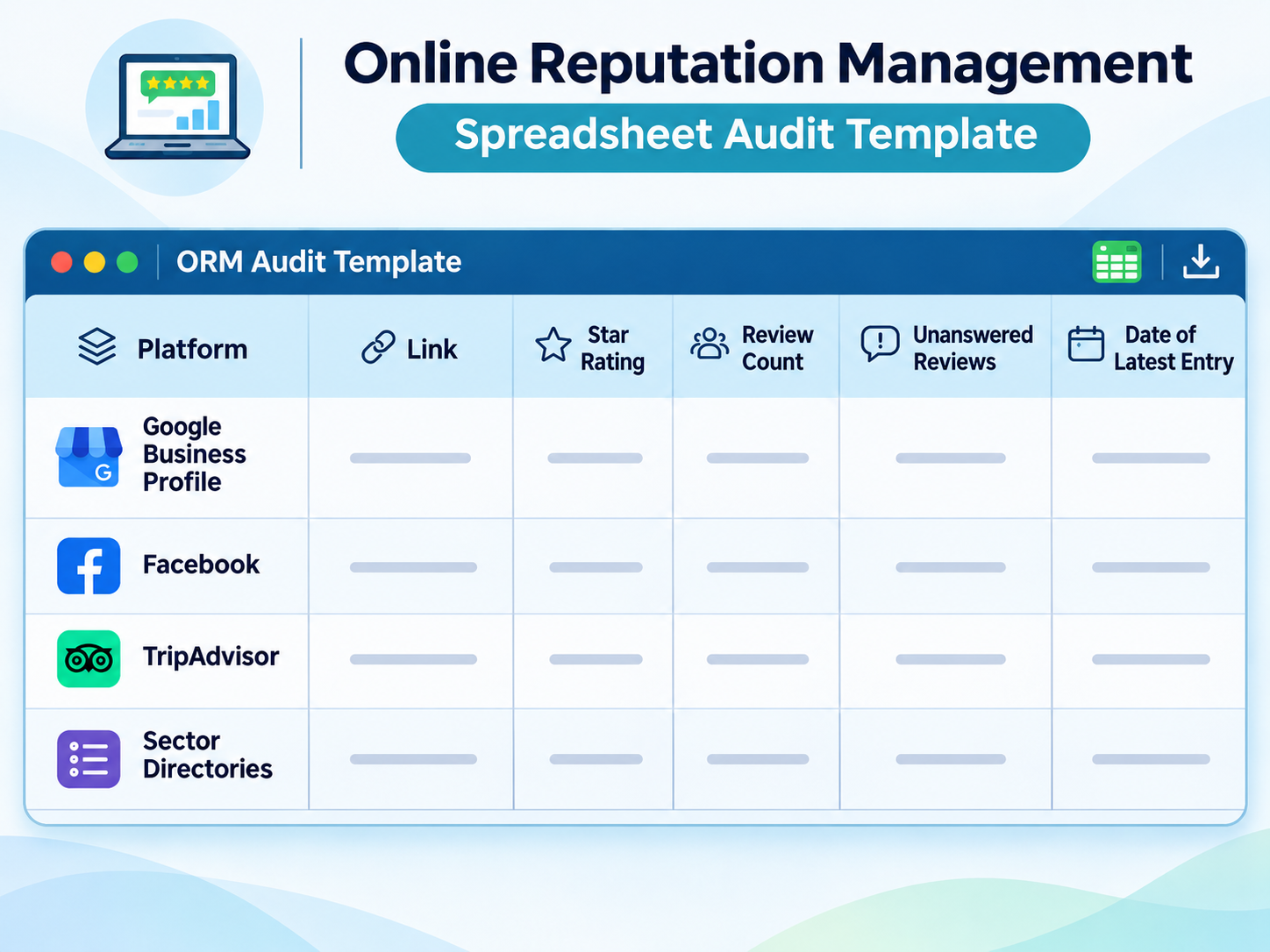
- Record the star rating, review count and date of the latest entry for each one.
The scope of reputation management
Reputation work covers three kinds of mentions, each needing a different response:
- Owned: your website, Google Business Profile and social media accounts.
- Earned: reviews, press coverage and customer posts.
- Third-party: forums, directories and sites you cannot edit.
Many firms focus only on owned channels, yet customers weigh earned and third-party voices more heavily. According to InMoment, 84% of consumers do not trust advertising and traditional sales messaging. Reputation work also means keeping your records of reviews, listings and published content accurate and current across every platform. Accurate content is the only foundation worth building on. Suppressing legitimate reviews or content is not recommended. Businesses in Singapore should manage their search results with the same honesty they apply to their services.
How reputation affects revenue, hiring and trust
A 2026 survey of Singapore consumers found the following:
- 87% check online reviews before engaging a new service provider.
- 74% would not use a business rated below 4.0 on Google Maps.
- 74% of consumers trust a business more after positive reviews.
The 4.0 threshold is a survey finding, not a universal rule. Treat it as a signal to watch rather than a fixed cut-off. Negative reviews also matter: 65% of consumers who rejected a local business did so for a review-related reason. Since 97% of people find local businesses online, buyers often judge a business by its review profile first. 84% of job seekers say an employer’s brand reputation is important to them. Reputation is a commercial concern for Singapore businesses, not only a communications one.
Why most consumers never look past page one
InMoment reports that 75% of people never scroll past the first page of search results. One damaging result can outweigh years of good work, so your published content and earned reviews must be strong enough to hold the first page. A single unresolved issue can become a crisis, so monitor these results regularly. Those potential customers who do reach page one will judge your online presence on what they see there.
Online Reputation Management and SEO: How the Two Work Together
What SEO contributes to reputation management
Search engine optimisation controls which pages a searcher sees when they type your name. Few users go past the first page, so your website, business profiles and reviews frame the conversation. If a complaint forum or a dated news story sits there instead, it frames the conversation for you. Accurate, consistent information across your web pages and listings is what search engines can surface. Every listing should match the same facts about your business, whether you are a digital marketing agency or one of many Singapore businesses offering services in Singapore. Proactive monitoring of your online presence keeps those listings accurate before problems surface.
SEO also keeps your owned properties healthy. Accurate business listings and consistent naming across directories help search engines recognise your brand as a single entity. That makes it more likely that the results shown for your name are the ones you published. Monitoring those results helps you spot problems early.
Where SEO alone falls short
SEO changes what ranks. It cannot change what people say. A business with weak reviews and no visible responses will still lose the customer who reads them, even if its website ranks first. Potential customers judge reviews as much as they judge the pages that rank.
There is also a trust gap. InMoment reports that 84% of consumers do not trust advertising and traditional sales messaging. Pages you control carry less weight than reviews and third-party voices, no matter how well optimised they are. Honest marketing that acknowledges this gap holds up better under scrutiny.
Search rankings also move. Google’s core updates, which are broad changes to how its search system ranks pages, can shift traffic sharply. The Sprinklr guide to online reputation management notes this for the March 2024 update. Google’s core update documentation explains how these changes work. A reputation built only on rankings is exposed to changes outside your influence, and a sudden drop can become a crisis if no one is watching.
A practical split of responsibilities
Treat SEO and reputation work as two jobs with one shared goal:
- SEO owns visibility. It keeps your website, Google Business Profile and key directory listings accurate, indexed and well ranked for your brand name across digital platforms.
- Reputation work owns the content behind those results. It answers reviews, requests fresh feedback and publishes genuine customer evidence. Proactive social listening, which means tracking what people say on social media, shows where customer sentiment is heading before it reaches search results.
- Review both together each quarter. Check which results rank for your name, then ask whether the top ones reflect the experience customers actually report. Good management of both starts with this check.
If a result ranks well but is inaccurate, reputation work fixes it by responding publicly or requesting a correction. If a good review is buried, SEO helps by improving how the profile is structured and keeping it updated. Both teams should share one strategy so that neither works against the other.
Auditing Your Current Online Presence
Most businesses cannot describe their online reputation in full. Ask an owner where their reviews sit, and they will name Google, perhaps one other platform, and guess at the rest. An audit replaces that guess with a list, a count and a rating for each place your brand appears. It is the first step in the Reputation Response Matrix, because you cannot plot a mention you have never found.
Mapping every place your brand appears
Start with a simple spreadsheet. Create one row for each platform where a customer could form an opinion, such as Google Business Profile, Facebook, Instagram, TripAdvisor, sector directories and industry forums. For each row, record the link, star rating, review count, unanswered reviews and date of the most recent entry. Include your company blog and any marketing pages that carry customer testimonials, since these shape perception too. Treat them as part of your wider digital marketing presence, because every page that carries your name contributes to your reputation.
Local buyers come first. According to InMoment, 97% of people learn about and find local businesses online. For a neighbourhood firm in Singapore, the review profile is often the first impression, ahead of the company website. Map those platforms first.
Searching your own brand the way customers do
Mapping shows where you exist. Searching shows what a customer actually sees. Open a private browser window and search your business name, then your name plus “reviews”, “complaints” and your area. Repeat on Google Maps, since local searches often surface the map pack before organic search results. Check social media results as well, because posts there often rank for brand queries.
Only 5% of users look past the first page of Google results, so the first page is the test that matters. Mark each result as positive, neutral or negative, and flag any negative review that needs a reply. Your audit is complete when every result on that first page has a row, a sentiment and an owner.
Setting up ongoing monitoring and alerts
A one-off audit goes stale within weeks. Set up monitoring alerts so new mentions reach you as they appear, and ask your reputation management or digital marketing team to own the process. Google Alerts can track your brand name at no cost, and most review platforms can notify the account holder when a review is posted. Assign one named person to check the sheet weekly, and review it fully each quarter. Keeping past snapshots in digital storage lets you compare quarters and spot trends.
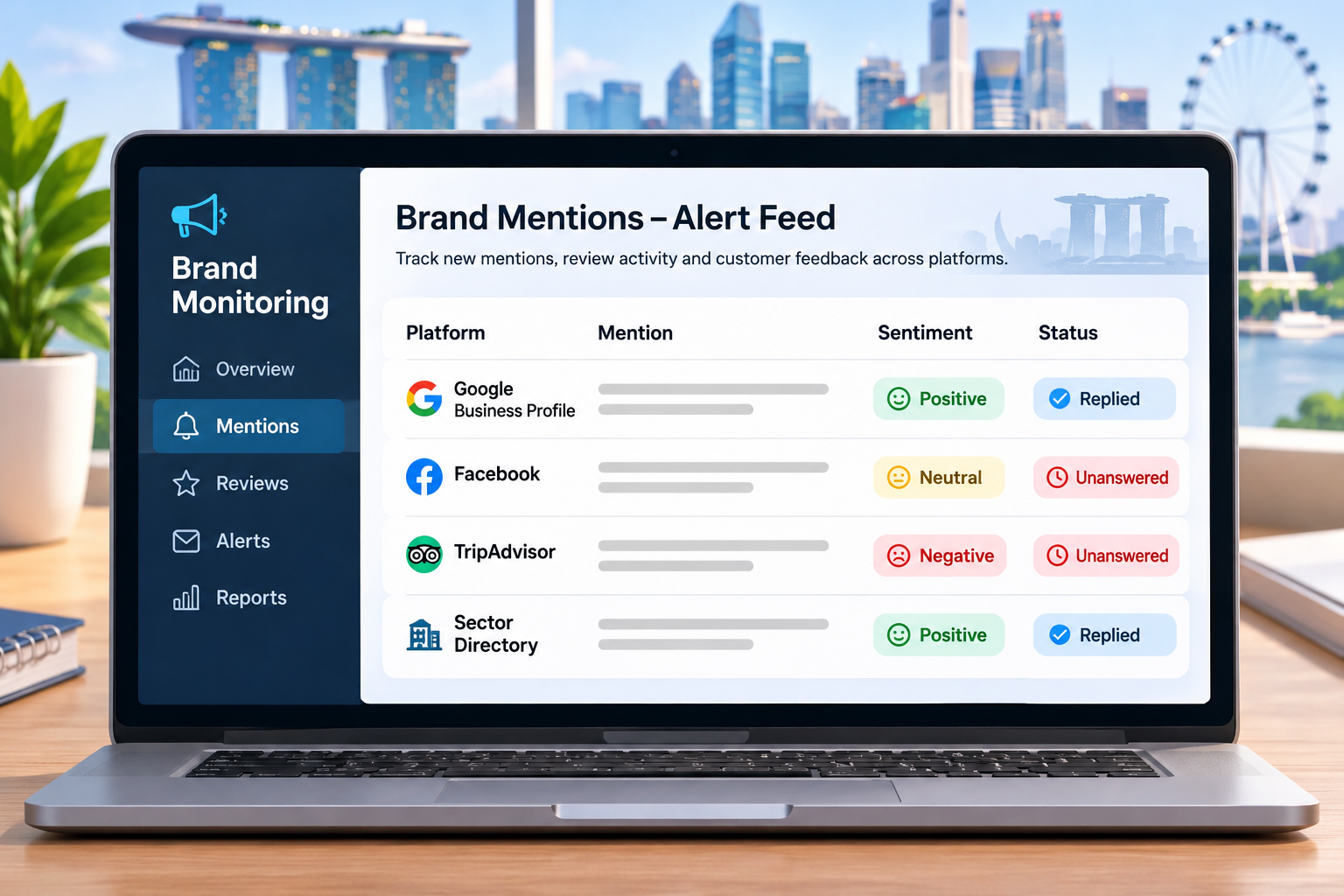
Recency matters as much as volume. 86% of consumers only saw reviews from the last three months, so a single unanswered complaint from last week can outweigh an older set of praise. Check the date of every entry, not just the rating. Recording that date alongside each rating makes the trend visible at a glance, and a negative review caught early gives you the chance to act before a crisis builds.
Responding to Online Reviews Well
Most businesses treat review replies as an afterthought, yet a public reply is one of the few reputation levers you fully control. Many prospective customers read replies without ever posting a review, so every answer shows how you treat people. Replies also travel beyond the original platform through social media and other digital channels. A consistent process for replies is the core of proactive management of your online reputation. Treat reply handling as part of your brand’s content, not a side task.
In Singapore, buyers often check Google Maps before anything else. The way you answer criticism in public carries real weight in their decision. Monitoring your reviews regularly helps you catch issues early, and services in Singapore that answer promptly tend to be judged more favourably by prospective buyers.
Response timing and why customers expect speed
Customers expect a timely reply. Set your target at seven days or fewer for every negative review. Track the average reply time in a simple spreadsheet that records each review and reply, and review that figure monthly to see whether it is improving.
Positive reviews need a reply too, but the urgency is lower. Aim for two to three working days, while the experience is still fresh for the reviewer.
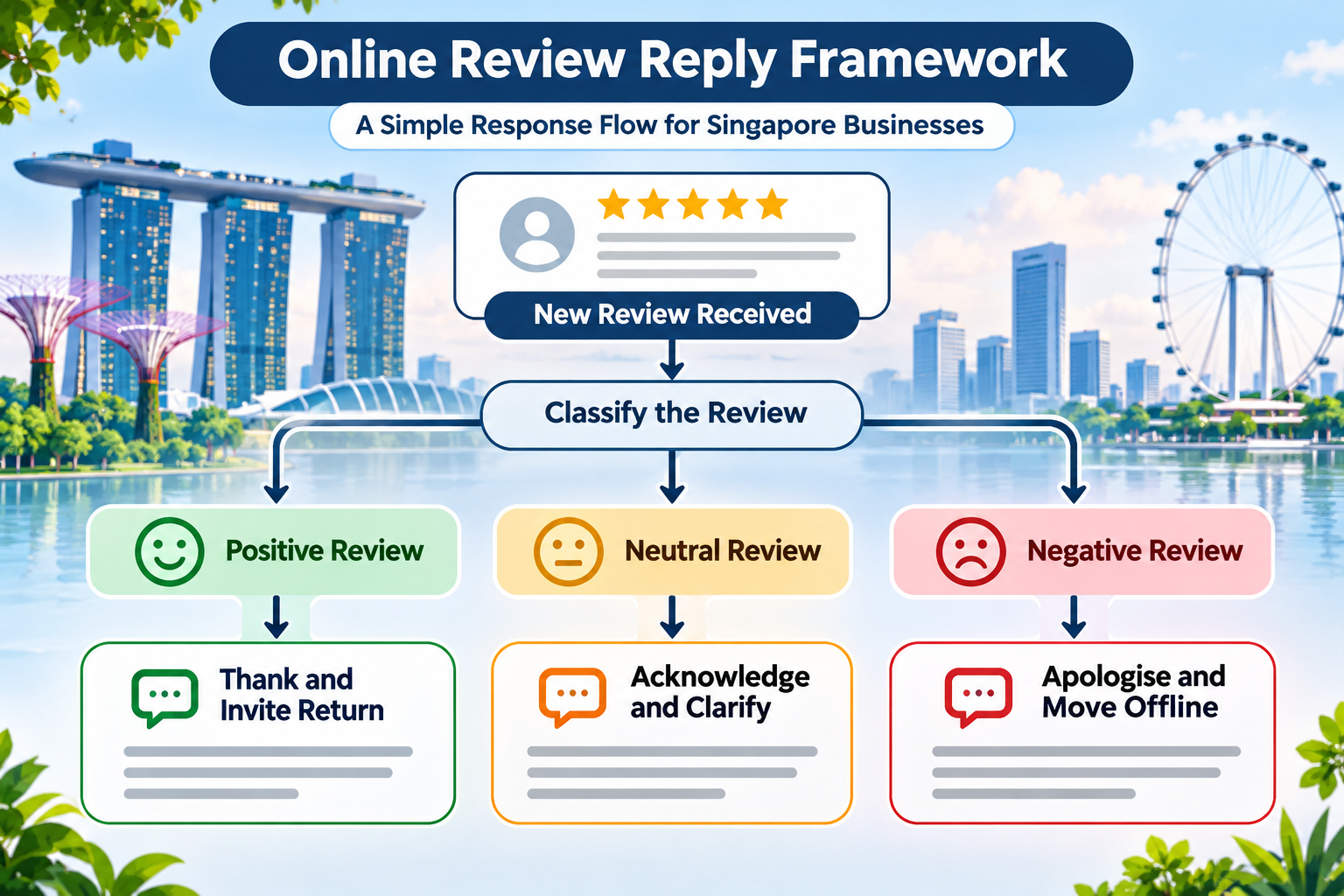
A reply framework for positive, neutral and negative reviews
Use a different structure for each sentiment. Keep replies short and specific, because readers spot templated answers quickly.
Reputation Response Matrix: the decision grid below. Each review is placed by its sentiment, and the matching row sets the action and the reply structure.
| Review type | Action | Reply structure |
|---|---|---|
| Positive | Thank and reinforce | Thank the reviewer by name, mention one specific detail they praised, and invite them back |
| Neutral | Acknowledge and clarify | Thank them, address the one point that fell short, and state what you will do about it |
| Negative | Apologise, act and move offline | Acknowledge the specific problem, apologise without blaming the customer, state the next step, and give a direct contact route |
Worked example. Suppose a Singapore renovation firm receives eight reviews in a month: five at five stars, two at four stars and one at two stars. Its monthly rating is (5 × 5 + 2 × 4 + 1 × 2) ÷ 8 = 35 ÷ 8, or 4.4 stars. One negative review in eight is 12.5%, well below the threshold suggested below, so the firm keeps to its normal reply timing.
Escalation thresholds (the author’s suggestion, not an industry standard). If negative reviews make up more than one in five of your recent reviews, or your monthly average rating drops by half a star, review the pattern with your team before replying to the next one. Treat it as a service issue rather than a one-off.
For a negative review, avoid defensive phrasing such as “that is not what happened”. Instead, write something like: “We are sorry the appointment ran late and left you waiting. We have changed how we confirm bookings, and I would like to put things right, so please contact me directly.”
Crisis response: when a complaint escalates
Most negative reviews stay contained if they are answered promptly. A small number grow into something larger, such as a viral post, a media enquiry or a sudden drop in rating. For those, follow a short sequence:
- Confirm the facts internally before saying anything publicly.
- Name one person who owns the response, usually a senior manager, and keep every public statement consistent with that person’s words.
- Reply publicly in the first hours, even if the full answer is not ready. A short, factual acknowledgement with a contact route is better than silence.
- Move detail to a direct channel. Follow up publicly once the issue is resolved, if the affected customer agrees.
The public tone should match the reply framework above: apologise for what went wrong, avoid blaming the customer, and state the next step.
When to take a complaint offline
Move a conversation offline when it involves personal data, a dispute over money, or details unsuited to public discussion. Give a direct channel, such as a named email address or phone line, and share only the minimum detail needed. Use social listening tools to spot recurring complaints across platforms, so a pattern can be fixed at its source. Keep complaint records in secure storage, limited to staff who need them.
The public reply should stand alone, so readers see the apology and next step even if they never see the follow-up. Once the issue is resolved, consider a short public update if the reviewer agrees. A visible resolution often influences later readers more than the original complaint.
Encouraging and Requesting Customer Reviews Ethically
Many businesses that struggle with reviews do not have a reputation problem. They have a request problem: they never ask happy customers to say so.
Simple, consistent request steps can lift review volume considerably compared with waiting passively, as PaperCut notes in its Singapore playbook. In that playbook, businesses with a proactive system average 4.4 to 4.8 stars on Google, against 3.1 to 4.1 for those with no system in place. The goal is a steady, honest flow of reviews, not a burst of five-star ratings. Track your review data to see where that flow comes from and where it is missing, and use monitoring to spot changes in your online reputation early.
Timing review requests around the customer experience
Ask when the customer has just seen the benefit of your work, such as the day the job is signed off. Send the request within a day or two. If there is no response, one reminder after about a week is the limit.
A steady trickle of recent reviews matters more than a large, old pile. Build the request into your close-out process and keep a record of when each request was sent. This keeps your review strategy consistent, so you can manage online feedback proactively.
Making the request easy and compliant
Give the customer one direct link to your Google Business Profile or chosen platform, with a short message that does not script the review’s content. If a customer cannot leave a review in under two minutes on a phone, simplify the process.
Ask every customer, not a selected group. Screening out unhappy customers distorts your profile and breaks the trust reviews depend on, which is the foundation of sound reputation management.
What to avoid: incentives, gating and fake reviews
Three practices damage reputation and should be ruled out:
- Incentives tied to ratings. Offering a discount only for positive reviews skews the profile, and review platforms prohibit it. Check the current policy page of each platform you use.
- Review gating. Sending only happy customers to the public review page hides real feedback, and it can be discovered quickly. Platform policy pages set out the same prohibition.
- Fake or purchased reviews. These carry platform penalties, and collapse once reported.
The honest alternative is to ask everyone, reply to everyone, and let the record show how you handled problems. A few well-answered negative reviews read as more credible than a flawless profile. Each type of feedback, positive or critical, tells you something useful.
Promoting Positive Content and Testimonials
Reviews tell customers what others think. Owned content tells them what you want them to know. The two work best together, and most businesses under-invest in both.
Building a steady stream of owned content
Few people look beyond the first page of search results, which is where proactive online reputation management pays off. Your website, Google Business Profile and social media accounts need to be strong enough to hold the top spots for your brand name. This is the suppression side of the work. Rather than trying to remove an unwanted result, you build strong owned pages and profiles that outrank it over time, and ongoing monitoring tells you when a new result needs attention.
Publish something useful and current on a regular schedule:
- Service pages that explain what you do and who it suits.
- Case notes from real jobs, with the problem, your response and the outcome.
- Answers to common questions drawn from your team’s weekly enquiries.
- Business updates, such as new locations, staff or service changes.
Keep each page accurate and dated. A page describing a service you stopped years ago damages trust as much as a bad review.
Turning customer stories into testimonials
Testimonials work when they are specific and verifiable. “Great service” is forgettable. “The team rescheduled our installation the same day after a supplier delay and finished in two days” tells a prospect something useful.
To collect them well:
- Ask customers soon after a successful job, while the details are fresh.
- Ask open questions: what was the problem, and what changed afterwards?
- Get written permission before publishing a name, photo or company.
- Quote the customer’s own words. Do not polish them into marketing copy.
Place testimonials next to the service they describe, not on a single “reviews” page that nobody reads.
Using third-party coverage and employer content
Independent voices carry more weight than your own claims. Press mentions, industry directories and partner listings all help, because potential customers trust them more than advertising. Employer content matters too: staff profiles and review platforms on employer sites also shape how customers see you.
Pursue genuine coverage, such as a trade association listing, a local business feature, or a guest article on a site your customers read. Avoid paid placement disguised as editorial, as it undermines the credibility you are building. Singapore businesses, in particular, benefit from managing their presence across local directories and platforms, where a consistent record helps manage online perception over the long term.
Final Thoughts on Online Reputation Management
Online reputation management works best when it is steady, visible and honest. Start with an audit so you know where your brand appears and what customers see first. Then use the Reputation Response Matrix to respond to every review with the right action, within the right timeframe. Ask every customer for feedback, never just the happy ones. Keep your owned pages accurate and current, so they hold the top results for your name.
None of this needs a large budget. It needs one named owner, a weekly check and a quarterly review. A prompt, specific reply to a complaint shows prospective customers how you treat people, and that builds trust more than any attempt to bury a bad result.
If you would rather have a team handle the monitoring, replies and reporting, MediaOne’s online reputation management services start with a free consultation.
Frequently Asked Questions
How long does it take to improve online reputation?
Most businesses see a visible change within three to six months of consistent work. A badly damaged profile can take a year or more. Speed depends on how many reviews you already have, how quickly you respond, and how steadily new positive reviews arrive. Track your average reply time to negative reviews and your monthly review count against a fixed baseline, so you can see the trend.
Should I respond to every online review?
Respond to every review you can, but prioritise the negative ones. Replies to positive reviews are quick thank-yous. Replies to negative ones show prospective customers how you handle problems. Since 53% of customers expect a reply to negative feedback within a week, leaving them unanswered signals neglect. Keep replies short, acknowledge the specific issue, and move detailed resolution to a private channel.
Is online reputation management in Singapore the same as SEO?
No, though the two overlap. SEO helps the right pages rank for the right searches. Online reputation management shapes what those results say and how the business responds. Strong search engine optimisation can help positive owned content appear higher, but it cannot fix a poor service record.
Can a business remove a negative review?
A business can usually remove a review only when it breaks the platform’s rules, such as containing abusive language, personal data or a conflict of interest. Otherwise, the correct route is a public reply and, where appropriate, a resolution offered to the reviewer. Be cautious with paid removal services. Their fees vary widely, and removal is not always lasting. Confirm the scope and terms before committing.
How often should I audit my online reputation?
Audit your online presence at least once a quarter, with a lighter weekly check of new reviews and mentions. Quarterly audits help you spot recurring complaints before they affect your rating. Set up alerts so urgent negative mentions reach you the same day. If a platform changes its review policy, check the effect on your data straight away.