
| AI Summary
Brand trust is built through consistent quality, transparent communication and reliable customer experiences. Discover why it matters for Singapore businesses and practical ways to build, measure and protect customer trust. |
Brand trust is the confidence customers have that a business will deliver what it promises, provide consistent quality and treat them fairly. It develops through reliable experiences, honest communication and responsible business practices.
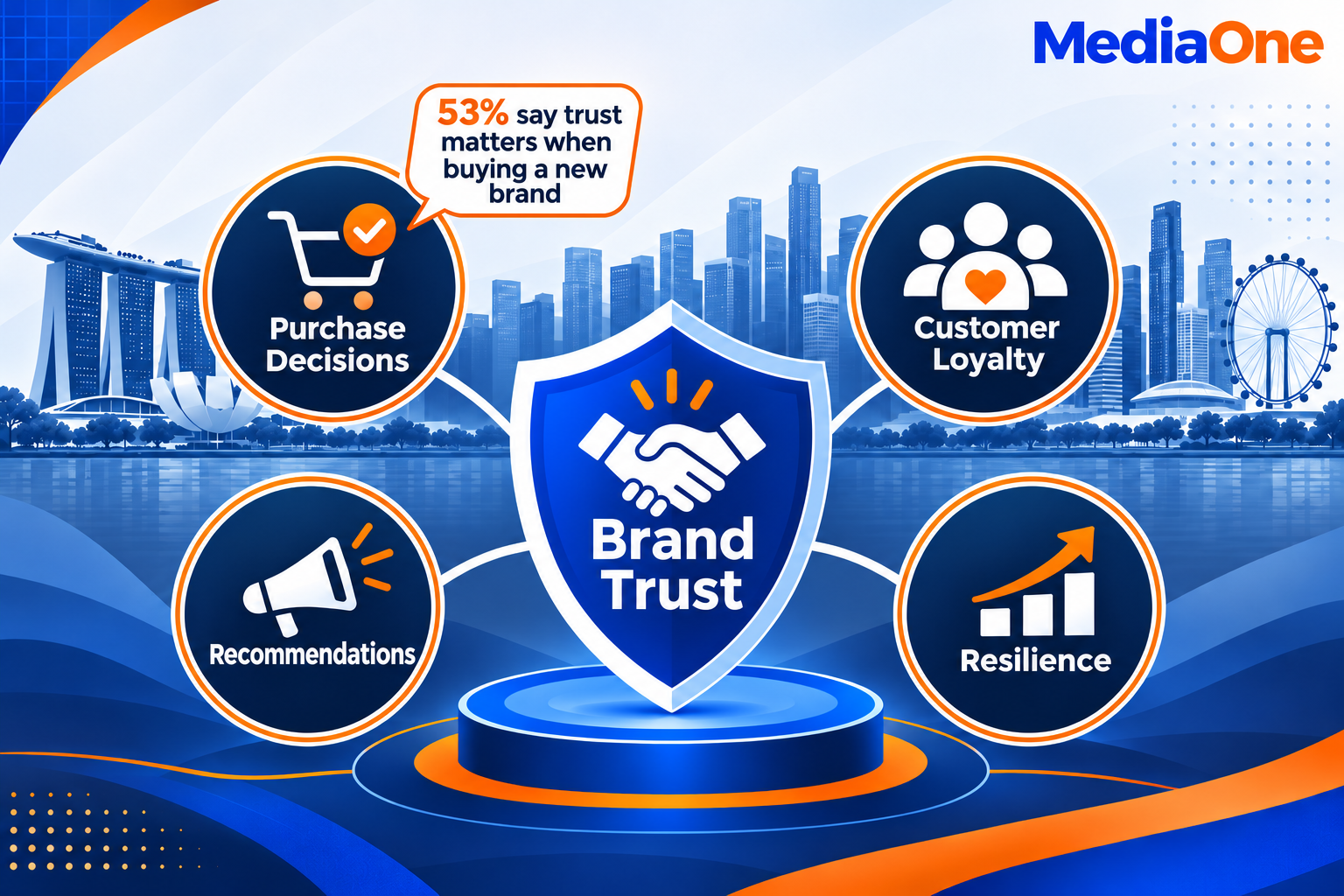
For Singapore businesses, brand trust influences purchasing decisions, customer loyalty and long-term growth. Customers who trust a company are generally more comfortable buying from it again and recommending it to others.
The 2020 Edelman Trust Barometer Special Report found that 53% of respondents considered trust in a company or brand important when purchasing a new brand, second only to price at 64%.
Building that confidence requires consistent action. In this guide, we explain what drives brand trust, how businesses can strengthen it and which measures help identify areas for improvement.
Key Takeaways
- Brand trust develops through experience. Reliable products, fair treatment and consistent service give customers reasons to return.
- Trust influences purchasing decisions. Customers consider a brand’s reliability alongside price, convenience and quality.
- Transparency reduces uncertainty. Clear pricing, realistic promises and honest communication help customers make informed decisions.
- Reviews influence customer confidence. BrightLocal’s 2026 US consumer survey found that 97% of respondents use reviews to guide purchasing decisions.
- Customer experience matters. Simple transactions and effective problem resolution help reinforce confidence.
- Trust needs continuous measurement. Customer feedback, repeat purchases, complaint resolution and review trends reveal potential weaknesses.
What Is Brand Trust?
Brand trust refers to a customer’s belief that a business will consistently meet expectations and act responsibly. A trusted brand delivers products or services as described. It communicates clearly, honours commitments and addresses problems without unnecessary complications.
Trust develops through direct experiences and the information customers receive from others. Reviews, recommendations and public interactions can influence expectations before someone makes their first purchase.
Brand trust vs brand reputation
Brand trust and brand reputation are closely connected, but they are not identical. Brand reputation reflects how people generally perceive and discuss a company. Advertising, news coverage, online reviews and public commentary contribute to that perception. Meanwhile, brand trust concerns whether customers believe the company will deliver on its promises.
A business may enjoy strong brand recognition while struggling with customer confidence. For example, a popular retailer might receive considerable publicity but repeatedly disappoint customers with delayed deliveries. Conversely, a smaller business with limited visibility may enjoy strong trust among its existing customers because it consistently provides reliable service.
We recommend examining both reputation and actual customer experiences. Positive publicity cannot compensate indefinitely for poor service or unreliable products.
The four foundations of brand trust
Deloitte Digital’s Close the Trust Gap research identifies four connected dimensions of trust: humanity, transparency, capability and reliability. These provide a practical framework for assessing business conduct.
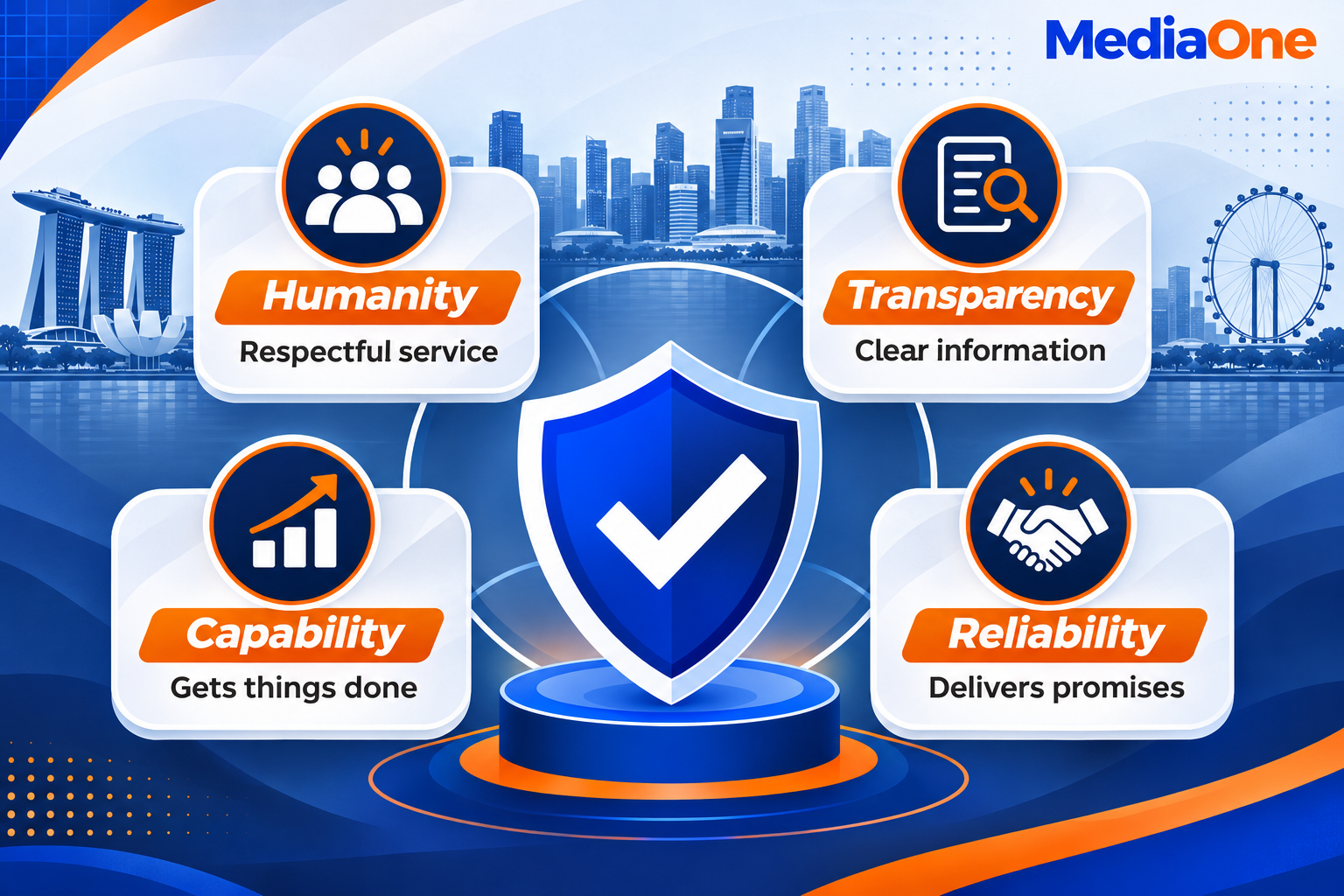
| Trust factor | What it means | Business example |
|---|---|---|
| Humanity | Customers feel respected and understood | Staff listen and respond fairly to complaints |
| Transparency | Information is accurate and accessible | Prices, conditions and limitations are clearly disclosed |
| Capability | The business can deliver what it promises | Products and services meet advertised specifications |
| Reliability | Performance remains consistent | Orders arrive within stated delivery periods |
These factors work together. A company may provide excellent products but lose customers through misleading pricing. Another may communicate openly yet struggle to fulfil orders consistently. Sustainable brand trust requires competence and responsible behaviour throughout the customer journey.
Why Brand Trust Matters for Business Growth
Trust affects customer acquisition, repeat purchases and the strength of customer relationships. It also influences how customers respond when something goes wrong.
Brand trust influences purchasing decisions
Customers assess risk before buying, particularly when dealing with unfamiliar businesses. They may investigate product claims, compare reviews and examine refund policies. Clear evidence of reliability can reduce uncertainty.
Edelman’s 2020 research found that trust in the company behind a brand ranked above brand reputation and product performance as a consideration when buying a new brand. The survey covered multiple international markets, so its findings should not be presented as Singapore-specific consumer data.
Nevertheless, it illustrates why businesses should address customer concerns before asking for a purchase. For an unfamiliar Singapore online retailer, visible contact details, genuine reviews and transparent delivery terms can help reassure potential customers.
Trusted brands encourage customer loyalty
A positive first purchase creates an opportunity for another transaction. When subsequent experiences remain consistent, customers have less reason to search for alternatives.
Edelman’s research also found that 75% of respondents with high brand trust expressed behaviours associated with loyalty, including purchasing from trusted brands even when cheaper alternatives existed. These findings describe surveyed consumer attitudes rather than guaranteed business outcomes.
We recommend treating repeat purchases as evidence to investigate alongside customer satisfaction. A customer may return because of convenience or limited alternatives, not necessarily because of strong trust.
Trust supports recommendations and advocacy
Satisfied customers can help businesses attract new buyers through personal recommendations and public reviews. Recommendations carry weight because they come from people who have experienced the product or service. The same Edelman report found that 78% of respondents with high brand trust expressed advocacy behaviours, including recommending or defending trusted brands.
For smaller Singapore businesses, genuine recommendations can support growth without relying entirely on paid advertising. However, advocacy should follow customer satisfaction naturally. Pressuring customers to provide positive testimonials can undermine credibility.
Brand trust helps businesses manage setbacks
Even reliable companies encounter delivery problems, service failures or product defects. Existing trust may encourage customers to give a business an opportunity to correct a mistake. That confidence depends on how the company responds.
Consider two retailers experiencing the same delivery delay. One ignores enquiries until customers complain publicly. The other explains the delay, provides an updated delivery estimate and offers appropriate assistance. The second retailer gives customers clearer reasons to maintain confidence.
Trust does not eliminate the consequences of mistakes. It creates an opportunity to demonstrate accountability through corrective action.
How to Build Brand Trust: 8 Practical Strategies
Building brand trust begins with identifying the experiences that shape customer expectations. We recommend prioritising operational improvements before increasing promotional activity. Advertising may attract attention, but customers ultimately judge the experience they receive.
1. Deliver consistent product and service quality
Customers need confidence that a business can meet the same standard repeatedly. A restaurant should maintain consistent food quality. An online retailer should ensure delivered products match their descriptions. A professional services firm should provide the agreed deliverables. Quality problems become trust problems when businesses ignore repeated complaints.
Start with three checks:
- Review product returns, service complaints and recurring defects.
- Compare advertised features against actual customer experiences.
- Assign responsibility for correcting recurring quality issues.
A Singapore retailer receiving frequent complaints about inaccurate sizing should review its product measurements and descriptions. If the problem continues, the business should investigate suppliers or production standards. Quality assurance should happen before customers experience avoidable problems.
2. Practise transparent communication
Transparency helps customers understand what they are purchasing and what they should expect. Businesses should clearly explain prices, delivery periods, product limitations and important transaction conditions.
In Singapore, the Competition and Consumer Commission of Singapore’s Guidelines on Price Transparency address practices including drip pricing, discounts, price comparisons and claims that something is free.
The guidelines advise businesses to include unavoidable charges in headline prices or clearly disclose charges that cannot reasonably be calculated beforehand. For example, advertising a service at S$100 while revealing a compulsory S$30 fee only during checkout can mislead customers.
Transparency also matters when circumstances change. If stock becomes unavailable, notify affected customers promptly. If a service requires additional work, explain the revised scope before proceeding. Clear communication allows customers to make decisions without unpleasant surprises.
3. Make customer service reliable and accessible
Customer service provides direct evidence of how a company treats people. Customers notice whether employees respond promptly, understand their problems and offer workable solutions.
A polite response is useful, but resolution matters. Businesses should establish clear procedures for handling complaints, returns and service requests.
We recommend monitoring:
- First-contact resolution: The percentage of enquiries resolved during the initial interaction.
- Resolution time: How long customers wait for issues to be settled.
- Repeat contacts: How often customers must follow up about the same problem.
- Customer satisfaction: Feedback collected after service interactions.
Avoid setting arbitrary response targets without considering staffing and case complexity. A practical service commitment should reflect what the business can consistently deliver.
4. Make buying and getting support easier
Complicated transactions can undermine an otherwise positive brand experience. Customers may abandon a purchase when checkout requires unnecessary information. Difficult cancellation processes can also create frustration.
Deloitte Digital and Twilio’s Close the Trust Gap research found that 96% of surveyed consumers trusted brands more when they were easy to deal with. However, only 35% described their most-trusted brands as very easy to do business with. These results highlight the difference between what customers value and what businesses deliver.
For Singapore businesses, useful improvements include simplifying mobile checkout, displaying delivery charges early and offering accessible support channels. Review common customer journeys from a buyer’s perspective. Ask whether someone can find information, complete a purchase or request assistance without unnecessary steps.
5. Communicate honestly across marketing channels
Marketing creates expectations that operations must fulfil. Statements such as “guaranteed results”, “best in Singapore” or “instant delivery” can become problematic when businesses lack evidence.
The Competition and Consumer Commission of Singapore issued a Guide on Quality-Related Claims in October 2025. It emphasises accurate, understandable claims supported by appropriate evidence.
We recommend reviewing promotional messages before publication. Check whether performance claims can be verified and whether customers could misunderstand important limitations. Instead of claiming “Singapore’s fastest delivery”, a retailer could state its actual delivery commitment and any conditions.
Specific, verifiable promises are stronger trust signals than unsupported superlatives.
6. Protect customer information
Responsible data handling helps customers feel comfortable interacting with a business. Online purchases, appointment bookings and marketing subscriptions often require customers to provide personal information.
Singapore’s Personal Data Protection Act (PDPA) establishes obligations concerning the collection, use, disclosure and protection of personal data. The Personal Data Protection Commission outlines requirements covering notification, consent, data protection and retention, among others.
Businesses should explain why they collect personal information and implement appropriate safeguards. Practical measures include limiting staff access, reviewing data retention practices and keeping privacy notices understandable.
Marketing teams should also verify that customer data is used appropriately before launching email or messaging campaigns. Data protection should remain part of everyday operations rather than a statement that appears only in a website footer.
Social media provides opportunities to demonstrate how a business communicates and responds. Customers may examine comments before buying. They may also notice whether complaints receive helpful replies.
We recommend using social media marketing to answer common questions, explain products and address customer concerns. Useful content includes product demonstrations, service explanations and practical advice.
A business can also share how it resolves recurring problems or improves customer experience. Avoid treating every interaction as an opportunity to sell. Responses should address the customer’s actual concern rather than redirecting every conversation towards a promotion.
Consistency matters across channels. Information published on social media should match website descriptions and current business policies.
8. Demonstrate your brand values through action
Values such as fairness, responsibility and customer care become meaningful when they influence business decisions. Customers can compare public statements against actual conduct.
For example, a company promoting sustainability should be able to support its environmental claims. A business that emphasises customer care should apply fair procedures when handling complaints.
We recommend selecting a few values that the business can demonstrate consistently. Connect each value to an observable practice.
If accessibility is important, review whether customers can use the website and obtain assistance easily. If fair treatment is central, ensure refund procedures are understandable and applied consistently.
Customers should be able to recognise brand values through their experiences without relying on promotional statements.
How Online Reviews and Social Proof Influence Brand Trust
Online reviews help potential customers assess businesses before making contact. They provide accounts of product quality, service standards and experiences with problems.
However, reviews should be considered alongside other evidence. Ratings alone cannot guarantee a satisfactory purchase.
What recent research says about customer reviews
BrightLocal’s 2026 Local Consumer Review Survey found that 97% of surveyed US consumers use reviews to help guide purchasing decisions. The research also reported that 85% were more likely to use a business after reading positive reviews, while 77% were deterred by negative feedback. These figures come from US consumers and should not be treated as Singapore-specific findings.
The survey also found that 54% of consumers visited a business website after reading positive reviews. This indicates that reviews often lead to further research rather than an immediate purchase. Businesses should therefore ensure their websites provide reliable information that supports what customers discover elsewhere.
How to collect customer reviews ethically
A genuine review reflects an actual customer experience. Businesses can request feedback after completed purchases or services, provided they follow the relevant platform’s rules.
For Google Business Profiles, Google prohibits incentivised reviews, including offering discounts, payments or free products in exchange for reviews. Google also prohibits selectively requesting positive feedback or discouraging negative reviews.
A sound review collection process should:
- Invite customers to share genuine feedback without directing their opinions.
- Avoid rewards or incentives prohibited by the review platform.
- Make review requests at an appropriate point after the experience.
- Monitor feedback for recurring service or product problems.
Singapore’s competition and consumer authority also identifies manipulated reviews as a potentially misleading digital practice. Businesses should avoid manufacturing positive ratings or concealing genuine negative feedback.
How to respond to negative reviews
Negative reviews give businesses an opportunity to demonstrate accountability. A useful response acknowledges the concern and explains how the customer can obtain assistance. Avoid disclosing personal information or arguing publicly.
We recommend a five-step process:
- Acknowledge: Recognise the customer’s specific concern.
- Investigate: Check the transaction or service record.
- Respond: Explain the next step without making unsupported promises.
- Resolve: Provide an appropriate remedy where warranted.
- Follow up: Confirm whether the issue has been addressed.
For example, if a customer reports receiving a damaged product, the retailer should explain the available replacement or refund process. A public reply should remain concise. Sensitive transaction details belong in a private support channel.
An occasional negative review is not necessarily evidence of an unreliable business. Repeated unresolved complaints deserve closer investigation.
How to Measure Brand Trust
Brand trust cannot be measured reliably through a single metric. Review ratings, customer satisfaction and repeat purchases provide useful signals, but each has limitations. We recommend combining customer feedback with operational data to identify consistent patterns.
Use a brand trust scorecard
A simple scorecard helps businesses assess the evidence behind customer confidence.
| Area | Score 1: Needs attention | Score 2: Developing | Score 3: Strong |
|---|---|---|---|
| Product quality | Recurring defects or complaints | Generally reliable with occasional issues | Consistently meets stated standards |
| Customer experience | Difficult processes or unresolved requests | Some friction remains | Straightforward transactions and effective support |
| Transparency | Unclear pricing or unsupported claims | Most information is clear | Claims and conditions are consistently verifiable |
| Reviews | Recurring unresolved criticism | Mixed feedback with some improvements | Authentic, recent reviews and responsible responses |
| Reliability | Promises frequently missed | Commitments usually met | Consistent delivery backed by operational records |
Total possible score: 15 points.
This is a practical diagnostic tool, not a scientifically validated brand trust index. Scores should reflect available evidence rather than management opinions.
An area scoring 1 deserves immediate attention, particularly when it concerns product quality, misleading claims or unresolved customer problems.
Track customer retention and repeat purchases
Repeat-purchase rate measures the proportion of customers who buy again within a defined period. For example, if 200 customers purchase during a quarter and 60 make another purchase within the chosen measurement period, the repeat-purchase rate is 30%.
Compare results across equivalent periods and customer groups. A rising rate may indicate stronger customer relationships, although pricing, purchasing cycles and promotions can influence the result.
For businesses with infrequent purchases, such as renovation companies, repeat sales may be unsuitable as the primary measure. Referrals and post-service feedback may be more informative.
Use customer satisfaction and recommendation surveys
Customer satisfaction surveys help businesses understand whether experiences meet expectations. Ask specific questions instead of relying entirely on general ratings.
Examples include:
- Did the product or service meet your expectations?
- Was the pricing clear before purchase?
- How easy was it to resolve your enquiry?
- How confident are you that we would deliver as promised again?
A Net Promoter Score (NPS) survey can provide additional information about willingness to recommend a company. However, recommendation intention is not identical to trust.
Compare survey responses with complaints, repeat purchases and actual referrals before drawing conclusions.
A practical brand trust assessment example
Consider a fictional Singapore homeware retailer called Maple & Oak. The retailer receives positive customer service feedback but frequent complaints that products differ from their online descriptions.
Its scorecard produces the following results:
- Product quality: 1
- Customer experience: 3
- Transparency: 2
- Reviews: 2
- Reliability: 2
Total: 10 out of 15.
The immediate priority should be product accuracy, not another promotional campaign.
Maple & Oak can verify specifications, improve product photographs and introduce pre-dispatch checks. It should then track product-related complaints and returns to see whether those changes improve customer experience.
This example illustrates how businesses can turn trust assessments into operational decisions.
Common Mistakes That Damage Brand Trust
Trust can weaken when companies create expectations they cannot consistently meet. Several practices deserve particular attention.
Making promises the business cannot fulfil
Aggressive marketing claims may attract initial interest but create disappointment when actual performance falls short. Review claims about speed, quality, availability and results before publishing them.
Hiding important conditions
Unexpected fees, unclear refund restrictions and complicated cancellation procedures create unnecessary uncertainty. Present material conditions where customers make decisions, not only in lengthy terms and conditions.
Ignoring recurring customer complaints
An unanswered complaint may appear isolated. Repeated complaints about the same issue indicate a possible operational weakness. Track common problems and assign responsibility for corrective action.
Manipulating reviews or testimonials
Fake reviews and selective feedback requests misrepresent customer experiences. They can also lead to platform enforcement and regulatory concerns.
Using customer data irresponsibly
Unnecessary information collection, unclear marketing practices and weak security controls can undermine confidence. Review customer data practices regularly and address identified risks promptly.
The underlying principle is straightforward: fix the business practice before attempting to repair the public perception it creates.
How to Rebuild Brand Trust After a Failure
Recovering trust requires evidence that the business understands what went wrong and has taken corrective action. A public apology may be appropriate, but it cannot replace practical improvements.
Start by establishing the facts.
- Identify affected customers, determine the cause and assess whether the problem is continuing.
- Next, communicate clearly about what the business can verify.
- Avoid minimising the issue or making promises that depend on uncertain outcomes.
- Where appropriate, provide remedies such as corrections, replacements, refunds or other assistance.
- Finally, monitor whether the changes work.
A company that repeatedly experiences the same failure should examine its underlying processes rather than issue another generic apology.
Recovery timelines vary. Customers may regain confidence after a well-resolved incident, while serious or repeated failures can require sustained improvement.
A 90-Day Brand Trust Improvement Plan
Businesses do not need to address every weakness simultaneously. A structured 90-day plan can establish priorities and make progress easier to evaluate.
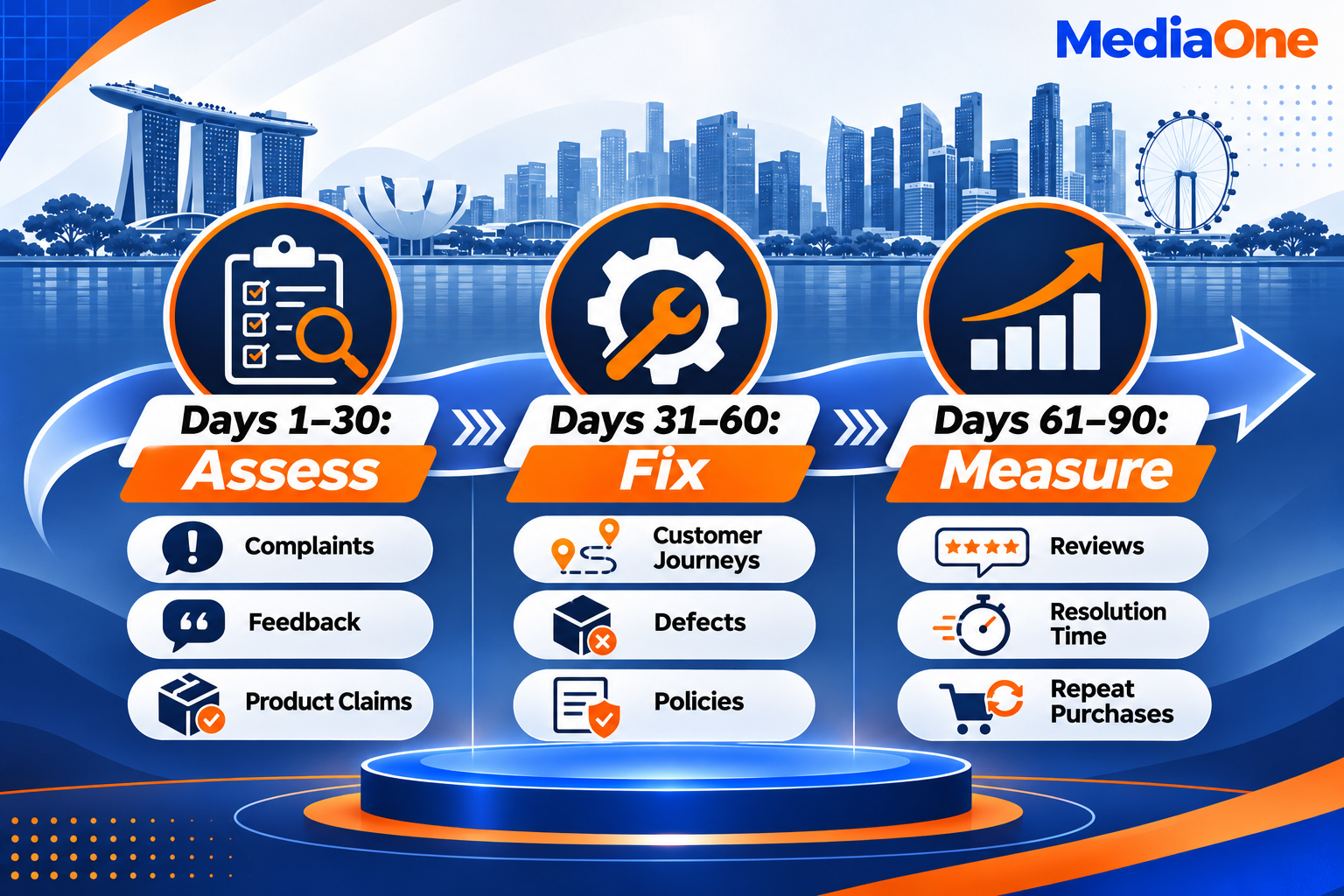
| Period | Main priority | Recommended actions |
|---|---|---|
| Days 1–30 | Assess current trust | Review complaints, customer feedback, product claims and service processes |
| Days 31–60 | Correct priority problems | Improve weak customer journeys, fix recurring defects and clarify policies |
| Days 61–90 | Measure improvements | Compare complaints, review trends, resolution times and repeat purchases |
Days 1–30: Identify trust gaps
- Begin with the brand trust scorecard.
- Review customer comments from relevant platforms and identify recurring themes.
- Compare marketing promises against operational performance.
- Prioritise issues affecting customer safety, fair treatment, product reliability or financial expectations.
Days 31–60: Address the most important weaknesses
- Assign responsibility for each improvement.
- A retailer may need clearer product descriptions. A service provider may need a better complaint escalation process.
- Document the changes and communicate updates when they directly affect customers.
- Avoid introducing unnecessary promotions while significant service problems remain unresolved.
Days 61–90: Evaluate progress
- Compare results against the initial assessment.
- Look for fewer recurring complaints, better resolution times and more consistent customer feedback.
- Where sufficient data exists, assess changes in repeat purchases or referrals.
- Continue monitoring after 90 days. Trust develops through repeated experiences, so short-term improvements should become routine business practices.
Frequently Asked Questions About Brand Trust
What is brand trust?
Brand trust is a customer’s confidence that a company will consistently deliver on its promises and behave responsibly. It develops through reliable products, honest communication and fair customer treatment.
Why is brand trust important for small businesses?
Brand trust helps small businesses attract customers, encourage repeat purchases and generate genuine recommendations. Consistent experiences can help smaller companies compete with established brands.
What are the main factors that build brand trust?
The main factors include product quality, reliability, transparency and customer treatment. Easy transactions, genuine reviews and responsible data handling also support customer confidence.
How long does it take to build brand trust?
There is no universal timeline. Trust develops through repeated positive experiences, and the time required depends on the industry, purchase frequency and consistency of business performance.
How do online reviews affect brand trust?
Reviews help prospective customers assess other people’s experiences. Genuine, detailed feedback can support confidence, while repeated unresolved complaints may discourage purchases.
Can a business recover after losing brand trust?
Yes, although recovery is not guaranteed. Businesses need to acknowledge failures, correct underlying problems and demonstrate consistent improvement.
How can companies measure brand trust?
Companies can combine customer surveys, review patterns, complaint resolution, repeat purchases and referrals. Comparing several measures provides a clearer picture than relying on star ratings alone.
Build Brand Trust That Customers Can Verify
Strong brand trust develops when customer expectations match actual business performance. Reliable products, transparent communication and fair treatment create the foundation. Genuine reviews and consistent customer service reinforce that confidence.
For Singapore businesses, we recommend starting with a practical assessment of product quality, customer experience, transparency, reviews and reliability. Identify the weakest area, correct the underlying problem and measure the results.
At MediaOne, we believe effective marketing should communicate credible business strengths. Through our digital marketing strategies, businesses can present clear information, address customer concerns and build consistent experiences across customer-facing channels.
Start by strengthening one customer experience that matters. Then make that improvement consistent enough for customers to trust.