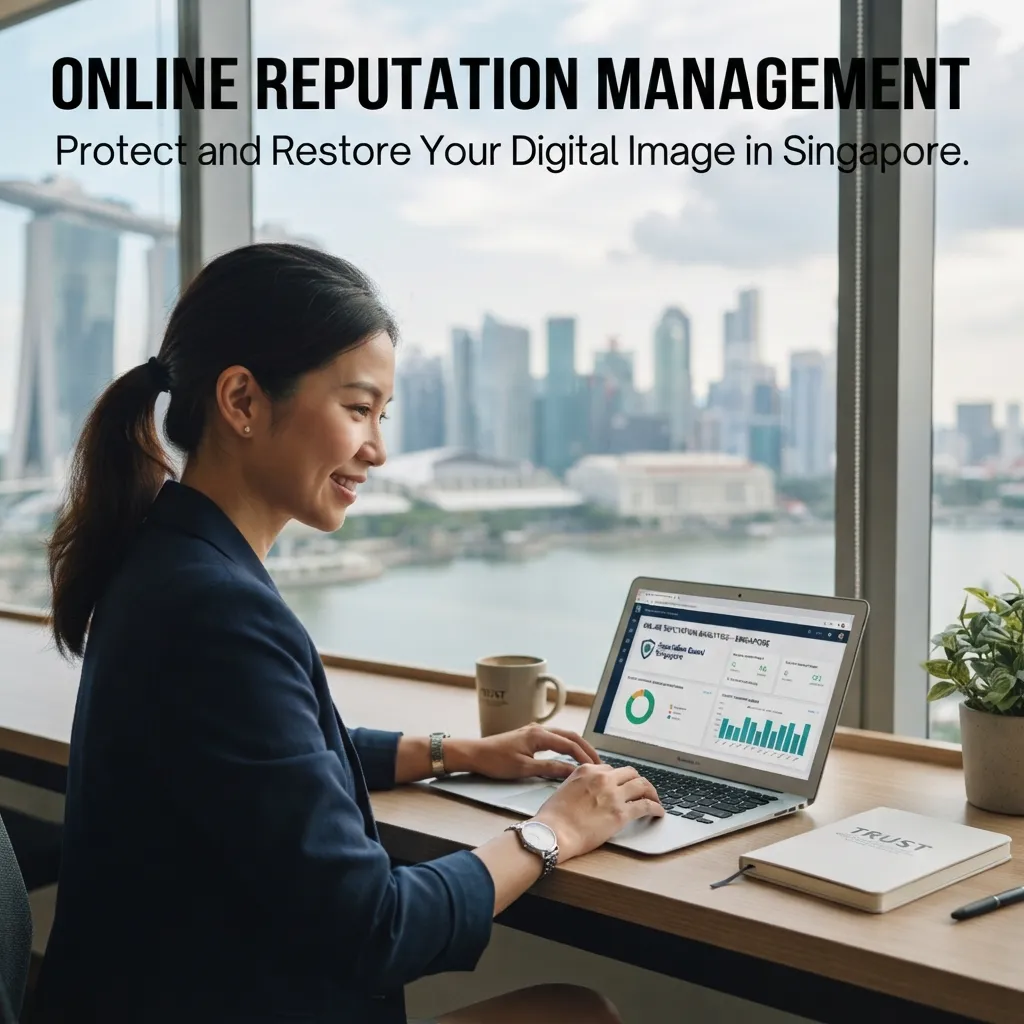
Online reputation management (ORM) is the practice of monitoring, influencing and improving how your name, business or brand appears across the internet. It combines public relations, digital marketing and crisis response. In Singapore’s well-connected business environment, online presence often shapes business decisions and customer trust. What people find about you online matters significantly.

A negative review, leaked email, or critical social media post can reach thousands within hours. For Singapore-based businesses and professionals, reputation directly affects customer acquisition, hiring, partnerships and regulatory standing.
Why This Matters Now
Consumers routinely research companies online before making purchase decisions. Search results that appear when someone looks up your name or business influence whether they contact you. Recruiters screen candidates through online profiles, which can determine hiring outcomes before interviews begin. B2B buyers conduct online background checks, particularly in regulated sectors. Businesses must respond responsibly to online criticism in line with expectations from regulators and industry bodies.

In documented cases, Singapore SMEs faced operational disruption following social media backlash over labour practices and pricing. Those with established positive digital footprints recovered faster than those without ORM protocols. Recovery is always slower and costlier than prevention. An established positive digital presence buffers against isolated negative events. You cannot control what people say, but you can control what they find first.
The Real Costs of a Damaged Online Reputation
Lost revenue: Consumers research companies online before buying. Negative search results can deter potential customers before they contact your organisation.
Hiring difficulty: Recruiters routinely search for candidates online. A poor personal reputation eliminates job offers before the interview stage. For founders and senior leaders, this extends to investor due diligence and partnership eligibility.
Supplier and partner risk: B2B buyers conduct online background checks, particularly in regulated sectors. A compliance complaint, lawsuit mention or regulatory dispute visible in search results can disqualify you from contracts worth millions.
Regulatory exposure: Singapore’s Personal Data Protection Act creates liability for how you respond to criticism. Slow or defensive reactions invite formal complaints to the Infocomm Media Development Authority (IMDA).
The Five Pillars of Effective Online Reputation Management
1. Continuous Monitoring Across All Channels
Monitor your name, business name and key team members across search results, social media, review sites and industry forums. For Singapore businesses, this includes SGcarmart (automotive), HungryGoWhere and TripAdvisor (hospitality), CareersSG and Indeed (employer reviews), and Facebook, Instagram and TikTok.
Set up automated daily alerts. Respond to emerging issues within 24 to 48 hours before negative sentiment becomes entrenched.
Recommended monitoring platforms:
- Google Alerts for name and brand mentions
- Social media listening (Brandwatch, Hootsuite Insights)
- Review aggregators (Google My Business, TripAdvisor, Trustpilot)
- Industry-specific monitoring (legal databases, property portals, fintech registries)
Most businesses only discover reputation problems through customer complaints or lost deals. Proactive monitoring catches issues when they are still contained.
2. Search Engine Visibility Control
Search results are often the first touchpoint. Control this by claiming and optimising owned properties, publishing authority content and using technical SEO strategically.
Claim and verify your profiles:
- Google My Business (critical for local search in Singapore)
- LinkedIn, Facebook, Instagram and industry directories
- Ensure these properties rank in the top three results for your name search
Publish authoritative content that ranks:
Create blog posts, articles, LinkedIn content and case studies that push down negative results. Published opinion pieces, company news or professional profiles typically rank above older negative content if optimised correctly. Search engines reward fresh, authoritative content from established sources over stale third-party posts.
Technical SEO for brand protection:
- Redirect outdated or hostile domain variations to your official site
- Use schema markup to enhance your knowledge panel
Owning the first page of your name search is foundational to ORM.
3. Proactive Content and Thought Leadership
Build a positive digital presence before crisis strikes. New content dilutes the visibility of older negative posts. Established authority makes criticism look isolated. Consistent messaging shapes how audiences interpret you.
What to publish:
- One long-form article per month on your blog or LinkedIn
- Company values, client wins, industry insights and team spotlights
- Employee-shared company news (with guidelines to avoid brand inconsistency)
- Contributions to industry forums, professional bodies and news outlets as a quoted expert
In Singapore, regulators and customers reward transparency. Use it to your advantage by documenting your processes, sharing lessons learned and showing how you handle problems. A company that publicly addresses mistakes looks more trustworthy than one that stays silent.
4. Review and Feedback Management
Online reviews significantly influence consumer trust and purchase decisions in Singapore.
Active review management workflow:
- Monitor Google Reviews, Facebook Reviews, Trustpilot, GrabFood, Carousell, Shopee and other merchant platforms
- Respond to every review (positive and negative) within 48 hours
- For negative reviews: address the concern, offer to resolve offline, and never attack the reviewer
- For positive reviews: thank the reviewer and reinforce the message publicly
Encourage positive reviews ethically:
- Post-purchase emails requesting feedback (with a direct link)
- Staff incentives for encouraging reviews (without creating false reviews, which violates PDPA guidelines)
- LinkedIn recommendations for B2B services
A pattern of professional responses to criticism actually improves reputation more than perfect scores alone. Customers who see you handling complaints well become advocates.
5. Crisis Response and Damage Control
Preparation prevents panic. Build a crisis protocol before you need it.
Essentials to have in place:
- A designated response team (legal, communications, operations, social media)
- Pre-drafted response templates for common scenarios
- Clear decision-making authority and escalation paths
- A holding statement ready for use within 2 hours of a major incident
When crisis strikes:
- Acknowledge the issue quickly. Silence looks like evasion.
- Take the conversation offline where possible
- Provide a concrete plan to resolve it
- Follow up with evidence of progress
Businesses must respond responsibly to online criticism. Delay or defensiveness compounds damage significantly.
Tools and Platforms for Online Reputation Management
| Function | Recommended Tools | Cost | Best For | Limitations |
|---|---|---|---|---|
| Monitoring and Alerts | Google Alerts, Mention, Brandwatch | Free to SGD 700/month | Real-time brand mentions, news tracking | Limited sentiment analysis |
| Social Listening | Sprout Social, Hootsuite, Buffer | SGD 250 to SGD 650/month | Sentiment analysis, competitor tracking | Requires training to interpret data |
| Review Management | Birdeye, Podium, Trustpilot | SGD 130 to SGD 530/month | Multi-platform review monitoring | Integration varies by platform |
| Content and SEO | SEMrush, Ahrefs, Moz | SGD 150 to SGD 530/month | Content performance, keyword tracking | Learning curve for new users |
| Threat Detection | DarkOwl, Recorded Future | SGD 6,500+/year | Dark web, breach monitoring | Enterprise-only; confirm availability with vendor |
| Public Records | CSC Global | One-off fee | Domain ownership, trademark status verification | For legal verification, not direct reputation monitoring |
Note: Pricing and availability vary; confirm with provider. For most Singapore SMEs, start with Google Alerts, Google My Business and native social media management. Add tools only when you’ve validated the workflow and confirmed they deliver actionable insights.
How to Respond to Negative Reviews, Comments and Social Media Attacks
Your response sets the narrative. Follow this decision framework and response formula.
Assess the Threat Level
Ignore these completely:
- Spam and troll comments with no engagement
- Deliberate defamation you plan to report to authorities
Respond publicly to:

- Legitimate complaints with factual errors (correct them)
- Criticism that reveals a service gap you can address
Respond privately to:
- Sensitive complaints (customer data, financial disputes)
- Issues requiring negotiation off-platform
Craft Your Response
Follow this five-part formula for public replies (aim for 30 to 90 seconds to read).
- Say thank you: “Thank you for sharing this feedback.”
- Say sorry if it’s your fault: “We’re sorry your experience fell short.”
- Explain what happened: One sentence on what went wrong.
- Resolve the issue: “We’d like to make this right. Please contact us at [phone/email].”
- Invite offline conversation: “This conversation is better handled privately.”
Real example:
“Thank you for this review. We’re sorry the installation took longer than expected. Our scheduling system was overwhelmed that week. We’ve since added staff. Please call us at +65 6XXX XXXX and reference your booking ID so we can offer you a discount on your next service.”
Never do this:
- Blame the customer
- Make excuses
- Argue about facts
- Leave the response unanswered for more than 48 hours
Take Action and Follow Up
After the customer accepts your private offer, resolve their issue fully. Then ask them to update or remove their negative review (never demand it). Request a follow-up review if they’re satisfied.
This public-plus-private combination rebuilds trust faster than any other tactic.
Online Reputation Management for Individuals vs. Businesses
For Professionals, Founders and Public Figures
Your personal brand often precedes your job title. Focus on these channels.
LinkedIn: Professional photo, complete profile and 1 to 2 posts per week. LinkedIn ranks prominently for personal name searches and signals authority to recruiters and investors.
Google search results: Secure the top three results with your official profiles. This includes your LinkedIn, personal website and verified social accounts.
Content portfolio: A personal website, Medium or LinkedIn article library that demonstrates expertise in your field.
Professional associations: Membership and visibility in industry bodies (Law Society Singapore, Engineers Singapore, etc.). This adds legitimacy and helps you appear in association directories.
Controlled commenting: Engage thoughtfully on industry posts. Avoid heated arguments. One angry comment from a senior executive can significantly damage corporate reputation.
For founders and senior leaders, document your digital guidelines early. What you share, how you engage and what you comment on reflect on your company.
For SMEs, Corporates and E-commerce
Business reputation is layered. Brand presence, employee behaviour, customer experience and regulatory compliance all matter.
Priorities:
- Google My Business and local search dominance
- Review aggregator management (Carousell, Shopee, Grab, TripAdvisor, Trustpilot)
- Social media community building and crisis-ready policies
- PDPA compliance in how you collect and use customer feedback
- Vendor and supply-chain transparency (increasingly important for B2B buyers in Singapore)
Legal and Regulatory Considerations in Singapore
Personal Data Protection Act (PDPA)
When gathering reviews or feedback, you must comply with the <a href=”https://www.pdpc.gov.sg/”>Personal Data Protection Act</a>. This means:
- Explicit consent before collecting personal data
- Clear privacy notice stating what data you collect, how it’s used and how long you keep it
- Right for individuals to opt out
Incentivising reviews is legal, but do not require a review to complete a purchase or claim a promotion. Do not use customer data to pressure negative reviewers into deletion. Do not manufacture false reviews, which constitutes fraud and defamation.
Defamation and Libel Online
If someone publishes a false statement that damages your reputation, you have legal recourse. However, proving defamation requires proof of falsehood and quantifiable damage. Opinions are harder to defend against. Court cases are lengthy and expensive. Prevention through strong ORM is vastly cheaper than litigation. Report serious threats to the police or consult a lawyer early. The Online Safety Commission also handles serious online harassment complaints.
Platform Terms of Service
Review removal requests go through platform policies, not the law.
- Google My Business: False, irrelevant or inappropriate reviews can be reported for removal
- Trustpilot: Misinformation and fake reviews are actionable
- Facebook and Instagram: False information and coordinated harassment policies apply
File formal disputes. Do not threaten or spam platforms. Legitimate removal typically takes 7 to 14 days.
Common Reputation Issues and How to Address Them
| Common Concern | Why It Happens | What To Do |
|---|---|---|
| Negative review surge after service failure | Dissatisfied customers share experiences across platforms simultaneously | Acknowledge the issue publicly immediately. Outline remedial steps in a holding statement. Respond to each review within 24 hours. Offer individual resolution conversations. Track fixes and follow up. |
| Search results show outdated or irrelevant content | Old news, archived social posts or competitor links rank higher than current information | Publish fresh authority content on your website and LinkedIn. Ensure your Google My Business and LinkedIn profiles are fully optimised and verified. Use technical SEO redirects for outdated domain content. |
| Negative comment on social media post attracting engagement | Followers share or comment on criticism, amplifying reach | Respond within 2 hours with a professional public reply. Take sensitive issues to private message. Do not delete comments unless they violate platform policy. |
| Fake reviews or competitor sabotage appearing on platforms | Competitors post false reviews or bots spam platforms with negative content | Gather evidence (screenshots). Report to the platform using the formal dispute process. File PDPA complaints if personal data is involved. Consider legal advice if pattern is systematic. |
| Employee posts damaging content on personal social media | Staff member makes controversial personal statement that reflects poorly on company | Address privately and directly with employee. Issue clear social media guidelines. Document the incident. Assess if public company response is needed (usually not for isolated personal posts). |
| Search engine results link to lawsuits, regulatory complaints or news coverage | Legitimate negative content ranks prominently for your name | Increase positive content volume and authority. Publish a response or clarification piece. Ensure Google My Business and LinkedIn profiles rank in the top three results. Consider a PDPA “right to be forgotten” request if data is outdated. Consult legal counsel for defamation assessment. |
Building a Long-Term Reputation Strategy
ORM is not a one-time fix. Sustainable reputation requires phased investment.
Year 1: Foundation and Control
- Claim all profiles (Google, LinkedIn, Facebook, industry directories)
- Establish monitoring and alert systems
- Create your first thought-leadership content (3 to 5 blog posts)
- Set up review management workflows
Year 2: Authority and Engagement
- Publish monthly content (blog, LinkedIn, industry articles)
- Build a community across owned channels (newsletter, social media)
- Speak or contribute to industry events
- Strengthen employee advocacy programmes
Year 3 and Beyond: Resilience and Growth
- Maintain consistent content and engagement (now routine)
- Expand into new platforms or formats aligned with audience growth
- Develop case studies and testimonials as social proof
- Monitor the competitive reputation landscape for emerging threats
The businesses with the strongest reputations invested in ORM before they needed it. By Year 3, your positive digital presence handles negative events automatically.
Next Steps
Online reputation management protects what you have built and shapes how customers, partners and regulators perceive you. The five pillars of monitoring, search visibility, content, reviews and crisis response work together to create a resilient digital presence.

Start small: claim your online profiles, monitor your name, respond to reviews promptly and publish something valuable once a month. As these habits compound, negative content naturally falls down the rankings and prospects see your best version first.
In Singapore’s competitive and transparent market, your reputation is your asset. Protect it now by auditing your Google search results and setting up one monitoring alert this week.
Frequently Asked Questions
How long does it take to improve a damaged online reputation?
Recovery depends on damage severity and existing positive content. A single negative review typically fades from prominence within months if you respond well and publish new content. Systemic damage, multiple complaints, news coverage or regulatory action requires longer-term investment in consistent positive ORM. Documented cases show a positive digital presence enables faster reputation recovery than the absence of a strategy.
Can I legally remove negative reviews or search results?
Factually false reviews can be reported to platforms for removal within 7 to 14 days. You can’t remove opinions or negative reviews just because they are negative. Outdated or sensitive personal data may be removable under PDPA requests. Litigation is possible for defamation but is slow and expensive.
Should I hire an online reputation management agency?
If you have limited time or manage large brand exposure, agencies can accelerate ORM work. For most Singapore SMEs, in-house monitoring plus monthly content works well. Test in-house for 3 to 6 months first. Hire agencies if you lack bandwidth or face active crises.
What is the difference between SEO and ORM?

SEO improves visibility of content you control. ORM improves visibility of positive content (owned and earned) while pushing down negative third-party content. ORM is broader and includes reputation-specific tactics like review management and crisis response.
How do I handle anonymous negative posts or fake reviews?
Report to the platform first for spam, false information or coordinated harassment. If false and defamatory, keep evidence and consult a lawyer. Avoid engaging directly with the post or threatening the poster. Platform moderation typically takes 7 to 14 days. Legal action takes months or longer.
Is it ethical to encourage positive reviews from customers?
Yes. Post-purchase requests for honest feedback are ethical and standard practice. You cannot incentivise positive reviews only, require reviews to access refunds or manufacture false reviews. The PDPA requires explicit consent and transparency about how you use the data.
What should I include in a company social media policy?
A social media policy should define who can post on company accounts, what content is acceptable, escalation procedures for controversial topics, and how employees should handle personal posts that reference the company. Clarify that personal opinions are separate from company positions. Include guidelines on responding to criticism.
How often should I audit my online reputation?
Conduct a full audit quarterly. Check your top 10 search results for your name and company name. Review your Google My Business profile and social media pages. Sample reviews on major platforms. Run a sentiment analysis on recent mentions. Between audits, monitor daily through alerts.
What if a competitor is posting negative reviews about my business?
Gather evidence and report it to the platform for a fake-review investigation. Do not engage directly with the competitor. If the reviews violate platform policy or make false claims, submit formal removal requests with supporting documentation. If the behaviour is systematic, consult a lawyer about defamation claims.
How do I balance transparency with protecting sensitive business information?
Share lessons learned and acknowledge problems without disclosing confidential details, employee names or specific financial impacts. Use statements like “We faced a challenge with our supply chain and have since implemented new quality checks. ” Avoid naming suppliers, customers or individuals involved in incidents unless they have already been made public.
What is a reputation crisis, and how do I know if I am in one?
A reputation crisis involves damaging information reaching many people quickly. Signs include media coverage, trending social media posts, regulatory complaints, significant customer complaints or lost business. If you cannot control the narrative, the situation is likely a crisis. Activate your crisis team immediately, communicate with stakeholders and document actions.
How does PDPA affect how I collect customer reviews?
You must obtain explicit consent before collecting personal data for reviews. Provide a clear privacy notice explaining what data you collect and how you use it. Never use customer data to pressure someone into leaving a positive review or removing a negative review. Offer an easy opt-out mechanism and honour deletion requests within the timeframe specified by law.