
Think about the last time you needed something nearby. Maybe it was a quick lunch spot, an emergency plumber, or even an SEO agency. Chances are, you grabbed your phone and started searching.

These searches usually include phrases like “near me” or simply show local intent. For businesses, this is some of the highest-value traffic you can get online.
Here’s a stat: there are about 50 million “near me” searches every day, adding up to 1.5 billion a month. Nearly half of all Google searches are local. That means people aren’t just browsing—they’re looking for something nearby and ready to act.
If you’re a business in Singapore, showing up for these “near me” searches can make a huge difference. In this guide, I’ll walk you through how Near Me SEO works and how you can stand out in local search results.
Key Takeaways
- Don’t stuff your pages with “near me.” Instead, mention your neighbourhoods, local landmarks, and service areas naturally. This helps Google understand where you operate.
- Most “near me” searches happen on mobile. Make sure your site loads fast, looks good on any device, and is easy to use. This helps you get more clicks and better rankings.
- Watch out for inconsistent business info (NAP), a slow or clunky mobile site, ignoring reviews, or not tracking your results. Any of these can hurt your rankings.
What Is “Near Me” SEO in Singapore?
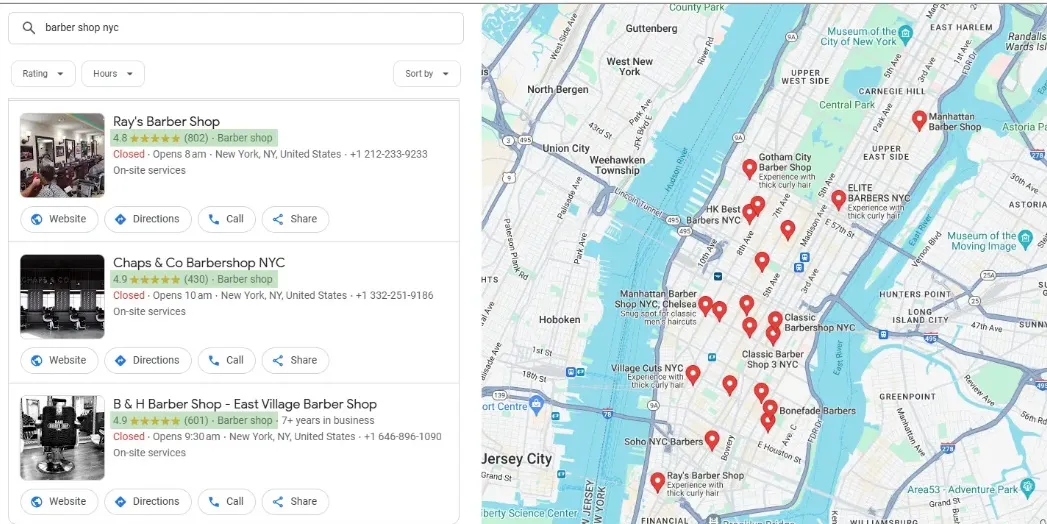
Image Credit: Wiremo
Near Me SEO is all about making sure your business shows up when people search for services nearby. In Singapore, with so many people on their phones and everything close together, these searches are even more common.
When someone searches for a service “near me”, Google automatically uses their real-time location to display the most relevant local results.
Rather than focusing solely on matching keywords, Google considers three factors for “near me” SEO: how close you are, how relevant your business is, and how well-known you are. businesses, “near me” SEO goes beyond traditional local SEO.
It involves optimising your Google Business Profile, ensuring accurate location signals, and creating content that clearly communicates where you operate. This helps Google match you with people searching in places like Orchard, Tampines, Jurong, or the CBD.
Why “Near Me” Searches Matter for Local Businesses in Singapore?
“Near me” searches show strong intent. People using these terms are usually ready to act—whether that means visiting a shop, calling a business, or booking a service.
- High-intent customers: These searches attract users who are actively looking for a solution, not just browsing.
- Built for convenience: In fast-moving Singapore, people want quick, nearby options they can access without hassle. Local visibility becomes especially important for service, retail, and professional businesses. Showing up at the right moment puts you directly in front of potential customers when they need you most.
- Top-of-page exposure: Many “near me” searches trigger Google’s local pack, which appears before organic results.
- Trust and credibility: Businesses in the local pack are often seen as more reliable and established.
- Direct actions, fewer steps: Users can call, get directions, or send enquiries straight from the search results—often without visiting a website.
Taken together, “near me” searches are about being present at the exact moment customers are ready to decide. That’s why optimising for local search is a practical next step for any business that wants to stay visible and competitive in Singapore.
How Google Ranks Results for “Near Me” Searches
Google decides who shows up in “near me” searches by looking at real-time location data and how relevant your business is locally. The exact formula changes, but Google always looks at three main things: proximity, relevance, and prominence. These three factors work together to decide who gets into the local pack and local search results.
Proximity: How Close Your Business Is to the Searcher
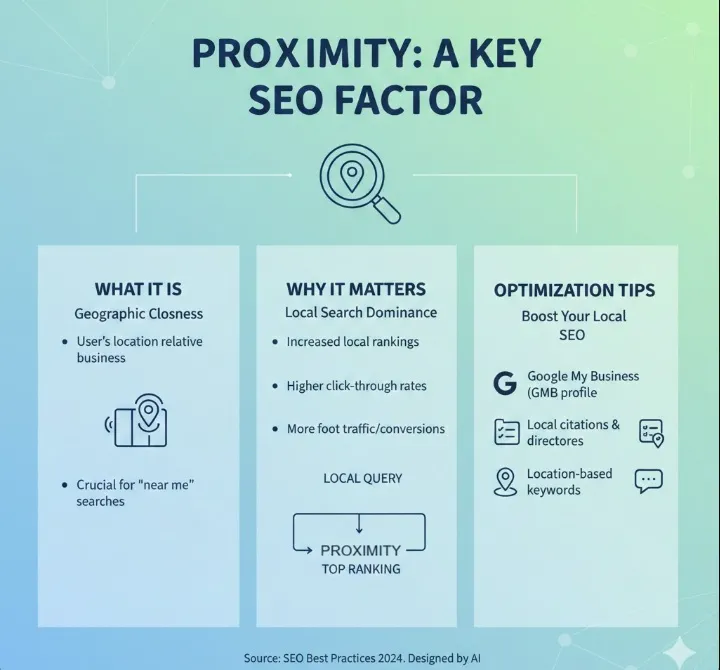
Image Credit: Generated by Gemini
Proximity is all about how close your business is to the searcher. For “near me” searches, this matters a lot—Google wants to show people the closest, most convenient options.
Google uses multiple location signals to determine proximity, including GPS data, IP addresses, Wi-Fi connections, and device settings. This is why two users searching for the same term in different parts of Singapore may see completely different results.
That’s why your address needs to be 100% accurate. Make sure your Google Business Profile shows the right location, map pin, and service areas.
Even small mistakes can make Google less confident about your location, which means you might not show up in top spots.
Relevance: How Well Your Business Matches the Search Intent
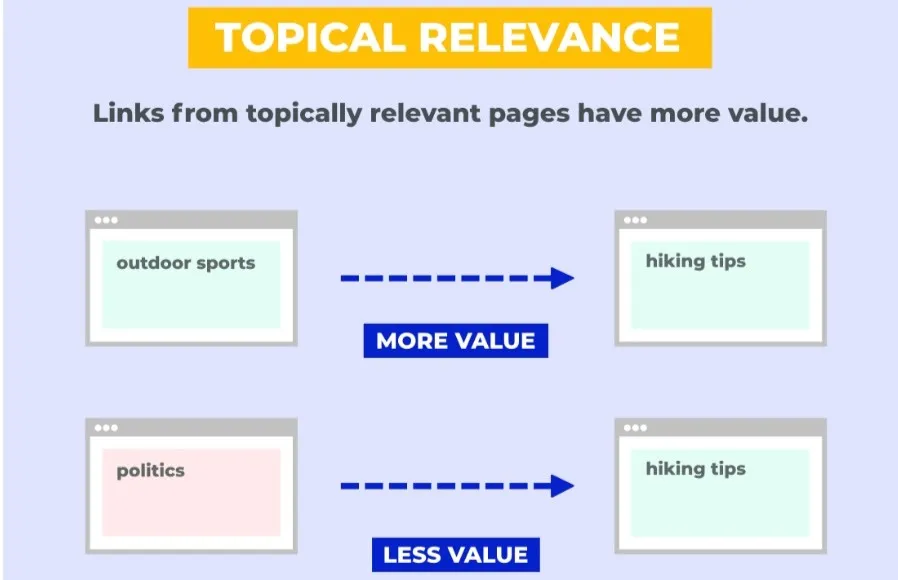
Image Credit: Mangools
Relevance is about how well your business matches what people are searching for. Google checks your business categories, services, website content, and headings to figure this out.
Google wants to see that your content clearly explains what you do and where you do it. Service descriptions, location mentions, FAQs, and local content all help.
To boost relevance, make sure your website and Google Business Profile show exactly what you offer—skip the generic descriptions.
The easier it is for Google to connect your business to a service and location, the more likely you are to rank for “near me” searches.
Prominence: How Trusted and Established Your Business Appears
Prominence is about how well-known and trusted your business is, both online and offline. Google uses this to see how you stack up against other businesses nearby.
Key signals influencing prominence include customer reviews, ratings, review velocity, and review responses. Businesses with consistent, positive engagement tend to perform better in “near me” search results. Citations across trusted directories, high-quality backlinks, and brand mentions also strengthen prominence by reinforcing legitimacy and trust.
Google also looks at how people interact with your listing—clicks, calls, direction requests, and how long they stay. If people engage with your business, it’s a strong sign you’re meeting local needs.
How These Factors Work Together
Proximity, relevance, and prominence all work together. Sometimes, a business that’s a bit farther away can still rank higher if it’s more relevant or trusted than closer competitors.
If you want to win at Near Me SEO in Singapore, you need to get all three right: accurate location info, clear service relevance, and strong trust signals. Do this, and you’ll show up more often when people search for services “near me”.
“Near Me” SEO Core Optimisation Strategies
Start with your Google Business Profile. Make sure every detail is accurate—business name, categories, hours, photos, and updates. Keep this info consistent everywhere online, or you risk losing trust with Google.
Google Business Profile Optimisation
Your Google Business Profile is usually the first thing local searchers see. That’s why it’s the best place to start with Near Me SEO.
Fill out your listing completely—business name, address, phone, website, and hours. Keep everything up to date.
Pick the right primary and secondary categories. These decide which“near me” searches you can show up for.
Add high-quality photos of your place, team, products, or work. This builds trust and gets more people to engage. Updates through posts, promotions, or announcements signal to Google that your business is active and relevant.
Make sure your Google Business Profile matches your website and all directories. Consistency builds trust—conflicting info can hurt your visibility.
On-Page Optimisation for “Near Me” Searches
On-page optimisation helps Google know where you work and who you serve. Clearly mention your service locations in a natural way—don’t force “near me” into every paragraph.
Mention neighbourhoods, service areas, and local landmarks where it makes sense. Structure your service pages for local users—add clear descriptions, local FAQs, and testimonials from nearby customers.
Internal linking between service pages and location-based content further supports crawlability and strengthens topical authority. When done correctly, on-page optimisation makes your website more relevant to Near Me searches without compromising clarity or user experience.
Mobile Optimisation and User Experience
Mobile optimisation is essential for Near Me SEO, as most local searches are performed on smartphones while users are on the move. Your website should load quickly, display correctly across all screen sizes, and provide a smooth, intuitive user experience.
Make it easy for users to act: simple navigation, clear calls to action, clickable phone numbers, and directions. These changes help visitors and send good signals to Google. A slow or clunky mobile site means more people leave and fewer convert, which can hurt your local rankings. Prioritise mobile performance to stay competitive in “near me” searches.
Focus on Intent, Not Just Phrases
A common myth: you need to stuff your site with “near me.” In reality, Google is smart enough to understand local intent. Users searching for “coffee shop near me” or “SEO coaching near me” are looking for convenient, local options—not for content that literally repeats “near me”.
So, focus on showing local relevance naturally. Mention your neighbourhoods, service areas, and local landmarks. For example, instead of writing “SEO coaching near me” everywhere, you could say:
“We provide personalised SEO coaching sessions in Singapore’s Central Business District and surrounding areas.”
This tells Google you’re local, and your content stays clear and professional.
Use Location Modifiers Strategically
Add geo-modifiers like your city, district, or suburb to your page titles, headers, meta descriptions, and content. This works better than stuffing “near me” everywhere.


For example, instead of “SEO Singapore near me,” use “SEO coaching services in Singapore” or “Local SEO experts serving clients in Singapore’s CBD.”
This way, you can target more local searches without keyword stuffing—and improve your chances of ranking for different queries.
Create Useful, Location-Focused Content
Don’t just mention locations—make your content useful. Write blog posts, guides, or FAQs that answer local questions or share local case studies. This boosts engagement and shows Google you’re relevant.

- “Top 5 SEO Coaching Tips for Businesses in Singapore”
- “How to Optimise Your Website for Near Me Searches in Jurong and Tampines”
This kind of content naturally uses local keywords and stays helpful for your audience.
Common Mistakes That Hurt “Near Me” SEO Rankings
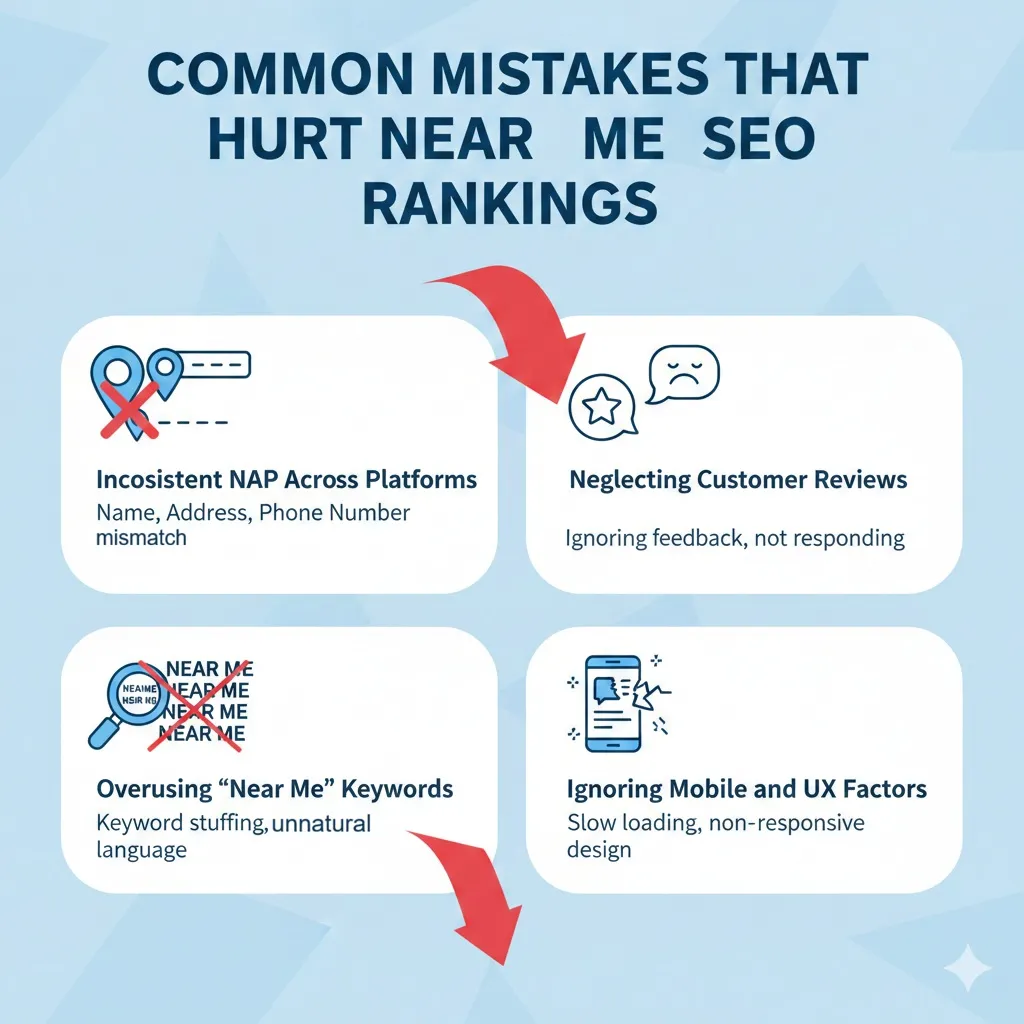
Image Credit: Generated by Gemini
Even small mistakes can hurt your local search visibility. Knowing what to avoid is key if you want your “near me” SEO to work long-term.
- Inconsistent NAP Across Platforms: If your business name, address, or phone number isn’t the same everywhere—Google, social media, directories—search engines get confused. Even a small mismatch, like “St.” versus “Street,” can hurt your rankings and trust. Double-check that every listing matches exactly.
- Neglecting Customer Reviews: Reviews matter for both rankings and customer decisions. If you ignore reviews or don’t ask for them, you risk losing out in Google’s local results. Not enough positive reviews, slow replies, or low engagement can all hurt your visibility.
- Overusing “Near Me” Keywords: Keyword stuffing is a common mistake. Filling your content with “near me” makes it hard to read and less trustworthy. Google prefers content that’s user-focused and naturally shows local relevance. Instead, mix in geo-modifiers, neighbourhood names, and clear service descriptions to show local relevance.
- Ignoring Mobile and UX Factors: Since the majority of Near Me searches are conducted on mobile devices, a poor mobile experience can hurt engagement metrics. Slow loading times, difficult navigation, or hidden contact information can increase bounce rates, sending negative signals to Google and lowering rankings.
Putting Your “Near Me” SEO into Action
“Near me” SEO is a powerful strategy for businesses looking to attract local customers at the exact moment they are searching for services nearby.
Get the basics right—proximity, relevance, and prominence—and your business will show up more often when people in Singapore search for products or services.
Near Me SEO isn’t just about rankings. It’s about connecting with people at the right time, building trust, and getting more enquiries, visits, and sales.
Ready to boost your local visibility and get more customers through a local SEO agency? Reach out to MediaOne today, let our team of Singapore-based digital marketing services experts help your business rank higher in “near me” searches.
Frequently Asked Questions
How long does it take to see results from “Near Me” SEO?
Results vary depending on your competition, industry, and current online presence. Some businesses may notice improvements in local visibility within a few weeks, but achieving strong rankings in competitive areas can take several months. Consistent optimisation and monitoring are key.
While social media signals are not a direct ranking factor, maintaining active social profiles can support your overall online presence, brand awareness, and engagement. Platforms like Facebook, Instagram, and LinkedIn can drive traffic, generate reviews, and improve your business’s credibility in the eyes of Google.
Should I create separate pages for each neighbourhood or service area?
Yes, creating dedicated pages for each location or neighbourhood can improve relevance for local searches. Each page should have unique content, precise NAP details, and service-specific information to avoid duplicate content issues while signalling local relevance to Google.
How do voice searches impact Near Me SEO?
Voice searches often use conversational language, such as “Where is the best pizza near me?” or “SEO coaching in Singapore CBD.” Optimising for natural, long-tail phrases and FAQs can help your business appear in voice search results and capture more local traffic.
Can structured data improve my visibility for “Near Me” searches?
Yes. Implementing the LocalBusiness schema and other structured data helps Google understand your business type, location, and services. This can enhance your appearance in rich results, map packs, and knowledge panels, increasing click-through rates and visibility for local searches.