Patients research before they book. Hashmeta’s healthcare marketing guide reports that 78% of Singaporean patients research online before choosing a provider. Overstated claims erode trust quickly.

Medical marketing in Singapore must attract patients while advertising accurately. Effective medical marketing, including modern digital marketing for medical clinics, is educational, compliant by design, and measured on patient outcomes rather than click volume.
Key Takeaways
- Compliance comes first. Patients research heavily online (78% per Hashmeta), so every statement must be verifiable.
- Check every claim before publication. Remove or rewrite promotional claims with no documented proof.
- Separate education from promotion. Lead with patient questions and reserve calls to action for booking intent.
- Make mobile booking frictionless. With 60% of healthcare searches on mobile per Terris, online scheduling is a core lever.
- Measure acquisition cost before scaling paid spend.
Why Compliance Comes Before Growth
Patients are looking, and medical clinics need them to find accurate information. Healthcare advertising in Singapore carries accuracy and accountability duties that a retail brand does not face — an overstated claim can mislead a patient about their own care.
Medical marketing is a trust exercise before it is a growth exercise. A clinic that treats patient acquisition as a pure conversion funnel will eventually lose ground to one that publishes accurate, verifiable, educational content. Strong branding and a consistent online presence built on accurate content earn patient trust over time, and content marketing works best when every claim can be checked.
The opposing view is that strict review slows a clinic and costs it patients. That concern is fair, but a single misleading claim costs more. A clinic that cannot prove “our most advanced treatment” loses more than one campaign if the claim is challenged. The Claim-to-Proof Matrix below shows how to keep the speed of marketing while removing claims that cannot stand.
Singapore’s healthcare sector serves a population of 6.21 million as at June 2026 through about 1,800 general practitioner clinics, hundreds of specialist centres and many aesthetic practices. The clinics that win are the ones patients trust on first read, across search, social channels and their own websites. Healthcare providers in this market can use a healthcare marketing agency for the mechanics, but the clinic still owns the accuracy of every claim, and digital marketing only amplifies the content behind it.
The Regulatory Framework: HCSA Rules and Marketing Compliance
Healthcare advertising in Singapore sits under the Healthcare Services (Advertisement) Regulations 2021, made under the Healthcare Services Act 2020 (HCSA) and in force since 3 January 2022, together with Ministry of Health (MOH) guidance. Three regulators matter: MOH governs advertising of licensable healthcare services, the Health Sciences Authority (HSA) governs health products such as medicines, and the Singapore Medical Council (SMC) governs how doctors conduct themselves, including in advertising. Confirm current wording directly with the Ministry, as secondary summaries can lag.
The Regulations set the tone in one line — every advertisement’s information:
“must be factually accurate and capable of being substantiated; and must not be exaggerated, false, misleading or deceptive.”
Healthcare Services (Advertisement) Regulations 2021, regulation 5(1)(a)
The definition of “advertisement” is any information published “by any means or in any form or medium” that has a Singapore link, so clinic social media accounts, including Facebook and Instagram, fall under the same rules as websites and print material. Every platform a clinic uses for branding and marketing must meet the same standard. Activa Media makes the same point for providers: guidelines from MOH and HSA mean every piece of communication must meet high standards of accuracy, responsibility and compliance.
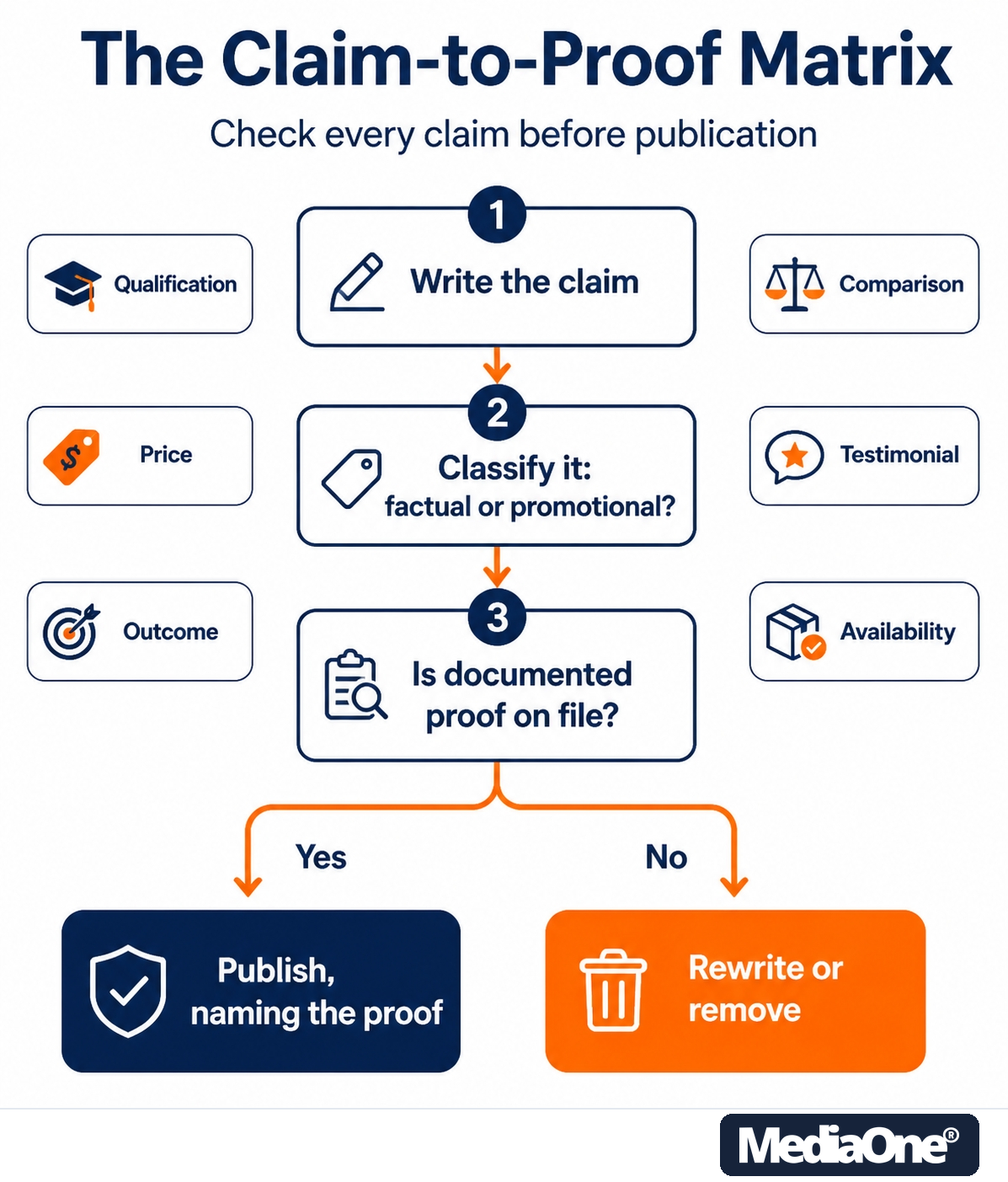
Figure 1: The claim-check test every marketing statement should pass before publication.
The Claim-to-Proof Matrix
The Claim-to-Proof Matrix gives each claim a fixed test, so every business can run a consistent review across its medical marketing and content marketing.
|
Claim type |
Required proof |
Action |
|
Qualification (e.g. “board-certified”) |
Current registration or certificate on file |
Publish with the credential named exactly |
|
Price or fee |
Written pricing schedule with inclusions and exclusions |
Publish with conditions attached, such as “consultation from” |
|
Treatment outcome |
Clinical reference or documented evidence |
Rewrite as general information; remove any guaranteed result |
|
Comparison (“our most advanced”) |
Evidence supporting the comparison |
Rewrite as a factual description, or remove |
|
Testimonial or award |
Dated record of who gave it or who granted it |
Use only if current guidance permits; keep the record |
|
Availability or waiting time |
Current booking data |
Publish only if current and checked |
A claim with no matching proof is never published as written. Note that the Regulations go further than the matrix for two rows: regulation 5(1)(c) prohibits advertisements that compare the quality of your service with another licensee’s, and regulation 5(1)(e) prohibits laudatory statements and superlatives — including statements of prominence or uniqueness — outright. “Our most advanced treatment” therefore fails the test even if you hold the evidence. Rewrite it as a factual description of the treatment itself.
Accuracy and Proof Requirements for Medical Claims
Before publishing, file the evidence behind each claim: a qualification certificate, a clinical reference, or a written pricing schedule. A statement is misleading when it implies a result the evidence does not support, omits a material risk, or compares you to competitors without basis. Search engine visibility does not change this obligation, so a claim that ranks well still needs the same proof. Clinics building a digital marketing presence should apply the same proof standard to every online claim.
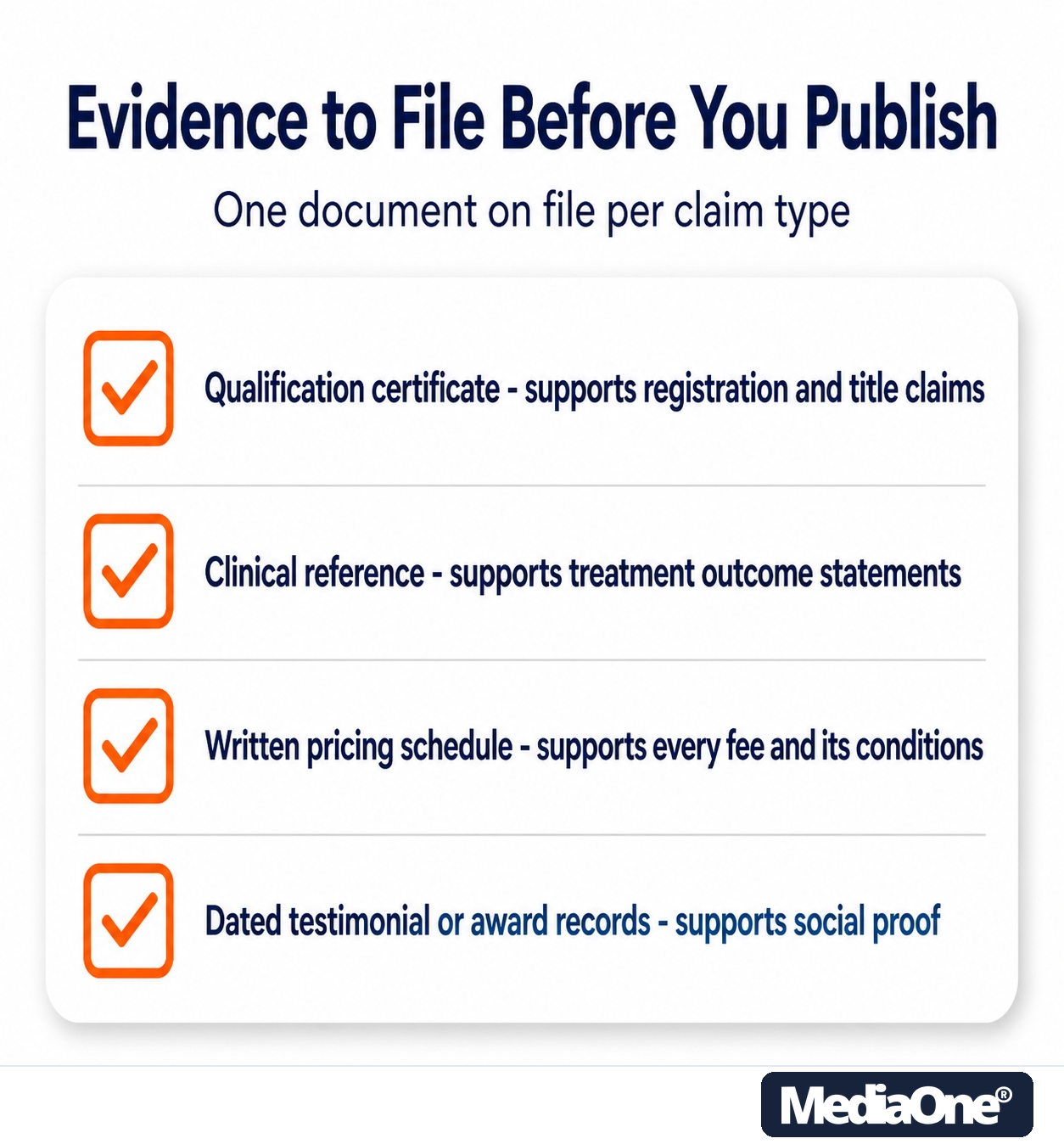
Figure 2: One document on file per claim type keeps the review fast and defensible.
Before-and-After Images, Testimonials and Awards
Regulation 5(1)(d) is absolute: an advertisement must not contain any photograph, picture, video or film showing a person’s appearance before and after — or only after — receiving treatment, whether or not it creates an unjustified expectation. MOH has confirmed the ban applies even with disclaimers. Follow these rules:
- Before-and-after images: Do not publish them in any advertisement, on any channel. Remove existing images from social media and website galleries. The only exception is showing such images to a patient during a consultation, with proper context (regulation 5(2)).
- Testimonials: Regulation 5(1)(f) prohibits reviews, testimonials and endorsements in advertisements except in narrow cases, and SMC’s Ethical Code and Ethical Guidelines (G2(7)) forbid doctors from using testimonials on any media they control — including websites, social accounts and blogs, even through hyperlinks. Never ask or induce patients to write positive testimonials. Check current guidance before using any testimonial at all.
- Awards: Name the award, the body that granted it, and the year. Do not use an award the clinic cannot document.
Transparent and Fair Pricing in Medical Advertising

Show fees clearly, with inclusions and exclusions stated. MOH also publishes price-transparency requirements under the HCSA, so check them against your fee displays:
- Do state the fee and its conditions together, such as “consultation from” with the inclusions listed.
- Do keep a written pricing schedule and check each advertised price against it.
- Do not promise a result at a given price.
- Do not publish a price that omits conditions. A price without its conditions is misleading.
Educational Versus Promotional Content: Drawing the Line
Patients who research online often want facts to decide with, not an advertisement. Educational content explains a condition, test or treatment and leaves the patient better informed. Promotional content persuades the patient to book, and in healthcare marketing it must stay within what the Healthcare Services Act framework permits. Check current wording with the Ministry of Health.
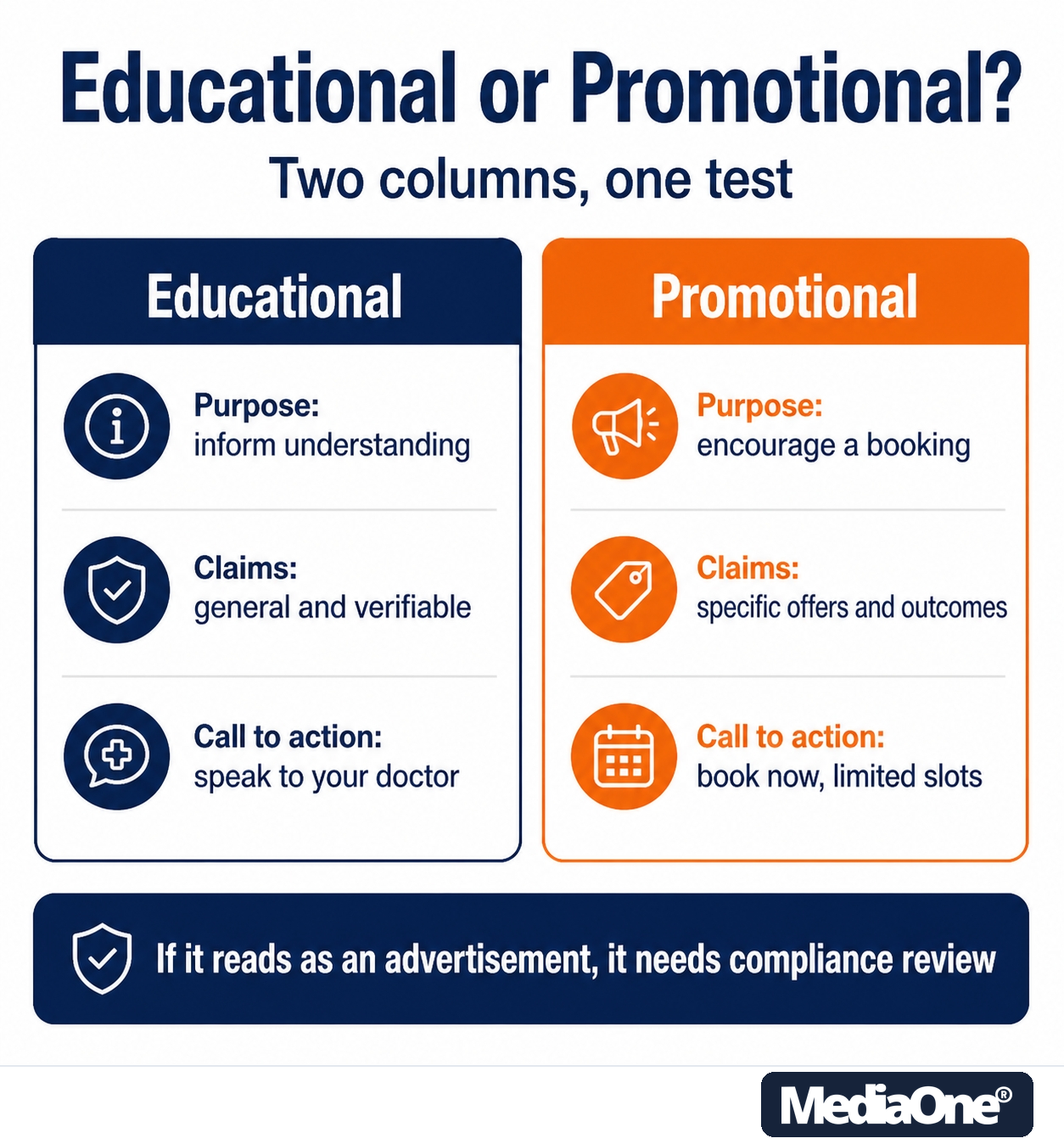
Figure 3: Two columns, one test — if it reads as an advertisement, it needs compliance review.

|
Aspect |
Educational content |
Promotional content |
|
Purpose |
Inform a patient’s understanding |
Encourage a booking or enquiry |
|
Claims |
General, verifiable, with limits stated |
Specific offers, comparisons or outcomes |
|
Calls to action |
“Speak to your doctor” or read further |
“Book now”, “Limited slots” |
|
Tone |
Neutral, clinical, balanced |
Persuasive, urgent, benefit-led |
A simple test helps when a draft sits between the two:
1. Would this be useful if the clinic’s name were removed?
2. Does it state risks and limits as clearly as benefits?
3. Does the call to action point to understanding rather than urgency?
If the answer to the first two is no, or the third is “booking”, the piece is promotional and needs stricter compliance review.
The real risk is drift: an article that starts educational and ends with a discount. Keep promotional material in a separate, clearly labelled section, and have a clinician sign off before publication. Clinics that run marketing through a marketing agency or across digital marketing channels should apply the same test to every asset, since branding consistency can quietly carry promotional tone into educational pages. Any marketing activity by medical clinics in Singapore’s healthcare landscape carries that responsibility.
Choosing Platforms and Building a Medical Marketing Strategy
Most medical clinics ask which platform to use before asking what a patient needs to know. A better sequence starts with the patient’s research stage, then matches each channel to the job it does. Good digital marketing planning for a clinic begins there, and it should be treated as part of the wider business plan.
Advertising Platform Selection for Healthcare Providers
Search suits a clinic with a clear service, because the patient is already looking for it. Paid social, such as Facebook and Instagram, builds familiarity over time but faces targeting limits on health topics. Display rarely justifies its cost for a single clinic, particularly one seeking a strong local presence.

Mobile matters. According to Terris, smartphone penetration in Singapore is above 97 percent, and 60% of healthcare searches happen on mobile. An ad that sends a patient to a slow or hard-to-book page wastes that traffic.
Developing a Medical Content Strategy
A workable content plan runs in five steps:
1. Collect patient questions from front-desk calls, WhatsApp messages and search queries.
2. Map each question to a stage: research, comparison or booking. Answer research questions first.
3. Draft against a fixed template stating the condition, the options and the limits of the information.
4. Route through review. A writer checks each factual claim against a source, and a clinician signs off on clinical accuracy.
5. Schedule refreshes every six months or when guidance changes.
Step 4 is the one clinics skip, and without it content marketing drifts into unsubstantiated claims that can damage the clinic’s branding and trust in the wider market.
Paid Social Media Campaigns
Paid campaigns only work if the numbers do. Terris benchmarks healthcare landing pages at a 5% conversion rate or higher to keep patient acquisition viable at $10 per click — the higher your cost per click, the higher that threshold climbs.
Break-even depends on the fee margin per patient. Use these formulas:
Cost per booking = cost per click ÷ conversion rate
Break-even conversion rate = cost per click ÷ profit per booking
|
Profit per booking |
Break-even conversion rate |
|
$100 |
10% |
|
$200 |
5% |
Say your clinic earns $200 profit per booking. At $10 per click, you need a 5% conversion rate to break even: from 100 clicks ($1,000 spend), a 5% rate gives five bookings that each cost $200 to acquire — exactly break-even — while a 2% rate gives two bookings at $500 each, a $600 loss on $400 in revenue. Replace the $200 with your own margin, because that figure sets the threshold.
Before launch, confirm that the ad makes no outcome promise, that the landing page states the service and fees accurately, and that a clinician or compliance reviewer has approved both. Launching first and reviewing later is the most common and costly mistake.
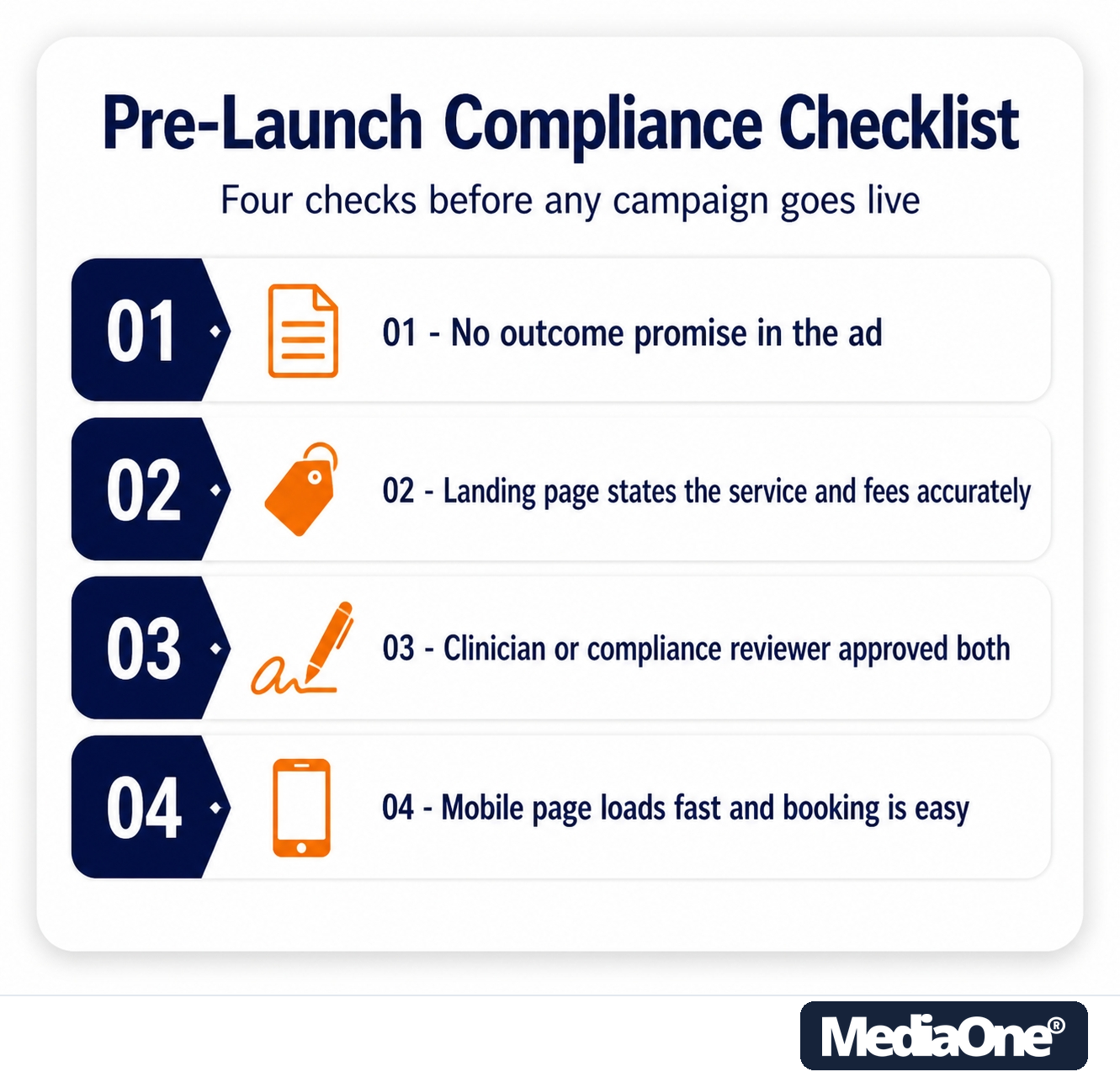
Figure 4: Four checks before any healthcare campaign goes live.
Social Media, SEO and Website Compliance
Most clinics treat social media and their website as separate jobs. For a regulated provider, they are one job: every post, page and search snippet is a marketing communication that the HCSA framework can reach. Ask which claims you can prove, not whether to be active online.
Benefits of Social Media Marketing for Doctors and Medical Clinics
Social media marketing earns trust when it teaches. Accurate explanations of common conditions and plain-language answers build familiarity before a patient needs to book. 78% of Singaporean patients search online before choosing a provider, and a structured social strategy is where that research first meets your clinic.
Tone is the limit. Words such as “best”, “guaranteed” or “limited-time offer” turn an educational channel into an advertising one, inviting the scrutiny that governs medical advertising in Singapore. The superlative ban in regulation 5(1)(e) applies here in full.
SEO and Website Compliance for Medical Providers
Your website is the final checkpoint for every claim, and its services pages must meet the same standard as your digital marketing. Apply the Claim-to-Proof Matrix to each page. Factual statements, such as qualifications, fees or availability, need documented proof. Remove promotional or ranking claims such as “Singapore’s leading clinic” — regulation 5(1)(e) prohibits statements of prominence and uniqueness outright. Never promise search rankings or treatment outcomes. Our healthcare SEO guide and the SEO services buyer’s guide cover the mechanics that stay within these limits.
Keep credentials clear and verifiable: names, registrations, specialities, and training. Online scheduling closes the gap between interest and booking. Terris reports clinics increasing appointment bookings by 35 to 50% after adding online scheduling, and a 2025 clinical study found online scheduling cut unused appointment slots from 22.7% to 10.3% in the practice it studied. A fast, mobile-first website makes the booking flow work; website design built for conversion is part of compliance, not just aesthetics.
Social Media and Digital Platform Compliance
Review each platform before you post. Monitor how patients and the public discuss your practice, and treat your reputation management as part of compliance:
- Comments: Moderate daily. Remove or respond to posts discussing a patient’s health details. Never confirm treatment outcomes publicly.
- Influencer content: Treat paid or gifted posts as your advertising. Check claims and disclosures before publication.
- Records: Keep dated copies of every post, caption, reply and campaign brief.
- Reviews: Do not offer incentives for testimonials or filter out negative reviews. SMC rules also stop you from asking or inducing patients to write positive ones.
Summary
Medical marketing in Singapore works best when it is educational, compliant by design, and measured on patient outcomes rather than click volume. A clinic that earns trust through accurate content will outperform one that chases raw traffic. Strong branding and a consistent online presence across platforms and channels build that trust, and effective reputation management protects it. Medical clinics and other healthcare providers can apply this same discipline across their digital marketing and search engine optimisation efforts, and a marketing agency that understands the market can help them do it. Clinics that offer a range of healthcare services can apply the same discipline to each one.
Three steps matter most:
- 1. Substantiate every claim. Before publishing, sort each statement into the Claim-to-Proof Matrix. Any promotional claim without documented proof is rewritten or removed.
- 2. Separate education from promotion. Keep informational articles free of calls to action, prices and comparative language. Reserve those for clearly labelled service pages.
- 3. Measure conversion against acquisition cost. At $10 per click, Terris benchmarks a landing page converting at 5% or higher to keep patient acquisition viable. Work out your own break-even before you spend, using your fee margin and the value of each patient.
For next steps, audit your top ten pages against the matrix this week. Then confirm current HCSA advertising guidance directly with the Ministry of Health before you change any wording.
Frequently Asked Questions
Can a clinic show before-and-after photos in Singapore?
Generally, no. Regulation 5(1)(d) of the Healthcare Services (Advertisement) Regulations 2021 prohibits before-and-after and after-only treatment images in advertisements, even with disclaimers. Treat them as off limits for paid and organic promotion; the only exception is showing them to a patient during a consultation.
Are patient testimonials allowed in healthcare advertising?
Largely no. Regulation 5(1)(f) prohibits reviews, testimonials and endorsements in advertisements except in narrow cases, and SMC’s Ethical Code and Ethical Guidelines forbid doctors from using testimonials on any media they control — including websites, social accounts and blogs. Never use one that implies a guaranteed outcome, never ask patients to write them, and review current guidance before anything goes live.
What makes a medical claim accurate enough to publish?
A claim is publishable only when you hold proof for it before you publish — the Regulations require advertising information to be “factually accurate and capable of being substantiated”. Anything promotional without proof should be rewritten or removed.

How do I tell if my content is educational or promotional?
Educational content answers a patient question with balanced, verifiable information and no push to book. Promotional content centres on your service, price or results and carries a direct call to action. If a draft reads as an advertisement, it needs compliance review.
Which advertising platforms suit a small clinic?
Search advertising suits clinics because patients actively look for providers, and mobile matters most. According to Terris, 60% of healthcare searches happen on mobile. Start with one channel you can review thoroughly.
How much should a clinic expect to spend per patient acquired?
Divide your total campaign spend by the number of booked patients to find your actual cost per acquisition. Compare that figure with the value of a patient to find your break-even point.