| AI Summary
Lead generation campaigns are focused marketing activities that attract potential customers and encourage enquiries. Their commercial value depends on the quality of those enquiries and what happens afterwards. A campaign plan connects audience needs, offers, traffic costs, qualification rules and sales follow-up. Reliable measurement separates form submissions from qualified prospects and completed sales, helping teams identify where spending produces business results. |

Lead generation campaigns can produce a busy inbox without bringing the business closer to a sale. A guide download and a pricing request show different levels of interest. Each needs a response that reflects what the person requested.
For Singapore SMEs and business-to-business (B2B) teams, each enquiry needs a connection to a commercial goal. The campaign needs an audience, an offer, a budget and someone responsible for the next conversation.
This guide explains campaign planning, launch and improvement through a worked example. The calculations connect completed sales calls to traffic and spending. The later sections cover landing pages, promotion, qualification and follow-up, so sales can act on enquiries and finance can assess the results.
Key Takeaways
- Planning: Each campaign needs an audience, an outcome, a spending limit and a deadline.
- Forecasting: Every conversion rate needs its own definition; visitor-to-enquiry and enquiry-to-qualified-lead rates measure different steps.
- Budgeting: Advertising, production, software and management costs belong in the campaign calculation.
- Qualification: A lead score helps prioritise enquiries, while sales acceptance requires agreed checks.
- Follow-up: A named owner and relevant response prevent enquiries from sitting untouched.
- Evaluation: Customer acquisition costs and profit provide context that lead counts cannot show.
What Is a Lead Generation Campaign?
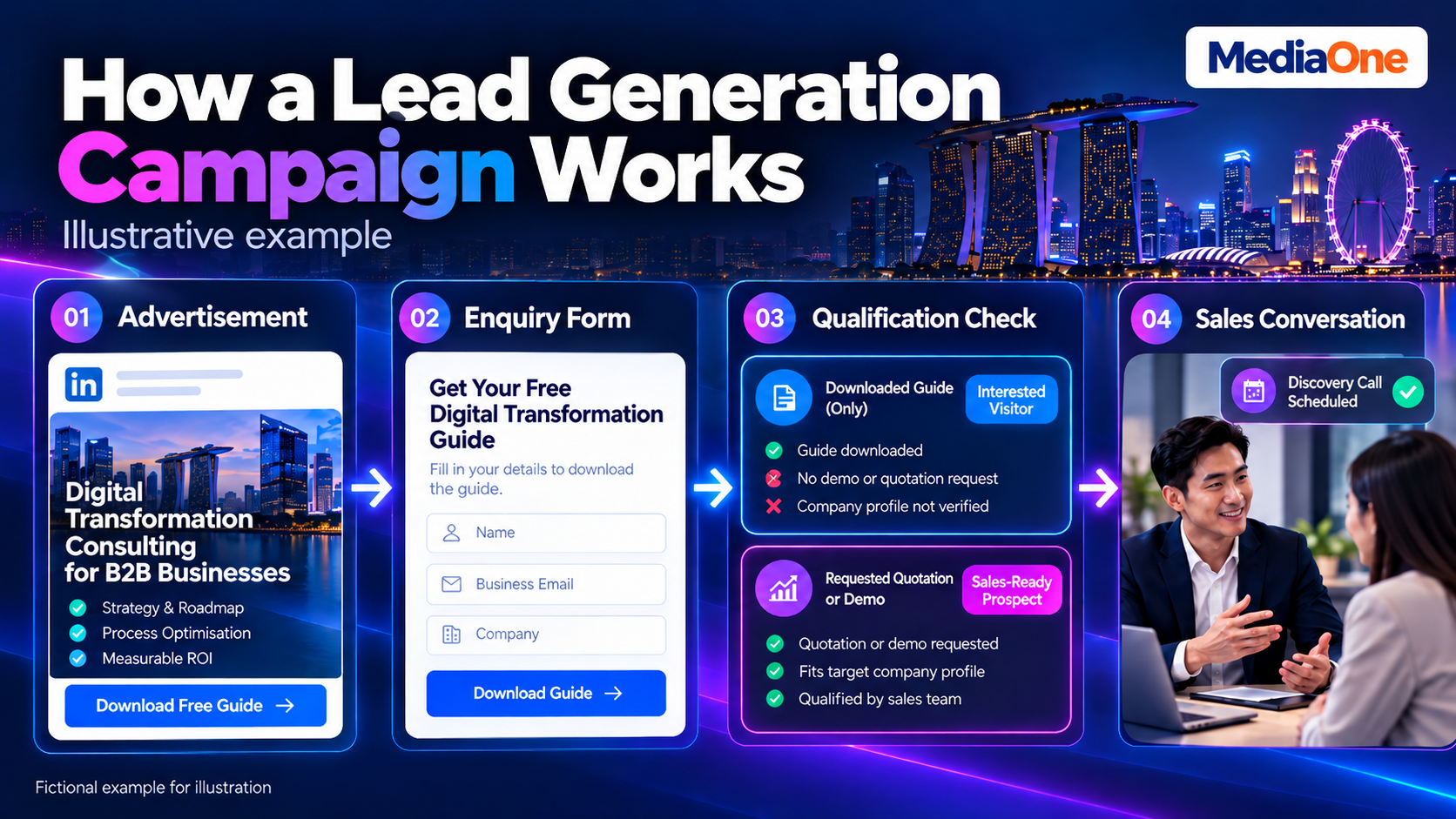
A lead generation campaign is a planned marketing effort that encourages potential customers to share their details or request contact. It usually focuses on a specific audience, offer and period, with a budget and measurable target.
A Singapore payroll provider, for example, might promote a payroll review to local companies preparing to replace their software. The campaign could include search ads, a dedicated landing page and follow-up from a sales adviser.
Ongoing lead generation can run throughout the year. A campaign gives one part of that activity a defined purpose, such as generating enquiries for a new service or reaching a particular industry.
Why Campaigns Produce Leads That Sales Cannot Use
Campaign problems often begin when the offer attracts people outside the intended buying audience. A broad giveaway may collect hundreds of names from people who want the prize. A specific service assessment gives a better indication of interest in that service.
Other problems appear after the enquiry. Sales may receive incomplete records, contact the same person twice or discover that nobody agreed what counts as a qualified lead.
A campaign plan should connect audience targeting, the offer, qualification and follow-up. Missing ownership at any stage can waste the work completed elsewhere.
Campaign Goals, Audiences and Lead Definitions
A Campaign Goal That Sales Can Measure
A measurable goal names the audience, outcome and deadline. For example: “Generate 75 marketing-qualified leads and 15 sales-qualified leads from Singapore biotech companies over eight weeks, leading to five completed discovery calls.”
The numbers are planning assumptions. Historical results and available sales capacity should determine whether they are realistic. A discovery call means an initial conversation to understand the buyer’s needs; a booking alone does not count as a completed call.
Well-defined marketing objectives also include spending limits and responsibility. The campaign brief should name who approves the budget, who reviews enquiries and who reports the results.
Campaign timing needs room for preparation, promotion and sales follow-up. An eight-week advertising period may require page production beforehand and sales reporting afterwards. Public holidays, industry events and the buyer’s purchasing calendar can affect availability. The team should choose dates around those conditions and its capacity to respond. A campaign can stop buying traffic while existing enquiries continue through the sales process.
The Difference Between an Enquiry, an MQL and an SQL
Shared definitions prevent marketing and sales from counting different things under the same label.
| Stage | Meaning in this campaign | Example |
| Enquiry or lead | A person provides valid contact details and expresses interest | A visitor requests a payroll checklist |
| Marketing-qualified lead (MQL) | The contact meets agreed audience and engagement requirements | An HR manager at a target company requests a software comparison |
| Sales-qualified lead (SQL) | Sales checks and accepts the prospect for further discussion | The manager confirms a relevant requirement and agrees to discuss it |
| Customer | The prospect completes the agreed purchase milestone | The company signs and pays for the service |
These labels are working definitions, not universal standards. A business can adapt them, provided everyone applies the same rules. A download does not automatically establish buying intent.
An Audience Based on Actual Customers
An ideal customer profile describes the companies a B2B business can serve: their industry, size, location, needs and purchasing circumstances. Buyer profiles describe the people involved, such as an operations manager, finance approver or business owner.
Existing customer records and sales conversations provide starting evidence. Audience segmentation helps turn that evidence into groups with different messages and offers.
A payroll campaign might address HR’s administrative workload and finance’s budget concerns separately. Both audiences can influence the same purchase, so the campaign should explain benefits relevant to each role.
Working Backwards From Sales Calls to Campaign Budget
Campaign forecasts become easier to assess when each step has a number and an assumption. The following example uses fictional rates and costs to explain the calculation. These figures are not Singapore market benchmarks or promised results.
A Worked Example With Every Stage Included
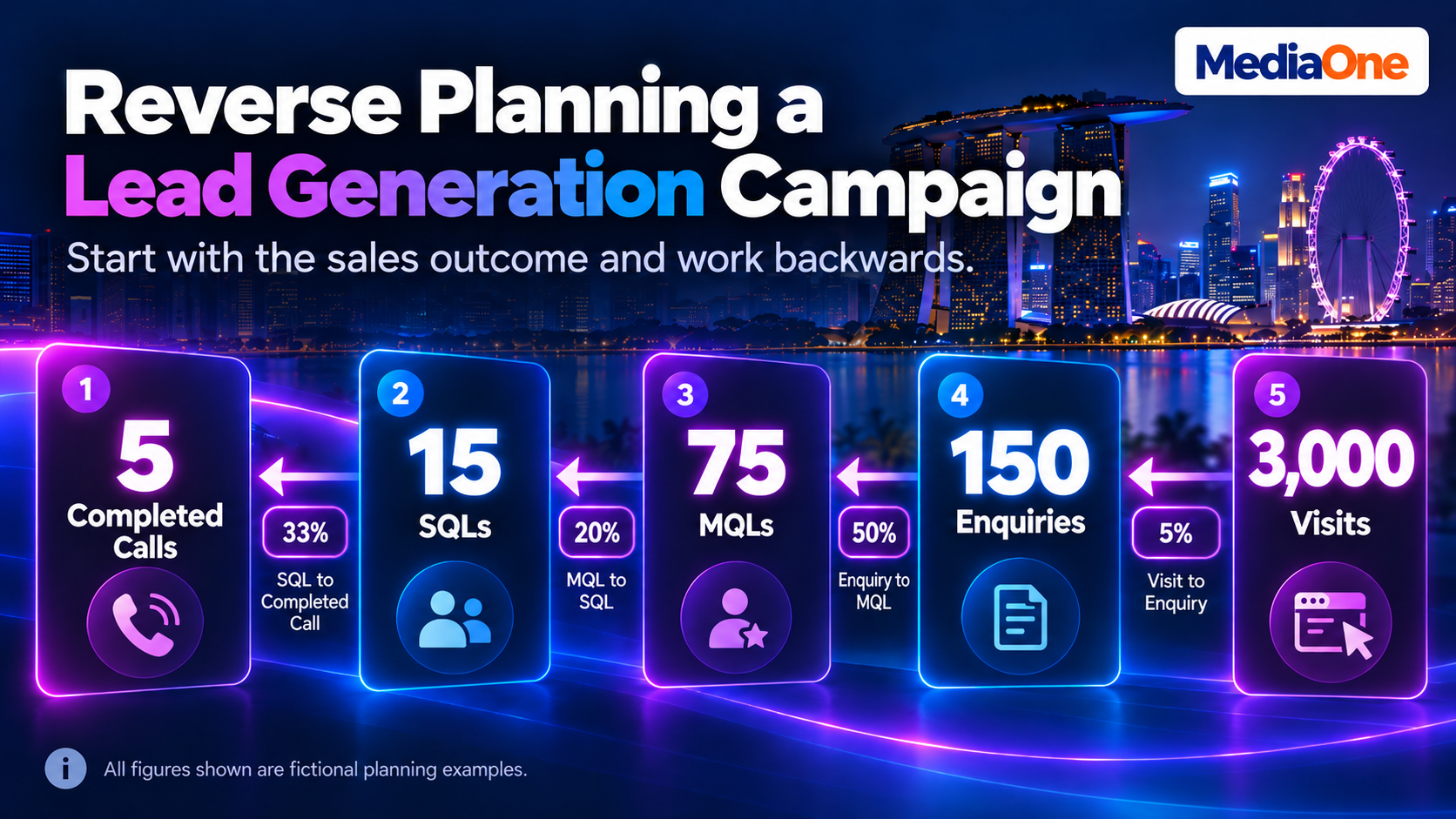
The goal is five completed discovery calls. The assumed conversion rates are:
- SQL to completed call: one in three.
- MQL to SQL: 20%.
- Enquiry to MQL: 50%.
- Landing-page visit to enquiry: 5%.
The enquiry-to-MQL step is essential. A forecast that treats every form submission as qualified can underestimate the traffic and budget required.
| Required outcome | Calculation | Planned volume |
| Completed discovery calls | Campaign target | 5 |
| SQLs | 5 ÷ one-third | 15 |
| MQLs | 15 ÷ 20% | 75 |
| Valid enquiries | 75 ÷ 50% | 150 |
| Landing-page visits | 150 ÷ 5% | 3,000 |
The lead generation funnel provides the stage structure. Campaign planning adds the deadlines, costs and owners needed to deliver those numbers.
The Budget Behind the Traffic Target
Suppose the campaign buys 3,000 clicks at SGD 2 each, with each click assumed to produce a landing-page visit. Advertising would cost SGD 6,000. Actual analytics may record fewer visits, so the team should check this assumption during the campaign.
Another SGD 2,000 for production, software and management brings the illustrative campaign budget to SGD 8,000. At the forecast volumes:
- Cost per enquiry: SGD 8,000 ÷ 150 = SGD 53.33.
- Cost per MQL: SGD 8,000 ÷ 75 = SGD 106.67.
- Cost per SQL: SGD 8,000 ÷ 15 = SGD 533.33.
- Cost per completed call: SGD 8,000 ÷ 5 = SGD 1,600.
These costs describe different outcomes. A report should label each one so a low enquiry cost does not hide expensive sales conversations.
Whether the Forecast Can Support a Sale
Revenue planning needs one more step: completed calls to paying customers. That rate depends on the business’s sales process and should come from its records.
A campaign producing five calls has not produced five customers. The acceptable cost per call depends on how often those calls become sales and how much profit each customer contributes.

A lower conversion rate also changes the forecast. At a 2.5% visit-to-enquiry rate, the example would require 6,000 visits for the same 150 enquiries. The team would need to revisit spending, the offer or the target before committing.
Offers and Landing Pages That Encourage Enquiries
An Offer That Matches the Buyer’s Immediate Need
The offer should solve a specific problem. Someone researching payroll errors may want a checklist. Someone comparing systems may want a feature comparison. A buyer with an upcoming replacement project may welcome a demonstration.
A campaign can serve these needs with separate offers. A broad “business growth guide” gives little indication of its contents. A “payroll software comparison worksheet” tells the reader what they will receive and how they might use it.
The offer also sets expectations for the conversation afterwards. A checklist download does not invite the same response as a quotation request. The form and confirmation message should explain what happens next.
A Landing Page With One Main Action
A campaign landing page should explain the offer before asking for details. Google’s landing-page recommendations emphasise agreement between the advertisement, keywords and destination page. A payroll comparison advertisement should lead to that comparison, with a matching next step.
A practical page includes:
- A headline identifying the offer and intended audience.
- A short explanation of what the prospect receives.
- Relevant evidence, such as an approved customer example or product demonstration.
- A form requesting information needed for delivery and qualification.
- A button describing the outcome, such as “Get the comparison worksheet”.
- A confirmation message explaining delivery and follow-up.
Evidence must be accurate and permitted for publication. A customer logo should not imply endorsement without permission, and a performance claim needs a source that supports the stated result.
Mobile checks should cover readability, error messages and successful submission. W3C’s form-label guidance explains how labels identify fields for users, including people using assistive technology. Conversion rate optimisation examines these barriers alongside the offer.
Form length should reflect the offer. A worksheet may need an email address and one audience question. A quotation request may need requirements and location. Each field should help deliver the offer or assess the enquiry.
Personal Data and Marketing Preferences
Singapore’s PDPA establishes obligations concerning notification, consent and appropriate purposes when organisations handle personal data. The PDPC’s data protection guidance explains those obligations, including applicable exceptions.
Campaign forms should explain why details are requested and how they will be used. A practical design separates delivery of the requested resource from an optional marketing subscription. A download should not leave someone uncertain about future messages.
Telephone outreach involves additional considerations. The PDPC’s Do Not Call guidance explains requirements for relevant marketing calls and messages to Singapore telephone numbers, including exclusions and exceptions. An online enquiry should not be treated as unrestricted permission for every type of promotion.
Promotion Channels for Lead Generation Campaigns
Channel selection depends on where potential buyers spend time, what they need and whether the business can afford the resulting acquisition cost. A small team can begin with one main channel and one supporting channel, then expand when the process works.
| Channel | Best suited to | Main planning consideration |
| Paid search | People actively researching a service or solution | Relevant keywords, search demand and click costs |
| Paid social | Defined audiences who may recognise the problem when shown an offer | Audience size, creative quality and qualification |
| Existing email contacts | People who have a relevant relationship with the business | Permission, relevance and list condition |
| Organic content | Questions buyers research before making contact | Production time, search visibility and conversion opportunities |
| Partners and events | Audiences reached through industry relationships | Access, lead-sharing arrangements and follow-up ownership |
Paid Search and Paid Social Have Different Jobs
A paid search campaign can reach someone searching for “payroll software Singapore.” Google’s search terms report helps identify irrelevant searches that triggered advertisements. A payroll software provider receiving job-seeker traffic might exclude relevant recruitment terms using negative keywords, which prevent ads from appearing for specified searches.
A social media advertising strategy may introduce a payroll checklist to relevant HR professionals before they actively search. That audience may require more explanation before requesting a sales conversation.
Neither channel guarantees better leads. Campaign results depend on the audience, offer, targeting and follow-up. Cost comparisons should therefore include qualification and customer outcomes.
Existing Audiences and Partner Distribution
An existing contact list can support a new campaign when the offer is relevant and the proposed communication is permitted. Previous engagement does not make every contact a new lead, so reports should distinguish new enquiries from returning prospects.
An industry association or complementary supplier may also help distribute an offer. The arrangement should state who receives contact details, what participants are told and which team handles enquiries. A shared webinar needs that agreement before registration opens.
Lead Scoring and Follow-Up After an Enquiry
A Score That Helps Prioritise Attention
Lead scoring assigns points to signals that suggest relevance or interest. It helps teams organise follow-up, but a score cannot confirm a buying requirement on its own.
A basic model can keep two assessments separate:
| Assessment | Example signals | What the team learns |
| Company and role | Service location, company requirements and purchasing involvement | Whether the business can serve the prospect |
| Interest and action | A demonstration request, substantive reply or relevant event participation | What the prospect may want to discuss |
A student researching payroll can show strong engagement without representing a purchasing company. Conversely, a business owner who sends one direct quotation request may deserve immediate attention.
Email opens should carry limited weight. Apple’s Mail Privacy Protection prevents senders from knowing whether protected messages were opened. A score based heavily on opens can misrepresent interest.
A Sales Handoff With Enough Context
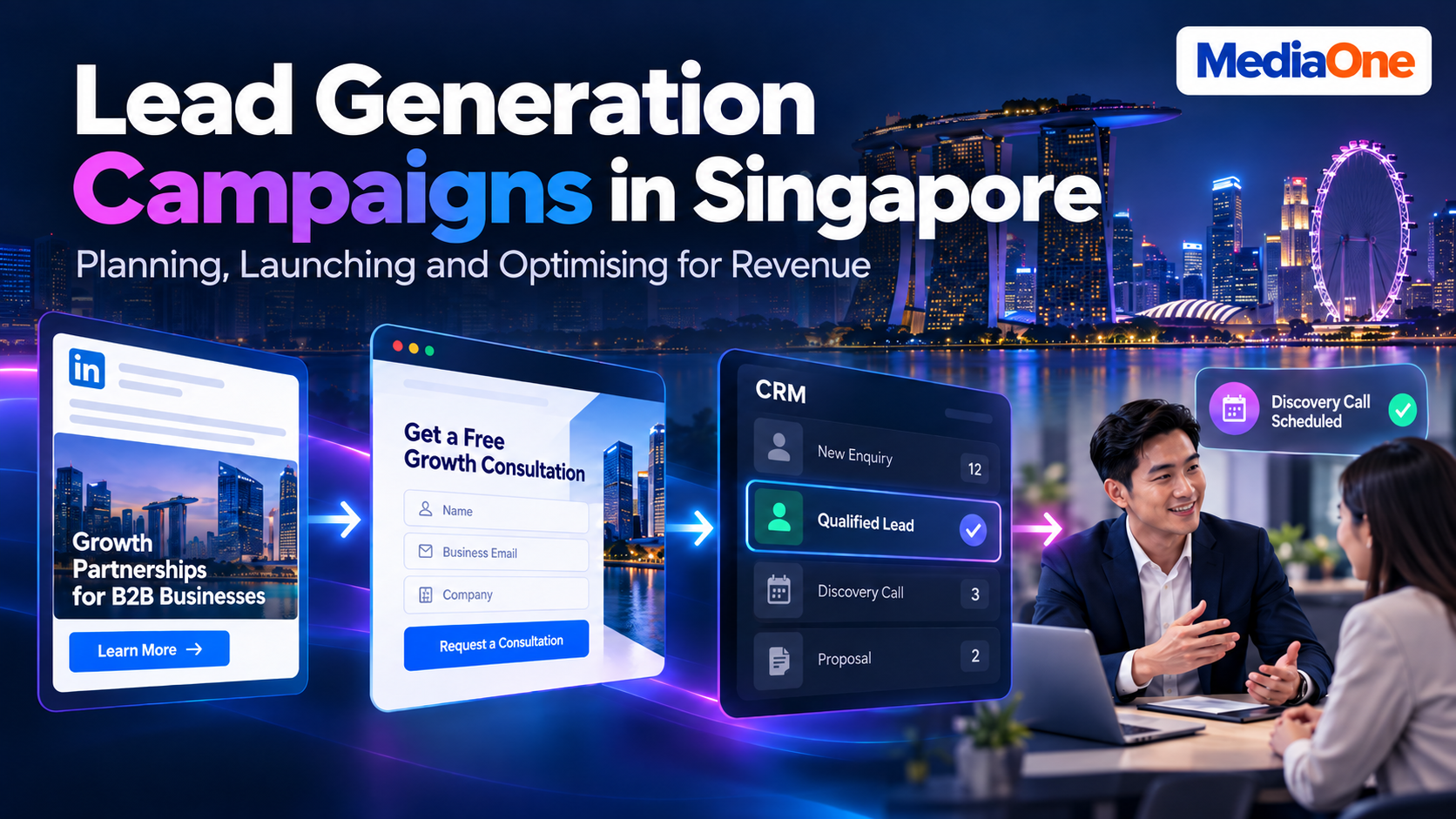
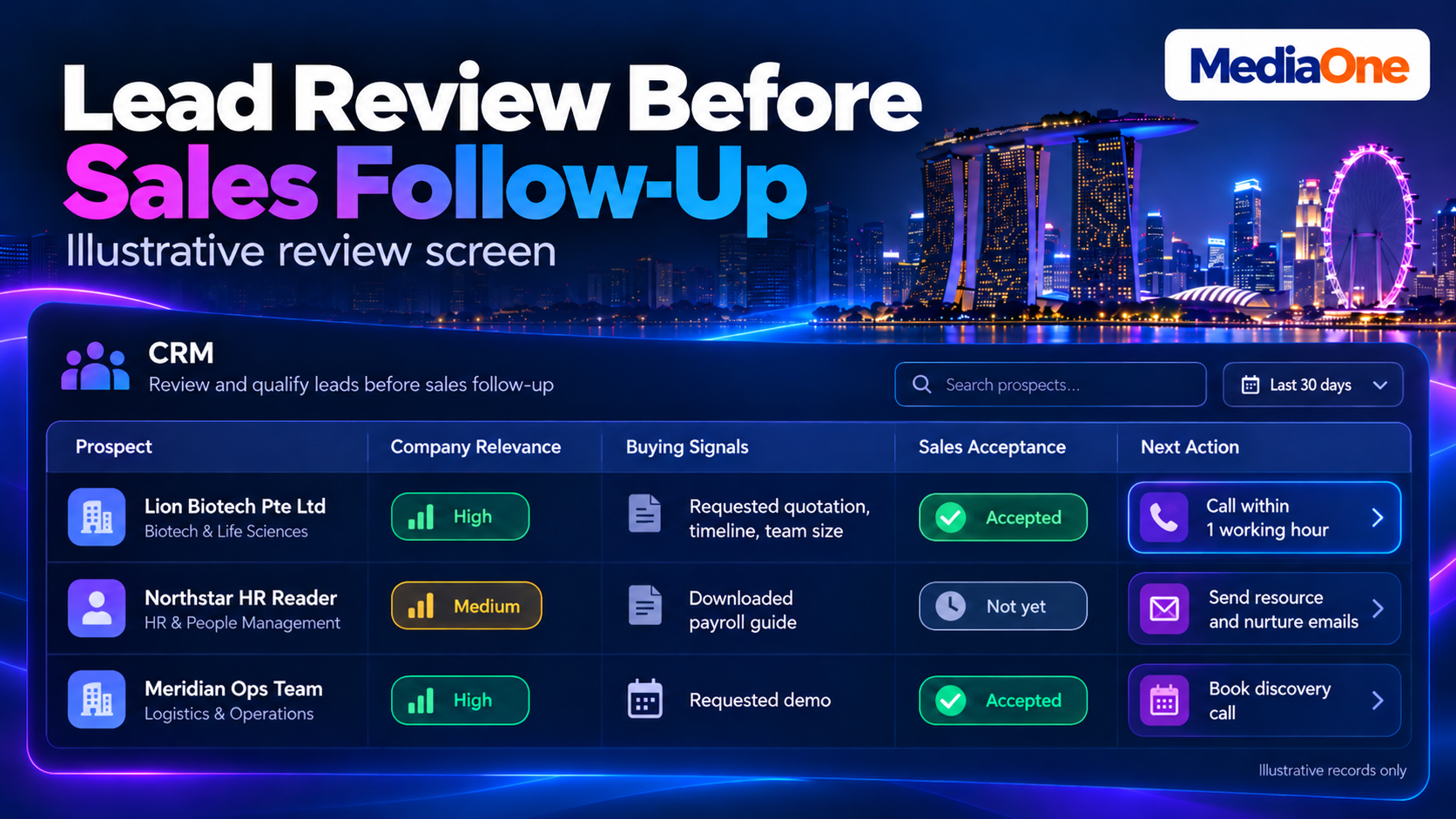
A qualified enquiry should reach a named owner with the source, requested offer, relevant details and latest interaction. A customer relationship management (CRM) system stores that contact and sales history. Sales should record whether it accepts the enquiry and why.
Common rejection reasons include an unsupported service request, the wrong location, a duplicate record or no relevant business need. These reasons help marketing change targeting and forms without blaming the channel for every unsuitable enquiry.
The response target should reflect buyer expectations and team capacity. A quotation request deserves prompt attention during working hours, while a guide download may begin with resource delivery. Public promises about response times must match what the team can deliver.
Follow-Up That Reflects the Request
A short email marketing sequence can develop the original topic without repeating the same sales pitch. Each message needs a reason to exist.
For a payroll comparison download, a possible sequence includes resource delivery, an explanation of common selection mistakes, a relevant customer example and an optional invitation to discuss requirements.
The sequence should stop or change when someone replies, books a conversation or unsubscribes. Webinar attendees and people who missed the session may also need different messages. A reply asking about implementation deserves a personal answer, not the next scheduled beginner email.

Email delivery needs attention alongside message quality. Google’s email sender guidelines cover sender authentication and unsubscribe practices. Authentication helps receiving services verify the sender’s domain. The email platform should support the requirements that apply to the campaign’s sending volume, while recipients should have an easy way to stop marketing messages.
Campaign Launch Checks and Performance Reviews
Launch Checks From Click to Sales Record
A complete test follows a sample prospect from the advertisement to the sales record. The campaign owner should confirm the following before paid traffic begins:
- Advertisements lead to the intended page and match its offer.
- Forms submit successfully on mobile and desktop.
- Confirmation messages and promised resources arrive.
- Analytics record successful enquiries without counting failed submissions.
- Lead records retain campaign details and reach the assigned owner.
- Marketing preferences and unsubscribe requests reach the relevant systems.
Spam checks belong in this test as well. Fake addresses, repeated automated submissions and test records can inflate results. The campaign needs a consistent rule for excluding them from lead counts. That rule should preserve genuine enquiries, including people who use a personal email address for a business purchase.
Google Analytics supports campaign URL parameters that identify traffic sources, channels and campaign names. Consistent naming makes results easier to compare; the same campaign should not appear under several spellings.
Metrics That Explain Campaign Results
The reporting dashboard should connect spending to successive outcomes. Each conversion rate must use the same stage definitions and reporting period.
| Metric | Calculation | What it helps assess |
| Visit-to-enquiry rate | Valid enquiries ÷ landing-page visits × 100 | The page and offer’s response rate |
| Cost per lead | Campaign cost ÷ valid leads | Acquisition cost before qualification |
| Cost per MQL | Campaign cost ÷ MQLs | The cost of marketing-qualified prospects |
| MQL-to-SQL rate | SQLs ÷ MQLs × 100 | Progress into sales acceptance |
| Customer acquisition cost | Relevant marketing and sales costs ÷ new customers | The cost of winning business |
Google Ads also supports qualified and converted lead measurement using offline outcomes from a CRM or internal lead system. This connects advertising activity to stages beyond the initial form submission.
Campaign ROI needs an agreed cost basis. A practical calculation is attributable contribution profit, minus campaign cost, divided by campaign cost, multiplied by 100. Contribution profit means revenue remaining after the direct costs of providing the product or service. The campaign cost must not already be deducted from that profit figure.
For example, SGD 30,000 in attributable sales with SGD 18,000 in direct delivery costs leaves SGD 12,000 in contribution profit. After the example’s SGD 8,000 campaign cost, SGD 4,000 remains.
The calculation is:

Campaign ROI = SGD 4,000 ÷ SGD 8,000 × 100 = 50%.
This illustrative return excludes other sales costs and overhead, so it does not establish the business’s overall profitability.
Performance Reviews That Lead to a Specific Change
A weekly review can compare actual results with the forecast and identify the earliest stage falling behind. Few relevant visits may indicate a targeting or distribution problem. Adequate visits with few enquiries may indicate an offer or page problem.
Many enquiries with few accepted prospects suggest a qualification issue. Accepted prospects that rarely become customers call for examination of requirements, pricing, sales follow-up and the offer itself.
A test needs a written plan and an agreed success measure. NIST’s experimental design guidance starts with the objective and factors being studied. For a basic campaign A/B test, the plan might compare the existing headline with one alternative and measure qualified enquiries.
The audience, offer and other page elements should remain comparable. Visitors should be assigned randomly to each version, so the team does not select who sees which headline. A small sample may not support a reliable conclusion, and early fluctuations should not decide the winner. More submissions are valuable only when those enquiries meet the campaign’s qualification requirements.

Campaign reviews need time for sales to develop. Results grouped by when leads first arrived help avoid comparing fresh enquiries with prospects that have had months to buy.
Connecting Lead Generation Campaigns to Revenue
The next campaign brief should make the spending decision easier: who the campaign serves, what it offers, how the numbers connect and who handles each enquiry. A forecast that sales cannot support needs revision before launch.
MediaOne’s lead generation services bring campaign strategy, paid media, landing-page optimisation and CRM integration into the same process. Businesses seeking campaign support can begin that discussion with their current results, budget and customer goals, giving the team a concrete basis for planning
Frequently Asked Questions
Can a Lead Generation Campaign Work Without a Dedicated Landing Page?
Some campaigns collect enquiries within the advertising platform. LinkedIn’s Lead Gen Forms allow people to submit profile information without completing a separate website form. This can suit webinar registrations or resource requests. The trade-off is less room to explain a complex offer, so the campaign still needs accessible supporting information.
Should Every Download Require Contact Details?
A form is appropriate when the resource offers enough value to justify the exchange. Basic explanations, service information and introductory advice can remain openly available. A business can publish an explanation freely and reserve a detailed worksheet for registration. The decision depends on whether contact collection supports the reader’s next step.
How Do B2C Lead Generation Campaigns Differ From B2B Campaigns?
Business-to-consumer campaigns often qualify people by service location, personal requirements and purchase timing. B2B campaigns may also assess company requirements and several people’s involvement. A home-services enquiry might proceed directly to an appointment, while a business software enquiry may require discussions with multiple departments. The actual buying process determines the stages.
What Should a Business Own When an Agency Runs Its Campaign?
The agreement should define access to advertising accounts, lead records, analytics, creative assets and reports. It should also explain export arrangements and responsibilities when the relationship ends. Ownership and licensing can differ between original work, stock assets and software, so those terms belong in the agreement before production begins.