Singapore buyers scroll past polished ads and trust people who say they used the product. That is why key opinion consumers (KOCs) now feature in many brand budgets.
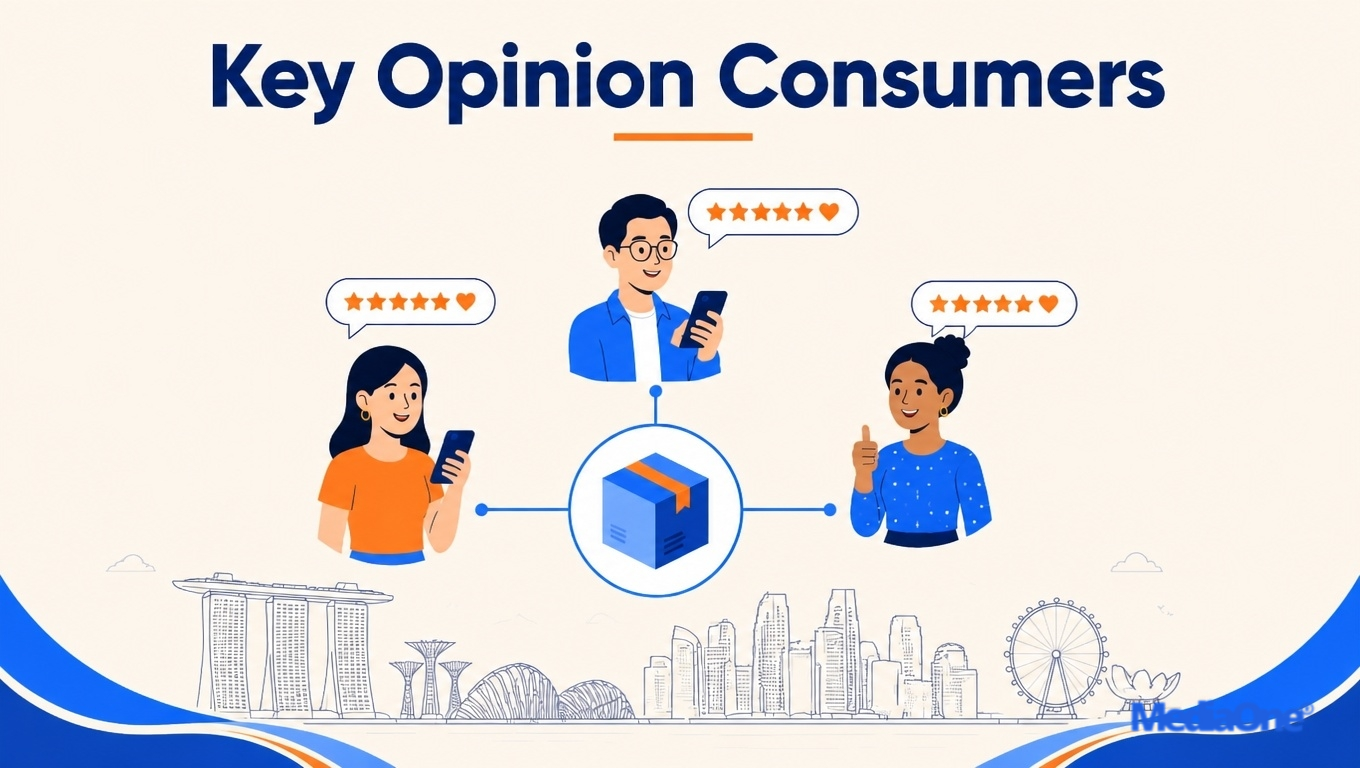
A KOC is an everyday customer who has used a product and recommends it to a small, relevant circle. This guide covers how Key Opinion Consumers (KOCs) differ from Key Opinion Leaders (KOLs), how to run a KOC campaign and how to shortlist creators – and if you want a partner for the wider programme, MediaOne’s influencer marketing service covers creator campaigns end to end. For many Singapore brands, several genuine creators earn more trust than one large account.
Key Takeaways
- KOCs are everyday customers whose credibility comes from genuine product use, not audience size.
- 54% of consumers trust online reviews first, ahead of friends and family (24%) and company claims (18%), per Reputation.com’s survey on consumer decision-making.
- KOCs sell trust; KOLs sell reach. On a budget under S$10,000, prioritise KOCs.
- Score each creator on five criteria (1 to 3 each); shortlist any scoring 10 or more out of 15.
- Give creators real product experience and a non-scripted brief, or credibility disappears.
What Key Opinion Consumers (KOCs) Are
A Key Opinion Consumer is an ordinary customer who has used a product and talks about it to a small, relevant circle of people. Unlike KOLs, whose standing rests on expertise or audience size, a KOC’s authority comes from using the product and describing what happened. Brands in China have long relied on this peer voice, a strong form of word-of-mouth that many marketers now treat as a marketing tool in its own right.
Influencers with large followings are a separate category: reach is their product; personal experience is the KOC’s.
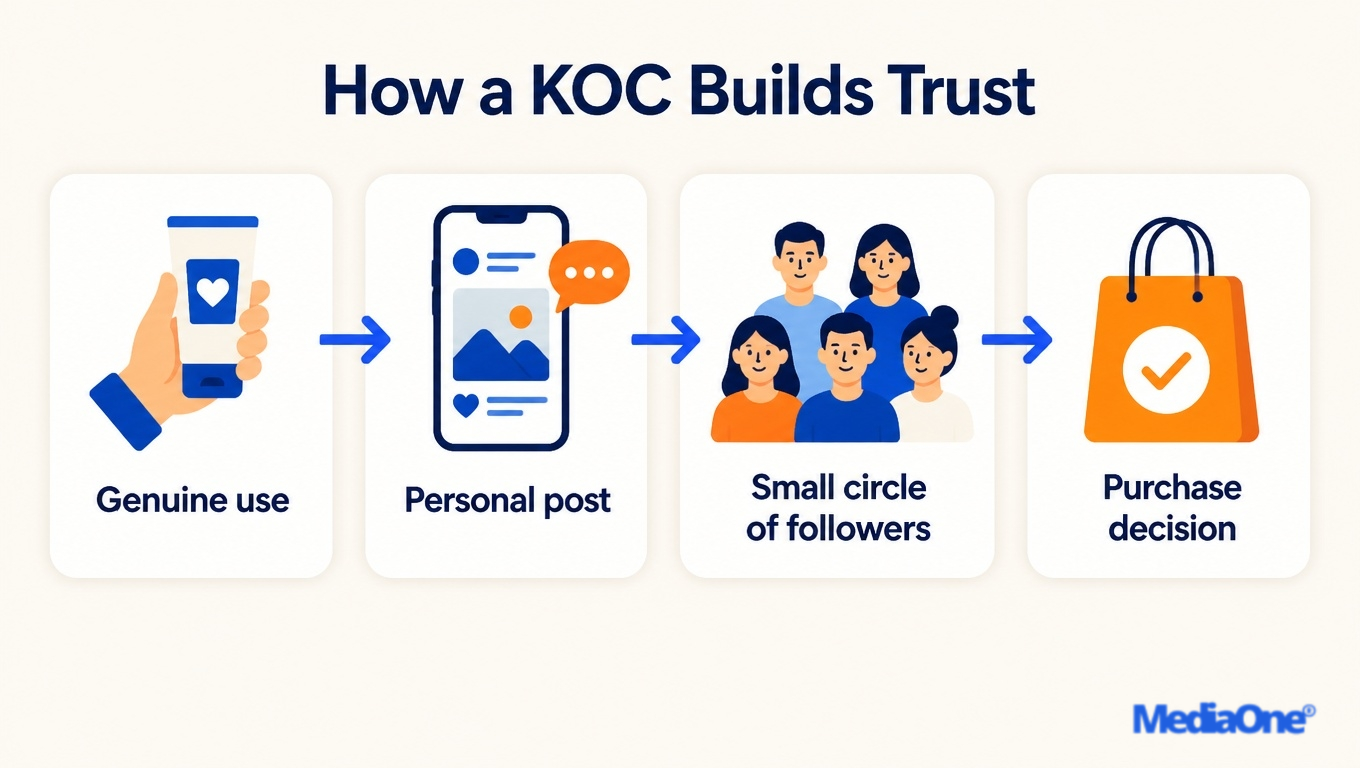
Figure 2: How a KOC builds trust: genuine use, personal post, small circle, purchase
The defining characteristics of a KOC
A KOC usually shows four traits:
- Genuine use: they used the product before posting.
- A small, close audience: often a few hundred to a few thousand trusted followers.
- Personal voice: they describe their own experience, not brand copy.
- Ongoing relationship: repeat posts show the product in real routines, keeping the brand in view.
Follower count is the weakest signal. A modest-audience KOC can be more persuasive than a large account whose posts look paid.
Why KOCs matter to brands and buyers
Buyers trust people like themselves, and KOC content sits in that space of peer experience. Brands build credibility across many small accounts, while buyers get a practical answer to what the product is like to live with. A high-quality KOC post can carry more weight with a buyer than a polished brand advertisement, especially when the reader has seen that same person’s honest results before.
KOLs and KOCs: How the Two Roles Differ
Key opinion leaders are established figures with large audiences, usually built around a niche, a personality or professional expertise. Key Opinion Consumers are ordinary buyers with smaller, closer networks who share their own product experiences. Both sit on the same spectrum of digital influencers but earn trust differently, and the difference changes what you buy: reach or credibility.
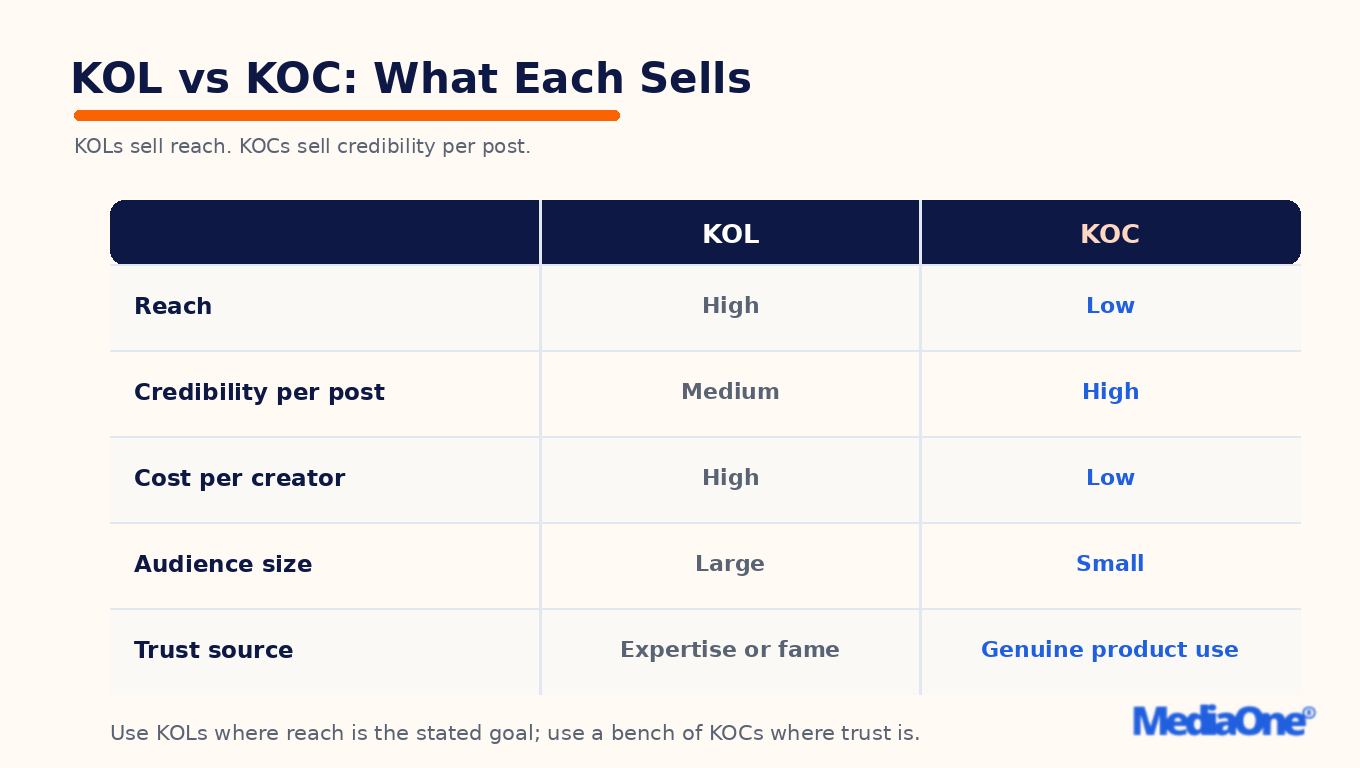
Figure 3: KOL vs KOC across reach, credibility, cost, audience and trust source
Why the distinction changes your campaign
A KOL’s fee rises with follower count, so a single campaign can be costly; a KOC is cheaper per creator, so a brand can work with many of them, and each recommendation reads as a genuine touch from a real buyer. Use a simple test when shortlisting: would a buyer believe this person bought the product with their own money? Brands that apply it choose better partners and see stronger results from their social media spend – teams often learn this only after a campaign has delivered poor returns.
Worked example: scoring three Singapore creator profiles
Consider three illustrative profiles for a Singapore skincare brand with a budget of S$3,000, scored on the Trust-Reach Scorecard defined in the campaign section below:
- Creator A, an office worker with 1,500 followers, has used the serum for six weeks and posts about it in her morning routine. Scores 13 out of 15.
- Creator B, a fitness coach with 90,000 followers, received the product as a gift and posts sponsored reels from a script. Scores 9.
- Creator C, a university student with 600 followers, bought the product with her own money and writes reviews in her own words. Scores 14.
Creators A and C clear the 10-point threshold; Creator B does not, despite the largest audience, because the content reads as a script and the buyer cannot tell whether the product was used. Actual use and the freedom to speak in one’s own voice decide the shortlist, not follower count or fee.
Why KOC Marketing Works: Trust, Decisions and Effectiveness
Consumer trust in personal content
Shoppers researching before they buy read comments, unboxings and real-use posts before polished brand ads, so KOC-led discovery works best for products that hold up to close inspection. The trust data backs the instinct: Reputation.com’s survey on consumer decision-making found 54% of consumers trust online reviews first, ahead of friends and family (24%) and company claims (18%). A creator who shows the product in an ordinary routine reads as a peer; one who reads a script reads as an advert, so the brief matters more than audience size.
How KOCs influence customer decisions
KOCs work best at the research stage, when buyers compare options. Their content answers practical questions: does it last, does it suit oily skin, is it worth the price? Attribution is hard to prove – a buyer may see a KOC post, search the brand, read a review and buy through a retailer – but several posts from different people over a few weeks make a product familiar enough to choose. The approach breaks down with repeated scripts, undisclosed paid posts or products that fail to match the post, and Singapore buyers who spot a scripted post often reject the content altogether.
Evidence on the effectiveness of KOC marketing
The clearest documented case is Proya, the Chinese beauty brand. HI-COM Asia’s KOC marketing guide reports that Proya ran a pyramid strategy: top-tier KOLs such as Austin Li, China’s ‘lipstick king’, and mainstream celebrities at the launch, with a broad base of product-seeded KOCs beneath them. The results were measurable – in 2019, the Bubble Mask was first on Douyin’s official product recommendation list, and Proya’s Tmall flagship store sold over 200 million RMB during that year’s Singles Day festival. WalkTheChat’s 2020 trend report adds that the campaign invested in 200 KOLs to promote the Bubble Mask. This is one brand’s experience in one market, not a guarantee for yours.
Running a KOC Campaign: Strategies, Methods and Platforms
Platforms: match where your buyers actually are
Much of the documented KOC activity sits on Chinese platforms: Proya’s Bubble Mask launch rested on Douyin, and Pechoin ran its ‘#Pechoin invites you to create a dream’ campaign on Kuaishou, seeding products to KOCs in diverse professions.
For a Singapore brand, the real question is whether your buyers use these platforms at all. Before launch, check which social media platforms your target audience uses – commonly Instagram, TikTok, YouTube and Facebook. Do not assume the China cases transfer. Plan the channel mix alongside creator selection, starting with our guide to planning, paying for and measuring Instagram influencer campaigns, and for live formats, our guide to TikTok Live best practices covers what pace and disclosure look like in practice.
The pyramid approach, scaled down for smaller brands
Proya’s structure offers the model: one or two influencers for reach at the top, many KOCs for depth beneath. Smaller brands can borrow the structure without the budget. Brief style matters as much as structure – Olay’s campaign encouraged young student KOCs to speak from their own perspective about anti-ageing products, and that autonomy is the point.
Give creators a real product experience and a clear, non-scripted brief; scripted talking points tend to read as advertising. For creators themselves, our guide to personal branding for Singapore professionals explains why a consistent own voice earns more trust than a scripted one.
Getting started: a step-by-step checklist
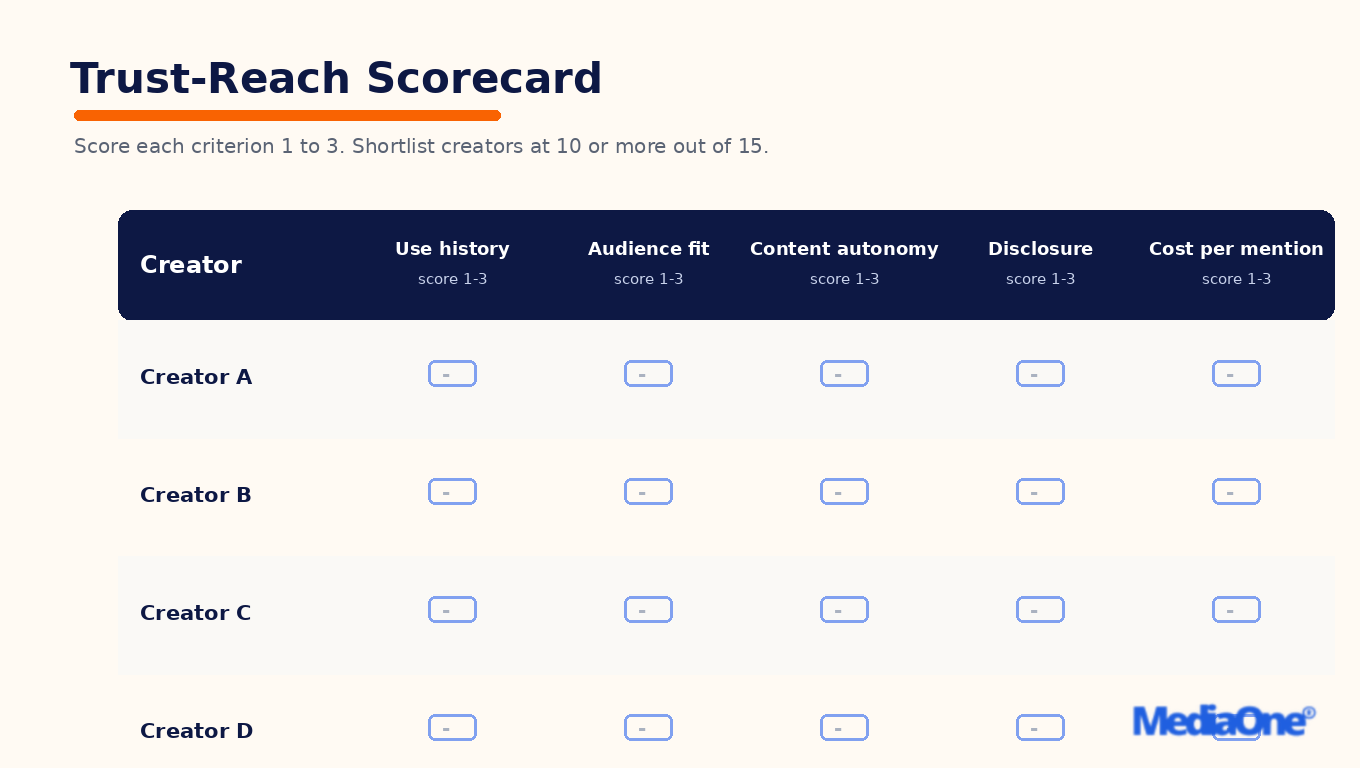
Figure 4: The Trust-Reach Scorecard: five criteria, scored 1 to 3, shortlist at 10 or more
- Define the goal: reach, trust or conversion. Use KOLs only where reach is the stated goal.
- Shortlist creators and score each on the Trust-Reach Scorecard: product use history, audience-to-buyer fit, content autonomy, disclosure compliance and cost per credible mention. Rate each criterion 1 to 3, and shortlist any profile scoring 10 or more out of 15. The threshold and criteria are the author’s own method, so test them against your first campaign before relying on them.
- Confirm the audience sits in Singapore and buys in S$.
- Send the product and let creators use it before posting, so they can give an honest view.
- Require clear disclosure that the post is paid or incentivised.
- Track mentions, saves and sales per creator, and compare cost per credible mention – our guide to brand mentions, their types and how to track them covers the tracking mechanics.
Understanding which creators build the brand better than others makes the next campaign stronger, so log the scorecard results and reuse them in the next brief.
Choose Trust Where Trust Is for Sale
KOC marketing is not a cheaper substitute for KOL campaigns; it makes a message credible in a different way. Singapore buyers often trust other consumers more than polished promotion, so weigh that trust against reach when choosing creators. Many small, genuinely used creator accounts can win on trust and conversion, provided each has real product experience.
Run the Trust-Reach Scorecard before committing budget, and use KOLs only where reach is the goal. The category is crowded – NielsenIQ reports that 95% of brand marketing efforts in 2022 already included influencers or KOLs – so careful creator selection is the advantage. If you would rather have a team run creator campaigns for you, review MediaOne’s influencer marketing service and hold it to the same standard: real use, own voice, disclosure on every post.
Frequently Asked Questions
What is the difference between a KOC and an influencer?
An influencer is usually paid for reach, and the brand’s message often sets the tone. A Key Opinion Consumer is an ordinary consumer who has used the product and shares that experience with a small circle of followers. The difference lies in credibility: in Reputation.com’s survey, 54% of consumers trust online reviews first, ahead of friends and family (24%) and company claims (18%).
Do KOCs need a large follower count?
No. A KOC’s value comes from genuine use and an audience that matches the brand’s buyers. Follower size matters only where reach is the stated goal.
How much do KOCs cost compared with KOLs?
KOCs are typically paid less per creator. Compare quotes in S$ by cost per credible mention, not cost per post.
Can a KOC campaign work outside China?
Yes, but verify platform fit first. Chinese cases, including Proya’s pyramid approach, do not transfer automatically. Confirm which platforms your Singapore audience uses, commonly Instagram, TikTok, YouTube and Facebook.
How do I measure whether a KOC campaign is working?
Track, for every creator, the share of credible mentions, conversions traced through unique codes or links, and cost per credible mention. Score each creator on the Trust-Reach Scorecard and keep only profiles scoring 10 or more.