
Yes, SEO is important if customers search for what you sell before they buy. For most businesses, it’s one of the most cost-effective channels, and this article gives you a short Organic Dependence Audit to test that against your numbers.
Key Takeaways
- Organic search drives most visits. Most website traffic comes from organic search, according to SEO.com.
- Local intent is large. 46% of searches have local intent, so an accurate Google Business Profile decides whether physical businesses get found.
- Page one is the finish line. Position one averages a 12% organic CTR, and only 0.63% of searchers click past page one.
- SEO compounds. Pages keep earning visits long after publication, lowering long-run acquisition costs compared to paid channels.
- Run the Organic Dependence Audit. Score organic share, local demand, page longevity and paid dependence to set your SEO priority.
Is SEO Important? The Organic Dependence Audit
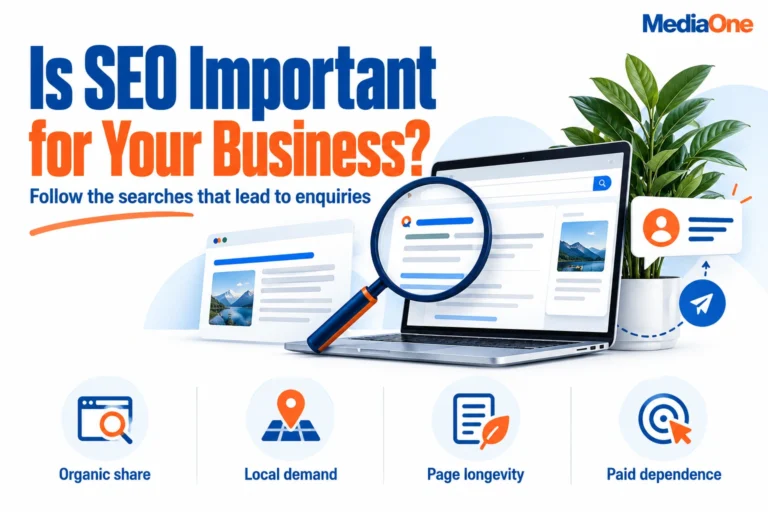
The audit scores four factors from 1 to 3, where 3 means SEO should be a funded priority. Add the scores for a total out of 12. Marketing professionals can use this audit to judge whether organic search deserves a budget in their online marketing plan.
| Audit factor | Score 1 (low priority) | Score 2 (review) | Score 3 (prioritise SEO) |
|---|---|---|---|
| Organic share of visits | Confirmed on enquiry | Confirmed on enquiry | Confirmed on enquiry |
| Local demand | Few local searches for your service | Some local searches | Most enquiries start with a local search |
| Page longevity | Short-lived content, such as ads or events | Mixed | Evergreen pages that keep earning visits |
| Paid dependence | Leads stop when ad spend stops | Partly paid-reliant | Most leads come from free channels |
A total of 9 to 12 makes SEO a funded priority. 6 to 8 makes it a worthwhile second channel. A total of 4 or below means you should test cheaper channels first and then revisit the audit in six months.
Pull organic share from your analytics, local demand from Google Business Profile insights, and paid dependence from your ad reports. Then score each factor against the table. If your website’s organic traffic is large and the score is high, a funded search engine optimization strategy is justified, and a strong user experience helps keep those visitors engaged and helps your pages rank higher over time.
Why Organic Search Matters More Than Most Channels Admit
Organic search is the largest source of website visits for most businesses, and successful marketing efforts depend on it. According to SEO.com, most visits come from organic search rather than paid ads or social media. Organic search drives 53% of website traffic for many businesses, and excluding direct traffic, B2B tech sites typically see organic search at 40-60% of traffic. Check these figures against your analytics.
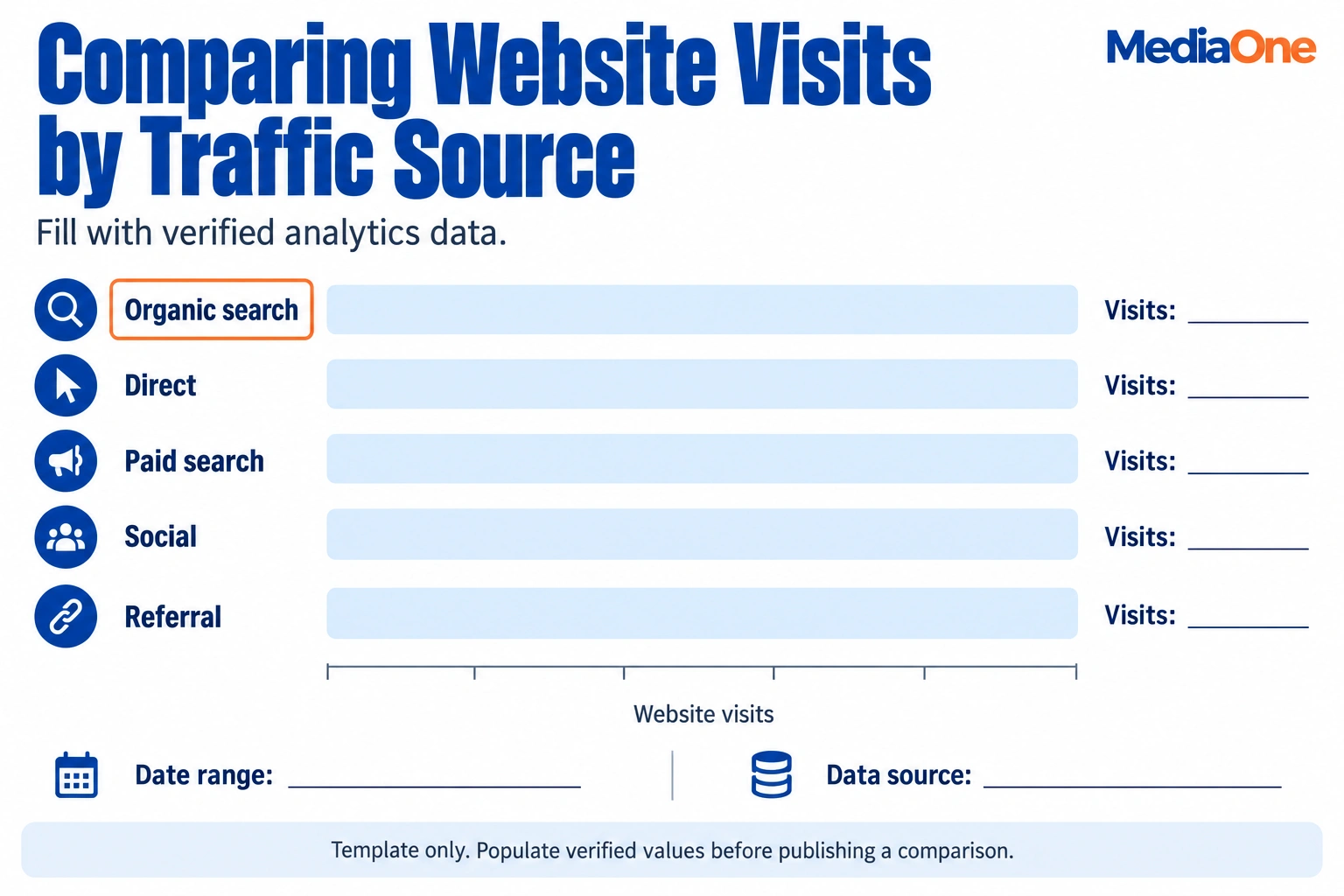
Paid results stop when the budget does. A well-ranked page keeps attracting visitors for months or years, often at a lower long-run acquisition cost than paid search. Strong online marketing built on organic search helps a business earn that lasting visibility, and the quality of each page determines how much of it the business earns. Improving that quality and the user experience it delivers is one of the clearest routes to better results.
Why search keeps its importance as platforms change
Social platforms and AI tools have changed how people discover information, but search engines remain the main gateway to purchase decisions. Search systems, including AI answer engines, still draw from pages that answer specific questions clearly. Search engine optimization keeps a business findable, which is why SEO is important as discovery habits shift, and marketing teams use it to make those pages visible in search results.
Visibility, Qualified Traffic and Where the Clicks Go
Why page one is the real finish line
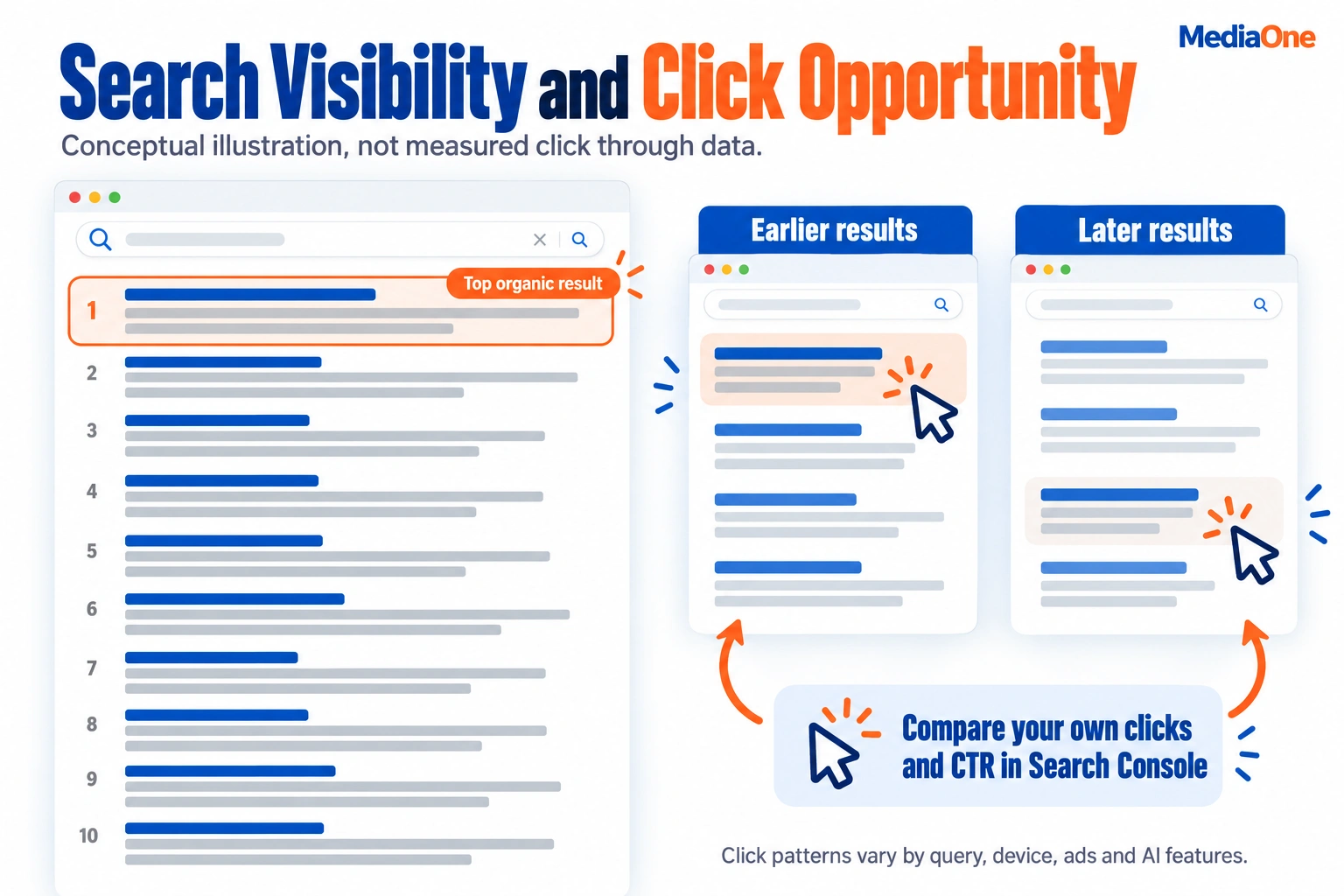
Most people never look past the first page, so search engine visibility depends on ranking near the top. The average organic CTR for position one is 12%, and only 0.63 percent of searchers click past Google’s first page, according to Blue Sheep Creative. These are dated, category-dependent estimates, and AI Overviews now reduce clicks to top organic results, so current figures are likely lower. Treat them as directional. Page two is close to invisible, and ninth place is worth far less than first. A high-ranking, successful SEO strategy depends on earning those top positions, since engine results pages reward the sites that rank first.
Generating qualified traffic instead of raw visits
A high visit count means little if visitors never buy. Organic search attracts people already looking for what you sell, so measure leads and enquiries from organic visits, not just sessions. Make sure landing pages match the searcher’s intent and deliver a strong user experience, because content quality shapes whether visitors stay and convert. Done well, SEO helps your online marketing reach buyers when they are ready to act, and a key part of that is a website that converts visitors into enquiries.
Read your own Search Console data by ranking position
Open Search Console, filter the Performance report by query, and note clicks, CTR and average position for your top 20 queries. Compare your actual CTR at positions one to three with the benchmarks above. A query averaging position two that earns 40 clicks and 2 enquiries may convert better per click than a position-one query earning 60 clicks and 2 enquiries. If so, prioritise matching content to queries over chasing rank alone, as the reasons behind each query matter as much as its position. Treat organic results as one channel within your wider advertising mix, and improve the pages on your site that earn the most qualified visits.
Trust, Buyer Journey and Brand Reputation
A page-one listing builds trust because the searcher chose the query and found you on their own. SEO covers the full journey, from research queries to buying queries, so the business shows up at each step.
SEO’s Return: Cost, Compounding Results and Other Channels
Paid search stops producing leads the day the budget stops. Organic search does not. A ranking page keeps drawing visits for months or years, so SEO’s cost per lead tends to fall over time while paid costs stay flat. Typical US paid search pricing ranges from $1 to $2 per click, according to WordStream’s review of Google Ads CPC data, and these averages vary by industry and season. The timeframe varies by starting point, from 1 to 3 months for an established website with a strong domain to 6 to 12 months for a brand new website on a new domain, according to Luminotechnology.
SEO also strengthens paid ads and content, which give landing pages proven relevance. For planning, Media One Marketing offers search and content services.
Answer engines still draw on pages that search engines can find, read and trust, so clear structure, accurate facts, and visible authority remain the foundation.
Conclusion and Summary
The question “Is SEO important?” has a practical answer: if your buyers find you through search, SEO matters. Excluding direct traffic, organic search accounts for a large share of visits on most sites, according to SEO.com’s analysis. Organic growth compounds because pages keep earning visits after publication, while paid traffic stops when the budget does. Score your site on the four audit factors above to set your priority.
Is SEO worth it for a small business?
Yes, if your customers search before they buy. Organic search has no per-click fee, so it can deliver steady website traffic without ongoing ad spend. If most enquiries come from Google, SEO is worth funding for six months or more.

How long does SEO take to show results?
Most sites need several months before rankings move. The timeframe depends on your starting point, ranging from 1 to 3 months for an established site with a strong domain to 6 to 12 months for a brand new site on a new domain. Judge progress over quarters, not weeks, and treat each small gain in search engine results as evidence of success.
Is SEO more cost-effective than paid advertising?
Over the long run, usually yes. Paid search stops producing visits when spending stops, while a well-ranked page keeps earning them, which helps your marketing efforts stay efficient.
Does SEO still matter with AI search tools?
Yes. AI answer engines still draw on indexed, well-structured pages, so clear headings, accurate information and topical authority decide what gets cited.
What are the main components of SEO?
- Technical health: crawlable, speedy, mobile-friendly pages that search engines can read easily.
- Content: pages that match specific search intent and deliver real quality.
- Authority: links and mentions from credible sites.
- Local signals: an accurate Google Business Profile and consistent listings.
Do I need SEO if I already run ads?
Probably. Ads buy visibility only while you pay for it, whereas SEO builds assets you keep, so it works well as a complementary channel alongside paid campaigns.