Most shoppers in Singapore hold several loyalty cards, and most of those schemes reward purchases that would have happened anyway. A programme is worth joining only when its points or perks turn into a cash value you can quickly calculate. Businesses that treat a programme as a retention and data asset, rather than a discount, justify its running cost.

This guide covers which consumer loyalty programmes pay off, which do not, and why. It also sets out a four-part Loyalty Value Test we created to help owners and shoppers decide whether to sign up.
Key Takeaways
- Most programmes reward spend that would have happened anyway. Joining pays off only when the reward delivers real value on your own spending.
- Work out what a point is worth. An earn rate of “1 point per S$1” means nothing until you know what a point redeems for.
- Check expiry and minimum-redemption rules first. For light users, these erase the value entirely.
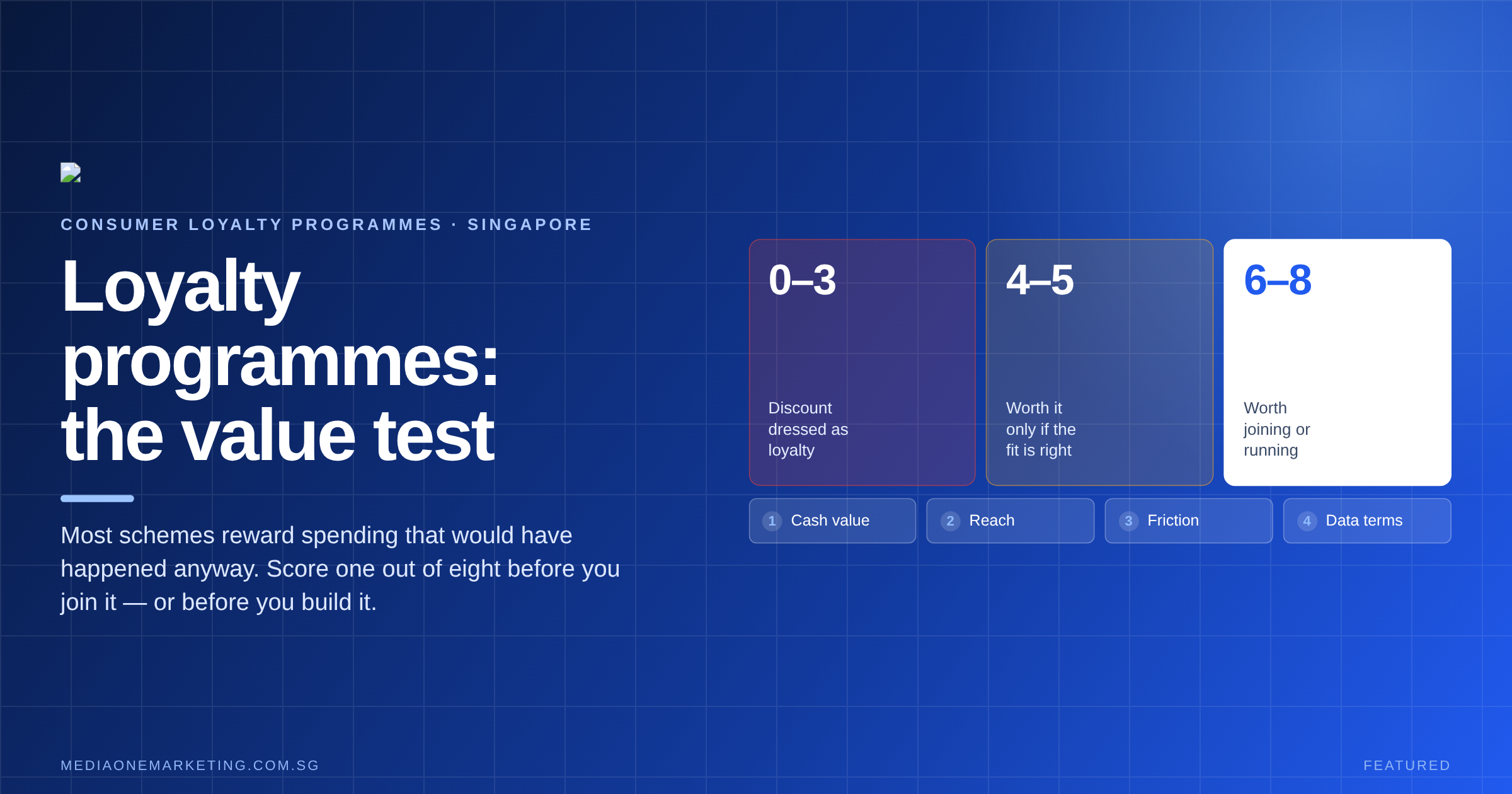
- Score every programme out of 8. Six or more suggests a programme worth joining; three or fewer suggests a discount with little loyalty behind it.
- Treat data use as part of the price. Check what is collected, how it is shared, and whether marketing consent can be withdrawn.
- Consolidate rather than collect. Keep the one or two schemes where your spend earns back.
Why Most Loyalty Programmes in Singapore Fail to Change Behaviour
Most consumer loyalty programmes in Singapore do not change what people buy. They reward purchases customers would have made anyway, so the programme works as a discount with extra paperwork, and the business pays for it in reward costs and data handling without gaining repeat spend. The problem is rarely the points themselves. It is the distance between signing up and spending more.
Enrolment is not repeat spend
Enrolment is easy to measure and easy to celebrate. A cashier asks for a mobile number to speed up the queue, and the sign-up count rises. Repeat spend is harder to earn. A member who joins at the till and never returns has cost the business a reward account and a database record, with nothing gained.
The gap widens when the earn rate is hard to understand. Many programmes state earn rates per S$1 but put redemption value, minimum thresholds and excluded categories on separate pages. A customer who has to work out the value before deciding is unlikely to change behaviour. A useful test: would a member who spent S$50 more this month know what that brings them? If the answer needs a calculator or a support call, the programme is probably rewarding existing habits rather than building new ones.
Points fatigue and too many cards
Singapore shoppers often hold several memberships at once, such as supermarket, pharmacy, fashion, dining and transport-linked schemes. Each asks for a little attention, a little data and a little loyalty. Beyond a certain number, members stop tracking any of them. They keep the card or app but stop checking balances, stop redeeming, and eventually forget the points exist.
For the business, that account stays on the books as a liability while no longer driving visits. For the customer, the points never add up to anything usable. A programme that is one of six will rarely win on points alone; it needs a reason to sit inside the shopper’s existing routine.
Loyalty, habit and what changes behaviour
Loyalty and habit are often treated as the same thing, but they differ.
Loyalty is an attitude that leads a customer to choose one brand over others.
Habit is automatic repetition triggered by a context, such as always buying lunch from the same stall on the same street. A points scheme can strengthen attitude by making the brand feel rewarding. It has a weaker effect on habit unless the reward is tied to the moment the customer already decides what to buy.
That explains why many programmes show high membership but modest change in spend. Rewards that arrive after several purchases, or that need a separate redemption trip, sit outside the habit loop. Rewards that appear at the moment of purchase, or that lower the price of the next visit, sit inside it. The programme that changes behaviour usually makes the next purchase cheaper or easier, not the one that promises a distant prize.
How Consumer Loyalty Programmes Work
Most programmes look simple from the outside: spend, collect, redeem. The mechanics underneath decide whether a member gains anything, and most members never see them. Three things matter: the reward structure, the cost of unredeemed points, and what the data is actually worth.
Points, tiers and stamps
- Points build up in proportion to spend, usually at a fixed rate per S$1. What matters is what a point is worth in cash. One point per S$1 redeeming at 100 points for S$1 returns 1 per cent; the same earn rate redeeming at 100 points for S$2 returns 2 per cent. Both sound identical in marketing.
- Tiers unlock better earn rates or perks once a member reaches a spend threshold within a set period. They reward concentrated spending, so they suit businesses where a few visits a year make up most revenue.
- Stamps reward visit counts, such as a free tenth coffee. They are easy to understand and cheap to run, and they reward frequency rather than value, which can favour low-ticket items.
Convert any scheme into a percentage return before judging it: divide the cash value of a redemption by the spend needed to earn it. A return of about 1 per cent or less on a supermarket or fuel card is unlikely to change what a household buys, because the discount is small next to normal price variation between outlets. Treat that as a working assumption to test, not an established benchmark.
Breakage, liability and why points carry a cost
Points are a liability on the business’s books until someone redeems them. Under SFRS(I) 15, the revenue standard Singapore-incorporated companies apply, part of each sale is allocated to the points issued and recognised as revenue only when those points are redeemed or expire. The business must eventually honour what is outstanding. Two terms matter here, each worth stating in plain words.
Breakage is the share of issued points never redeemed. It happens when members lapse, forget, or hold balances below the minimum threshold. Breakage is a source of margin for the programme owner, which is why many schemes carry expiry dates and high minimums.

Liability is the cost of points that will be redeemed or the money the business owes for unused points. Unlike breakage, it grows with every point issued, so a popular programme without a funding plan can create a large unfunded commitment.
For a member, breakage means the business keeps unused points as money, and expiry rules are usually the mechanism. Before joining, check whether points lapse after inactivity and whether the minimum redemption is reachable at your actual spend level. A household spending S$80 a month at a shop needing 2,000 points at one point per S$1 takes about two years to earn one redemption — long enough for an inactivity rule to wipe the balance first.
Data capture as the real return
The more important return for the business is usually the data. Each sign-up links a name, contact details, and purchase history to a transaction stream, showing who buys, how often, and what. That is why programmes are better described as retention and data assets than as discounts.
The distinction matters for members. A programme that uses data to tailor offers and time reminders is trying to change behaviour. A programme that mainly collects contact details for mass marketing is trying to extract value from the sign-up itself. The practical signal is whether rewards change with your behaviour or stay the same for everyone.
The Main Types of Loyalty Programme and When Each Suits a Business
Six models cover most consumer loyalty programmes, and each fails in a different way. Choosing the wrong one is among the most common reasons a programme never changes how people buy, so settle the model before designing any mechanics.
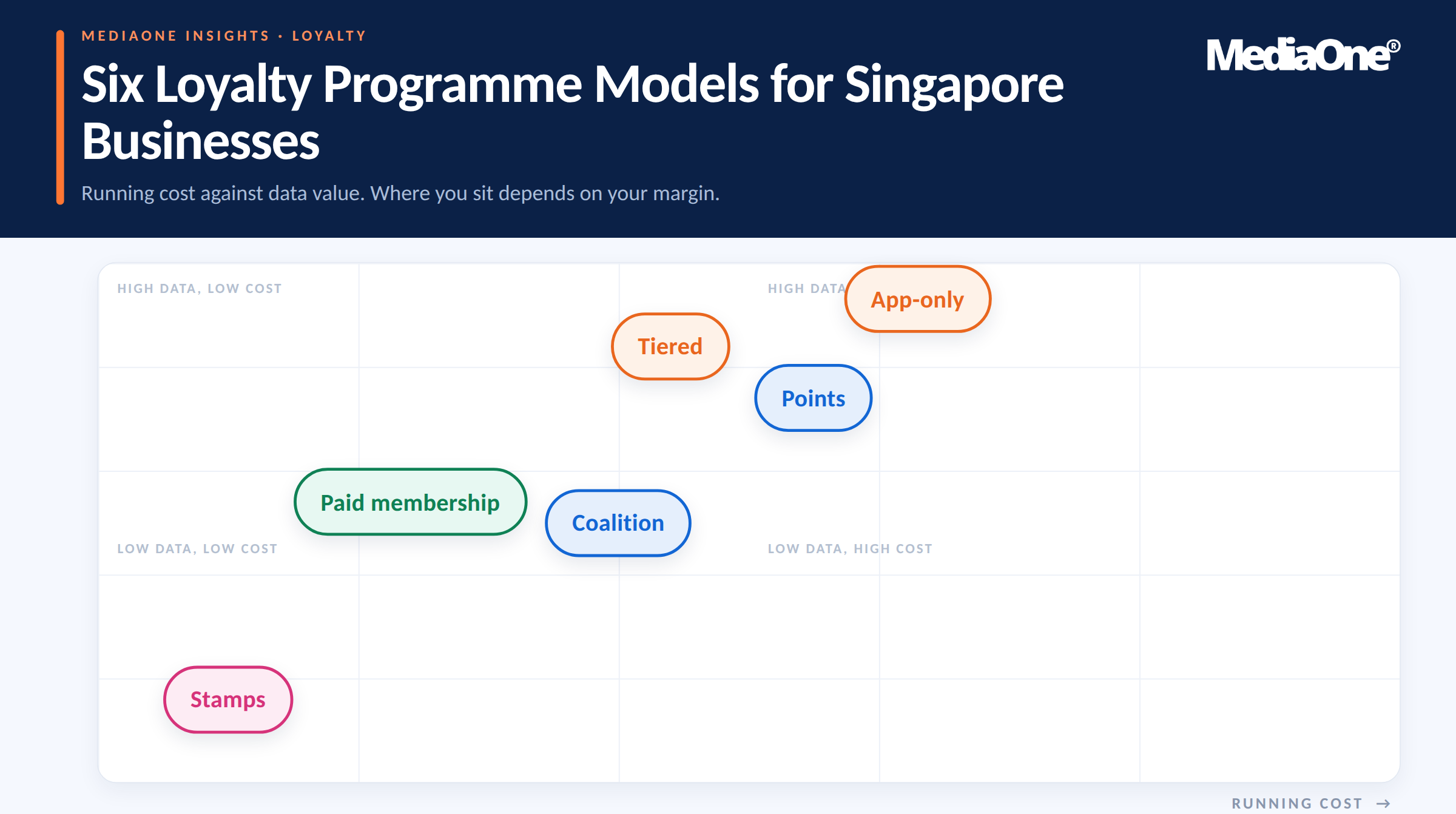
Figure 2: Six loyalty models, with margin tolerance, data value and the failure to expect first.
- Points-based programmes suit frequency and small baskets — supermarkets, cafés, pharmacies. They are flexible and easy to follow, and they are a poor fit for occasional high-ticket purchases, where members rarely reach a threshold before points lapse.
- Tiered programmes reward members who reach a spend level within a period. They suit businesses where a minority of customers drives most revenue, such as airlines, hotels and premium retail. The usual failure is a threshold set too high, which leaves the middle of the customer base with nothing to aim for.
- Stamps and visit-based cards suit independent cafés, bakeries and food stalls with a regular walk-in crowd. They ask for no personal data, which keeps costs low and also means the business never learns who its best customers are.
- Paid membership and subscriptions charge a fee for perks such as free delivery or early access. They suit predictable repeat spend with a bounded set of benefits a member can value in money terms. Divide the fee by the savings a typical member would realistically make; if the fee is higher, the member is paying for the feeling of loyalty.
- Coalition and multi-brand schemes pool points across non-competing brands, which suits businesses whose own base is too small to sustain a standalone programme. The trade-off is control: when one partner changes its terms, the shared currency loses credibility for everyone.
- Digital and app-only schemes record purchases, send offers and track balances through a phone. They can make rewards relevant by tying them to real purchase history, and they fail when the app is one more thing a customer will not install.
Choosing a Loyalty Model by Business Type
Most businesses pick a model by copying a competitor. That is the wrong starting point. Ask instead what the programme must change in customer behaviour, and how much margin you can give up to change it. A model that suits a supermarket with thin margins may sink a boutique with high ones.
Start with margin
Work out what a single reward costs as a share of the sale it follows, then ask whether your gross margin absorbs that on every visit. If it cannot, a points model with generous earn rates is the wrong tool, and a paid membership that charges an entry fee may be safer.
Then decide what data you need
If the purpose is personalised offers, you need a model that ties every transaction to a known identity — points or tiers collected at checkout against a member number or phone-linked account. If you only need to reward loyalty, a stamp card with no personal data may be enough.
Then check the failure mode against your base
Occasional buyers who make one or two purchases a year rarely accumulate enough points to redeem anything. For them, a points scheme delivers little, and a simple discount on the next visit works better. Vendors selling programmes have little reason to say so, because it lowers the number of customers who appear to benefit.
The Loyalty Value Test, Step by Step
Apply the test to a programme’s published terms before you join it, or to your own scheme before you launch it. Four criteria, scored from 0 to 2 each, for a total out of 8.
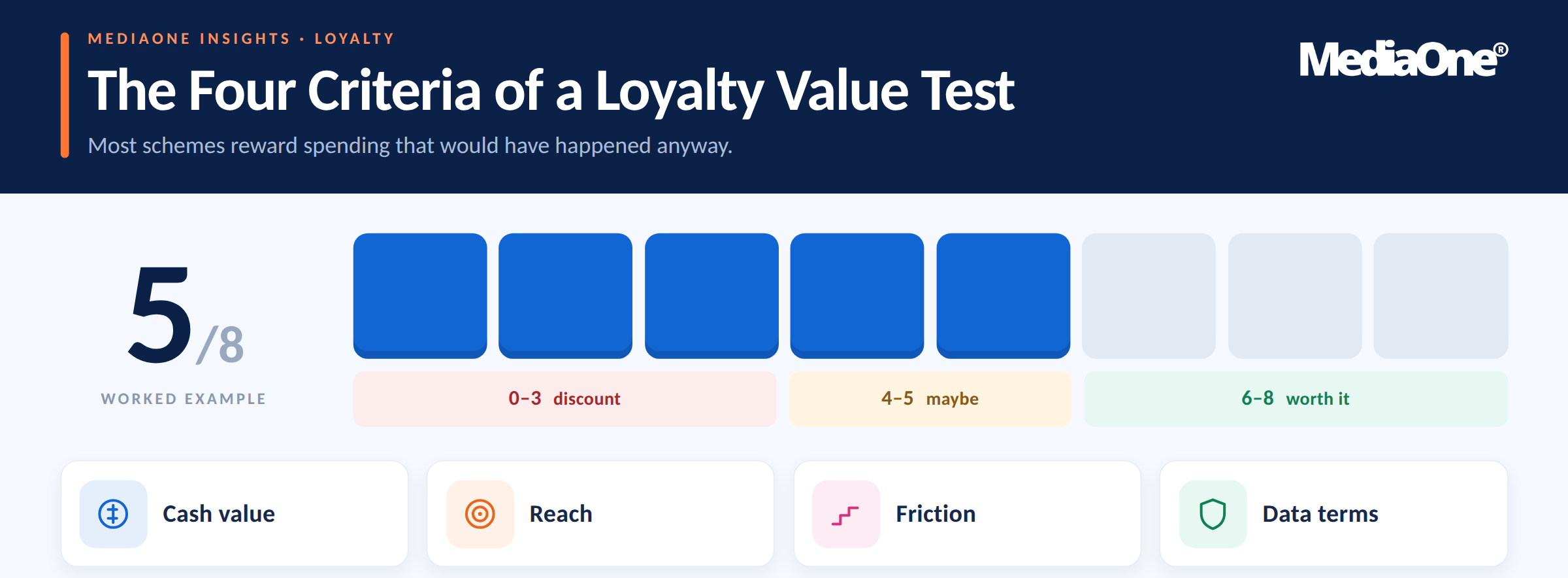
Figure 3: The Loyalty Value Test, with the descriptors for each score and the three outcome bands.
- Convert one reward into S$ and divide by the spend that earned it. If you cannot do that from the terms, score 0.
- Count how many purchases you would need before the reward arrives, and how wide the redemption catalogue is.
- Check the minimum redemption, whether points expire after inactivity, and how many steps claiming takes.
- Look for what is collected, who receives it, and how to opt out of marketing.
A worked example: a café stamp card gives a free drink after ten purchases. Cash value scores 2, because the drink’s price is clear. Reach scores 1, because the reward needs several visits. Friction scores 2, because redemption is one step with a reachable minimum. Data terms score 0, because the card takes only a name and publishes no terms. The total is 5 out of 8 — a worthwhile stamp card with weak data terms.
The test is a starting point, not a verdict. It does not replace reading the programme’s full terms, and it is not a measured predictor of results.
Singapore Market Context: Payment Systems and Data Rules
Singapore’s payment habits shape how these programmes work in practice. Many shoppers pay by card, mobile wallet or PayNow, and many programmes now link to one of those rails. A card-linked programme credits points automatically when a member pays with a registered card, and a wallet-linked programme does the same through an app. Both reduce the effort of collecting, which directly addresses points fatigue — and both create a second data trail, because the payment provider and the merchant may each see the same transaction.
PayNow is fast, but speed does not guarantee points. Many programmes credit only card or in-app purchases, so check before assuming. E-commerce platforms add their own rules; platform-wide vouchers often will not stack with member discounts.
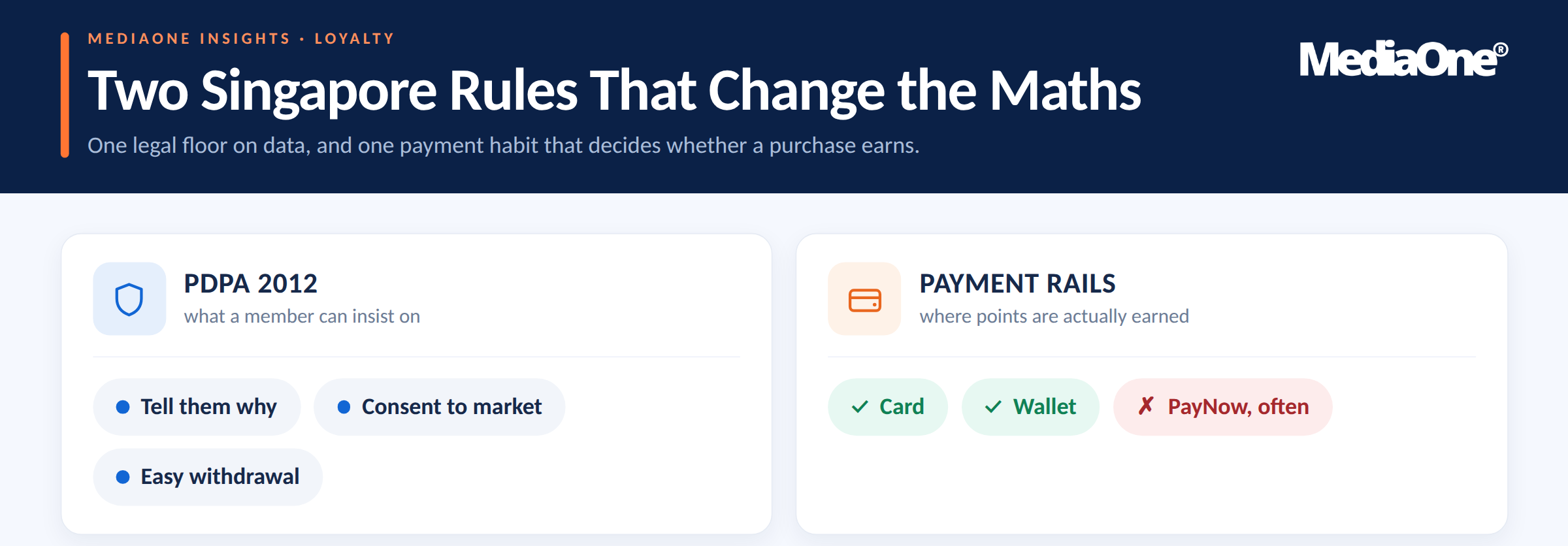
Figure 4: What the PDPA demands of a loyalty programme, and where Singapore shoppers actually earn points.
The data side has a legal floor. Operators collecting personal data in Singapore must comply with the Personal Data Protection Act 2012. In practice, that means notifying members of the purposes of collection, taking consent before using data for marketing, allowing withdrawal of that consent with reasonable notice, and limiting collection to what a reasonable person would consider appropriate in the circumstances.
A line such as “we may share your data with partners” is not a clear consent basis, and purpose limitation means a programme cannot make marketing consent a condition of the service itself.
Consumer expectations run close to that floor. Singapore shoppers tend to accept sign-up and marketing contact when the benefit is clear and immediate, and resist programmes that collect more data than the reward justifies or make unsubscribing hard. Members tolerate a monthly digest; they resent a daily promotional SMS. Sending fewer, more relevant messages and making opt-out as easy as sign-up does more for retention than another earn-rate promotion.
Costing a Loyalty Programme: The Numbers Owners Should Model
Most programmes are costed roughly, if at all. Owners set an earn rate that feels generous, assume members will spend more, and hope the sums work. Often they do not. A programme pays for itself only when the reward cost is smaller than the extra margin it creates — and that extra margin is usually far smaller than gross sales suggest.
Separate two figures before doing anything else. Total member sales include purchases customers would have made anyway. Incremental revenue is only the extra spend the programme caused, measured against what those same customers spent before enrolling. Express reward cost as a percentage of incremental revenue, never of total sales. A programme returning 5 per cent of member spend looks very different once you subtract the spend that was coming anyway.
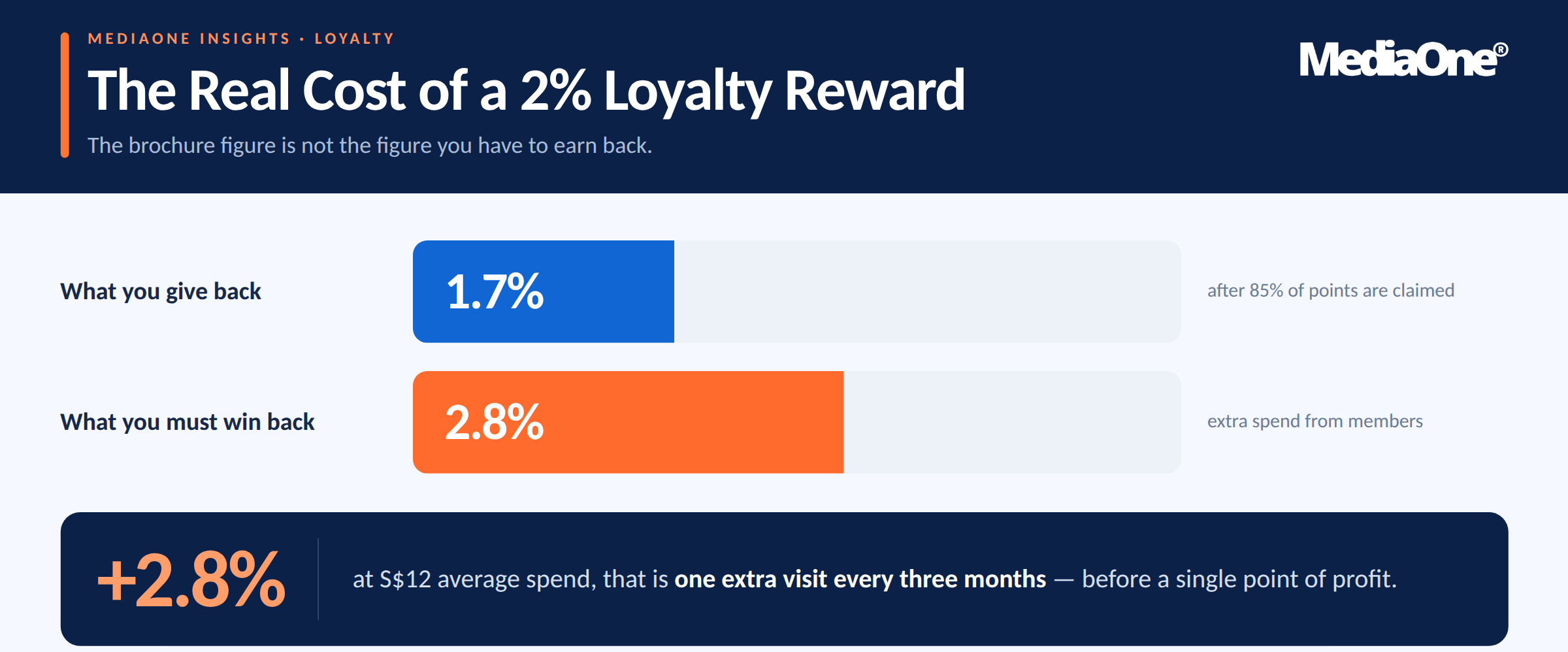
Figure 5: How a 2 per cent earn rate becomes a 2.8 per cent break-even threshold.
Break-even in three steps
- Decide what one point is worth in cash — for example S$0.01.
- Multiply points earned per S$1 by the value per point. One point per S$1 at S$0.01 is a 1 per cent cash reward.
- Divide the reward rate by the gross margin on the sale. At a 1 per cent reward against a 25 per cent margin, members must generate about 4 per cent extra spend merely to cover the rewards.
That uplift figure is the threshold that matters. If the scheme cannot plausibly lift member spend by that much, every point issued is a loss.
Worked example: a café chain
A neighbourhood café chain with an average transaction of S$12 and a 60 per cent gross margin on food and drink proposes one point per S$1, each point worth S$0.02 at redemption. The calculation runs in four steps.
- One point per S$1 at S$0.02 is a 2 per cent reward.
- A 2 per cent reward against a 60 per cent margin needs at least a 3.3 per cent uplift in member spend to break even on rewards alone.
- If 85 per cent of earned points are redeemed, the effective reward falls to about 1.7 per cent, and the required uplift to roughly 2.8 per cent. Test that redemption assumption against your own data rather than adopting it.
- Printing, app development and staff time add a fixed monthly cost. Divide it by active members to see the overhead per member.
If members visit three extra times a month at S$12 average, the added spend clears the threshold comfortably. If the owner expects one extra visit a quarter, the scheme loses money once you include fixed costs. The numbers decide viability, not the earn rate. All figures here are illustrative assumptions to be replaced with your own.
Programme name earns ___ points per S$1. Each point redeems for S$___ off ___ outlets. Points expire after ___ months, with a minimum of ___ points. Expected extra visits per member per month: ___. Expected redemption rate: ___ per cent. Reward cost as a share of incremental revenue: ___ per cent. Break-even uplift needed: ___ per cent.
Loyalty Programme Singapore: Putting the Value Test to Work
Consumer loyalty programmes in Singapore pay off only when the reward is clear, reachable, and tied to purchases customers already make. Most schemes fail for three reasons: enrolment is not repeat spend, points are hard to value, and too many cards dilute attention. The value test turns that into a scorecard, and the costing model turns it into a number.
For shoppers, the instructions are short. Consolidate memberships, keep the one or two schemes that earn back, and read the expiry and data terms before joining. Re-run the test every few months, because programmes change earn rates, thresholds and expiry rules quietly; a scheme that scored well at sign-up can lose value without telling you.
For owners, the sequence is the same in reverse. Pick the model by purchase pattern, publish a reward value a member can state in one line, link earning to a payment method they already use, and model reward cost against the incremental revenue you realistically expect.
If you would rather not build the measurement yourself, digital marketing services for SMEs can cover customer data, retention reporting, and campaign execution under one contract, and this EDM planning guide covers the message cadence that determines whether members stay subscribed.
Frequently Asked Questions
Are consumer loyalty programmes worth it for small businesses in Singapore?
Only when the reward cost is covered by the extra spend it creates. Model reward cost against your own margin before launch, then choose a model that fits how often your customers buy — stamps for a café, points for a grocer. Start with one clear reward, track repeat visits for three months against a baseline, and expand only if the signal is there.
How do I stop points becoming an unfunded liability?
Set an explicit value per point, cap how many can be earned in a period, and use expiry and minimum thresholds that match realistic spend. Record outstanding points as an obligation under SFRS(I) 15 and review the balance each quarter. If unredeemed points start to rival your marketing budget, lower the earn rate before the problem grows.
What is a good redemption rate for a loyalty scheme?
There is no single benchmark, and any published figure is an assumption. As a working test, most active members should redeem at least once within the period their rewards stay valid. Large balances sitting unredeemed for long stretches usually mean the reward feels too distant or too hard to claim.
How long before a loyalty programme shows results?
Early signals — more sign-ups, more repeat visits among enrolled members — often appear within months. Change in spend per customer takes longer, because habits form gradually. Compare enrolled customers with a similar group that did not join, so seasonality is separated from the programme’s effect.
Should a loyalty programme be free or paid?
A free programme is the right start for most retailers and food businesses: low barrier, fast data. A paid model suits businesses where customers buy frequently and value exclusive benefits enough to pay. Paid schemes need benefits a member can calculate in cash terms, or the fee reads as a surcharge.
What is the difference between breakage and liability?
Breakage is the share of points never redeemed, which becomes margin for the business. Liability is the cost of points that will be redeemed, which grows with every point issued. A scheme designed around breakage and a scheme funded around liability behave very differently once members start redeeming.