Affiliate marketing rewards fit over volume. Your earnings depend on whether your audience suits the offer, how the programme pays, and whether you track what happens after the click. Treat affiliate marketing as a low-capital side channel, not a fast route to income.
The model itself is old and settled: you earn a commission when someone you refer buys from a merchant. The first affiliate programme started in 1989, when William J. Tobin launched PC Flowers & Gifts on the Prodigy network, and Amazon Associates followed in 1996 – ClickBank’s history of affiliate marketing recounts both. CJ Affiliate, formerly Commission Junction, has operated since 1998 and is one of the early networks still running.
In this guide, we give you a five-criteria scorecard to choose offers on evidence, then a 30-day plan to test them. And when you want a partner for the content side, MediaOne Marketing’s digital marketing services cover the channels that make affiliate content earn.
Key Takeaways
- Affiliate marketing pays a commission for referred sales. It works best as a low-capital side channel, not a fast route to income.
- Score each niche and offer on audience fit, commission model, tracking clarity, content effort and the channels you already control. Our working rule of thumb is to drop anything scoring below 15 out of 25.
- Pay-per-sale, pay-per-click and pay-per-lead each change the content you need and how steady your income will be. Pay-per-sale programmes tend to reward reviews that answer buying questions, which is why many beginners start there.
- Cookie windows vary by programme, so check your own programme’s settings before you rely on any window.
- Check programme terms and payout thresholds directly with each platform, and confirm how IRAS taxes and reports affiliate income.
How Affiliate Marketing Works
Four parties make up every transaction: the merchant, the affiliate, the network or platform that tracks and pays, and the customer. The affiliate’s link carries a unique ID. Attribution matches a sale to the link that sent it.
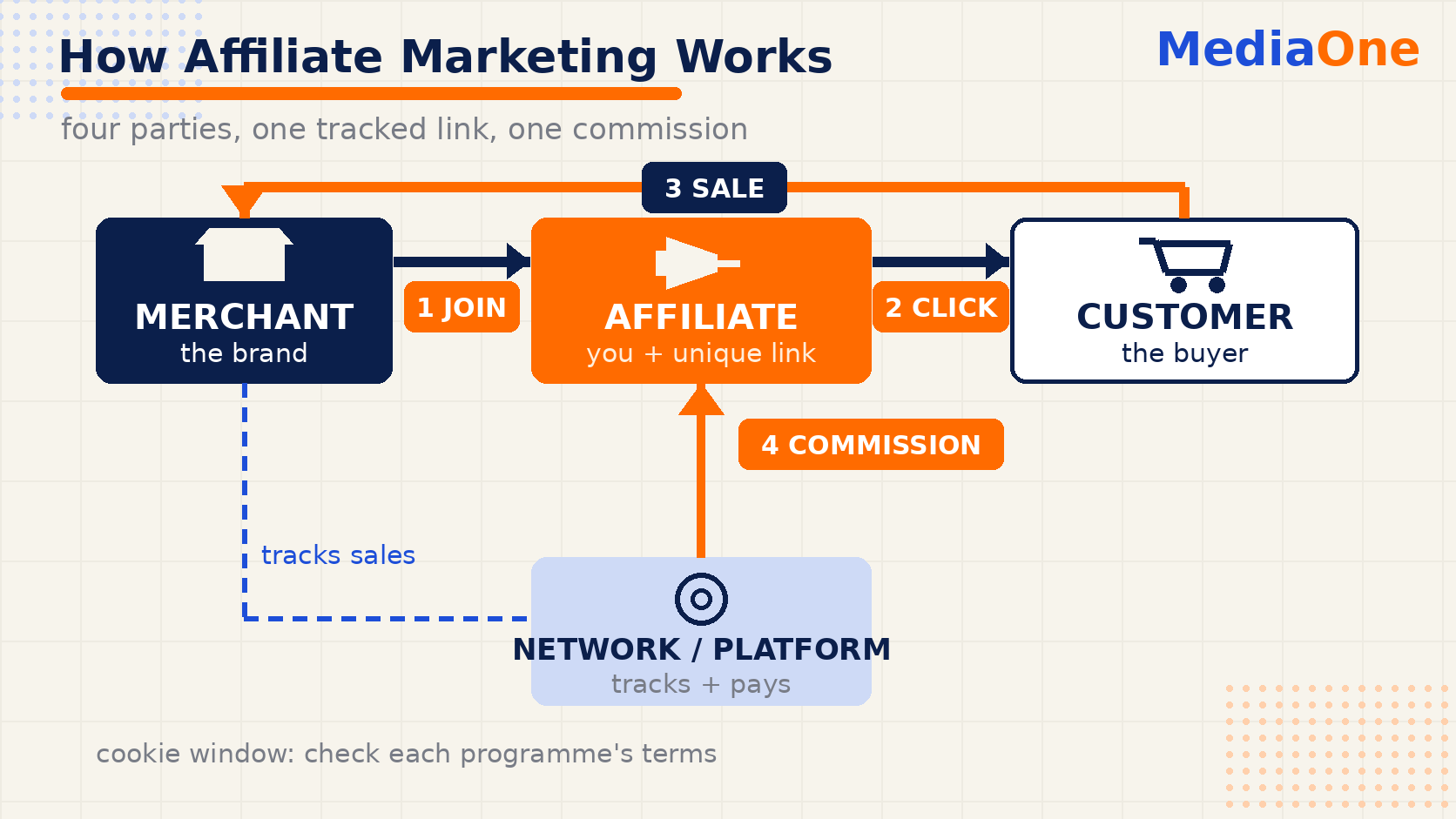
Figure 2: The four parties of affiliate marketing and where the commission flows
Attribution often depends on cookies – small files a browser stores to remember a visit or a click. Each programme sets its own cookie window, which is how long a click stays credited. Windows differ from programme to programme, so read the terms page and record the window before you commit. A reader who clicks your link on Monday and buys on Friday is often still credited while the window is open; a buyer who returns after the window closes usually is not.
Why Affiliate Marketing Suits Singapore
Singapore has high mobile and social media use, so a small, reachable audience can convert well. We Are Social’s Digital 2026 Singapore report counts 5.33 million social media user identities – 90.6% of the population – and an average of 17 hours a week spent on social platforms. Our roundup of Singapore social media statistics for marketers tracks how these numbers move.
Local platforms are also recruiting. Involve Asia, an affiliate network operating across Southeast Asia, publishes a step-by-step guide to starting affiliate marketing in Singapore, covering sign-up, adding your platform and generating your first tracked link – evidence that local merchants and networks continue to look for performance-based partners.
Choosing Your Niche, Platform and Prerequisites
Affiliate marketing needs little capital, but it does need time, a clear audience and a way to measure results. Check these basics before you join any affiliate programme.
Requirements and prerequisites for getting started
Most programmes do not require a formal licence. You need a niche you understand, a place to publish (a blog, YouTube channel or social account), basic analytics access and a payout account. Plan for several hours a week over several months. Many professionals start as a side activity alongside their main business, which keeps the risk low while they test what their audience responds to.
Affiliate income is also a tax matter. Disclose your affiliate relationships to your audience, and confirm how earnings are taxed and reported with IRAS – our overview of digital marketing laws in Singapore covers the wider compliance picture.
Affiliate networks and platform selection
|
Option |
What it is |
Best for |
|
Affiliate network |
One platform hosting many merchants |
Breadth and consolidated payouts |
|
Direct merchant programme |
Your own agreement with one brand |
Higher commissions and direct support |
|
Marketplace |
A directory of offers from many sellers |
Quick discovery of new products |
Compare programmes on commission rate, cookie length, payout threshold and reporting quality. Singapore merchants and networks publish their own terms, so read those pages before you commit. Beginners should start with one network or one direct programme. Build your affiliate sites on your own websites or channels, so the traffic stays under your control if a programme changes its terms.
Finding brands, offers, and generating affiliate links
Score each candidate offer from 1 to 5 on audience fit, commission model, tracking clarity, content effort and the channel you control. Drop any offer scoring below 15 out of 25 – what a good score looks like is explained in the scorecard below. Avoid promises of guaranteed returns or unclear commission terms.
Read an offer’s terms page before scoring it, and record the commission rate, cookie length and refund policy exactly as stated. If a figure is missing, mark that criterion as unconfirmed rather than estimating it.
Tag every link with tracking parameters so sales are credited correctly – if UTM tags are new to you, our guide to the difference between UTM and GTM walks through the basics – and keep a written record of each partner’s terms.
Step-by-Step Guide to Starting
Work through these steps to reach a first live link:
- Pick one niche you know well.
- Create one website or channel you control.
- Join one or two programmes in that niche, reading each term’s page first.
- Generate a tracked link for one offer and tag it with UTM parameters.
- Publish one review that links to that offer, with your disclosure at the top.
- Check that the link works and that the click appears in your network report.
- Review clicks, sales and refunds each week, then optimise what converts.
In a 30-day starter plan, spend week one choosing a niche and scoring offers, week two publishing your first review, week three adding tracked links and a disclosure, and week four reviewing clicks and refunds. Realistic early milestones are a first tracked click and a first sale, not a monthly income target.
Content Creation for Affiliate Promotion
Review, comparison and tutorial formats convert best because readers arrive already weighing a purchase. Write your disclosure at the top of the page in one plain sentence, such as ‘I earn a commission if you buy through this link’ – our guide to ASAS-compliant influencer marketing guidelines explains how Singapore’s rules treat sponsored content. Then use a specific call to action, such as ‘compare the plans here’ rather than ‘click here’. Repurpose one review into a short video, a social post and an email paragraph, so the same offer reaches more of your audience.
Social Media Channels for Promotion (TikTok, Instagram, YouTube, Telegram)
|
Channel |
Audience type |
Content format |
Strengths |
Risks |
|
YouTube |
Searchers seeking detailed advice |
Long-form reviews |
Long shelf life |
High production effort |
|
|
Visual, lifestyle buyers |
Carousels, stories |
Strong product imagery |
Limited link placement |
|
TikTok |
Younger, discovery-led viewers |
Short demonstrations |
Fast reach |
Short attention, fast decay |
|
Telegram |
Community members |
Channel posts |
Direct, loyal audience |
Strict group rules |
Figure 3: Channel comparison for affiliate promotion
YouTube suits long-form reviews best, but uploads are heavy, so a useful review must stand out through depth. Telegram communities reward value and punish spam, so post only where the rules allow, and state your affiliate relationship in each message.
Measuring Results and Earning Potential
Affiliate income depends on how the programme pays. The three main models reward different actions, carry different risks and suit different niches. Each model’s risk is stated in the table below, and cookie windows differ by programme.
|
Model |
What the advertiser pays for |
Risk to the affiliate |
Typical use |
|
Pay-per-sale |
A completed purchase |
Highest: no sale, no income |
Products with high margins, such as software or hosting |
|
Pay-per-click |
Each visitor sent to the merchant |
Lower, but payouts per click are small |
Content-heavy sites with high traffic |
|
Pay-per-lead |
A form fill, sign-up, or enquiry |
Medium: depends on lead quality |
Insurance, courses and financial services |
Judge a model by asking whether your audience is ready to buy now. If not, a pay-per-lead offer often converts better than a pay-per-sale one. Test this against your own marketing data before you commit to a model. In practice, the audience size and buying readiness of your own readers should decide the payment model, not the headline commission.
Worked scorecard example
Use the Affiliate Viability Scorecard to test one offer before you start affiliate marketing with it. Score each criterion from 1 to 5:
- Commission: Is the rate clear in the programme’s terms? A 5 means a fixed, stated amount per sale.
- Cookie window: How long does the programme credit a click? A 5 means 30 days or more, stated in the terms.
- Refund rate: How often are sales reversed? A 5 means a low published figure or none reported.
- Audience fit: Does your readership already need this product? A 5 means your content answers that need directly.
- Payment threshold: How much must you earn before payout? A 5 means a low threshold with a payment method you use.
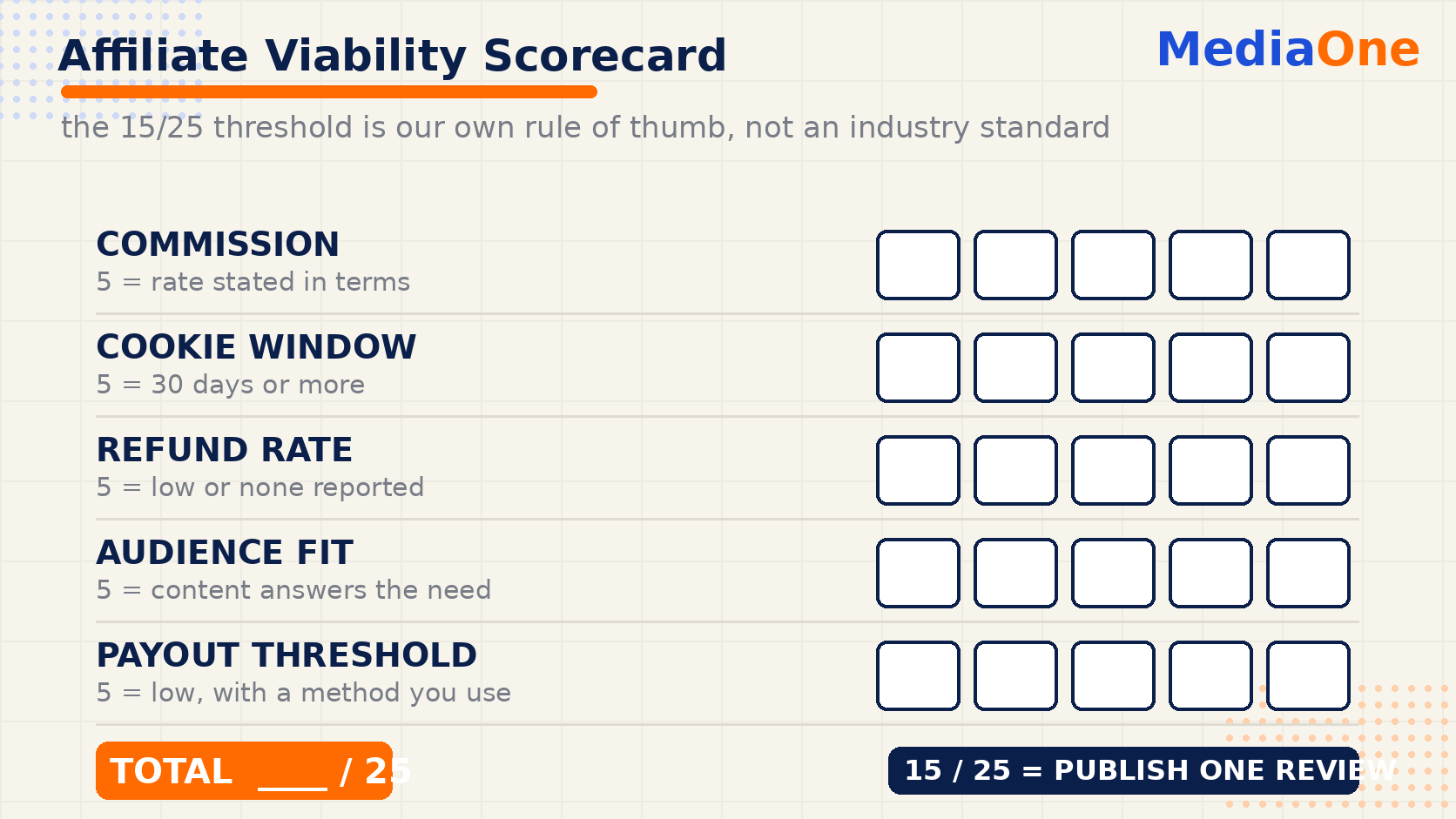
Figure 4: The Affiliate Viability Scorecard – five criteria, 25 points
Apply the scorecard to one real Singapore offer. Take the terms from the programme’s own page, not a third-party summary, and record the date you checked them. The 15-out-of-25 threshold is this guide’s own rule of thumb, not an industry standard. Scores of 15 or above justify publishing one review and measuring it for 30 days.
For example, take a hypothetical review page for a software product. Score it 4 on commission, 5 on cookie window, 4 on refund rate, 4 on audience fit and 3 on payment threshold. The total is 20 out of 25, which clears the threshold. This is an illustration, not a real offer.
Earnings per visitor make the difference concrete. Suppose 1,000 visitors a day reach a review page on your blog – a hypothetical example, and results vary widely. At a 2% sale rate and an S$50 commission, pay-per-sale would yield S$1,000 a day. The same traffic on a pay-per-click offer paying S$0.20 per click would yield S$200 if every visitor clicks through. Pay-per-lead at a 5% lead rate and S$15 per lead would yield S$750. Traffic alone does not decide income – the model and the audience’s readiness to buy do.
Worked examples for Singapore setups
These three setups are illustrative only, not real affiliates or results:
- A personal finance blogger reviews a budgeting app in a blog post, using a pay-per-sale link and a clear disclosure near the link.
- A fitness coach uses a YouTube video to demonstrate equipment, with a pinned comment that explains the affiliate relationship.
- A parenting community admin shares course sign-ups through a Telegram group, using a pay-per-lead offer for enrolments.
Performance tracking and analytics
Track four metrics: click-through rate, conversion rate, earnings per click and refund rate. Earnings per click is the money you make per visitor sent. Refund rate is the share of sales the merchant reverses. Review these monthly to see which offers earn their place. Cross-check the network’s own report against your analytics – our guide to Google Analytics 4 channel reports shows how GA4 groups traffic by source – so you can see which messages bring buyers.
Attribution depends on the cookie mechanics explained above. Each programme sets its own window, so check the terms before you rely on any window – a buyer who returns after it closes may not be credited.
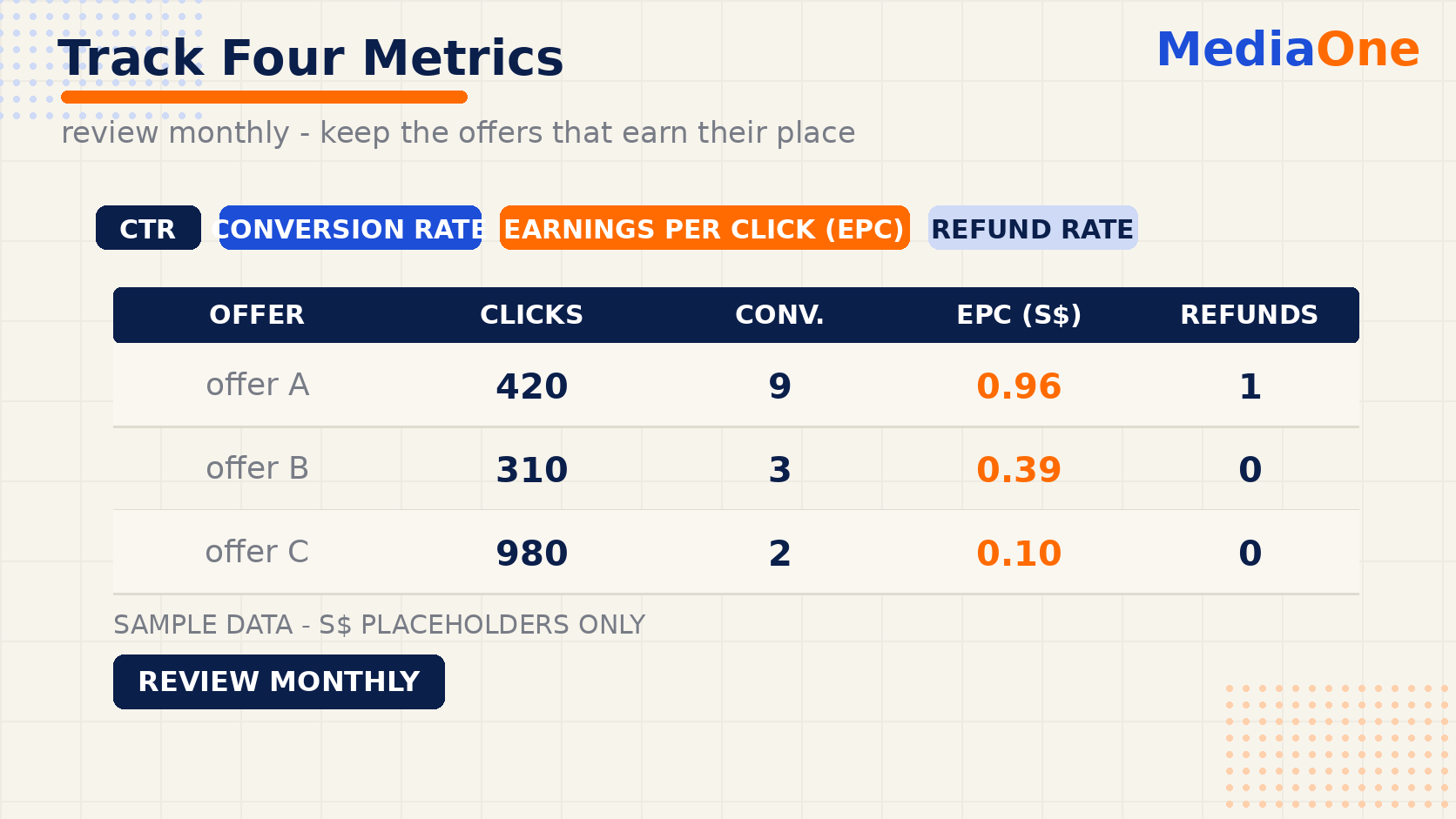
Figure 5: Sample tracking dashboard for affiliate offers
Earnings potential and income expectations
Income varies widely because it depends on audience fit, offer quality and consistency. Early months usually bring little money, and many affiliates earn nothing from their first programmes. Treat the first six months as a test period, not a salary. For context on what content channels eventually pay, our guide to how much a blogger in Singapore can earn sets out the realistic range.
Common beginner mistakes to avoid
Most people who quit affiliate marketing in the first year do not fail because the model is broken. They fail because of a few avoidable errors.
- Joining too many affiliate programs at once. Twenty programmes spread a small amount of content too thin. Start with one or two offers that score well, then add more only when the first ones convert.
- Ignoring disclosure and audience trust. Readers who feel misled rarely come back. State the affiliate relationship plainly near each link, and recommend only what you would use yourself.
- Promoting low-quality products for short-term commission. A high payout on a weak product usually means high refunds and a damaged reputation. Check refund rates before you commit.
- Neglecting tracking. Without tracking, you cannot tell which content earns money. Check each programme’s cookie lifespan, because a buyer who purchases after the window closes will not be credited.
Start Your Affiliate Marketing Journey
Affiliate marketing earns a commission when a customer buys through your affiliate link. To start affiliate marketing, pick a niche, score one offer, join the affiliate programme, publish useful content and track results. Each month, review click-through rate, conversion rate, earnings per click and refund rate, and drop any partner that does not earn its place.
Before building a site, score one offer. At 15 out of 25 or higher, publish one review and measure its performance for 30 days. Confirm tax treatment with IRAS, and read each platform’s terms before promoting products online. When you are ready to scale the content behind your links, MediaOne Marketing’s digital marketing services can help you build the channels that make affiliate marketing pay.
Frequently Asked Questions
Is affiliate marketing a legitimate way to earn money in Singapore?
Yes. The model has operated since 1989, and Amazon Associates followed in 1996. Local networks such as Involve Asia serve Singapore advertisers and affiliates. Legitimacy depends on the programme, not the model: avoid any scheme that guarantees returns or charges you to join – our guide to multi-level marketing legality and risks in Singapore explains how those schemes differ from genuine performance programmes.
How much money can a beginner make from affiliate marketing?
Income varies widely, and most beginners earn little at first. Earnings depend on audience fit, the payment model and consistent publishing. Treat early months as a test, not a salary, and let tracked data guide how much effort you commit.
Do I need a website to start affiliate marketing?
No, but you need a channel you control, such as a blog, a YouTube channel, a social media account or a Telegram community. Choose the platform where your audience already spends time.
Which affiliate payment model is best for beginners?
Pay-per-sale is usually the most sensible starting point, since it pays only when a buyer completes a purchase. Pay-per-lead and pay-per-click can suit specific niches, but check each programme’s terms before committing.
How long does it take for affiliate marketing to pay off?
Most beginners need several months of consistent publishing before commissions become regular. Cookie windows affect timing, and each programme sets its own window, so check the terms rather than assuming any standard duration.
Do I have to disclose affiliate links in Singapore?
Yes. Under the Singapore Code of Advertising Practice, administered by the Advertising Standards Authority of Singapore, commercial content not disclosed as sponsored breaches the Code; the Ministry of Communications and Information has confirmed that undisclosed commercial posts are a breach and that ASAS can ask for them to be amended or removed. State the relationship plainly in every post and email (‘I earn a commission if you buy through this link’), and confirm tax reporting with IRAS.