Social media trends can influence how people discover brands, consume content and make purchasing decisions. From short-form videos and creator partnerships to AI-assisted content and social commerce, these developments create opportunities for businesses to reach new audiences and strengthen customer relationships.
However, not every viral sound, popular hashtag or emerging content format deserves a place in your marketing strategy. A trend may attract millions of views without generating meaningful engagement, website visits or sales.
For Singapore businesses, the challenge is to identify which developments matter to their target audiences, determine whether those trends fit their brand and measure whether participating produces worthwhile results.
This guide explores the social media trends shaping 2026, explains how to distinguish lasting changes from short-lived fads and provides a practical framework for tracking and testing trends. It also examines how businesses can use short-form video, creator partnerships, user-generated content and AI without losing sight of their commercial objectives.
Key Takeaways
- Prioritise audience relevance: Choose trends based on your customers’ interests and behaviour rather than popularity alone.
- Understand platform differences: Instagram, TikTok, Facebook, YouTube and LinkedIn serve different content and business objectives.
- Use short-form video strategically: Reels and TikTok videos can introduce your brand to new audiences, while carousels provide room for detailed explanations.
- Explore authentic creator partnerships: Audience relevance and credibility are often more valuable than follower count.
- Use AI with human oversight: AI can accelerate content production, but brand voice, accuracy and originality still require attention.
- Measure commercial outcomes: Track enquiries, website visits, bookings and sales instead of relying exclusively on views and likes.
- Test before investing heavily: Use a consistent scoring framework to decide which trends deserve further experimentation.
What Are Social Media Trends and Why Do They Matter?
A social media trend is a recurring pattern in how people create, share or consume content across social platforms. It may involve a popular content format, a change in audience behaviour, a new platform feature or a shift in the way people interact with brands.
Examples include:
- Short-form video: Vertical videos designed for quick viewing and discovery.
- Creator-led content: Brands working with creators who have established communities and specialist knowledge.
- Social commerce: Product discovery and purchasing journeys that take place through social platforms.
- User-generated content: Customers sharing their experiences with products and services.
- AI-assisted content creation: Using artificial intelligence to support ideation, editing, research and production.
- Social search: People using platform search functions to discover products, recommendations and information.
These developments matter because they influence how businesses communicate with potential customers. A company that understands its audience’s preferred formats and discovery habits can make better decisions about content, platform selection and campaign investment.
Social Media Trends Versus Passing Fads
Not every popular social media format represents a lasting trend.
A trend reflects a broader change in audience behaviour or platform usage. A fad is usually a short-lived burst of attention around a particular sound, meme, challenge or topic.
For example, short-form vertical video has become an established content format across multiple platforms. A particular audio clip used in thousands of Reels may only remain popular for a few weeks.
The distinction matters because businesses need to decide whether a development deserves long-term investment or a quick experiment.
Consider these questions before participating:
- Does this development change how my target audience discovers or evaluates products?
- Is it relevant to my industry and brand positioning?
- Can I use it to communicate something useful?
- Is there a realistic opportunity to generate engagement, enquiries or sales?
- Is the trend likely to remain relevant beyond its initial popularity?
A trend that answers these questions positively may deserve further testing. A passing fad may still be useful for a timely post, but it should not determine your overall marketing strategy.
Why Trend Awareness Matters for Singapore Businesses
Singapore has a highly connected population and an active social media environment. DataReportal’s Digital 2026 Singapore report estimated 5.33 million social media user identities in October 2025, equivalent to 90.6% of the population.
These figures provide useful context for businesses planning their digital presence. However, social media user identities should not automatically be interpreted as unique individuals, and platform advertising reach is not the same as active monthly users.
For local businesses, the more important question is where their customers spend time and what they expect to find on each platform.
For example:
- A fashion retailer may use Instagram and TikTok to showcase products, styling ideas and customer experiences.
- A professional services firm may use LinkedIn to share industry knowledge and build credibility.
- A restaurant may use Instagram Reels, Facebook and customer-generated content to showcase its menu and dining experience.
- An education provider may use YouTube videos and short-form clips to explain courses and answer common questions.
The right platform depends on the audience, business model and campaign objective. Businesses should validate their assumptions using customer research and account analytics rather than treating general platform popularity as proof of commercial potential.
The Social Media Landscape in Singapore in 2026
Social media platforms are no longer simply chronological feeds of updates from accounts people follow. Recommendation systems, video feeds, search functions and personalised content suggestions influence what users discover.
This means businesses can reach people who have never interacted with their accounts. However, gaining that exposure depends on creating content that is relevant to the people a platform recommends it to.
Platform Selection Should Follow Audience Behaviour
Each platform offers different opportunities. Rather than maintaining an account everywhere, businesses should prioritise the channels that support their marketing objectives.
| Platform | Potential business applications |
|---|---|
| Community engagement, local business updates, events, customer communication and paid advertising | |
| Visual storytelling, Reels, product discovery, creator collaborations and brand building | |
| TikTok | Short-form video, entertainment, product discovery, demonstrations and creator-led content |
| YouTube | Tutorials, product demonstrations, educational videos, reviews and longer-form storytelling |
| B2B marketing, professional insights, recruitment, company updates and thought leadership | |
| Visual inspiration, product ideas, lifestyle content and purchase research | |
| Community discussions, niche interests, customer questions and product research |
These are broad use cases, not fixed rules. A B2B company may find success on YouTube, while a consumer brand may build a strong community on Facebook.
Review your existing audience demographics, engagement patterns, referral traffic and conversions before expanding to another platform.
For a broader overview of platform selection and campaign planning, read MediaOne’s Social Media Marketing Guide for Singapore Businesses.
Social Search and Content Discovery
Social platforms are increasingly used as discovery tools. People may search TikTok for product demonstrations, Instagram for visual inspiration, YouTube for tutorials or Reddit for discussions and personal experiences.
This creates an opportunity for businesses to make their content easier to discover.
Practical steps include:
- Use clear, descriptive captions that explain what each post covers.
- Include relevant keywords naturally in video titles and descriptions.
- Answer common questions from your target audience.
- Create content around specific products, services, locations and customer needs.
- Organise videos and posts into useful categories where the platform supports them.
Avoid filling captions with unrelated keywords or hashtags. Content should remain natural and genuinely useful to the people viewing it.
The Social Media Trends Businesses Should Watch in 2026
Social media developments can change quickly. The following trends are worth monitoring because they influence content production, audience discovery, brand communication and purchasing behaviour.
1. Short-Form Video Remains Important for Discovery
Short-form video continues to play a major role across platforms such as TikTok, Instagram and YouTube.
Businesses can use short videos to introduce products, explain services, demonstrate processes and answer common customer questions.
For example, a Singapore home renovation company could create short videos showing:
- Before-and-after renovation transformations.
- Common mistakes homeowners make when planning renovations.
- Material comparisons and design considerations.
- Project progress and behind-the-scenes footage.
- Answers to frequently asked questions about renovation costs.
The advantage of short-form video is that it allows businesses to communicate a focused message quickly. It also gives potential customers an opportunity to understand a product or service before visiting the company’s website.
However, short videos should not be produced simply to follow a popular format. Each video should have a clear purpose, whether that is introducing the brand, educating viewers or encouraging an enquiry.
What businesses should test:
- Short product demonstrations.
- Quick educational tips.
- Behind-the-scenes videos.
- Customer testimonials.
- Frequently asked questions.
- Short explanations of industry developments.
2. Authentic and Creator-Led Content
Audiences may respond differently to content that feels like a genuine recommendation or personal experience compared with highly polished promotional material.
This has increased the importance of creators who can communicate naturally with established communities.
Brands can work with creators to produce product demonstrations, tutorials, reviews, educational content and event coverage.
The most suitable partner is not necessarily the creator with the largest following. Audience relevance, credibility, content quality and alignment with your business objectives should carry more weight.
For example, a Singapore skincare retailer may benefit from collaborating with a creator who regularly discusses skincare routines and ingredients. A large entertainment account with an unrelated audience may generate more views but fewer relevant enquiries.
What businesses should assess before a collaboration:
- Whether the creator’s audience matches the intended customer profile.
- Whether their content style suits the brand.
- The quality and relevance of their comments and interactions.
- Previous examples of sponsored content.
- Deliverables, timelines and usage rights.
- How campaign results will be measured.
Businesses should also ensure that commercial relationships are disclosed clearly. Singapore’s Advertising Standards Authority of Singapore (ASAS) provides guidance on interactive marketing communication and social media. The Ministry of Digital Development and Information has also explained Singapore’s expectations around disclosure of sponsored social media content.
3. User-Generated Content and Customer Advocacy
User-generated content (UGC) refers to content created by customers or members of the public about a brand, product or service.
It can include:
- Customer photographs and videos.
- Product reviews and testimonials.
- Unboxing videos.
- Before-and-after results.
- Customer stories and experiences.
- Posts showing how customers use a product.
UGC can make a brand feel more approachable by showing real experiences rather than relying entirely on company-produced promotional material.
For example, a café could encourage customers to share photographs of their favourite dishes. A fitness studio could invite members to share milestones or experiences, provided they are comfortable doing so.
A simple UGC programme can follow these steps:
- Encourage participation: Invite customers to share experiences through a branded hashtag, campaign or post-purchase message.
- Make participation straightforward: Give clear instructions and examples of the type of content customers can contribute.
- Obtain permission: Ask for permission before reposting customer content in marketing materials.
- Credit the creator: Acknowledge the original contributor when sharing their work.
- Evaluate performance: Identify which customer stories generate meaningful engagement, website visits or enquiries.
UGC should complement a brand’s content strategy rather than replace it. Businesses still need to publish their own educational, informative and promotional content consistently.
4. Social Commerce and Shorter Buying Journeys
Social commerce combines product discovery, brand interaction and purchasing activity through social media platforms.
Instead of discovering a product on social media and immediately leaving to conduct further research elsewhere, customers may be able to explore product information, ask questions and follow a purchase link within the same platform.
The exact shopping features available vary by platform and market, so Singapore businesses should check current eligibility and local availability before planning an in-app checkout strategy.
Even without native checkout, businesses can reduce friction by making the next step obvious.
For example, an online retailer can:
- Show products in short demonstration videos.
- Include prices or relevant product information.
- Direct users to the correct product page.
- Answer questions through comments and direct messages.
- Provide clear delivery, return and payment information.
A good social commerce experience does not end with an attractive post. It gives interested customers the information and access they need to make a purchase decision.
5. AI-Assisted Content Creation and Personalisation
Artificial intelligence is changing how marketing teams plan, produce and manage social media content.
AI tools can help businesses brainstorm content ideas, draft captions, generate creative variations, edit videos, summarise audience feedback and organise content calendars.
They can also help teams adapt one central idea for different platforms.
For example, a business could turn a detailed article into:
- A short educational Reel.
- A TikTok video answering one question.
- An Instagram carousel explaining key points.
- A LinkedIn post discussing the business implications.
- A YouTube video covering the topic in greater detail.
This approach can reduce repetitive production work while helping businesses maintain a consistent message across channels.
However, AI-generated content still needs human review. Automatically publishing large volumes of generic posts can weaken brand identity and reduce the usefulness of your content.
Use AI to support your team’s work, not to replace its understanding of customers.
Recommended practices:
- Verify factual claims before publishing.
- Review AI-generated images and videos for accuracy.
- Maintain a consistent brand voice.
- Avoid publishing repetitive or misleading content.
- Protect confidential customer and business information.
- Ensure that human oversight remains part of the approval process.
6. Search-Driven Social Content
People increasingly use social platforms to find answers, recommendations and demonstrations.
This means businesses should think about the questions customers are likely to ask before making a purchase.
A dental clinic, for example, might publish videos answering questions about teeth whitening, dental implants or routine check-ups. A travel company could create destination guides, itinerary comparisons and travel preparation tips.
The aim is to make content discoverable and useful.
Businesses can improve their social search visibility by:
- Using descriptive titles and captions.
- Addressing specific customer questions.
- Including relevant location references when appropriate.
- Publishing clear demonstrations and explanations.
- Organising content around recurring topics.
- Maintaining accurate profile descriptions and business information.
This approach also supports your wider content strategy. A useful social media post can introduce a topic that is explored in greater detail on your website.
7. Community Building and Meaningful Engagement
Follower growth is not the only way to measure the strength of a social media presence.
Businesses also benefit from developing relationships with people who regularly interact with their content, ask questions and share their experiences.
Community-building activities include:
- Responding to comments and messages.
- Hosting relevant Q&A sessions.
- Sharing customer stories.
- Asking questions that encourage meaningful discussion.
- Creating recurring content series.
- Participating in relevant community conversations.
For example, a Singapore financial education business could host regular question-and-answer sessions on budgeting or financial planning. A home improvement retailer could invite customers to share renovation questions and project ideas.
A strong community takes time to develop. Consistent communication and relevant content are more sustainable than trying to manufacture engagement through unrelated viral challenges.
8. Social Video and Live Interaction
Live video offers a way to interact with audiences in real time.
Depending on the platform and audience, businesses can use live sessions for:
- Product demonstrations.
- Expert interviews.
- Launch announcements.
- Customer questions and answers.
- Behind-the-scenes events.
- Educational discussions.
Live sessions can help customers ask questions before making a purchase decision. They also allow businesses to understand which topics attract the most interest.
Plan each session around a specific subject. Prepare talking points, check the technical setup and have someone monitor audience questions.
After the broadcast, consider repurposing useful sections into shorter clips, provided the platform’s rules and any relevant permissions are respected.
How to Choose Between Reels, Carousels and Other Formats
The best content format depends on the message you want to communicate and the action you want the audience to take.
Two formats that businesses commonly compare are short-form video and carousel posts.
Carousels: Best for Detailed Explanations
Carousels allow businesses to present information across multiple slides.
They are useful for content that requires a sequence or several related points, such as:
- Step-by-step tutorials.
- Product comparisons.
- Industry tips.
- Checklists.
- Frequently asked questions.
- Educational explanations.
For example, a Singapore interior design company could publish a carousel titled “5 Things to Consider Before Renovating Your HDB Flat”.
Each slide could explain one consideration, with the final slide directing interested readers to a consultation page.
Reels and TikTok Videos: Best for Visual Discovery
Short-form videos can communicate an idea quickly through movement, demonstrations, narration and on-screen text.
They are suitable for:
- Product demonstrations.
- Before-and-after transformations.
- Quick tutorials.
- Customer testimonials.
- Behind-the-scenes footage.
- Short educational explanations.
For example, the same interior design company could produce a Reel showing a completed renovation project, followed by a short explanation of the design decisions.
Choosing the Right Format
| Content objective | Recommended format | Example |
|---|---|---|
| Introduce a product | Reel or TikTok video | Product demonstration |
| Explain a process | Carousel or tutorial video | Step-by-step guide |
| Share customer experiences | UGC or testimonial video | Customer review |
| Announce an event | Stories, posts or short video | Event announcement |
| Discuss industry insights | LinkedIn post or carousel | Expert commentary |
| Answer detailed questions | YouTube video or carousel | Educational guide |
| Encourage immediate interaction | Stories, live video or Q&A | Audience questions |
Businesses do not need to choose one format permanently. A single topic can be adapted into several formats, provided each version is designed for the platform and audience.
How to Track Social Media Trends Effectively
Trend tracking should be a regular marketing activity rather than an occasional exercise prompted by a viral post.
A consistent process helps teams identify developments, compare opportunities and decide which ones deserve further investment.
1. Start With Your Audience and Business Objectives
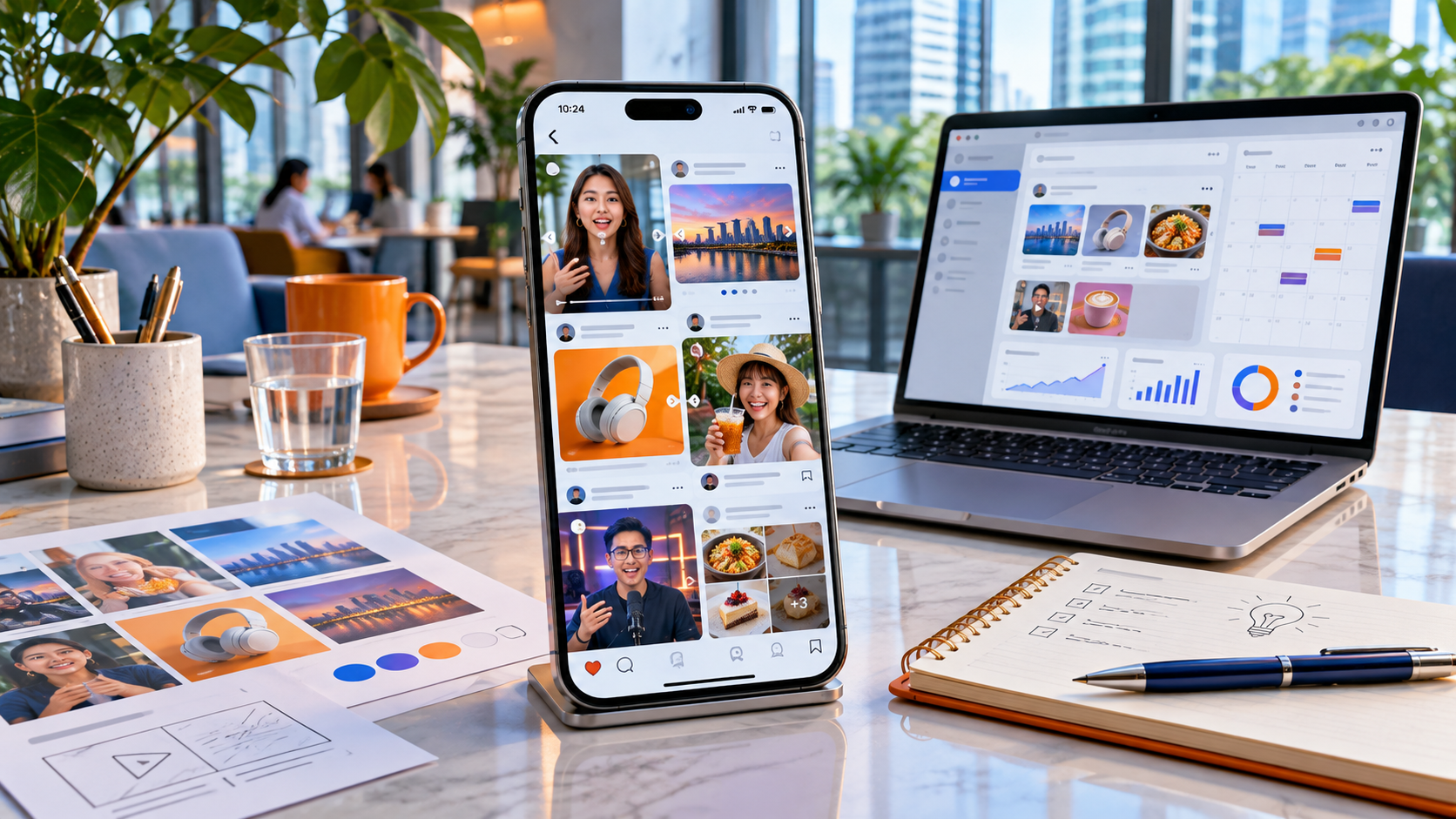
Before looking for trends, identify the audience you want to reach and the outcome you want to achieve.
For example:
- A retailer may want to increase product discovery and online purchases.
- A professional services firm may want to generate qualified enquiries.
- A restaurant may want to increase reservations and event attendance.
- An education provider may want to generate course enquiries.
This gives your trend research a clear direction.
A popular format is only useful if it can help you reach the right people or communicate something relevant to them.
2. Monitor Relevant Platforms Regularly
Review the platforms your customers use and look for repeated patterns in content and audience behaviour.
Useful sources include:
- TikTok’s 2026 Next Trend Report, which explores developments in audience discovery, consumer behaviour and brand communication.
- Instagram’s Best Practices for Creators, which provides guidance on content creation, engagement, reach and monetisation.
- Meta’s official business resources for updates on Facebook and Instagram features.
- YouTube’s official creator resources for video production and channel development.
- LinkedIn’s official marketing resources for B2B content and advertising guidance.
You should also observe what your customers, competitors and relevant industry communities are discussing.
Do not treat one viral post as proof of a major trend. Look for repeated examples and signs that the behaviour is spreading.
3. Use a Trend Relevance Scorecard
To make trend evaluation more consistent, businesses can use a simple scoring framework.
The following Trend Relevance Scorecard is an internal working tool proposed for this article. It is not an established industry standard. Its purpose is to help teams assess potential opportunities before committing significant time or budget.
Rate each candidate trend from 1 to 5 across four criteria.
| Criterion | Question | Score of 1 | Score of 5 |
|---|---|---|---|
| Audience fit | Does your target audience use this format or platform? | Little audience relevance | Strong audience relevance |
| Conversion path | Can the trend lead to a meaningful action? | No clear next step | Clear path to an enquiry or sale |
| Brand fit | Does it suit your brand’s identity and message? | Feels forced or inappropriate | Fits naturally with your brand |
| Durability | Is it likely to remain relevant? | Short-lived fad | Established or emerging behaviour with staying power |
Suggested scoring guide:
- 14–20 points: Consider a small test, provided there are no brand-safety concerns.
- 10–13 points: Monitor the trend and gather more evidence.
- 4–9 points: Usually deprioritise it.
These thresholds are suggested starting points, not universal rules. Review the framework periodically and adjust it according to your own campaign results.
A trend that scores highly on audience fit but poorly on conversion potential may still be useful for awareness. It simply should not be treated as a sales campaign without a clearer customer journey.
4. Monitor Engagement Quality

High engagement does not always indicate genuine interest.
A post may receive many likes or comments without reaching relevant potential customers. Some accounts may also use artificial or misleading methods to inflate engagement figures.
Look beyond headline numbers.
Assess:
- Whether comments are relevant to the content.
- Whether people ask genuine questions.
- Whether users share or save the post.
- Whether profile visits increase.
- Whether engagement comes from your intended audience.
- Whether website visits or enquiries follow.
Be cautious of sudden follower increases that have no corresponding improvement in meaningful interactions.
A shared tracking sheet or content calendar makes it easier for teams to monitor trends over time.
Useful fields include:
| Field | What to record |
|---|---|
| Trend | Name or description of the trend |
| Platform | Where it is gaining attention |
| Format | Reel, carousel, audio, live video or other |
| Date identified | When the team first noticed it |
| Example | Link to a relevant post |
| Audience fit | Score from 1 to 5 |
| Conversion path | Score from 1 to 5 |
| Brand fit | Score from 1 to 5 |
| Durability | Score from 1 to 5 |
| Decision | Test, monitor or ignore |
| Result | Performance after testing |
This record helps prevent teams from repeatedly revisiting the same ideas without learning from previous campaigns.
6. Establish a Weekly Trend-Tracking Routine
A simple weekly routine can be sufficient for many small and medium-sized businesses.
| Day | Activity | What to Do |
|---|---|---|
| Monday | Observe | Review relevant platform feeds, creator content and industry discussions. Identify recurring formats, topics and audience questions. |
| Tuesday | Evaluate | Use the Trend Relevance Scorecard to assess promising opportunities and determine whether they fit your audience and brand. |
| Wednesday | Plan | Select a suitable trend and decide how to adapt it. Define your target audience, key message and call to action. |
| Thursday | Produce | Create and review the content. Check factual accuracy, visual quality and brand suitability before publishing. |
| Friday | Review | Evaluate previous tests and record engagement quality, website visits, enquiries and other relevant outcomes. |
This process can be adapted to suit your team’s size and publishing schedule. The goal is to create a repeatable system rather than chase every new development.
How to Turn Social Media Trends into Business Results
Identifying a trend is only the first step. Businesses need to adapt it to their audience, connect it to a clear objective and measure the results.
Match Each Trend to a Marketing Objective
Different trends support different stages of the customer journey.
| Marketing objective | Suitable content approach | Relevant measurement |
|---|---|---|
| Brand awareness | Short videos, creator collaborations and shareable content | Reach, impressions and relevant audience growth |
| Audience engagement | Q&A sessions, polls and community content | Comments, replies, shares and saves |
| Website traffic | Educational posts, product demonstrations and link-driven content | Link clicks and website sessions |
| Lead generation | Service explanations, case studies and enquiry prompts | Qualified leads and cost per lead |
| Sales | Product demonstrations, customer reviews and shopping content | Purchases, revenue and conversion rate |
| Customer retention | Tutorials, customer stories and community updates | Repeat purchases and returning engagement |
Avoid measuring every post against the same target. An educational carousel and a promotional product video serve different purposes.
Create Content That Gives People a Reason to Engage
A trend should provide a natural starting point for your message.
Instead of copying a viral video exactly, consider what made it effective and how the underlying idea could be adapted.
For example, if short transformation videos are popular in your industry, a renovation business could use the format to show a genuine project transformation. The video could include a brief explanation of the work and a prompt to request a consultation.
The content participates in a recognisable format while still communicating something relevant to the business.
Use Clear Calls to Action
Content should guide interested viewers towards an appropriate next step.
Depending on the objective, calls to action may include:
- Visit our website to learn more.
- View the full product range.
- Send us a message for a quotation.
- Book a consultation.
- Register for an upcoming event.
- Read our complete guide.
Make sure the destination matches the content. Someone who clicks a post about a specific product should ideally arrive at that product’s page rather than a generic homepage.
Measure Performance Beyond Views and Likes
Businesses should connect social media activity to meaningful outcomes.
Useful metrics include:
- Reach: The number of unique accounts that saw your content.
- Impressions: The number of times your content was displayed.
- Engagement rate: Interactions relative to a chosen denominator, such as reach or impressions. State which calculation you use when comparing campaigns.
- Shares: How often people distribute your content.
- Saves: How often people bookmark your content.
- Profile visits: Visits to your social media profile.
- Link clicks: Clicks on links directing people to your website or another destination.
- Conversions: Completed actions such as enquiries, bookings or purchases.
For website traffic and campaign measurement, use tracking links with UTM parameters and review the resulting traffic in your analytics platform.
Google’s Campaign URL Builder can help you create tagged campaign URLs. Google’s Analytics Help Centre provides guidance on understanding acquisition and conversion data.
The most useful metrics depend on the campaign objective. A brand awareness campaign may focus on reach and audience growth, while a lead-generation campaign should place greater emphasis on qualified enquiries and cost per lead.
Common Mistakes to Avoid When Following Social Media Trends
Following trends can create opportunities, but poor execution can waste resources or damage a brand’s credibility.
1. Copying Trends Without Understanding Them
A trend may be popular because of its humour, cultural context or audience appeal. Reproducing it without understanding why people respond to it can make a business appear out of touch.
Understand the original idea before adapting it.
2. Choosing Platforms Based on Popularity Alone
A platform with a large user base is not automatically the best channel for every business.
A company should consider customer demographics, content requirements, available resources and commercial objectives before expanding its presence.
3. Prioritising Views Over Business Results
Viral reach can be impressive, but it does not necessarily generate customers.
Measure whether your content attracts the right audience and encourages the actions that matter to your business.
4. Publishing Too Much Low-Quality AI Content
AI can make content production faster, but speed should not become the main objective.
Generic posts, repetitive captions and inaccurate information can reduce audience trust. Review every piece of content before publishing and make sure it offers something useful.
5. Ignoring Brand Safety and Cultural Context
Not every sound, meme, challenge or discussion is appropriate for a business account.
Before participating, consider the original context, possible interpretations and whether the content could create reputational problems.
For creator partnerships, establish expectations about content approval, disclosure, usage rights and campaign reporting before work begins.
6. Failing to Obtain Permission for Customer Content
A customer posting about a business does not automatically mean the business can reuse that content in advertising.
Ask for permission before reposting photographs, videos or testimonials, and clarify whether the content may be used in paid advertising or other marketing materials.
A Practical 30-Day Social Media Trend Testing Plan
Businesses do not need a large budget to begin testing trends. A structured 30-day plan can help identify promising formats and establish a more consistent approach.
| Period | Main activity | Actions |
|---|---|---|
| Days 1–7 | Research and audit | Review existing accounts, identify audience interests and shortlist potential trends |
| Days 8–14 | Select and plan | Score shortlisted trends, choose one or two suitable tests and prepare content |
| Days 15–21 | Publish and observe | Publish the content, respond to interactions and track performance |
| Days 22–30 | Evaluate and refine | Compare results against objectives and decide whether to repeat, adapt or discontinue each test |
Week 1: Understand Your Current Performance
Review your social media accounts and establish a baseline.
Record:
- Current follower numbers.
- Typical reach and engagement.
- Website traffic from social channels.
- Enquiries and sales attributed to social media.
- Best-performing content formats.
- Audience questions and feedback.
This information helps you distinguish genuine improvements from ordinary fluctuations.
Week 2: Identify and Select Trends
Research the platforms relevant to your audience.
Use the Trend Relevance Scorecard to shortlist opportunities. Select trends that suit your brand and can be tested without requiring substantial production resources.
Prepare the content concept, intended audience and success measure before production begins.
Week 3: Publish and Monitor
Publish the selected content and monitor its performance.
Pay attention to the quality of interactions, not only the number of views. Record whether the content attracts relevant comments, profile visits, website clicks or enquiries.
Avoid making major decisions based on the first few hours of performance. Allow a suitable period for the platform and audience to respond.
Week 4: Evaluate and Improve
Compare results against your original objective.
Ask:
- Did the content reach the intended audience?
- Did people interact meaningfully?
- Did it generate website visits or enquiries?
- Was the production effort justified by the result?
- Should the format be repeated or adapted?
Keep successful approaches, revise underperforming ones and discontinue experiments that consistently fail to deliver useful results.
Over time, these records can help your business develop a more effective social media strategy based on evidence rather than assumptions.
Strengthen Your Social Media Strategy for Sustainable Growth
Social media trends can help businesses discover new ways to reach audiences, communicate their value and encourage customer interaction. However, following trends without a clear strategy can result in wasted effort and attention that does not translate into business results.
The most effective approach is to understand your audience, choose suitable platforms, adapt relevant trends and measure performance against meaningful objectives.
For Singapore businesses, this means looking beyond viral content and focusing on the formats, conversations and experiences that matter to local customers.
Start with a manageable testing process. Use the Trend Relevance Scorecard to assess opportunities, publish content with a clear purpose and review the results regularly.
If you want to develop a more structured approach to social media marketing, explore MediaOne’s social media marketing services. A well-planned strategy can help your business build a stronger online presence, engage relevant audiences and turn social media activity into measurable business outcomes.
Frequently Asked Questions
Important developments to watch include short-form video, creator-led content, user-generated content, social commerce, AI-assisted content creation, social search and community building. Their relevance varies by industry and audience. Businesses should assess each development against their own objectives rather than assuming every trend will work for every brand.
A weekly review is a practical starting point for most businesses. It provides enough time to identify recurring patterns and assess opportunities without requiring teams to monitor every platform constantly. Businesses in fast-moving industries may benefit from more frequent monitoring.
Evaluate the trend based on four factors: audience fit, conversion path, brand fit and durability. The Trend Relevance Scorecard in this guide provides a suggested way to rate each factor. Businesses should adapt its scoring thresholds based on their own results.
Are short-form videos better than carousel posts?
Neither format is universally better. Short-form videos are useful for demonstrations, storytelling and discovery. Carousels work well for educational content, comparisons and step-by-step explanations. Choose the format that best communicates your message and supports your campaign objective.
Do trending audio clips help businesses increase sales?
Trending audio may help a post fit into a popular content format, but popularity does not guarantee commercial results. Use audio when it suits your brand and audience. Include a clear message and relevant next step, then evaluate whether the post generates meaningful engagement or conversions.