
| AI Summary
Online reputation services help businesses protect their brand credibility through reputation monitoring, customer review management, search engine optimisation and crisis management. The right service depends on the severity of reputational issues, available resources and business objectives. This guide explores service models, pricing, ethical practices and provider selection criteria. It also explains how businesses can address negative content, measure reputation performance and build lasting customer trust in competitive markets. |
Online reputation services help businesses protect their credibility, manage customer feedback and improve how their brand appears across digital channels. These services combine reputation monitoring, review management, search engine optimisation (SEO) and strategic communications to address reputational risks.
The right solution depends on where your reputation problems originate. A business struggling with negative customer reviews needs a different strategy from a company facing damaging search results or widespread media criticism.
At MediaOne, we recommend starting with a reputation audit before investing in a service package. Understanding what customers encounter when researching your business helps you direct resources towards the issues that affect trust, enquiries and revenue. This guide explains how online reputation services work, what they cost and how to select a provider that supports your business objectives.
Key Takeaways
-
Online reputation services help businesses monitor brand mentions, manage customer reviews, address damaging content and strengthen digital credibility.
-
Effective reputation management combines customer experience improvements with SEO, strategic communications and ethical review management.
-
Service costs depend on the complexity of the reputation issue, business size, monitoring requirements and level of specialist support.
-
Legitimate providers follow search engine policies and consumer protection regulations. They cannot guarantee the removal of genuine negative reviews or unfavourable news coverage.
-
Businesses should measure reputation management performance through customer sentiment, branded search visibility, review trends and commercial outcomes.
What Are Online Reputation Services?
Online reputation services are professional solutions that help businesses monitor, protect and improve public perceptions of their brand across digital channels. They form part of a broader discipline known as online reputation management (ORM).
These services address how customers, investors, employees and other stakeholders perceive a business when researching it online. They also help organisations identify emerging reputational threats before those issues escalate.
A comprehensive reputation management programme may cover search engine results, customer review platforms, social media discussions, news coverage and industry directories. The scope varies considerably between providers. Some specialise in customer feedback and local business listings. Others focus on search reputation repair, executive reputation management or corporate crisis communications.
We recommend identifying the primary reputation problem before comparing providers. This prevents businesses from paying for services that fail to address their actual needs.
Why Online Reputation Services Matter for Businesses
Customers frequently research businesses before making purchasing decisions. They compare reviews, visit company websites and examine independent sources to determine whether a brand deserves their trust.
For businesses competing in international markets, reputation influences every stage of the customer journey. Its commercial impact becomes particularly significant in industries where purchases involve substantial financial commitments or personal risk.
Build Customer Trust and Credibility
Consistent customer feedback helps prospective buyers evaluate a business. Detailed reviews can provide reassurance about product quality, service reliability and customer support.
However, credibility depends on the authenticity of that feedback. An established business with a realistic mixture of positive reviews and constructive criticism may appear credible when it responds professionally to customer concerns. Reputation services help businesses maintain this balance through ethical review collection and effective response processes.
Protect Sales and Conversion Opportunities
Negative search results can undermine marketing campaigns before prospective customers reach a business website. Consider a potential customer who discovers your company through a paid advertisement. Before submitting an enquiry, the customer searches for your business name and encounters unresolved complaints.
Even a well-designed landing page may struggle to overcome those concerns. Reputation management helps identify these barriers. It supports conversion improvements by ensuring prospective customers can access accurate company information and evidence of reliable service.
Identify Recurring Customer Experience Problems
Customer reviews provide valuable operational insights. Repeated complaints about delayed deliveries, billing errors or poor communication can reveal weaknesses that internal reporting overlooks.
A structured reputation programme categorises feedback and identifies recurring concerns. Management teams can then prioritise improvements based on the frequency and severity of those issues. We recommend treating reputation reporting as a business intelligence function rather than restricting it to marketing.
Reduce the Impact of Reputational Crises
A poorly handled complaint can attract widespread attention across social media, news websites and online communities.
Monitoring services help businesses recognise unusual increases in negative mentions. Early detection gives internal teams an opportunity to investigate the issue and prepare an appropriate response. The objective is to prevent avoidable escalation while maintaining transparency and accountability.
The Four Core Components of Online Reputation Services
Most comprehensive reputation management programmes combine four core functions. Each addresses a different aspect of how customers discover, evaluate and discuss a business.
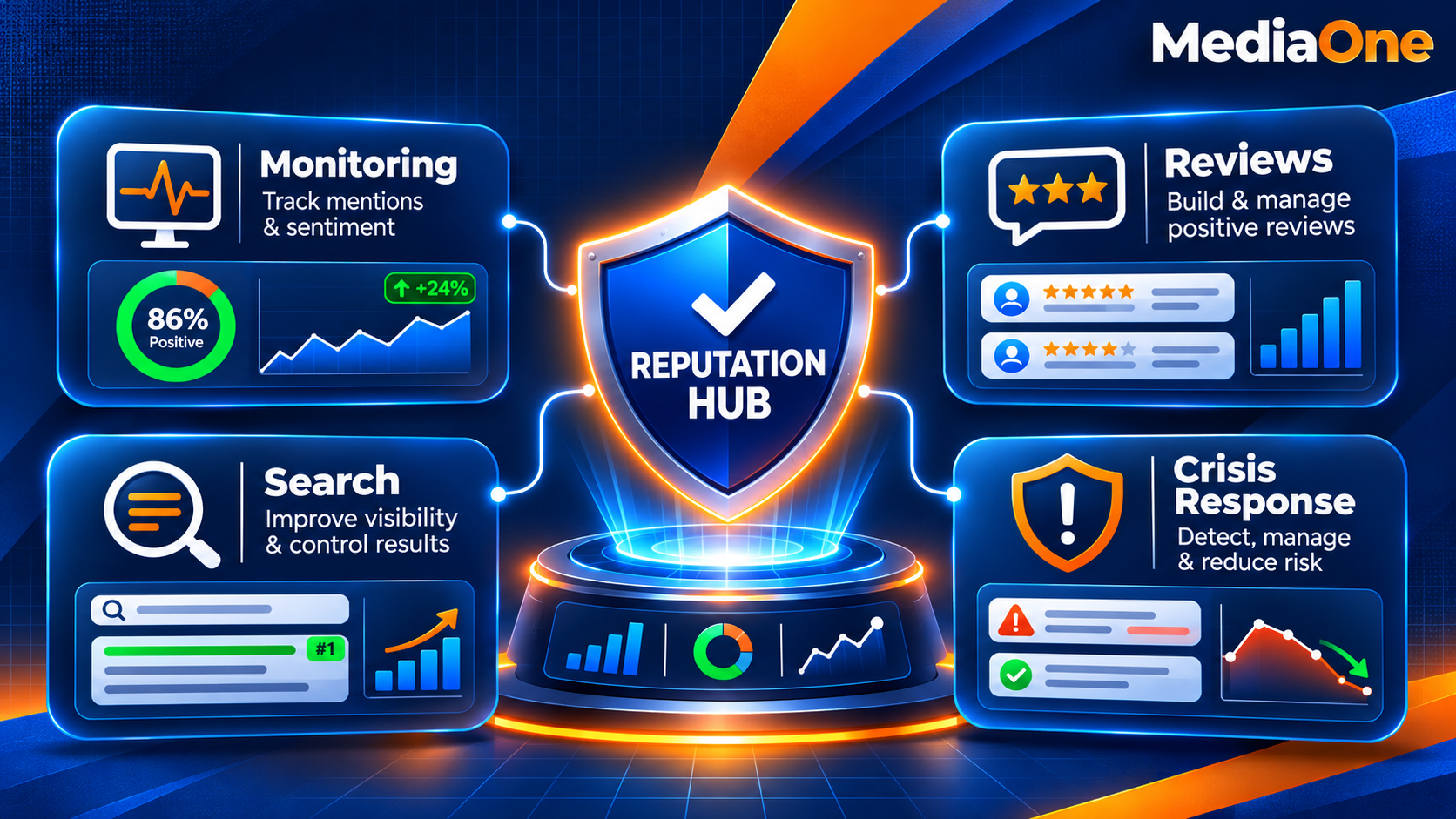
| Component | Primary function | Typical deliverables |
|---|---|---|
| Reputation monitoring | Identify emerging risks and public sentiment | Brand alerts, mention tracking and sentiment reports |
| Review management | Improve customer feedback processes | Review requests, response workflows and complaint escalation |
| Search reputation management | Strengthen branded search visibility | Search audits, content development and SEO |
| Crisis management | Address serious reputational threats | Incident assessments, response plans and stakeholder communications |
1. Reputation Monitoring and Social Listening
Reputation monitoring identifies where people discuss your business and what they say about it. Social listening extends this process by analysing conversations, recurring themes and changes in public sentiment. It helps businesses understand the context behind individual mentions.
A monitoring programme should cover relevant sources, including:
-
Google Search and Google Maps.
-
Customer review platforms and industry directories.
-
Social media networks and public discussion forums.
-
Online news publications and industry websites.
-
Competitor mentions and emerging industry concerns.
The appropriate monitoring frequency depends on the organisation’s risk profile. A small professional services business may require daily alerts, while a multinational consumer brand may need continuous monitoring.
Automated sentiment analysis can help categorise large volumes of mentions. However, human review remains important because automated systems can misinterpret sarcasm, humour and context.
2. Customer Review Management
Review management helps businesses collect authentic customer feedback, respond to complaints and maintain accurate profiles across relevant platforms. A professional review management service typically establishes a consistent process for requesting feedback after customer interactions. It also creates response guidelines and escalation procedures for complaints that require specialist attention.
Businesses targeting US consumers should prioritise platforms that match their industry.
| Platform | Particularly relevant for |
|---|---|
| Google Business Profile | Local businesses, retailers and professional services |
| Yelp | Restaurants, hospitality and local service providers |
| Trustpilot | E-commerce businesses and consumer brands |
| G2 and Capterra | Software and business-to-business technology companies |
| Tripadvisor | Hotels, travel businesses and tourism operators |
| Better Business Bureau (BBB) | Businesses serving North American consumers |
| Glassdoor | Employer reputation and recruitment |
| Amazon customer reviews | Brands selling products through Amazon |
Not every business needs a presence on every platform. We recommend prioritising channels that influence actual purchasing decisions.
Businesses must also follow each platform’s review solicitation policies. Some platforms allow businesses to request genuine customer feedback, while others impose stricter restrictions.
3. Search Engine Reputation Management
Search engine reputation management focuses on the information people encounter when searching for a business, product or executive.
It combines SEO with content development and digital public relations (PR). The objective is to improve the visibility of accurate, authoritative and relevant information.
A search reputation campaign may involve developing company profiles, publishing evidence-backed case studies, improving existing website content and securing legitimate editorial coverage.
The process usually begins with an assessment of branded search queries, such as:
-
Company name.
-
Company name and reviews.
-
Company name and complaints.
-
Product name and customer experiences.
-
Executive name and professional background.
These searches reveal how prospective customers investigate a business. They also help identify information gaps that competitors, review websites or negative publications may currently occupy.
Our recommendation is to strengthen useful, authoritative content rather than publish large volumes of low-quality articles designed solely to manipulate search rankings.
4. Reputation Crisis Management
Crisis management services support organisations facing significant threats to public trust. These situations may include product recalls, data breaches, allegations of misconduct or widespread customer dissatisfaction.
A crisis management provider helps establish response priorities, communication responsibilities and escalation procedures. Effective crisis response requires coordination between marketing, customer service, senior management and legal advisers where necessary.
The first priority should always be establishing the facts. Publishing a premature denial or making unsupported claims can create further reputational and legal risks.
Businesses should maintain a crisis response plan before an incident occurs. Preparing approved communication channels and assigning decision-makers reduces confusion when a serious issue emerges.
Choosing the Right Online Reputation Service Model
Online reputation services range from automated monitoring software to fully managed agency programmes. Choosing the right model depends on your internal resources, business complexity and the severity of your reputation concerns. We recommend comparing four service models before committing to a contract.
| Service model | Best for | Main limitation |
|---|---|---|
| Self-service reputation software | Small businesses with dedicated internal staff | Requires internal management and execution |
| Managed review services | Local businesses and multi-location companies | Limited ability to address damaging search results |
| Full-service reputation management agency | Established brands with complex reputation challenges | Higher investment and longer engagement periods |
| Specialist reputation repair and crisis management | Businesses facing serious reputational damage | Custom pricing and uncertain recovery timelines |
Self-Service Reputation Management Software
Reputation management software helps businesses centralise customer reviews, automate feedback requests and monitor brand mentions. This model works well when an organisation has employees who can respond to customers, investigate complaints and implement corrective measures.
Software alone may be insufficient when the underlying problem involves negative news coverage or persistent unfavourable search results. These situations often require specialist SEO and communications support.
Managed Review Services
Managed review services provide operational support for businesses that lack the time or personnel to oversee customer feedback. Providers may monitor review platforms, draft responses and coordinate feedback collection. Some also manage business listings and produce location-specific performance reports. This model is particularly useful for restaurant groups, dental practices, property management companies and retail chains.
Businesses should retain control over sensitive responses. Complaints involving financial disputes, safety concerns or legal allegations require approval from authorised personnel.
Full-Service Reputation Management Agencies
A full-service agency combines monitoring, review management, SEO, content marketing and strategic planning. This model suits businesses with reputation challenges across several digital channels. It can also support companies entering new markets where brand recognition and credibility remain limited.
When evaluating an agency, establish whether content production, digital PR and technical SEO are included in the proposed retainer. These activities may otherwise attract additional fees.
Specialist Reputation Repair Services
Specialist reputation repair services address persistent or serious reputational damage. These engagements may involve outdated negative articles, inaccurate business information, impersonation or damaging search results involving senior executives.
The work often requires coordination between SEO specialists, communications professionals and legal advisers. The complexity of each case makes standardised recovery timelines unreliable. We recommend specialist intervention when reputation issues threaten significant revenue opportunities, professional relationships or business continuity.
What Do Online Reputation Services Cost in 2026?
The cost of online reputation services depends on the scope of work, number of digital channels and complexity of the reputation problem. Basic review monitoring may require a modest monthly investment. Comprehensive search reputation repair can require substantial resources over several months.
Businesses should distinguish software subscription costs from professional service fees. A low-cost monitoring platform and a managed reputation repair campaign serve different purposes.
Online Reputation Management Pricing
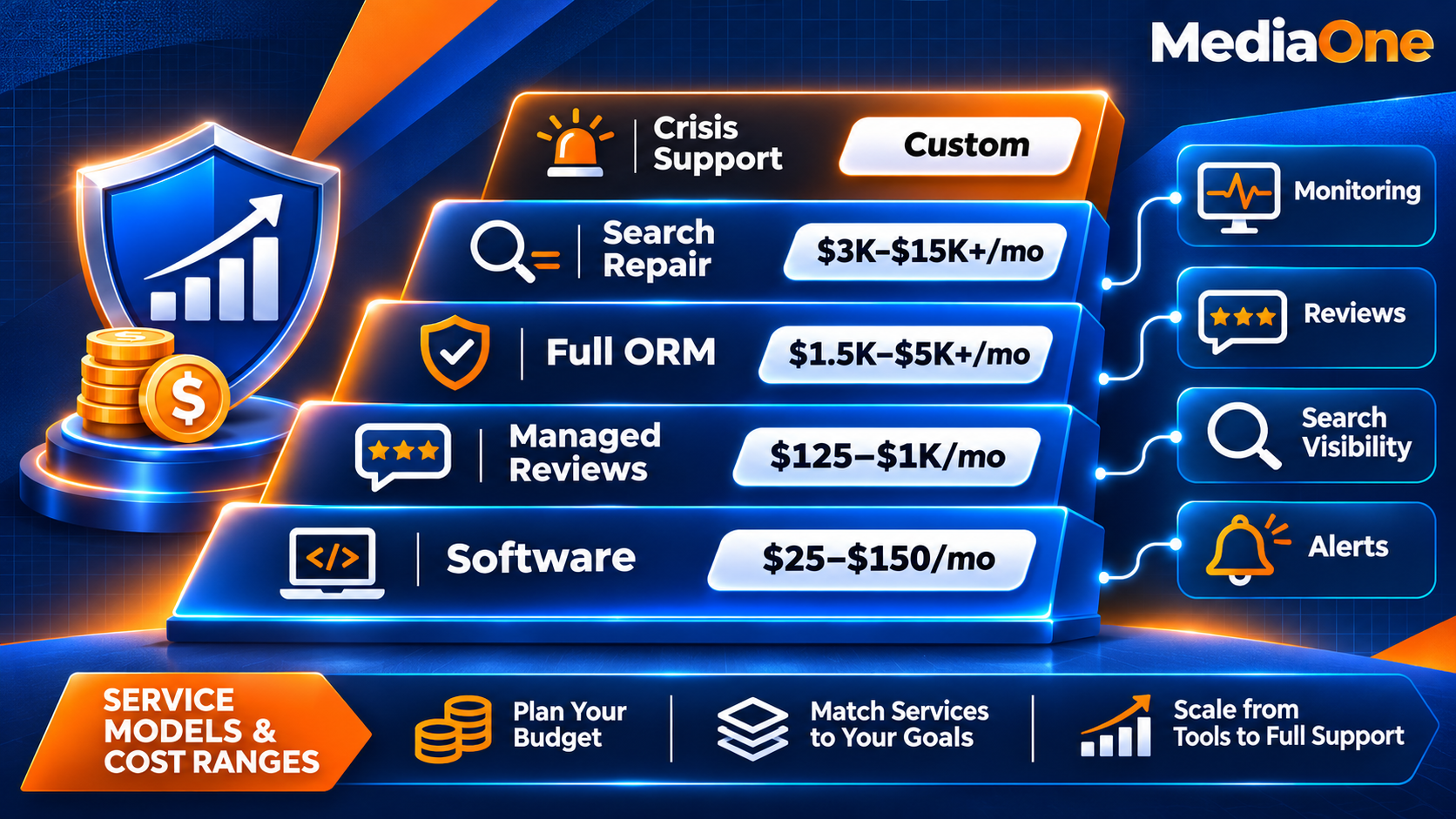
The following figures are indicative budgeting estimates in US dollars. They are not fixed industry averages or MediaOne service quotations.
| Service type | Estimated cost (USD) | Typical scope |
|---|---|---|
| Reputation monitoring software | $25–$150 per month | Review tracking, alerts and basic reporting |
| Managed review services | $125–$1,000 per month | Review monitoring, response support and feedback collection |
| Multi-location reputation management | $500–$3,000+ per month | Centralised monitoring, location reporting and review workflows |
| Comprehensive reputation management | $1,500–$5,000+ per month | Monitoring, SEO, content development and reputation strategy |
| Advanced search reputation repair | $3,000–$15,000+ per month | Competitive search optimisation, content development and specialist support |
| Corporate crisis management | Custom quotation | Urgent communications, risk assessment and specialist intervention |
Actual quotations may fall outside these ranges. Enterprise requirements, legal support and urgent crisis response can increase costs considerably.
Factors That Influence Reputation Management Costs
Before comparing quotations, establish which activities are included in the proposed scope. Several factors influence the final investment:
-
Business size: Larger organisations typically require monitoring across multiple brands, locations and stakeholder groups.
-
Severity of reputational damage: Persistent negative search results generally require greater resources than occasional unfavourable reviews.
-
Number of platforms: Managing several review websites, social channels and search engines increases operational requirements.
-
Content production: Research, professional writing and multimedia development may increase campaign costs.
-
Search competition: Highly authoritative negative publications can be difficult to outrank.
-
Monitoring frequency: Continuous monitoring and emergency response coverage require additional staffing.
-
Industry regulations: Healthcare, financial services and other regulated industries may require specialist compliance procedures.
We recommend requesting an itemised quotation rather than comparing monthly fees alone. Two providers charging identical rates may offer substantially different deliverables.
Is Online Reputation Management Worth the Investment?
The value of reputation management depends on its contribution to measurable business outcomes.
Consider a professional services company generating 200 qualified enquiries each month. Its enquiry-to-customer conversion rate is 10%, and each new customer contributes an average of $1,500 in gross profit.
If improved reputation and other supporting activities contribute to an increase in conversion rate from 10% to 12%, the business gains four additional customers monthly. This represents an additional $6,000 in monthly gross profit. If the reputation programme costs $2,000 per month, the illustrative return would be 200% after deducting the programme cost.
This example demonstrates how businesses can assess potential returns. However, it does not establish that reputation management alone caused the improvement. Pricing changes, sales performance and other marketing activities may also influence conversion rates.
Online Reputation Management Software vs Agency Services
Reputation management software and professional agency services address different operational requirements. Software provides the infrastructure for monitoring and reporting. An agency supplies the expertise and resources required to investigate problems, develop strategies and execute corrective actions.
| Comparison factor | Reputation management software | Reputation management agency |
|---|---|---|
| Brand monitoring | Automated | Automated and specialist-led |
| Review management | Internal team manages responses | Managed or collaborative responses |
| Search reputation repair | Generally limited | Specialist SEO and content support |
| Crisis communications | Alerts and monitoring | Strategic planning and response coordination |
| Reporting | Automated dashboards | Analysis and recommendations |
| Internal workload | Moderate to high | Generally lower |
| Strategic support | Limited or package-dependent | Customised to business objectives |
| Cost | Subscription-based | Retainer or project-based |
Established platforms such as Birdeye, Reputation and BrightLocal offer reputation management capabilities. Their suitability depends on the business’s size, locations and operational requirements.
We recommend software when your organisation has the expertise to act on reputation data. Consider agency support when search visibility, content strategy or complex reputational risks require specialist intervention.
A hybrid approach may also work well. Internal teams can manage routine customer interactions while an agency handles strategic SEO and reputation development.
Can Online Reputation Services Remove Negative Reviews and Search Results?
Professional reputation management providers can help businesses pursue legitimate content removal where applicable. However, they cannot guarantee the deletion of genuine criticism, lawful news coverage or unfavourable customer experiences. Understanding the distinction between removal and search reputation improvement is essential.
| Approach | How it works | When to use it |
|---|---|---|
| Review removal | Reports content that violates platform policies | Fake reviews, spam or prohibited content |
| Publisher correction | Requests an update to inaccurate published information | Factual errors or outdated business details |
| Search result removal | Requests exclusion from search results under applicable policies | Eligible personal information or unlawful content |
| Search result suppression | Improves the visibility of relevant, credible content | Persistent negative search results |
| Customer resolution | Addresses the underlying complaint | Genuine customer dissatisfaction |
Reporting Fake or Inappropriate Reviews
Google allows businesses to report reviews that violate its content policies. A negative review does not automatically qualify for removal. Businesses should review Google’s review removal guidelines before submitting a report.
When reporting a potentially fraudulent review, document relevant details and identify the applicable policy violation. Avoid accusing a reviewer of dishonesty publicly without supporting evidence. The business may have incomplete customer records or may not recognise the account name used to publish the review.
Correcting Inaccurate Online Information
Some reputation issues originate from outdated business listings, inaccurate articles or incorrect company information. Contact the publisher with documented evidence and a specific correction request. A professional request supported by verifiable information provides a stronger basis for correction than an aggressive demand.
Where Google removes an eligible result from its search index, the original information may remain accessible on the publishing website. Its content removal guidance explains the distinction between removing search results and removing information at its source.
Improving Search Results Through SEO
When content cannot legitimately be removed, businesses can improve the visibility of accurate and relevant information. This may involve strengthening official company pages, publishing expert content and developing authoritative resources that address customer concerns.
Search engines determine rankings independently. No provider can guarantee that a specific result will disappear or move to a particular position. The objective should be to provide search users with a representative view of the business while addressing legitimate criticism.
How to Respond to Negative Reviews Professionally
Negative reviews provide an opportunity to demonstrate how a business handles customer dissatisfaction. A constructive response can reassure prospective customers even when the original reviewer remains unhappy. We recommend a response framework built around acknowledgement, investigation, resolution and follow-up.
Acknowledge the Customer’s Concern
Recognise the specific issue raised in the review. Avoid generic responses that fail to address the customer’s experience. A personalised acknowledgement demonstrates that the business has reviewed the complaint.
Investigate Before Making Claims
Verify the available information before accepting or disputing allegations. Where further investigation is necessary, explain that the matter requires additional review. Do not disclose private customer information or make promises your organisation cannot fulfil.
Offer a Practical Next Step
Provide an appropriate contact channel or explain how the business intends to investigate the complaint. Move sensitive discussions into a private communication channel. The public response should establish accountability without exposing confidential information.
Follow Up and Record the Outcome
Document the complaint, actions taken and final outcome. Recurring issues should be escalated to the relevant operational team. This creates a feedback loop between reputation management and customer experience improvement.
Example of a Professional Negative Review Response
Thank you for sharing your experience. We understand your frustration regarding the delay and apologise for the inconvenience. Please contact our customer support team with your order details so we can investigate the matter and discuss an appropriate resolution.
The response acknowledges the problem without making unsupported claims. It also provides a clear next step. Avoid offering refunds, discounts or other incentives in exchange for removing a negative review. Such practices may violate platform policies.
Consumer Protection, Fake Reviews and Reputation Management Regulations
Businesses operating internationally must consider consumer protection requirements alongside platform-specific rules. For organisations targeting the US market, the Federal Trade Commission (FTC) provides important guidance on customer reviews, testimonials and deceptive marketing practices.
FTC Rules on Fake Reviews and Testimonials
The FTC’s Consumer Reviews and Testimonials Rule took effect on 21 October 2024. It addresses deceptive practices that undermine the reliability of consumer feedback.
Prohibited practices include purchasing fabricated reviews, providing incentives conditional on positive or negative feedback and certain undisclosed insider testimonials. The rule also addresses improper review suppression and the misuse of fake social media influence indicators.
Businesses should scrutinise agencies that promise rapid increases in positive ratings without explaining how they obtain genuine customer feedback.
Consumer Review Fairness Act
The US Consumer Review Fairness Act protects consumers’ ability to express honest opinions about businesses. It generally prohibits businesses from using standard-form consumer contracts to restrict legitimate reviews or impose penalties for publishing them. Businesses should ensure their customer agreements and complaint resolution policies respect these protections.
Review Platform Policies
Legal compliance does not automatically mean a review collection strategy complies with every platform’s requirements. For example, Google’s review collection guidelines prohibit businesses from offering incentives in exchange for reviews or review changes.
Reputation management providers should establish platform-specific procedures rather than apply identical review solicitation methods across every channel.
Customer Privacy and Data Protection
Reputation management often involves customer records, complaint histories and contact information. Businesses should restrict access to sensitive data and establish secure procedures for sharing information with external providers.
US businesses must consider applicable federal and state privacy requirements. International organisations may also need to comply with privacy legislation in other jurisdictions where they operate. Healthcare providers and financial institutions should apply additional industry-specific safeguards when responding to complaints.
How to Evaluate Online Reputation Service Providers Before Signing
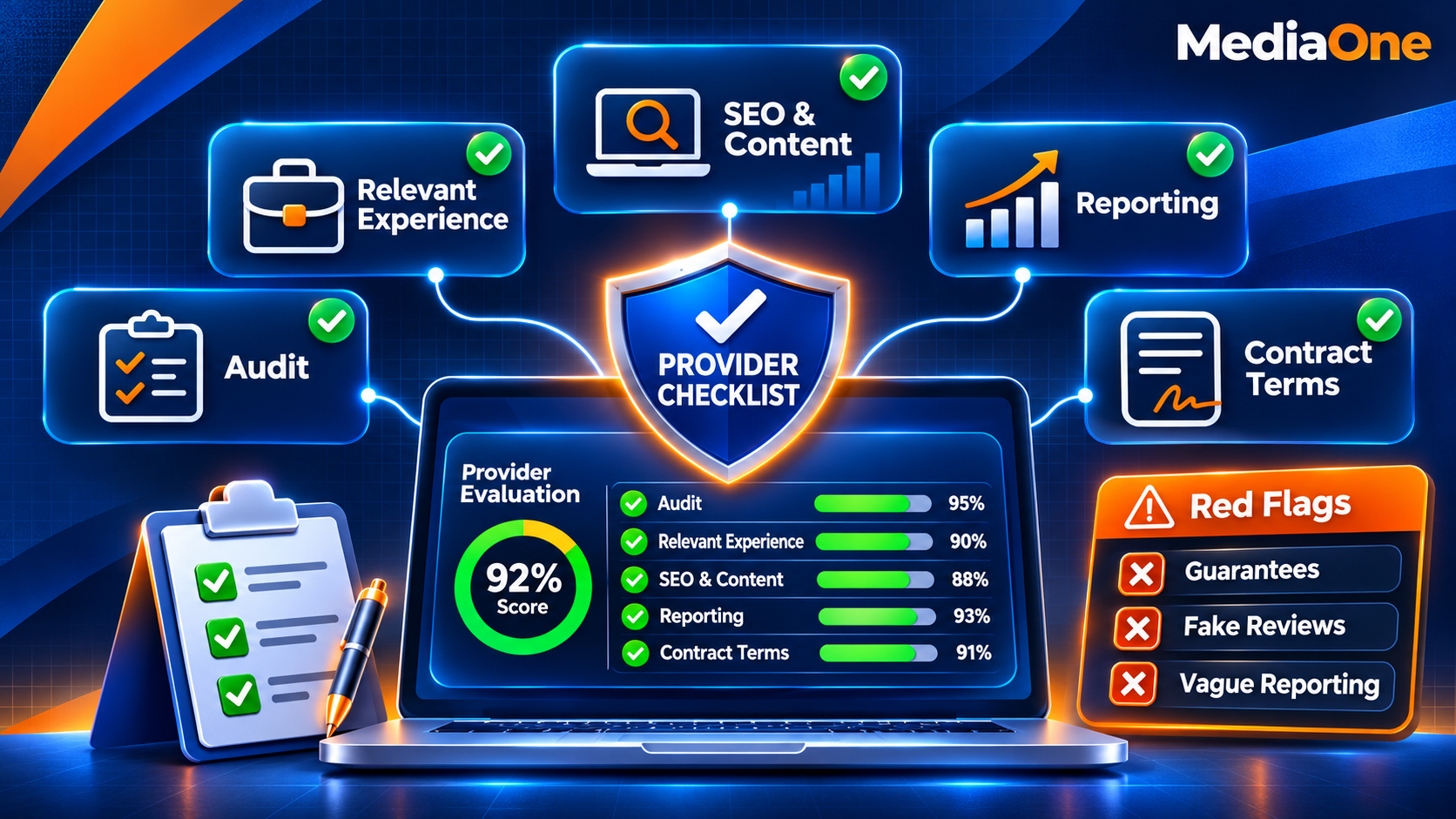
Choosing a reputation management agency requires careful assessment of its methods, expertise and reporting standards. A provider should explain how its proposed activities address your specific reputation challenges. Generic promises about improving brand image offer little assurance of commercial value.
Request a Reputation Audit
A credible proposal should begin with an assessment of your existing reputation. The audit should identify priority search queries, negative content, review trends and gaps in your digital presence. Ask the provider to explain which issues require immediate attention and which can be addressed through long-term improvements.
Examine Relevant Experience and Case Studies
Request examples involving reputation challenges similar to yours. Look for documented starting conditions, campaign activities, timelines and measurable outcomes.
A case study demonstrating successful review management does not necessarily establish expertise in complex search reputation repair. Evaluate experience against your specific requirements.
Assess SEO and Content Marketing Capabilities
Businesses facing damaging search results need providers with strong technical SEO and content development capabilities. Ask how the agency evaluates search competition, identifies content opportunities and measures branded search performance.
The provider should also explain its approach to content quality and legitimate link acquisition. Avoid agencies that rely on mass-produced articles, deceptive websites or manipulative link schemes.
Review Deliverables and Reporting Standards
Establish exactly what the provider will deliver each month. A suitable reporting framework should explain the activities completed, changes in reputation metrics and priorities for the following reporting period.
Reports should distinguish between outputs and outcomes. Publishing ten articles is an output. Improving the visibility of credible information across priority branded searches is an outcome.
Check Contract Terms and Account Ownership
Review cancellation procedures, minimum engagement periods and additional charges before signing. Confirm who owns the content, digital assets, software accounts and business profiles created during the engagement.
Businesses should retain administrative access to their primary digital properties. This reduces operational disruption when changing providers.
Use a Reputation Management Provider Scorecard
We recommend assigning weighted scores to each shortlisted provider. This creates a consistent evaluation process and reduces the influence of sales presentations.
| Evaluation criterion | Suggested weighting |
|---|---|
| Relevant reputation management experience | 20% |
| SEO and content marketing capabilities | 20% |
| Ethical practices and regulatory compliance | 20% |
| Reporting and performance measurement | 15% |
| Service scope and communication | 10% |
| Pricing transparency | 10% |
| Contract flexibility and account ownership | 5% |
| Total | 100% |
Score each provider from one to five against every criterion. Multiply each score by its corresponding weighting to calculate a comparable overall result.
Adjust the weightings according to your priorities. A business facing an immediate reputational crisis should assign greater importance to crisis response expertise and availability.
Warning Signs of Unreliable Online Reputation Services
Some reputation management providers use aggressive sales promises to attract businesses facing urgent reputational problems. These approaches may deliver short-term improvements while exposing the organisation to substantial long-term risks.
Watch for the following warning signs:
-
Guaranteed negative content removal: Providers cannot control independent publishers or search engine decisions.
-
Guaranteed five-star reviews: Authentic customer feedback cannot ethically be predetermined.
-
Unrealistic recovery timelines: Complex search reputation problems may require sustained work.
-
Unclear content creation methods: Low-quality articles and fabricated websites can damage credibility.
-
Undisclosed link-building practices: Manipulative links may expose websites to search engine penalties.
-
Pressure to sign immediately: A reputable provider should allow sufficient time to review its proposal.
-
Poor reporting transparency: Businesses should understand how their investment is being used.
-
Restrictions on account access: Providers should not prevent clients from accessing their own digital properties.
We recommend rejecting proposals that rely on unethical review manipulation or unsupported guarantees, regardless of the potential short-term benefits.
Online Reputation Management in AI-Powered Search
Artificial intelligence (AI) is changing how consumers research businesses. Prospective customers may now receive brand information through AI-generated search summaries and conversational search platforms. This introduces additional reputation management considerations.
An AI-generated response may draw on company websites, independent publications, customer feedback and other available sources. Businesses have limited control over how individual systems interpret and present this information.
Monitor AI-Generated Brand Information
Include relevant AI-powered search platforms in periodic reputation audits. Test questions that prospective customers might ask, such as whether a company is trustworthy or how its products compare with competitors.
Record inaccurate statements, missing information and inconsistencies across platforms. Treat the results as individual observations because AI-generated answers can vary between sessions.
Strengthen Authoritative Brand Content
Publish accurate company information and maintain consistent descriptions across official digital properties. Detailed product documentation, verified credentials, customer case studies and clear service policies can help establish a reliable information base. Businesses should also correct inaccurate third-party information where possible.
Maintain Consistency Across Digital Channels
Conflicting company descriptions, outdated contact details and inconsistent service information can create confusion for both consumers and automated systems. A reputation management programme should periodically audit key business facts across websites, directories and public profiles.
We recommend treating AI search visibility as an extension of an established reputation strategy. Avoid agencies promising guaranteed inclusion or favourable recommendations in AI-generated answers.
How to Measure the Success of Online Reputation Services
Effective reputation management requires measurable objectives. Businesses should establish baseline performance before launching a campaign. A useful measurement framework combines reputation indicators with customer experience and commercial performance data.
| Key performance indicator (KPI) | What it measures |
|---|---|
| Average review rating | Overall customer satisfaction reflected in published ratings |
| Review volume and recency | Availability of current customer feedback |
| Review response rate | Proportion of reviews receiving a response |
| Average response time | Speed of customer engagement |
| Complaint resolution rate | Effectiveness of customer issue handling |
| Negative mention frequency | Prevalence of unfavourable brand discussions |
| Branded search visibility | Presence of relevant and authoritative content |
| Customer enquiry conversion rate | Commercial performance associated with customer acquisition |
Monitor Review Quality and Customer Sentiment
Star ratings provide a useful overview but cannot explain every customer experience. Analyse recurring feedback themes and compare them across reporting periods.
For example, a retailer may maintain a strong average rating while receiving increasing complaints about delivery reliability. Identifying this pattern early allows management to address the operational issue.
Track Branded Search Performance
Monitor priority branded queries consistently using comparable locations, devices and measurement methods. Record the visibility of official company pages, independent reviews and negative publications.
For international businesses, search results may differ substantially between countries. Reports should identify the market being measured rather than combine inconsistent ranking data.
Connect Reputation Data to Commercial Results
Where possible, evaluate reputation performance alongside enquiries, conversion rates and customer retention. Tools such as Google Analytics 4 (GA4), Google Search Console (GSC) and customer relationship management (CRM) platforms can support this analysis.
Reputation improvements should not automatically receive credit for every increase in sales. Compare campaign timelines against other business changes to establish a realistic understanding of performance.
A 90-Day Online Reputation Management Action Plan
Businesses do not always need a large-scale reputation campaign immediately. A structured 90-day programme can establish monitoring processes, address priority concerns and develop a foundation for long-term improvement.
| Period | Primary objective | Key activities | Expected deliverables |
|---|---|---|---|
| Days 1–30 | Audit and risk assessment | Monitor brand mentions, review search results and identify recurring complaints | Reputation audit and prioritised action plan |
| Days 31–60 | Implementation and improvement | Establish review workflows, correct inaccurate information and develop relevant content | Response procedures, updated profiles and content assets |
| Days 61–90 | Measurement and refinement | Review performance, assess complaint trends and refine the strategy | Performance report and ongoing recommendations |
Days 1–30: Establish the Reputation Baseline
Begin with a comprehensive review of your digital presence. Identify the search queries customers use when researching your business. Examine relevant review platforms, social media accounts and independent publications.
Create a register of identified issues. Assign each issue a severity level based on its potential commercial and reputational impact. By the end of the first month, your business should have documented priorities, baseline metrics and clear responsibilities.
Days 31–60: Implement Corrective Measures
Establish consistent review response procedures and introduce compliant feedback collection processes. Update inaccurate business information and address content gaps on your website. Where appropriate, begin developing useful resources that answer common customer concerns.
Assign recurring operational complaints to the relevant departments. This phase should demonstrate progress through completed corrective actions rather than relying solely on changes in ratings or search rankings.
Days 61–90: Evaluate Performance and Refine the Strategy
Compare current performance against the original reputation audit. Assess changes in review response times, customer sentiment and branded search visibility. Identify activities that require additional investment or specialist intervention.
Complex reputation repair campaigns may require substantially longer than 90 days. Treat the initial programme as a foundation for continued improvement rather than a guaranteed recovery period.
Frequently Asked Questions
What is the difference between online reputation management and public relations?
Online reputation management focuses on how a business appears across search engines, review websites and other digital channels. Public relations manages broader stakeholder relationships and media communications, although both disciplines often work together.
How long do online reputation services take to work?
Monitoring improvements and review response procedures can be implemented within weeks. Complex search reputation repair may require several months or longer, depending on the severity of the issue and competing content.
Can an online reputation management company remove negative Google reviews?
A provider can report reviews that violate Google’s policies and help prepare supporting documentation. Google determines whether the review qualifies for removal, so legitimate negative feedback cannot be removed simply because it harms a business’s reputation.
Are online reputation services suitable for small businesses?
Yes. Small businesses can benefit from affordable monitoring software, structured customer feedback collection and professional review management. Specialist agency support may become necessary when reputation issues affect search visibility or customer acquisition.
Do online reputation services help improve SEO?
Reputation services can support SEO by improving business information, developing authoritative content and strengthening branded search visibility. Review quantity and quality can also contribute to local search performance, although results depend on several ranking factors.
Can businesses manage their online reputation internally?
Businesses can handle routine monitoring and review responses internally when they have sufficient resources and expertise. Complex search reputation repair or serious reputational crises may require professional assistance.
How much should a business spend on online reputation services?
The appropriate budget depends on business size, reputation risks and commercial objectives. Compare the cost of proposed services against the potential financial impact of unresolved reputation problems.
Is online reputation management a one-time service?
Certain issues may be suitable for project-based support, such as correcting inaccurate listings. However, ongoing monitoring and customer feedback management help businesses identify emerging concerns and maintain credibility.
Protect Your Brand and Build Lasting Trust With the Right Online Reputation Services
A strong online reputation requires consistent attention to customer experience, search visibility and public communication. Businesses that invest in ethical reputation management are better positioned to identify risks and maintain credibility in competitive markets.
Start by identifying where your reputation needs improvement. Review management may be sufficient for businesses struggling with inconsistent customer feedback. Organisations facing damaging search results may require a comprehensive SEO and content strategy.
At MediaOne, we recommend connecting reputation management with your wider digital marketing objectives. This approach helps ensure that reputation improvements support customer acquisition and sustainable business growth.
If branded search visibility, negative search results or weak online credibility are affecting your business, our online reputation management services and SEO services can help you identify priority improvements and develop a strategy aligned with your business objectives.