| AI Summary
Marketing for non-profit organisations connects a cause with people who can support it through donations, volunteering and partnerships. This guide explains a six-step plan for Singapore organisations, followed by a supporter journey audit, retention tactics and campaign budgeting. It also covers fundraising disclosures, personal data protection and Google Ad Grants. |
Marketing for non-profit organisations helps people understand a cause, take part and stay involved. In Singapore, that work also needs accurate fundraising messages and responsible handling of supporter information.
A campaign can bring someone through the door, but their experience afterwards shapes whether they return. A working donation form, a thoughtful thank-you and an update on the programme all contribute to that relationship. The following plan connects those tasks so a small team can manage campaigns without starting from scratch each time.
Key Takeaways
- One campaign goal guides the work. A defined audience, action and deadline help teams choose relevant messages and channels.
- Supporter journeys reveal missed opportunities. A simple audit shows where people lose interest or encounter problems.
- Retention needs planned follow-up. Thank-you messages, progress updates and communication preferences give supporters reasons to stay involved.
- Singapore compliance starts before launch. Fundraising arrangements, donation claims and personal data use need checks during planning.
- Campaign reports should measure participation. Completed donations, returning volunteers and repeat giving explain more than reach alone.
What Marketing for Non-Profit Organisations Covers
Non-profit marketing explains why an organisation exists, what it does and how people can participate. Fundraising sits within that wider work, alongside volunteer recruitment, public education and partnership building.
The campaign goal determines the message. A charity seeking weekday volunteers needs to explain the role and time commitment. An organisation raising programme funds needs to explain the need, intended use of donations and payment process.
Different organisations also have different responsibilities. A social enterprise, registered charity and Institution of a Public Character (IPC) should check their own status before making donation or tax claims.
Supporter experience connects campaigns
People experience an organisation through connected moments. A social post may introduce the cause, while a website answers questions and a later email explains the outcome.
Consistent branding helps those moments feel connected. The programme name, description and donation purpose should agree across every channel so supporters can recognise what they are supporting.
A Six-Step Marketing Plan for Non-Profit Organisations
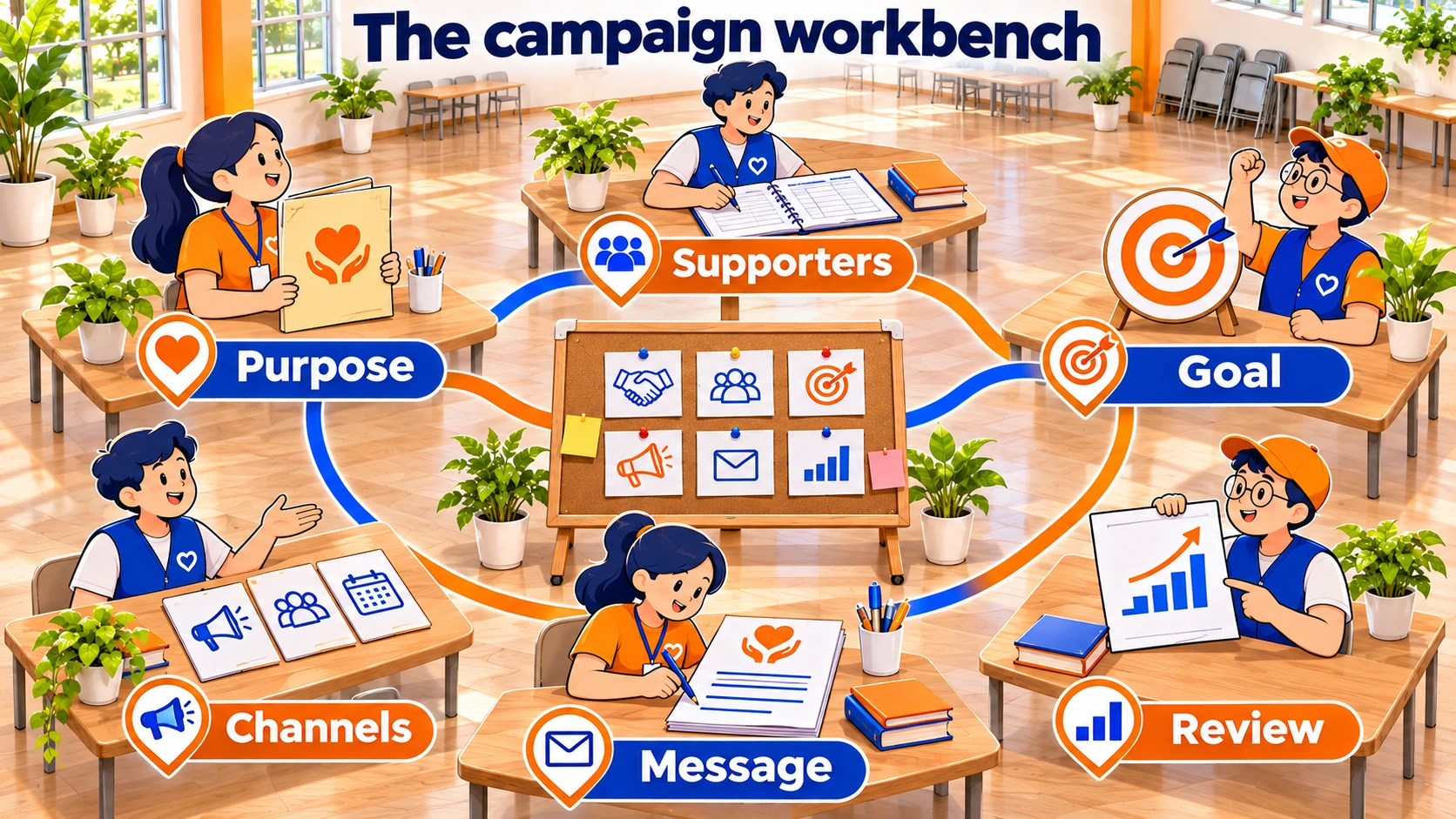
A practical plan starts with the organisation’s purpose and ends with evidence from the campaign. Each step gives the next person enough information to continue the work.
Step 1: Define the mission and campaign purpose
A short mission statement explains who the organisation serves and what it helps them achieve. The campaign then turns part of that mission into a specific request.
An illustrative reading programme might support children through weekly sessions. Its next campaign could recruit volunteers for Saturday mornings, with every message explaining the same role.
The campaign brief needs five answers:
- The need the campaign addresses.
- The people it aims to reach.
- The action those people can take.
- The resources needed to deliver the work.
- The person responsible for approval.
Step 2: Group supporters by their relationship
Supporters need different information depending on their experience with the organisation. Someone considering a first donation may want evidence of the programme, while a regular donor may want a progress update.
A small team can begin with these groups:
| Supporter group | Likely information need | Relevant next action |
| New visitors | Purpose, credibility and participation options | Explore a programme |
| First-time donors | Confirmation and an explanation of what follows | Choose update preferences |
| Regular donors | Progress and practical account support | Continue or adjust support |
| Volunteers | Roles, training and available sessions | Book a suitable session |
| Corporate partners | Programme needs and partnership responsibilities | Discuss a defined project |
These groups can overlap. A volunteer who also donates should receive coordinated messages, with staff checking recent contact before sending another appeal.
Step 3: Set one measurable goal
A campaign goal needs an action, a number and a deadline. The number should come from programme needs and team capacity.
For example, an illustrative target could be “recruit 12 volunteers who complete orientation before the next programme cycle”. That goal gives the team something more meaningful to report than application forms alone.
A short measurement plan keeps attention on delivery:
| Campaign purpose | Main measure | Supporting check |
| Fundraising | Completed donations | Donation form completion rate |
| Volunteer recruitment | Volunteers completing orientation | Applications and attendance |
| Supporter retention | Previous donors giving again | Contact preferences and responses |
| Public education | Completed resource downloads | Relevant visits and enquiries |
A review of the previous campaign provides a starting point. Where records are missing, the first campaign establishes that starting point.
Step 4: Choose channels around supporter needs
Channel selection follows the audience and action. A volunteer recruitment campaign might combine community posts with a page explaining duties, training and available dates.
Search can reach people already looking for an opportunity. Keyword research helps identify that language, while search engine optimisation helps organise pages around the questions people ask.
Each channel needs a defined job:
- Social media introduces the activity or need.
- Search connects existing interest with a relevant page.
- The website explains participation and answers practical questions.
- Email supports people who have agreed to receive updates.
A manageable mix gives staff time to respond. An unanswered enquiry can interrupt the journey even when the campaign attracts attention.
Step 5: Build the message and participation page
A campaign message connects the need with an achievable action. Specific details help readers understand what participation involves.
A volunteer appeal, for example, could explain the session length, tasks, training and location. The linked page should repeat those details so people can decide without contacting staff for basic information.
Effective copywriting carries that explanation from the opening message to the form. Before launch, a colleague unfamiliar with the campaign should test whether they can:
- Explain the campaign’s purpose.
- Find the expected commitment or donation options.
- Complete the form on a phone.
- Understand the confirmation message.
Step 6: Review results and improve the next campaign
The review compares the goal with completed actions, then examines where people stopped. Strong engagement followed by few completed forms suggests a different problem from low engagement with the original message.
The team should record one change to test next. A shorter form, a more specific appeal or a different audience can each answer a separate question.
The six steps work as one cycle, with campaign results informing the next brief.
A Supporter Journey Audit That Shows What to Fix
A supporter journey audit examines what people experience before and after taking part. It helps a team locate the problem before spending more on promotion.
The audit can run in a spreadsheet with one row per supporter group. Staff should test the journey themselves and compare their experience with available records.
Four stages to review
Each stage answers a different question. The evidence should show whether the next action is understandable and possible.
| Stage | Audit question | Evidence to examine |
| Attract | Can relevant people find the programme? | Search visits, referrals and campaign traffic |
| Participate | Can they complete the intended action? | Form tests, completed donations and enquiries |
| Return | Do they receive a reason to stay involved? | Follow-up records and repeat participation |
| Refer | Can willing supporters introduce others? | Shareable information and recorded referrals |
A simple score can organise the findings: zero for missing, one for inconsistent and two for working with evidence. These are internal working scores, not sector benchmarks.
The audit should end with an owner and a deadline for each priority. A broken payment button takes priority over changing a successful social post.
An example of using the findings
Suppose a volunteer campaign receives applications, but applicants rarely attend orientation. The coordinator discovers that the confirmation email omits the venue and booking link.
The immediate repair is the confirmation process. Further social media marketing would bring more applicants into the same incomplete experience. The audit connects the visible campaign with the less visible work that supports participation.
Supporter Retention Through Relevant Follow-Up
Retention means people continue a relationship with the organisation. That relationship may involve donations, volunteering, introductions or occasional participation.
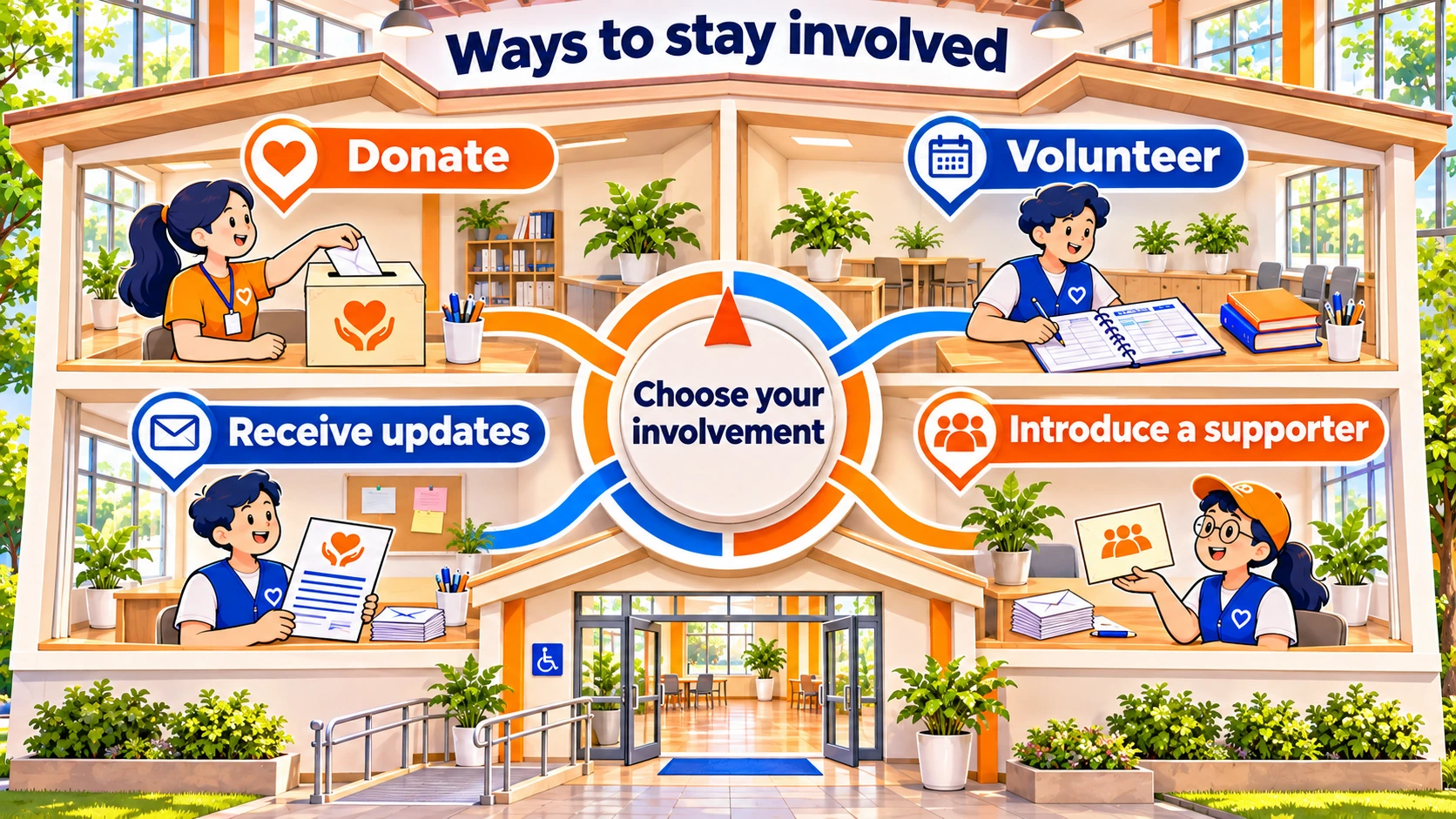
Supporters should have room to choose their involvement. A regular volunteer may prefer to contribute time, while a donor may want programme updates without event invitations.
A welcome sequence with a purpose
The first follow-up should confirm what happened and explain what comes next. A donation acknowledgement, for example, can confirm the transaction and provide a contact for questions.
Later messages can develop that relationship:
- A welcome message introduces the programme and communication options.
- A progress update explains work completed during a stated period.
- A relevant invitation offers one available way to participate again.
The timing depends on the programme and supporter’s preferences. An email marketing lifecycle gives these messages an order, while staff judgement keeps them relevant.
Progress updates that respect the people involved
Impact stories need context. A photograph of a delivered meal can illustrate an activity, but claims about improved health need evidence beyond the delivery count.
A credible update explains the reporting period, activity and result the organisation can support. Where individual stories could expose private information, aggregated results or a programme-level example may communicate the work more appropriately. Planned content marketing helps teams collect these updates during delivery, reducing the rush to find a story before every appeal.
Communication preferences that supporters can change
Preferences help staff send relevant messages. A supporter might choose quarterly updates, volunteering opportunities or fundraising appeals.
The record should distinguish those choices from payment and receipt information. A donation cancellation also needs a respectful response, with a simple way to pause communications where requested. The relationship can continue through several forms of participation, as the following illustration shows.
A Campaign Calendar That Gives Every Message a Reason
A shared calendar helps teams balance appeals with updates and programme activity. It also reveals when different departments plan to contact the same supporters.
Programme dates should lead the schedule. A recruitment campaign needs enough time for applications, screening and training before volunteers begin.
Dates and responsibilities belong together
A working calendar includes more than publication dates:
- Audience and purpose.
- Channel and campaign page.
- Content owner.
- Approval deadline.
- Planned follow-up.
- Reporting date.
The approval window should reflect the campaign’s requirements. A routine programme update may need fewer checks than an appeal involving partners, public collections or beneficiary stories.
Events need a next step before invitations go out
Event planning should include the action attendees can take afterwards. A volunteer introduction session, for example, could end with available orientation bookings.
The follow-up can then repeat that action and answer questions raised during the event. Staff should measure completed bookings and attendance to understand whether the event met its recruitment goal.
Attendance remains relevant when attendance itself serves the programme, such as a community education session. The measure should follow the event’s purpose.
Digital Tools, Budgets and Google Ad Grants
A small organisation needs tools that staff can maintain. An affordable system becomes expensive when nobody can keep its records accurate or resolve a failed form. The budget should therefore include staff time, payment charges, website work, content production and ongoing support.
Supporter records need ownership
A customer relationship management (CRM) system stores relationship information, such as contact preferences, donation history and volunteer participation. A restricted-access spreadsheet can support a small team initially, provided someone owns its maintenance.
The record should include:
- Contact details needed for the relationship.
- Communication preferences and relevant consent records.
- Recent participation.
- The next agreed action.
- The staff member responsible.
Beneficiary case records need access controls suited to their purpose. A marketing database should contain only information the campaign team needs.
Website improvements can support existing traffic
A slow or confusing donation page can interrupt an otherwise successful campaign. Mobile testing should cover the payment provider, error messages and confirmation process.
Practical website design brings these elements together so supporters can understand and complete the action. A repaired form may be the most valuable first investment when existing visitors already show interest.
Google Ad Grants can support eligible organisations
Google Ad Grants provides eligible organisations with up to US$10,000 monthly in donated Google Search text advertising. The support is advertising credit, so the budget still needs to cover any staff time or external management.
Eligibility depends on Google’s requirements and verification. Its Singapore eligibility criteria include eligible non-profit structures, alongside programme exclusions. A social purpose alone does not establish eligibility.
Ongoing account management is essential. Google’s Ad Grants policy requirements include a monthly click-through rate of at least 5%; falling below that for two consecutive months can cause temporary deactivation. Relevant keywords and accurate conversion tracking also need attention.
An organisation considering external Google Ads management should establish who handles policy checks and reporting. Grant credit, management fees and any separately purchased advertising should appear as distinct budget items.
Singapore Fundraising and Data Protection Basics
Compliance checks work best when they happen during planning. The campaign team can then resolve wording, records and collection arrangements before producing the final materials.
Requirements depend on the organisation and fundraising method. A public street collection raises different questions from an online volunteer recruitment campaign.
Fundraising messages must explain the purpose
The Charity Portal’s fund-raiser duties and obligations require accurate information, disclosure of the organisation and intended use of funds, and safeguards for donations. Commercial fundraising arrangements bring additional disclosure requirements.
Campaign wording should describe a purpose the organisation can deliver. Specific restrictions also affect how donations can be used, so programme and finance staff should review the promise together. The pre-launch check should cover the named recipient, intended use, payment destination and any third-party fundraising arrangement.
Public collections need the relevant checks
The disclosure regime for public charitable fundraising covers specified collections, including house-to-house and street collections by or for registered or exempt charities and valid permit-holders. Applicable details must reach the Charity Portal at least seven working days before the appeal starts.
A team planning donation boxes, retail collections or public solicitation should identify the applicable arrangements early. Other organisers may need a House to House and Street Collections licence.
Donation tax claims need accurate wording
Approved IPC status and registered charity status are different. According to IRAS donation tax rules, qualifying donations to approved IPCs for local causes can receive a deduction of 2.5 times the donation amount.
For example, a qualifying S$100 donation gives a S$250 deduction from income used in the tax calculation. The deduction does not mean a S$250 cash refund, and donations involving benefits need additional checks.
Personal data needs a defined purpose
Singapore’s Personal Data Protection Act (PDPA) applies to organisations’ handling of personal data. The PDPC’s social service sector guidelines explain notification, consent, relevant exceptions and appropriate purposes.
A supporter form should explain the intended communications. Staff should retain relevant records, support withdrawal requests and restrict access to people who need the information.
Charitable appeals and commercial messages differ
The Do Not Call Registry explanation distinguishes charitable messages from commercial telemarketing. A message solely seeking charitable donations can fall outside the DNC provisions, while one promoting goods or services may be covered.
DNC treatment does not remove other data protection responsibilities. Staff should assess both the message and the intended use of the contact details. These checks can sit within the campaign approval process.

Choosing an Agency or Freelancer
External help makes sense when a defined task exceeds the team’s skills or capacity. The brief should explain the campaign goal, available evidence and internal responsibilities.
Comparable proposals need the same scope. Otherwise, a low quote may exclude reporting, revisions or the work needed after launch.
| Fee model | How it works | What to confirm |
| Project fee | One price for specified deliverables | Scope, revisions and handover |
| Monthly retainer | Regular payment for agreed ongoing work | Deliverables and review dates |
| Hourly or daily rate | Payment for time spent | Estimate and approval limit |
The contract should also address account access, supporter data, subcontractors and deletion or return of information. Organisation-controlled accounts make handover easier when the engagement ends.
A sample report should show how the provider connects activity with completed actions. Case studies can demonstrate experience, while named responsibilities explain who will deliver the proposed work.
A Practical Marketing Plan for Lasting Support
Marketing for non-profit organisations connects campaign planning with supporter experience. A defined goal, relevant follow-up and accurate reporting help Singapore teams improve participation while meeting their responsibilities.
At MediaOne, we can help connect your content, search visibility and website around an agreed campaign goal. Our marketing consultation gives your team a starting point for discussing priorities, resources and the work your next campaign needs.
Frequently Asked Questions
Can a non-profit market its services to beneficiaries?
Beneficiary outreach can form part of non-profit marketing. Programme information should explain eligibility, access, cost and available support in language the intended audience understands. Trusted community partners can help distribute it, especially where people have limited internet access or prefer another language.
Should a charity buy an email list?
Purchased lists can create problems with permission records, relevance and supporter expectations. An organisation can build a more traceable audience through its own sign-up forms, events and programme enquiries. Each collection point should explain what communications people can expect and how they can change their preferences.
Can a non-profit use artificial intelligence to draft content?
AI can help prepare an initial draft, with a staff member responsible for checking every claim before publication. Approved organisational tools and data policies should govern its use. Identifiable supporter or beneficiary information needs appropriate handling, and generated stories must never be presented as real experiences.
How should a charity respond to criticism online?
A named staff member should assess the concern and provide verified information. Questions involving private records should move to an appropriate private channel. A public response can explain the organisation’s review or next action without exposing personal details or promising an outcome before the facts are established.
Does every campaign need more than one language?
Language choices should follow the intended audience. A programme serving a particular community may need translated participation details, while another campaign may work in English. Translation needs to include forms and confirmation messages so people can complete the process in the language used by the appeal.