
| AI Summary
Instagram marketing performs best when content, audience insight, community interaction and measurement work as one system. Reels can widen discovery, Stories maintain follower contact, feed posts build credibility, and comments and messages create opportunities to move engaged users towards a sale. The guide also covers profile conversion, posting rhythm and attribution so performance can be judged against traffic, leads and revenue. |
Instagram has shifted. The platform that once rewarded follower counts and vanity metrics (activity indicators that do not correlate with business value) no longer operates on that basis. In 2024, Instagram’s algorithm prioritises engagement depth, content format diversity, and demonstrated business outcomes over raw audience size.

This change fundamentally alters how you should approach the platform. A brand with 15,000 followers and a clear conversion funnel typically outperforms a competitor with 150,000 passive followers. Successful businesses on Instagram treat it as a revenue channel, not a broadcast tool.
This Instagram marketing guide focuses on what actually drives measurable results: audience research, format-specific content design, community-driven growth, and attribution-based paid strategy. It avoids outdated tactics such as follow-for-follow pods and generic hashtag lists. You will find concrete thresholds, decision frameworks, and workflows drawn from observed patterns across client accounts and documented case studies.
Whether you are starting from zero followers or auditing an account that has plateaued, the five pillars in this guide will show you where friction points exist and how to address them.
Key Takeaways
- Instagram marketing in 2024 succeeds through revenue attribution, not follower counts. Shift focus from vanity metrics to business outcomes: website traffic, conversions, and customer acquisition cost.
- The five pillars of effective strategy are content design across Feed, Reels and Stories; audience research; posting rhythm; community management as a conversion funnel; and measurement against real business goals.
- Reels receive priority algorithmic treatment, but Feed posts, Stories and user-generated content each serve distinct roles in the funnel. Omitting any format reduces overall reach and conversion potential.
- Organic growth typically plateaus after six to nine months. Paid advertising becomes essential at scale when paired with proper attribution tracking to measure return on advertising spend.
- Common failure patterns include treating Instagram as a broadcast channel rather than dialogue, overlooking Stories and Reels, and posting without audience insights. This guide addresses each issue with specific solutions.
What Instagram Marketing Actually Is (and Why It Matters Now)
Instagram marketing is a business necessity, not a vanity project. Success now depends on what you measure, not what the platform celebrates.
Five years ago, Instagram marketing centred on follower counts. Brands chased large numbers, celebrated viral posts, and used the platform as a digital billboard. Today, the metrics that matter most are those that connect to your bottom line: whether Instagram efforts move someone closer to a purchase or contract.
The Shift from Vanity Metrics to Revenue Attribution
Follower count still appears in profile headers but no longer should drive business strategy. What matters is whether your Instagram efforts move someone closer to a purchase.
Meta’s advertising tools made this shift possible. You can now track a customer from ad impression through transaction. You can see which posts drive traffic and connect revenue directly to content.
Companies measuring Instagram success by engagement rate alone miss the fundamental question: did this post drive sales? A Reel with 50,000 views but zero conversions is activity without purpose. A post reaching 2,000 people that generates five qualified sales leads is a business asset.
Your Instagram strategy must align with your broader sales funnel. Early-stage awareness content has value, but it must feed into a middle-of-funnel consideration phase (when prospects evaluate options). Consideration must lead to measurable action. Most guides treat Instagram as a standalone content platform and ignore this structure entirely.
How Instagram’s Algorithm Changed the Game for Businesses
Instagram’s algorithm shifts significantly every 18 to 24 months. The 2024 version penalises outdated tactics.
The Feed algorithm now prioritises content that holds attention. Reels outrank carousel posts, which outrank static images. Stories receive no algorithmic boost but serve a critical operational role: they build habit and reduce follower unfollows. Follower count barely influences reach anymore. If your content does not engage new audiences, new audiences do not see it.
This created a genuine problem for many businesses. The post-then-wait approach that worked in 2019 produces negligible results now. You must design content specifically for algorithmic distribution: capture attention in the first second, tell a story, and end with a reason to stay or click.
Direct messaging and comment replies now carry more weight than three years ago. Instagram’s algorithm registers when someone replies to your comment or visits your profile after a direct message conversation. These signals increase your account’s visibility in followers’ feeds.
This shifted the economics of small-business Instagram. You no longer need 100,000 followers to reach people. Instead, you need 2,000 engaged followers, consistent posting, and willingness to spend 30 minutes daily on replies and messages. This requires different work than traditional growth tactics and is harder to scale. However, it costs less than paid advertising for many niches.
Why a 2024 Guide Works Better Than Recycled Advice
Most Instagram guides online recycle outdated strategies. They emphasise hashtag tactics from 2021. They teach carousel best practices from 2022. They treat Stories as optional. They ignore or minimise Reels.
That advice creates confusion. You follow a five-year-old hashtag formula and see no growth. You post consistently and reach plateaus. You run ads without understanding the funnel that must surround them.
A current guide reflects how the algorithm actually works: Reels first, Stories for habit-building, Feed posts as authority pieces, and direct messages as a conversion lever. It ties Instagram strategy to actual business metrics: traffic, leads, revenue. It acknowledges organic growth limits and shows when and how to allocate budget to paid advertising.
Every tactic and framework in this guide connects to one principle: Instagram marketing must be revenue-driven, or it is distraction.
The Five Pillars of Effective Instagram Strategy
Effective Instagram strategy rests on five interconnected pillars. Each pillar serves a specific function. Together, they create a system that moves followers toward business outcomes.\
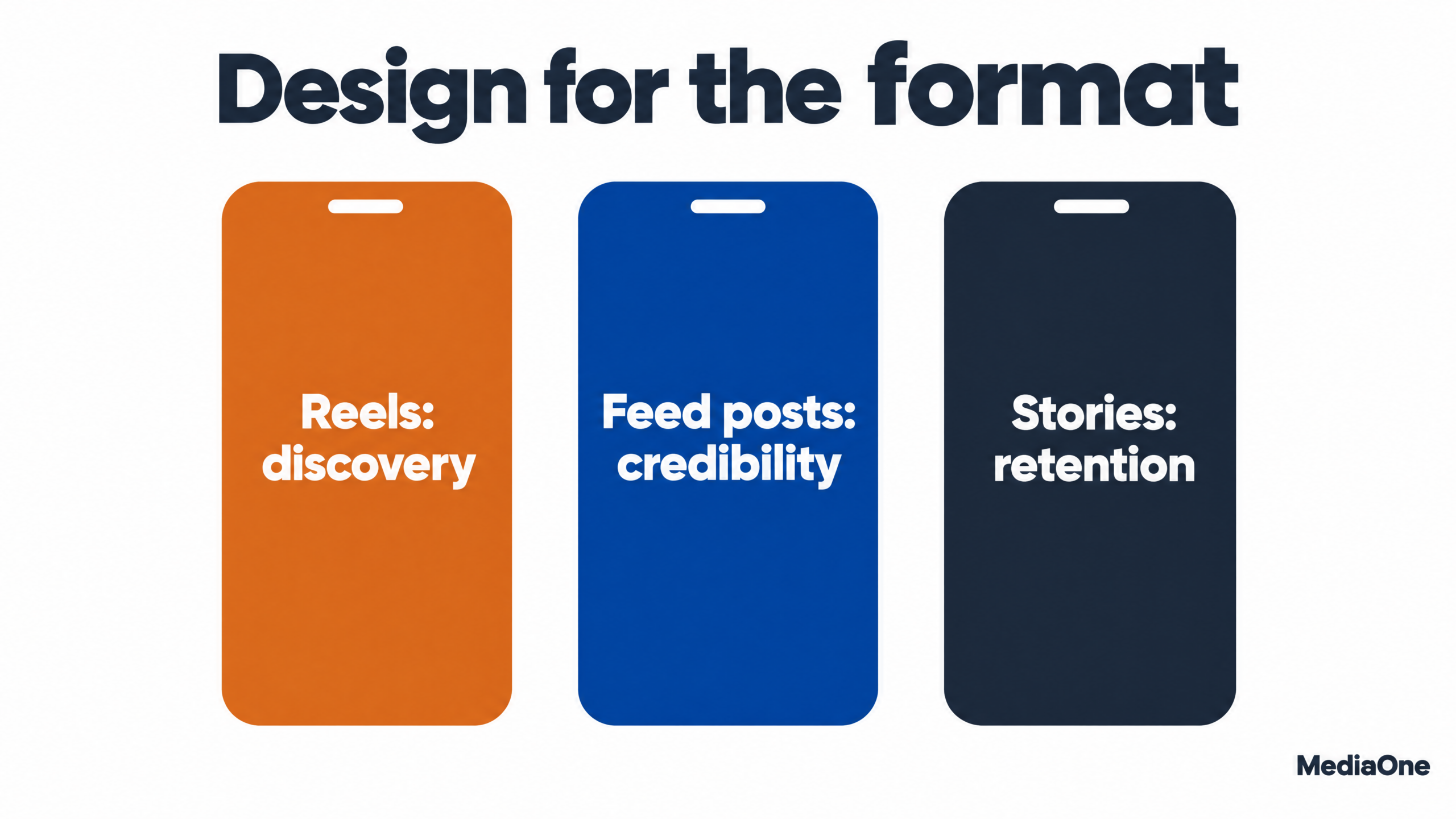
Pillar 1: Content Design for Feed, Reels and Stories. Each format serves a different algorithmic purpose and audience expectation. Reels drive algorithmic reach. Feed posts establish authority. Stories build habit and reduce follower churn.
Pillar 2: Audience Research and Segmentation. You cannot reach the right people without understanding who they are, what problems they face, and where they are in their buying journey.
Pillar 3: Posting Rhythm and Timing. Consistency matters more than frequency. The right timing varies significantly by audience segment and industry. Testing is essential.
Pillar 4: Community Management as Conversion Funnel. Replies, direct messages, and comments are conversion opportunities, not interruptions. Time invested here directly affects algorithmic visibility and sales.
Pillar 5: Measurement Against Actual Business Goals. Track what matters to your business: traffic, leads, revenue. Ignore vanity metrics. Attribution closes the loop between content and outcomes.
These pillars work together. Content without audience research wastes effort. Audience research without proper measurement leaves you blind to what actually works. Community management without a conversion funnel feels like work with no payoff.
The rest of this guide unpacks each pillar with actionable frameworks, common pitfalls, and decision guides specific to different business types and account stages.
The Five Pillars of Effective Instagram Strategy
Instagram success does not happen by accident. It is built on five interconnected practices that turn followers into revenue and engagement into measurable business outcomes. Each pillar supports the others; skip one and your strategy will weaken under inconsistency.
Pillar 1: Content Design for Feed, Reels and Stories
Instagram’s algorithm treats each format as a separate engine. Feed posts, Reels and Stories occupy different feed slots, reach different audiences and reward different behaviours. A single design approach fails across all three.
Feed posts (carousels, single images, videos) prioritise quality and credibility. The algorithm rewards posts that trigger saves and shares, which signal lasting value. Design for clarity over cleverness. High-contrast imagery, readable text overlays and a consistent colour palette build recognition. Test carousel posts with 3–5 cards: some practitioners report carousels drive higher engagement than single images because they encourage swipe-through behaviour. Results vary by audience and content type.
Reels receive disproportionate algorithmic priority. According to Meta agency briefings from 2023-24, Reels receive the majority of impressions relative to their share of content volume, though exact figures vary by account. Design for mobile viewing at thumb height: keep text large, movement punchy and captions on-screen for silent watching. Shorter videos often perform well; test 15 to 30 second formats with your audience. Trending audio matters, but only if it fits your message; generic trending audio without relevance reduces reach.
Stories function as a retention tool, not a reach engine. They live outside the main feed algorithm and expire after 24 hours. Use Stories to test messaging, share behind-the-scenes content and direct traffic to limited-time offers. Interactive elements such as polls, questions and stickers drive replies, which signal intent to your customer relationship management (CRM) system and qualify warm leads.
The mistake most brands make is designing one template and scaling it across formats. Design for the format instead.
Pillar 2: Audience Research and Segmentation
Posting without audience understanding guarantees low returns. Knowing who engages, what they need and when they are online transforms posting from guesswork into a measurable lever.
Use Instagram Insights (native, free, within your Business Account settings) to extract three datasets: demographic breakdowns by age, gender and location; behaviour patterns including peak active hours, which posts receive saves or shares, and profile visits; and follower growth trends showing which content types attract followers versus which cause attrition.
Run this audit monthly. Segment your audience into behavioural cohorts: heavy engagers (comment regularly), lurkers (save without commenting), cold followers (watch Stories only) and non-followers (your content reached them via recommendations).
For B2B and service-based brands, engagement patterns matter more than demographics. If 40% of your website clicks come from followers aged 18-24, but your core customer is 35-45, you have a misalignment. Your content attracts students, not clients. Either refine your targeting or acknowledge that Instagram attracts an unsuitable audience for your product.
Create a simple audience profile spreadsheet listing primary location, job title (for B2B), income level if known, engagement pattern and the business problem your content solves for them. This becomes your content brief.
Segment followers in Meta Business Suite using saved audiences. Tag engaged followers differently from cold ones. When you launch a paid campaign, you will use these segments to test messaging variation.
Pillar 3: Posting Rhythm and Timing
Consistency beats volume. Posting five times per week on Monday at 9 am outperforms posting once on Monday and three times on Thursday.
Frequency threshold: Post 3-5 times per week to the main feed for most B2B and service brands. E-commerce can scale to daily posting without diminishing returns if inventory and pricing change frequently. Posting more than once daily means your own posts compete for space in followers’ feeds; the algorithm will suppress the second post even if the first underperforms.
Add 3-7 Stories daily if you have content. Stories do not reduce feed reach because they live in a separate slot. A brand posting once daily to feed plus five Stories daily maintains visibility without saturation.
Timing varies significantly by audience segment and industry. Use Insights to find your peak active hours. If your audience peaks at 6 pm Wednesday and 9 am Saturday, test posting at those times. A/B test by posting identical content at two different times in separate weeks, then compare reach and engagement. After four weeks of testing, a pattern will emerge.
For B2B brands (SaaS, consultancy), early morning (6-9 am) and lunch (12- 1 pm) often perform well because your audience checks Instagram during work transitions. E-commerce and consumer brands often see peaks at 5-7pm and late evening (9-11pm) when users browse and shop. Always test these windows with your own audience first.
Consistency matters more than timing. Posting at 8 am every Monday, even if not your absolute peak, builds habit in your audience. They expect you; the algorithm learns to serve you more reliably. Erratic posting trains the algorithm to deprioritise you.
Document your posting calendar three months ahead using a tool like Notion, Google Sheets or Later. Include the format (Reel, carousel, Story), caption, visuals and scheduled time. Batch-create content in blocks: dedicate one day per month to filming Reels, one day to shooting carousel imagery, one day to writing captions.
Pillar 4: Community Management as Conversion Funnel
Community management is not customer service. It is an active filter for qualified leads and a conversion mechanism.
Every comment on your posts and every direct message is data. Comments signal intent: a follower willing to type a public reply is more engaged than one who watches silently. Replies to Stories (via direct message or sticker) represent the warmest signal; that person raised their hand privately.
Your engagement workflow is simple: Reply to every comment within 4 hours (Instagram’s algorithm rewards fast responses). Replies that spark a thread multiply reach. If someone comments “Do you work with startups?” reply publicly with a specific answer, then follow up in direct messages with a qualifying question: “What is your current bottleneck?”
Use direct messages to qualify leads. Templated direct message outreach (via Instagram’s Notes feature or via third-party tools like Chatfuel) works for high-volume businesses like e-commerce or creators. For B2B and services, personal replies work better. Do not sell in the first message; ask a question that confirms fit.
Example: A prospect watches your Story about case studies. You direct message: “Noticed you viewed my case study. What industry are you in?” Their reply tells you whether they are a lead or a browser. After two exchanges, if there is fit, share a link to a discovery call.
This workflow converts 3-5 times more prospects than posting alone because you move conversations off-feed to private channels where you can qualify and nurture.
Assign one person to reply to comments and direct messages daily. This is not optional; it is your conversion pipeline.
Pillar 5: Measurement Against Actual Business Goals
Vanity metrics (follower counts, likes, impressions) feel good but do not move revenue. Measure what matters: website traffic, leads generated, sales attributed and cost per acquisition.
Set up tracking before you post. If you run paid campaigns, connect your Meta Business Account to your website pixel and CRM (Shopify, HubSpot, Pipedrive). Every visitor arriving via Instagram should be tagged. Use UTM parameters in links: add ?utm_source=instagram&utm_medium=organic to your bio link and Story links.
Three metrics to track monthly:
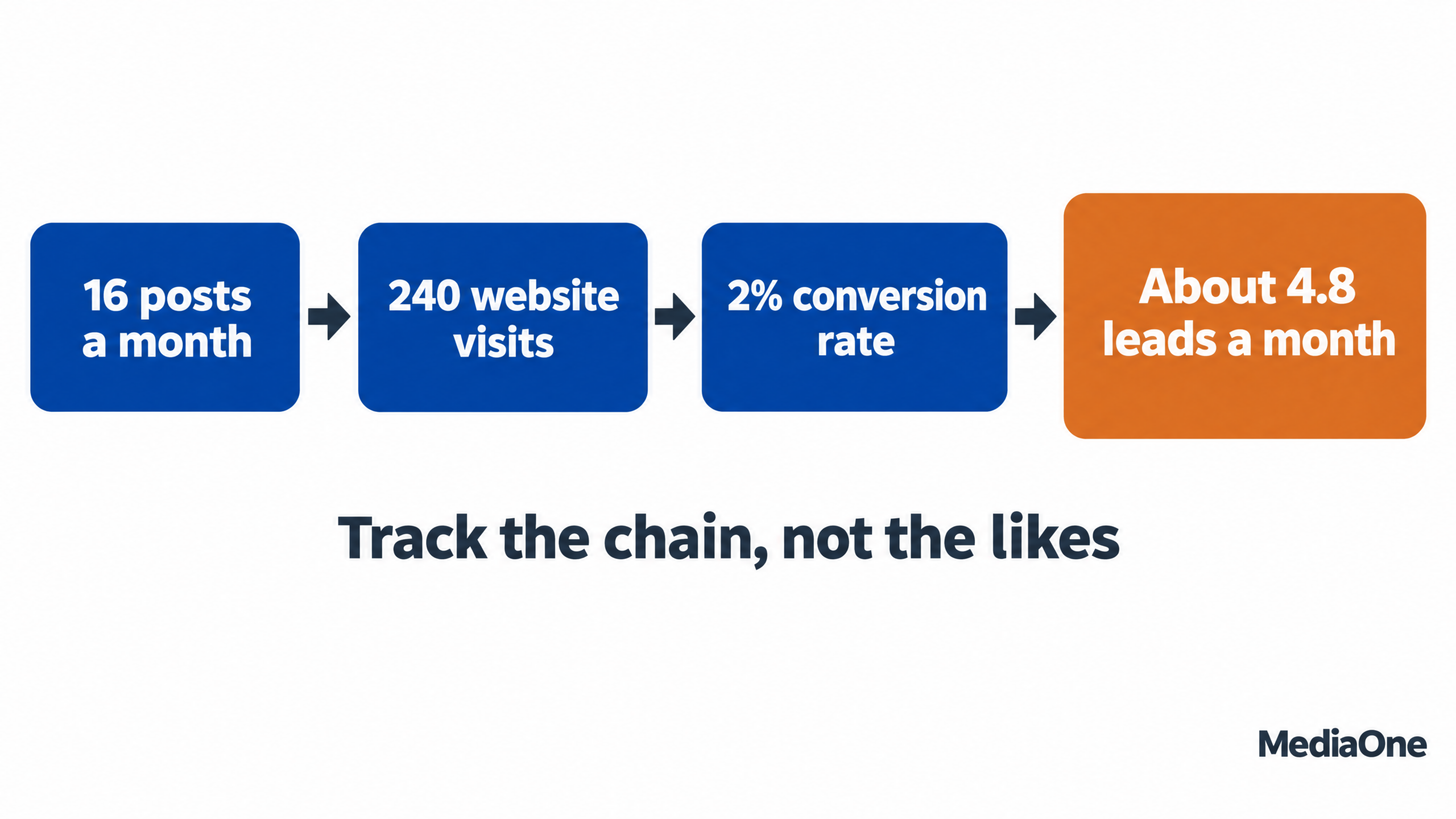
- Click-through rate from Instagram to your website. Use Insights or Google Analytics to count sessions from Instagram. If you post 16 times per month and receive 240 website visits, that is 15 visits per post. If your conversion rate is 2%, you generate approximately 4.8 leads monthly.
- Conversion rate of Instagram traffic. Not all visitors convert equally. E-commerce tracks purchases; service businesses track demo bookings or email signups. Divide conversions by sessions: 72 leads from 3,600 sessions equals 2%.
- Cost per lead (for paid campaigns) or cost per acquisition. If you spend £400 on paid campaigns and generate 8 leads, your cost per lead is £50. Track this by campaign objective. Awareness campaigns cost less per click but do not typically convert. Conversion-focused campaigns cost more but deliver sales-ready leads.
Create a one-page monthly dashboard. Track these three numbers plus follower count, engagement rate (total engagements divided by followers, typically benchmarked at 3-5% for most brands) and a notes column for what changed (new content type, strategy shift).
Revenue attribution is the most challenging piece. If you sell via Instagram Shop or Shopify, enable conversion tracking in Meta Ads Manager. If sales involve a long sales cycle (consultancy, B2B software), use multi-touch attribution: assign 40% credit to the first touchpoint (perhaps an organic post), 40% to the last (a Reel) and 20% to the middle (Stories). Your CRM should track which Instagram post or campaign led each customer.
The goal is not perfection. The goal is comparison: knowing whether this month performed better than last month and identifying why.
Building an Instagram Profile That Converts
Your Instagram profile is your storefront. It is where a potential customer lands after seeing your Reel or clicking your link. You have roughly three seconds to convince them to follow, tap your call-to-action, or leave.
Most brands treat the profile as static. They write a generic bio, pick a logo, and move on to posting content. This approach leaves revenue on the table. A converted profile works in concert with your content strategy to move people from observer to lead or buyer.
Bio Copywriting: From Description to Call-to-Action
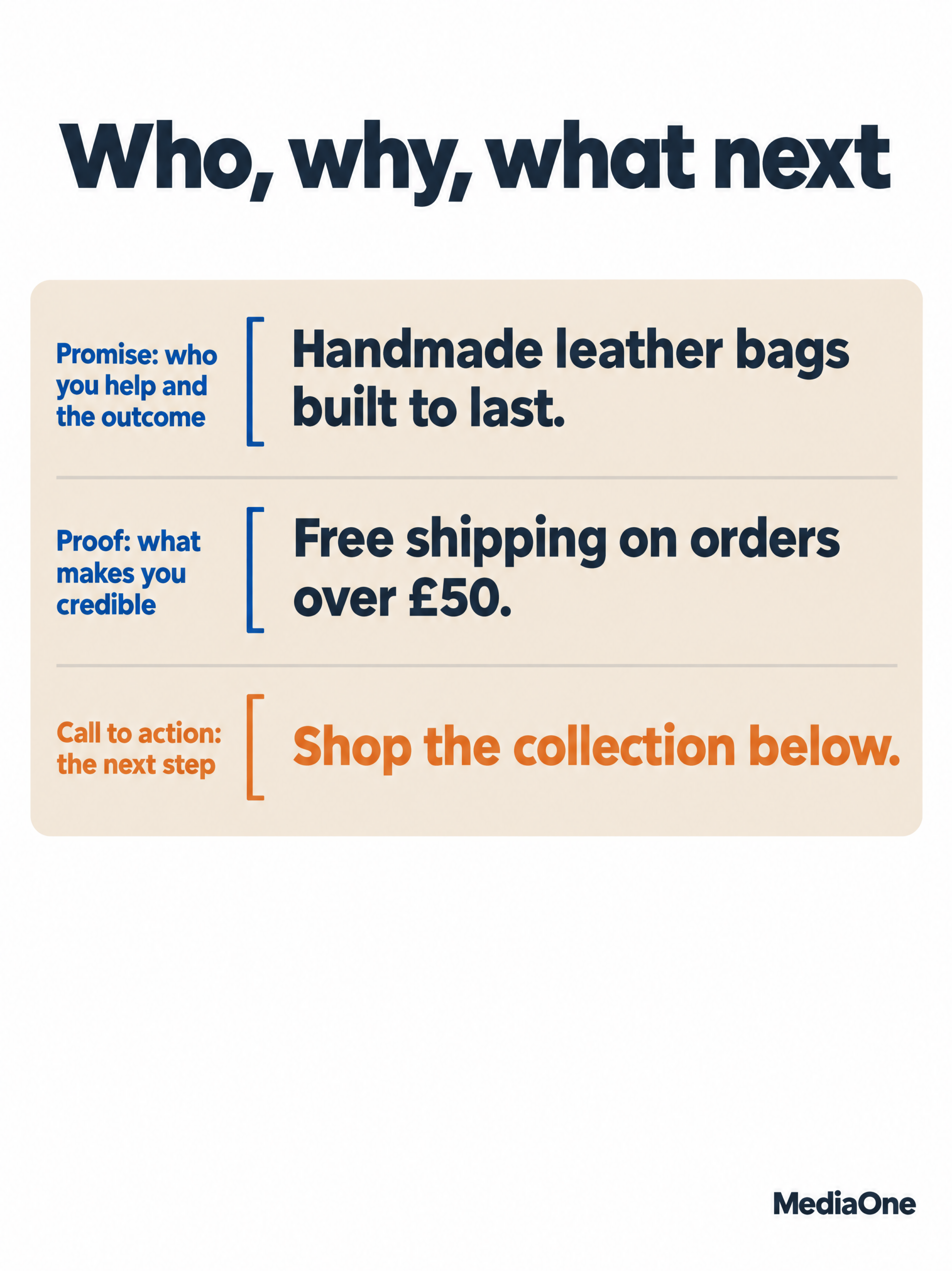
Your bio has approximately 150 characters and two lines to prove relevance. It must answer three questions a visitor asks silently: Who are you? What do you do? What should I do next?
The weakest bios answer only the first two. They read like business cards: “Digital marketing agency. We help B2B brands grow.” Strong bios answer the third question with a direct call-to-action.
Compare these two:
“Coaching for female founders. 1-on-1 and group programmes available. DM us to learn more.”
versus
“I help female founders scale to 6 figures. Proven framework + personal guidance. Book a free strategy call below.”
The second bio tells the visitor what success looks like, implies your authority, and points to the next step. It invites action rather than requesting it.
Use this bio structure:
- Your specific promise (who you help and what outcome)
- Social proof or differentiator (proven, award-winning, trusted by X)
- Call-to-action with direction to your link in bio
Example for e-commerce: “Handmade leather bags built to last. Free shipping on orders over £50. Shop the collection (link in bio).”
Example for SaaS: “Project management for remote teams. Used by 500+ companies. Start free, no card required (link below).”
Your bio is not the place for personality quirks or hashtags. Avoid vague language such as “creative entrepreneur” or “passionate about helping”. Be specific about who you serve and what they gain.
Your bio should also reflect your target customer’s vocabulary. If you serve accountants, use “bookkeeping” rather than “finance magic”. If you coach executives, say “C-suite leadership” instead of “boss energy”.
Test your bio by sending the link to three people outside your industry and asking what your account is about. If their answer is vague, rewrite it.
Visuals That Signal Professionalism and Trust
Your profile photo and header images are the first visual signal of professionalism. In 2024, visual inconsistency reads as unprepared.
For B2B and service-based brands, use a professional headshot as your profile photo. A real face builds trust faster than a logo, particularly for coaches, consultants, and personal brands. The photo should be recent, well-lit, and show your face clearly. Avoid group photos, sunglasses, or heavily filtered images.
For e-commerce or product brands, your logo works if it is distinctive and recognisable at thumbnail size. Instagram displays profile photos at roughly 110 by 110 pixels on mobile. Test yours by viewing it at that size.
Your grid aesthetic (the nine posts visible when someone lands on your profile) should communicate what you do within a second. This does not mean every image needs to match perfectly. It means your colour palette, lighting, and subject matter should feel cohesive.
Accounts with consistent grid presentation increase profile visits more effectively than accounts with wildly disparate image sizes, colours, and styles. Visitors leave before they scroll when visual cohesion is absent.
Create a visual guideline if you post regularly:
- Consistent filter or colour grade (warm, cool, muted, vibrant)
- Aspect ratio consistency (square is safest for grid impact)
- Subject hierarchy (product photos, behind-the-scenes, lifestyle, educational in a repeating pattern)
This is not about sterility. It is about signalling that you are intentional and professional.
For header images (if you use Instagram Guides or highlighted Story sections), use text overlays sparingly. Focus on clarity. If your header image is hard to read or visually jarring, it works against you.
Linking Strategy: Instagram Shop, Linktree Alternatives and Direct Links
Instagram allows exactly one active link in your bio. That link is your highest-value real estate on the platform. Where it points determines whether a visitor becomes a lead or leaves.
Direct Shop linking
If you sell products, link directly to Instagram Shop. Set up Shop by converting to a business account (Settings, then Switch to Professional Account, then Choose Business as category). Next, enable Shop (Settings, then Business, then Instagram Shop), then connect a product catalogue from Shopify, WooCommerce, or Facebook Catalogue.
Once enabled, your link in bio shows a “Shop” button. Visitors see your products without leaving Instagram. This is the fastest path to purchase.
Linktree and alternatives
If you cannot link to Shop or you have multiple destinations, a link aggregator gives you more control than a single URL.
Linktree is the market standard. It lets you create a landing page within your bio link that displays multiple clickable options: “Buy now”, “Book a call”, “Read the blog”, “Follow my email”.
Alternatives include Beacons, Stan Store, and native Instagram solutions such as Guides.
Linktree’s free tier covers most needs. Paid plans add analytics and branding options. Pricing starts at approximately £5 per month for premium features.
The key is that your Linktree page must match your bio promise. If your bio says “Book a free strategy call,” that button should be the first or most prominent option on Linktree. Do not bury it below five other links.
Story links and swipe-up
Once you reach 10,000 followers, Instagram unlocks swipe-up links in Stories. Swipe-up performs well because it interrupts the Story stream with a direct call-to-action.
Use swipe-up for time-limited offers (“Ends midnight today: 20% off. Swipe up to claim”), lead magnets (“Download the 10-page guide. Swipe up”), and event registrations (“Webinar starts in 2 hours. Swipe up to join”).
Reels and feed posts cannot have direct links, so Stories become a critical traffic driver once you unlock swipe-up. Set up Story links in the Story composer by tapping the link icon and pasting your URL. Review link analytics weekly and promote whichever links drive the most clicks.
If you are under 10,000 followers, use a Linktree-style tool and direct people to your bio link within the Story caption.
Verification and Credibility Signals
Verification (the blue checkmark) is one of the most misunderstood signals on Instagram. It does not mean you are famous. It means Instagram has confirmed your identity.
As of 2024, Meta offers verification to public figures, celebrities, and established brands; users with significant media coverage; or anyone willing to subscribe to Meta Verified (approximately £10 to £15 per month, depending on region).
If your account meets the first two criteria, apply via Settings, then Account, then Request Verification. Be prepared to provide government ID and links to media mentions or your official website.
More useful than verification are other credibility signals you control.
Link to your official website
A clickable link in your bio that leads to a professional website (not a blog or free service) builds trust. Visitors cross-check your Instagram against your website to verify you are legitimate.
Consistent posting history
Accounts that post regularly (three to five times per week) and have been active for over six months read as established. Accounts with long gaps or low post counts read as abandoned or inauthentic.
Earned media mentions
If you have been covered by reputable publications or have testimonials from recognisable clients, reference them in your bio or pinned Story highlights. “Featured in Forbes” or “Trusted by 500+ companies” work as credibility anchors.
Highlights of social proof
Create Story highlights called “Testimonials”, “Press”, or “Case Studies” and pin them on your profile. Visitors see these immediately and do not have to dig through weeks of Stories to find proof of your authority.
Professional photography and captions
Typos, blurry images, and casual language erode credibility. Proofread every caption. Use consistent, high-quality imagery. Respond to comments and direct messages promptly.
These signals compound. A verified account with one good post and no website credibility performs worse than an unverified account with consistent content, a linked website, and customer testimonials. Build credibility through consistency and evidence, not badges alone.
Content Types That Perform: A Practitioner’s Breakdown
Not all Instagram content formats drive the same outcomes. The platform’s algorithm, combined with how users consume content, has created a clear hierarchy of what works. Choosing the right format for each goal saves time and improves results.
Reels as the Algorithm’s Priority
Instagram’s algorithm prioritises Reels over feed posts and Stories. Meta has stated this plainly in creator resources: Reels reach is distributed wider, even to accounts you don’t follow, because the algorithm treats Reels as discovery-first content.
This does not mean every Reel achieves viral reach. It means Reels have structural advantage. A Reel with modest engagement often achieves broader reach than a feed post with higher engagement rates from existing followers.
What makes a Reel perform:
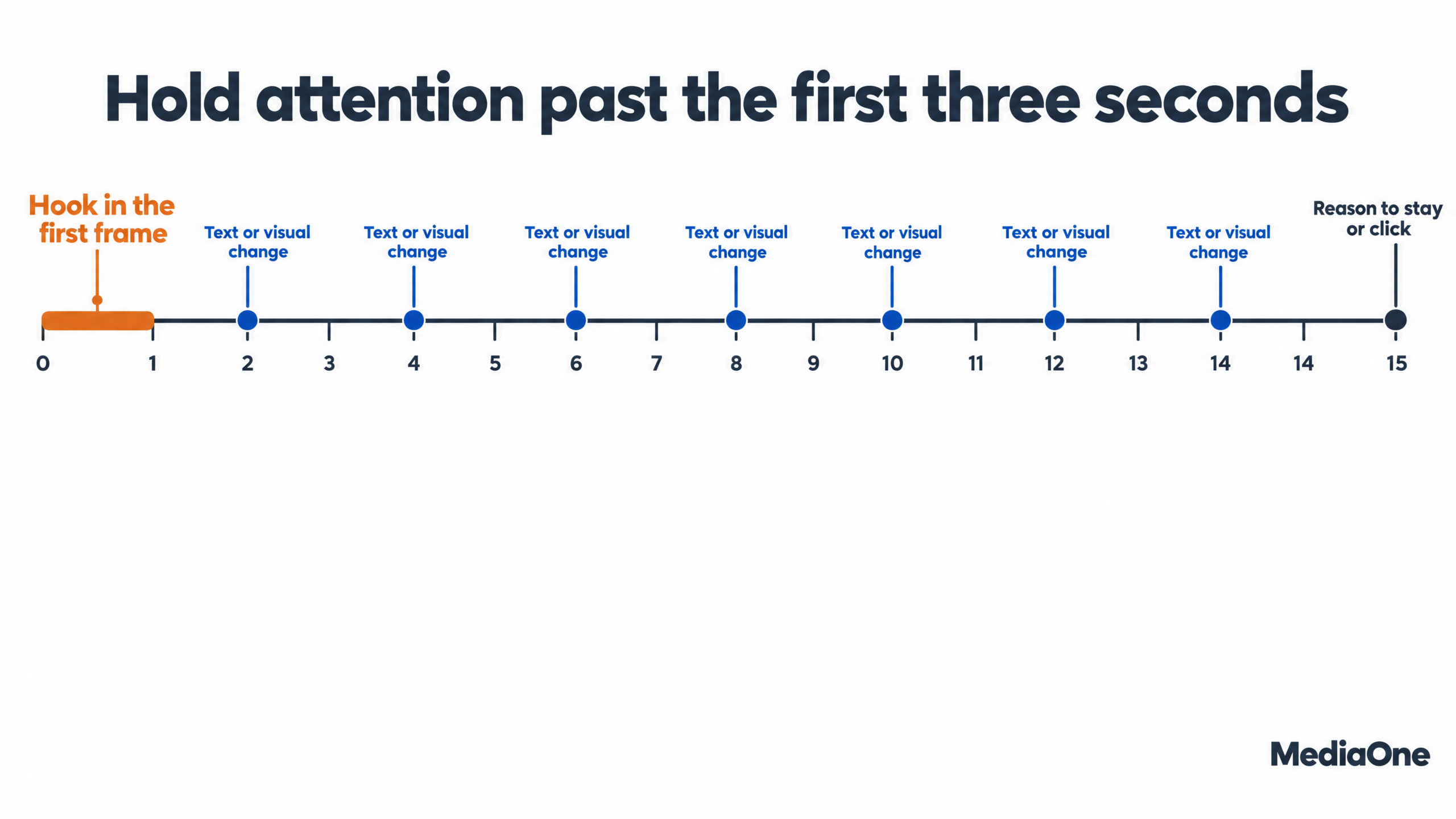
Reels under 15 seconds often perform well and reward motion, pattern disruption, and cuts that hold attention. Text overlays, transitions, and on-screen text changes every one to two seconds help viewers watch past the critical three-second threshold where most drop off. Testing is essential because ideal length varies by audience and content type.
Trending sounds matter, but relevance matters more. A Reel using on-trend audio with shallow relevance to your niche performs worse than a less trendy sound that fits your audience’s actual interests. The algorithm detects plays beyond the first few seconds as a signal; mismatched audio causes early exits.
Hook in the first frame. The opening shot must signal value, curiosity, or entertainment within one second. Text hooks such as “You’ve been doing this wrong” or “Watch until the end” work, but showing your outcome or the moment of transformation works better.
Post Reels three to five times per week if you have production capacity. Reels fatigue exists but is driven by low quality, not by frequency. High-quality Reels posted daily outperform a single weekly Reel.
Production reality: most high-performing Reels are not highly produced. Phone-shot, natural lighting, minimal editing often outperforms polished video because it reads as authentic. This removes the barrier many face that professional production equipment is necessary.
Feed Posts: Carousels, Single Images and When Each Wins
Feed posts are no longer the algorithm’s priority but remain valuable for different reasons: they build your visual identity, they age well without disappearing after 24 hours, and they drive credibility.
Carousel posts, which are multi-image swipeable formats, typically generate higher engagement than single images. Each swipe signals interest to the algorithm, and users who swipe to see more are warm leads. Carousel posts also allow storytelling: before-and-after comparisons, process breakdowns, or multi-part takeaways.
Use carousels when you have a narrative: a transformation, a step-by-step guide, or related images that build on each other. Carousels also outperform for product features because you can show a product from multiple angles or highlight different variants without cluttering captions.
Single images work best for striking visuals: brand moments, hero shots, or aesthetic consistency. If your image needs no context and stands alone, single images work effectively. They also serve as visual anchors for your feed grid, which matters if your audience browses your profile directly.
Feed post reach is more limited compared to Reels but drives better sustained engagement from followers who actively follow you. Reels bring discovery; feed posts build trust with those who have already chosen to follow you.
Post feed content two to three times per week. More than that dilutes your grid’s visual coherence and can trigger follow unsubscriptions, as many users manage notifications by muting accounts that post too frequently.
The best feed strategy: lead with a Reel or Stories for discovery and traffic, then supplement with one to two feed posts weekly for brand consistency and follower retention.
Stories: Ephemeral Content for Retention, Not Reach
Stories disappear after 24 hours, so they do not drive discovery. They drive retention instead. Stories hold followers’ attention between feed posts and keep your account active in the follower’s mind.
Stories are friction-free to consume. Followers already follow you, so they see your Stories without algorithm gatekeeping. Use them to share moments, updates, behind-the-scenes content, and calls to action that do not need permanent visibility.
Story formats that work:
Poll stickers, question stickers, and countdown stickers drive interaction. A poll sticker on a Story generates significantly more interactions than the same image posted as a feed post because the format invites immediate response.
Narrative Stories, which build sequentially, keep viewers watching deeper into your Story stack. One Story alone rarely gets watched completely. Five Stories in sequence that tell a mini-story (a problem, solution, outcome, or journey) retain viewers longer.
Link stickers drive traffic. If you have the swipe-up feature, available to accounts with 10,000 or more followers or verified status, Stories are one of the highest-converting traffic sources to your website because friction is minimal.
Post five to seven Stories daily if you are actively using them as a tool. Unlike feed posts, daily Story activity signals presence without fatiguing your audience. Many followers check Stories specifically because they update frequently.
Stories are not for building authority or permanent credibility because they are ephemeral. They are essential for engagement and retention. Skipping Stories causes your follower engagement to plateau even if your feed is strong.
Guides and Collections: Overlooked Tools for Authority
Guides and Collections are native Instagram features used by fewer than five per cent of marketers, which means low competition and high value per post.
Guides let you curate up to 30 posts, articles, or products under a theme. You write a short introduction, and Instagram displays your guide as a browsable collection. Guides appear in your profile, in the Explore page, and in other users’ profile recommendations.
Collections are different from Guides: they are follower-initiated bookmarks of your posts. You do not create them; followers do. However, you can encourage collections by tagging content as “Save this” in captions.
Guides are authority plays. Publish a guide on “10 Signs Your Email Marketing Needs an Audit,” linking to your posts rather than external sites, and you have published something that looks like an editorial offering. Guides show your expertise and give followers a reason to deep-dive into your archive.
For service-based businesses such as consultancy, coaching, and agencies, Guides are underrated. They aggregate your best educational content in one place, making it easy for prospects to evaluate your knowledge before reaching out.
The conversion logic works as follows: a follower lands on your Reels, watches, follows, then dives into your Guides to learn more. Guides extend the engagement journey.
Create one Guide every two to four weeks if you have evergreen educational content. Use them to organise your best posts by theme: troubleshooting, case studies, tools, or frameworks.
User-Generated Content Campaigns That Drive Participation
User-generated content (UGC) is content your followers create featuring your product, service, or brand. It is the highest-trust content type because it comes from peers rather than from you.
Running a UGC campaign works by asking followers to post a photo or video using your product and tag your account with a branded hashtag. Repost the best submissions to your feed, crediting the original creator. This serves multiple functions: it gives followers a reason to engage, provides you with authentic content, and builds community.
The mechanics:
Create a specific, memorable hashtag. “Share Your Story” is generic and generates noise. “#MyBrandMoment” or “#HowIUse[YourBrand]” is specific. Announce the campaign in Stories, feed posts, and Reels.
Offer a small incentive: a feature on your profile, a mention in Stories, or entry into a monthly prize draw. Do not require purchase; some of the best UGC comes from existing customers or engaged followers who want visibility.
Repost the best submissions weekly. Tag the creator and thank them in the caption. This action drives follower loyalty. Most people who see their content reposted by a brand they follow become repeat engagers.
UGC also serves as social proof. A feed full of your own promotional posts reads as broadcast. A feed with 30 per cent follower-created content reads as community.
Run one UGC campaign per quarter at minimum. Seasonal campaigns such as holiday, back-to-school, or new product launch generate the most participation.
How These Formats Fit Together
Reels drive discovery and growth. Feed posts build credibility and visual identity. Stories maintain engagement between posts. Guides establish authority. User-generated content builds community.
A balanced content mix allocates roughly 40 per cent Reels, 30 per cent Stories, 20 per cent feed posts, and 10 per cent Guides and UGC campaigns. Adjust this ratio based on your business model: e-commerce may emphasise carousels, feed posts, and UGC. B2B may prioritise Guides. Creators may emphasise Reels above all else.
The most common error is relying on a single format. A feed-only strategy now underperforms. A Reels-only strategy builds followers but not lasting community. Coverage across formats creates compounding returns.