
Singapore SEO packages are typically priced by volume: pages, keywords, articles and backlinks. Those units are easy to count, but rankings depend on outcomes. A package is worth its price only if its deliverables match the results you need, in the markets you serve.
This guide explains the price bands you will see, what each tier actually buys, and how to compare proposals line by line. It is the companion piece to our SEO packages Singapore hub, which sets out MediaOne’s own planning bands and package-fit scorecard in full, and to the broader 2026 pricing guide.
Key Takeaways
- Price follows volume, not outcome. Most SEO packages are sold by page, keyword and article count, so the monthly fee says little about the results you will get.
- Read every unit. Ask what “pages optimised” includes. A meta-tag edit and a full technical fix are very different work at the same stated quantity.
- Score before you sign. The Package Fit Scorecard rates five items from 0 to 2. Under 6 out of 10 signals a likely mismatch. This is an editorial heuristic, not an industry standard.
- Count your target markets. Market coverage often decides fit more than the tier name does.
- More volume is not always better. Higher tiers add capacity, which pays off only if those units target terms your buyers actually search.
- Verify prices yourself. Published rates change, and some widely quoted “Singapore” figures are not Singapore figures at all – see the fact-check log in Appendix A.
- Check grant eligibility before you commit. For SEO work in Singapore, the funding landscape changed on 30 September 2026.
Singapore SEO Package Prices at a Glance
There is no standard Singapore SEO rate card. Prices reflect competition, website condition, and the work required, so published fees are benchmarks rather than equivalent offers. The bands below are planning categories derived from published offers, not standardised packages.
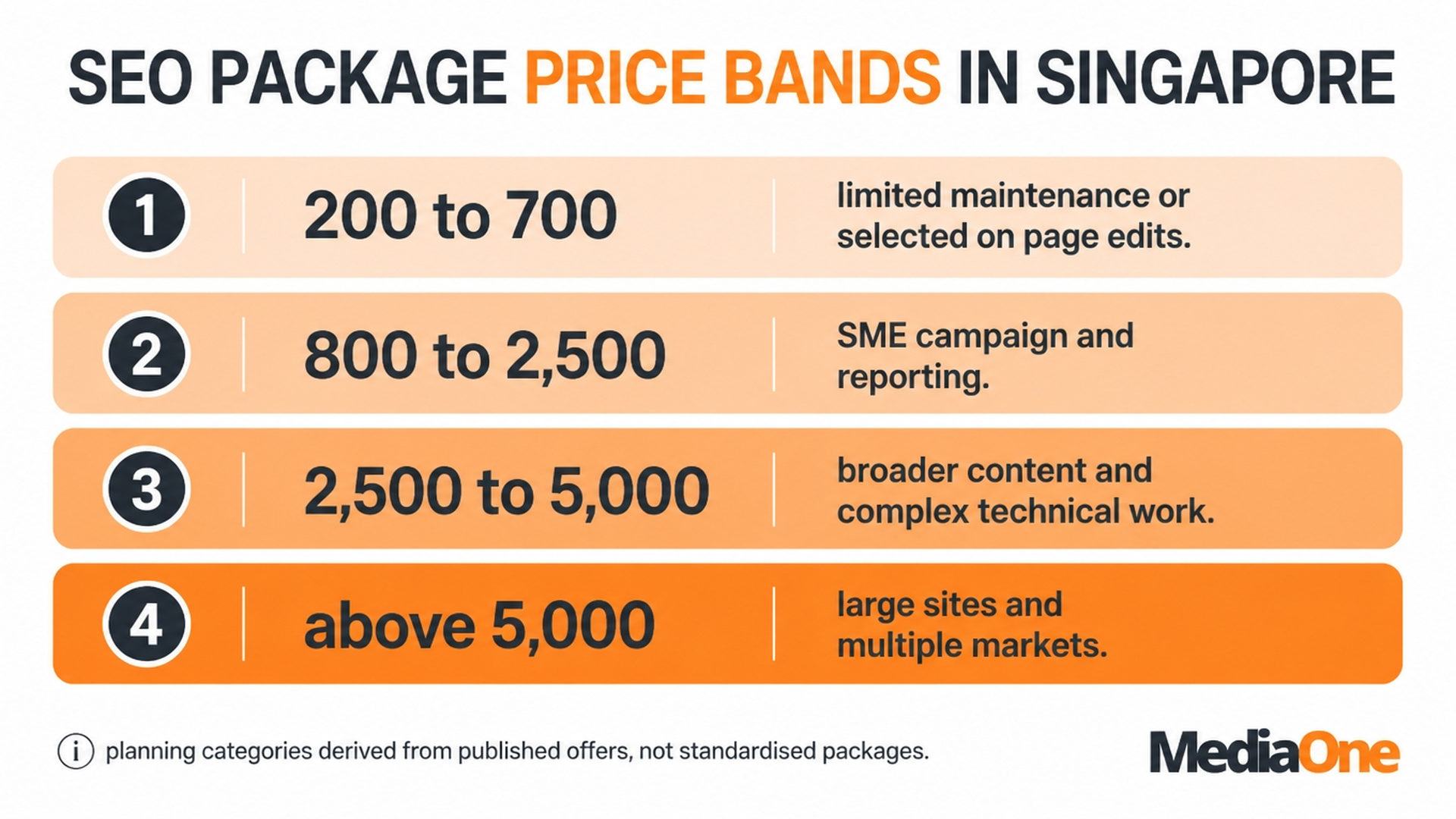
Figure 1: Indicative SEO package price bands for Singapore, with the scope and limitation of each
These bands come from MediaOne’s own SEO packages guide, which derives them from published Singapore offers. They are planning categories, not a rate card – and critically, they are not the same as the bands quoted elsewhere on the web, a discrepancy worth understanding before you compare quotes.
A note on widely quoted figures. Several price ranges that circulate in “Singapore SEO pricing” articles are not Singapore figures at all. Some originate with overseas agencies or providers pricing in US dollars for other markets. Before you benchmark your budget against any quoted range, check who published it and in which currency. Appendix A of this document lists the specific attributions we could not verify in the source draft.
Packages Versus Custom Plans
A package fixes the volume of work before the scope is known, while a custom plan starts from your site and then sets the volume. Most SEO services packages in Singapore count units such as pages optimised, keywords tracked, blog articles and backlinks. The price follows those counts, not the organic traffic outcome you want.

The pattern is easy to see in any provider’s public listing: as the price rises, the unit counts rise in step, and the nature of the work stays broadly the same. That is the central thing to understand about package pricing – most of the extra cost buys more units of the same work, not a fundamentally different service.
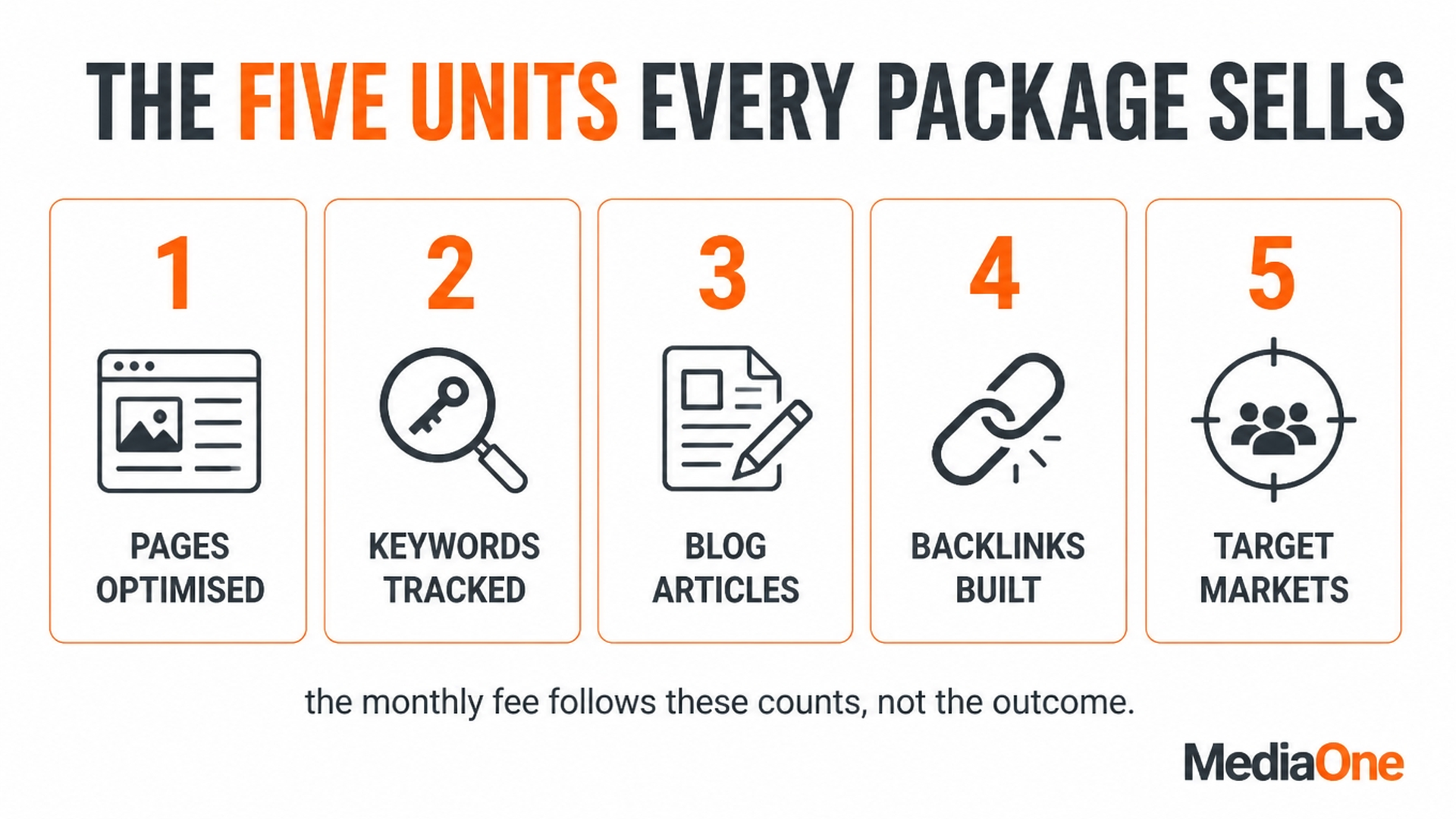
Figure 2: The five units every SEO package sells
When a Fixed Package Fits and When It Does Not
A fixed package suits a business whose needs match the tier’s units. It fails when your site needs a heavy technical fix the package does not count. Compare each tier against the same units to see which gives the most work for your budget. A growth-stage business with a clear, repeatable content plan often fits a package better than a one-off project.
Contract Length and Switching Costs
Many providers push a 6 or 12 month commitment for a lower rate. Check what happens to unused blog articles or backlinks if you leave early. SEO results typically take several months to show, so a short contract may end before the work pays off. Confirm which deliverables sit inside the contract and which are billed separately, and ask whether on-page optimisation and social media work are included or billed as add-ons.
Google’s own guidance supports the patience this requires. The SEO Starter Guide notes that changes can take from hours to several months to appear in search results, which is why a contract shorter than about three months rarely gives a fair test of anything.
Core Services Included in SEO Packages
Most packages bundle the same five service lines, but a proposal rarely says how much work sits behind each one. The useful question is not whether a package includes technical SEO or link building, but how many units it delivers and what those units mean. Judge a package on its complete scope, not a single line item, and treat any package in Singapore as a long-term growth plan rather than a one-off fix.
Technical SEO Audit and Site Health
Crawling means search engines finding your pages. Indexing means they store them for search results. A technical audit finds the crawl, indexing and speed problems that stop good pages from ranking.
Ask whether the audit ends in a fix list or a fix plan. A report alone is not the same as changes made to the site. Worth knowing: Google explains that crawling, indexing and serving are separate stages, and a technically valid page is not guaranteed indexing or any particular ranking. So separate critical access problems from optional improvements, and ask which fixes were actually deployed.
Keyword Research and Search Intent Mapping
Keyword research should produce a map: each target term assigned to one page, with its search intent noted. Intent is the reason behind a search, classed as informational (learning), commercial (comparing) or transactional (buying). A list of 120 keywords with no page assignments is a spreadsheet, not a strategy.
This mapping is the clearest single sign of a serious plan. Ask for a keyword-to-page map that prioritises improvements to existing pages before recommending new articles – search volume alone is not enough, because a low-volume service query often carries stronger commercial intent than a high-volume informational one.
On-Page SEO for Pages and Blog Content
On-page optimisation covers the elements that tell search engines what a page is about: titles, headings, body copy and internal links. This is where page count matters most, and where the word “optimised” does the most hidden work.
Ask what “optimised” covers: titles and headings only, or content rewrites and internal links too? Depth matters more than the count, and a rewritten page with a clearer title and fuller answer often does more than several light edits. The best blog briefs name one target term and one reader question per article.
Backlink Outreach and Off-Page Work
Off-page work means earning links from other sites, which search engines read as a signal of authority. Ask for the domains acquired, their relevance and the outreach method. Volume without relevance is a risk, not a benefit.
Two cautions worth holding on to. First, Google’s spam policies prohibit links created primarily to manipulate rankings, including paid links that pass ranking credit – legitimate advertising links should carry rel=”sponsored” or rel=”nofollow”. Second, do not accept a rule that every referring domain must exceed Domain Rating 30 or stay below a 3% spam score. Ahrefs explains that DR measures the relative strength of a domain’s backlink profile, and its own 2026 analysis makes clear that DR is not a Google ranking factor. A relevant local industry association with a modest DR may be useful; a high-scoring unrelated site may be a poor placement.
Deliverables to Write Into Every Package
Every package should state, in writing:
- The exact number of pages optimised, and what “optimised” includes.
- The keyword count tracked, and whether pages are assigned to each term.
- The number of blog articles, with word count and topic approach.
- The backlink count per month, and the named link sources.
- The number of target markets covered.
- The reporting cadence and the metrics reported.
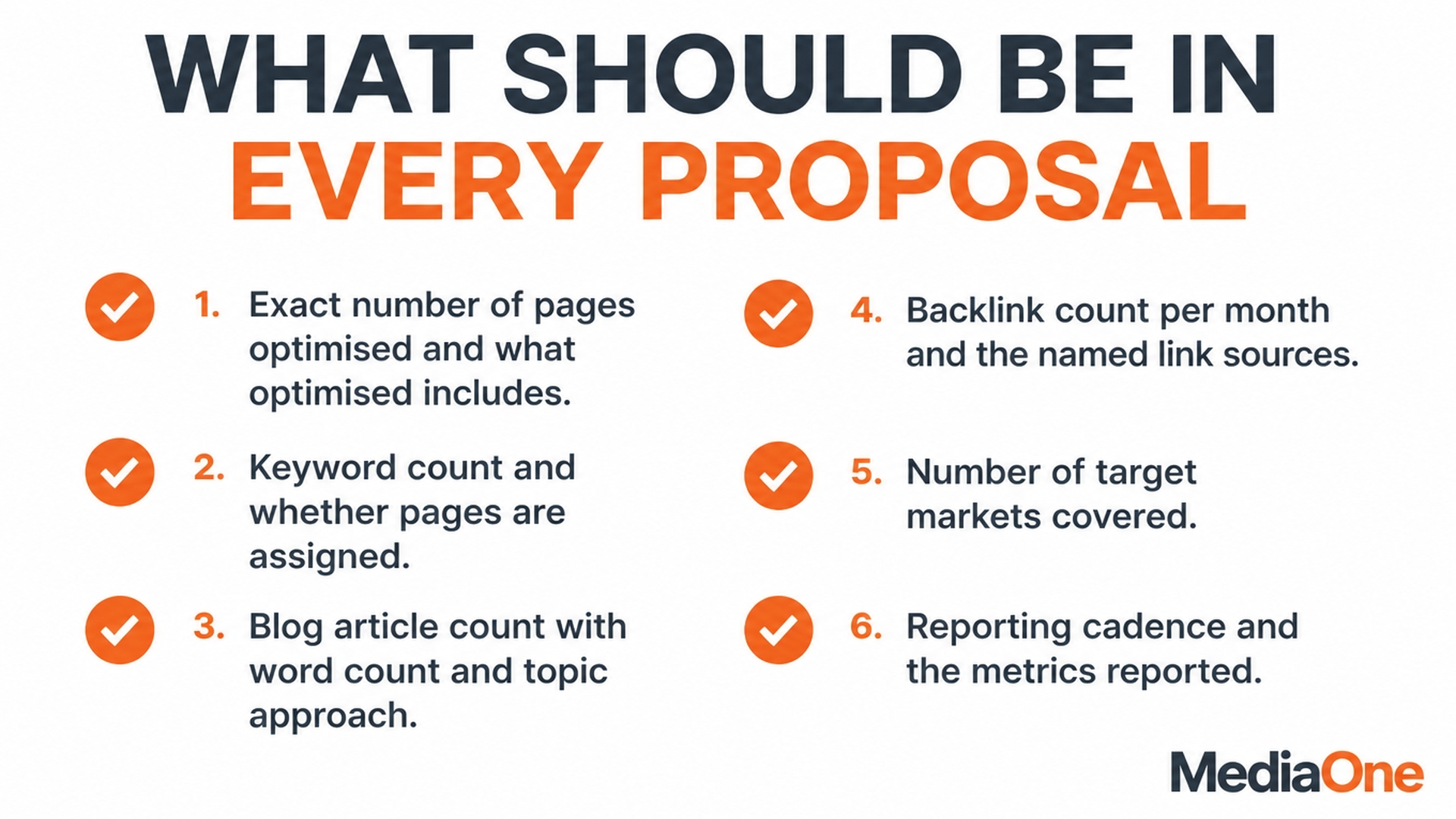
Figure 4: Figure 3: Six items that should appear in writing in every SEO proposal
Basic, Standard and Advanced Packages: What Each Tier Buys
Tier names vary between providers, so compare what each tier delivers rather than what it is called. The entry-level package is the one buyers most often misjudge. Score each tier against your own growth goal before you decide.
The Basic or Starter Tier
Starter packages are usually priced from about S$500 a month and tend to cover a small set of pages and a handful of tracked keywords. A representative entry plan we reviewed covers 8 pages optimised, 1 target market, 25 keywords tracked, 2 blog articles a month and a basic technical audit. This may suit a single-service business with a small site, but not one ranking across several service pages.
The Standard or Competitive Tier
Standard packages cover more ground. A typical mid-tier plan lists 20 optimised pages, 1 target market, 60 tracked keywords, 4 blog articles a month and 3 backlinks a month. Two questions matter here: ask whether the plan includes a Google Business Profile setup, since local SEO depends on it, and ask how progress is shared through monthly reporting.
The Advanced or Dominate Tier
Advanced plans roughly double the page and keyword counts, add more blog articles, raise backlink building and lift target markets. A representative top-tier plan adds 40 pages, 2 target markets, 120 keywords, 6 blog articles a month and 8 backlinks a month. Extra volume helps only if your target markets and search terms need it, and technical fixes may still require separate development work.
Important currency and market note. The tier structure above is drawn from a provider that publishes its prices in US dollars on an India-focused page. It is a useful illustration of how package pricing scales, and the unit counts are accurate to that listing – but it is not evidence of Singapore pricing, and the figures should not be read as Singapore dollars. The Singapore planning bands in the first section of this guide are the appropriate benchmark for local budgeting.
Local and E-Commerce SEO Packages Compared
Local packages are often sold per market, so the target-markets line matters most for a business serving one Singapore district. An e-commerce store with thousands of product pages needs a different scope entirely, and is better served by ecommerce SEO than by a standard page-count package. A plan that optimises 20 pages will not cover a large catalogue, so ask how product pages are counted before comparing prices.
For local businesses, the relevant Google guidance is that local ranking depends mainly on relevance, distance and prominence. No agency can purchase a better Maps position. If the business is not eligible for a Business Profile, a provider should not include profile management as a promised deliverable.
What S$1,500 to S$4,000 a Month Realistically Buys an SME
This band can support an SME’s rankings and enquiries. A typical small business gets ongoing optimisation of a core set of pages, keyword tracking, a few articles a month and some link outreach. That is enough to move rankings for a focused set of terms. It rarely covers a large catalogue or several markets at once, so check the unit counts against your actual need.
Check also that Google Business Profile work is included, since local listings often shape pricing decisions. If your goal is enquiry volume rather than rankings, it is worth understanding how SEO sits alongside lead generation before you decide the split of budget.
How to Compare SEO Packages Fairly
Most SEO packages in Singapore are sold by tier name and monthly price, which makes them look comparable when they are not. A fairer test is to line up the units each package delivers: pages optimised, keywords tracked, target markets, blog articles and backlink building.
Check that these units match your business goals and the content and local SEO work you need, and that the team can explain how each unit is delivered. Some businesses also weigh other channels alongside their search spend, so it helps to know which units belong to SEO services and which belong to a different service line. Where a provider cannot separate the two, that is itself a useful signal.
The Package Fit Scorecard
The Package Fit Scorecard below is a suggested evaluation method, not an established industry standard. It has not been tested against outcomes, so treat it as a checklist to validate with your provider. Score each package from 0 to 2 on five items, for a maximum of 10. As an editorial rule of thumb, a package scoring under 6 for your goal may be mismatched. This threshold is untested, so ask a provider to show how their units would reach your targets.
|
Criterion |
2 points |
1 point |
0 points |
|
Pages optimised |
20 or more, with real technical and on-page work |
5 to 19 |
Fewer than 5 |
|
Keywords tracked |
60 or more that the research actually targets |
20 to 59 |
Fewer than 20 |
|
Target markets covered |
Two or more that match where you sell |
One |
No defined market |
|
Blog articles |
4 or more briefed against keyword research |
2 a month |
None |
|
Backlink building |
8 or more from sources the provider can name |
3 a month |
None |
A second scorecard, and why it matters here. MediaOne’s SEO packages Singapore guide uses a different five-criterion scorecard focused on business fit, deliverable clarity, technical and content priorities, transparent methods and commercial accountability – scoring 8 to 10 as worth serious consideration, 5 to 7 as needing clarification, and below 5 as too many unanswered questions to sign.
The two are complementary rather than competing. The unit-based scorecard above measures capacity – how much work you are buying. The criteria-based scorecard measures quality and fit – whether the work is defined, owned and accountable. A package can pass one and fail the other, which is exactly why both are worth running.
Market coverage is the line item most buyers skip. A firm serving one Singapore district gains little from a plan priced for two markets. Check whether a Google Business Profile is included for each location, since local listings matter for district-level targeting.
A Checklist for Reading a Proposal Line by Line
Ask the provider these questions before you sign:
- What does “pages optimised” include? Does it cover technical fixes such as crawl errors and page speed, or only meta title and description edits?
- Does keyword tracking change the work? Tracking 25 keywords and tracking 120 should produce different research, not just more rows in a report.
- How many target markets are included, and which ones?
- Are blog articles briefed against keyword research, and who writes and approves them?
- Where do the backlinks come from? Links from weak sites can do more harm than good.
- Can the provider state in writing what each unit means before you sign, and how often it delivers monthly reporting?
The best providers will answer this clearly for every line item in the proposal. If they cannot, the proposal is not yet specific enough to compare.
Timelines, Contracts and Funding in Singapore
SEO is not a fixed-duration installation. Some technical changes can affect visibility quickly, while new content and competitive rankings may take months. A six-month planning horizon is sensible for budgeting and assessing trends, but it is not a promise of profitability – your starting position and customer economics determine the actual timeline.
Funding changed recently, and this matters before you sign. New applications for the Productivity Solutions Grant (PSG), Market Readiness Assistance (MRA) and Enterprise Development Grant (EDG) ended on 29 September 2026. The EDGE Grant launched on 30 September 2026, while previously submitted applications continue under their original schemes. EDGE supports specified business activities, but an ordinary domestic SEO retainer does not automatically qualify – for example, its overseas marketing activity excludes work aimed at generating domestic business opportunities. Check the relevant activity’s costs and eligibility before paying a vendor or starting work. Our SEO packages guide covers the current position on grants in more detail.
Get the Right SEO Package for Your Goals
Most SEO package pricing follows page counts and blog volume, not the work that moves rankings. Judge a package by whether its deliverables match your outcome, and whether it supports your business growth.
Score each package from 0 to 2 on five items in the Package Fit Scorecard, then ask the agency to define each unit. Treat the thresholds as untested; a score under 6 out of 10 may signal a mismatch. Pair it with the fit-and-accountability scorecard in our SEO packages Singapore hub, which asks the harder questions about ownership, reporting and delivery.
Two final cautions. Verify published prices yourself before signing, because they change – and check the currency and the market behind any figure you are benchmarking against, because not every “Singapore SEO pricing” number in circulation originates in Singapore. If you would like your own site assessed against a scoped brief rather than a tier template, talk to our team or review our SEO services first.
Frequently Asked Questions
How much does an SEO package cost in Singapore?
Published monthly prices vary widely. A practical planning frame for Singapore SMEs is S$800 to S$2,500 a month, with broader content programmes and competitive categories running from S$2,500 to S$5,000, and large or multi-market sites above S$5,000. These are planning categories derived from published offers rather than an audited industry average, so check what units sit behind each price and confirm current figures.
What is the difference between a package and a custom SEO plan?
A package is a fixed bundle with set quantities, such as pages optimised or blog articles. A custom plan is scoped around your own targets. Packages suit predictable needs. Custom plans suit unusual markets, large catalogues or specific growth goals.
How long should an SEO contract run?
SEO work usually needs several months before rankings move, so a contract shorter than about three months rarely gives a fair test. Ask for a review at three months and a clear exit clause. Google’s own starter guide notes results can take from hours to several months to appear, which supports a longer initial term but not an indefinite commitment without review points.
Can I switch SEO packages mid-contract?
It depends on the contract. Check whether upgrades take effect immediately and whether downgrades are allowed before the term ends. Ask how unused units are handled, and get any change written into the agreement.

Which SEO services should a small business prioritise?
Start with a technical SEO audit so search engines can crawl and index your site. Then work on on-page optimisation for your highest-value pages and keyword research aimed at buying intent. Add link building only once those foundations are sound. For local businesses, Google Business Profile work belongs early, since local ranking depends on relevance, distance and prominence.
Can an SEO agency guarantee first-page rankings?
No. No provider can guarantee Google’s organic ranking decisions across all searches. Request precise contract terms and avoid treating promised positions as proof of future leads or sales.
Can I claim a government grant for SEO in Singapore?
Do not assume a regular SEO retainer qualifies. New applications for PSG, MRA and EDG ended on 29 September 2026, and the EDGE Grant launched on 30 September 2026. Check the specific EDGE activity and its eligibility requirements before committing funds.

Is a cheap SEO package worth buying?
It can be worthwhile for a narrow, well-defined task when the business handles other work internally. It is less suitable when the website needs substantial content, development and ongoing strategic support. The question is not price but whether the stated units cover the work your site actually needs.