
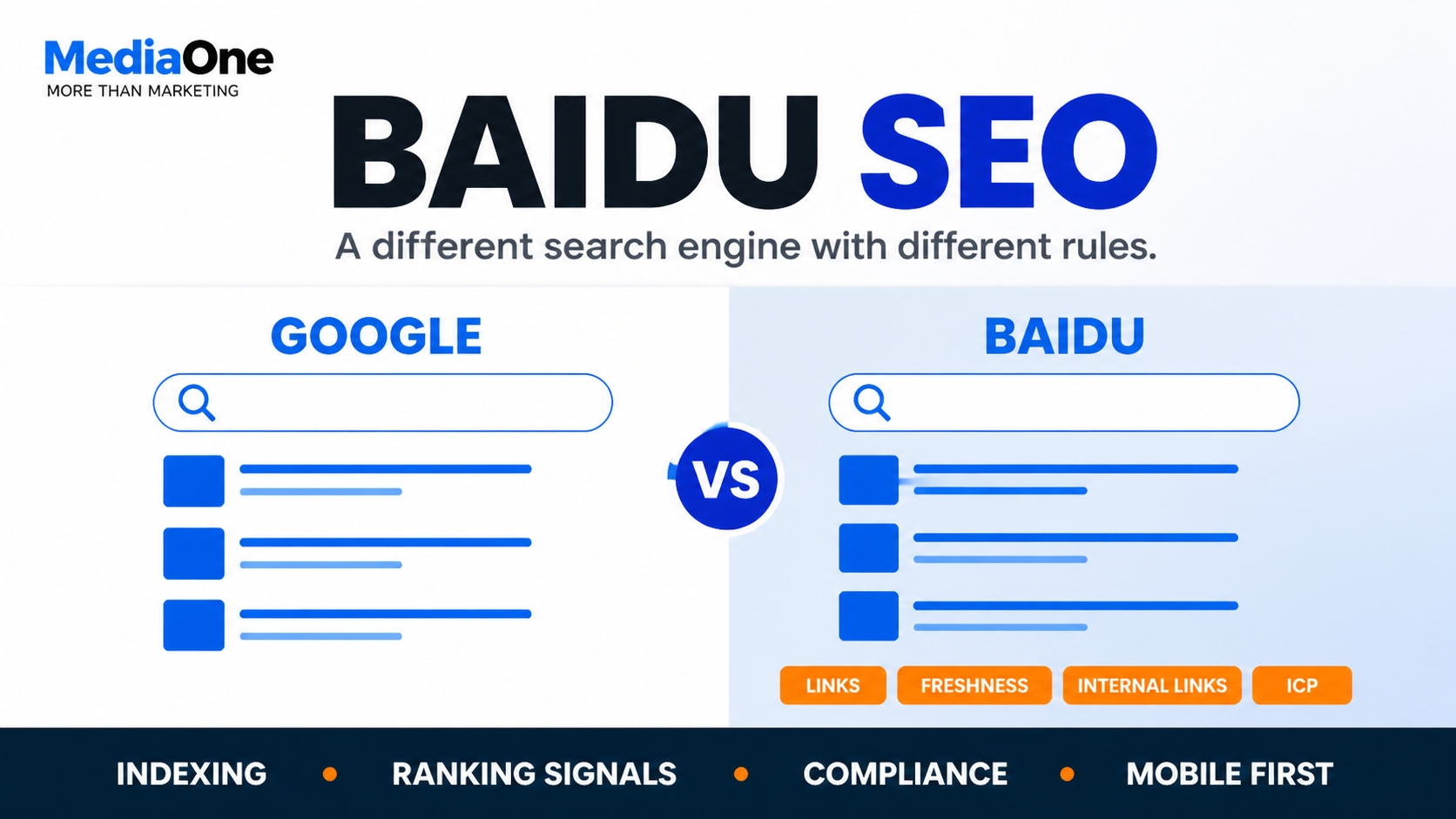
| AI Summary Baidu remains China’s largest individual search engine, with 46.65% market share in September 2026. Baidu SEO requires market-specific keyword research, high-quality Chinese content, reliable crawlability and compliance with China’s internet regulations. Businesses should use Baidu Search Resource Platform and Baidu Index rather than applying Google SEO assumptions directly to the Chinese market. |
Baidu SEO is important for businesses targeting customers in mainland China. According to StatCounter, Baidu held 46.65% of China’s search engine market in September 2026. China also had 1.125 billion internet users by the end of 2025, according to the National Bureau of Statistics of China.

Baidu has its own search ecosystem, optimisation requirements and webmaster resources. Businesses targeting China should therefore evaluate Baidu separately from Google instead of applying the same strategy without adapting it to Chinese search behaviour. This guide explains the key differences and the practical steps businesses can take to improve their search visibility in China.
Key Takeaways
- Baidu remains China’s largest individual search engine, making it a major channel for businesses targeting mainland Chinese audiences.
- Baidu SEO requires market-specific keyword research, strong content quality, reliable crawlability and compliance with applicable Chinese internet regulations.
- Baidu Index measures weighted search interest rather than exact monthly search volume, so use it to compare demand and trends.
- Baidu does not publish fixed rules for keyword density, sandbox periods or ranking timelines, so focus on relevance, usability and verified optimisation practices.
What Is Baidu SEO and Why It Matters
Baidu is China’s dominant search engine. For any business with customers, users, or content in Mandarin or mainland China, Baidu optimisation is foundational, not optional.
Yet most global SEO guides skip Baidu entirely. Why? Because Google’s search algorithm is well-documented through years of public statements, research, and practitioner reverse-engineering. Baidu, by contrast, publishes almost nothing about how it ranks pages. Its algorithm evolved independently from Google’s and has not converged toward it. Applying Google SEO directly to Baidu is like optimising for Bing when your users are on Google: you might hit some overlaps, but you will miss the core signals that actually drive rankings.
Baidu’s Market Position and Search Landscape
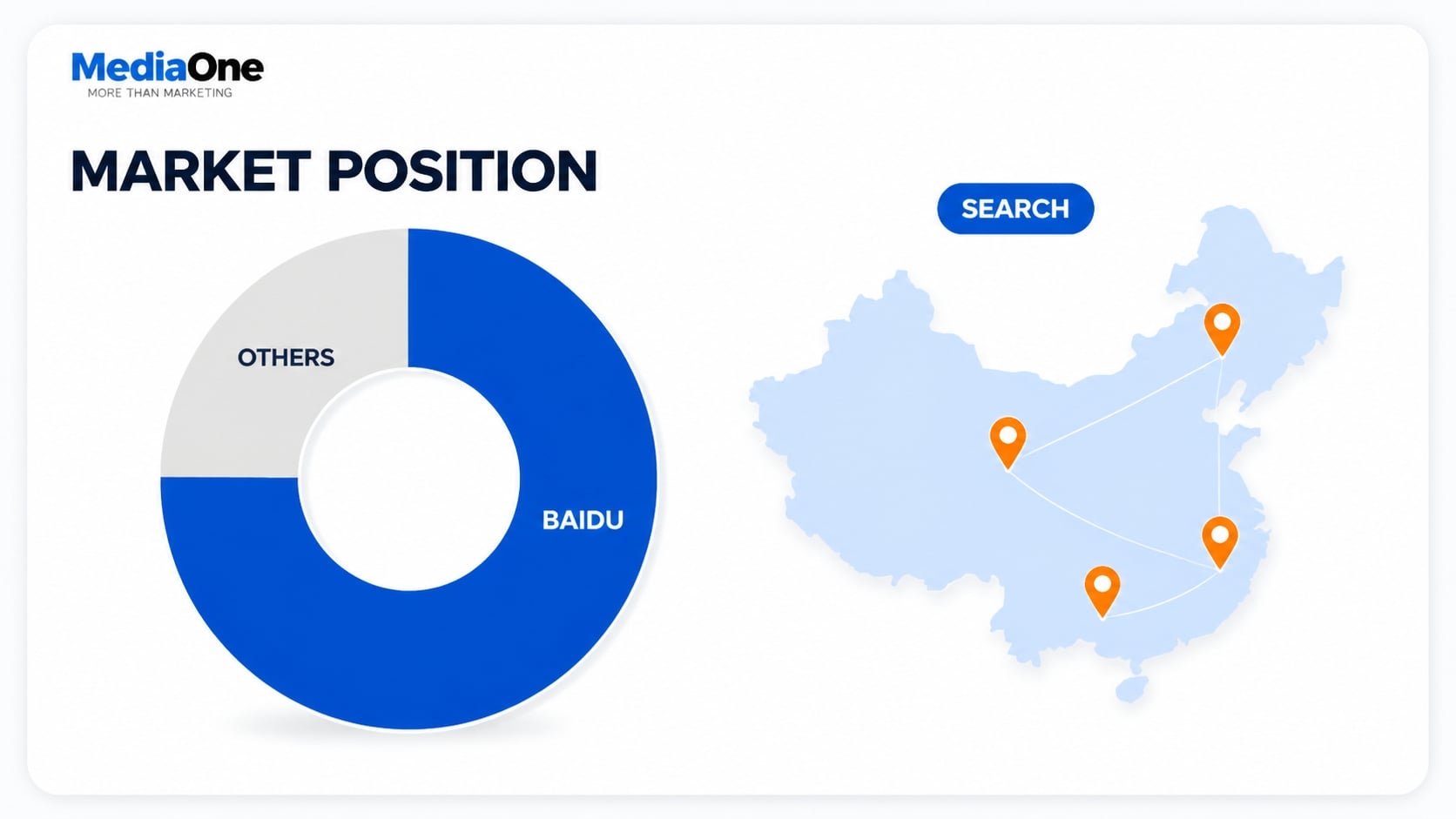
Baidu remains China’s largest individual search engine, although its market share fluctuates. According to StatCounter, Baidu held 46.65% of China’s search engine market in September 2026, followed by Bing at 21.76%, Yandex at 14.98%, Haosou at 12.26% and Sogou at 2.61%.
Global SEO agencies rarely prioritise Baidu because their clients are typically English-language or global-but-English-first. Chinese market specialists, by contrast, treat Baidu as the primary channel. This creates a skills gap: you can hire a Baidu SEO expert in Shanghai more easily than in London or New York.
How Baidu Differs from Google in Core Mechanics
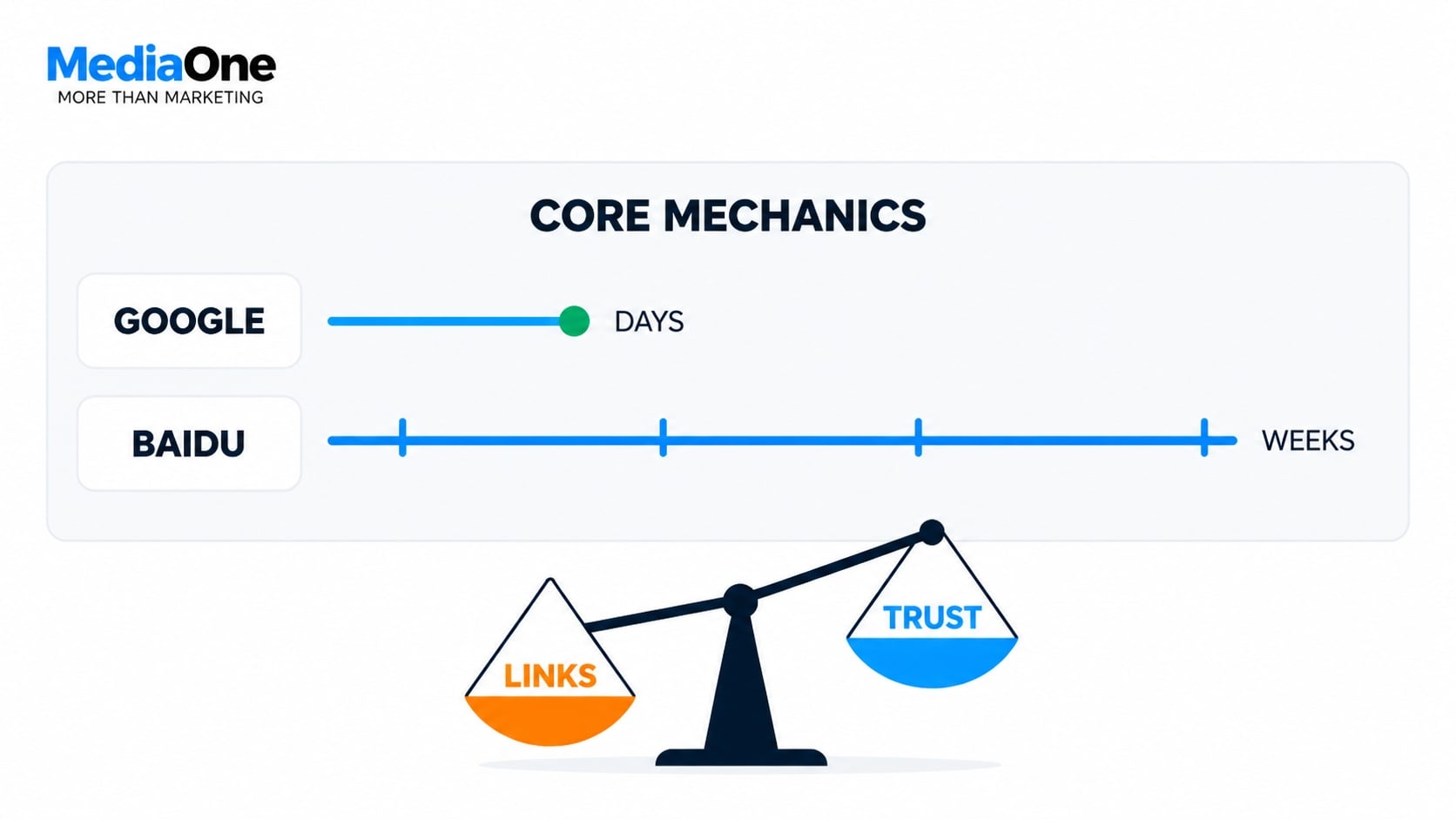

Baidu and Google operate on different indexation logic, crawl patterns, and ranking principles. Here are the fundamental differences:
Indexation speed: Baidu does not guarantee a fixed indexing timeframe. Submitting a URL can help Baiduspider discover it sooner, but submission does not guarantee indexing.
Link weight: Google treats backlinks as votes of confidence and central to authority. Baidu counts links but weighs them far lower. A site with 100 high-quality backlinks may rank similarly to a site with 10 high-quality backlinks on Baidu, whereas Google would favour the first. Trust signals and brand recognition matter more to Baidu than backlink quantity or domain authority.
Exact-match domains: Baidu historically favoured exact-match domains (a domain that literally contains the target keyword). Google phased out this bias years ago. On Baidu, a domain like “seo-consultant.cn” still has a mild ranking advantage for “SEO consultant” searches. This is less powerful than it was in 2010, but it persists.
Keyword matching: Google uses semantic understanding and can recognise that “best restaurants near me,” “top-rated eateries”, and “where to eat locally” all target similar intent. Baidu is much weaker here. If your page targets “SEO优化” (SEO optimisation) but the user searches “搜索引擎优化” (search engine optimisation, a synonym), Baidu is less likely to match them. Exact keyword placement and near-exact variants matter far more.
Content sovereignty: Baidu is hostile to content that violates Chinese law or censorship rules. This is a hard blocker, not a ranking factor. Political content, gambling, and other prohibited topics result in automatic delisting. Google also removes illegal content, but Baidu’s definition of “prohibited” is broader and enforced more aggressively.
ICP licensing: Any site serving mainland China from a .cn domain or China-hosted server must have an ICP (Internet Content Provider) licence issued by China’s Ministry of Industry and Information Technology. Without it, Baidu will not index your site. There is no equivalent gate on Google.

These differences mean that a Baidu SEO strategy is not a variant of a Google strategy. It is a separate discipline with its own tools, timelines, and success metrics.
What Baidu Says It Evaluates in Search
Baidu does not disclose a complete ranking formula. Its official Search Resource Platform identifies content quality, authority, browsing experience and timeliness as important factors when evaluating search results. Baidu Search Resource Platform
We recommend building a Baidu SEO strategy around these documented principles rather than relying on unverified formulas for domain age, keyword density or backlink counts.
Site History, Authority and Trust
Established websites may already have stronger content, links, brand recognition and crawl history. However, Baidu does not officially confirm a fixed sandbox period or a ranking advantage based solely on domain age.
We recommend focusing on useful content, reliable crawlability and legitimate authority signals instead of relying on an assumed domain-age threshold.
Content Freshness and Update Frequency
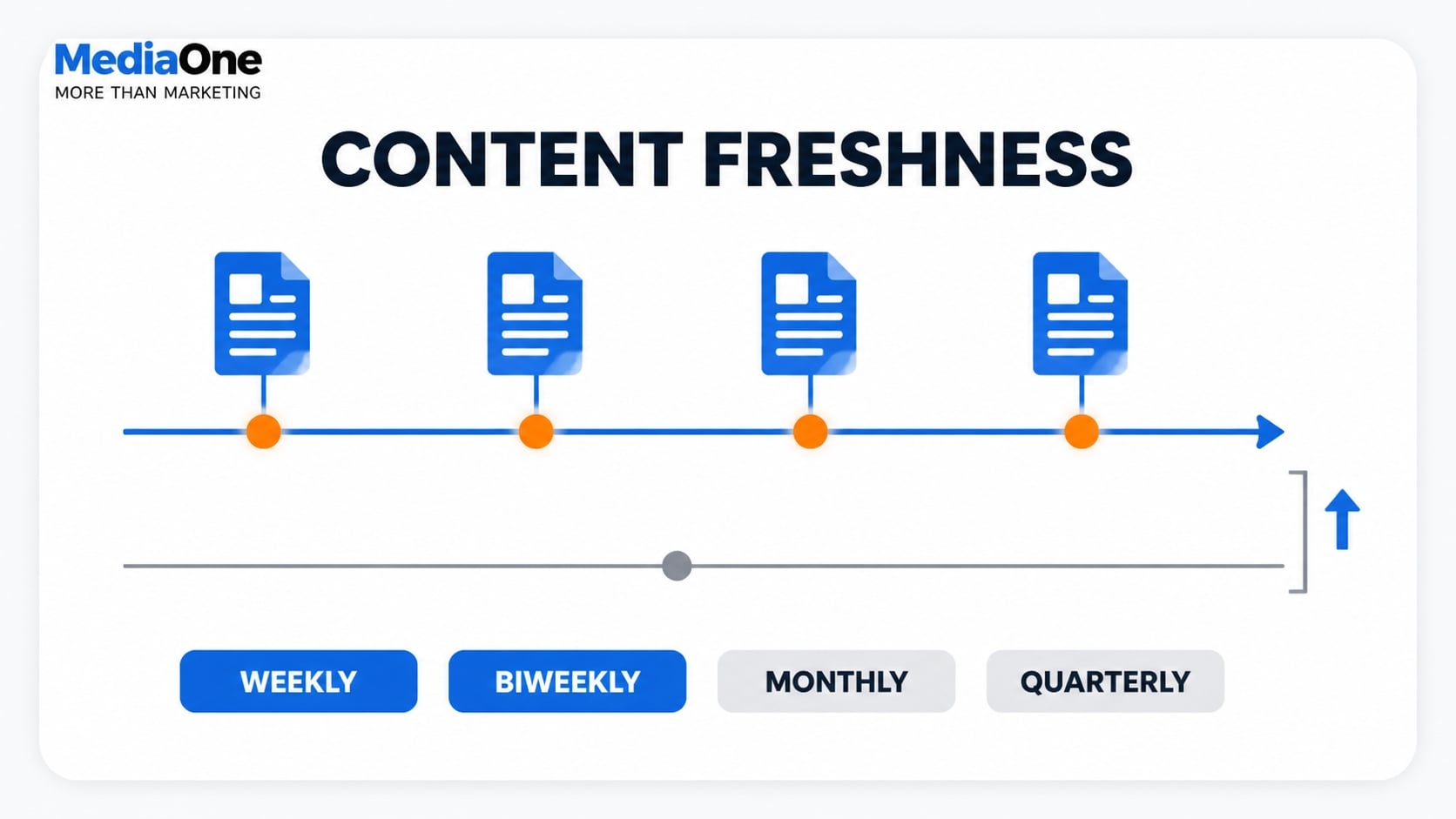
Baidu includes timeliness among the factors considered when assessing search results. Update content when facts, products, regulations or user needs change rather than publishing to meet an arbitrary frequency.
Keep publication and update dates accurate. Do not change a date solely to make old content appear new.
Link Profile and Internal Linking Strategy
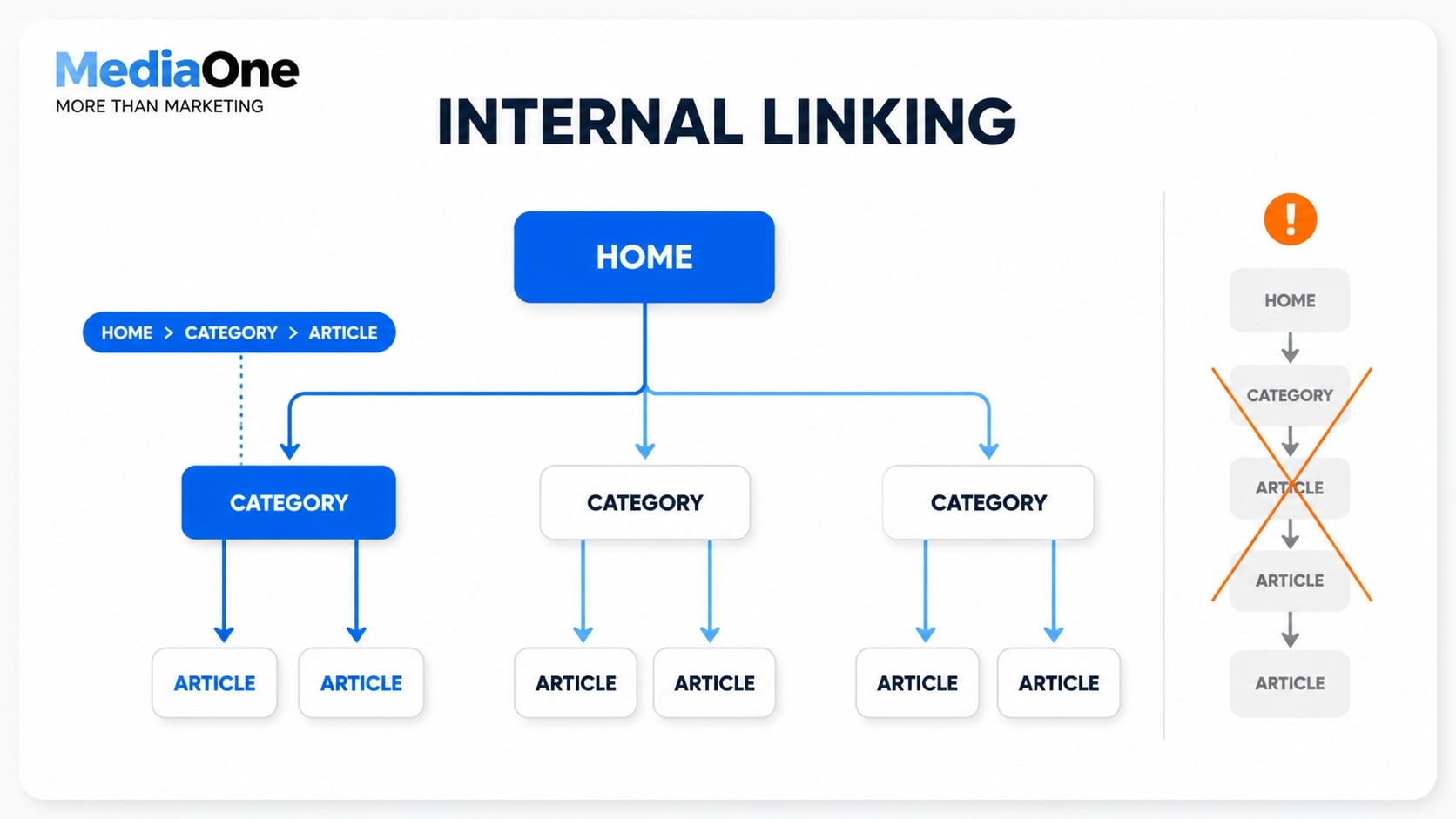
Baidu counts backlinks, but with lower weight than Google. A site with 50 backlinks from authoritative domains might rank competitively on Baidu with a site with 20 backlinks that ranks on Google.
What matters more to Baidu is internal linking. The way you connect pages within your own site has outsized importance on Baidu compared to Google.
Internal linking checklist:
- Create a clear site map (ideally as an HTML page linked from your footer). Baidu crawlers use site maps to discover and prioritise pages.
- Use breadcrumb navigation (Home > Category > Article). Baidu rewards this structure and users appreciate it for navigation.
- Link to related articles contextually within the body. If Article A mentions a concept explained in Article B, link it. Anchor text should be descriptive (“read our guide to Baidu keyword research” not “read more”).
- Front-load links in your information architecture: critical revenue-generating pages should be reachable within two or three clicks from the homepage.
- Use consistent, descriptive anchor text across your site. Avoid generic anchors (“click here”) on Baidu more strictly than on Google.
Because Baidu crawls slowly, a site with poor internal architecture may take months to have all pages crawled and indexed. A competitor with tight internal linking might see their entire site indexed in weeks.
Keywords, Semantic Matching, and User Intent
Baidu’s semantic understanding lags Google’s significantly. Google can infer that “best CRM for startups,” “startup-friendly customer relationship management,” and “CRM tools for new businesses” target the same intent. Baidu sees these as separate queries.
Consequence: exact keyword placement matters much more on Baidu.
Your target keyword should appear:
- In the title tag (as early as possible).
- In the H1 heading (verbatim or a very close variant).
- In the first 100 words of the body.
- In at least one H2 subheading.
- Naturally throughout the body at a density of 0.5–1.5% (not stuffed).
Near-exact variants also matter. If your primary keyword is “Baidu SEO” (百度SEO), target “Baidu search engine optimisation” (百度搜索引擎优化) as a secondary keyword. Do not assume Baidu will match them semantically.
Keyword density caveat: Baidu is not as forgiving of keyword stuffing as it once was, but it penalises under-optimisation more severely than Google. A page that mentions its target keyword only twice in 2,000 words will underperform, even if the content is excellent. Aim for 1.5–2% density on a first draft, then scale back any awkward repetition.
Mobile-First Indexing and User Experience Signals
Mobile experience is important for Baidu search. Baidu’s Mobile Search Landing Page Experience White Paper 5.0 states that first-screen content should load within one second. Baidu also considers mobile usability factors such as page layout, readability and intrusive elements when evaluating the search experience.
Baidu’s crawlers are mobile-user-agents that render JavaScript, but rendering is slower and less reliable than on Google. If your site relies heavily on JavaScript for layout, testing on Baidu’s crawler is essential. Use the Baidu Webmaster Tools rendering tool to verify that your pages display correctly when crawled by Baidu’s bot.
Mobile usability signals also matter: ensure tap targets are large enough, text is legible without zooming, and navigation is not overlaid with intrusive pop-ups. Baidu explicitly penalises pages with full-page interstitials (pop-ups that block content on first visit).
Baidu SEO On-Page Optimisation Checklist
Title Tags, Meta Descriptions, and Header Structure
Title length: Baidu displays approximately 60 characters in search results. Beyond this, the title is truncated. Your most important keyword should fit within the first 60 characters.
Format: [Keyword] | [Secondary Keyword] – [Brand Name] or [Brand Name]: [Keyword] – [Brief Description]
Example (in English context, but translatable to Chinese):
- Weak: “Welcome to Our SEO Services”
- Strong: “Baidu SEO Services | Ranking & Traffic Growth – [Company Name]”
H1 tag: One H1 per page (standard). It should match or closely mirror your title keyword. Unlike Google, which can infer intent from context, Baidu benefits from exact alignment.
Weak: <h1>Our Services</h1>
Strong: <h1>Baidu SEO Optimisation Services for E-Commerce</h1>
H2 and H3 hierarchy: Use H2 for main topic divisions and H3 for subsections. Do not skip levels (no H2 followed by H4). Baidu crawlers are sensitive to heading structure; proper nesting helps them understand your content’s logical flow.
Include secondary keywords in H2 headings where natural. If your primary keyword is “Baidu SEO”, your H2s might include “Baidu Ranking Factors”, “Baidu Technical SEO”, “Baidu Content Strategy”, etc.
URL Structure and Internal Site Architecture

URL format: Keep URLs short and keyword-rich. For Chinese content, use pinyin (the Roman alphabet transliteration of Chinese characters) rather than Chinese characters themselves or random strings.
Examples:
- Good: /baidu-seo-guide/ or /baidu-seo-optimisation/
- Avoid: /article-12345/ or /p/abc123def456/
- Mixed results: /百度搜索引擎优化/ (Chinese characters in URLs complicate crawling and are less shareable)
Hierarchy: Use a flat structure. Avoid nesting beyond three levels.
Good: example.cn/seo/baidu-seo/, example.cn/tools/keyword-research/
Avoid: example.cn/guides/seo/china/baidu/optimisation/ranking/
Flat architecture allows Baidu crawlers to reach your content faster and reduces crawl-budget waste on deep navigation paths.
URL parameters: Avoid session IDs and unnecessary parameters. Baidu struggles with dynamic URLs and may crawl duplicate versions.
Bad: /article/?id=123&session=abc456&ref=search
Better: /article-title-123/
If your CMS generates parameters unavoidably, use Baidu Webmaster Tools to notify Baidu of your preferred URL format.
Image Optimisation and Alt Text
Baidu’s image search is improving but still lags Google’s. However, images embedded in indexed pages affect ranking indirectly: they improve user engagement and time-on-page.
Alt text: Provide descriptive, keyword-relevant alt text for every image. Include your target keyword in at least one alt text per page, but do not stuff.
Example:
<img src=”baidu-seo-strategy.jpg” alt=”Baidu SEO strategy framework showing domain age, content freshness, and link building” />
Filename: Use ASCII-friendly filenames (no Chinese characters, spaces, or special characters). Baidu handles ASCII more reliably than non-ASCII in filenames.
Good: baidu-ranking-factors.jpg
Avoid: 百度排名因素.jpg or baidu ranking factors!.jpg
File size: Baidu’s infrastructure compresses images more aggressively than Google’s. Large, unoptimised images load slowly. Aim for under 300 KB per image on average. Use modern formats (WebP with JPEG fallback) and lazy-load images below the fold.
Content Formatting: Lists, Tables, and Structured Data
Baidu’s crawlers and ranking algorithm respond well to visual content breaks. Pages that are walls of text rank worse than pages with lists, tables, and subheadings, even at identical word count.
Use bulleted lists for non-sequential points:
- Point 1
- Point 2
- Point 3
Use numbered lists for sequential steps or ranked items:
- Step 1: Claim your Baidu Baike entry
- Step 2: Verify your ICP registration
- Step 3: Submit your site to Baidu Webmaster Tools
Tables are valuable for comparisons. Baidu indexes table content and understands table structure better than flowing prose.
Structured data: Baidu supports Schema.org markup (JSON-LD, microdata, RDFa). Structured data is less critical for Baidu than for Google, but it helps. Use markup for:
- Article metadata (headline, publish date, author)
- Organisation info (company name, address, phone)
- Product data (if selling)
- FAQ markup (if your page has Q&A sections)
Baidu does not display rich snippets like Google does, so structured data is not a direct ranking boost. However, it clarifies content intent to Baidu’s crawlers, which indirectly helps ranking.
Technical SEO for Baidu: Indexation, Crawling, and ICP Compliance
This is where many Western practitioners fail. Technical SEO for Baidu involves compliance, legal requirements, and infrastructure considerations that Google does not impose.
ICP Beian Registration and Legal Requirements
This is non-negotiable: Any site serving mainland China from a .cn domain or a server hosted in mainland China must be registered with China’s Ministry of Industry and Information Technology and assigned an ICP Beian number.
Without registration, Baidu will not index your site. It is not a ranking penalty; it is a hard blocker.
Process:
- If your domain registrar does not offer ICP registration services (most Chinese registrars do; most international ones do not), contact a Chinese registrar or ICP filing service.
- Prepare documents: business license or personal ID, website content description, and server information.
- Submit through the registrar or filing service to the Ministry of Industry and Information Technology.
- Approval typically takes 5–20 working days.
- Once approved, you receive an ICP beian number (e.g., “京ICP备20001234号”).
- Display the ICP number on your website (typically in the footer) with a link to beian.miit.gov.cn as proof of compliance.
Domains and hosting considerations:
- .cn domains with mainland China hosting: must have ICP registration.
- .cn domains with overseas hosting: registration may not be enforced, but Baidu crawls slower.
- .com, .co.uk, etc. with mainland China hosting: technically require ICP registration.
- .com, .co.uk, etc. with overseas hosting: no ICP requirement, but no search advantage. Baidu crawls slower than sites with local hosting.
If targeting mainland China seriously, invest in a .cn domain and China-hosted server with proper ICP registration. The ranking boost and crawl speed improvement justify the effort.
Content compliance: Beyond licensing, your content must comply with regulations in the People’s Republic of China. This is stricter than Western standards. Prohibited categories include:
- Politically sensitive content (criticism of the government, discussion of Tibet or Taiwan independence)
- Gambling and betting
- Pornography and adult content
- Illicit drugs and weapons sales
- Pirated content (movies, software, books without licensing)
Grey-zone content includes VPN discussions, religious proselytising, and certain financial discussions. When in doubt, research or consult a Chinese legal adviser. Violating content policies results in delisting.
Baidu Site Submission and Webmaster Tools
Baidu Webmaster Tools is Baidu’s equivalent to Google Search Console. It is less polished and slower to update than GSC, but it is your primary diagnostic tool.
Setup:
- Go to zhanzhang.baidu.com and register with an email or phone number.
- Verify your site ownership via DNS CNAME record (preferred), HTML file upload, or HTML metatag.
- Once verified, Baidu begins crawling and indexing your site (if compliant and live).
Key reports:
- Crawl statistics: How many pages Baidu crawled daily and errors encountered. If errors spike, investigate immediately (server issues, robots.txt blocks, or ICP delisting are common causes).
- Index volume: Total pages indexed. This grows slowly on new domains (weeks to months). Watch for sudden drops, which may signal a penalty.
- URL submission: Baidu Search Resource Platform provides resource-submission options such as ordinary inclusion, quick crawling and sitemap submission. Submission can shorten the time Baiduspider needs to discover a URL, but it does not guarantee indexing.
- Search analytics: Keywords triggering impressions, click-through rate, and average position. Data lags 2–3 days.
- Structured data status: Whether your JSON-LD markup is recognised and any issues detected.
Pro tip: Baidu Webmaster Tools is slower to update than Google Search Console. Data is often 2–3 days delayed. Do not panic if you see drops in reported data; wait a few days for updates.
Monitor crawl statistics weekly. A sudden spike in errors indicates a site issue; a gradual decline in crawl frequency suggests Baidu is deprioritising your site (investigate content quality or link profile).
XML Sitemaps, Robots.txt, and Crawl Optimisation
Sitemap format: Submit an XML sitemap in standard XML format (same as Google). Baidu recognises the same schema.
Include:
- Last modified date (tells Baidu when you updated pages).
- Priority (Baidu uses this; mark critical pages as 1.0, less important as 0.5).
- Change frequency (does not impact ranking but informs crawl planning).
Limit sitemaps to 50,000 URLs per file; Baidu enforces this limit more strictly than Google.
Robots.txt: Use robots.txt to manage Baidu’s crawl efficiency.
Example robots.txt optimised for Baidu:
User-agent: Baiduspider
Allow: /
Disallow: /admin/
Disallow: /private/
Crawl-delay: 1
User-agent: *
Disallow: /
This allows Baidu to crawl everything except admin and private sections, with a 1-second delay between requests (prevents server overload). Other crawlers are blocked.
Baidu crawlers:
- Baiduspider (desktop)
- Baiduspider-mobile (mobile)
- Baiduspider-image (image search)
Verify your crawl delays in Baidu Webmaster Tools: if Baidu is crawling too fast, increase the Crawl-delay; if too slow, decrease it.
Server Location, Load Speed, and Baidu’s Crawl Behaviour
Baidu’s crawlers originate from mainland China. Pages hosted in mainland China are crawled and re-crawled faster than overseas-hosted pages. A page on a China-based server might be recrawled weekly; an overseas-hosted equivalent, monthly.
This compounds over time. Sites on China hosting rank faster, especially in competitive niches.
Speed thresholds: Baidu expects pages to load in under 3 seconds on 4G networks. This is measurable and enforced:
- Under 2 seconds: optimal.
- 2–3 seconds: acceptable.
- 3–5 seconds: likely ranking penalty.
- Over 5 seconds: significant penalty.
Use Baidu’s official PageSpeed Insights tool (zhanzhang.baidu.com/pagespeed) to test your site. It is less detailed than Google PageSpeed, but it reflects Baidu’s actual speed expectations.
Infrastructure: If you must host overseas, choose a location close to mainland China (Hong Kong, Singapore) and use a CDN with China nodes. Cloudflare, Akamai, and other major CDNs have mainland China PoPs that improve speeds for Baidu crawlers and users.
Redirects, Canonical Tags, and URL Parameter Handling
301 redirects: Baidu respects 301 redirects but processes them slowly. A URL redirected 301 to another URL may take 2–4 weeks for Baidu to recognise the redirect and update its index. Plan migrations carefully; avoid bulk redirects if possible.
Canonical tags: Baidu recognises the canonical tag (<link rel=”canonical” href=”…” />). However, it treats canonicals as hints, not directives. If Baidu believes a different version is the “true” version, it may ignore your canonical. This happens less on Google.
Use canonicals for obvious duplicates (www vs. non-www, /article.html vs. /article), but do not rely on them for complex de-duplication.
Dynamic URLs: Baidu struggles with session IDs, tracking parameters, and dynamic URLs. If you have a shopping site that generates URLs like /product.php?id=123&session=abc&ref=search, Baidu may crawl multiple duplicate versions.
Fix this by:
- Using clean, static URLs: /product-name-123/
- Using canonical tags on dynamic pages to indicate the preferred version.
- Specifying parameter handling in Baidu Webmaster Tools (under Site Settings > URL Parameters) to tell Baidu which parameters matter and which are tracking fluff.
Baidu Keyword Research and Topic Clustering
Keyword research for Baidu requires different tools and interpretation frameworks than Google. While Google’s Keyword Planner and Ahrefs target English-language search behaviour, Baidu’s algorithm, user intent, and linguistic patterns demand source data that reflects how Mandarin speakers actually search.
Tools for Baidu Keyword Research
Four categories of tools can supply valid keyword data for Baidu. Each serves a different purpose and requires some navigation if you are unfamiliar with Chinese interfaces.
Baidu Index (baidu.com/index):
Baidu Index is Baidu’s official search-interest and audience-analysis platform. It shows aggregate daily search volume, geographic distribution, and demographic breakdowns for any term you enter.
To use it: navigate to index.baidu.com, type your keyword in Simplified or Traditional Chinese, and select your date range. The platform displays a numerical index score (not raw monthly searches, but a relative trend value calibrated to a baseline of 100). The score reflects search intensity across Baidu’s network.
Key limitation: Baidu Index scores are not directly comparable to Google’s monthly search volume. A Baidu Index score of 500 does not equal 500 monthly searches. Instead, use Index scores relatively. If keyword A scores 1,200 and keyword B scores 400, you know A attracts roughly three times more search traffic than B. For absolute monthly volume estimates, cross-reference with third-party tools.
Baidu Index also displays “news index” (news-driven searches) and “media index” (content mentions), which signal trending topics and emerging interest. For seasonal niches or time-sensitive content, these signals are invaluable.
Baidu Suggest and Related Searches:
As you type into Baidu’s search box, a dropdown appears with auto-completed keyword suggestions. These reflect real, high-frequency searches. Below the search results, Baidu displays “related searches”, typically 10 queries related to your original term.
These dropdowns and footer suggestions are gold for long-tail discovery. They are not ranked by competitiveness, but they are ranked by search frequency. The first suggestion in the dropdown is often the most-searched related term.
Method: Open baidu.com, type a seed keyword, and screenshot the suggestions. Then click on each suggestion and repeat. This generates a tree of related queries, many of which are under-optimised compared to their Google equivalents.
Ahrefs and SEMrush Baidu Modules:
Ahrefs and SEMrush both offer limited Baidu support in their keyword research tools. These are useful if you already subscribe to either platform.
Ahrefs includes a “Baidu keywords” section where you can input a Chinese keyword and see estimated monthly search volume, keyword difficulty score (0–100), and a list of top-ranking pages. The data is less complete than their Google module, but it provides Western-trained practitioners a familiar interface.
SEMrush offers a “Baidu Keyword Database” with similar functionality: estimated search volume, difficulty, and SERP analysis.
Both tools improve annually, but neither rivals Baidu-native platforms in accuracy. Use these for quick difficulty assessments or competitive analysis if you are already a subscriber.
Cost: Pricing varies by platform and plan. Check each provider’s current pricing before subscribing.
Chinese Third-Party Tools: 5118.com and Chinaz:
5118.com and Chinaz.com are SEO platforms built specifically for the Chinese market. They provide Baidu-focused keyword research, competitor analysis and rank-tracking tools. Check each platform’s current pricing before subscribing.
5118.com is considered the most comprehensive. It displays Baidu Index data, estimated monthly volume, keyword difficulty, click value (inferred from cost-per-click in Baidu Ads), and a list of top-ranking pages with their estimated traffic. The platform also tracks your site’s ranking for up to 5,000 keywords and shows competitors’ top keywords.
Chinaz Ranking Tool is simpler and lighter, suitable for quick lookups. It shows Baidu Index scores, keyword difficulty (0–10 scale), and top-ranking competitors.
Limitation for English speakers: both platforms are Chinese-only. No English interface exists. If you do not read Mandarin, you will need to rely on Google Translate or hire a Chinese-speaking consultant to interpret the data. For serious Baidu SEO campaigns, the investment in learning the interface (or hiring support) is worthwhile.
Search Volume, Keyword Difficulty, and Topic Selection
Understanding how to interpret Baidu’s metrics is critical to choosing realistic keywords for your domain’s authority level.
Baidu Index Scores: What They Mean
Baidu Index scores measure relative search intensity, not absolute volume. A score of 1,000 means the keyword was searched with 10 times the intensity of a keyword with a score of 100, but it does not tell you if that represents 10,000 monthly searches or 100,000.
To estimate absolute volume: industry practitioners have reverse-engineered rough conversion rates. A Baidu Index score of 100–500 typically corresponds to 500–3,000 monthly searches. A score of 500–2,000 often represents 3,000–15,000 monthly searches. Scores above 2,000 usually indicate highly competitive terms with 15,000+ monthly searches. These are estimates; individual variation is high.
For practical strategy, treat Index scores as tiers:
- Under 100: Ultra-niche, low monthly volume, easy to rank, minimal traffic potential.
- 100–500: Niche, moderate volume, medium difficulty for new sites, realistic entry-level target.
- 500–2,000: Mainstream, competitive, difficult for new domains but worthwhile.
- 2,000+: Highly competitive, dominated by established brands and Baidu properties, avoid until your domain has 6+ months of authority.
Keyword Difficulty on Baidu
Unlike Google, where Moz and Ahrefs publish Domain Authority and Keyword Difficulty scores, Baidu does not publish official difficulty rankings. Third-party tools estimate difficulty based on the quality of top-ranking competitors, but these estimates are less reliable for Baidu than for Google.
Manual difficulty assessment is more reliable: search your keyword on Baidu, examine the top 10 results, and ask:
- Are any results from Baidu’s own properties (Baike, Zhidao, Baidu Wenku)?
- What domain age do the top-ranking sites show?
- Do the top results have significant backlink profiles?
- Is the content depth and quality notably high?
If Baidu Baike or Zhidao occupy the top position, difficulty is high; breaking into the top 10 as a new domain is unlikely in under 6 months.
If the top results are from domains aged 2–5 years with moderate content depth, difficulty is medium; a well-optimised new site can rank in 3–4 months.
If the top results are from newer domains (under 2 years) or low-authority sites, difficulty is low; expect rankings within 4–8 weeks.
Recommended Topic Selection for New Domains
For a new domain with no Baidu authority, start with Baidu Index scores of 100–800. These offer enough search volume to justify effort (likely 500–5,000 monthly searches) whilst remaining realistic targets within 2–4 months.
Avoid index scores above 2,000 until your domain is 6+ months old and has published 10+ optimised pieces. Baidu’s sandbox effect is real; new domains are suppressed in competitive niches.
Seasonal patterns and regional variation also matter. If targeting a niche with strong seasonal demand (e.g., Chinese New Year gifting, college entrance exams in June), concentrate content publication 4–6 weeks before peak season. Baidu Index shows seasonal trends; use this to plan your content calendar.
Regional variation: China’s 34 provinces and regions show different search behaviour. If your product or service is region-specific (e.g., Shanghai education, Guangdong manufacturing), research keywords in Baidu Index’s geographic filter to understand local volume distribution. A keyword popular in Shanghai may have minimal search volume in Sichuan.
Long-Tail and Conversational Queries
Baidu excels at ranking long-tail queries because Mandarin Chinese users phrase searches very differently from English speakers. English searchers often use abbreviated, keyword-heavy queries (“best CRM software”). Mandarin speakers, particularly on mobile, phrase questions more naturally (“哪个客户管理系统最好用”, literally “which customer management system is easiest to use”).
Target 4–8 word queries aggressively on Baidu. These typically have lower competition, faster ranking timelines, and higher intent-to-conversion rates than head keywords.
Example: instead of targeting “SEO” (ultra-competitive), target “how to do Baidu SEO for e-commerce” (long-tail, specific intent, faster to rank).
Mobile search patterns matter heavily. China had 1.125 billion internet users at the end of 2025, including 1.121 billion mobile internet users. Mobile searches on Baidu are more conversational (“best restaurant for family dinner near me”) than desktop searches (“top restaurants Shanghai”). Structure content to answer mobile-first, question-format queries.
Off-Page Ranking Factors: Links, Brand, and Authority Building
Baidu’s off-page algorithm differs materially from Google’s. Backlinks matter far less; brand authority and social signals matter far more. This shift has profound implications for strategy.

Baidu’s Lower Weighting of Backlinks
Baidu counts backlinks but treats them as one signal among many, rather than the primary ranking lever. A site with 500 backlinks does not necessarily outrank a site with 50 backlinks on Baidu (unlike Google, where this correlation is much stronger).
Why? Baidu’s user base and the Chinese link-building ecosystem are both different from Google’s. Chinese link-building services are commoditised and of lower average quality. Spam links are rampant. Baidu responded by de-emphasising links as a core ranking factor, making the algorithm less vulnerable to manipulation.
Link-building for Baidu is still worthwhile, but for different reasons:
- Links from Baidu’s own ecosystem (Baiku, Zhidao, Tieba, Baidu News) carry more weight than external links.
- Links from government (.gov.cn) and educational (.edu.cn) domains are weighted higher.
- Links from high-traffic sites in your industry carry more weight than links from low-traffic sites, even if domain authority is equal.
- Topically relevant links (links from pages about related topics) matter more than authority alone.
Link-building strategies that rely on quantity (e.g., 100 low-quality directory links) do not work on Baidu. Strategies that target relevance and traffic (fewer, higher-quality links from topically related, trafficked sites) do work.
Building Brand Authority on Baidu Properties
Your best short-term ranking boosts come from establishing authority within Baidu’s ecosystem, not from external link-building.
Baidu Baike (Baike.baidu.com): Baike is Wikipedia-style encyclopedia hosted by Baidu. Creating or optimising a Baike entry for your brand, product, or topic carries significant authority weight. Baike entries appear prominently in Baidu search results and contribute to your brand’s credibility signal.
Process: Go to Baike.baidu.com, search for your brand or topic. If an entry exists, request to edit it (Baidu moderates changes). If not, create a new entry. Fill in basic information, add references (links to your site, news articles, or third-party sources), and submit. Baidu moderators review within 1–3 days. Approval rates are higher for brands with legitimate credentials (registered businesses, published news coverage).
Baike entries that mention your site and link to it pass authority and improve your site’s credibility signal. Even without a direct link to your site, the Baike entry establishes brand presence and drives branded search traffic.
Baidu Zhidao (Zhidao.baidu.com): Zhidao is Baidu’s question-and-answer platform, similar to Quora or Yahoo Answers. Users ask questions; other users answer them. Answers that are marked as “best answer” and get high ratings gain visibility.
For Baidu SEO: search for questions relevant to your business or content. If no satisfactory answer exists, register a Zhidao account, answer the question thoroughly, and include a link to your relevant page (if it genuinely answers the question). Avoid spamming; Baidu moderators flag obvious promotional answers.
High-quality Zhidao answers drive referral traffic and generate backlinks from Baidu’s own domain, which carries significant authority weight.
Baidu Tieba (Tieba.baidu.com): Tieba is Baidu’s forum network, organised by topic. Each topic has a “bar” (社区, community) where users post, discuss, and share content.
For Baidu SEO: find Tieba bars related to your industry or topic. Become an active, respected contributor by answering questions, sharing valuable content, and helping other users. Do not spam links; Baidu and Tieba moderators are aggressive about removing obvious promotion.
As your reputation grows, Tieba allows you to post your own threads and include links. Threads from high-reputation users are visible longer and ranked more prominently. Over months, this can drive consistent referral traffic and signal brand authority to Baidu’s main algorithm.
Baidu News (News.baidu.com): Baidu aggregates news from thousands of sources. If your business publishes press releases or news content through reputable newswire services, getting your content into Baidu News can generate high-value links.
Process: Publish press releases through services like Xinhuanet (新华网), People Daily (人民日报), or SinaNews. These sources are indexed by Baidu News. Links from news items to your site pass significant authority.
Note: This requires genuine newsworthy content and legitimate news distribution channels. Fabricating news or distributing thin promotional content will be rejected by newswires and damages your credibility.
Social Signals and Brand Search Volume
Baidu places high weight on social signals and brand search volume. Your ranking on competitive keywords improves if:
- Your brand name generates regular searches on Baidu (“branded searches”).
- Your brand is mentioned on social media platforms (Weibo, WeChat, Douyin, Xiaohongshu).
- Your brand receives editorial coverage in news outlets or respected blogs.
- Your social media accounts are verified and have high follower counts.
These signals are not direct ranking factors, but they feed into Baidu’s estimation of brand authority, which indirectly boosts your site rankings.
Practical implications: invest in brand building, not just keyword ranking. Establish official social media accounts on major Chinese platforms (Weibo, WeChat Official Account, Douyin, Xiaohongshu). Post regular updates, engage with followers, and encourage shares. As your brand presence grows, your Baidu rankings will improve even without building links to your site.
Monitor branded search volume using Baidu Index. If your brand name generates 100+ daily searches, Baidu’s algorithm recognises you as an established, trusted entity and allocates more crawl budget and ranking preference to your pages.
Common Baidu SEO Mistakes and How to Avoid Them
Most Baidu failures come from applying Google habits to a search engine that works differently. These are the mistakes that cost the most time.
1. Treating Baidu as “Google lite”
Baidu weighs domain age, brand signals, update frequency and exact keyword matching more heavily than Google does. A strategy built on backlink volume and semantic keyword variety will underperform. Build the plan around Baidu’s own signals from the start.
2. Skipping ICP registration or ignoring hosting
If you serve mainland China from a .cn domain or a China-hosted server, no ICP Beian number means no indexing. For overseas-hosted sites, expect slower crawling. Settle your domain, hosting and filing approach before you write any content.
3. Expecting fast results from a new domain
New domains face a sandbox period of roughly three to six months. Brands that quit after eight weeks of flat rankings usually leave right before the domain starts to gain trust. Target low-competition long-tail keywords first and set expectations with stakeholders early.
4. Relying on semantic variation instead of exact keywords
Baidu is far less likely than Google to treat synonyms as the same query. If you target “SEO优化”, do not assume the page will rank for “搜索引擎优化”. Place primary keywords in the title, H1, first 100 words and at least one H2, and cover close variants in separate sections or pages.
5. Publishing in bursts, then going quiet
Baidu rewards consistent publishing and visible updates. Fifteen articles in one month followed by six months of silence signals an abandoned site. Set a sustainable cadence, such as two updates a month for competitive niches, and stick to it.
6. Neglecting mobile speed
With mobile-first indexing in place, a slow mobile page costs you rankings. Aim for under three seconds on 4G, compress images below roughly 300 KB, and avoid full-page pop-ups.
7. Chasing backlink volume
Bulk directory links and cheap link packages do little on Baidu and can attract spam filters. Invest in links and mentions from relevant, trafficked sites, plus Baidu’s own properties (Baike, Zhidao, Tieba, Baidu News).
8. Ignoring Baidu’s ecosystem
Many brands optimise their website and never claim a Baidu Baike entry, answer questions on Zhidao, or build a presence on Weibo, WeChat or Xiaohongshu. These assets often rank before your own site and feed the brand signals Baidu uses.
9. Publishing non-compliant content
Political, gambling, adult and pirated content leads to delisting, and grey-zone topics such as VPNs and some financial content carry risk. Review content against Chinese regulations before it goes live, and consult a local legal adviser if you are unsure.
10. Reading Baidu Webmaster Tools data too quickly
Reports lag by two to three days. A one-day dip is rarely a penalty. Check crawl statistics weekly and look for sustained trends before making changes.
How to Measure Baidu SEO Progress
Because Baidu is slow to index and rank, track leading indicators before you look at traffic.
- Indexation: Check index volume in Baidu Webmaster Tools weekly. Steady growth shows the site is being crawled and trusted.
- Crawl health: Watch daily crawl counts and error rates. Falling crawl frequency often means Baidu is deprioritising the site.
- Keyword positions: Track a fixed set of 20–50 target keywords with 5118.com or a similar tool, and review monthly rather than daily.
- Branded search volume: Use Baidu Index to monitor searches for your brand name. Growth here is one of the clearest signs of rising authority.
- Referral traffic from Baidu properties: Track visits from Baike, Zhidao and Tieba, since these often arrive before organic rankings do.
- Conversions: Tie Baidu traffic to leads or sales in your analytics. Traffic alone does not show whether the strategy pays off.
Review results quarterly. Most new sites will see early movement on long-tail terms within two to four months, with competitive terms taking six months or more.
Build a Baidu Strategy Around Verified Signals
Baidu SEO requires a market-specific strategy. Start with reliable access from mainland China, confirm any applicable ICP requirements, research Chinese search demand and make the site easy for Baiduspider to crawl.
We recommend using Baidu’s own Search Resource Platform and Baidu Index as primary sources whenever possible. Avoid building strategy around unsupported keyword densities, fixed sandbox periods or guaranteed ranking timelines.
If mainland China is an important growth market, integrate Baidu into your wider international search strategy. MediaOne’s SEO services can support technical SEO, content strategy, international optimisation and performance measurement across markets.
Baidu SEO FAQs
How long does it take to rank on Baidu?
It depends on domain age and competition. A new domain typically sits in a sandbox for three to six months, though you can often rank for low-competition long-tail keywords within four to eight weeks. Established domains with strong brand signals can move faster. Competitive terms usually take six months or longer.
Do I need an ICP licence to rank on Baidu?
If your site is hosted in mainland China or uses a .cn domain to serve mainland users, yes. Without an ICP Beian number, Baidu will not index it. Overseas-hosted .com sites do not strictly require one, but they are crawled more slowly and generally rank less well than locally hosted, registered sites.
Can I use the same SEO strategy for Baidu and Google?
Only partly. Core practices such as quality content, a clean site structure and fast pages apply to both. But Baidu puts more weight on domain age, exact-match keywords, content freshness, internal linking and brand signals, and less on backlinks. Run them as two strategies that share a content foundation.
Are backlinks important for Baidu SEO?
They count, but less than on Google. Relevance and traffic matter more than volume. Links from Baidu’s own properties, government (.gov.cn) and education (.edu.cn) domains, and busy industry sites carry the most value. Large batches of low-quality links are unlikely to help.
Which tools should I use for Baidu keyword research?
Start with Baidu Index for relative search trends and Baidu’s search suggestions and related searches for long-tail ideas. Add 5118.com or Chinaz for Baidu-native volume and difficulty data. Ahrefs and SEMrush offer limited Baidu coverage if you already subscribe. Whichever you use, check the top 10 results manually to judge real difficulty.