Most Singapore businesses pick a web design agency on portfolio and headline quote. Neither predicts the next 12 months. The real differences appear later: no one on your team can update a page, the content management system (CMS, the tool used to edit your site) licence is resold at a margin, or the agency alone holds the admin login to your domain.

Treat choosing web design agencies as a governance decision first and a design decision second. Design is cheap to change later; ownership, handover terms and lifecycle cost are not. Start with control and cost, then aesthetics, and compare the full pricing of each option, not just the launch fee.
This guide gives you a self-assessment template for each agency, the documents to request before signing, and the post-launch costs most quotes omit. It is designed as a companion to our website design service page, which sets out how MediaOne scopes and hands over a project, and to our published guide to website design costs in Singapore. Prices and timings depend on scope, so confirm current figures on enquiry.
Key Takeaways
- Govern before you decorate. Judge agencies first on ownership, handover and exit terms, because governance is costly to retrofit.
- Get the domain and hosting in your name. This is not just good practice in Singapore – eligibility for a .com.sg domain depends on the registrant being the registered business, so if the agency is listed as registrant, the domain is not contractually yours.
- Price the lifecycle, not the launch. Ask for post-launch change-request rates and the hosting, licence and maintenance costs that most quotes omit.
- Demand testable acceptance criteria. Write performance and WCAG 2.2 AA conformance into the statement of work. WCAG 2.2 is the current W3C accessibility standard, and it is testable.
- Use a weighted self-assessment. Weight ownership and exit at 30% and aesthetics at 15%. This is this guide’s recommended method, not an industry standard.
- Confirm your team can publish alone. If staff cannot update pages without the agency, you have bought a dependency, not a website.
- Check the timeline claim before you plan around it. Widely circulated “7 to 14 days” figures for a business website do not survive checking – see the fact-check log in Appendix A.
Why Most Singapore Businesses Hire the Wrong Web Design Agency
Most buyers screen agencies on portfolio aesthetics and the headline quote. Governance matters more: who owns the site, who can edit it and what it costs to run. Anyone comparing web design agencies should treat governance as the primary test, because a polished portfolio says little about what happens after launch.
The three costly mismatches
- Ownership. The agency registers the domain, holds the hosting account and keeps the only CMS administrator login, so switching providers becomes impossible.
- Hidden lifecycle cost. The build quote looks reasonable, but the CMS licence is resold at a margin, maintenance is billed by the block, and every text change is chargeable.
- Internal dependency. No one on the team can publish a page without raising a ticket, and the site goes stale within a year.
What a good agency relationship looks like in practice

A sound relationship produces specific documents before the first invoice is paid: a signed intellectual property (IP) assignment transferring ownership of design and code to you, the domain registered in your name, and hosting and CMS accounts held by you with delegated access for the agency. A documented staging environment (a private test copy of the site) completes the list. Ask for these in writing before comparing designs. Resistance to them is the most useful signal the pitch will give you.
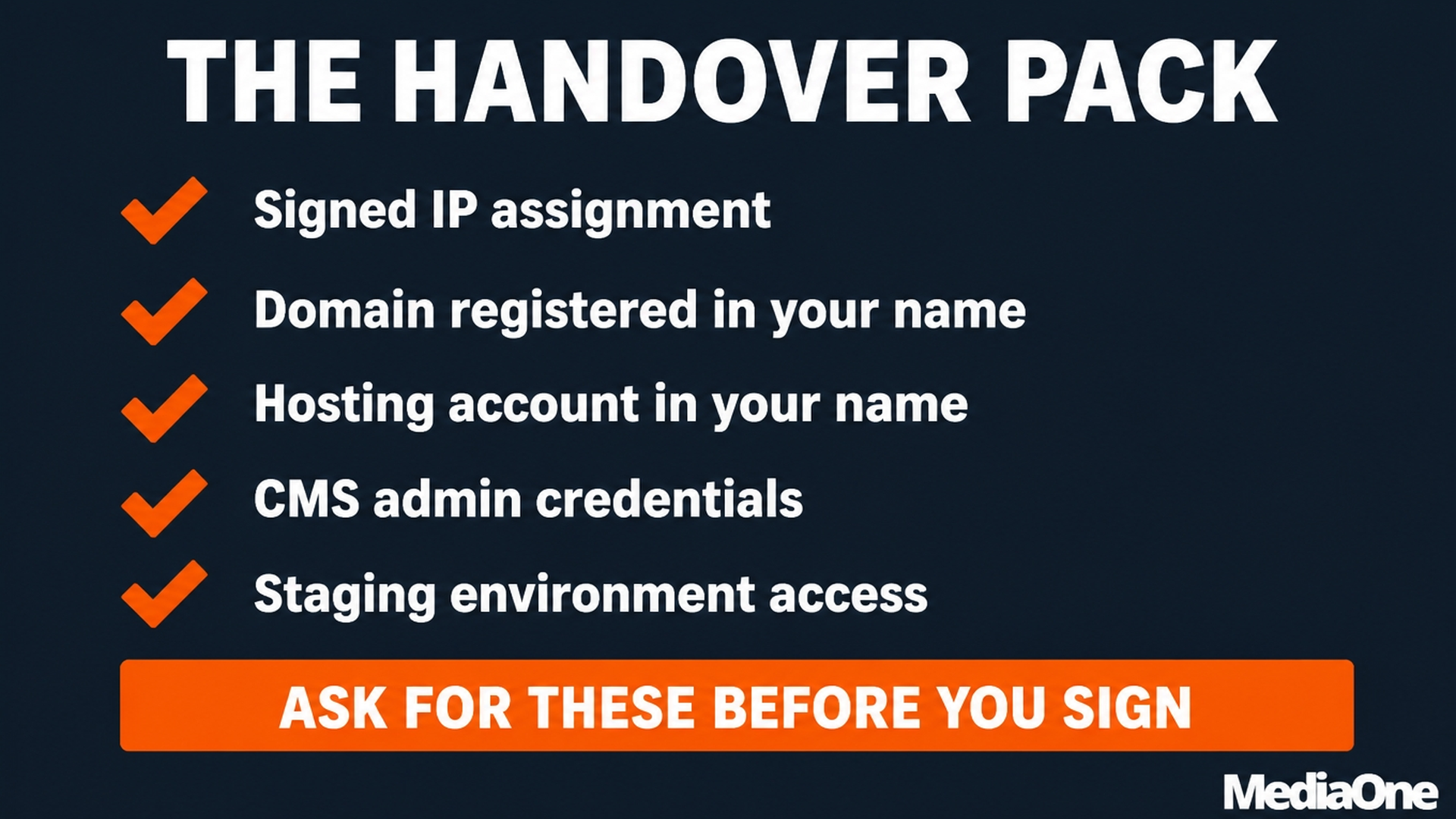
Figure 1: The documents and accounts to request before you sign anything
Why the domain matters more in Singapore than buyers realise
In Singapore, this is not only a commercial question. Under the rules for the .com.sg extension, applicants must be registered – or in the process of registering – with the Accounting and Corporate Regulatory Authority (ACRA), Enterprise Singapore or a relevant professional body, and a foreign company must appoint a duly authorised local agent as its administrative contact.
The registrant is therefore meant to be the business itself. If your agency is listed as the registrant of your company’s domain, the mismatch is not merely a red flag about intentions; it runs against the registration category’s own eligibility terms. The.SG categories and rules are published by the Singapore Network Information Centre (SGNIC) and are worth reading before you sign anything.
How Web Design Agencies in Singapore Differ from In-House Teams and Freelancers
Agencies, in-house teams and freelancers are not interchangeable. The cheapest option on paper is often the most expensive over three years. The right choice depends less on the size of the build and more on how often the site changes after launch.
When an agency makes financial sense
An agency suits a one-off build with a defined scope and a set launch date, especially where several specialist disciplines are needed, such as strategy, UI/UX (user interface and user experience design), development, search engine optimisation (SEO) and copywriting. Check the handover terms before signing, as ownership and exit matter most. Ask whether the agency offers design and development under one contract, and whether ongoing support is included after launch.
Agencies that bundle design, development and platform work under a single contract reduce coordination overhead for multi-channel clients, and the web design services page is a useful example of how that scope is normally written up.
When an in-house team or freelancer is the better choice
For continuously merchandised sites, such as a Shopify store with weekly product launches, a part-time in-house designer can cost less than per-change agency retainers. A capable freelancer suits a single-channel site with light, predictable updates. Note that a freelancer whose background is in one narrow discipline may not cover the full scope of a brand’s website, and continuity risk rises sharply when the whole project rests on one person.

Decision table: agency, in-house or freelancer
|
Factor |
Agency |
In-house |
Freelancer |
|
Best for |
One-off builds, multi-discipline scope |
Continuous updates, e-commerce |
Small sites, light updates |
|
Upfront cost |
Highest |
Lowest per project, high payroll |
Low to moderate |
|
Ongoing cost |
Retainer or change-request rates |
Fixed salary |
Hourly or day rate |
|
Continuity risk |
Low if handover is documented |
Low |
High if one person |
|
Ownership control |
Depends on contract |
Full |
Depends on contract |
Confirm figures against current quotations, as rates for Singapore agencies and freelancers vary with demand and scope.
Web Design Services and the Website Types You Actually Need
The phrase “web design agencies” covers very different jobs. The scope you buy should follow the type of site you need. Design companies quote accurately when the brief is well written, so prepare a proper website brief before requesting pricing. Name the website type, the page list and the integrations.
Corporate and brochure websites
A corporate site is mainly a credibility asset for your business, with few pages and infrequent changes. Governance matters most. Can your team change a service description or publish a case study without calling the agency? If not, you will pay for every small edit. Ask whether the CMS suits non-technical editing before you sign.
Ecommerce and Shopify builds
Ecommerce is an operations system, not a brochure. Product catalogues, pricing rules, tax settings, payment gateways and inventory sync all need ongoing care. Singapore is home to 64 Shopify stores tracked by Brandsearch, generating a combined 4.9M monthly visits.
The platform cost is real and worth budgeting explicitly. On Shopify’s own Singapore pricing page, the Basic plan is S$39 a month (S$29 a month on annual billing), with an online card rate of 3.2% plus S$0.50 SGD per transaction and a 2% fee on third-party payment providers; point-of-sale Pro adds S$129 a month per location.
Confirm the current Shopify plans yourself, because platform pricing changes. App subscriptions add further recurring cost, so budget for these alongside merchandising changes, which are the real lifecycle expense.
WordPress and landing pages
WordPress suits many Singapore SME sites because it is flexible and widely supported. Its risk lies in plugins and updates. Confirm who applies updates and who holds the hosting login – a well-known example of how the same platform can be governed well or badly. If you would rather compare platforms and tools before committing, our review of free web design tools and what they cost you later sets out the trade-offs.
For WordPress specifically, our WordPress website design service covers how themes, plugins and updates are handled after launch. Single-purpose landing pages are cheaper and faster to build, so design them to be reused across campaigns.
Mobile-first and responsive design as a baseline
Responsive design is the minimum, not a premium feature. Specify it as a testable acceptance criterion in your statement of work, for example, correct rendering on current iOS and Android browsers and a stated performance score at handover.
The Web Design Process: Discovery, UI/UX, Development and Launch
A well-run project moves through four stages, each a checkpoint where a buyer can test whether the agency is governing the work or simply producing screens. Ask for the milestone plan in writing before you sign. A vague timeline is usually the first sign of a vague process.
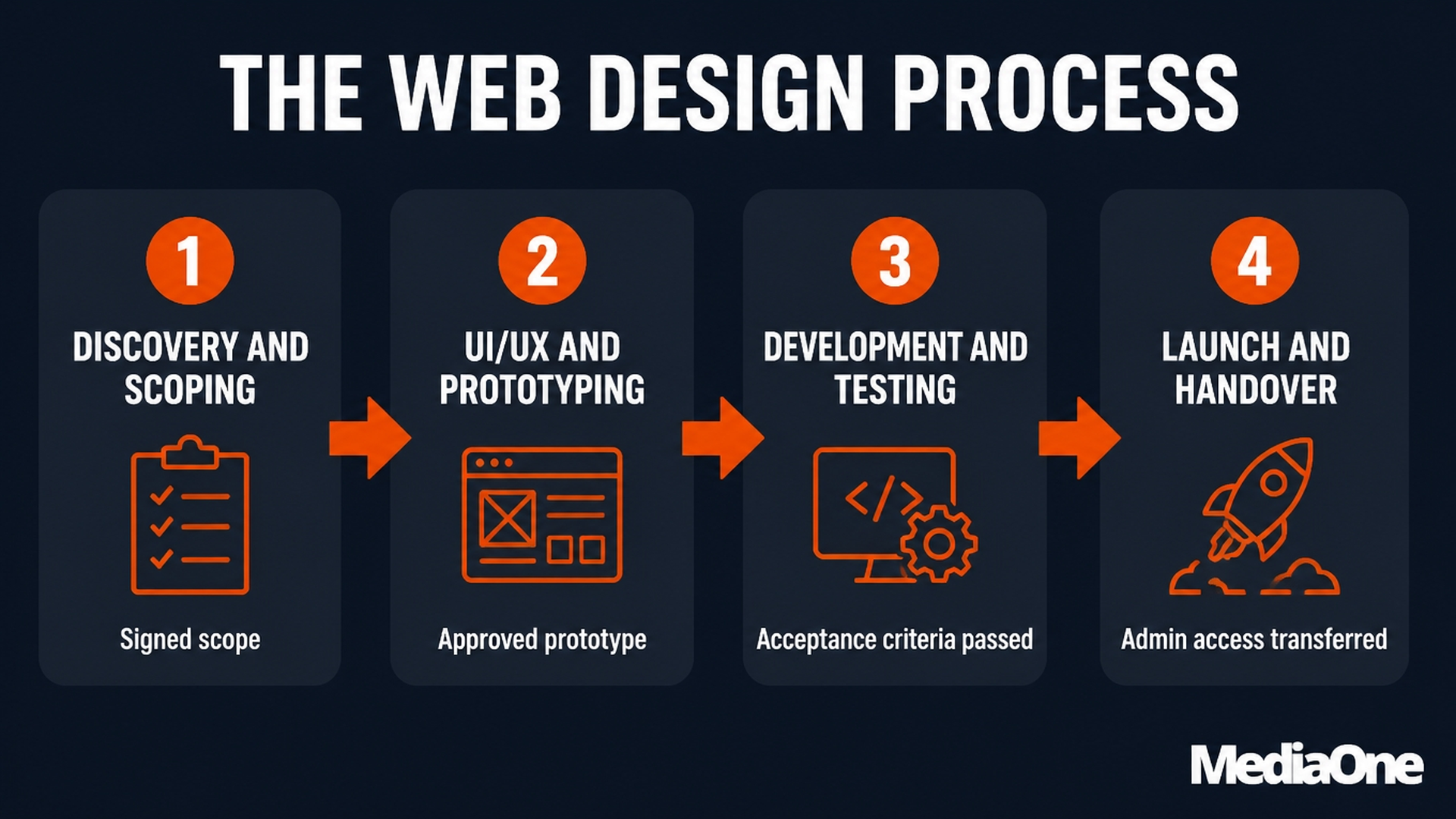
Figure 2: The four stages of a web design project and the checkpoint that closes each one
Discovery and scoping (weeks 1 to 2)
Discovery is where most governance gaps should surface. The agency should document your business goals, page inventory, integrations, content owners and success measures, then issue a scope with a fixed deliverables list. A generic proposal that never asks about your analytics, your marketing goals or your customer relationship management (CRM) tool often signals later change requests. Agencies serving Singapore clients should also confirm the scope covers the local search and service requirements you need.
UI/UX design and prototyping
Approve designs in stages, with a clickable prototype before development starts. Changing a layout in a prototype costs far less than changing it in code. Test the prototype against your brand guidelines, so the final interface reflects your brand consistently across every screen.
Development, SEO-ready structure and testing
Development should happen on a staging environment you can access, not a server only the agency controls. Write acceptance criteria into the statement of work, such as a stated Lighthouse performance score (Lighthouse is Google’s open-source page quality tool), WCAG 2.2 AA conformance and a list of tested browsers and devices.
Clean heading hierarchy, descriptive URLs and crawlable navigation belong in the build itself, and this is where the handover decision has technical consequences. Google publishes explicit guidance on URL structure and on making links crawlable; a build that follows it is one your own team can extend later without the original agency.
Launch, handover and post-launch checks
Launch is complete only when you hold the admin credentials, domain registrar login, hosting account and source files. After go-live, check redirects, forms, analytics tags and indexing within the first two weeks. A handover document listing every account and its owner is the clearest test of whether the agency intends to hand the project over, and it should name the support contact for each service.
One more Singapore-specific item belongs in handover. If the site collects personal data through enquiry forms, an organisation handling personal data in Singapore must designate at least one Data Protection Officer under the Personal Data Protection Act. The PDPC’s guidance for organisations and DPOs sets out the obligations, and the privacy notice and consent flow should be part of the build, not an afterthought.
What Website Design Costs in Singapore in 2026
“How much does a website cost?” is unanswerable without a scope, which is why most quotes differ by a factor of five or more for the same brief. What can be answered is the shape of the market. MediaOne publishes planning bands by website type, and they are a more useful starting point than any single headline number.
|
Website type |
Planning range (S$) |
What drives the upper end |
|
Corporate, template-based |
2,500 – 5,000 |
Page count, copywriting, integrations |
|
Corporate, custom-built |
4,000 – 8,000 |
Bespoke layout, CMS build, SEO setup |
|
Retail or branded, template-based |
4,000 – 8,000 |
Branding depth, catalogue size |
|
Retail or branded, custom-built |
6,000 – 20,000 |
Custom design, commerce features |
|
E-commerce, template-based (to 200 products) |
4,500 – 10,000 |
Payment gateways, tax rules, inventory sync |
|
E-commerce, custom-built (to 200 products) |
6,000 – 15,000 |
Custom checkout, ERP or CRM integration |
|
E-commerce, template-based (500+ products) |
8,000 – 20,000 |
Catalogue scale, merchandising |
|
E-commerce, custom-built (500+ products) |
15,000 – 40,000 |
Custom features, multi-market setup |
These are the guide prices in MediaOne’s published website design cost guide, and they carry the same caveat that guide carries: they are planning figures, not quotations. The same guide puts a domain name at roughly S$10 to S$20 a year, a content management system build at S$1,000 to S$10,000, and specialised UX design time at around S$150 an hour, which is a useful reminder that the build fee is rarely the whole cost.
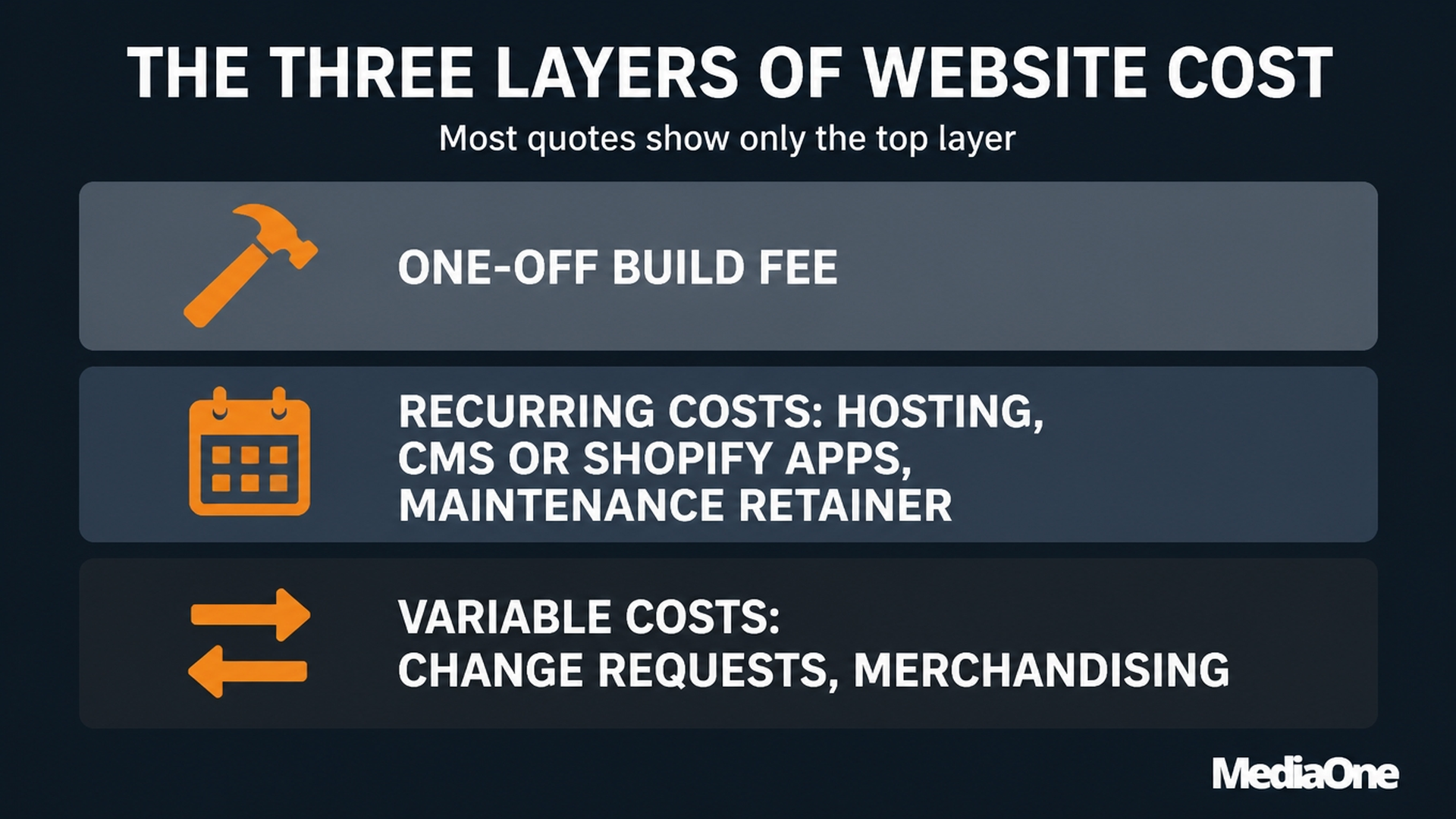
Figure 3: The three layers of website cost – and the layer most quotes leave out
The post-launch costs most quotes omit

- Hosting. Usually billed annually and rarely mentioned in the launch quote.
- Platform or licence fees. A CMS licence, Shopify subscription or premium plugin renews forever. Shopify Basic alone is S$39 a month on monthly billing.
- Maintenance retainer. Updates, backups and security monitoring are either included or billed separately. Establish which.
- Change-request rates. This is where most lifetime spend accumulates. Ask for the rate in writing, and ask whether it is billed per hour or per block of hours.
- Third-party app subscriptions. Ecommerce builds accumulate apps, each with its own recurring fee.
Comparing Agencies on Governance, Not Portfolio
Ranking agencies by portfolio alone rewards whoever has the strongest deck. The criteria that decide how the relationship ends are ownership, exit and lifecycle cost. For a professional business, these determine whether the solutions you buy still work for you when the relationship changes.
For a directory of named Singapore agencies rather than a framework, see our round-up of web design agencies in Singapore and our web design agency list.
Criteria used for the comparison
Score each agency against five axes: ownership and exit, lifecycle cost, editorial independence, delivery evidence, and design and technical fit. Governance is weighted above aesthetics. This weighting is this guide’s own recommended method, not an established industry standard. Agency terms change often, so verify specifics directly with each firm, including pricing and how clients are charged after launch.
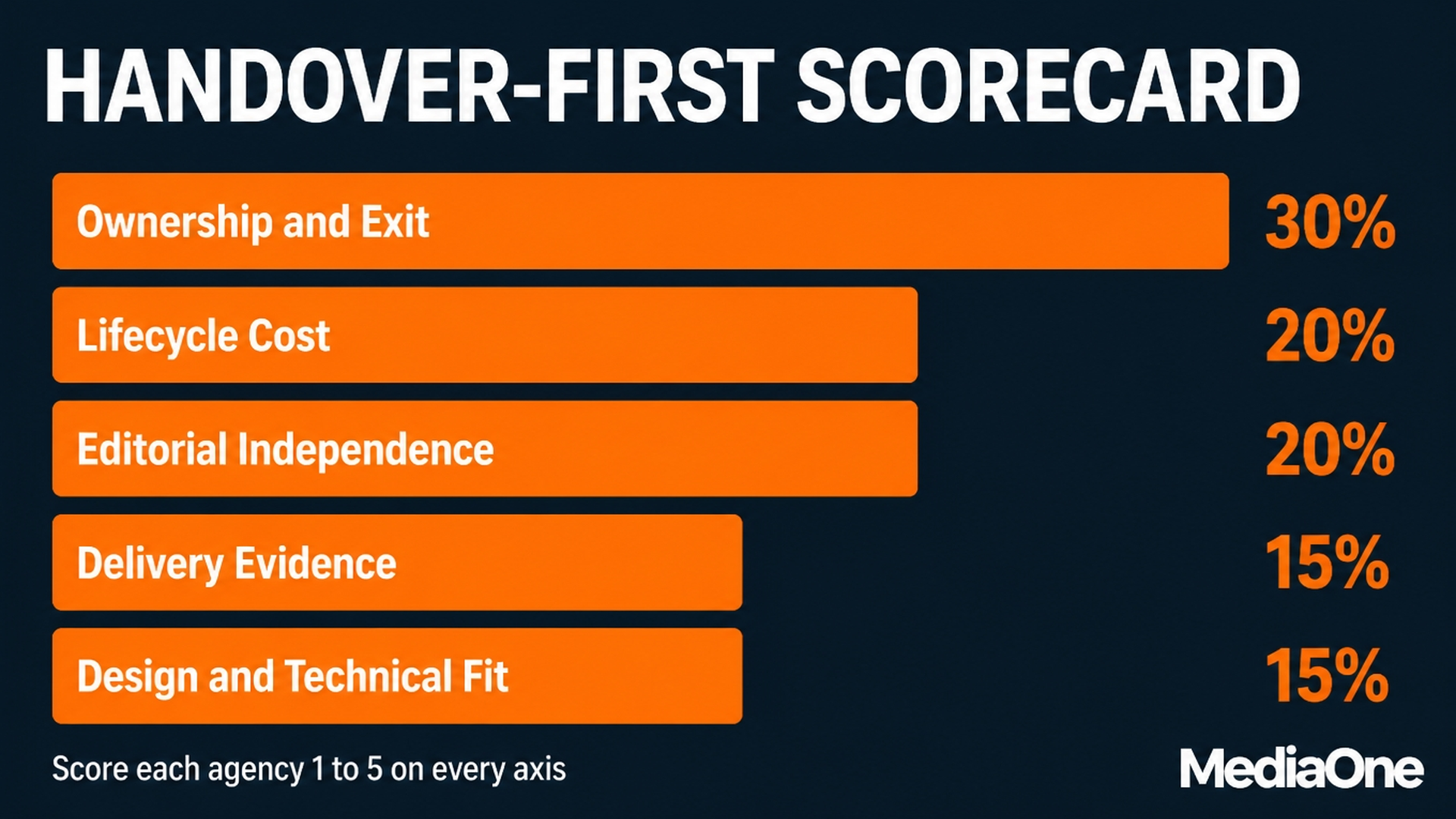
Figure 4: The Handover-First Scorecard – five weighted axes, with governance weighted above aesthetics
Quick comparison worksheet
The table below is a self-assessment template. It names no agencies and implies no ranking. Buyers complete the scores using each agency’s own written answers.
|
Axis (weight) |
What to verify |
Your score (1 to 5) |
|
Ownership and exit (30%) |
Signed IP assignment; you hold the registrar and hosting accounts |
|
|
Lifecycle cost (20%) |
Written post-launch change-request rate and hosting or licence terms |
|
|
Editorial independence (20%) |
Your staff can publish without the agency |
|
|
Delivery evidence (15%) |
Named Singapore references and staged milestones |
|
|
Design and technical fit (15%) |
Responsive behaviour, CMS suitability, page-speed approach |
Using the table as a shortlisting worksheet
Score each firm you shortlist. Ask prospects for their handover pack: the signed IP assignment, administrator credentials and a staging environment. An agency that hesitates to provide these before you sign has told you how the exit will go. The best shortlist comes from comparing these written answers side by side. If you are still at the stage of working out what to look for, our guide to choosing forward-thinking web design firms covers the same ground from a different angle.
The Scored Selection Checklist
Most buyers choose on portfolio and price, then find the real differences a year later. The more useful question is governance: who can change the site, who owns it, and what it costs to run. Design can be revised later. Control of the domain, the content management system and the content is hard to recover once lost. Businesses that treat these as core services rather than add-ons tend to avoid that trap.

Step-by-step selection framework
Score each shortlisted agency after its pitch on the same five weighted axes, rating each 1 to 5:
- Ownership and exit (30%): signed IP assignment, domain registered in your name, admin credentials held by you.
- Lifecycle cost (20%): build fee, hosting, licences, and post-launch edit rates.
- Editorial independence (20%): can your staff publish without contacting the agency?
- Delivery evidence (15%): references from comparable Singapore projects and a milestone plan.
- Design and technical fit (15%): responsive behaviour, content management system suitability and page-speed approach, including whether a custom build or a standard platform suits your brand and support needs.
Rank agencies on governance first, aesthetics last. Weighted in this way, an agency with a mediocre portfolio and clean handover terms will outscore a beautiful build with a locked handover, which is the intended result.
Questions to ask every shortlisted agency
- Will the domain registrar account list us as registrant, not you?
- Who holds the content management system administrator login, and can we access it on day one?
- Is the post-launch change-request rate billed per hour or per block?
- Can you state acceptance criteria, such as a Lighthouse performance target and WCAG 2.2 AA conformance?
- Can you invoice against our purchase order?
- Will you hand over a document naming every account, its owner and the support contact for each service?
Red flags that should end the conversation
Walk away if the agency refuses to transfer the domain or hosting, keeps the only admin account, or resists writing ownership terms into the contract. A vague answer on post-launch rates is another warning, because most total cost accumulates there. The same caution applies to any development, SEO or marketing work bundled into the quote, since ownership of those deliverables should be written down too – which is why it is worth understanding how a build relates to the SEO services or content marketing that will follow it.
Choosing Your Web Design Agency with Confidence
Most agency selections are decided on how the portfolio looks, but the costlier decisions come later, when the site needs an update and nobody internally can log in. Treat the choice as a governance decision first and a design decision second. Design can be changed at almost any point. Ownership, handover and lifecycle cost are far harder to fix once the contract is signed.
Before booking a second meeting, complete the Handover-First Scorecard for each shortlisted agency. Score five axes from 1 to 5: Ownership and Exit (30%), Lifecycle Cost (20%), Editorial Independence (20%), Delivery Evidence (15%) and Design and Technical Fit (15%). Ask each agency to show the artefacts behind its score: a signed IP assignment, the registrar and hosting accounts in your name, and a staging environment you can access. Hold these artefacts before any launch, since they determine who controls the site long after the agency has left.
Your next step is to request a written handover pack and a post-launch change-request rate card from your top two agencies. Compare the answers, not the mock-ups. If you would rather have your own requirements scoped first, review our website design services or talk to our team.
Frequently Asked Questions
How long does a website project take with a Singapore agency?
A complete website design and launch typically takes about 4 to 12 weeks, which is the range MediaOne publishes on its website design service page. Independent agency guidance is consistent with the lower part of that band: a custom small-business site commonly runs 4 to 8 weeks, a simple brochure site 2 to 4 weeks, and an ecommerce build with payment and courier integration 6 to 12 weeks.
The range depends less on the agency than on how quickly your team returns content, approvals and decisions, which is the single most common cause of delay. Ask for a staged milestone plan with a named date for each phase and a client review window at every gate. Treat any promise of a full business website in a week or two with scepticism, and see Appendix A.
How much do web design agencies in Singapore charge?
Compare quotes on total lifecycle cost rather than the build fee alone. MediaOne’s published planning bands run from S$2,500 to S$5,000 for a template-based corporate site and from S$15,000 to S$40,000 for a large custom ecommerce build, with the middle of the market landing between S$4,000 and S$15,000 depending on scope.
Ask each provider to state the build fee, hosting and licence costs, the maintenance retainer, and the rate for change requests. Change requests are where most spending accumulates after launch, so they deserve the same scrutiny as the headline quote.
Should I choose WordPress, Shopify or a custom content management system?
Pick the platform your own team can run after launch. WordPress suits content-led corporate sites. Shopify suits merchants who want a managed ecommerce stack, at S$39 a month on the Basic plan in Singapore on monthly billing. A custom system makes sense only when your workflow is genuinely unusual, because it ties you to the agency that built it. Whatever you choose, confirm that you hold the administrator credentials and the licence in your own name.
How do I know if an agency’s security and maintenance practices are adequate?
Ask for a written security baseline before signing. It should cover regular software updates, backups stored outside the live server, multi-factor authentication on admin accounts, and a documented process for restoring the site after an incident. If an agency cannot describe these practices plainly, treat that as a red flag.
Do I need anything specific for a Singapore domain?
Yes. The .com.sg category requires the applicant to be registered, or in the process of registering, with ACRA, Enterprise Singapore or a relevant professional body, and a foreign company must appoint a duly authorised local agent as its administrative contact. The practical consequence is that the registrant should be your business, not your agency. Check the SGNIC rules for the exact wording.
What should I put in the contract about ownership?
An intellectual property assignment transferring ownership of the design, code and content to you on payment; the domain and hosting accounts in your name; admin credentials for the CMS and any third-party services; and a written change-request rate. If a provider resists putting these in writing, that resistance is the most useful information the pitch has given you.