Guest posting is one of the oldest search marketing tactics and is still widely used. HubSpot reports that nearly 65% of link builders call guest blogging the most popular tactic, citing Authority Hacker’s link building survey. BuzzStream, citing uSERP’s State of Backlinks report, puts guest posting third behind content marketing and digital PR – so popular, yes, but no longer automatically the leader.

What has changed is the supply of easy placements. The choice today is between buying links at volume and writing for a specific audience, then letting the link follow. This guide takes the second approach, for Singapore marketers, founders and content leads who want placements that keep delivering. It complements the link building services and content marketing work we do for clients, and the local playbook is set out in our local link building guide.
Key Takeaways
- Treat guest posting as content creation. Writing for a relevant audience earns durable links. Volume link-building does not.
- Set one primary goal first. Brand awareness, referral traffic, lead generation and search authority each call for different sites and different metrics.
- Vet before you pitch. Score sites on relevance, audience fit, editorial quality, SEO metrics and content value. Drop any site that fails on relevance or editorial quality.
- Know the line Google draws. Paid or exchanged links placed to manipulate rankings are link spam. Paid placements are permitted only when the link is qualified with rel=”sponsored” or rel=”nofollow”.
- Favour Singapore-facing publications. A local industry site often reaches more of the peers, partners and buyers you want than a higher-metric international blog.
- Stop when outcomes fall. Pause outreach if response rates, placement quality or referral traffic drop for two consecutive review periods.
What Is Guest Posting? A Direct Answer
Guest posting means writing an article for another website’s audience, with a byline, a short author bio and usually a link back to your site. The host editor decides what goes live. A good guest post serves the reader first; the link is secondary.
How to Start Guest Posting: Six Steps
- Set one primary goal – brand awareness, referral traffic, lead generation or search authority.
- Shortlist relevant sites – publications and blogs your clients and peers actually read.
- Read each site before pitching – recent articles, guidelines, sponsored-content disclosure.
- Find the right editor – check the masthead or the contributor guidelines.
- Pitch one specific idea – a short, personalised email proposing an uncovered topic.
- Measure what the placement delivers – track referral sessions and enquiries, not just the link.
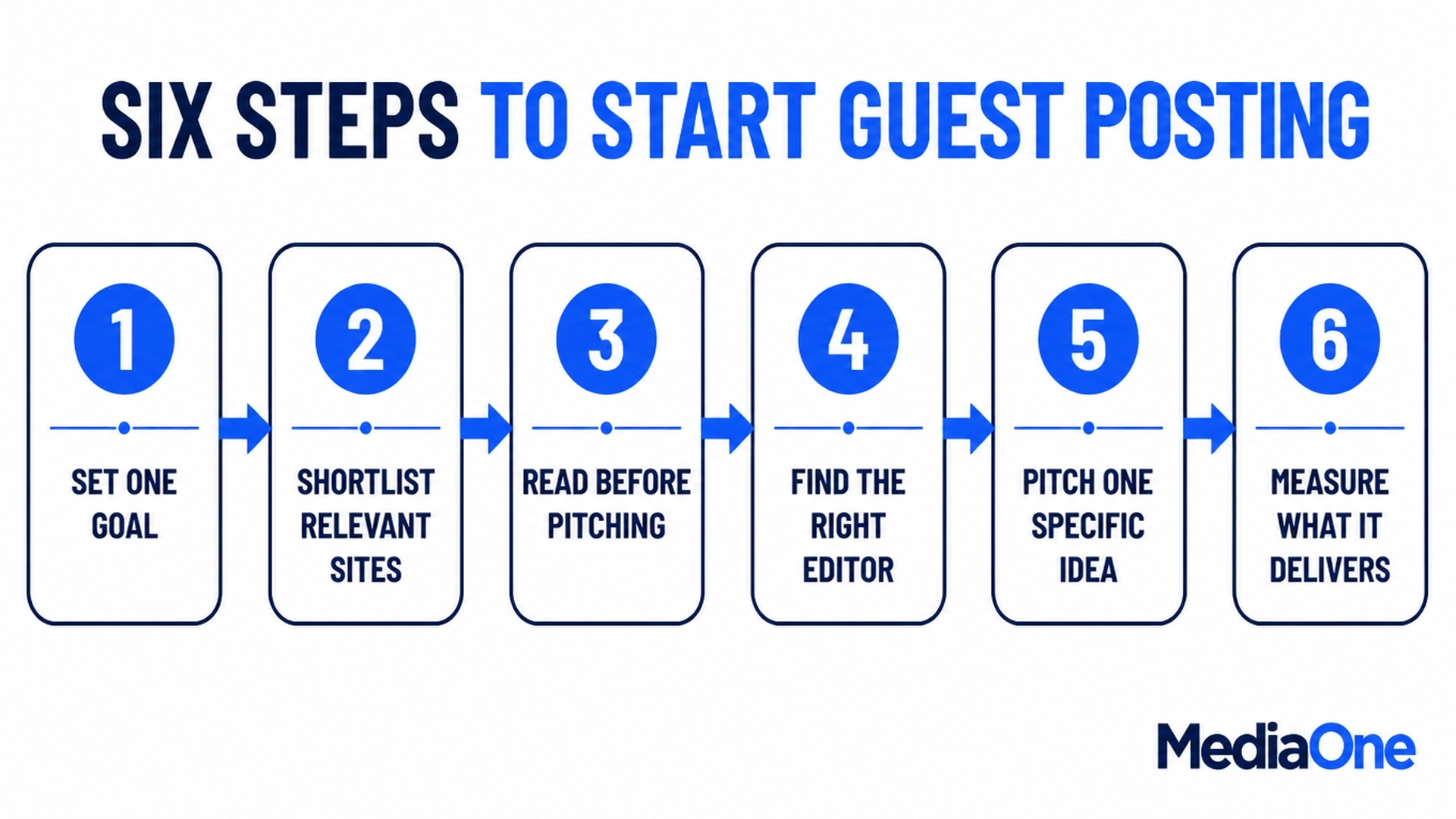
Figure 2: Figure 1: The six-step guest posting process, from goal setting to measurement
Why Most Guest Posting Advice Is Out of Date
Most guest posting advice was written for a different era, urging mass pitching to high-authority sites. That approach now carries real cost and risk. Easy placements are crowded, and weak submissions often land on sites you would not want to be linked with – which can undermine your wider online reputation management effort and any link building you have already paid for.
Guest posting now pays only as content creation for a specific, relevant audience. BuzzStream’s guide puts it plainly: to succeed with guest blogging you need to think of yourself as a content creator instead of a link builder. Aim for a few well-chosen placements that a real reader would find useful even without the link. Its own analysis is blunter still – the pitch emails it receives daily, it says, are never good.

What Is Guest Blogging and How Does It Differ From Other Content Placement?
A guest post is an article written by an outside contributor and published on another site, with a byline, a short author bio and often a link back to the author’s website. The host site’s editor decides what goes live.
The term is easily confused with other placements:
- Sponsored content is paid for by a brand and should be labelled as such.
- Press releases announce organisational news and are rarely treated as editorial contributions.
- Advertorials are paid placements written to look like editorial – Google treats payment for links inside them as link spam unless the link is qualified.
A genuine guest post is contributed for editorial value. If money changes hands for the placement itself, it has become sponsored content, and both Singapore’s advertising code and Google’s spam policies have something to say about how it must be handled (see below).
Guest Posting Versus Link Building
Many teams still treat guest posting as a source of backlinks, producing thin articles that editors reject quickly. Done well, the same contributions also build reach: a useful article gets shared beyond the host site’s own readers, and a short pitch that offers a genuinely useful angle is far more likely to earn a placement than a generic request.
A placement that a regional industry reader finds useful gets shared, remembered and followed up by peers, recruiters and partners. A link on a high-metric site that nobody in your field reads delivers little of that.
Benefits of Guest Posting: Visibility, Credibility, Networking and Traffic
The placement is only the delivery vehicle. What you earn comes from being useful to a specific reader.
Visibility, credibility and networking
A guest article reaches readers who have never heard of you, and those readers already trust the publication. For a Singapore professional, a placement on a well-read local industry blog or regional trade newsletter often reaches the hiring managers, procurement leads and peers who matter. Appearing beside established voices signals that an editor judged your work worth publishing. The most underrated benefit is the relationship: editors may commission you again or introduce you to contributors, and these relationships build over years in a way a single link does not.
Referral traffic and search performance
A link count shows how many pages point at you, not whether anyone arrived. Referral sessions from a relevant placement are usually fewer than a viral piece would deliver, but the visitors are far better qualified. A guest post does not replace publishing and ranking on your own domain – it is one input into a site that already serves its own audience. When the placement is supported by a coherent content marketing programme, the returns compound.
|
Benefit |
What it looks like in practice |
How to measure it |
|
Audience reach |
New readers in your target sector via the host publication |
Visitors from the referring page |
|
Credibility |
Your byline beside established voices |
Enquiries that cite the piece |
|
Networking |
Replies from editors, invitations to contribute again |
New professional connections tied to the placement |
|
Referral traffic |
Visits from the author bio or a contextual link |
Referral sessions by source domain |
|
Search support |
Relevant links from a topically aligned site |
Ranking movement for target queries |
Log each placement in a spreadsheet or a free CRM, recording the date, referral sessions and enquiries it produced. That shows which publications earn their time.
Google’s Stance and the Real Risk
Google does not penalise guest posting as an activity. Its spam policies target link spam: links bought, exchanged or placed mainly to manipulate rankings. The policy names the specific pattern to avoid: “advertorials or native advertising where payment is received for articles that include links that pass ranking credit, or links with optimised anchor text in articles, guest posts, or press releases distributed on other sites”.
Crucially, the same page sets out the legitimate route. Google acknowledges that buying and selling links is a normal part of the web economy for advertising and sponsorship, and states that such links are not a policy violation so long as they are qualified with a rel=”nofollow” or rel=”sponsored” attribute. In other words: paid placements are not banned; undisclosed paid placements that pass ranking credit are.
Google’s detection is not manual only. In December 2022, Google confirmed that its AI-based SpamBrain system can detect both sites buying links and sites used for the purpose of passing outgoing links. A manipulative placement may stop passing ranking value even without a manual action.
Before any pitch, ask:
- Would this post exist without the link? If not, it is probably a link transaction.
- Does the link sit in editorial content? Contextual links differ from bylines or sitewide footers.
- Is the site publishing for readers, or for anyone who pays? Sites accepting any submission at a fixed price are rarely safe.
Avoid paid placements presented as editorial, keyword-stuffed bylines and mass publishing of low-quality articles.
Guest Posting Relevance in 2026
Editors are flooded with pitches, and the bar keeps rising. They reject thin, generic drafts quickly, and AI answer engines reward pages with original data, clear definitions and attributable claims – so a guest post built on a specific, sourced insight is far more likely to be quoted than a generic listicle.
For Singapore professionals, fewer, better placements on sites your peers read will do more for credibility and referral traffic than high-volume generic posts. A local SEO lens helps here: a link from a Singapore trade publication or industry body usually carries more weight for local intent searches than a higher-metric overseas blog nobody in your market reads.
Setting Guest Posting Goals and Cadence
Most guest posting campaigns fail before the first pitch, because nobody decided what the placement was for. Pick one primary goal and let it guide which sites you approach, what you write and how you measure results: brand awareness, referral traffic, lead generation or search authority.
Cadence comes next. A publisher producing at scale might post several times a week, but that is not a benchmark a solo professional should chase. Two or three well-researched placements a month is a realistic target alongside a full-time job. Quality sets the ceiling, not the calendar.
|
Goal |
Leading metric |
Example target |
Review cadence |
|
Brand awareness |
Named mentions and new followers from the post |
2 relevant placements per quarter |
Quarterly |
|
Referral traffic |
Sessions from each post’s link in analytics |
50+ qualified sessions per placement |
Monthly |
|
Lead generation |
Enquiries tagged to the referring post |
1 enquiry per 3 placements |
Monthly |
|
Search authority |
Rankings and impressions for target topics |
Visibility gains on 3 to 5 keywords |
Quarterly |
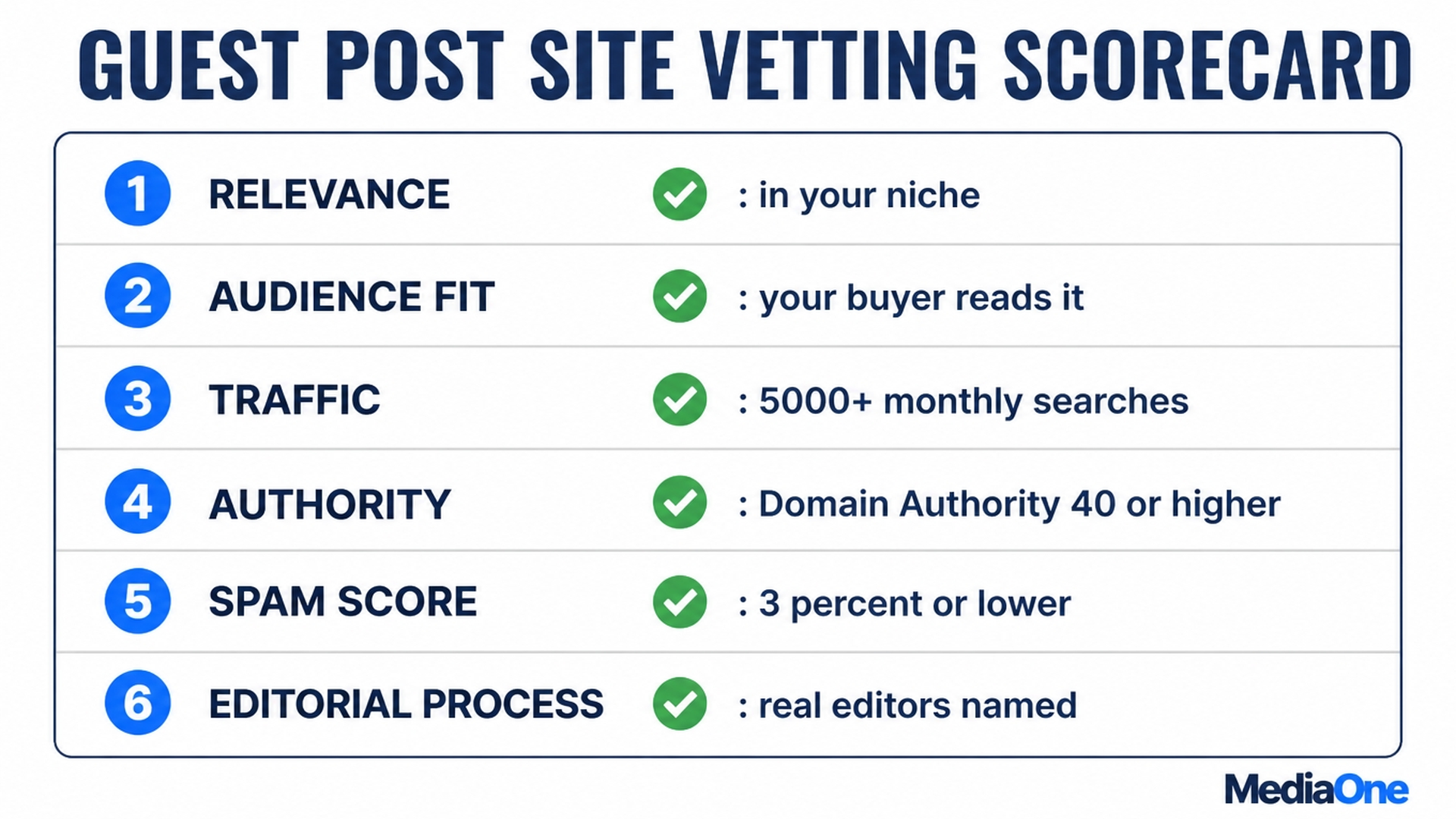
Figure 3: Figure 2: Matching each guest posting goal to one leading metric and a review cadence
Identifying Your Niche and Target Audience
Define the reader before the website. Write one sentence describing the person you want to reach, such as “a Singapore HR director evaluating payroll software”. The sites that matter are the ones that reach that person.
Then map the topics where your expertise helps that reader, across three columns: questions the reader asks, problems you have solved, and angles few people cover well. The overlap is your niche.
|
Reader question |
Problem you have solved |
Angle few cover well |
Niche fit |
|
How do I choose payroll software for a 50-person firm? |
Migrated a client off manual spreadsheets |
CPF and payroll deadlines for small teams |
Strong |
|
Is a cloud accounting tool worth the cost? |
Compared three tools for a client |
Costs for businesses with fewer than 10 staff |
Moderate |
|
What does a payroll audit involve? |
Ran a review for a client |
Checklists for non-finance managers |
Strong |
Keep the list narrow. Three to five topics can sustain a year of placements without diluting your authority. If outreach and content feel like two separate jobs, that is usually a sign to bring in a team that does both – which is where a content marketing engagement usually starts.
Finding Guest Posting Opportunities
Start with two free searches. The first is a Google query such as “write for us” or “submit a guest post”, which surfaces sites that openly invite outside contributors. The second is a competitor backlink review: run three to five competitors’ domains through a backlink tool such as Ahrefs or Semrush, then filter for editorial articles. Many of those pages are guest blog posts, showing which publications accept contributions in your niche.
Next, review each site’s recent articles, submission guidelines and whether real editors are named. Then build a sourcing checklist:
- Does the site publish articles in your niche each month?
- Does it name an editor or accept pitches through a clear route?
- Are its contributor guidelines published and current?
- Does its audience match your persona sentence?
- Would you be comfortable reading the site yourself?
Keep the working list in a spreadsheet or a free CRM. Record the site, editor, submission route, guidelines link, last-checked date and pitch status. A few dozen well-qualified sites are more useful than hundreds of unchecked ones.
Competitor and SERP Analysis for Finding Sites
Search your core topic and note which publications appear repeatedly on the first page, then which competitors have bylined articles on them. That overlap shows where your audience already reads.
Apply Three Thresholds as a Starting Filter
These are working filters, not verdicts:
|
Metric |
Baseline |
Why it matters |
Source |
|
Organic traffic |
Above 5,000 searches a month |
Shows a real readership |
BuzzStream |
|
Domain Authority / Rating |
40 or higher |
Indicates an established domain |
HubSpot |
|
Spam Score |
3% or lower |
Flags link-farm footprints |
HubSpot |
BuzzStream’s own screening filter is looser than the HubSpot baselines – DR 25 or above with 5,000+ monthly traffic – and its author notes he sometimes raises the traffic bar to 10,000. The 5,000-search figure is the traffic bar from BuzzStream’s guest post site analysis; the Domain Authority and Spam Score baselines come from HubSpot’s guest blogging guide.
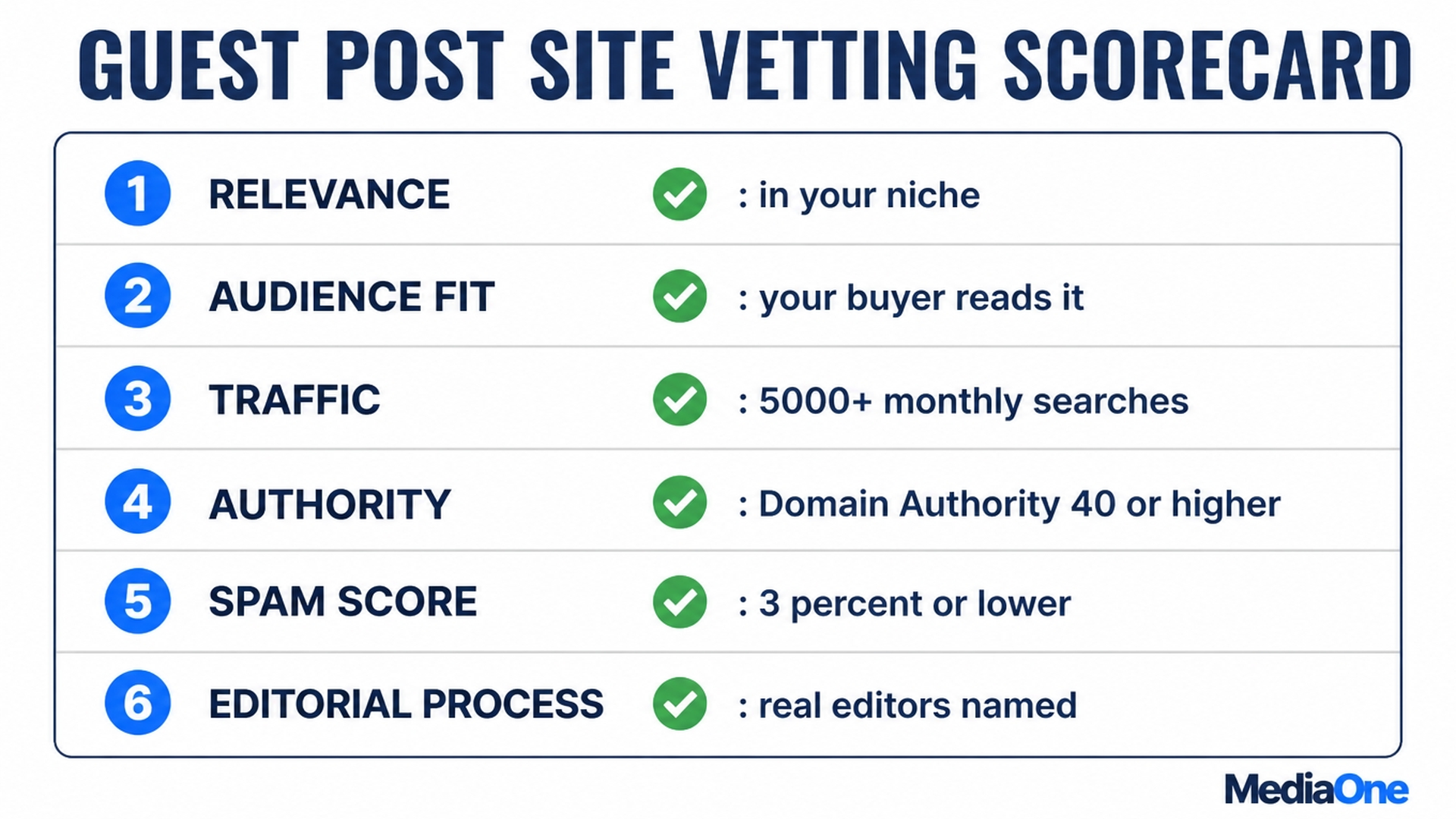 Figure 4: Figure 3: The pre-pitch vetting scorecard with working baselines for each criterion
A Singapore trade publication with 1,500 monthly searches and a strong local readership can beat an international blog that clears every threshold but has no readers in your market. Relevance and editorial quality decide the shortlist; metrics only filter the list down.
Drafting and Personalising Outreach Emails
A strong pitch email is short, specific and easy to answer:
- Subject line: name the topic and reader, such as “Payroll checklist for small Singapore firms”.
- Opening: one sentence showing you have read the site’s recent work.
- Pitch: two or three sentences on the article, its angle and why its readers need it.
- Credibility: one sentence on your relevant experience.
- Close: a clear, low-effort ask, such as whether the editor would like a full draft.
Personalise each email with a detail a careful reader would notice. Do not send the same template to every site, as editors reject generic pitches quickly.
Finding editor contacts. Start with the site’s contributor or “write for us” page, which often names an editor or gives a submission address. If none is listed, check the masthead, author pages and about section, and use professional networking profiles to confirm a name and role. Record each contact with the date you verified it, because staff changes often.
Cost and Budget
There is no published Singapore rate card for guest placements, and pricing varies widely by publication and niche. What is documented is the vendor markup. BuzzStream’s cost analysis of more than 26,000 guest-post sites puts the average estimated direct cost at about US$364.76, against an average vendor price of about US$1,459.06 – roughly four times more, and an indicative US-dollar benchmark rather than a local one. A separate BuzzStream pricing study reports an average of $295 buying directly from a site against $461 through a vendor.
Before paying anything, confirm the publication, the disclosure wording, and whether the link is editorial and unqualified. If the answer is that the payment buys a followed link, you are buying link spam under Google’s policy – the correct handling is a rel=”sponsored” or rel=”nofollow” attribute.

Your main cost is time. Measure cost per qualified enquiry, not cost per link.
Pre-Pitch Checklist: Reading a Site Before You Write
Before pitching a guest posting opportunity, read the site’s last ten articles and check:
- Are bylines real people with visible roles and profiles?
- Do articles answer readers’ questions in depth, or are they thin lists?
- Are sponsored pieces clearly labelled?
- Are outbound links contextual, or clustered in bios and footers?
- Does the editor respond to pitches and show a visible editorial process?
If three or more answers are negative, drop the site whatever its metrics say.
Singapore’s Disclosure Rules for Paid Placements
If a placement is paid, Singapore’s self-regulatory framework applies as well as Google’s. The Advertising Standards Authority of Singapore (ASAS), under CASE, administers the Singapore Code of Advertising Practice, and its Guidelines on Interactive Marketing Communication and Social Media require that disclosure of sponsored content be clear and prominent.
In a written Parliamentary reply, the Ministry of Digital Development and Information set out the position: those who post commercial content without disclosing that it is sponsored are in breach of the Code and will be asked by ASAS to amend or remove it. The reply also notes that the Consumer Protection (Fair Trading) Act protects consumers against unfair practices, including non-disclosure of sponsorship to the extent it misleads consumers in relation to a consumer transaction.
The practical takeaway for a guest posting programme is simple: editorial placements need no label, paid placements need a label and a qualified link. Anything else is a compliance risk on two fronts.
Vetting Contextual Links from Sitewide and Bio Links
A contextual link sits inside body copy and supports a point the reader is following. A sitewide link appears on every page through a footer or sidebar. An author-bio link is a credit line many sites allow without editorial judgement.
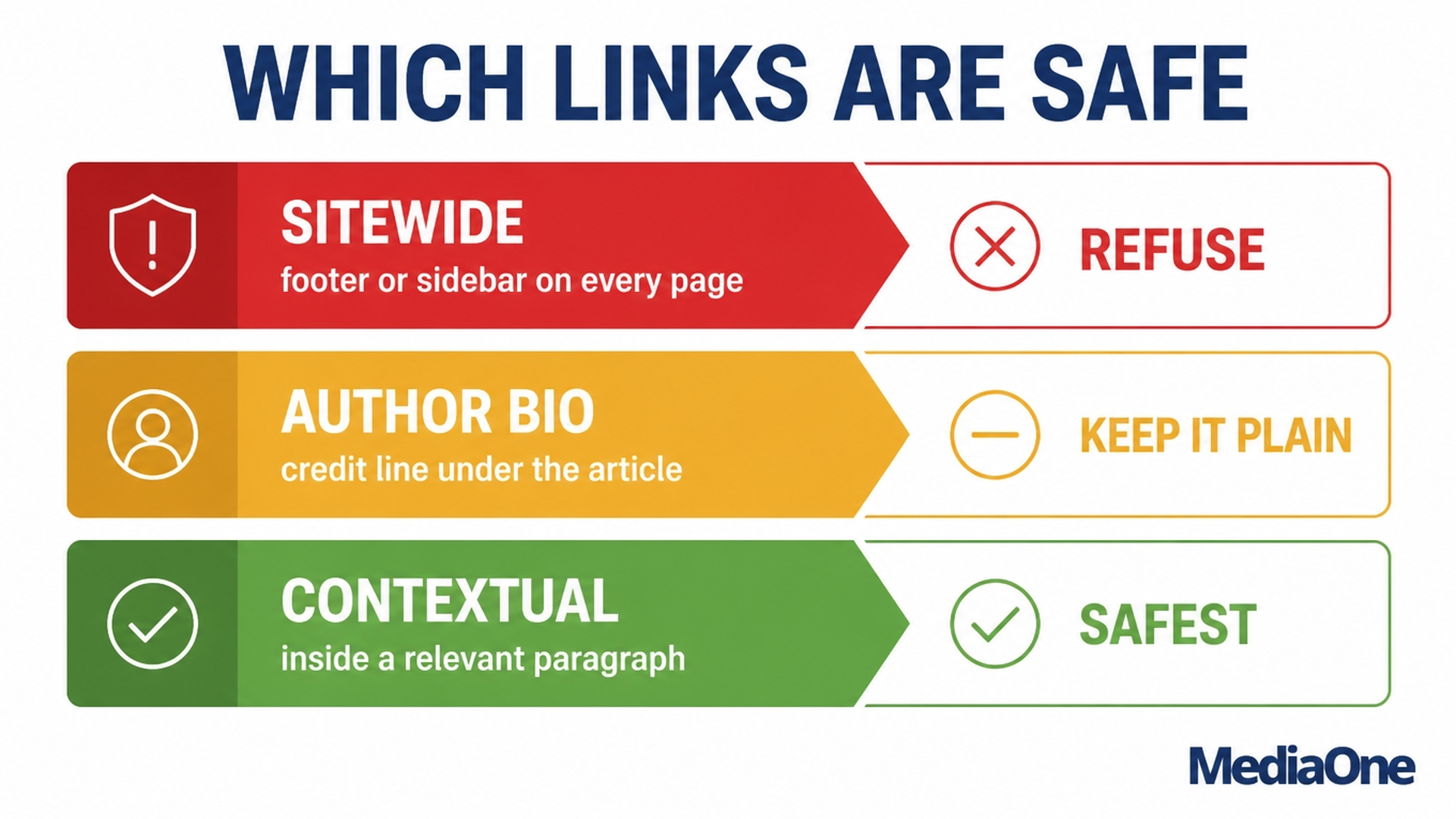
Figure 5: Figure 4: Risk ladder for link placement types, from contextual to sitewide
Google’s spam policy explicitly lists “widely distributed links in the footers or templates of various sites” as link spam, so a sitewide placement is not a grey area – it is a named pattern. During vetting, ask the editor where the link will sit and whether it fits a relevant paragraph. Check that the hosting site is a real publication with organic traffic, and note whether the deal demands promotion on social media. Refuse any deal that promises a sitewide link, a link in every author bio, or a fixed number of links per month. Treat a flood of such offers as a warning sign rather than a gain.
For teams that would rather not run this vetting and outreach in-house, our off-page SEO and link building team runs the audit, gap analysis and placement process end to end.
Tracking Outcomes Beyond Rankings
Track the outcomes a single placement can influence:
- Referral sessions from the post, filtered by source domain.
- Enquiries tagged to the referring page or a unique bio link.
- Repeat commissions or invitations from the same editor.
Review monthly. No sessions, enquiries or conversations after three months signals a need to adjust the niche or the website, not to pitch more. Keep a simple research log alongside your wider strategy so you can compare which host publications send readers who actually engage – the same discipline we apply when reporting on SEO performance for clients.
When to Stop Outreach

Pause outreach when any of these holds for two consecutive review periods:
- Editor replies fall below one in five pitches.
- Placements turn heavier on sponsorship or thinner in quality.
- Referrals from recent guest posting reach zero.
- You are producing content you would not want a client to read.
Pausing lets you rebuild your list and review your templates before resuming.
Treat Guest Posting as Content Creation, Not Link Acquisition
Guest posting is content creation for a specific reader. The link is a byproduct. Set one primary goal, define your niche and vet each site before pitching, so every placement serves a reader who needs your expertise.
Google’s spam policies target link schemes, not guest posts as such. Paid placements presented as editorial, sitewide author-bio links and volume outreach fall into that category. A few trusted editorial relationships last longer than any tactic, and they sit inside a broader SEO programme rather than replacing one.

Count the referral sessions, enquiries and professional connections each placement brings. If you would like a second opinion on whether your current placements are helping or quietly hurting, talk to our team.
Frequently Asked Questions
Is guest posting still worth doing in 2026?
Yes – but as content creation for a specific audience rather than a link acquisition channel. Nearly 65% of link builders surveyed by Authority Hacker call guest blogging the most popular tactic, so competition for good placements is high. A few well-chosen, relevant articles can still bring referral visitors, enquiries and professional contacts.
Does guest posting help Google rankings?
It can, indirectly, when the post is useful, and the link is contextual and unqualified. It stops helping when placements look like a paid network. Google’s spam policies target link schemes rather than guest posts themselves. Treat any link as a bonus to the reader’s value, never the main purpose.
How many guest posts should I publish each month?
Start small. A solo Singapore professional can realistically manage two or three strong placements a month. HubSpot’s guide suggests starting at around seven posts a month, but with an explicit condition attached: seven works if you are both the writer and the outreach specialist, and the bar rises to 10-12 if someone else writes. Scale up only when response rates and placement quality hold steady.
How do I find a guest posting site that is safe to pitch?
Score each candidate on topical relevance, audience fit, editorial quality and SEO metrics. As working baselines, HubSpot suggests a Domain Authority of 40 or higher and a Spam Score of 3% or lower; BuzzStream’s site analysis uses a traffic floor of 5,000 monthly searches. Read the site’s last ten articles before pitching. If they are thin, heavily sponsored or full of outbound links, walk away.
Keep it short, factual and tied to your expertise: your name, role, organisation, one or two relevant credentials and a single link to your professional profile. Avoid keyword-stuffed anchor text and multiple links. An editor is far more likely to keep a plain, credible bio.
What is the difference between a guest post and sponsored content?
A guest post is an editorially reviewed article written by an outside contributor, usually without payment for the placement itself. Sponsored content is paid promotion and should be clearly labelled – in Singapore, ASAS guidance requires clear and prominent disclosure, and Google requires the link to carry a rel=”sponsored” or rel=”nofollow” attribute if it was paid for.