| AI Summary
Small business marketing mistakes include vague goals, spending without a strategy, weak messages, poor tracking, website problems and teams working separately. Singapore SMEs can address these errors by choosing a measurable outcome, understanding their buyers, explaining their offer, checking results and assigning responsibility for enquiries. |
Small business marketing mistakes often begin before an advert runs. A business approves a campaign without deciding who should respond, what those people need or how the team will turn interest into sales.
Owners can then spend more time posting and paying for clicks while the same problems remain. Progress starts with finding the point where customers lose interest or cannot take the next step.
The six fixes below show how to review that journey. At MediaOne, we connect marketing strategy with campaign delivery, so each activity serves a defined business goal.
Key Takeaways
- Set a measurable goal. Give each campaign a target, deadline and owner so the team can judge its results.
- Understand buyers before choosing channels. Use customer conversations and sales records to decide where to spend.
- Explain the offer in everyday language. Connect product features with customer needs and support claims with evidence.
- Follow spending through to sales. Compare campaign costs with qualified enquiries, purchases and the money left after delivery.
- Connect the website and customer service. Test booking steps, check offers and give every enquiry an owner.
The Six Small Business Marketing Mistakes at a Glance
Each mistake affects a different part of the customer journey. The table helps you identify where to begin before changing campaigns or increasing spending.
| Mistake | What it looks like | First fix |
| No defined goals | Reports list activity without showing progress | Choose one business outcome and deadline |
| Spending before strategy | Channels receive money without a buyer focus | Identify the buyer, need and buying situation |
| Weak value message | Customers cannot explain why they should choose you | Connect the offer with a specific benefit |
| Ignoring data | Clicks receive attention while sales remain unknown | Record enquiries, sales and campaign costs |
| Website problems | Visitors struggle to enquire, book or buy | Test the main customer task on mobile |
| Misaligned teams | Offers and follow-up differ across departments | Share campaign details and assign ownership |
A business may recognise several errors. The best starting point is the problem preventing the next customer action, such as a broken form or an offer that attracts unsuitable enquiries.
Mistake 1: Setting Goals That Cannot Be Measured
“Increase awareness” gives a team little direction on its own. Without a defined audience or measure, almost any rise in views can look like success.
A stronger goal describes what should change and when. For a Singapore catering company, an illustrative target could be “Generate 12 qualified corporate catering enquiries within eight weeks.” That gives marketing and sales a shared outcome.
Give every target a business purpose
The SMART framework helps owners make goals specific, measurable, achievable, relevant and time-bound. Previous results should shape the target; a business with no sales history needs an initial test to establish a starting point.
The campaign brief should answer five questions:
- Outcome: What customer action supports the business?
- Measure: Which number records that action?
- Target: What result can the team reasonably work towards?
- Deadline: When will the team review progress?
- Owner: Who checks the results and decides what happens next?
The catering company also needs a shared meaning for “qualified”. An enquiry might qualify when the customer provides an event date, headcount and delivery location within the company’s service area.
Match the measure to the campaign
Different campaigns need different measures. A booking campaign can track completed appointments, while an awareness campaign needs evidence that it reached the intended audience.
| Campaign purpose | Main measure | Supporting measure |
| Increase bookings | Confirmed appointments | Booking completion rate |
| Generate business enquiries | Qualified enquiries | Cost per qualified enquiry |
| Sell products online | Completed purchases | Order value and returns |
| Encourage repeat orders | Repeat purchases | Time between purchases |
The supporting measure helps explain the result. If enquiries increase but few qualify, the next review should examine targeting and the offer before celebrating the higher total.
Mistake 2: Spending Before Understanding the Buyer
A popular platform can attract an owner’s attention before the business has identified its customers. The result is a campaign built around available advertising options, with little evidence that buyers use them during purchase decisions.
Customer research gives that decision a basis. Sales records reveal who already buys, while conversations explain why they chose the business and what nearly stopped them.
Build a buyer description from evidence
A buyer description should help the team choose a message and channel. Broad labels such as “working adults” leave too many unanswered questions about need, location and purchase timing.
A Singapore air-conditioning servicing company could begin with a narrower group: households within its service area seeking routine maintenance. Customer discussions can then explore:
- What prompted the search for servicing?
- Which concerns delayed the booking?
- What information helped the customer choose?
- How did the customer first find the company?
- Who approved the booking or payment?
A small set of interviews provides starting ideas, although it cannot represent every customer. Repeated answers become stronger when booking records and enquiry patterns support them.
Choose channels around buying behaviour
The buyer’s situation should shape the channel choice. Someone searching for an urgent repair has a different need from someone watching home maintenance videos.
| Buying situation | Possible channel | What the business needs |
| Customer actively searches for a service | Paid search or SEO | Relevant service page and enquiry process |
| Customer wants to see products in use | Social media | Demonstrations and accurate product details |
| Nearby customer searches for a provider | Local search | Current business information and service area |
| Previous customer may need another purchase | Permission-based email | Relevant timing and a suitable offer |
These internet marketing channels can work together, but a small team needs enough time to maintain each one. A focused test makes it easier to learn which activity deserves further spending.
For search campaigns, keyword research connects customer language with website content. A business can then compare paid search advertising with ongoing search work according to its goals and resources.
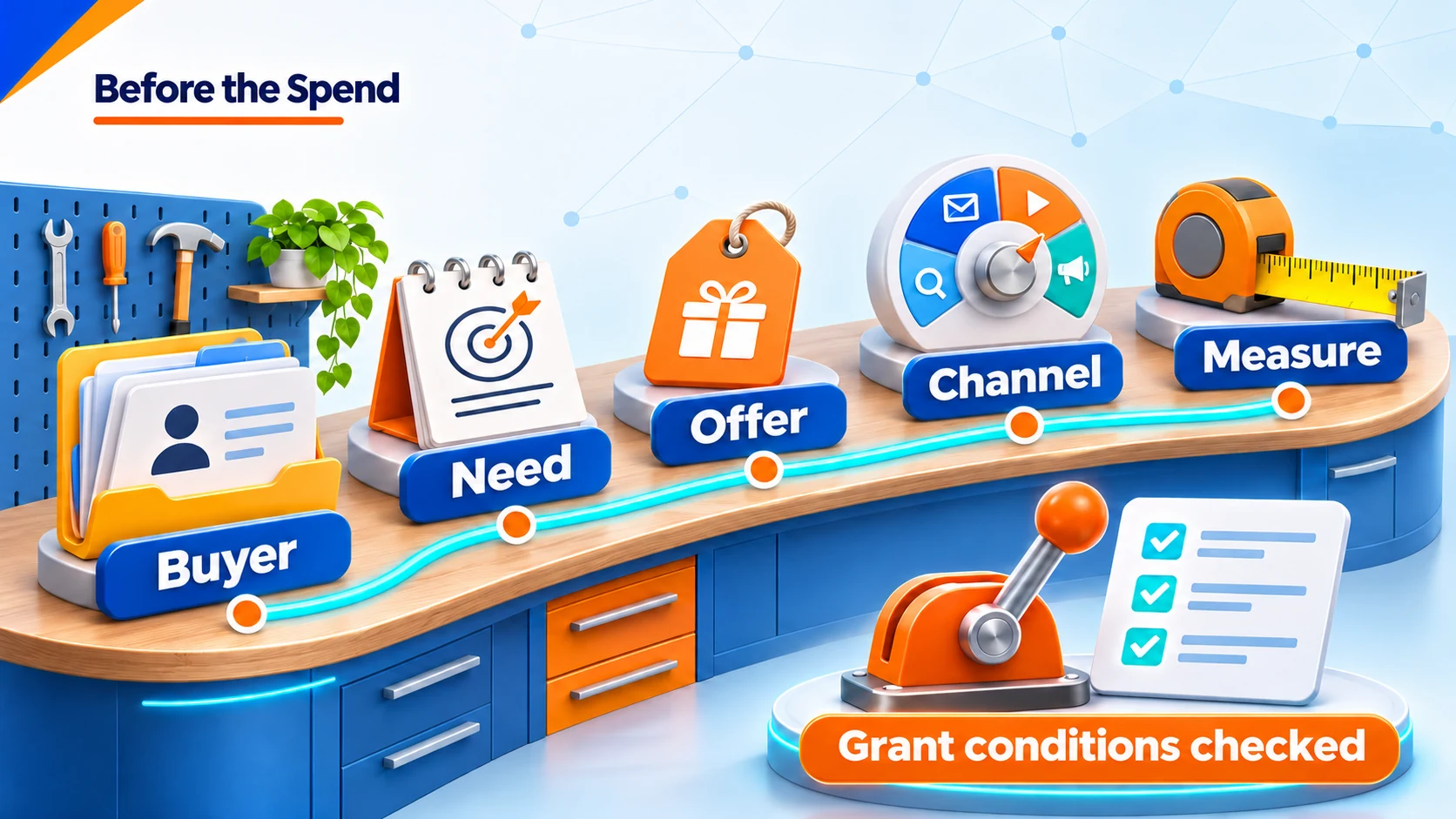
Check grant conditions before committing
Singapore grant support may help eligible businesses fund approved activities. Enterprise Singapore’s digital marketing support sets conditions covering eligibility, project scope and application timing, including restrictions on starting work or paying before submission.
Overseas expansion has a separate purpose. Its overseas marketing and public relations support excludes activities aimed at generating domestic business opportunities. The planned market therefore needs to match the selected support activity.
The planning sequence below helps owners connect those decisions before approving a campaign.
Mistake 3: Giving Customers No Specific Reason to Choose You
Owners know their products well, which can make missing information hard to notice. A feature that feels impressive internally may leave a customer wondering how it helps.
“Flexible packages” is one example. Customers still need to know what can change, what it costs and whether the package suits their situation.
Connect features with customer needs
A stronger message explains the feature, the benefit and the evidence supporting it. The wording becomes easier to assess because buyers can connect it with a decision they need to make.
| Feature | Customer benefit | Supporting detail |
| Online booking | Customers can request a slot without calling | Booking steps and confirmation process |
| Itemised quotation | Buyers can see what the price covers | Included work and optional charges |
| Product demonstration | Customers can assess how an item works | Accurate video showing normal use |
| Service reminders | Customers can plan their next appointment | Reminder timing and communication choices |
A local cleaning company, for example, could explain which rooms and tasks a package covers. Photos of completed work can support that explanation when the business has permission to publish them.
Our copywriting services turn those details into customer-facing messages. The business still needs to supply accurate evidence for every claim.
Keep the promise consistent across channels
The same offer should remain recognisable from advert to landing page to sales conversation. Customers should not discover a different minimum order or service area after making contact.
A campaign message can use this structure:
“We help [customer group] with [specific need] through [service or product], supported by [verifiable detail].”
Different social media marketing formats can explain parts of that offer through demonstrations, questions and examples. Longer content marketing pieces can answer purchase questions that need more space.
Make price information accurate
Price wording forms part of the promise. Customers need to understand the total payable and any conditions before deciding whether to proceed.
Under IRAS price display requirements, GST-registered businesses generally must show GST-inclusive prices to the public. Hotels and food and beverage establishments imposing service charge have a stated exception with disclosure conditions.
A campaign review should therefore compare the advert, website and quotation. Accurate pricing helps the sales team continue the conversation without correcting expectations created earlier.
Mistake 4: Tracking Clicks Without Checking Business Results
Clicks show that someone responded to a message. They do not establish whether the visitor became a suitable enquiry, made a purchase or returned later.
The next step is to connect website activity with sales records. That connection shows where customers progress and where the business needs to investigate.
Record the actions that lead towards sales
Google Analytics allows businesses to mark important actions as key events. A completed enquiry form or purchase can provide a more relevant measure than a page visit when the campaign aims to generate revenue.
The tracking setup needs testing before the results guide spending. A button click may show interest without confirming that a form reached the business or a booking succeeded.
A basic enquiry record should contain:
- Enquiry date and campaign source, where known.
- Product or service requested.
- Whether the enquiry meets the agreed criteria.
- Follow-up owner and current status.
- Confirmed sale value, where applicable.
Sales feedback makes lead generation easier to assess. A campaign generating fewer enquiries may still deserve attention if more of them become suitable customers.
Calculate costs using the same scope
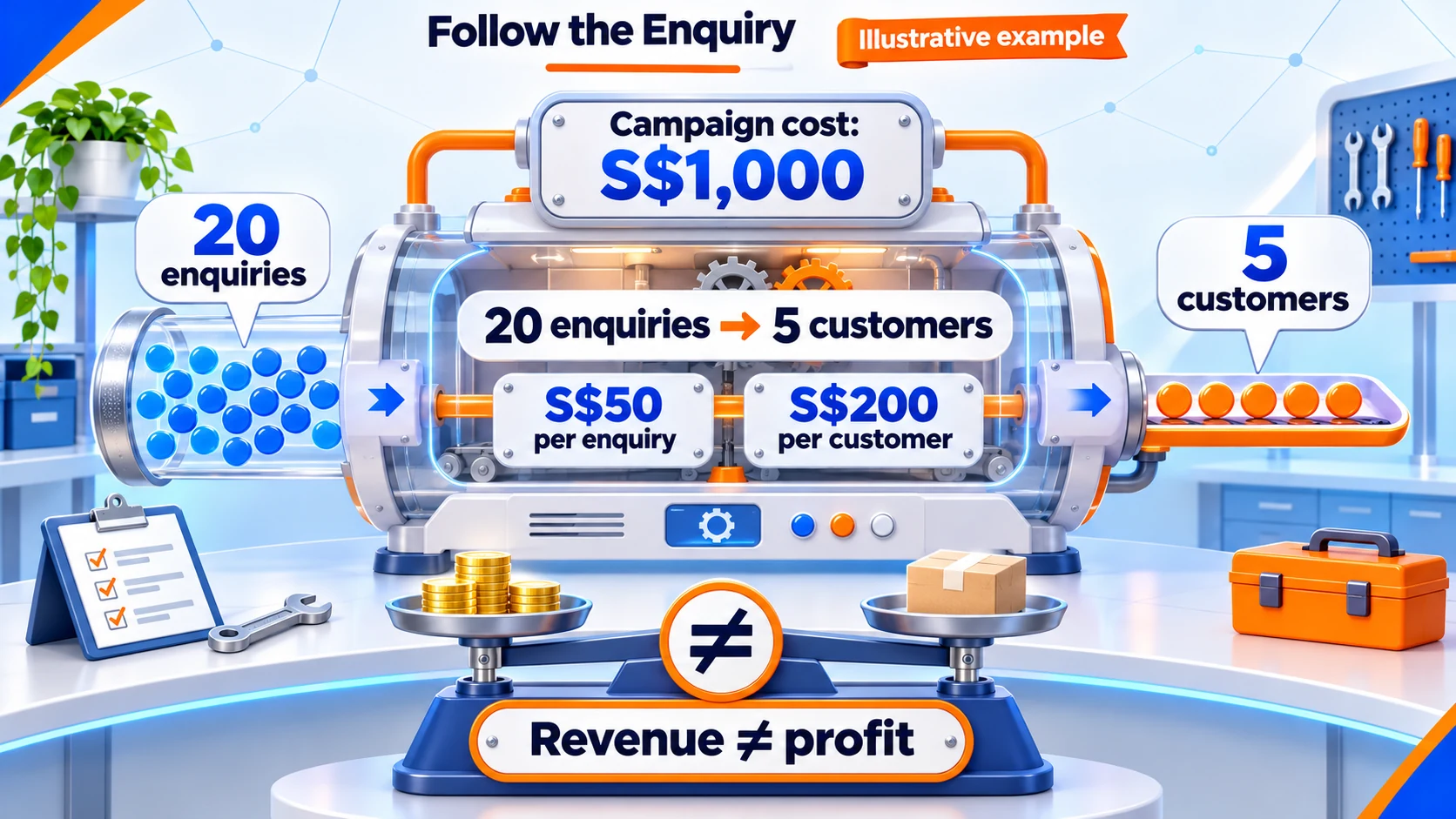
Suppose a campaign costs S1,000andproduces20enquiries.ItscostperenquiryisS50. If five enquiries become customers, the campaign cost per acquired customer is S$200.
These are illustrative figures, not Singapore market averages. The calculation must identify which costs are included, such as advertising, creative work, software or agency fees.
| Calculation | Illustrative result | What it tells you |
| S$1,000 ÷ 20 enquiries | S$50 per enquiry | Cost of generating contact |
| S$1,000 ÷ 5 new customers | S$200 per customer | Campaign cost of acquiring a customer |
| Sales minus delivery costs | Amount remaining before other costs | Whether sales help cover marketing and overheads |
The business then needs to compare acquisition cost with the amount each customer contributes after direct delivery costs. Revenue alone cannot show whether the campaign is affordable.
The next illustration separates those stages so the team can see what each number represents.
Investigate changes before reacting
Small totals can move sharply when only a few customers buy. A quiet week needs context, including campaign changes, holidays, tracking faults and the time customers normally take to decide.
A review should compare similar periods and trace the sequence. Rising visits with falling enquiries suggests a different problem from steady enquiries with fewer completed sales.
Mistake 5: Sending Visitors to a Website That Blocks the Next Step
A website can look modern and still lose customers. Slow pages, missing service details and forms that fail on mobile all interrupt the journey from interest to enquiry.
The review should begin with the task customers came to complete. For a service business, that may mean checking coverage, understanding the offer and requesting an appointment.
Test the website as a customer
Someone outside the project can often spot gaps the team has stopped noticing. A phone test is especially helpful because limited screen space exposes buried information and awkward controls.
The reviewer should attempt these tasks:
- Identify the service from the first screen.
- Check whether the business serves their location.
- Find pricing information or understand how quotes work.
- Submit an enquiry or complete a purchase.
- Confirm what happens after submission.
The team should record every point that causes confusion or prevents completion. Those findings give website design work a practical purpose and help owners prioritise changes.
Give each campaign a relevant destination
An advert for office cleaning should lead to a page explaining office cleaning. A homepage covering every service may leave visitors searching again for information promised in the advert.
A relevant landing page needs:
- A heading matching the offer.
- Service details and coverage.
- Evidence supporting the claims.
- Pricing conditions or quotation steps.
- One prominent action.
- A confirmation message explaining the response process.
The page also needs to support discovery. Google’s SEO Starter Guide explains how accessible, organised content helps search engines understand pages and people find information. Our SEO services connect those requirements with website improvements.
Keep local business details current
Website information should agree with business listings. A customer seeing different opening hours or telephone numbers may struggle to decide which details to trust.
Google’s local ranking information highlights the role of complete, accurate Business Profile details. For eligible businesses, local SEO should include checking hours, categories, contact details and other relevant information.
These checks become especially relevant when opening hours change around public holidays. The team needs an owner for updating both the website and business profile.
Mistake 6: Letting Marketing, Sales and Operations Work Separately
Marketing creates expectations that other teams must fulfil. An offer can attract interest and still fail when sales lacks the details or operations cannot deliver what the advert promises.
A shared campaign brief gives everyone the information needed before customers respond. It also reduces the time staff spend checking basic questions during a sales conversation.
The brief should stay short enough for staff to use. Its purpose is to explain what the customer saw and how the business will respond.
| Detail | What the team needs |
| Audience | Who the campaign serves |
| Offer | What is included and excluded |
| Conditions | Dates, coverage, availability and charges |
| Customer action | What the advert asks people to do |
| Follow-up | Who replies and records the outcome |
| Delivery | Who confirms the business can fulfil the promise |
Consistent branding includes these promises as well as visual elements. A customer should receive the same essential information from the advert, website and person answering the enquiry.
Assign every enquiry an owner
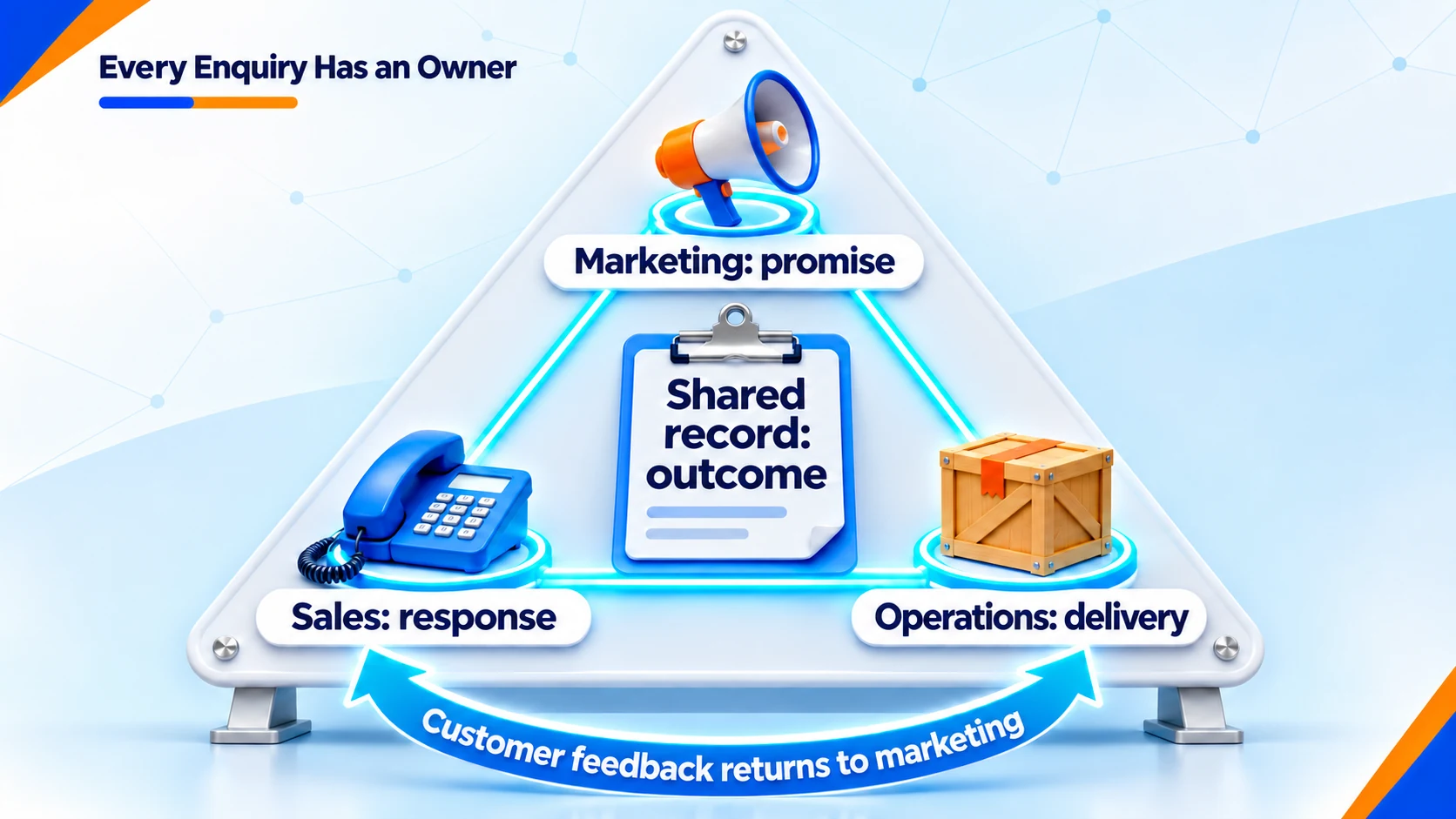
An enquiry needs a named person responsible for the next action. Without that ownership, several staff may assume a colleague has replied.
The process should record three things:
- Receipt: Who checks that the enquiry arrived?
- Response: Who answers and follows up?
- Outcome: Who records the booking, sale or reason for declining?
The team can then identify whether a campaign attracts unsuitable buyers or whether interested customers are waiting too long for an answer.
Separate enquiry handling from promotional contact
A customer asking for a quotation gives the business a reason to answer that request. Future promotional contact needs its own assessment of the applicable data protection requirements.
The PDPC’s marketing consent guidelines explain limits on requiring marketing consent as a condition of receiving goods or services. Enquiry handling and marketing preferences therefore need appropriate processes and records.
A shared responsibility board helps the team connect the customer promise with delivery.
Five-Question Marketing Health Check
The five questions below help owners find gaps before adding spending. Each answer should point to evidence the team can produce, such as a campaign brief, report or tested booking.
- Can we describe the buyer and their main need? Customer records and conversations should support the answer.
- Can we explain why customers choose our offer? The reason should connect with a benefit and supporting evidence.
- Does the promise match across channels and staff? Prices, terms and service details should agree.
- Can we connect campaign costs with enquiries and sales? The team should understand what the report includes.
- Can a customer complete the next step and receive a response? A real test should confirm the process.
Every “no” identifies work to address. This checklist has no validated pass score, and five positive answers cannot guarantee campaign success.
The highest priority is a gap that blocks customers or prevents measurement. Once that is resolved, the team can test the offer and channel with better information.
Turn Small Business Marketing Mistakes Into a Working Plan
Small business marketing mistakes become easier to address when each campaign connects a buyer, an offer, a measurable goal and a working response process. Owners can use the health check to find the first gap, assign responsibility and review the result before increasing spending.
At MediaOne, we bring together strategy, search, content, advertising and website improvements around your business goals. A digital marketing consultation gives us a starting point to discuss where enquiries are being lost and which changes deserve attention first.
Frequently Asked Questions
Should a small business copy a competitor’s campaign?
A competitor’s campaign can suggest questions to investigate, but its public appearance does not reveal costs or profitability. Your business needs its own evidence about customers, capacity and margins before adopting a similar approach. Claims, images and wording also need to remain original and accurate.
Does a small business need to publish content every day?
A daily schedule works only when the business can maintain accuracy, quality and responses. A smaller schedule may serve customers better when each piece answers a purchase question. The team should judge frequency by its resources and the results of published content.
Can paid advertising replace SEO?
Paid advertising and SEO provide different ways to reach search users. Advertising can fund visibility while campaigns run, while SEO develops eligibility and relevance in unpaid results over time. A business can choose either or combine them according to customer behaviour, available resources and its need for enquiries.
Who should own the business’s marketing accounts?
The business should retain appropriate administrative control of its domain, website, advertising and analytics accounts. Staff or agencies can receive access suited to their work. Documented ownership, recovery details and access reviews help preserve reporting history and reduce disruption when working relationships change.
When should a business pause a campaign?
A pause deserves consideration when tracking fails, the offer is inaccurate, the destination page breaks or the business cannot fulfil orders. Performance concerns need a review of the agreed goal and normal buying time. The team should identify the problem and set restart conditions before spending resumes.