
If your business has different phone numbers, addresses, or service details listed online, you’re not alone—but it’s a problem. Over 80% of people say they lose trust in a business when they spot these inconsistencies.

But it’s not just about trust. Inconsistent info also confuses search engines, making it harder for your business to show up in local results. Just being visible online isn’t enough anymore. You need to make sure your details are clear and consistent everywhere.
Search engines now give priority to businesses that keep their information clear and consistent across every platform. When your business info matches everywhere online, Google can easily verify you and connect you with people searching for your services nearby. This helps you show up more often and higher up in local search results.
So, how do you make sure your business keeps showing up in local searches? It starts with understanding what really matters for an SEO agency and how each piece helps build trust and visibility.

In this guide, I’ll walk you through the most important local SEO ranking factors and show you how to put them into action. If you want extra help, you can always reach out to a local SEO agency in Singapore.
Key Takeaways
- Keeping your business info consistent and accurate across Google Business Profile, directories, and your website helps both customers and search engines trust you.
- Search engines look for clear, relevant, and trustworthy businesses to show in local search results.
- Where your business shows up also depends on how close you are to the searcher, what they’re looking for, and how people interact with your listing.
What Are The Local SEO Ranking Factors?
Local SEO ranking factors are the signals search engines use to decide how businesses appear in local search results.
These factors help Google determine which companies are most relevant, trustworthy, and valuable to show when someone performs a local SEO search or looks for a service “near me” within a specific city.
Beyond the foundational elements of local SEO, search engines increasingly rely on deeper contextual, behavioural, and trust-based signals to refine local search results.

These factors don’t just decide if your business shows up. It also affects how high you rank compared to other local competitors. Here are some advanced, often-overlooked local SEO ranking factors that can give your business an edge in today’s local search results.
1. Entity Understanding and Brand Associations

Image Credit: Golden Flitch
Google now evaluates businesses as entities rather than isolated listings. This means your business is assessed based on how consistently it is referenced, described, and connected across the web.
Mentions of your brand alongside related services, locations, and industry terms help reinforce topical authority. Even unlinked brand mentions contribute to prominence by strengthening Google’s understanding of who you are and what you do within a local context.
2. Local Search Context and Personalisation Signals
Local SEO rankings aren’t the same for everyone. Google tailors results based on things like search history, device, time of day, and recent activity.
For example, a user who frequently searches for restaurants may see different local results than someone searching the same term for the first time. Businesses that align their messaging, content, and listings with real-world user intent tend to perform better across personalised local SEO searches.
3. Consistency Between Listing Messaging and Landing Pages

Image Credit: Octopush
A subtle but influential ranking factor is message alignment between your local listing and the page users land on. Discrepancies between services advertised in Google listings and content on your website create relevance gaps.
When service names, pricing cues, and value propositions match across platforms, Google gains more substantial confidence in relevance. This consistency improves engagement signals and supports more stable local SEO rankings.
4. Engagement Quality, Not Just Engagement Volume
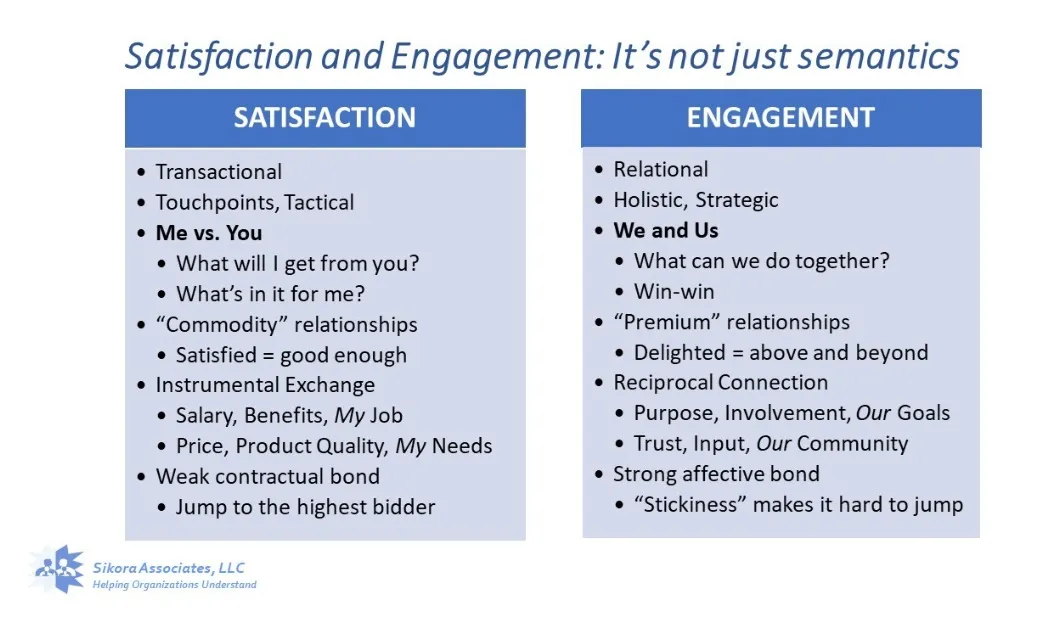
Image Credit: LinkedIn
While clicks and calls matter, Google increasingly evaluates how users engage rather than simply whether they do. Short visits, quick bounces, or repeated backtracking to search results may indicate poor relevance.
High-quality engagement, such as longer visits, deeper scroll depth, and multi-page navigation, suggests stronger intent fulfilment. Businesses that optimise for user satisfaction rather than raw traffic often maintain stronger local SEO results over time.
5. Local Content Freshness and Topical Renewal
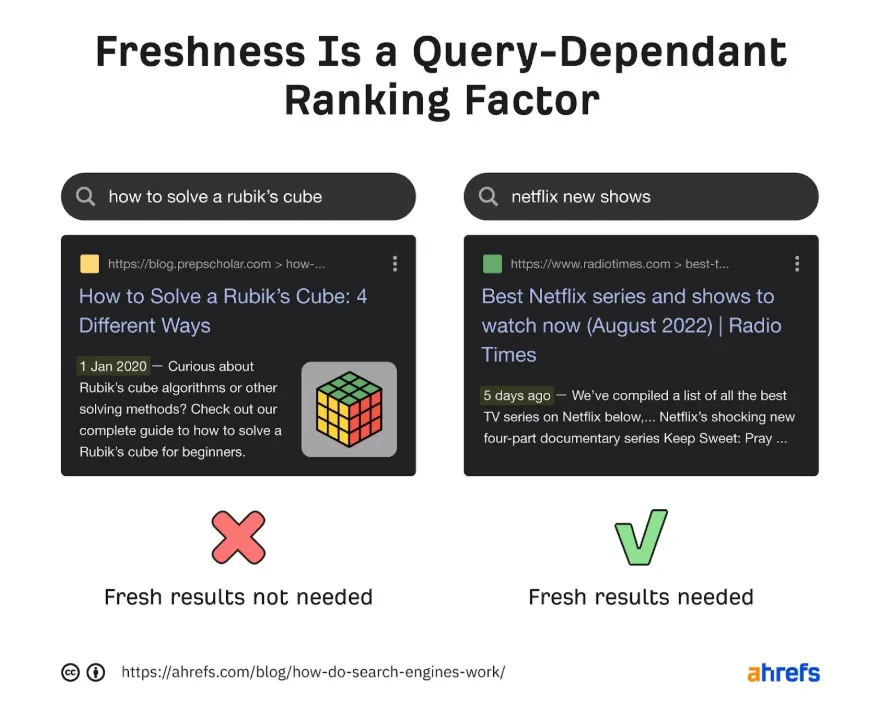
Image Credit: Ahrefs
Search engines prioritise businesses that demonstrate ongoing relevance. Static location pages or unchanged service descriptions may gradually lose visibility. Publishing locally relevant updates signals activity and relevance. Regular topical renewal helps maintain competitiveness in evolving local SEO search environments.
6. Trust Signals Beyond Reviews
While reviews are widely discussed, Google also evaluates broader trust indicators such as refund policies, explicit service guarantees, transparent pricing explanations, and detailed FAQs. These elements reduce user friction and increase perceived legitimacy. Businesses that provide clear, confidence-building information often see stronger engagement and improved local SEO rankings.
7. Offline Signals Reflected Online
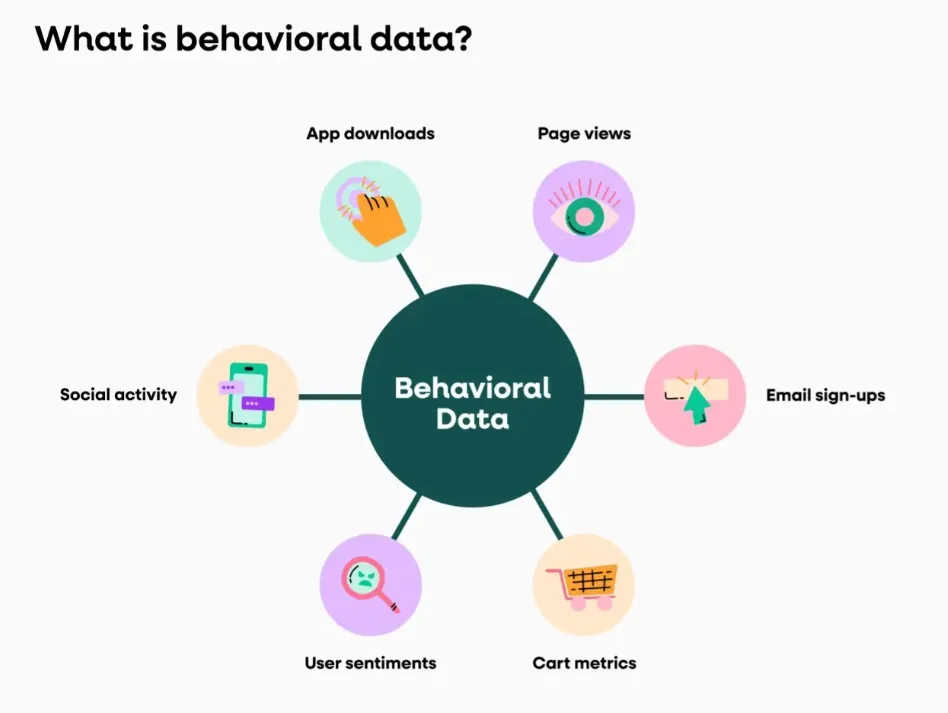
Image Credit: Fullstory
Google increasingly correlates online data with offline behaviour. Foot traffic trends, real-world brand recognition, and repeat customer interactions influence prominence, even if indirectly. When offline signals are reinforced by online visibility through consistent branding, event mentions, or local partnerships, businesses gain stronger authority in local SEO results.
8. Competitive Density and Market Saturation
Local SEO rankings are relative, not absolute. In highly competitive areas, Google applies stricter thresholds for prominence and relevance.
Businesses in dense markets must demonstrate stronger differentiation through expertise, specialisation, or niche relevance. Understanding competitive saturation helps explain why rankings fluctuate even when optimisation appears sound.
Steps To Appear in Local Search Results
Showing up in local search isn’t a one-and-done job. You need to make sure your business info, website, and other online signals all line up. Here are the key steps to help you boost your local SEO visibility.
1. Claim and Fully Optimise Your Google Business Profile
Your Google Business Profile is one of the most influential local SEO ranking factors and often determines whether you appear in Google Maps and the local pack. Start by claiming and verifying your listing, then complete every available field.
Choose the most accurate primary business category and add relevant secondary categories to reflect your services. Write a concise, keyword-aware business description that explains what you offer and where you operate.
Ensure your address, phone number, and website URL are correct, and select the appropriate service areas if you do not operate from a walk-in location.
Regular activity also matters. Upload high-quality photos, add products or services, publish updates through Google Posts, and keep opening hours up to date. An active and accurate profile signals relevance and trust, helping improve local SEO rankings.
2. Ensure NAP Consistency Across All Online Platforms
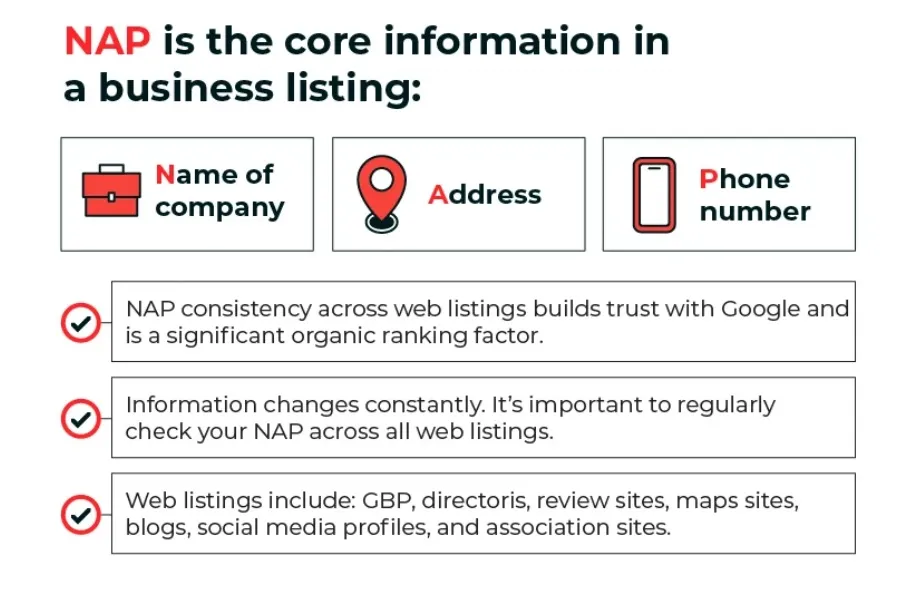
Image Credit: dashClicks
Consistency in name, address, and phone number is critical for strong local SEO results. Search engines cross-check your business details across multiple sources, including directories, social platforms, and mapping services. Any inconsistencies can weaken confidence in your business information.
Audit your existing listings and correct errors such as outdated addresses, incorrect phone numbers, or variations in your business name.
Focus on high-authority directories first, followed by industry-specific and local platforms. Maintaining consistent NAP information helps search engines validate your business and strengthens your local SEO ranking.
3. Optimise Your Website for Local SEO Search
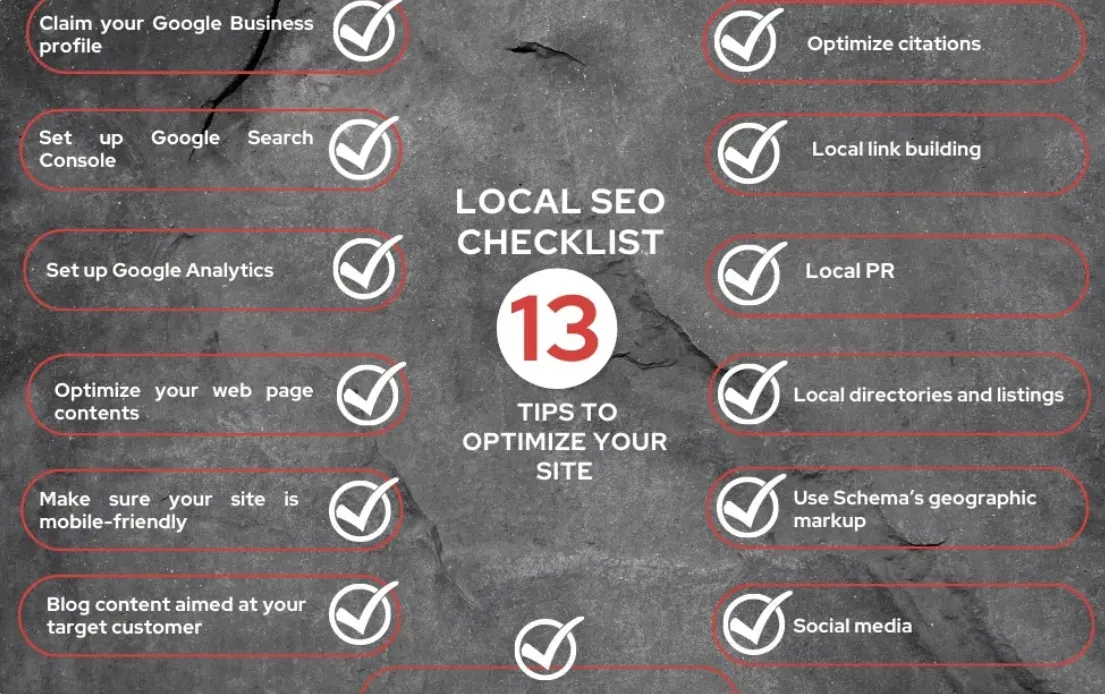
Image Credit: The Hoth
Your website needs to make it obvious where you’re located and who you help. Start by focusing on your on-page SEO.
Add location keywords to your title tags, meta descriptions, headings, and main content—but keep it natural. Don’t overdo it or force keywords where they don’t fit.
If you serve more than one area, create a separate page for each location. Make sure each page has unique content that’s relevant to that area, like service details, testimonials, and contact info.
Add a Google Map, use schema markup, and include clear calls to action on your pages. These steps help both users and search engines, making it easier for people to find and contact you.
4. Build and Manage Local Citations
Local citations are online mentions of your business details and play a significant role in local SEO ranking factors. Submitting your business to trusted directories helps reinforce your legitimacy and visibility in SEO local results. Prioritise well-known platforms, followed by local business directories and niche industry sites. Regularly review and update these listings to ensure accuracy.
The quality and consistency of citations matter more than quantity, so focus on credible sources that align with your location and industry.
5. Encourage and Respond to Customer Reviews
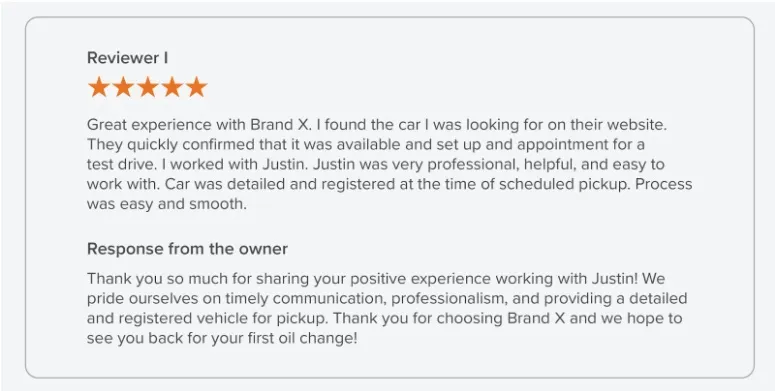
Image Credit: Ryviu
Customer reviews strongly influence both local SEO rankings and consumer trust. Actively encourage satisfied customers to leave reviews on Google and other relevant platforms. A steady flow of genuine reviews signals prominence and engagement.
Respond to all reviews, whether positive or negative. Thoughtful replies demonstrate professionalism and show search engines that your business is active and customer-focused.
Reviews that mention services or locations can also reinforce relevance in local SEO search results.
6. Earn Locally Relevant Backlinks
Backlinks remain a powerful ranking signal, and local relevance is significant for local SEO rankings. Links from local news sites, community organisations, industry associations, and local partners help establish authority and prominence.
Opportunities for local link building include sponsoring events, collaborating with local businesses, issuing press releases, or contributing expert content to local publications. These links signal to search engines that your business is well-established within the local community.
7. Optimise for Mobile and User Experience

Image Credit: headspin
Most local SEO searches are performed on mobile devices, making mobile optimisation essential. Ensure your website loads quickly, is easy to navigate on smaller screens, and provides clear access to key actions such as calls, directions, and enquiries.
Page speed, mobile usability, and overall user experience affect engagement metrics, which in turn influence local SEO results. A smooth mobile experience increases the likelihood of conversions while supporting more substantial local SEO rankings.
8. Maintain Ongoing Activity and Optimisation
Local SEO isn’t something you set and forget. Search trends, competitors, and Google’s rules are constantly changing. Keep your business info up to date, watch your reviews, post new local content, and check your results regularly. Keep working on these steps, and you’ll boost your local search visibility, climb the rankings, and stay ahead of the competition.
Common Local SEO Ranking Mistakes to Avoid
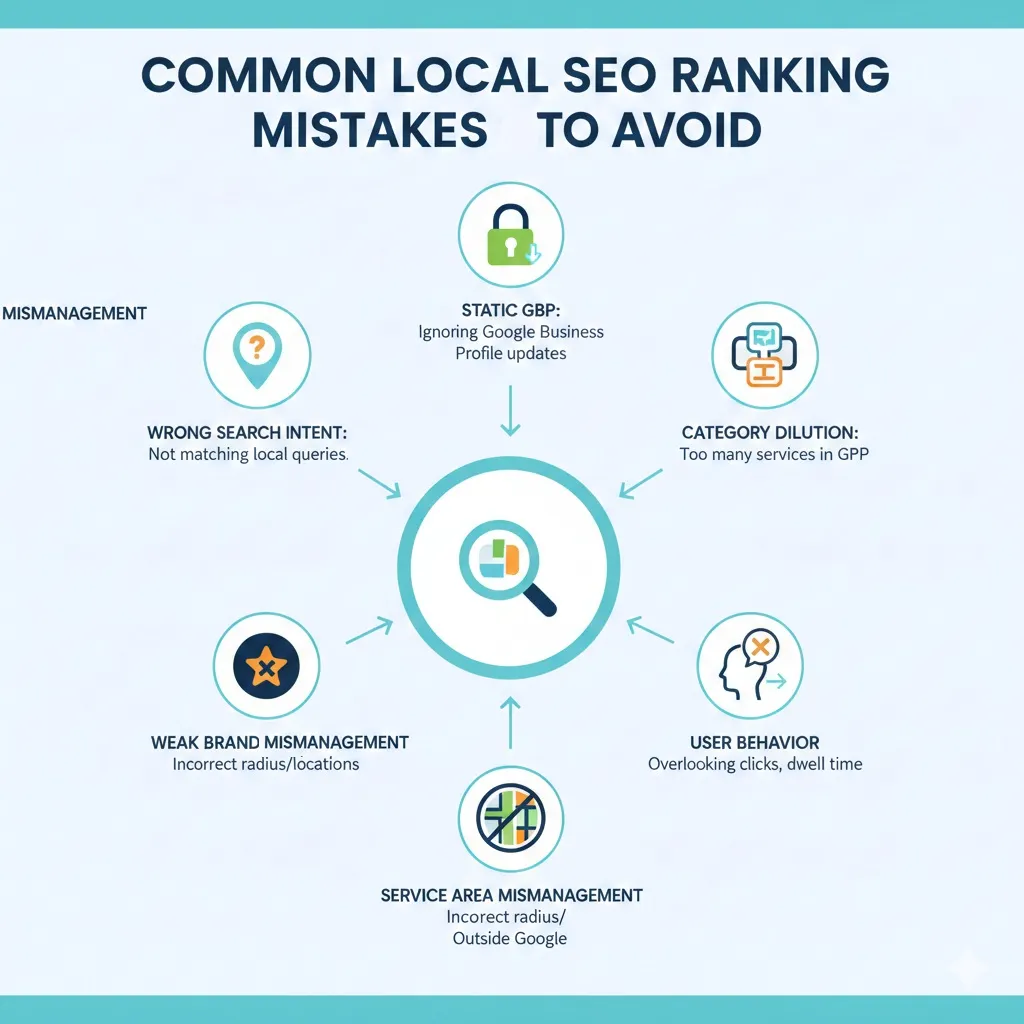
Image Credit: Generated by Gemini
Basic setup errors do not cause many local SEO issues, but they can lead to subtle missteps that limit growth over time. These mistakes are often overlooked because they do not trigger immediate ranking drops, yet they quietly suppress local SEO performance and visibility in competitive markets.
1. Optimising for the Wrong Local Search Intent
A common but underestimated mistake is targeting keywords that do not match actual local search intent. Many businesses optimise for broad service terms while ignoring how users phrase local SEO searches, such as including neighbourhoods, landmarks, or service modifiers.
Failing to align content with real-world search behaviour reduces relevance and weakens local SEO rankings, even if technical optimisation appears correct. Understanding intent at a regional level is essential for stronger local SEO results.
2. Treating Google Business Profile as a Static Asset
Google Business Profile is often optimised once and then left untouched. However, Google increasingly rewards active profiles that demonstrate ongoing relevance and engagement.
Not publishing updates, failing to add new services, or ignoring seasonal changes can quietly reduce visibility in local SEO search results. Businesses that treat their listings as living assets tend to outperform those with static profiles.
3. Ignoring Category Dilution in Google Business Profile
Selecting too many secondary categories or changing categories frequently can dilute relevance rather than improve it. While it may seem beneficial to appear for multiple services, unclear categorisation makes it harder for Google to understand your core offering.
This often results in weaker local SEO rankings for high-intent searches, especially in competitive niches where category accuracy is critical.
4. Creating Location Pages Without Local Authority Signals
Many location pages are well-written but fail to demonstrate genuine local presence. Pages that lack local backlinks, citations, testimonials, or references to nearby landmarks appear generic to search engines. Without supporting authority signals, these pages struggle to rank in local SEO results, even when on-page optimisation is strong. Local relevance must be reinforced both on and off the page.
5. Overlooking User Behaviour Signals in Local SEO
Clicks, calls, direction requests, and engagement all influence local SEO rankings. A common mistake is focusing purely on rankings while ignoring how users interact with listings and websites. Poor click-through rates, confusing landing pages, or mismatched messaging can quietly weaken engagement signals, which can, over time, quietly weaken performance in local SEO search results.
6. Mismanaging Service Area Settings
For service-area businesses, incorrectly configured service areas can limit visibility. Setting areas too broadly or failing to remove irrelevant locations sends mixed signals to search engines. This often leads to inconsistent local SEO results, with rankings fluctuating or failing to appear in high-value areas. Precise service area configuration improves relevance and stability.
7. Relying Too Heavily on Reviews Without Diversification
While reviews are a strong local SEO ranking factor, relying on them alone is risky. Some businesses neglect citation health, content updates, or link building because reviews appear strong. If review velocity slows or competitors improve other signals, rankings can decline. Sustainable local SEO rankings depend on balanced optimisation across multiple ranking factors.
8. Neglecting Local Brand Signals Outside Google
Search engines are increasingly evaluating brand presence beyond Google Business Profiles. Ignoring local brand mentions, unlinked citations, social proof, and third-party platforms weakens prominence. Businesses that fail to build a recognisable local brand often struggle to maintain strong local SEO results in competitive areas, even with technically sound optimisation.
How to Track and Improve Local SEO Rankings
Monitoring and improving local SEO rankings is crucial to ensure your business remains visible in local search results. Without ongoing tracking, even well-optimised businesses may lose ground to competitors or miss opportunities to attract more local customers.
Tracking and optimisation should cover both performance metrics and the signals that influence local SEO results.
Use Localised Rank Tracking Tools
General SEO tools often fail to capture the nuances of local search results, which vary by location and device. Use specialised local rank tracking tools to monitor how your business appears in Google Maps, local packs, and organic local search results.
Key features to track:
- Rankings for location-specific keywords
- Differences in rankings by city, neighbourhood, or postal code
- Fluctuations between desktop and mobile results
Regularly reviewing this data allows you to identify underperforming keywords, see the impact of optimisation efforts, and prioritise areas for improvement.
Analyse Website Engagement and Conversion Metrics
Behavioural signals from your website are increasingly relevant to local SEO. Track metrics such as:
- Click-through rates from search results
- Time on site and bounce rates
- Form submissions, phone calls, and map clicks
High engagement signals to Google that your business is relevant and valuable, improving your local SEO ranking. Low engagement indicates a need to optimise content, UX, or calls to action to better meet user intent.
Optimise Based on Keyword and Content Performance

Local SEO is dynamic, and search trends shift over time. Track which local keywords drive traffic and conversions, then adjust your content strategy accordingly.
Steps to optimise:
- Identify underperforming keywords or pages.
- Refresh content with location-specific details, FAQs, and relevant services.
- Add internal links to connect high-performing pages with new content.
Consistently refining your content ensures continued relevance in local SEO search results.
Monitor Competitor Local SEO Performance
Understanding your competitors’ local SEO strategies provides valuable insights. Track their:
- Google Business Profile optimisations
- Review ratings and engagement.
- Backlink profiles and local citations
Benchmarking against competitors helps identify gaps in your strategy and opportunities to outperform them in local search rankings.
Maintain Continuous Optimisation
Local SEO is an ongoing process. Regularly review performance data, update your business profile, refresh content, build relevant backlinks, and encourage reviews.
By consistently refining all elements—technical SEO, on-page content, citations, reviews, and engagement signals—you ensure that your business maintains strong visibility in local search results and continues to attract qualified local customers.
Winning Local SEO Search Results
Getting great local SEO results takes a smart plan, steady effort, and regular updates. If you keep your info accurate everywhere, match your messaging, and stay active with your customers, you’ll have a much better shot at showing up in Google’s local results.
The basics still matter—like your Google Business Profile, local citations, reviews, and on-page SEO. But now, things like how people interact with your business, your brand reputation, and how relevant you are to local searches play a bigger role in who gets top spots.
To win at local SEO, you need to be proactive and play the long game. It’s not just about being seen—you have to show you’re reliable, relevant, and trustworthy everywhere online.
For businesses looking to accelerate results and ensure every aspect of their local SEO strategy is optimised, partnering with a digital marketing agency in Singapore, such as MediaOne, can provide expert guidance, hands-on management, and measurable outcomes. Contact us!
Frequently Asked Questions
What are local SEO ranking factors?
Local SEO ranking factors are the signals that search engines use to determine which businesses appear in local search results. Key factors include relevance, proximity, prominence, Google Business Profile optimisation, consistent NAP information, reviews, local backlinks, and engagement signals.
How long does it take to see results from local SEO?
Local SEO is an ongoing strategy. Many businesses begin to see noticeable improvements in visibility and traffic within 3–6 months, depending on the level of competition, the quality of optimisation, and the consistency of updates.
Do I need a Google Business Profile to rank locally?
Yes. A fully optimised Google Business Profile is essential for local SEO, particularly for appearing in Google Maps and the local pack. It also allows businesses to manage reviews, post updates, and provide accurate location and service information.
Can reviews really impact local SEO rankings?
Absolutely. Reviews influence both consumer trust and local SEO signals. The quantity, quality, recency, and diversity of reviews all contribute to a business’s perceived prominence and relevance in local search results.
How can MediaOne help with local SEO?
MediaOne provides end-to-end local SEO services, including Google Business Profile optimisation, citation management, review strategy, on-page and off-page optimisation, and performance tracking. Partnering with experts ensures your business consistently appears in high-intent local searches, maximising visibility and customer acquisition.